Aabgoosht-e Giahi (آبگوشت گیاهی) — Persian Vegetarian Stone Soup with Legumes and Dried Lime
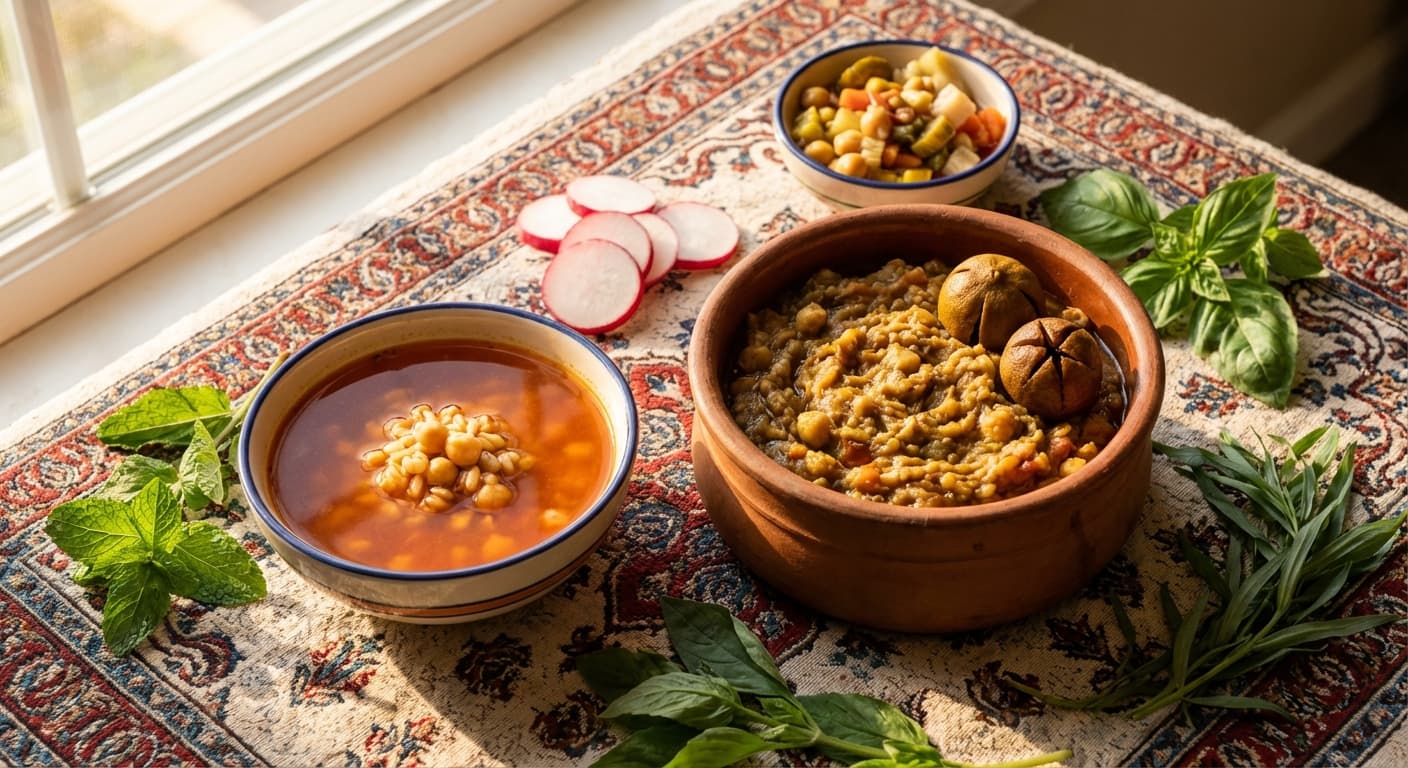
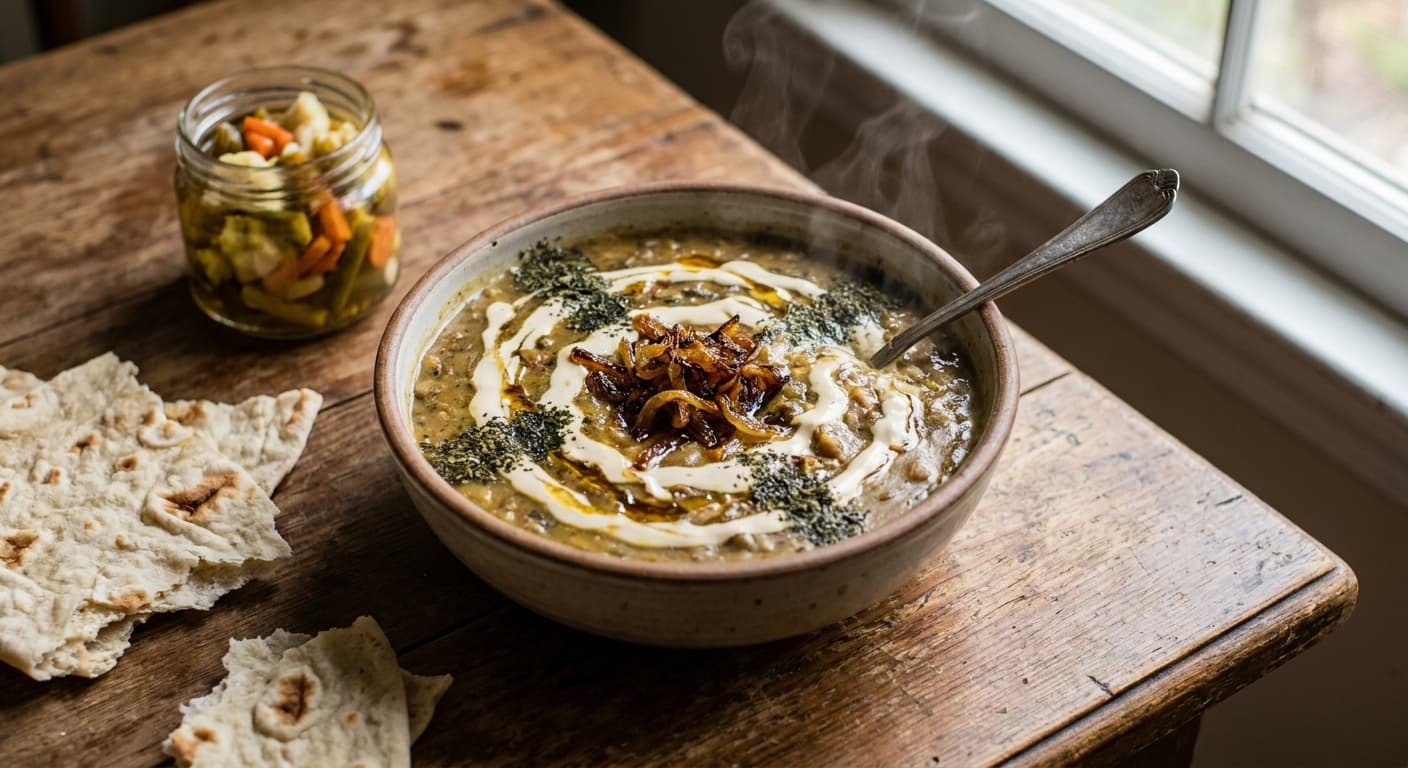
Aabgoosht-e Giahi is a vegetarian take on Iran’s beloved dizi, built on slow-simmered legumes, wheat, and tangy dried limes. Served as broth first and then mashed solids, it keeps the ritual and comfort of the original in a plant-based form.
Printable Recipe Card
Servings: 6 · Total: 175 min · Difficulty: medium
Ingredients (quick list)
- 120 g Dried chickpeas (Soak 12 hours in 900 ml water, then drain)
- 100 g Dried pinto beans (Soak 12 hours in 900 ml water, then drain)
- 100 g Dried white beans (navy or cannellini) (Soak 12 hours in 900 ml water, then drain)
- 120 g Whole wheat berries (Rinse well)
- 90 g Textured soy protein (TVP), chunks (Rehydrate in 400 ml hot water for 10 minutes, then squeeze dry)
- 250 g Onion, finely diced
- 350 g Tomatoes, grated or finely chopped (About 3 medium)
- 30 g Tomato paste (About 2 tbsp)
- 450 g Potatoes, peeled and cut into 4 cm chunks (About 3 medium)
- 30 ml Vegetable oil (About 2 tbsp)
- 20 g Butter (Adds classic richness; omit for vegan)
- 3 Limoo amani (dried limes), pierced (Pierce each lime 6–8 times to prevent bitterness)
+ 5 more in the full ingredients section below.
Steps (summary)
- Soak the chickpeas, pinto beans, and white beans separately for 12 hours, then drain and rinse until the water runs clearer. Re…
- Heat the vegetable oil and butter in a heavy pot over medium heat, then add the diced onion. Cook for 10 minutes, stirring ofte…
- Add turmeric, black pepper, and cumin to the onions and stir for 30 seconds to bloom the spices. Stir in the tomato paste and c…
- Add the grated tomatoes and cook for 6–8 minutes, stirring, until the mixture thickens and the oil begins to separate slightly.…
- Add the soaked chickpeas, pinto beans, white beans, and the rinsed wheat berries to the pot. Pour in 2000 ml water and bring to…
- Reduce heat to low, cover with the lid slightly ajar, and simmer for 90 minutes, stirring every 20 minutes so the wheat doesn’t…
+ 3 more steps in the full instructions section below.
Cultural Background
Dizi is traditionally cooked and served as a two-part meal—broth first, then mashed solids—often shared in homes and teahouses. This vegetarian version preserves that ritual while leaning on legumes, wheat, and limoo amani for the signature Persian depth.
Equipment
💡 Tips
- Pierce the dried limes and add them after the initial long simmer; adding them too early can make the broth bitter.
- For a thicker, more dizi-like mash, hold back 250 ml broth before serving and add it gradually while mashing.
- If your beans are old and slow to soften, extend the first simmer by 20–30 minutes before adding potatoes so they don’t overcook.
⚠️ Common Mistakes
❌ Adding dried limes at the beginning and ending up with a bitter broth.
✅ Fix: Add limoo amani after the legumes have simmered and softened, and always pierce them before adding.
❌ Potatoes disintegrating and turning the stew gluey.
✅ Fix: Add potatoes only after beans and wheat are mostly tender, and keep the simmer gentle rather than boiling hard.
❌ A thin, flat-tasting base.
✅ Fix: Cook the tomato paste and tomatoes until thick and slightly oil-separated before adding water.
🧊 How to Store
Cool to room temperature within 2 hours, then refrigerate in an airtight container for up to 4 days. Reheat gently on the stovetop with 100–200 ml water, stirring often; the wheat and beans thicken the stew as it sits.
📅 Make Ahead
Soak and drain the beans up to 24 hours ahead and refrigerate them, and cook the onion-tomato base up to 2 days ahead. On cooking day, combine everything and simmer; the stew tastes even better after an overnight rest.
🍽️ Pairs Well With
- Sangak bread
- torshi
- sabzi khordan
- pickled garlic (seer torshi)
- radishes
- raw onion wedges.
Regional Variations
- Yazdi-style: add 1 tsp ground cinnamon and 0.5 tsp ground dried lime powder at the end for a warmer, more perfumed finish.
- Teahouse-inspired: increase tomato paste to 45 g and simmer uncovered for the last 15 minutes for a darker, thicker broth.
- Herb-forward: add 10 g dried fenugreek leaves (kasuri methi) in the last 10 minutes for a subtle, savory bitterness.
Ingredients
- 120 gDried chickpeas (Soak 12 hours in 900 ml water, then drain)
- 100 gDried pinto beans (Soak 12 hours in 900 ml water, then drain)
- 100 gDried white beans (navy or cannellini) (Soak 12 hours in 900 ml water, then drain)
- 120 gWhole wheat berries (Rinse well)
- 90 gTextured soy protein (TVP), chunks (Rehydrate in 400 ml hot water for 10 minutes, then squeeze dry)
- 250 gOnion, finely diced
- 350 gTomatoes, grated or finely chopped (About 3 medium)
- 30 gTomato paste (About 2 tbsp)
- 450 gPotatoes, peeled and cut into 4 cm chunks (About 3 medium)
- 30 mlVegetable oil (About 2 tbsp)
- 20 gButter (Adds classic richness; omit for vegan)
- 3Limoo amani (dried limes), pierced (Pierce each lime 6–8 times to prevent bitterness)
- 2 tspGround turmeric
- 1 tspGround black pepper
- 1 tspGround cumin
- 10 gFine sea salt (Start with 8 g, finish with remaining 2 g if needed)
- 2000 mlWater (Add up to 300 ml more if needed during simmering)
🔄 Substitutions
- Butter→ Vegetable oil (additional 15 ml)
- Whole wheat berries→ Pearled barley
- Textured soy protein (TVP), chunks→ Cooked brown lentils (180 g)
Instructions
- 1
Soak the chickpeas, pinto beans, and white beans separately for 12 hours, then drain and rinse until the water runs clearer. Rehydrate the soy protein in 400 ml hot water for 10 minutes, then squeeze it firmly so it won’t dilute the stew.
- 2
Heat the vegetable oil and butter in a heavy pot over medium heat, then add the diced onion. Cook for 10 minutes, stirring often, until the onion turns soft and lightly golden at the edges.
- 3
Add turmeric, black pepper, and cumin to the onions and stir for 30 seconds to bloom the spices. Stir in the tomato paste and cook for 2 minutes until it darkens slightly and smells sweet rather than raw.
- 4
Add the grated tomatoes and cook for 6–8 minutes, stirring, until the mixture thickens and the oil begins to separate slightly. This step builds the classic dizi-style base and prevents a watery, flat broth.
- 5
Add the soaked chickpeas, pinto beans, white beans, and the rinsed wheat berries to the pot. Pour in 2000 ml water and bring to a strong boil for 5 minutes, skimming any foam that rises to keep the broth clean.
- 6
Reduce heat to low, cover with the lid slightly ajar, and simmer for 90 minutes, stirring every 20 minutes so the wheat doesn’t stick. If the liquid drops below the level of the legumes, add 150–300 ml water to keep everything gently submerged.
- 7
Add the pierced dried limes, rehydrated soy protein, and 8 g of the salt, then stir well. Continue simmering for 30 minutes so the limoo amani perfumes the broth without turning harsh.
- 8
Add the potato chunks and simmer for 25–30 minutes until the potatoes are fully tender and the beans are creamy inside when pressed. Taste the broth and add the remaining 2 g salt if needed, then remove the pot from the heat and rest it for 10 minutes for a fuller flavor.
- 9
Serve in the traditional two-part style: first ladle the broth into bowls, keeping some beans and wheat in each portion. Then transfer the solids to a serving bowl and mash them with a potato masher until chunky-smooth, adding 60–120 ml broth if you want it looser.
🪪 Recipe Passport
Cultural Background
Dizi is traditionally cooked and served as a two-part meal—broth first, then mashed solids—often shared in homes and teahouses. This vegetarian version preserves that ritual while leaning on legumes, wheat, and limoo amani for the signature Persian depth.
Regional Variations
Researched from multiple sources and validated by the Zaffaron editorial team. Every recipe is tested for accuracy, measurements, and cultural authenticity.
Nutrition per serving
Pairs well with
If you enjoyed this recipe, here are a few related Zaffaron recipes to try next.
Does your family make this differently?
Every family has their own version. Maybe your grandmother adds a secret ingredient, or your aunt has a completely different technique. Preserve your family's version — with their name on it, forever.
You Might Also Like
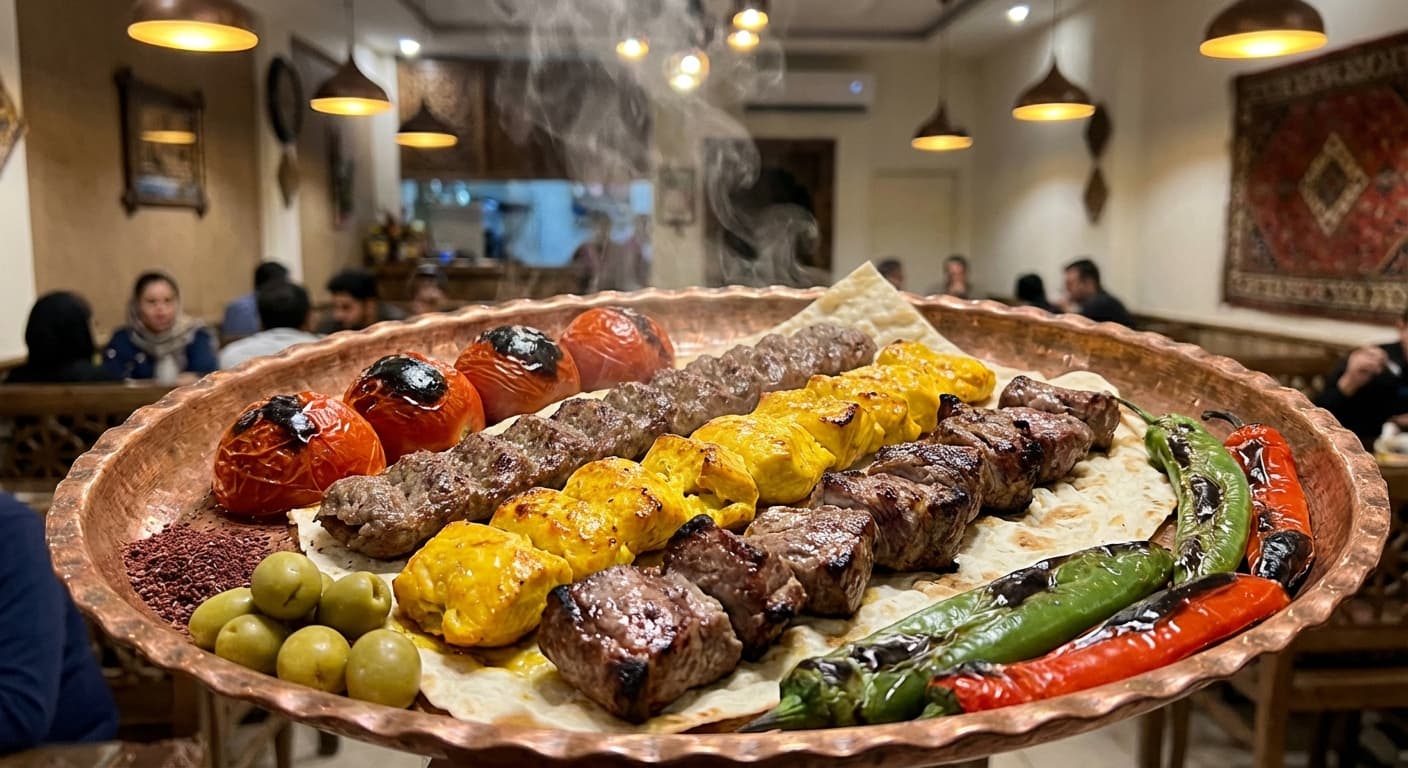
Kabab Vijeh (کباب ویژه) — Royal Persian Mixed Grill Platter
Persian · Kebabs · 70 min
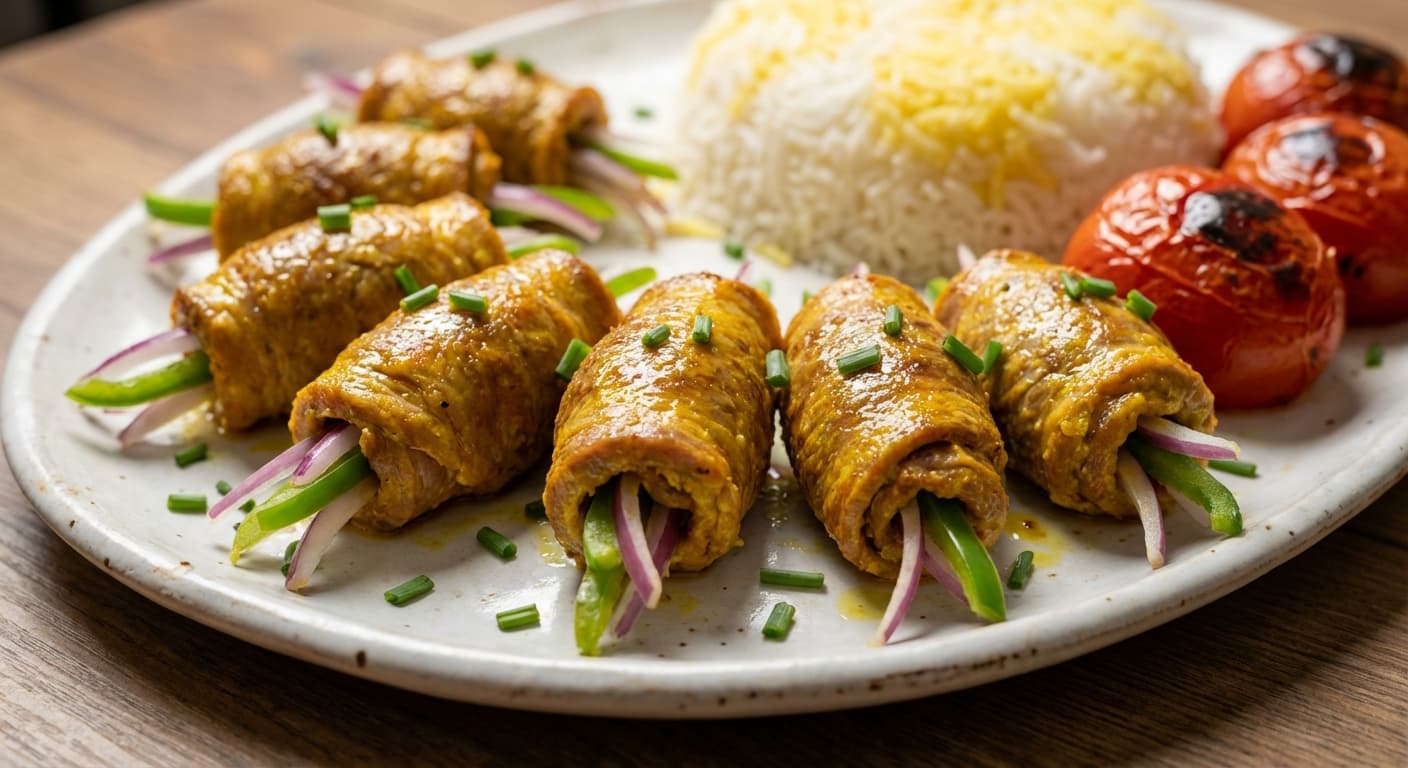
Bulgar Kabab (کباب بلغار) — Persian Rolled Saffron Fillets
Persian · Kebabs · 37 min
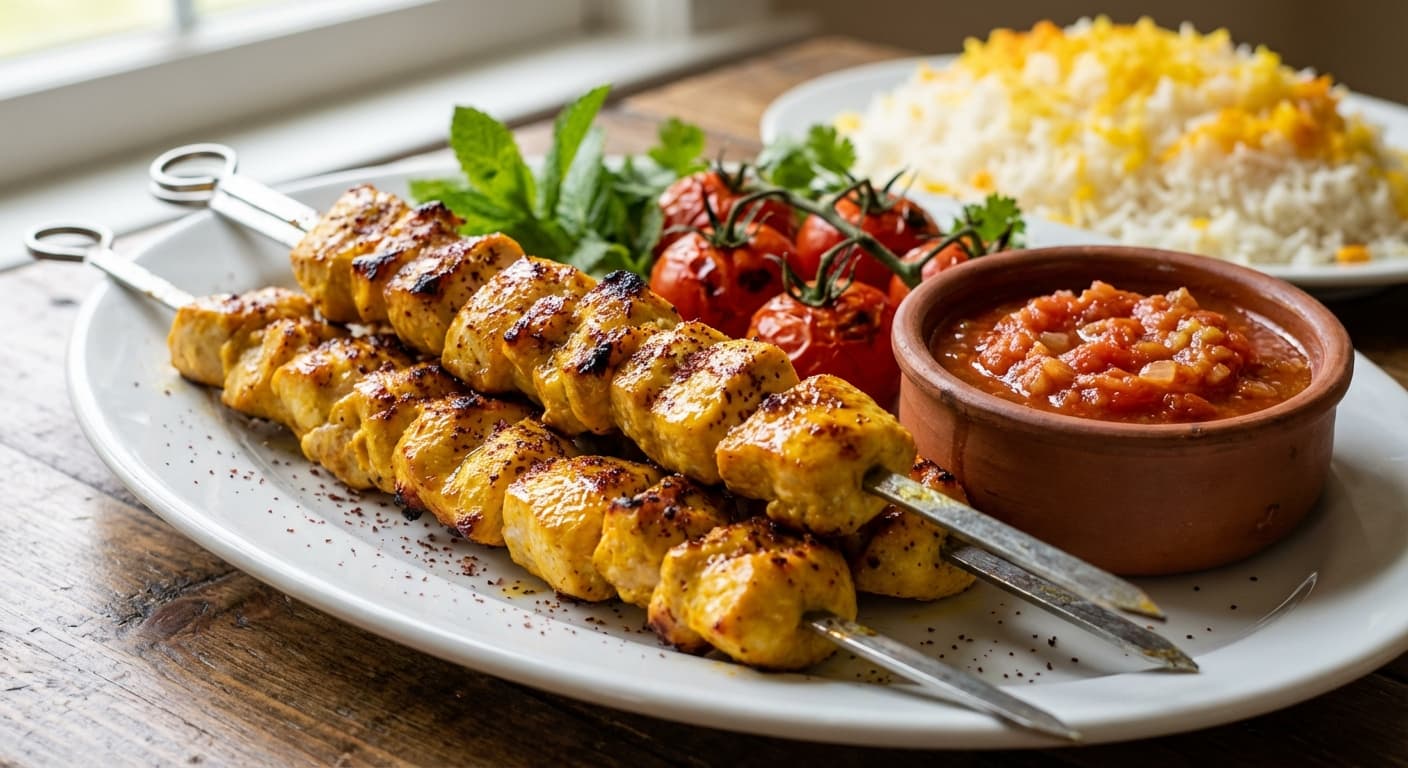
Jujeh Kabab (جوجه کباب) — Saffron-Turmeric Chicken with Rustic Tomato Sauce
Persian · Kebabs · 45 min
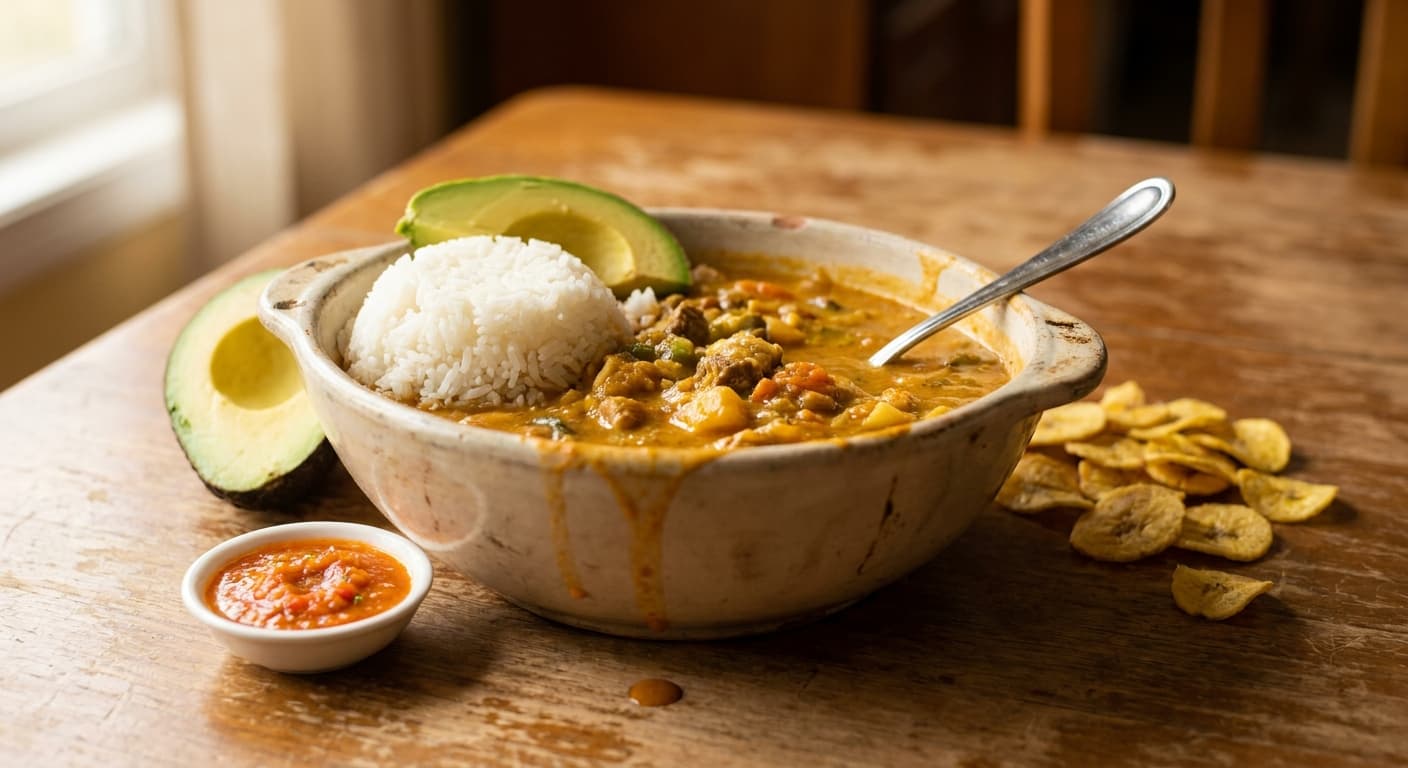
Ecuadorian Peanut Tripe Stew (Guatita) — Creamy Potato and Peanut Stew
Ecuadorian · Stews · 180 min
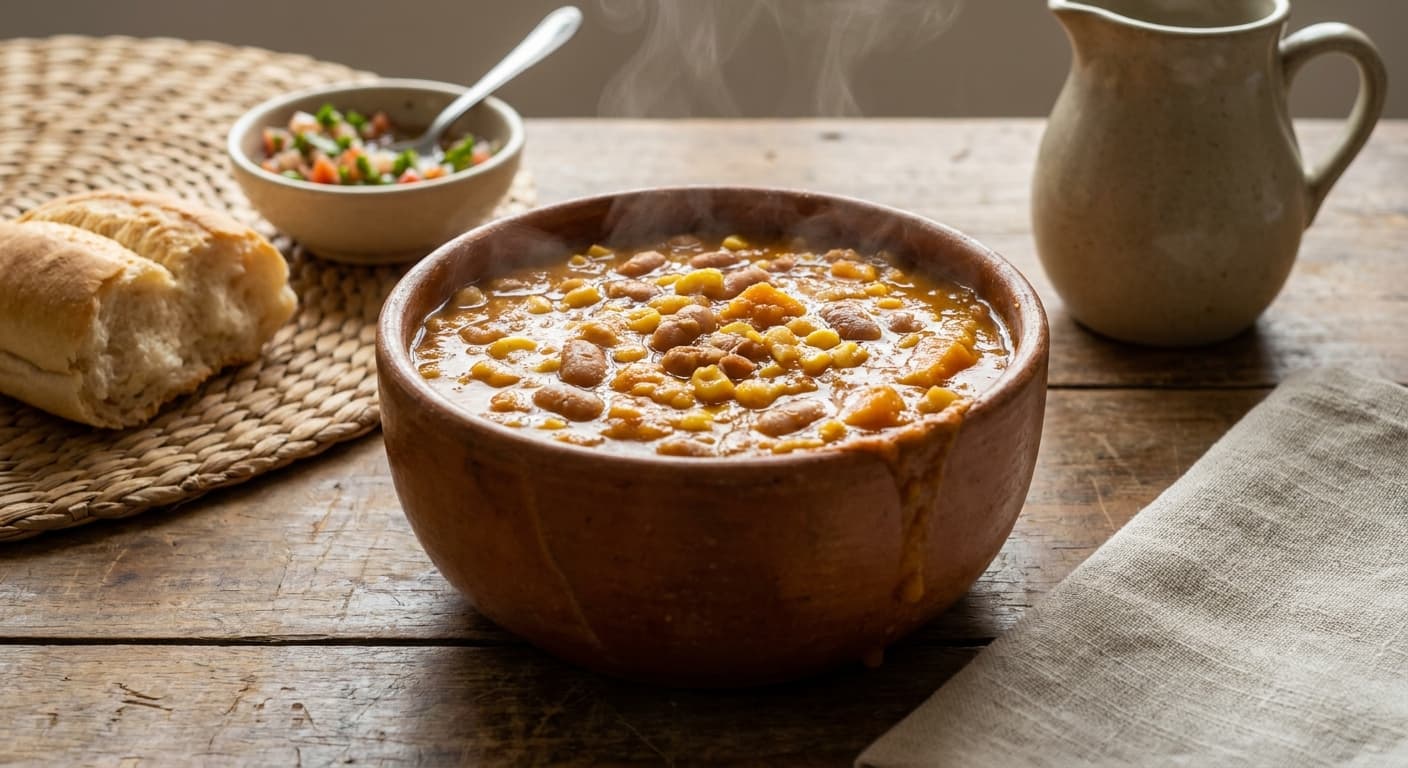
Chilean Fresh Bean Stew (Porotos granados) — Summer Corn and Squash Bean Stew
Chilean · Stews · 80 min
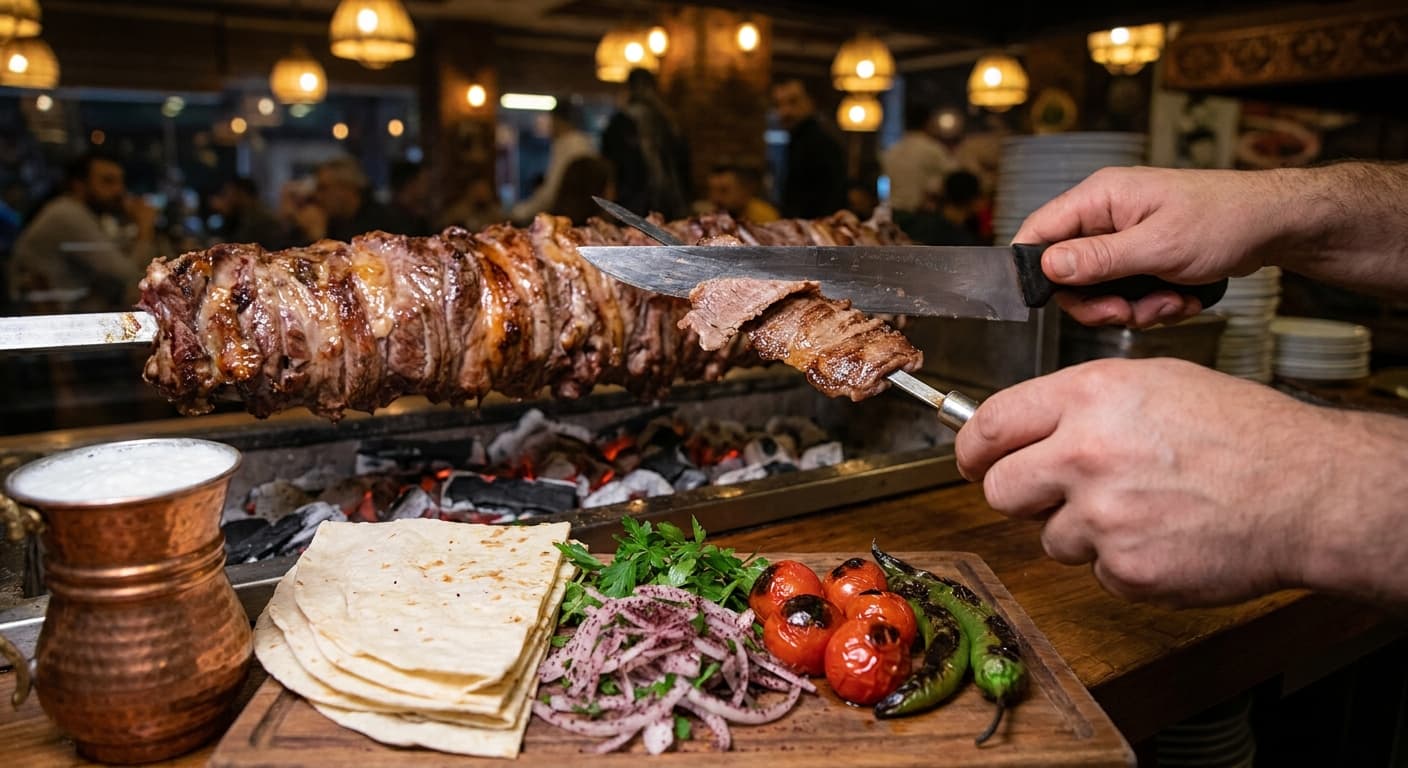
Turkish Cağ Kebab (Cağ Kebabı) — Erzurum Slow-Roasted Charcoal Lamb Skewer
Turkish · Kebabs · 160 min
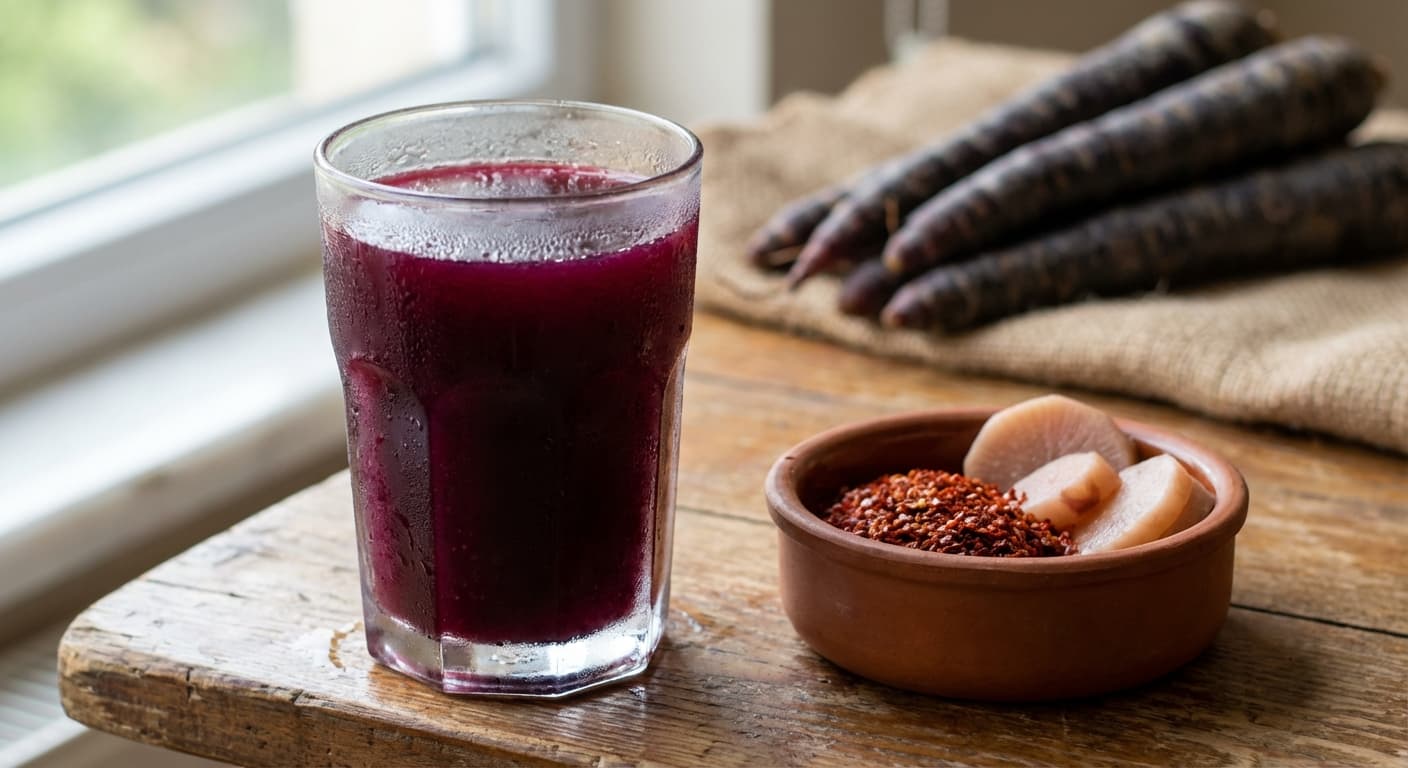
Salgam Juice (Şalgam) — Spicy, tangy fermented black-carrot drink
Turkish · Drinks · 25 min
Ash-e Sak (آش ساک) — Gorgani Spinach and Lamb Ash
Persian · Soups · 175 min
Reviews
Cooked this recipe?
Tap the stars to rate it — that's all it takes. A few words are welcome but optional.
No ratings yet. Cooked this one? Be the first to rate it — it takes one tap.