Bavarian Schweinshaxe (Schweinshaxe) — Crispy Roasted Pork Knuckle
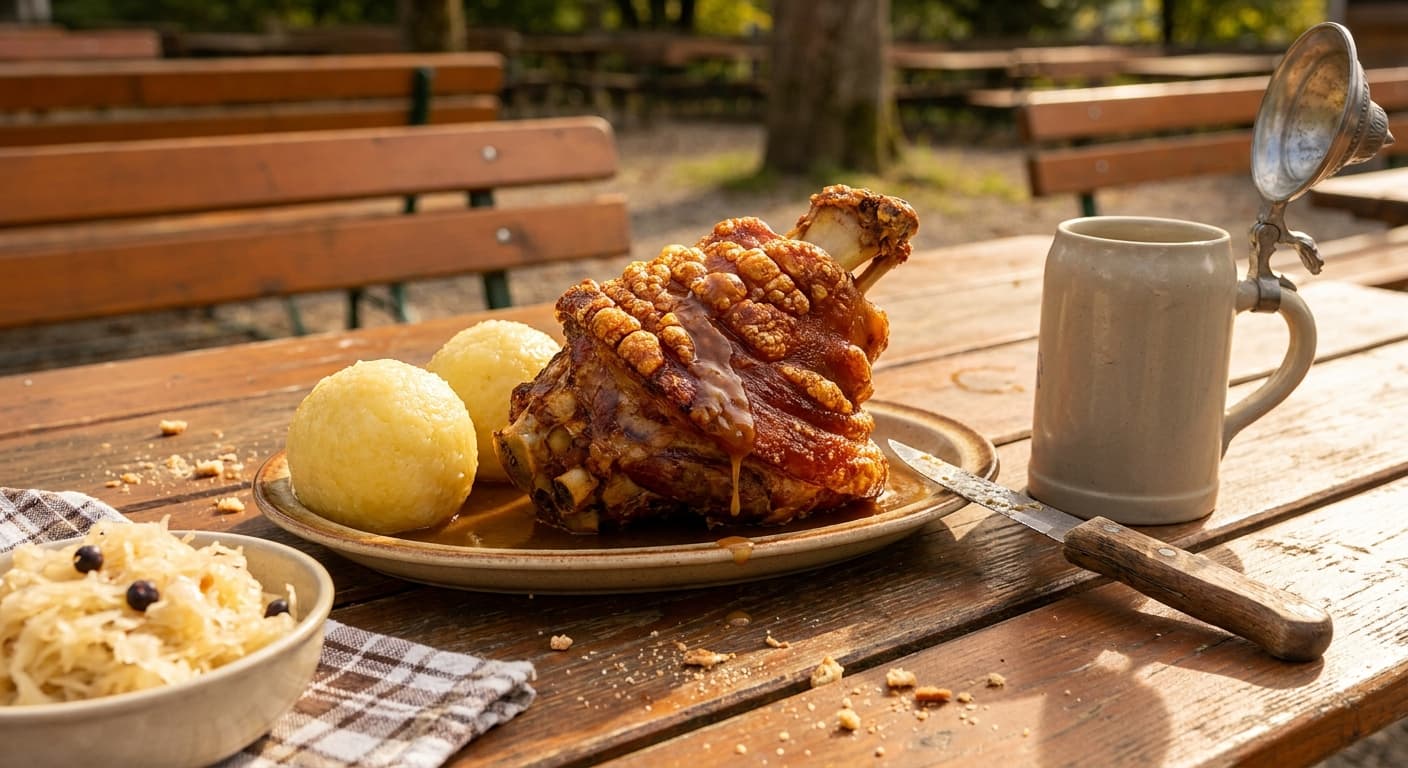
Schweinshaxe is a Bavarian beer-hall classic: pork knuckle roasted until the meat is spoon-tender and the rind crackles. It is traditionally served with knödel, sauerkraut, and kartoffel sides.
Printable Recipe Card
Servings: 4 · Total: 235 min · Difficulty: medium
Ingredients (quick list)
- 4 skin-on pork knuckles (hind hocks, 850-950 g each; about 3.6 kg total)
- 28 g kosher salt
- 2 tsp caraway seeds
- 2 tsp black peppercorns (coarsely crushed)
- 2 tsp dried marjoram
- 25 g lard
- 2 yellow onions (quartered)
- 2 large carrots (cut into 4 cm chunks)
- 1 leek (white and light green parts, sliced and rinsed)
- 4 clove garlic (lightly crushed)
- 2 leaf bay leaves
- 8 juniper berries (lightly crushed)
+ 6 more in the full ingredients section below.
Steps (summary)
- Pat the pork knuckles completely dry with paper towels, especially the rind. Using a very sharp knife, score the skin in 1 cm d…
- Mix the kosher salt, caraway seeds, crushed black peppercorns, and dried marjoram in a small bowl. Rub this mixture all over th…
- Remove the pork knuckles from the refrigerator 45 minutes before roasting so the chill comes off the meat. Heat the oven to 160…
- Melt the lard in a large roasting pan over medium heat, then add the onions, carrots, leek, garlic, bay leaves, and juniper ber…
- Pour the German dark lager, pork broth, and 250 ml water into the roasting pan, scraping up the browned bits from the bottom. S…
- Roast for 2 hours and 15 minutes, basting the meat, not the top of the rind, with pan juices every 30 minutes. Turn the hocks o…
+ 3 more steps in the full instructions section below.
Cultural Background
Schweinshaxe is central to Bavarian beer-hall cooking, where crisp pork, knödel, and cabbage make a hearty communal plate. Mimi Sheraton’s German food writing places such roasts within the country’s strong regional tavern tradition.
Equipment
💡 Tips
- Drying the scored rind uncovered for at least 8 hours is the most reliable way to achieve proper crackling.
- Keep the liquid below the skin line during roasting because submerged rind softens instead of blistering.
- If one side browns faster, rotate the pan and shield the darkest patch with a small piece of foil for 10 minutes.
⚠️ Common Mistakes
❌ Cutting too deeply through the rind into the meat.
✅ Fix: Score only the skin and fat layer so juices stay in the meat and the crackling forms evenly.
❌ Letting beer or broth cover the skin during roasting.
✅ Fix: Keep the hocks elevated and the liquid below the rind so the skin dries and blisters.
❌ Serving immediately from the oven.
✅ Fix: Rest the pork for 15 minutes so the meat relaxes while the crackling remains crisp.
🧊 How to Store
Refrigerate leftover meat and sauce in separate airtight containers for up to 3 days. Reheat meat uncovered at 190°C for 15-20 minutes; re-crisp skin at 230°C for 5 minutes, watching closely.
📅 Make Ahead
Score and season the pork knuckles up to 24 hours ahead, then refrigerate uncovered. The vegetables can be cut 1 day ahead and stored covered in the refrigerator.
🍽️ Pairs Well With
- Potato knödel
- sauerkraut
- warm kartoffel salad
- braised red cabbage
- Bavarian sweet mustard
- pretzels
- German lager.
Regional Variations
- In Bavaria, Schweinshaxe is usually roasted with beer and served with potato knödel or bread dumplings.
- In parts of northern Germany, Eisbein is often cured or boiled rather than roasted crisp.
- Franconian versions may use a darker beer and a more pronounced caraway seasoning.
Ingredients
- 4skin-on pork knuckles (hind hocks, 850-950 g each; about 3.6 kg total)
- 28 gkosher salt
- 2 tspcaraway seeds
- 2 tspblack peppercorns (coarsely crushed)
- 2 tspdried marjoram
- 25 glard
- 2yellow onions (quartered)
- 2large carrots (cut into 4 cm chunks)
- 1leek (white and light green parts, sliced and rinsed)
- 4 clovegarlic (lightly crushed)
- 2 leafbay leaves
- 8juniper berries (lightly crushed)
- 500 mlGerman dark lager
- 500 mllow-sodium pork broth
- 250 mlwater
- 2 tspcornstarch
- 2 tbspcold water
- 80 gBavarian sweet mustard
🔄 Substitutions
- German dark lager→ 500 ml additional low-sodium pork broth
- lard→ 25 g neutral vegetable oil
- Bavarian sweet mustard→ 80 g medium-hot German mustard
Instructions
- 1
Pat the pork knuckles completely dry with paper towels, especially the rind. Using a very sharp knife, score the skin in 1 cm diamonds without cutting deeply into the meat.
- 2
Mix the kosher salt, caraway seeds, crushed black peppercorns, and dried marjoram in a small bowl. Rub this mixture all over the pork knuckles, working it into the scored skin, then refrigerate the hocks uncovered for 8 to 24 hours to dry the rind.
- 3
Remove the pork knuckles from the refrigerator 45 minutes before roasting so the chill comes off the meat. Heat the oven to 160°C and place a rack in the lower-middle position.
- 4
Melt the lard in a large roasting pan over medium heat, then add the onions, carrots, leek, garlic, bay leaves, and juniper berries. Cook for 8 minutes, stirring twice, until the vegetables begin to brown and smell sweet.
- 5
Pour the German dark lager, pork broth, and 250 ml water into the roasting pan, scraping up the browned bits from the bottom. Set the pork knuckles upright or on their sides above the vegetables, keeping as much skin as possible exposed above the liquid.
- 6
Roast for 2 hours and 15 minutes, basting the meat, not the top of the rind, with pan juices every 30 minutes. Turn the hocks once halfway through cooking, and add 150 ml hot water only if the pan becomes nearly dry.
- 7
Increase the oven temperature to 230°C and roast for 25 to 35 minutes more, rotating the pan once for even blistering. The Schweinshaxe is ready when the crackling is deeply browned and crisp, and the meat near the bone registers 88-92°C.
- 8
Transfer the pork knuckles to a warm platter and rest them for 15 minutes while you make the sauce. Strain the pan juices into a saucepan, skim off excess fat, simmer for 8 minutes, then whisk in the cornstarch mixed with 2 tbsp cold water and cook for 2 minutes until lightly thickened.
- 9
Serve one pork knuckle per person with the hot pan sauce and 20 g Bavarian sweet mustard per serving. For the most traditional plate, add potato knödel, sauerkraut, and a kartoffel side such as warm potato salad.
🪪 Recipe Passport
Cultural Background
Schweinshaxe is central to Bavarian beer-hall cooking, where crisp pork, knödel, and cabbage make a hearty communal plate. Mimi Sheraton’s German food writing places such roasts within the country’s strong regional tavern tradition.
Regional Variations
Researched from multiple sources and validated by the Zaffaron editorial team. Every recipe is tested for accuracy, measurements, and cultural authenticity.
📚 Sources & Cultural References
- Mimi Sheraton — The German Cookbook — (1965)
- Prosper Montagné — Larousse Gastronomique — (1938)
Sources cited by the Zaffaron editorial team during recipe research. Cultural and culinary references supporting authenticity claims.
Nutrition per serving
Pairs well with
If you enjoyed this recipe, here are a few related Zaffaron recipes to try next.
Does your family make this differently?
Every family has their own version. Maybe your grandmother adds a secret ingredient, or your aunt has a completely different technique. Preserve your family's version — with their name on it, forever.
You Might Also Like
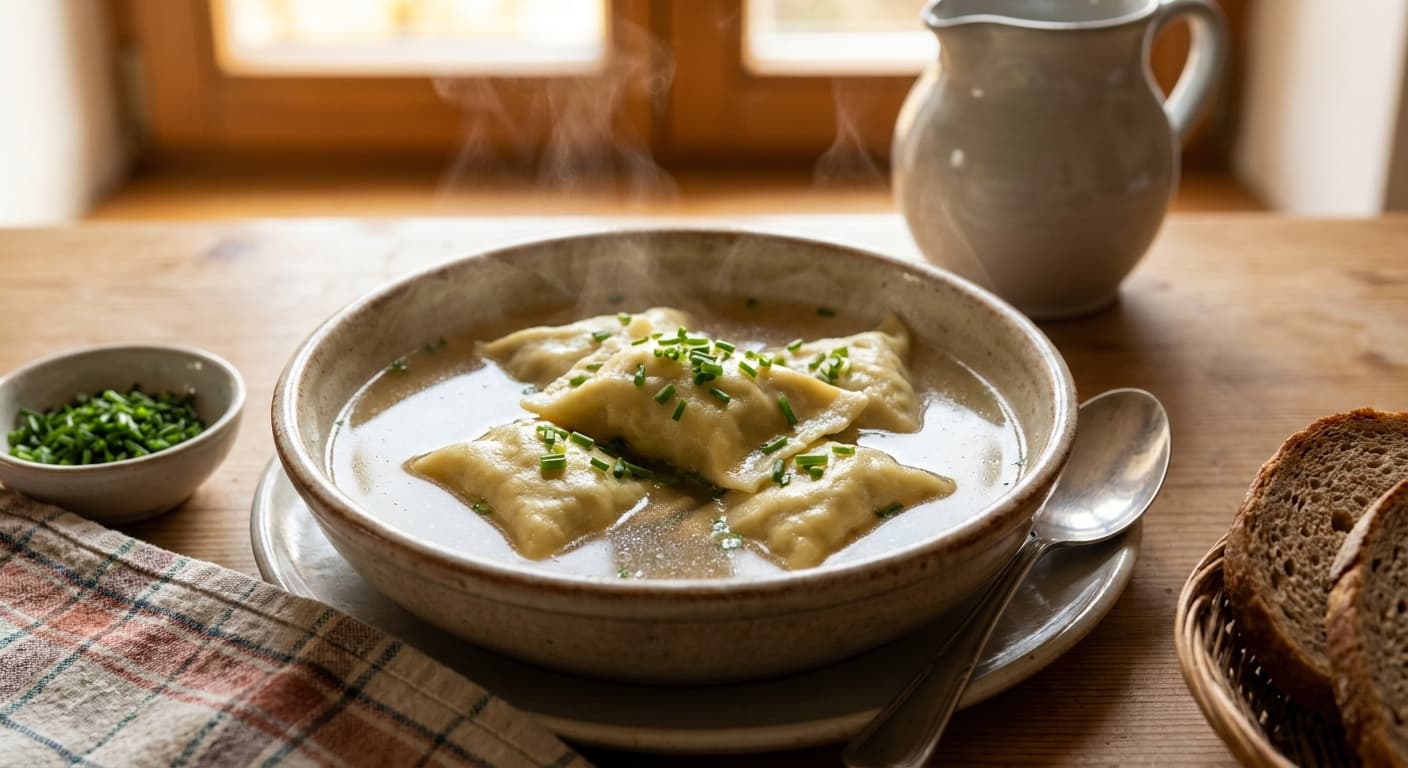
Swabian Stuffed Pasta (Maultaschen) — Spinach-Meat Dumplings in Broth
German · Main Courses · 105 min
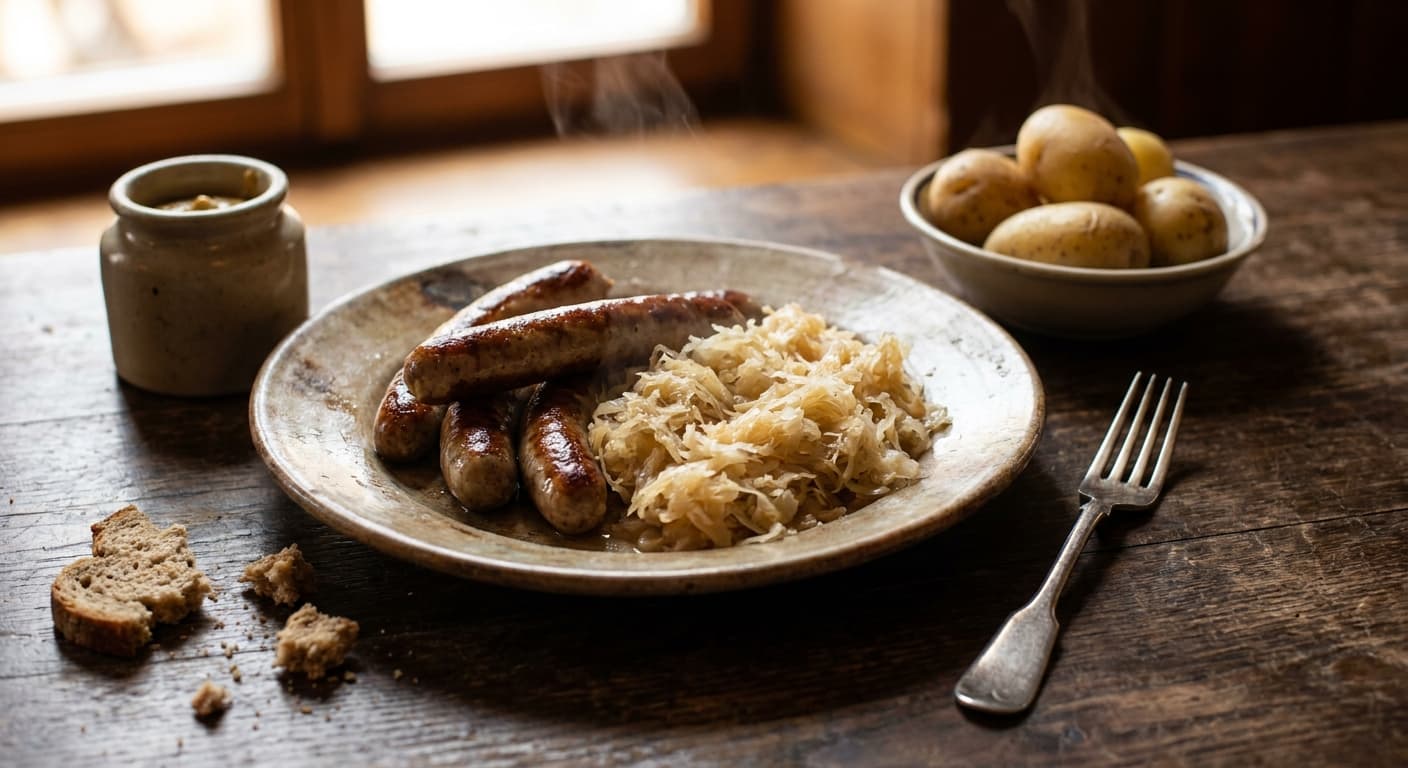
Bratwurst with Sauerkraut (Bratwurst mit Sauerkraut) — German Sausages on Wine-Braised Cabbage
German · Main Courses · 80 min
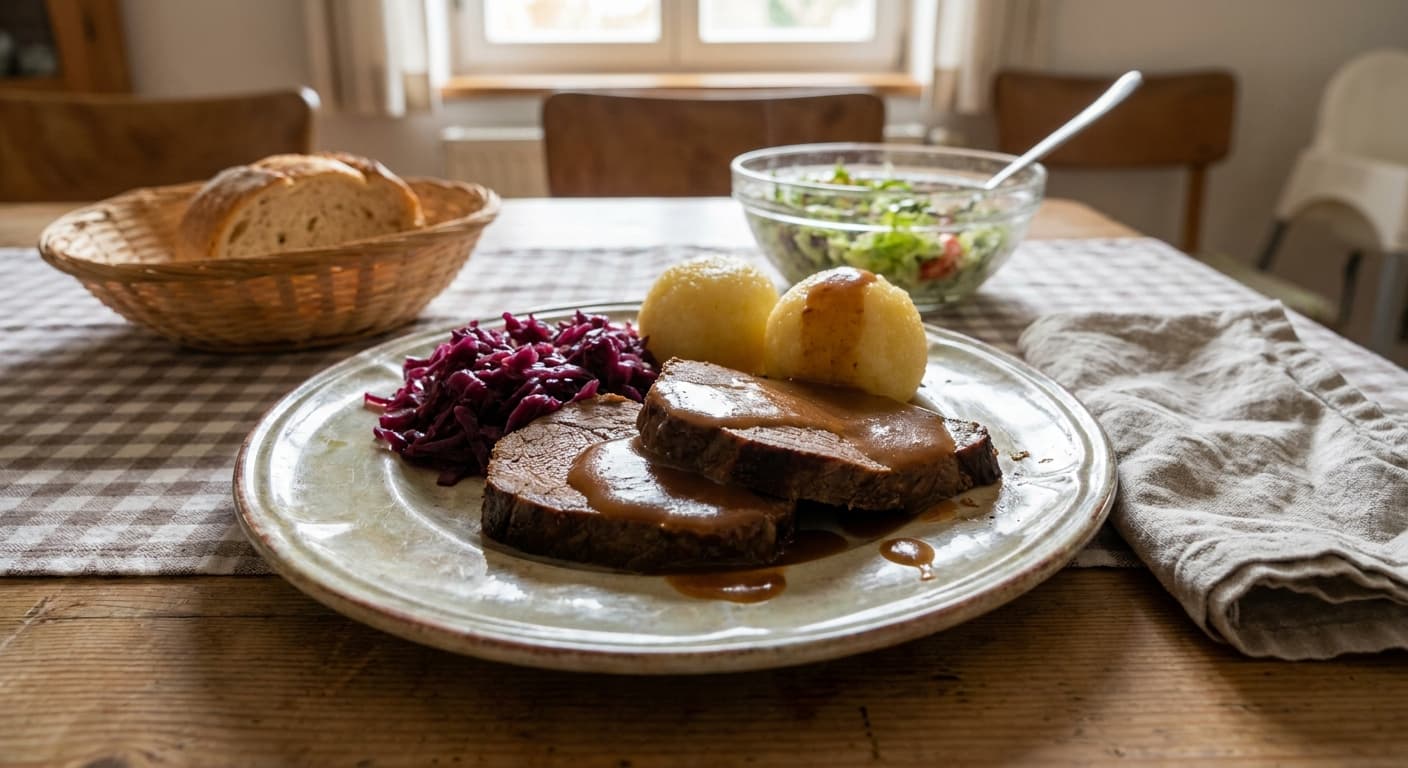
Sauerbraten (Sauerbraten) — German Marinated Pot Roast
German · Main Courses · 240 min
Bosnian Popara (Попара) — Bread Porridge with Kaymak
Bosnian · Main Courses · 22 min
Bolivian Spicy Chicken Stew (Sajta de Pollo) — Aji Amarillo Chicken with Chuño
Bolivian · Main Courses · 95 min
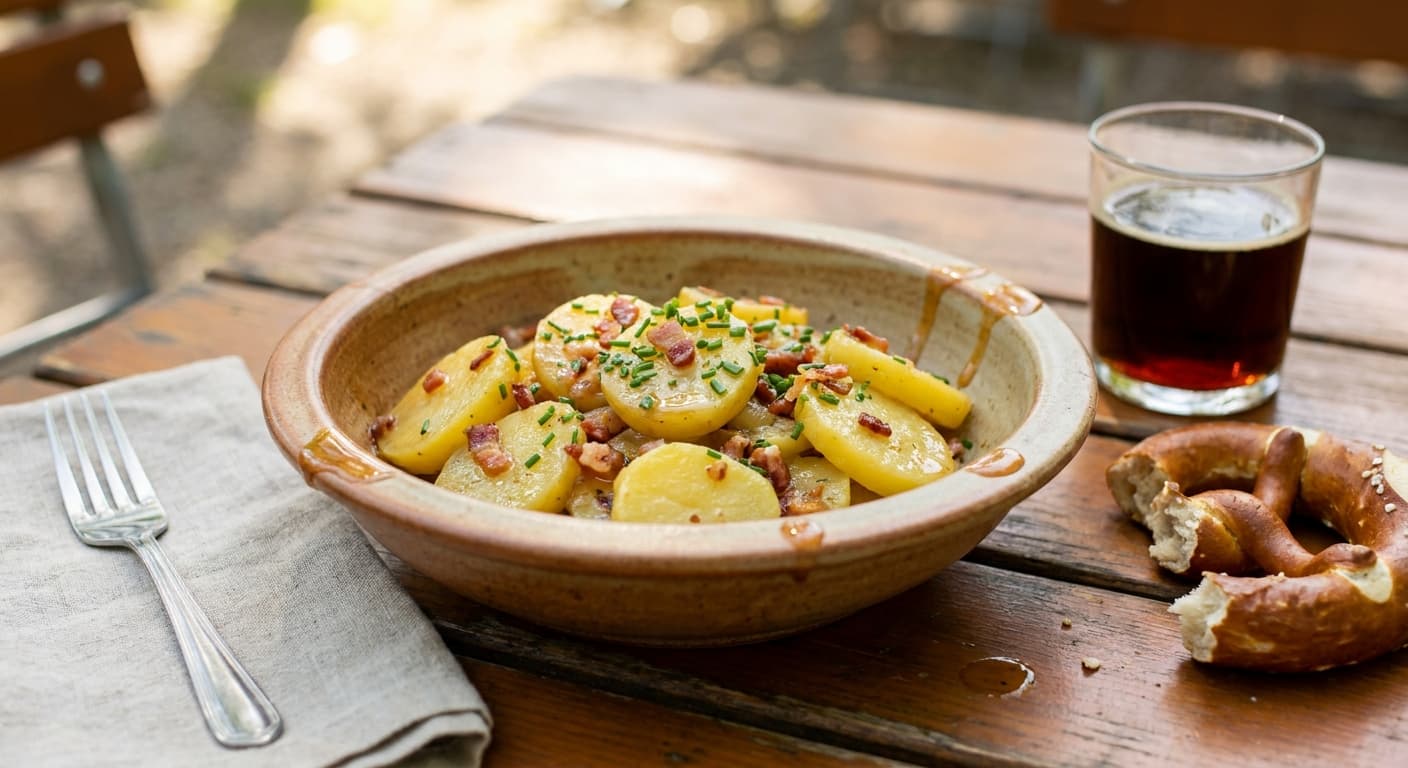
German Potato Salad (Kartoffelsalat) — Warm Vinegar-Broth Potato Salad
German · Salads · 50 min
Spaetzle (Spätzle) — Tender German Egg Noodles
German · Side Dishes · 30 min
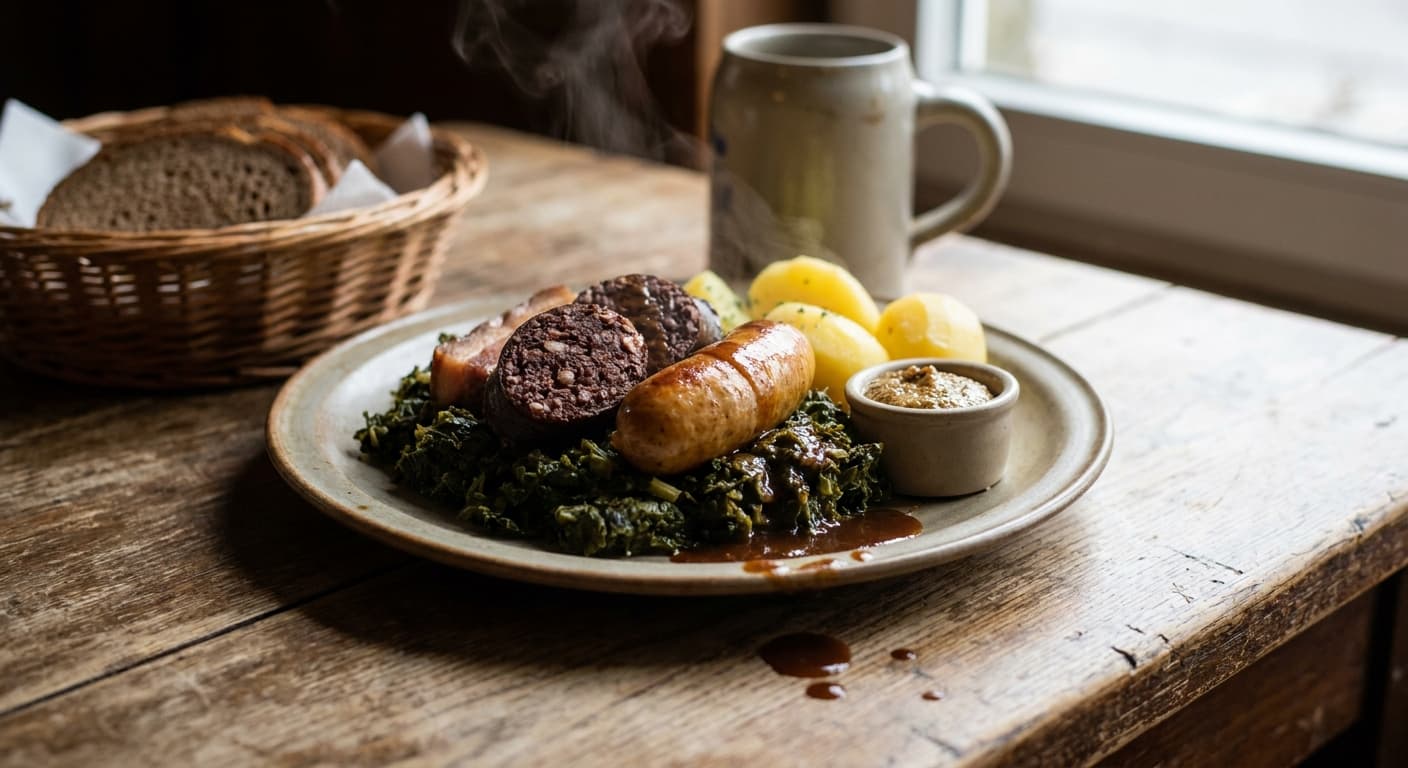
Kale with Pinkel Sausage (Grünkohl mit Pinkel) — North German Winter Stew
German · Stews · 130 min
Reviews
Cooked this recipe?
Tap the stars to rate it — that's all it takes. A few words are welcome but optional.
No ratings yet. Cooked this one? Be the first to rate it — it takes one tap.