German Bread Dumplings (Semmelknödel) — Bavarian Bread Dumplings
Semmelknödel are tender German bread dumplings made from day-old rolls, milk, eggs, onion, and parsley. A Bavarian and Austrian Alpine staple, these knödel are served with roasts, mushroom gravy, Rouladen, or Schweinshaxe.
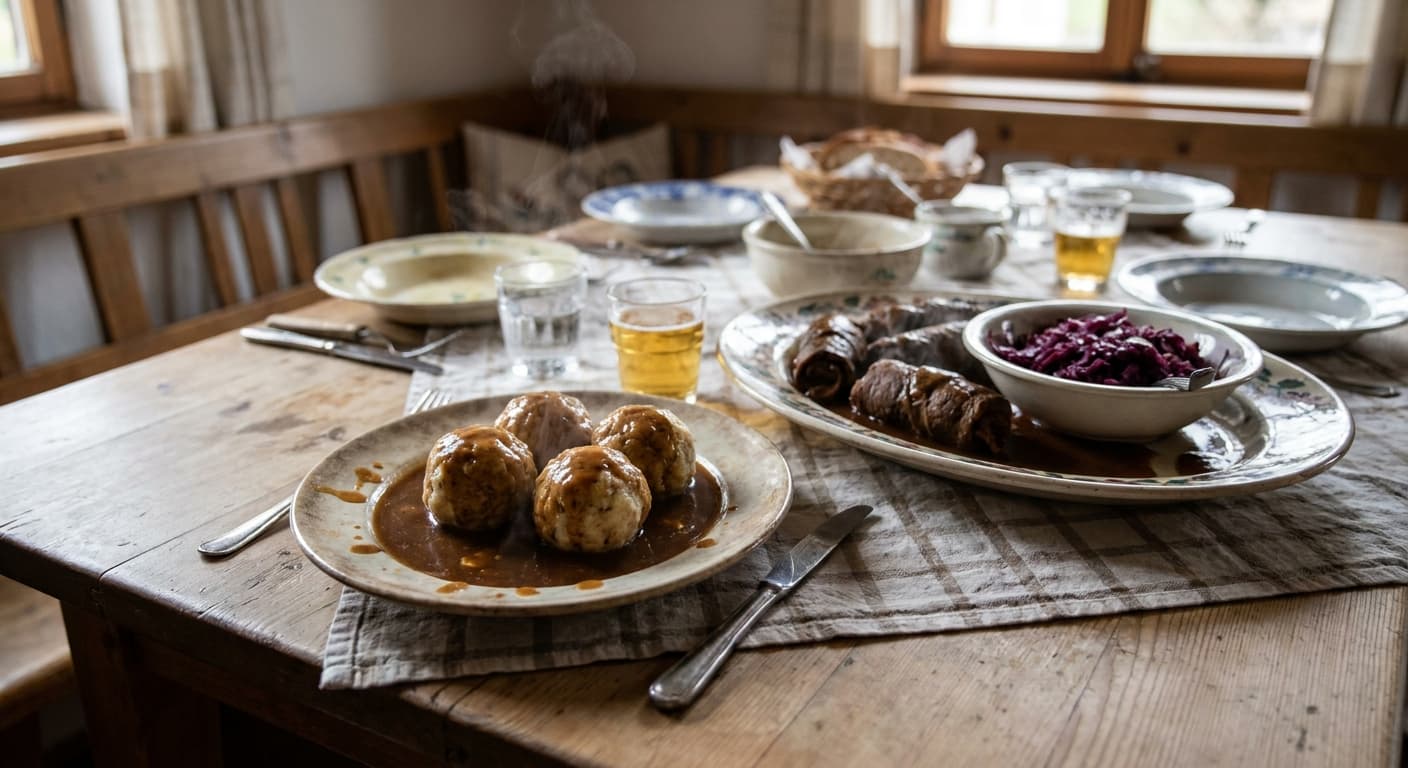
Printable Recipe Card
Servings: 4 · Total: 50 min · Difficulty: medium
Ingredients (quick list)
- 300 g day-old white bread rolls or Kaiser rolls (cut into 1.5 cm cubes)
- 275 ml whole milk (warmed to 60°C)
- 2 large eggs
- 80 g yellow onion (finely diced)
- 40 g unsalted butter
- 12 sprig flat-leaf parsley (leaves finely chopped)
- 6 g fine sea salt
- 0.5 tsp freshly ground black pepper
- 0.25 tsp ground nutmeg
- 25 g fine dry breadcrumbs (for adjusting the mixture only if needed)
- 3 l water
Steps (summary)
- Spread the cubed day-old rolls in a wide mixing bowl and pour the warm milk evenly over them. Toss gently with your hands or a…
- Melt the butter in a small skillet over medium heat and add the diced onion. Cook for 5 minutes, stirring often, until the onio…
- Add the cooked onion with its butter to the soaked bread, then add the eggs, parsley, 6 g salt, pepper, and nutmeg. Mix firmly…
- Test the mixture by pressing 2 tablespoons of it into a small ball. If it cracks and falls apart, knead the mixture for 30 seco…
- With damp hands, form the mixture into 8 dumplings, each about 75 g and roughly 6 cm wide. Roll them gently rather than tightly…
- Bring 3 l water and 18 g salt to a boil in a wide pot, then reduce the heat until the water barely trembles. Lower in the dumpl…
+ 1 more steps in the full instructions section below.
Cultural Background
Mimi Sheraton describes German dumplings as central to home cooking, and Semmelknödel show that thrift beautifully: stale rolls become a substantial side for Sunday roasts, Alpine mushroom dishes, and Bavarian tavern meals.
Equipment
💡 Tips
- Use genuinely stale bread rolls; fresh soft bread absorbs milk unevenly and makes gummy knödel.
- Never boil Semmelknödel hard. A bare simmer is the traditional technique that keeps the dumplings intact.
- For extra flavor, fry leftover sliced dumplings in butter until golden and serve them with eggs or mushrooms.
⚠️ Common Mistakes
❌ Using fresh bread
✅ Fix: Cube the bread and dry it uncovered overnight, or place it in a 120°C oven for 15 minutes and cool it before adding milk.
❌ Boiling the dumplings vigorously
✅ Fix: Keep the water at a bare simmer with small bubbles only, because strong boiling can tear the knödel apart.
❌ Adding too many breadcrumbs at once
✅ Fix: Add breadcrumbs in 5 g increments only after testing the mixture, so the dumplings stay tender rather than dense.
🧊 How to Store
Refrigerate cooked Semmelknödel in an airtight container for up to 3 days. Reheat whole dumplings in gently simmering water for 6 minutes, or slice and pan-fry in 15 g butter until crisp on both sides.
📅 Make Ahead
Shape the dumplings up to 8 hours ahead and refrigerate them covered on a tray. Let them stand at room temperature for 20 minutes before simmering so they cook evenly.
🍽️ Pairs Well With
- Rouladen
- Schweinshaxe
- Sauerbraten
- mushroom cream sauce
- red cabbage
- cucumber salad.
Regional Variations
- In Bavaria, Semmelknödel are often served with roast pork gravy or creamy mushroom sauce.
- In Austria, the same bread dumpling tradition appears with goulash, venison, and chanterelle sauce.
- Serviettenknödel uses a similar mixture shaped in a cloth or foil roll, simmered, then sliced.
Ingredients
- 300 gday-old white bread rolls or Kaiser rolls (cut into 1.5 cm cubes)
- 275 mlwhole milk (warmed to 60°C)
- 2large eggs
- 80 gyellow onion (finely diced)
- 40 gunsalted butter
- 12 sprigflat-leaf parsley (leaves finely chopped)
- 6 gfine sea salt
- 0.5 tspfreshly ground black pepper
- 0.25 tspground nutmeg
- 25 gfine dry breadcrumbs (for adjusting the mixture only if needed)
- 3 lwater
🔄 Substitutions
- day-old white bread rolls or Kaiser rolls→ day-old baguette or plain white sandwich loaf by weight
- whole milk→ 2 percent milk
- flat-leaf parsley→ curly parsley
Instructions
- 1
Spread the cubed day-old rolls in a wide mixing bowl and pour the warm milk evenly over them. Toss gently with your hands or a spoon, then cover the bowl and let the bread stand for 20 minutes so the cubes soften without becoming a paste.
- 2
Melt the butter in a small skillet over medium heat and add the diced onion. Cook for 5 minutes, stirring often, until the onion is soft and translucent but not browned, because dark onion can make Semmelknödel taste harsh.
- 3
Add the cooked onion with its butter to the soaked bread, then add the eggs, parsley, 6 g salt, pepper, and nutmeg. Mix firmly but briefly with your hands until the mixture holds together in a moist, uneven mass with visible bread pieces, which is the classic knödel texture.
- 4
Test the mixture by pressing 2 tablespoons of it into a small ball. If it cracks and falls apart, knead the mixture for 30 seconds more; if it is wet and sticky, add the breadcrumbs 5 g at a time until it can be shaped cleanly.
- 5
With damp hands, form the mixture into 8 dumplings, each about 75 g and roughly 6 cm wide. Roll them gently rather than tightly, because compacted Semmelknoedel become heavy instead of tender.
- 6
Bring 3 l water and 18 g salt to a boil in a wide pot, then reduce the heat until the water barely trembles. Lower in the dumplings and simmer for 18 to 20 minutes, keeping the water below a boil so the knödel do not break apart.
- 7
Lift the dumplings out with a slotted spoon and let them drain for 2 minutes on a warm plate. Serve immediately with gravy, mushroom sauce, Rouladen, Schweinshaxe, or a Sunday roast, spooning sauce over the dumplings just before eating.
🪪 Recipe Passport
Cultural Background
Mimi Sheraton describes German dumplings as central to home cooking, and Semmelknödel show that thrift beautifully: stale rolls become a substantial side for Sunday roasts, Alpine mushroom dishes, and Bavarian tavern meals.
Regional Variations
Researched from multiple sources and validated by the Zaffaron editorial team. Every recipe is tested for accuracy, measurements, and cultural authenticity.
📚 Sources & Cultural References
- Mimi Sheraton — The German Cookbook — (1965)
- Alan Davidson — The Oxford Companion to Food — (1999)
Sources cited by the Zaffaron editorial team during recipe research. Cultural and culinary references supporting authenticity claims.
Nutrition per serving
Pairs well with
If you enjoyed this recipe, here are a few related Zaffaron recipes to try next.
Does your family make this differently?
Every family has their own version. Maybe your grandmother adds a secret ingredient, or your aunt has a completely different technique. Preserve your family's version — with their name on it, forever.
You Might Also Like
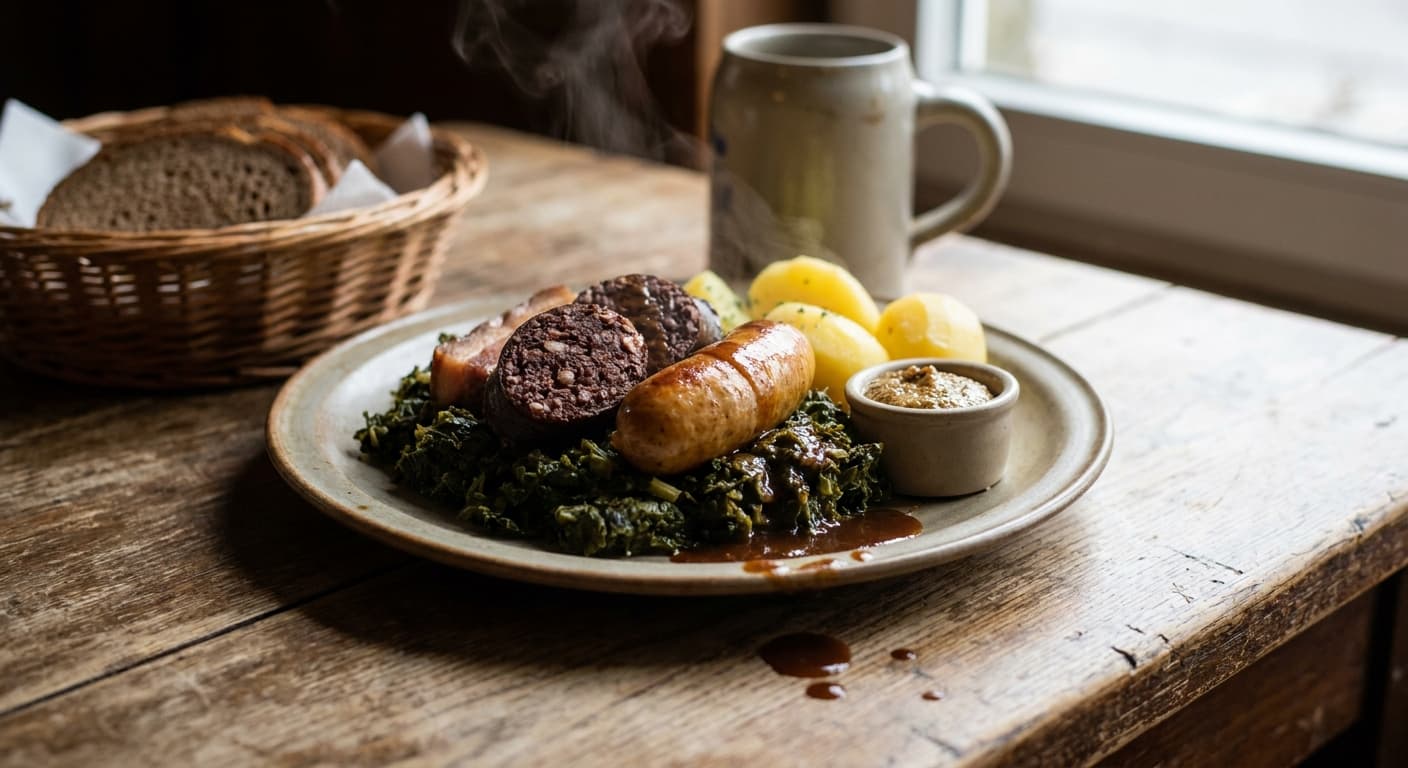
Kale with Pinkel Sausage (Grünkohl mit Pinkel) — North German Winter Stew
German · Stews · 130 min
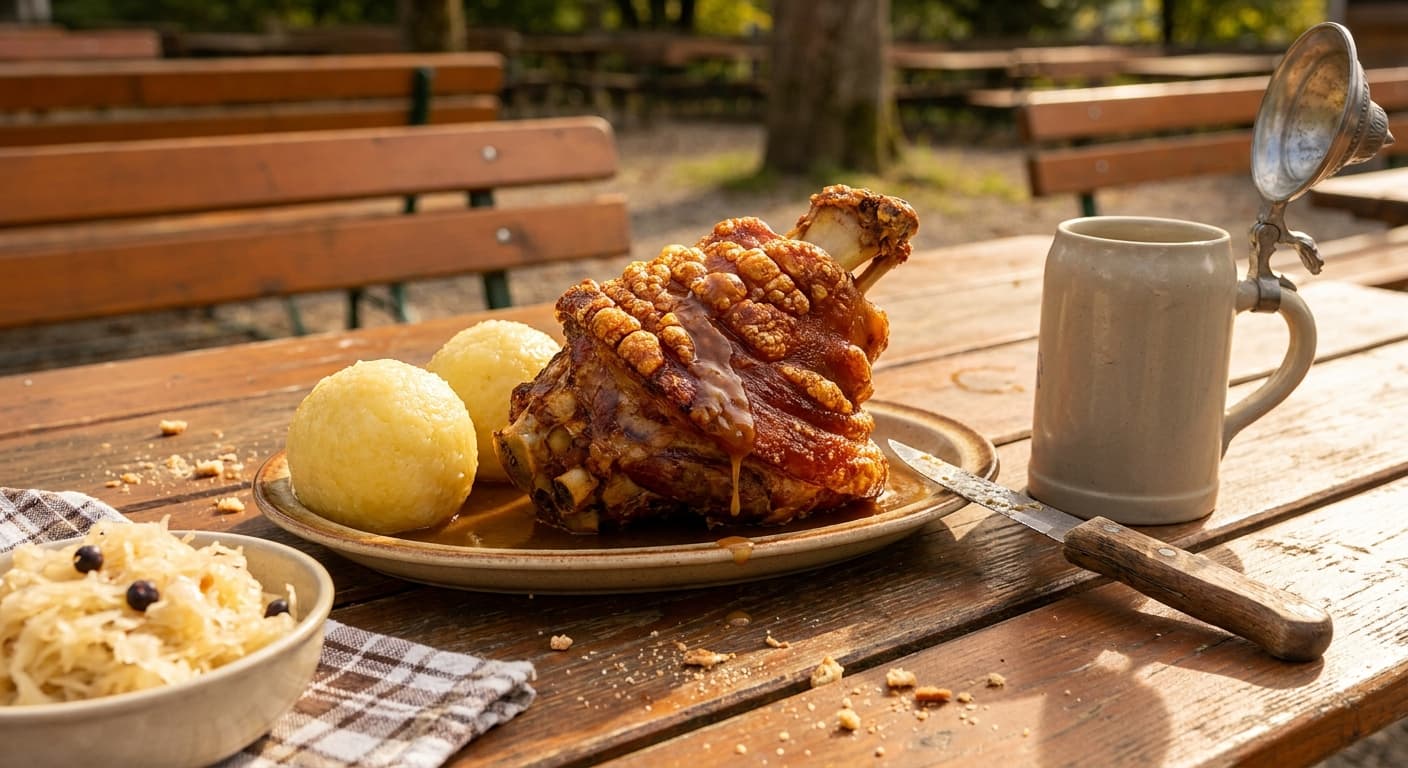
Bavarian Schweinshaxe (Schweinshaxe) — Crispy Roasted Pork Knuckle
German · Main Courses · 235 min
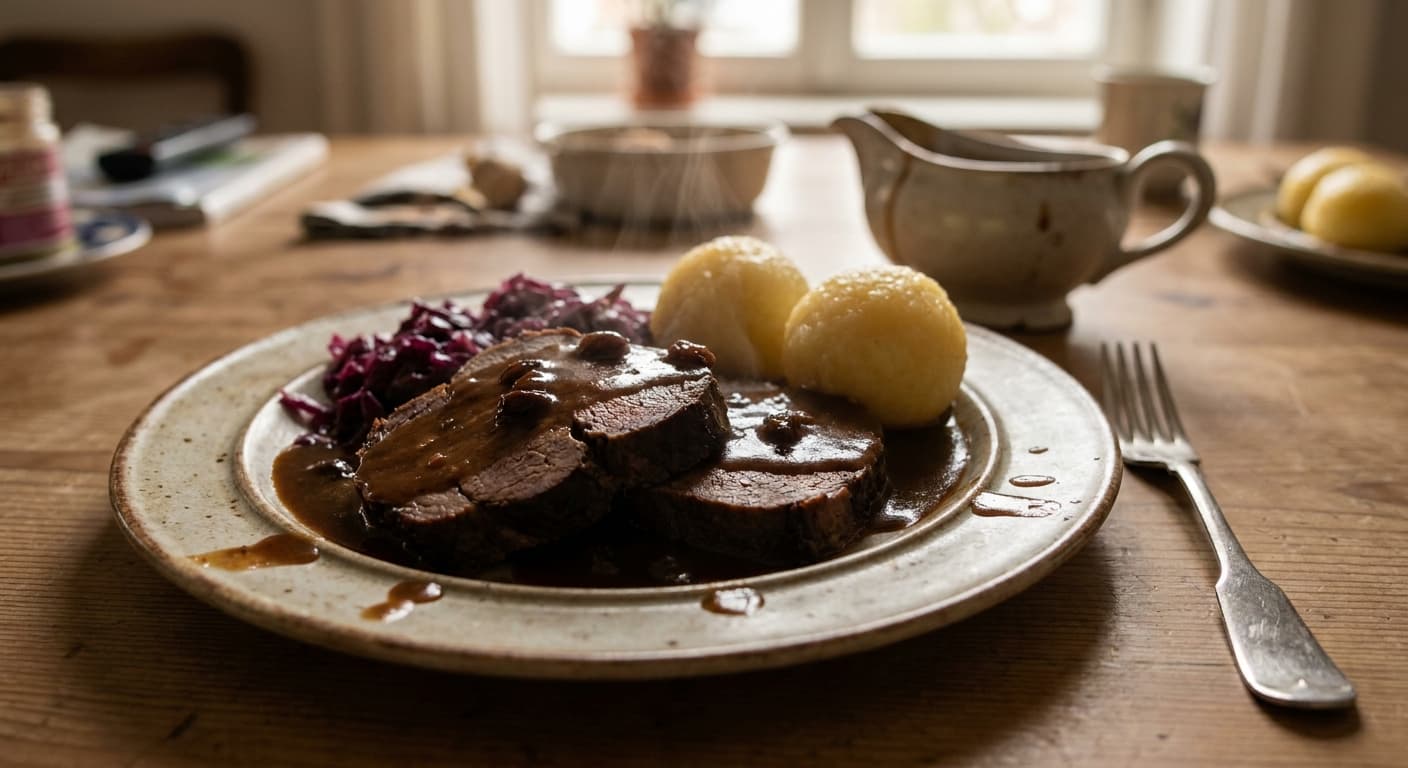
German Marinated Pot Roast (Sauerbraten) — Sweet-Sour Braised Beef
German · Main Courses · 245 min
Zagorje Mlinci (Zagorski mlinci) — Thin Baked Flatbread for Roast Juices
Croatian · Side Dishes · 73 min
Jeow Bong (ແຈ່ວບອງ) — Lao Chili Paste Relish
Laotian · Side Dishes · 60 min
Sauerbraten (Sauerbraten) — German Marinated Pot Roast
German · Main Courses · 240 min
German Potato Salad (Kartoffelsalat) — Warm Vinegar-Broth Potato Salad
German · Salads · 50 min
Spaetzle (Spätzle) — Tender German Egg Noodles
German · Side Dishes · 30 min
Reviews
Cooked this recipe?
Tap the stars to rate it — that's all it takes. A few words are welcome but optional.
No ratings yet. Cooked this one? Be the first to rate it — it takes one tap.