Portuguese Pork Sandwiches (Bifanas) — Garlicky Wine-Braised Pork Rolls
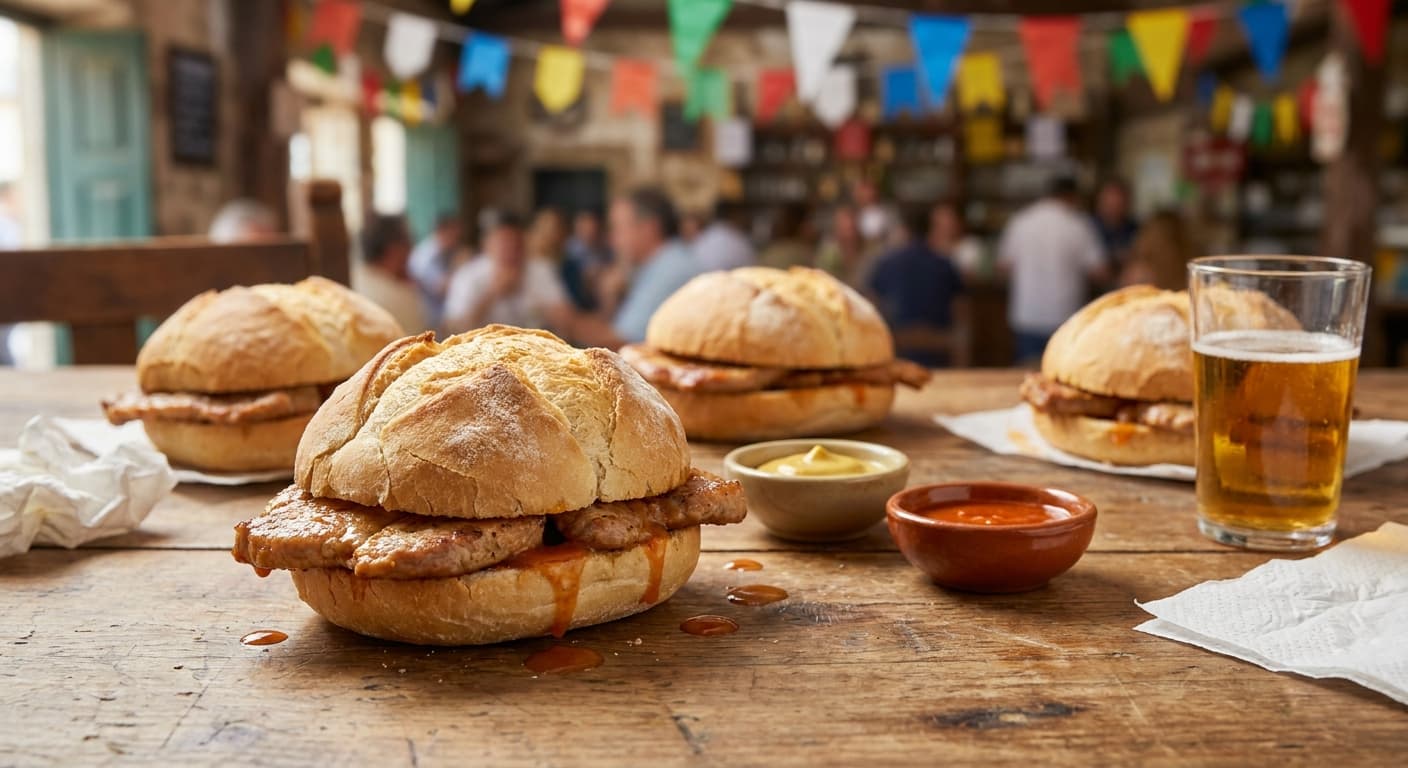
Bifanas are beloved Portuguese pork sandwiches served in cafés, markets, football grounds, and street festivals. Thin pork is marinated with garlic, wine, bay, paprika, and piri-piri, then cooked until juicy and tucked into crusty rolls.
Printable Recipe Card
Servings: 6 · Total: 60 min · Difficulty: easy
Ingredients (quick list)
- 900 g pork loin (trimmed and sliced across the grain into 3 mm cutlets)
- 6 clove garlic (finely grated)
- 240 ml dry white wine
- 30 ml white wine vinegar
- 2 tsp sweet paprika
- 2 tsp piri-piri sauce
- 2 leaf bay leaves
- 10 g fine sea salt
- 1 tsp ground black pepper
- 30 g lard
- 2 tbsp olive oil
- 6 Portuguese papo seco rolls (split but not fully separated)
+ 1 more in the full ingredients section below.
Steps (summary)
- Place the pork slices between two sheets of parchment paper and pound them lightly to an even 2 to 3 mm thickness. This helps t…
- In a nonreactive bowl, mix the garlic, white wine, vinegar, paprika, piri-piri sauce, bay leaves, salt, and black pepper. Add t…
- Remove the pork from the refrigerator 20 minutes before cooking so it loses its deep chill. Lift the slices from the marinade a…
- Heat the lard and olive oil in a wide sauté pan over medium-high heat until the fat shimmers. Sear the pork in batches for abou…
- Pour the reserved marinade into the same pan and scrape the browned bits from the base with a wooden spoon. Simmer for 6 to 8 m…
- Return all the pork and any accumulated juices to the pan, turning the slices through the garlicky sauce. Reduce the heat to me…
+ 1 more steps in the full instructions section below.
Cultural Background
Bifanas are a staple of Portuguese snack bars and popular gatherings, especially around fairs, football matches, and summer Festas Populares. Each region has its own sauce style, but the essential pleasure is thin pork in bread.
Equipment
💡 Tips
- Slice the pork very thinly; thick pork chops will not give the quick-cooked, saucy texture expected in a bifana.
- Do not discard the marinade, because it becomes the essential garlic-wine pan sauce after boiling and reducing.
- For a more tavern-style sandwich, dip the cut sides of each roll briefly into the hot sauce before filling.
⚠️ Common Mistakes
❌ Cooking thick pork slices
✅ Fix: Pound the pork to 2 to 3 mm thickness so it sears quickly and remains tender.
❌ Using the marinade without boiling it
✅ Fix: Always simmer the marinade for at least 6 minutes before returning the pork to the pan.
❌ Letting the sauce reduce until dry
✅ Fix: Keep enough sauce to moisten the rolls; add 30 to 60 ml water if the pan becomes too tight.
🧊 How to Store
Store pork and sauce together in an airtight container in the refrigerator for up to 3 days. Reheat gently in a covered skillet with 30 ml water until hot, then assemble with fresh or rewarmed rolls.
📅 Make Ahead
Marinate the pork up to 12 hours ahead and keep it refrigerated. The cooked pork and sauce can also be made 1 day ahead, then gently reheated before filling the rolls.
🍽️ Pairs Well With
- Portuguese fries
- caldo verde
- pickled vegetables
- olives
- cold beer
- extra piri-piri sauce.
Regional Variations
- Porto-style bifanas are often saucier, spicier, and sometimes simmered longer in a reddish beer-and-paprika sauce.
- Vendas Novas bifanas are known for simplicity, tender pork, and a soft roll that absorbs the garlicky juices.
- Lisbon snack-bar versions commonly lean on garlic, white wine, bay, mustard, and piri-piri served at the table.
Ingredients
- 900 gpork loin (trimmed and sliced across the grain into 3 mm cutlets)
- 6 clovegarlic (finely grated)
- 240 mldry white wine
- 30 mlwhite wine vinegar
- 2 tspsweet paprika
- 2 tsppiri-piri sauce
- 2 leafbay leaves
- 10 gfine sea salt
- 1 tspground black pepper
- 30 glard
- 2 tbspolive oil
- 6Portuguese papo seco rolls (split but not fully separated)
- 6 tbspyellow mustard
🔄 Substitutions
- pork loin→ pork leg or pork shoulder
- papo seco rolls→ crusty Portuguese-style rolls
- lard→ olive oil
Instructions
- 1
Place the pork slices between two sheets of parchment paper and pound them lightly to an even 2 to 3 mm thickness. This helps the meat cook quickly and gives the bifana its characteristic tender, flexible bite.
- 2
In a nonreactive bowl, mix the garlic, white wine, vinegar, paprika, piri-piri sauce, bay leaves, salt, and black pepper. Add the pork and turn every slice until fully coated, then cover and refrigerate for 2 hours.
- 3
Remove the pork from the refrigerator 20 minutes before cooking so it loses its deep chill. Lift the slices from the marinade and let excess liquid drip back into the bowl, but keep all of the marinade for the pan sauce.
- 4
Heat the lard and olive oil in a wide sauté pan over medium-high heat until the fat shimmers. Sear the pork in batches for about 45 seconds per side, just until lightly browned, and transfer each batch to a plate.
- 5
Pour the reserved marinade into the same pan and scrape the browned bits from the base with a wooden spoon. Simmer for 6 to 8 minutes, until the sharp wine aroma softens and the sauce reduces by about one third.
- 6
Return all the pork and any accumulated juices to the pan, turning the slices through the garlicky sauce. Reduce the heat to medium-low and simmer for 8 to 10 minutes, until the pork is cooked through, glossy, and tender.
- 7
Warm the papo seco rolls in a low oven or dry skillet, then spread each roll with 1 tablespoon of mustard. Fill each roll with several pork slices, spoon over 1 to 2 tablespoons of pan sauce, and add 0.5 teaspoon piri-piri sauce per sandwich.
🪪 Recipe Passport
Cultural Background
Bifanas are a staple of Portuguese snack bars and popular gatherings, especially around fairs, football matches, and summer Festas Populares. Each region has its own sauce style, but the essential pleasure is thin pork in bread.
Regional Variations
Researched from multiple sources and validated by the Zaffaron editorial team. Every recipe is tested for accuracy, measurements, and cultural authenticity.
📚 Sources & Cultural References
- Maria de Lourdes Modesto — Cozinha Tradicional Portuguesa — (1982)
- Jean Anderson — The Food of Portugal — (1986)
Sources cited by the Zaffaron editorial team during recipe research. Cultural and culinary references supporting authenticity claims.
Nutrition per serving
Pairs well with
If you enjoyed this recipe, here are a few related Zaffaron recipes to try next.
Does your family make this differently?
Every family has their own version. Maybe your grandmother adds a secret ingredient, or your aunt has a completely different technique. Preserve your family's version — with their name on it, forever.
You Might Also Like
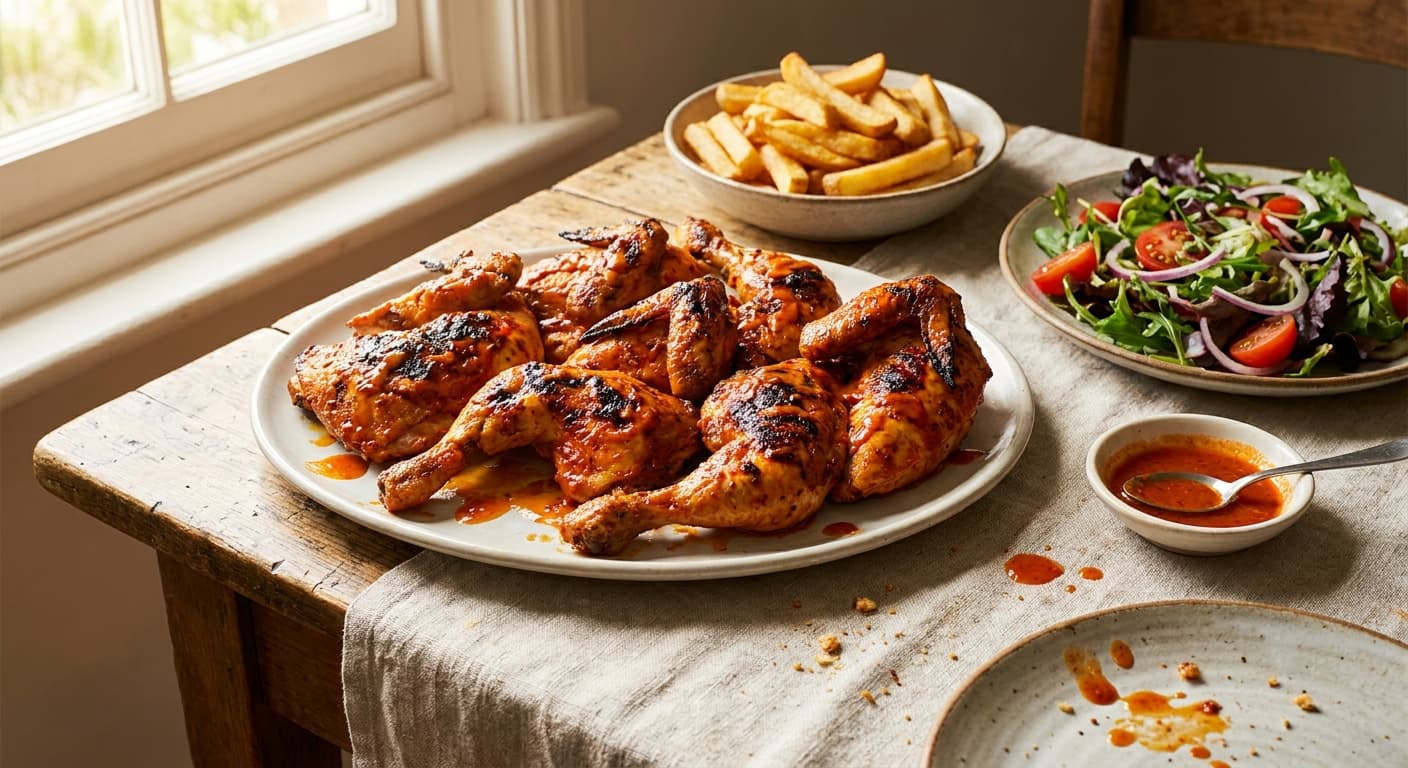
Piri-Piri Chicken (Frango Piri-Piri) — Charred Portuguese Chile-Garlic Grilled Chicken
Portuguese · Main Courses · 70 min
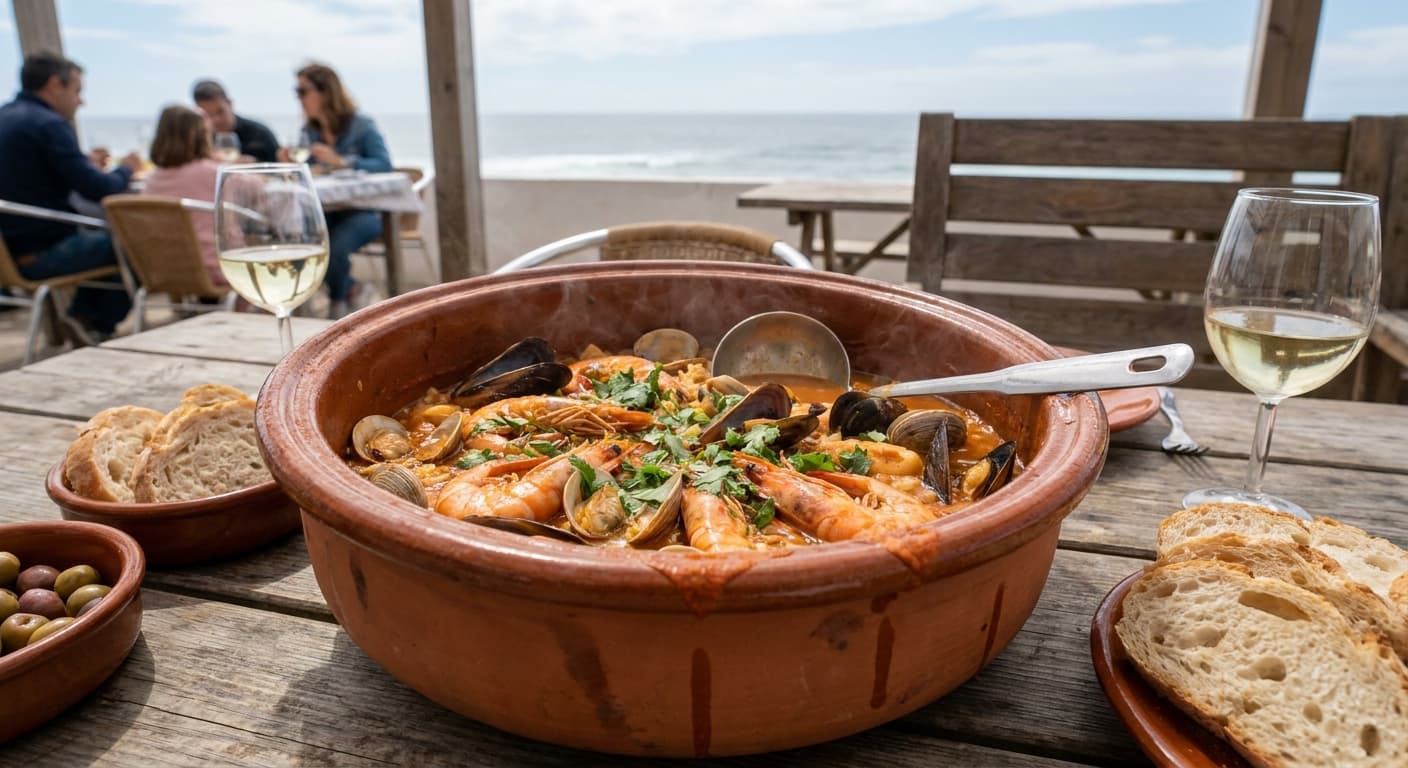
Seafood Rice (Arroz de Marisco) — Saucy Portuguese Shellfish Rice
Portuguese · Rice Dishes · 65 min

Caldo Verde (Caldo Verde) — Portuguese Kale and Potato Soup
Portuguese · Soups · 55 min
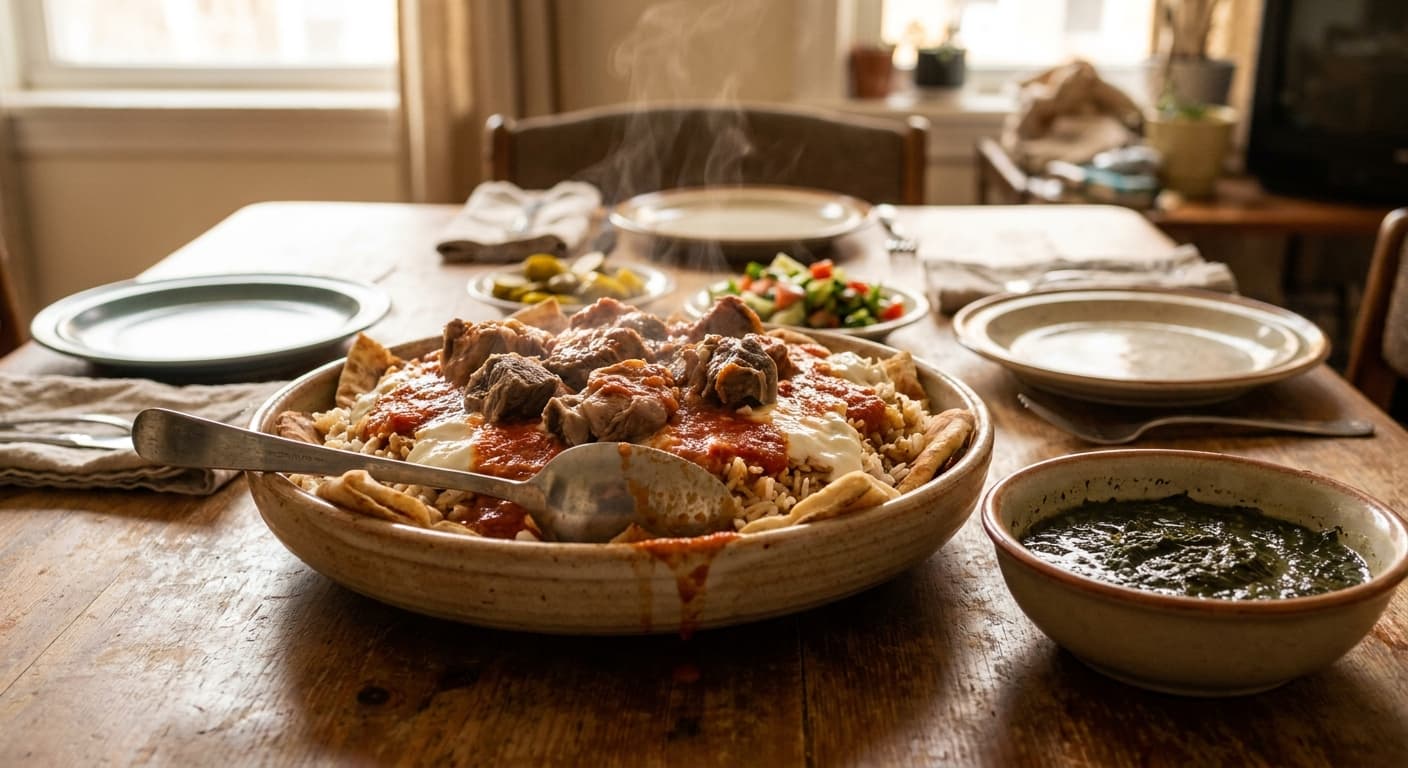
Egyptian Fatta (فتة) — Layered Meat, Rice, and Crisp Bread
Egyptian · Main Courses · 145 min
Biangbiang Noodles (油泼扯面) — Xi'an Hand-Pulled Belt Noodles
Chinese · Main Courses · 65 min
Brigadeiro (Brigadeiro) — Brazilian Chocolate Party Truffles
Brazilian · Desserts · 37 min
Coq au Vin (Coq au vin) — Burgundy Chicken Braised in Red Wine
French · Stews · 160 min
Dongpo Pork (东坡肉) — Hangzhou Red-Braised Pork Belly
Chinese · Main Courses · 205 min
Reviews
Cooked this recipe?
Tap the stars to rate it — that's all it takes. A few words are welcome but optional.
No ratings yet. Cooked this one? Be the first to rate it — it takes one tap.