Khoresht Gazaneh (خورشت گزنه) — Persian Stinging Nettle Stew
A seasonal Persian Caspian-style stew built on tender stinging nettles, lots of garlic, and softly set eggs. Bright, mineral, and deeply comforting, it is traditionally served spooned over fluffy steamed basmati rice.
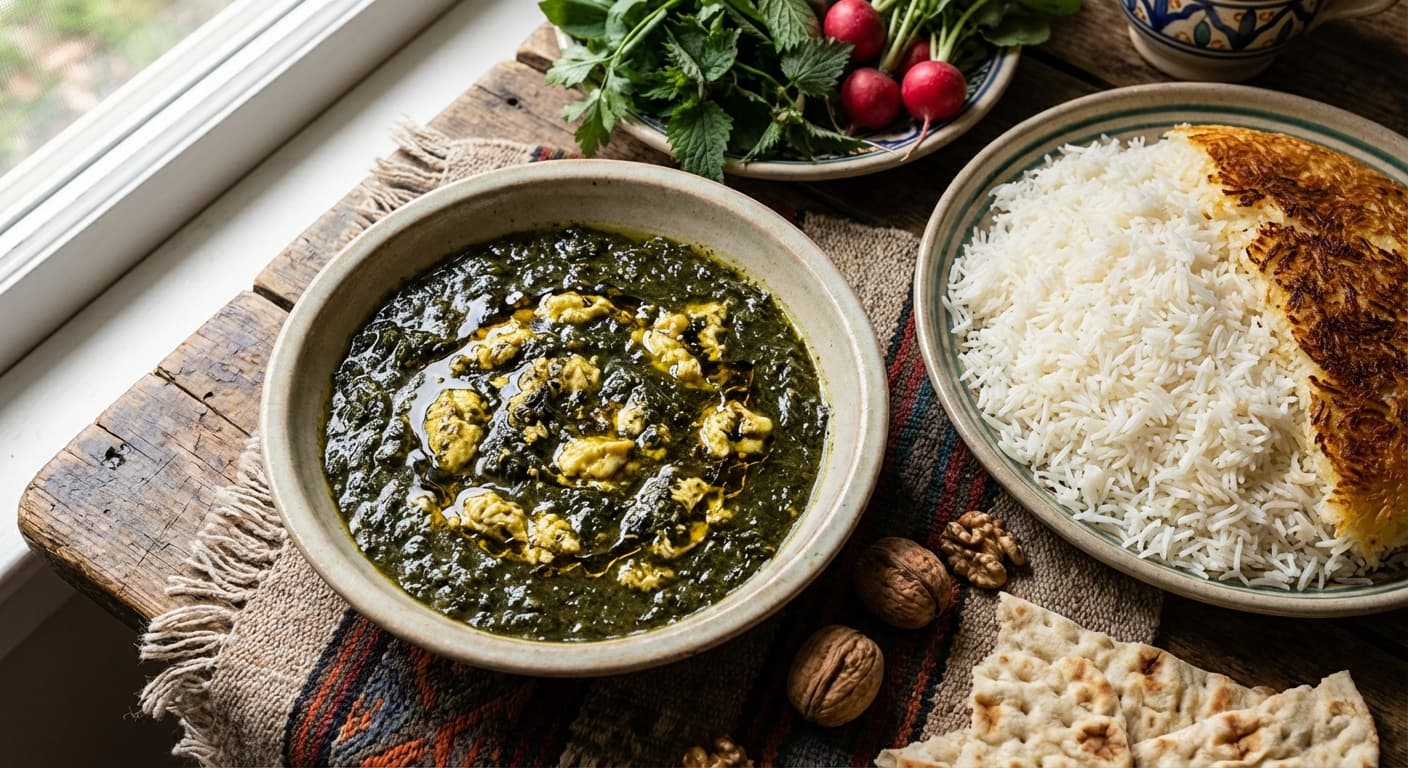
Printable Recipe Card
Servings: 4 · Total: 85 min · Difficulty: medium
Ingredients (quick list)
- 300 g Basmati rice (rinsed until water runs mostly clear)
- 18 g Sea salt (divided: 12 g for rice water, 6 g for stew)
- 2500 ml Water (for boiling rice)
- 30 ml Cooking oil (neutral oil such as sunflower or canola)
- 500 g Stinging nettle leaves (fresh, tough stems removed; wear gloves while handling)
- 45 g Garlic (finely minced (about 10–12 medium cloves))
- 2 g Black pepper (freshly ground)
- 6 large Eggs (room temperature if possible)
Steps (summary)
- Prepare the nettles safely: put on gloves, then pick through the leaves, discarding thick stems. Rinse in several changes of co…
- Start the rice: bring 2.5 liters water to a rolling boil in a large pot. Add 12 g sea salt, then add the rinsed basmati rice. B…
- Steam the rice: return the pot to medium heat and add 30 ml oil. Add 2–3 tablespoons water, then mound the drained rice into a…
- Build the stew base: while the rice steams, warm 45 ml oil in a wide sauté pan over medium heat. Add the minced garlic and cook…
- Cook the nettles: add the chopped blanched nettles to the pan and stir to coat in the garlic oil. Cook 8–10 minutes over medium…
- Set the eggs gently: reduce heat to low. Beat the eggs lightly in a bowl just until yolks and whites combine. Pour into the net…
+ 1 more steps in the full instructions section below.
Cultural Background
This seasonal nettle stew is associated with the green, foraged cooking of Iran’s Caspian regions, where wild spring plants are commonly used in home kitchens. It is typically prepared as a simple, nourishing meal that highlights fresh greens and is often served with steamed rice.
Equipment
💡 Tips
- If using very young nettles, blanching can be reduced to 1 minute; older leaves benefit from the full 2 minutes for tenderness.
- Keep the garlic pale golden; if it browns, start over with fresh oil and garlic to avoid bitterness.
- For a richer mouthfeel, cook the nettles until nearly dry before adding eggs; excess moisture can make the eggs watery.
- Soft-scrambled eggs set quickly on residual heat—turn off the burner when the eggs are still slightly underdone.
- If you cannot source nettles, use a mix of spinach and Swiss chard for a similar green, mineral profile.
⚠️ Common Mistakes
❌ Handling fresh nettles with bare hands
💡 Why: Raw nettles can sting and irritate skin before they are blanched or cooked.
✅ Fix: Wear gloves, use tongs, and blanch briefly to neutralize the sting before chopping.
❌ Browning the garlic too much
💡 Why: Deeply browned garlic can taste bitter and dominate the delicate green flavor.
✅ Fix: Cook garlic 2–3 minutes over medium heat until pale golden, then immediately add nettles to cool the pan.
❌ Overcooking the eggs until dry
💡 Why: Egg proteins tighten quickly, turning the stew crumbly instead of silky.
✅ Fix: Lower heat before adding eggs, stir slowly, and stop cooking when the curds are glossy; finish with 2 minutes of resting heat.
❌ Adding eggs while the nettle mixture is watery
💡 Why: Excess moisture makes the eggs weep liquid and dulls flavor.
✅ Fix: Cook nettles 8–10 minutes until most moisture evaporates; if needed, increase heat briefly to drive off steam before adding eggs.
🧊 How to Store
Refrigerate stew in an airtight container for up to 2 days. Reheat gently in a covered pan over low heat with 1–2 tablespoons water to prevent the eggs from toughening. Store rice separately up to 3 days; re-steam or microwave with a splash of water.
📅 Make Ahead
Blanch, squeeze, and chop the nettles up to 24 hours ahead and refrigerate in a sealed container. Cook the garlic-and-nettle base up to 1 day ahead; rewarm gently, then add eggs right before serving for the best texture.
🍽️ Pairs Well With
- Steamed basmati rice
- Plain yogurt
- Radishes and fresh herbs
- Pickled vegetables
Regional Variations
- Gilan (Caspian coastal)Often cooked very garlicky with a slightly looser texture, sometimes served with local pickles and fresh herbs alongside rice.
- Mazandaran (Caspian foothills)Commonly made thicker and drier so it can be spooned over rice; some households add more black pepper and cook the greens longer for a deeper color.
Ingredients
- 300 gBasmati rice (rinsed until water runs mostly clear)
- 18 gSea salt (divided: 12 g for rice water, 6 g for stew)
- 2500 mlWater (for boiling rice)
- 30 mlCooking oil (neutral oil such as sunflower or canola)
- 500 gStinging nettle leaves (fresh, tough stems removed; wear gloves while handling)
- 45 gGarlic (finely minced (about 10–12 medium cloves))
- 2 gBlack pepper (freshly ground)
- 6 largeEggs (room temperature if possible)
🔄 Substitutions
- Stinging nettle leaves→ 300 g spinach + 200 g Swiss chard, chopped
- Cooking oil (neutral)→ Olive oil (light or regular)
- Eggs→ 300 g firm tofu, crumbled
Instructions
- 1
Prepare the nettles safely: put on gloves, then pick through the leaves, discarding thick stems. Rinse in several changes of cold water to remove grit. Bring 500 ml water to a boil, add nettles, and blanch 2 minutes. Drain well, rinse briefly with cold water, then squeeze out excess moisture and chop finely.
- 2
Start the rice: bring 2.5 liters water to a rolling boil in a large pot. Add 12 g sea salt, then add the rinsed basmati rice. Boil 6–8 minutes, stirring once or twice, until the grains are tender on the outside but still firm in the center. Drain in a colander and rinse quickly with warm water.
- 3
Steam the rice: return the pot to medium heat and add 30 ml oil. Add 2–3 tablespoons water, then mound the drained rice into a pyramid shape. Poke 5–6 holes to the bottom with a spoon handle. Cover with a clean towel under the lid and steam on low heat for 35–40 minutes until fluffy.
- 4
Build the stew base: while the rice steams, warm 45 ml oil in a wide sauté pan over medium heat. Add the minced garlic and cook 2–3 minutes, stirring constantly, until fragrant and just turning pale golden. Do not let it brown deeply, as it will turn bitter and overpower the nettles.
- 5
Cook the nettles: add the chopped blanched nettles to the pan and stir to coat in the garlic oil. Cook 8–10 minutes over medium-low heat, stirring frequently, until the mixture turns darker green and the moisture evaporates. Season with the remaining 6 g sea salt and 2 g black pepper, then taste and adjust.
- 6
Set the eggs gently: reduce heat to low. Beat the eggs lightly in a bowl just until yolks and whites combine. Pour into the nettle mixture and stir slowly with a wooden spoon for 3–5 minutes until the eggs form soft curds and look glossy, not dry. Remove from heat and rest 2 minutes before serving.
- 7
Serve: fluff the steamed basmati rice with a fork. Spoon the warm nettle-and-egg stew over rice, or serve alongside so each person can mix to taste. For best texture, serve immediately while the eggs are still tender and the garlic aroma is fresh.
🪪 Recipe Passport
Cultural Background
This seasonal nettle stew is associated with the green, foraged cooking of Iran’s Caspian regions, where wild spring plants are commonly used in home kitchens. It is typically prepared as a simple, nourishing meal that highlights fresh greens and is often served with steamed rice.
Regional Variations
Researched from multiple sources and validated by the Zaffaron editorial team. Every recipe is tested for accuracy, measurements, and cultural authenticity.
Nutrition per serving
Pairs well with
If you enjoyed this recipe, here are a few related Zaffaron recipes to try next.
- Khoresht-e Gheimeh Nesaa (خورش قیمه نسا) – Persian Lentil & Dried Lime Stew
- Khoresht Kalam (خورشت کلم) — Creamy Persian Cabbage & Spinach Stew
- Khoresht Morgh Torsh (خورشت مرغ ترش) — Persian Sour Chicken & Split Pea Stew
- Khourek-e Goosht o Gharch (خوراک گوشت و قارچ) — Persian Baked Meat, Mushroom & Zucchini Stew
Does your family make this differently?
Every family has their own version. Maybe your grandmother adds a secret ingredient, or your aunt has a completely different technique. Preserve your family's version — with their name on it, forever.
You Might Also Like
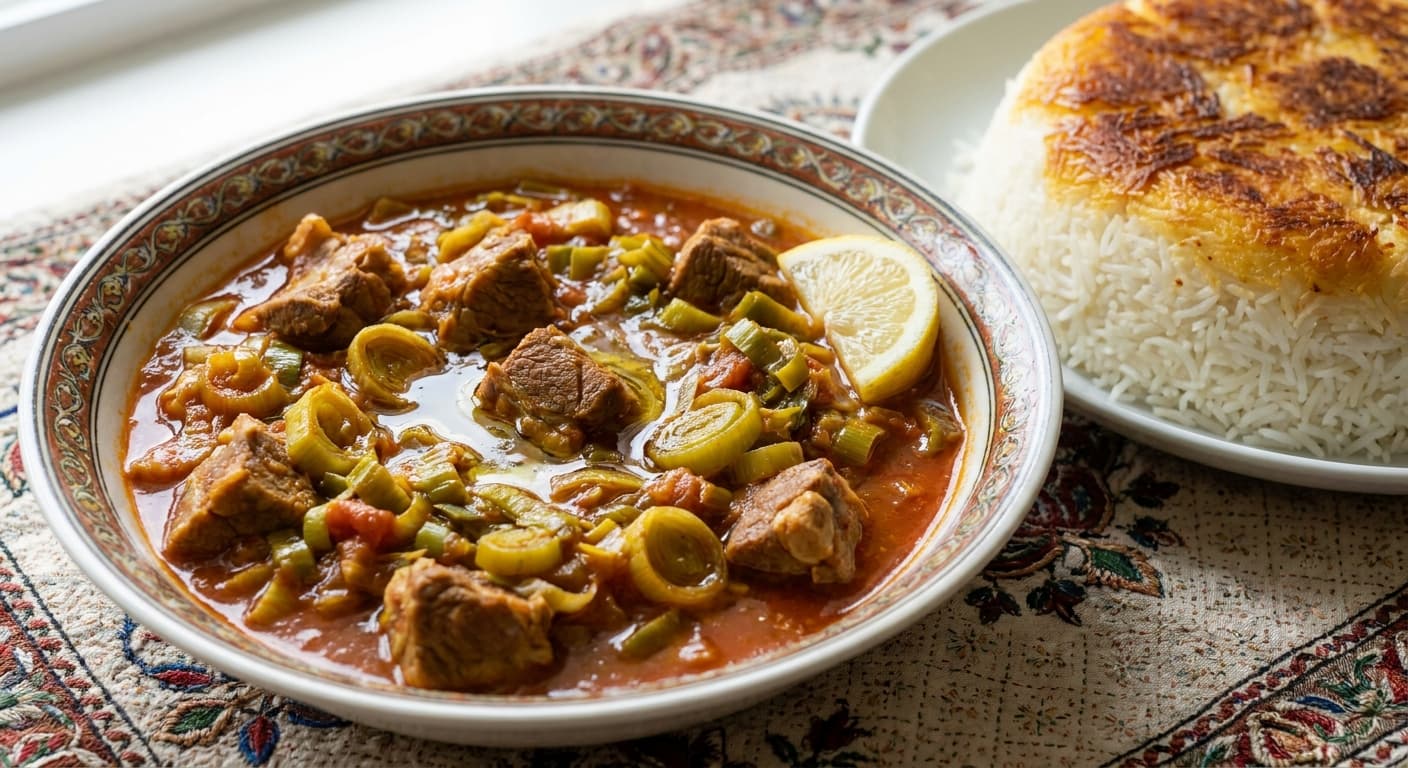
Khoresh Tareh Farangi (خورش تره فرنگی) — Persian Leek and Lamb Stew
Persian · Stews · 130 min
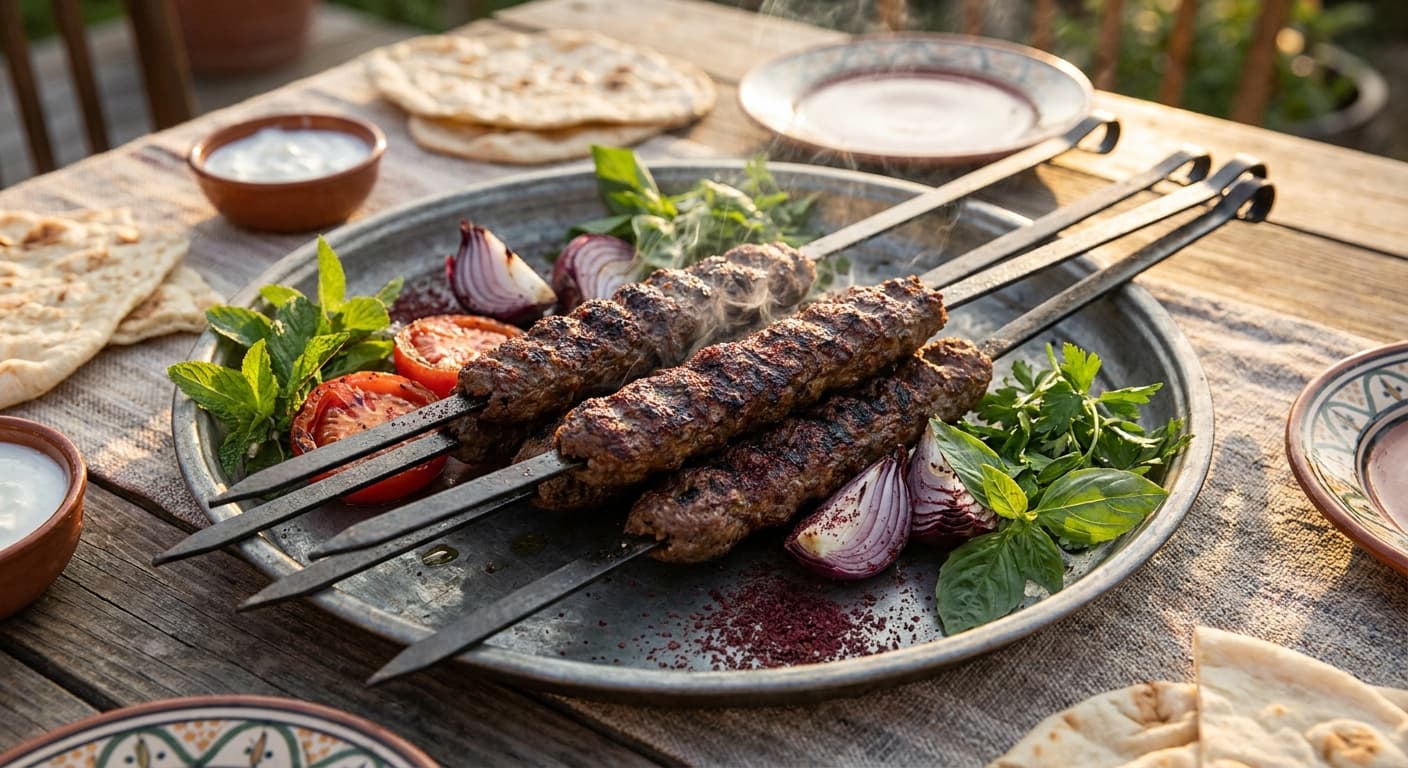
Authentic Kabab Koobideh (کباب کوبیده) — Persian Minced Lamb Skewers
Persian · Kebabs · 40 min
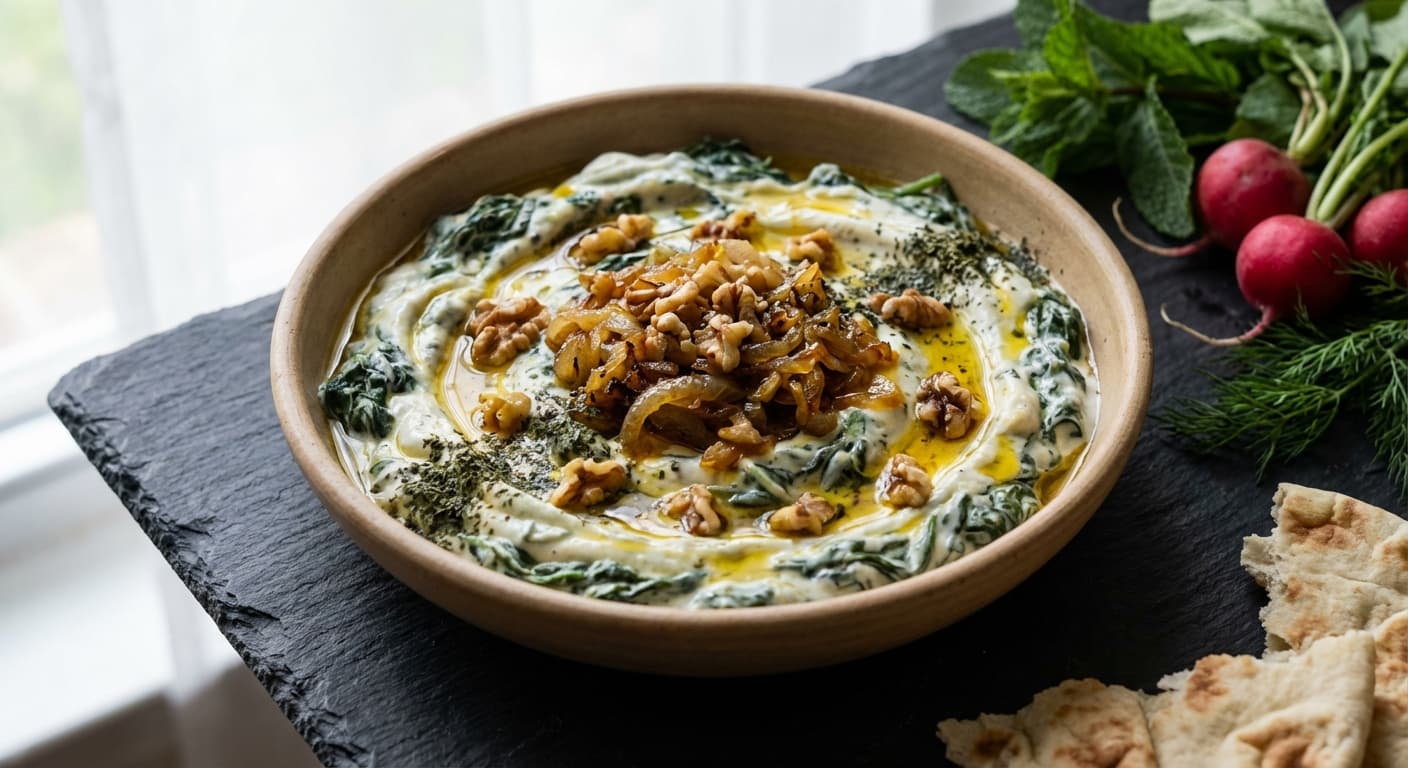
Borani Esfenaj (بورانی اسفناج) — Persian Spinach and Yogurt Dip with Saffron and Walnuts
Persian · Appetizers · 40 min
Yemeni Saltah (سلتة) — Bubbling Fenugreek Lamb Stew
Yemeni · Stews · 130 min
Cameroonian Ndolé (Ndolé) — Bitterleaf Peanut Stew with Beef and Seafood
West african · Stews · 140 min
Azerbaijani Milk Rice Porridge (Südlü Sıyıq) — Creamy Breakfast Bowl
Azerbaijani · Rice Dishes · 40 min
Turkish Menemen (Menemen) — Soft Eggs with Tomatoes and Peppers
Turkish · Main Courses · 37 min
Norwegian Lamb and Cabbage Stew (Fårikål) — Peppery Autumn National Dish
Norwegian · Stews · 170 min
Reviews
Cooked this recipe?
Tap the stars to rate it — that's all it takes. A few words are welcome but optional.
No ratings yet. Cooked this one? Be the first to rate it — it takes one tap.