Kuku Sabzi (کوکو سبزی) — Azerbaijani Herb Frittata Packed with Greens
Kuku sabzi is a beloved Azerbaijani-Persian herb frittata, intensely green and fragrant with fresh herbs. Often served for gatherings and spring celebrations, it balances bright greens with warm spices and a crisp, browned crust.
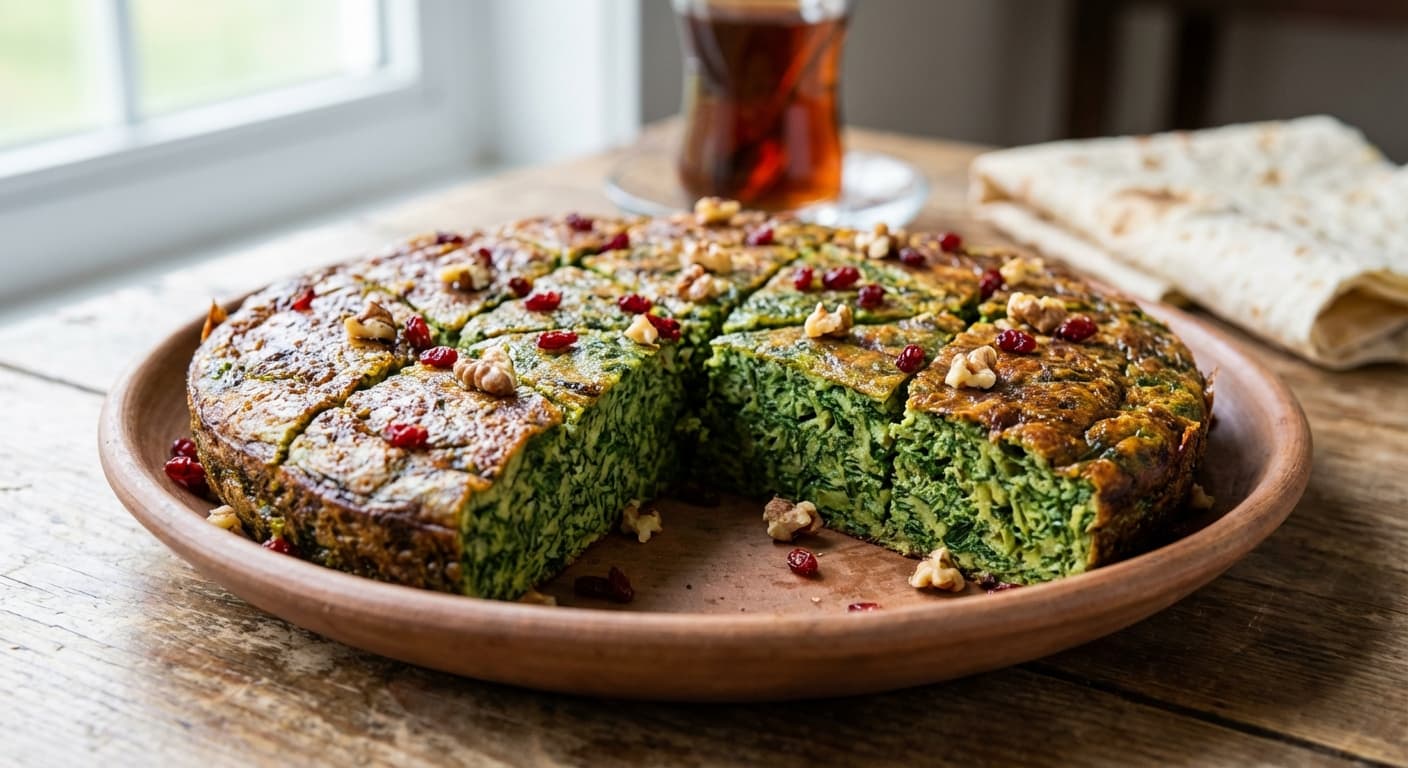
Printable Recipe Card
Servings: 6 · Total: 50 min · Difficulty: medium
Ingredients (quick list)
- 8 Eggs (Large eggs, about 50 g each without shell)
- 1 tsp Baking powder (Helps the kuku puff slightly)
- 1 tsp Fine sea salt
- 0.5 tsp Ground black pepper
- 0.5 tsp Ground turmeric (For warmth and color)
- 0.25 tsp Saffron threads (Lightly crushed)
- 30 ml Hot water (To bloom the saffron)
- 15 g All-purpose flour (About 2 tbsp; helps set and slice cleanly)
- 120 g Fresh parsley (Leaves and tender stems, finely chopped)
- 60 g Fresh cilantro (Finely chopped)
- 40 g Fresh dill (Finely chopped)
- 30 g Fresh chives (Finely chopped)
+ 6 more in the full ingredients section below.
Steps (summary)
- Bloom the saffron by stirring the crushed saffron threads into 30 ml hot water, then let it stand for 10 minutes. This step ext…
- Wash and thoroughly dry all fresh herbs, then chop them very finely so they distribute evenly and the kuku slices cleanly. Meas…
- In a large bowl, whisk the eggs for 45 seconds until the whites and yolks are fully combined and slightly foamy. Whisk in salt,…
- Fold in the chopped parsley, cilantro, dill, chives, spinach, and green onions until the mixture is thick and herb-heavy. Add t…
- Heat a 24 cm nonstick skillet over medium heat for 2 minutes, then add 30 ml of the oil and swirl to coat the bottom and sides.…
- Cover the skillet with a lid and cook for 12 minutes over medium-low heat until the edges are set and the center is mostly set…
+ 2 more steps in the full instructions section below.
Cultural Background
Across Azerbaijani and Iranian Azeri tables, kuku sabzi signals hospitality and springtime abundance, showcasing market-fresh greens. It is especially popular around seasonal celebrations, when vibrant herbs symbolize renewal and prosperity.
Equipment
💡 Tips
- Dry the herbs well after washing; aim for less than 10 g surface water clinging to the greens to avoid a watery, fragile kuku.
- For a deeper crust, cook the first side 2 minutes longer on medium-low, then flip; the extra browning adds a nutty flavor without drying the center.
- If using barberries, rinse and drain them, then pat dry; excess water can create steam pockets and soften the crust.
⚠️ Common Mistakes
❌ Using wet herbs, causing a watery center and broken slices.
✅ Fix: Spin or towel-dry herbs thoroughly, then chop; if already mixed, add 10 g flour and cook 2–3 minutes longer covered on low.
❌ Cooking on high heat, browning the outside before the center sets.
✅ Fix: Keep heat at medium-low after pouring the mixture and use a lid to gently set the center.
❌ Flipping too early, leading to cracking and sticking.
✅ Fix: Wait until edges are fully set and the center is mostly set; loosen edges with a spatula before flipping.
🧊 How to Store
Cool to room temperature within 1 hour, then refrigerate in an airtight container for up to 3 days. Reheat slices in a covered skillet over low heat for 4–5 minutes, or in a 160°C oven for 8–10 minutes to restore the crust.
📅 Make Ahead
Chop herbs up to 24 hours ahead and refrigerate tightly covered with a paper towel to absorb moisture. You can also whisk the egg-spice base 12 hours ahead; combine with herbs just before cooking for best texture.
🍽️ Pairs Well With
- Lavash
- yogurt with cucumber
- torshi
- radishes and fresh herbs
- black tea
- pickled garlic.
Regional Variations
- Baku-style: slightly thicker, often with more green onions and a darker crust from longer pan time.
- South Azerbaijan (Iranian Azeri): commonly includes barberries and walnuts, sometimes with a touch more saffron for aroma.
- Oven-baked version: baked in an oiled 22–24 cm pan at 180°C for 18–22 minutes, then briefly broiled for color.
Ingredients
- 8Eggs (Large eggs, about 50 g each without shell)
- 1 tspBaking powder (Helps the kuku puff slightly)
- 1 tspFine sea salt
- 0.5 tspGround black pepper
- 0.5 tspGround turmeric (For warmth and color)
- 0.25 tspSaffron threads (Lightly crushed)
- 30 mlHot water (To bloom the saffron)
- 15 gAll-purpose flour (About 2 tbsp; helps set and slice cleanly)
- 120 gFresh parsley (Leaves and tender stems, finely chopped)
- 60 gFresh cilantro (Finely chopped)
- 40 gFresh dill (Finely chopped)
- 30 gFresh chives (Finely chopped)
- 100 gFresh spinach (Finely chopped)
- 80 gGreen onions (White and green parts, thinly sliced)
- 1 tspDried fenugreek leaves (Optional but traditional; crush between fingers)
- 50 gWalnuts (Coarsely chopped)
- 20 gBarberries (Rinsed and drained)
- 45 mlVegetable oil (About 3 tbsp, for pan-frying)
🔄 Substitutions
- Barberries→ Dried cranberries
- Dried fenugreek leaves→ Extra dill
- All-purpose flour→ Chickpea flour
Instructions
- 1
Bloom the saffron by stirring the crushed saffron threads into 30 ml hot water, then let it stand for 10 minutes. This step extracts maximum color and aroma so the kuku tastes fragrant rather than just eggy.
- 2
Wash and thoroughly dry all fresh herbs, then chop them very finely so they distribute evenly and the kuku slices cleanly. Measure the chopped herbs after chopping to keep the herb-to-egg ratio consistent and authentically green.
- 3
In a large bowl, whisk the eggs for 45 seconds until the whites and yolks are fully combined and slightly foamy. Whisk in salt, black pepper, turmeric, baking powder, the bloomed saffron (including liquid), and the flour until no dry pockets remain.
- 4
Fold in the chopped parsley, cilantro, dill, chives, spinach, and green onions until the mixture is thick and herb-heavy. Add the walnuts and barberries and fold again, ensuring the barberries are evenly scattered for tangy bursts in every slice.
- 5
Heat a 24 cm nonstick skillet over medium heat for 2 minutes, then add 30 ml of the oil and swirl to coat the bottom and sides. Pour in the herb-egg mixture and press it gently into an even layer so it cooks uniformly from edge to center.
- 6
Cover the skillet with a lid and cook for 12 minutes over medium-low heat until the edges are set and the center is mostly set but still slightly glossy. Drizzle the remaining 15 ml oil around the edges to help crisp the crust and prevent sticking.
- 7
Flip the kuku by sliding it onto a flat plate, then invert it back into the skillet so the uncooked side faces down. Cook uncovered for 6–8 minutes until the second side is browned and the center reaches a firm, springy set.
- 8
Rest the kuku for 10 minutes before slicing so the eggs finish setting and the herbs reabsorb moisture. Cut into wedges or diamonds and serve warm or at room temperature, which is a classic way to enjoy its full herbal aroma.
🪪 Recipe Passport
Cultural Background
Across Azerbaijani and Iranian Azeri tables, kuku sabzi signals hospitality and springtime abundance, showcasing market-fresh greens. It is especially popular around seasonal celebrations, when vibrant herbs symbolize renewal and prosperity.
Regional Variations
Researched from multiple sources and validated by the Zaffaron editorial team. Every recipe is tested for accuracy, measurements, and cultural authenticity.
Nutrition per serving
Pairs well with
If you enjoyed this recipe, here are a few related Zaffaron recipes to try next.
Does your family make this differently?
Every family has their own version. Maybe your grandmother adds a secret ingredient, or your aunt has a completely different technique. Preserve your family's version — with their name on it, forever.
You Might Also Like
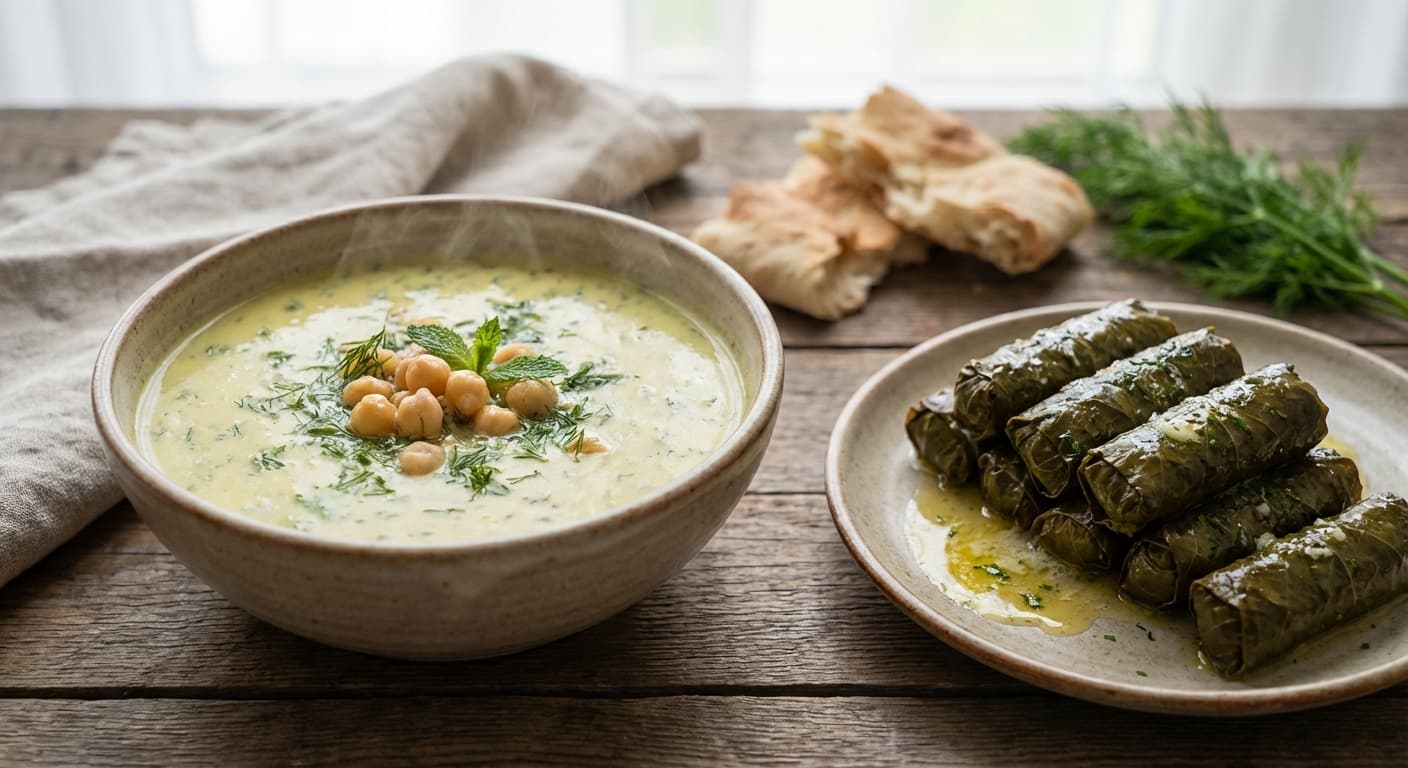
Dovga Dolma (دۆوغا دولما) — Herb dolma served with tangy yogurt soup
Azerbaijani · Main Courses · 100 min
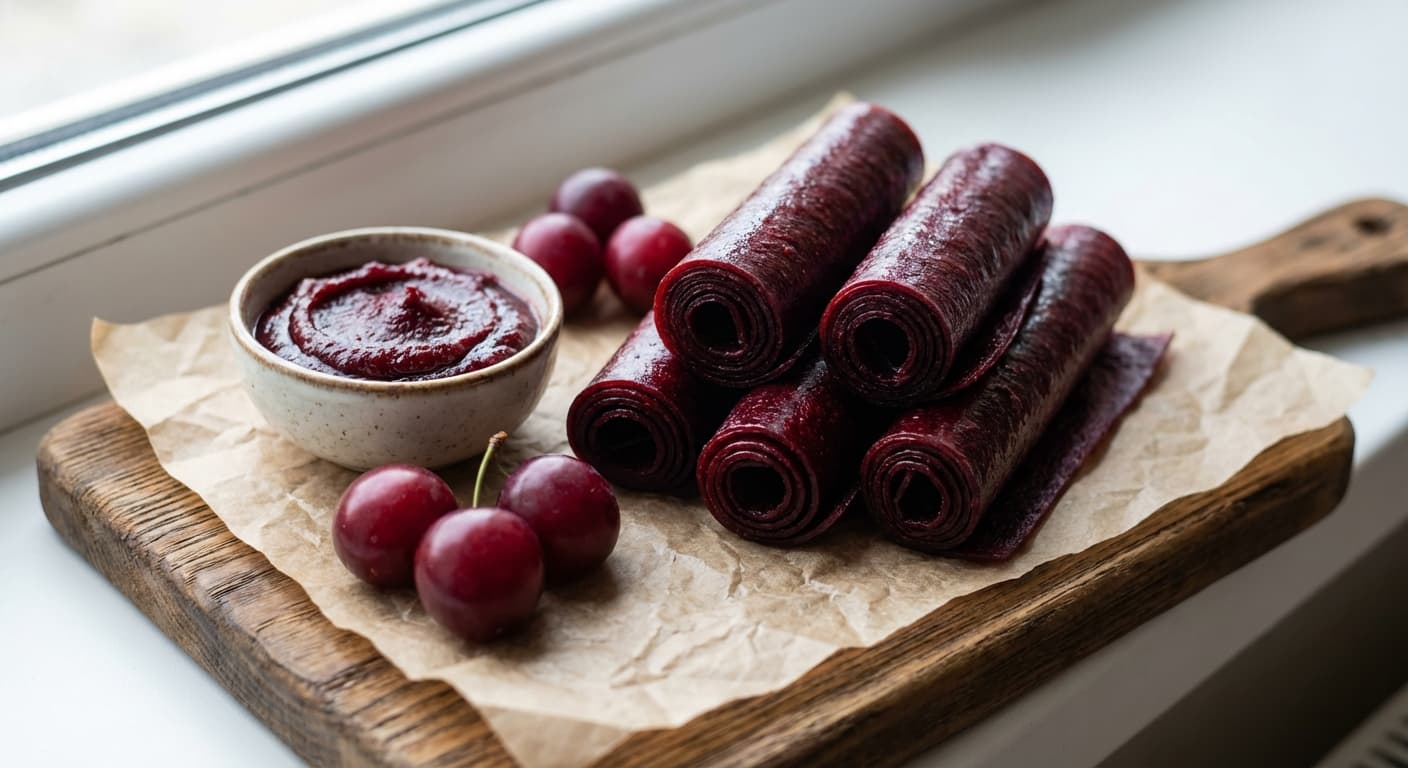
Lavashana (لواشانا) — Azerbaijani Tart Fruit Leather for Snacks and Cooking
Azerbaijani · Side Dishes · 90 min
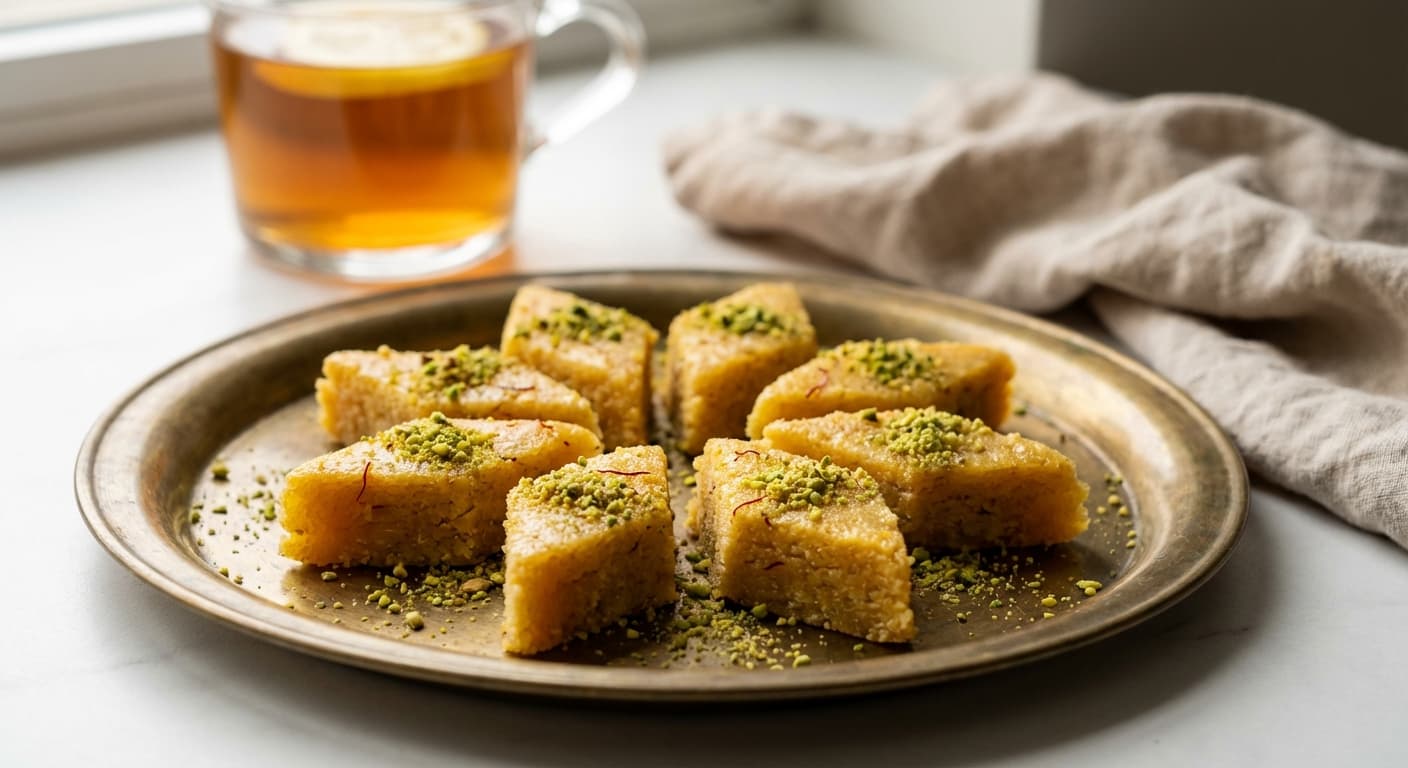
Badam Halva (بادام حلوا) — Azerbaijani Crumbly Almond Festival Sweet
Azerbaijani · Desserts · 45 min
Orromo (Оромо) — Kyrgyz Steamed Rolled Dumpling with Lamb and Pumpkin
Kyrgyz · Main Courses · 105 min
Swedish Smörgåsbord (Smörgåsbord) — Classic Buffet with Gravlax, Sill, and Köttbullar
Swedish · Main Courses · 115 min
Pkhali (ფხალი) — Georgian Spinach-Walnut Appetizer
Georgian · Appetizers · 35 min
Mıhlama (Mıhlama) — Black Sea Cornmeal and Cheese Skillet
Turkish · Main Courses · 25 min
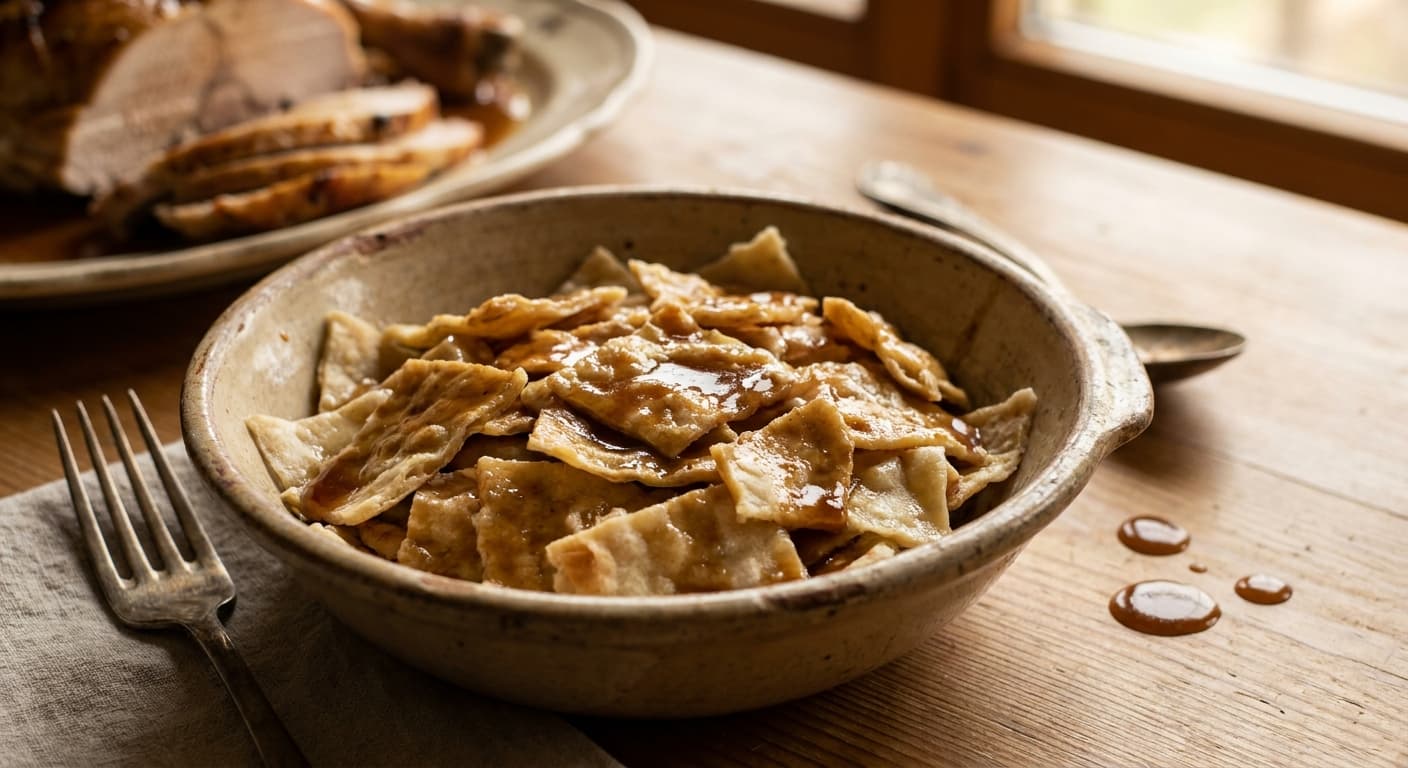
Zagorje Mlinci (Zagorski mlinci) — Thin Baked Flatbread for Roast Juices
Croatian · Side Dishes · 73 min
Reviews
Cooked this recipe?
Tap the stars to rate it — that's all it takes. A few words are welcome but optional.
No ratings yet. Cooked this one? Be the first to rate it — it takes one tap.