Meloui (ملوي) — Moroccan Spiral-Layered Pan-Fried Flatbread
Meloui is a beloved Moroccan pan-fried flatbread shaped into spirals and folded into delicate layers. Often served at breakfast or tea time, it’s crisp outside, tender within, and perfect with honey, butter, or savory fillings.
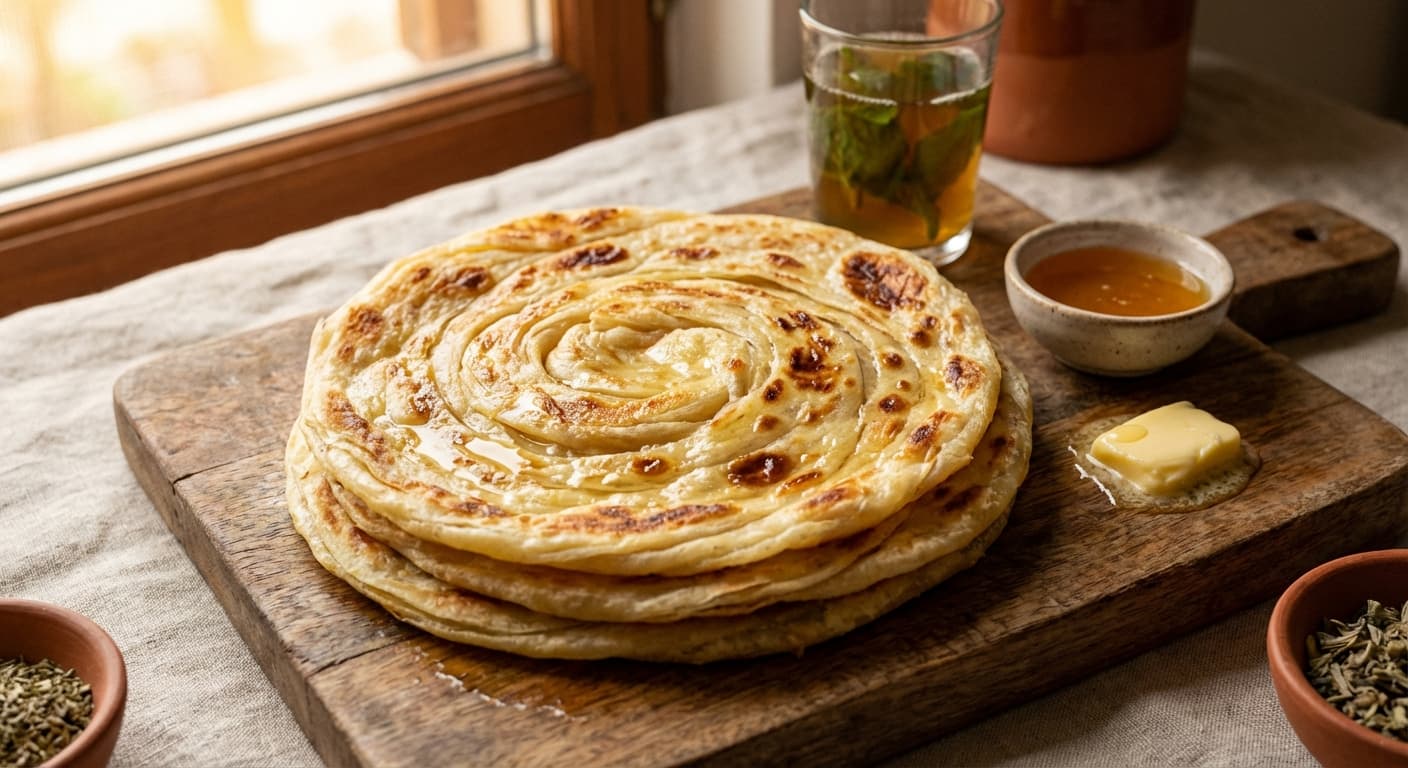
Printable Recipe Card
Servings: 6 · Total: 60 min · Difficulty: medium
Ingredients (quick list)
- 360 g all-purpose flour (plus 20 g extra for dusting)
- 120 g fine semolina (also used for shaping)
- 6 g granulated sugar
- 8 g fine sea salt
- 4 g instant yeast
- 300 ml warm water (about 38–40°C)
- 30 ml neutral oil (for the dough)
- 80 g unsalted butter (melted and cooled slightly)
Steps (summary)
- Combine the flour, fine semolina, sugar, salt, and instant yeast in a large bowl and whisk until evenly mixed. Add the warm wat…
- Knead the dough for 10 minutes by hand (or 7 minutes in a stand mixer on medium-low) until it becomes smooth, elastic, and only…
- Lightly oil your hands and the bowl, then place the dough inside and cover. Rest for 15 minutes so the gluten relaxes, which ma…
- Divide the dough into 6 equal pieces (about 150 g each) and shape each into a tight ball. Coat each ball with a thin film of oi…
- Mix the melted butter and 60 ml neutral oil in a small bowl to create your lamination fat. Set a wide work surface and lightly…
- Working with one dough ball at a time, press it into a small disc and begin stretching it outward with oiled fingertips. Contin…
+ 6 more steps in the full instructions section below.
Cultural Background
In Morocco, meloui is a staple of home kitchens and neighborhood bakeries, especially for breakfast and afternoon tea. Its spiral shape and laminated layers reflect Maghrebi flatbread traditions where careful handwork turns simple flour into celebratory comfort food.
Equipment
💡 Tips
- Resting twice is essential: 15 minutes after kneading and 15 minutes after portioning makes the dough stretch thin without tearing.
- Keep your hands and surface lightly oiled rather than heavily floured to preserve tenderness and prevent dry, tough layers.
- Cook over steady medium heat; if the bread browns too fast, lower the heat and extend cooking so the inner layers cook through.
⚠️ Common Mistakes
❌ Dough tears while stretching and won’t go thin.
✅ Fix: Rest the dough 10 more minutes and use more oil on hands; stretch gradually from the center outward instead of pulling the edges hard.
❌ Bread browns quickly but feels raw or gummy inside.
✅ Fix: Lower to medium-low heat and cook longer, flipping more often so heat penetrates the layers without scorching.
❌ Layers fuse and the bread turns bready rather than flaky.
✅ Fix: Use the full butter-oil amount and sprinkle semolina evenly; roll the coil snugly so the lamination is defined.
🧊 How to Store
Cool completely, then store meloui in an airtight container at room temperature for up to 24 hours or refrigerate up to 3 days. Reheat on a dry skillet over medium-low for 1–2 minutes per side, or wrap in foil and warm at 160°C for 8–10 minutes to refresh the layers.
📅 Make Ahead
Shape the spirals and keep them covered and lightly oiled in the refrigerator for up to 18 hours. Bring to room temperature for 30 minutes before pressing and pan-frying so the layers relax and cook evenly.
🍽️ Pairs Well With
- Honey
- softened butter
- mint tea
- amlou
- olives
- fresh cheese
- harira.
Regional Variations
- Some Moroccan households enrich the lamination with more butter for a more brioche-like richness, especially when serving with honey.
- In parts of the Maghreb, a similar layered flatbread is made thinner and larger on a griddle, then folded rather than tightly coiled for a different pull-apart texture.
- Savory versions may include a thin layer of spiced onion or herbs before coiling, turning meloui into a snack bread rather than a sweet accompaniment.
Ingredients
- 360 gall-purpose flour (plus 20 g extra for dusting)
- 120 gfine semolina (also used for shaping)
- 6 ggranulated sugar
- 8 gfine sea salt
- 4 ginstant yeast
- 300 mlwarm water (about 38–40°C)
- 30 mlneutral oil (for the dough)
- 80 gunsalted butter (melted and cooled slightly)
🔄 Substitutions
- fine semolina→
- unsalted butter→
Instructions
- 1
Combine the flour, fine semolina, sugar, salt, and instant yeast in a large bowl and whisk until evenly mixed. Add the warm water and 30 ml neutral oil, then stir until a shaggy dough forms and no dry flour remains.
- 2
Knead the dough for 10 minutes by hand (or 7 minutes in a stand mixer on medium-low) until it becomes smooth, elastic, and only slightly tacky. If it feels wet and sticky after kneading, add 10 g flour at a time (up to 30 g) and knead again until manageable.
- 3
Lightly oil your hands and the bowl, then place the dough inside and cover. Rest for 15 minutes so the gluten relaxes, which makes stretching easier and prevents tearing.
- 4
Divide the dough into 6 equal pieces (about 150 g each) and shape each into a tight ball. Coat each ball with a thin film of oil and place on an oiled tray, then cover and rest for 15 minutes to relax again.
- 5
Mix the melted butter and 60 ml neutral oil in a small bowl to create your lamination fat. Set a wide work surface and lightly oil it, then keep the 60 g semolina nearby for sprinkling as you shape.
- 6
Working with one dough ball at a time, press it into a small disc and begin stretching it outward with oiled fingertips. Continue stretching until you have a very thin sheet (about 35–40 cm wide) that is nearly translucent, and keep the edges as even as possible.
- 7
Brush or drizzle about 1 1/2 tbsp (roughly 20 ml) of the butter-oil mixture over the entire surface of the dough sheet. Sprinkle about 10 g semolina evenly across the top to create separation between layers and help crisping.
- 8
Fold the dough sheet into thirds like a letter to form a long strip, then lightly brush the top with a little more butter-oil mixture. Starting from one end, roll the strip into a tight coil to form a spiral, then tuck the end underneath so it does not unravel.
- 9
Place the spiral seam-side down on the oiled tray and repeat with the remaining dough balls. Cover and rest the spirals for 10 minutes so they flatten without springing back and the layers settle.
- 10
Heat a heavy skillet or griddle over medium heat for 3 minutes, then lightly grease it with about 5 ml oil. Gently press one spiral with your fingertips into a round about 18–20 cm wide, using a light dusting of semolina only if it sticks.
- 11
Cook the meloui for 3–4 minutes on the first side until golden with darker toasted spots and the layers begin to puff slightly. Flip and cook 3–4 minutes more, then flip once or twice for 30–60 seconds per side to deepen color without burning.
- 12
Transfer to a rack or clean towel and cover loosely so steam doesn’t soften the crust too much. Repeat cooking with the remaining spirals, greasing the pan with about 5 ml oil between breads for even browning and crisp edges.
🪪 Recipe Passport
Cultural Background
In Morocco, meloui is a staple of home kitchens and neighborhood bakeries, especially for breakfast and afternoon tea. Its spiral shape and laminated layers reflect Maghrebi flatbread traditions where careful handwork turns simple flour into celebratory comfort food.
Regional Variations
Researched from multiple sources and validated by the Zaffaron editorial team. Every recipe is tested for accuracy, measurements, and cultural authenticity.
Nutrition per serving
Pairs well with
If you enjoyed this recipe, here are a few related Zaffaron recipes to try next.
- Moroccan Carrot Salad (سلطة الجزر المغربية) — Spiced Carrot Salad with Cumin and Orange Blossom
- Moroccan Orange and Cinnamon Salad (سلطة البرتقال بالقرفة) — Fresh citrus dessert with floral spice
- Rfissa (رفيسة) — Moroccan Shredded Flatbread with Chicken and Lentils
- Tagine of Fish Chermoula (شرمولة) — Moroccan Baked Fish with Herb and Spice Paste
Does your family make this differently?
Every family has their own version. Maybe your grandmother adds a secret ingredient, or your aunt has a completely different technique. Preserve your family's version — with their name on it, forever.
You Might Also Like
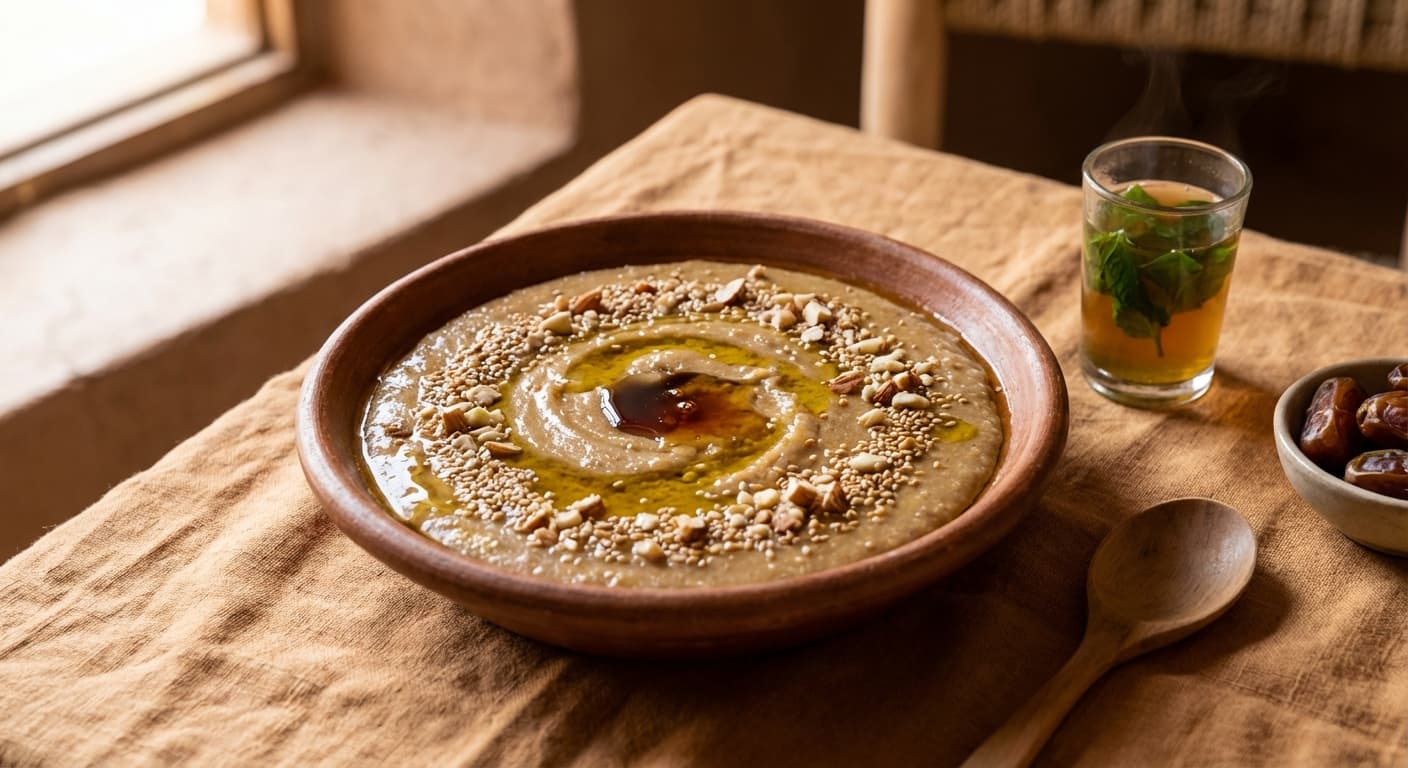
Zemita (زمّيطا) — Moroccan Roasted Flour Energy Porridge
Moroccan · Desserts · 30 min
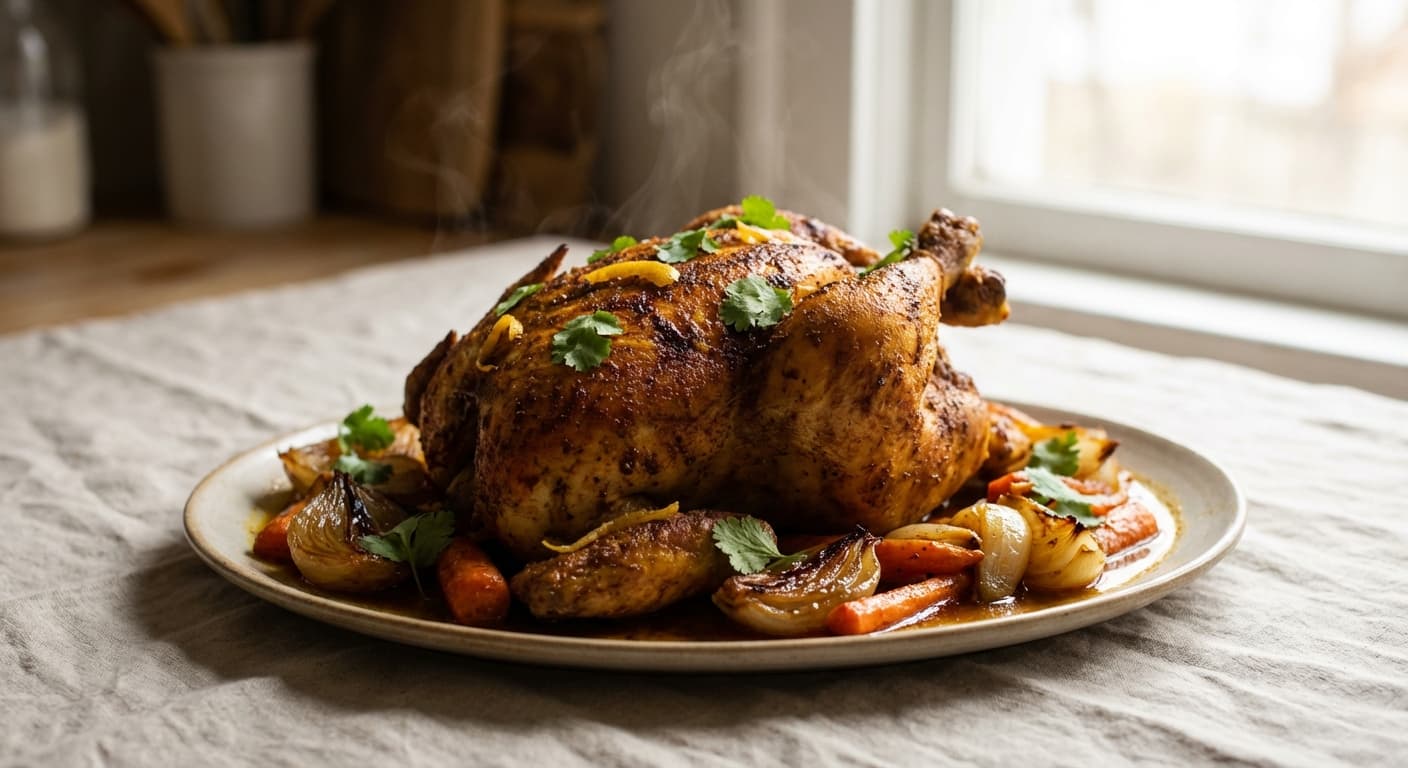
Ras El Hanout Chicken (رأس الحانوت) — Moroccan Spiced Roasted Chicken with Aromatic Blend
Moroccan · Main Courses · 95 min
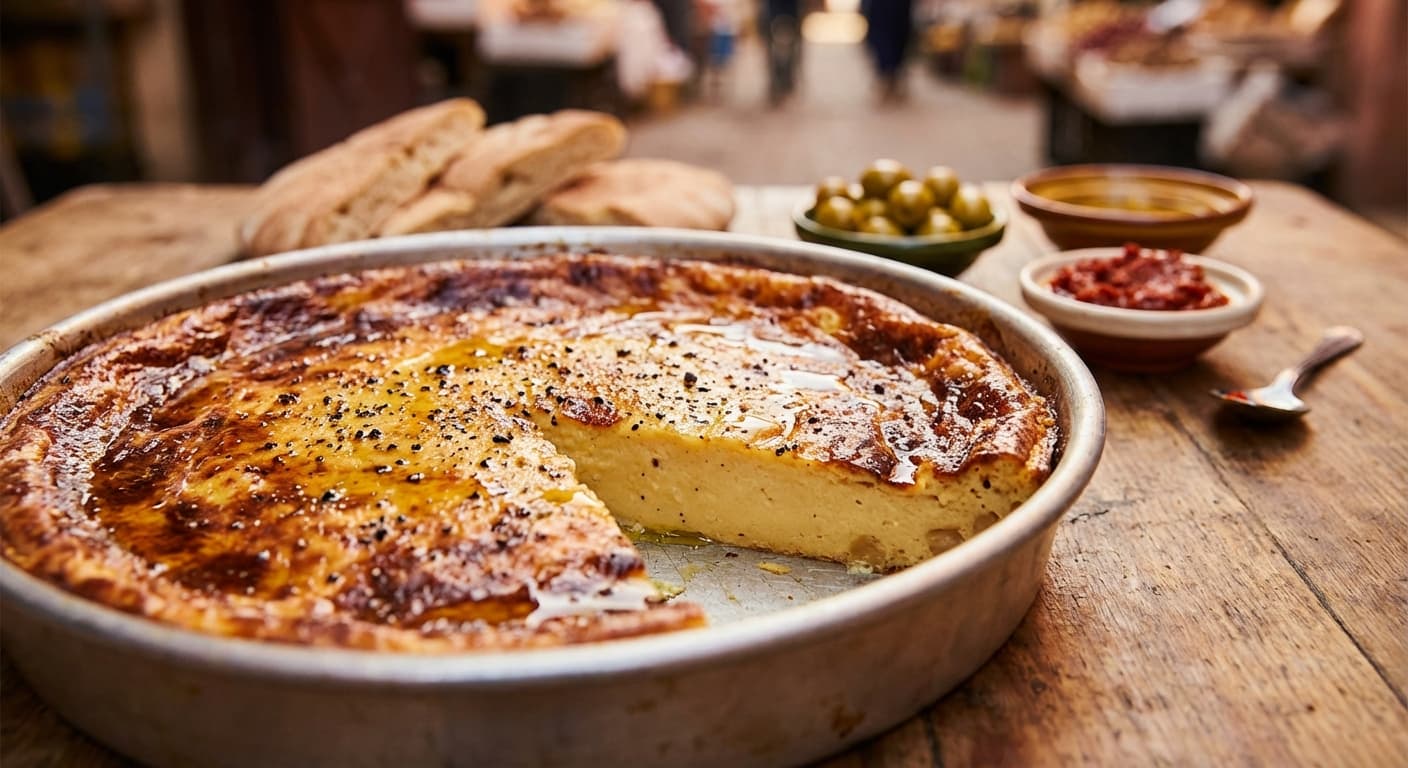
Calentica (كالنتيكا) — Moroccan Chickpea Flan Street Food, Peppery and Warm
Moroccan · Side Dishes · 60 min
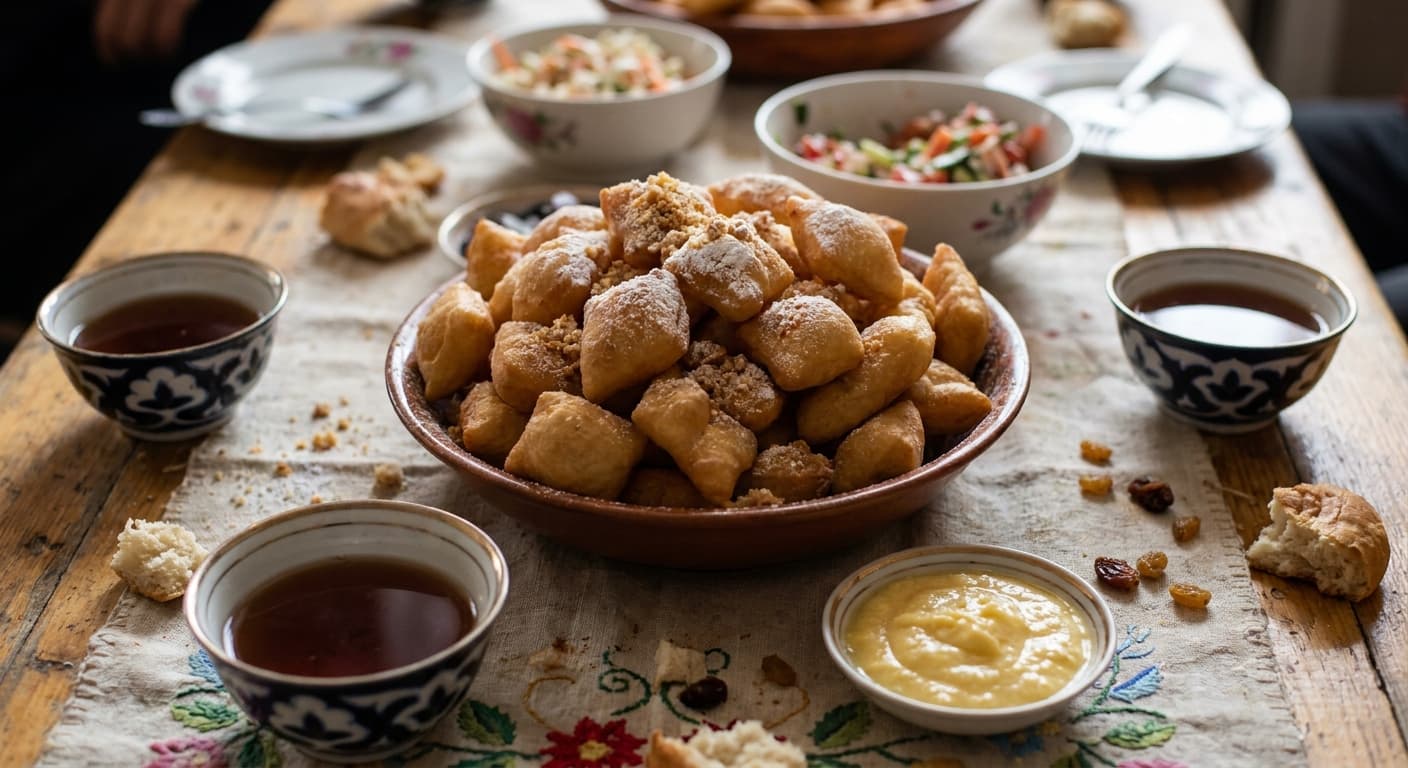
Boorsok (Боорсок) — Kyrgyz Fried Celebration Bread
Kyrgyz · Breads · 120 min
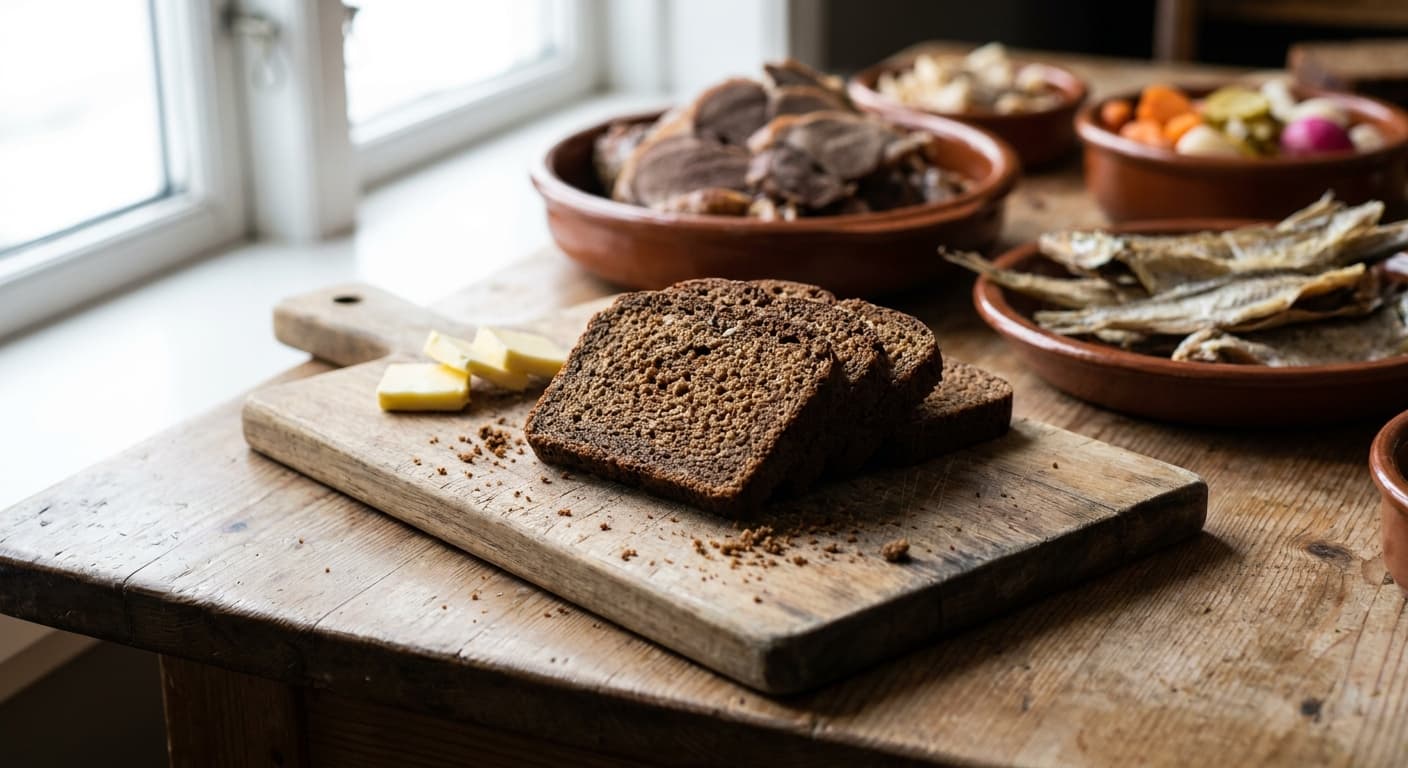
Icelandic Rye Bread (Rúgbrauð) — Dense Geothermal-Style Rye Loaf
Icelandic · Breads · 440 min
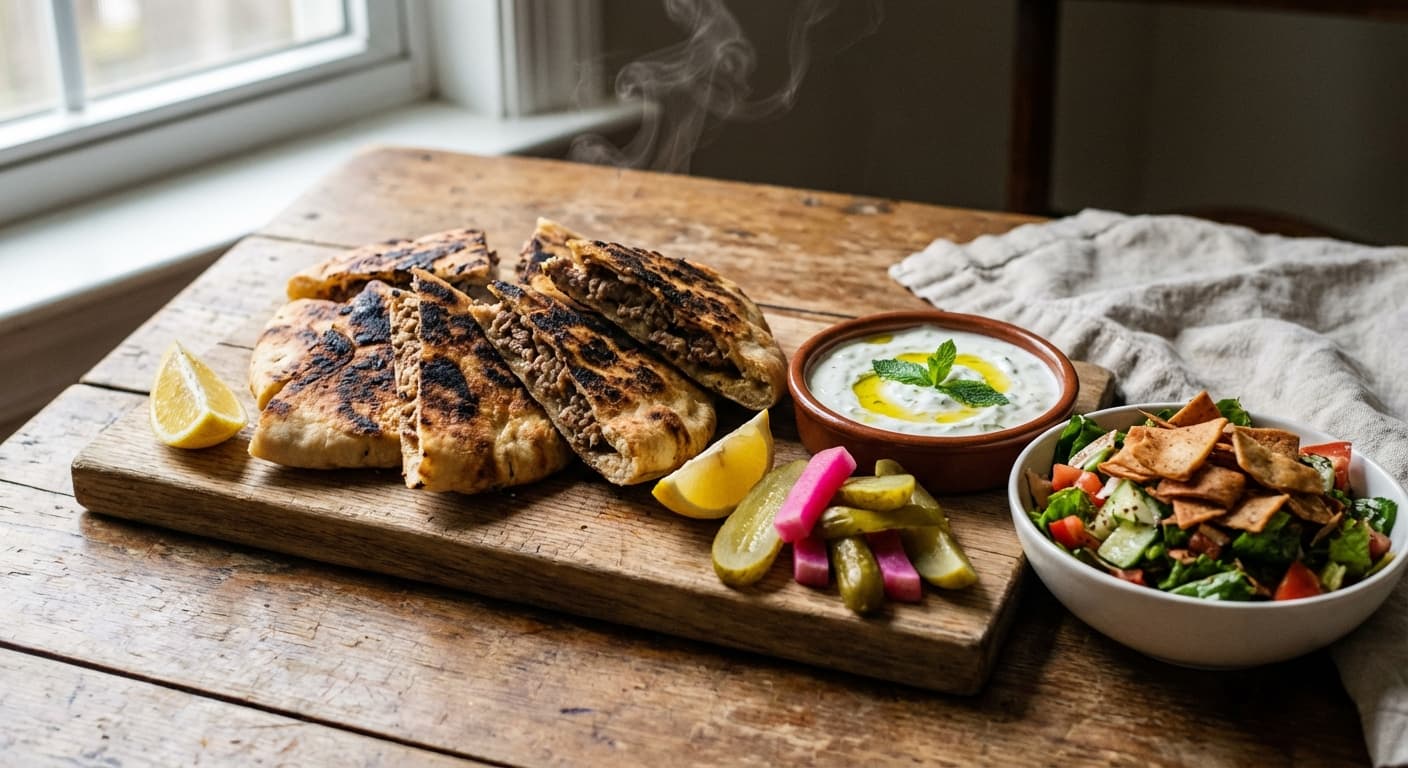
Arayess (عرايس) — Lebanese Grilled Stuffed Pita with Spiced Meat
Lebanese · Kebabs · 34 min
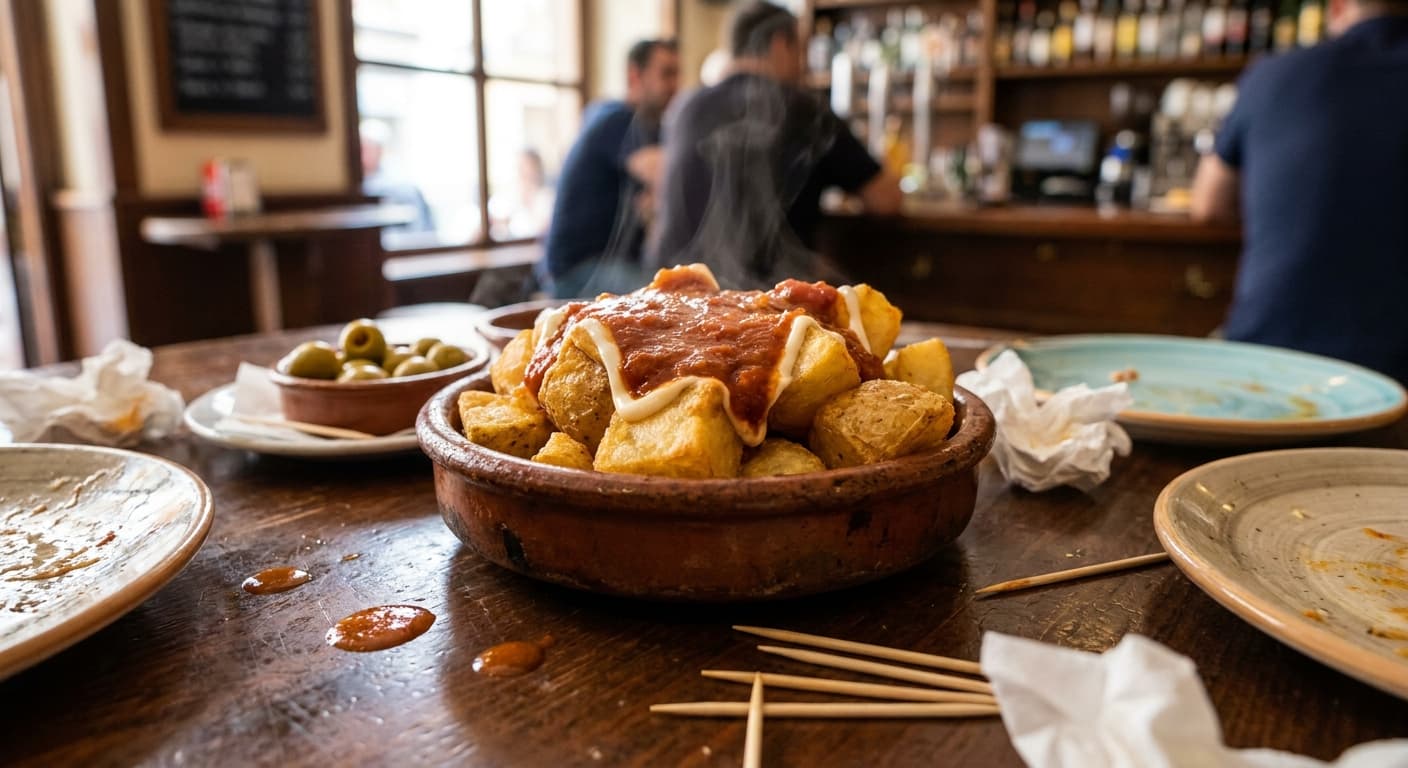
Patatas Bravas (Patatas bravas) — Crisp Spanish Tapas Potatoes with Spicy Brava Sauce
Spanish · Appetizers · 55 min
Noodle ba Soy va Felfel (نودل با سویا و فلفل) — Persian-Style Noodles with Soy and Peppers
Persian · Main Courses · 43 min
Reviews
Cooked this recipe?
Tap the stars to rate it — that's all it takes. A few words are welcome but optional.
No ratings yet. Cooked this one? Be the first to rate it — it takes one tap.