Norwegian Sour Cream Porridge (Rømmegrøt) — Festive Dairy Porridge with Cinnamon Sugar
Rømmegrøt is a traditional Norwegian sour-cream porridge made by coaxing butterfat from rich cultured cream. It is served for farm feasts and family gatherings, often with lefse and slices of brunost at the table.
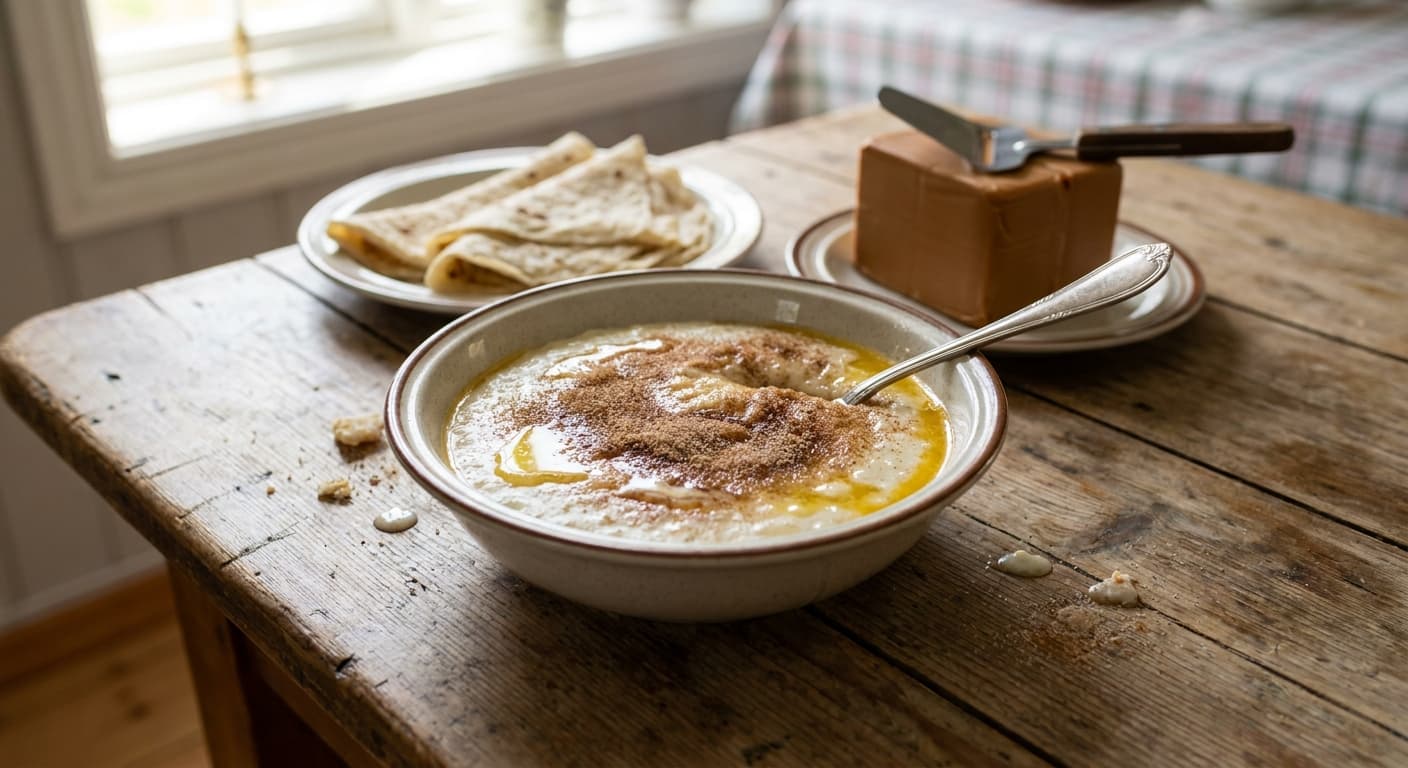
Printable Recipe Card
Servings: 4 · Total: 35 min · Difficulty: medium
Ingredients (quick list)
- 600 g full-fat cultured sour cream (35 percent fat; Norwegian seterrømme if available)
- 90 g all-purpose flour
- 350 ml whole milk (warmed to 60 C)
- 3 g fine sea salt
- 48 g granulated sugar
- 2 tsp ground cinnamon
Steps (summary)
- Place the sour cream in a heavy 2 l saucepan and warm it over medium-low heat until it barely trembles at the edges. Simmer gen…
- Reduce the heat to low and whisk in 45 g of the flour in a thin, steady stream. Cook for 3 to 4 minutes while stirring constant…
- When a clear layer of butterfat appears, spoon 45 ml of it into a warm small bowl and reserve it for serving. Leave any remaini…
- Whisk in the remaining 45 g flour and cook for 2 minutes, keeping the heat low so the mixture thickens without catching on the…
- Simmer the porridge for 8 to 10 minutes, stirring slowly with a wooden spoon, until it is smooth, thick, and gently elastic. St…
- Mix the sugar and cinnamon in a small bowl, then ladle the hot porridge into 4 warm bowls. Spoon 11 ml reserved butterfat over…
Cultural Background
Magnus Nilsson records rømmegrøt within Norway's older dairy-farm cookery, where rich cream signaled abundance. It remains tied to Sankthans, weddings, Olsok gatherings, and rural festive tables.
Equipment
💡 Tips
- Use sour cream with at least 35 percent fat; lighter sour cream will thicken but will not release the traditional golden butterfat.
- Keep the heat low after adding flour, because scorched dairy gives rømmegrøt a harsh flavor that cinnamon cannot hide.
- Warm the milk before adding it so the porridge stays smooth and does not tighten into lumps.
⚠️ Common Mistakes
❌ Using low-fat sour cream.
✅ Fix: Choose 35 percent fat cultured sour cream so enough butterfat separates for the traditional topping.
❌ Adding cold milk all at once.
✅ Fix: Warm the milk to 60 C and whisk it in 50 ml additions to prevent lumps.
❌ Boiling the porridge hard after the flour goes in.
✅ Fix: Keep the heat low and stir steadily so the dairy thickens without scorching or splitting.
🧊 How to Store
Refrigerate leftovers in an airtight container for up to 3 days. Reheat gently in a saucepan with 30 ml milk per serving, stirring over low heat until smooth; do not boil, or the dairy may separate.
📅 Make Ahead
Measure the flour, salt, sugar, and cinnamon up to 2 days ahead. The porridge is best cooked just before serving, but the milk can be warmed and held for 20 minutes in a covered jug.
🍽️ Pairs Well With
- Lefse
- brunost slices
- cured lamb or spekemat
- strong coffee.
Regional Variations
- In parts of western Norway, the porridge is cooked slightly looser and served with more visible butterfat.
- Some inland families serve rømmegrøt with cured meats and flatbread as a festive meal rather than a sweet course.
- Modern home cooks sometimes add a small amount of butter when supermarket sour cream does not release enough fat.
Ingredients
- 600 gfull-fat cultured sour cream (35 percent fat; Norwegian seterrømme if available)
- 90 gall-purpose flour
- 350 mlwhole milk (warmed to 60 C)
- 3 gfine sea salt
- 48 ggranulated sugar
- 2 tspground cinnamon
🔄 Substitutions
- Norwegian seterrømme→ full-fat cultured sour cream
- whole milk→ 3.25 percent milk
- all-purpose flour→ white spelt flour
Instructions
- 1
Place the sour cream in a heavy 2 l saucepan and warm it over medium-low heat until it barely trembles at the edges. Simmer gently for 8 to 10 minutes, stirring every 2 minutes, until small beads of yellow butterfat begin to rise.
- 2
Reduce the heat to low and whisk in 45 g of the flour in a thin, steady stream. Cook for 3 to 4 minutes while stirring constantly, because this first flour addition helps the cream release its fat without scorching.
- 3
When a clear layer of butterfat appears, spoon 45 ml of it into a warm small bowl and reserve it for serving. Leave any remaining fat in the pan, since it helps the porridge stay glossy and authentically rich.
- 4
Whisk in the remaining 45 g flour and cook for 2 minutes, keeping the heat low so the mixture thickens without catching on the bottom. Add the warm milk in 50 ml additions, whisking fully after each addition before adding the next.
- 5
Simmer the porridge for 8 to 10 minutes, stirring slowly with a wooden spoon, until it is smooth, thick, and gently elastic. Stir in the salt, then let the rømmegrøt stand off the heat for 3 minutes so the texture settles.
- 6
Mix the sugar and cinnamon in a small bowl, then ladle the hot porridge into 4 warm bowls. Spoon 11 ml reserved butterfat over each serving and sprinkle each bowl with 12 g cinnamon sugar, serving lefse and brunost on the side rather than mixing them into the porridge.
🪪 Recipe Passport
Cultural Background
Magnus Nilsson records rømmegrøt within Norway's older dairy-farm cookery, where rich cream signaled abundance. It remains tied to Sankthans, weddings, Olsok gatherings, and rural festive tables.
Regional Variations
Researched from multiple sources and validated by the Zaffaron editorial team. Every recipe is tested for accuracy, measurements, and cultural authenticity.
📚 Sources & Cultural References
- Magnus Nilsson — The Nordic Cookbook — (2015)
Sources cited by the Zaffaron editorial team during recipe research. Cultural and culinary references supporting authenticity claims.
Nutrition per serving
Pairs well with
If you enjoyed this recipe, here are a few related Zaffaron recipes to try next.
Does your family make this differently?
Every family has their own version. Maybe your grandmother adds a secret ingredient, or your aunt has a completely different technique. Preserve your family's version — with their name on it, forever.
You Might Also Like
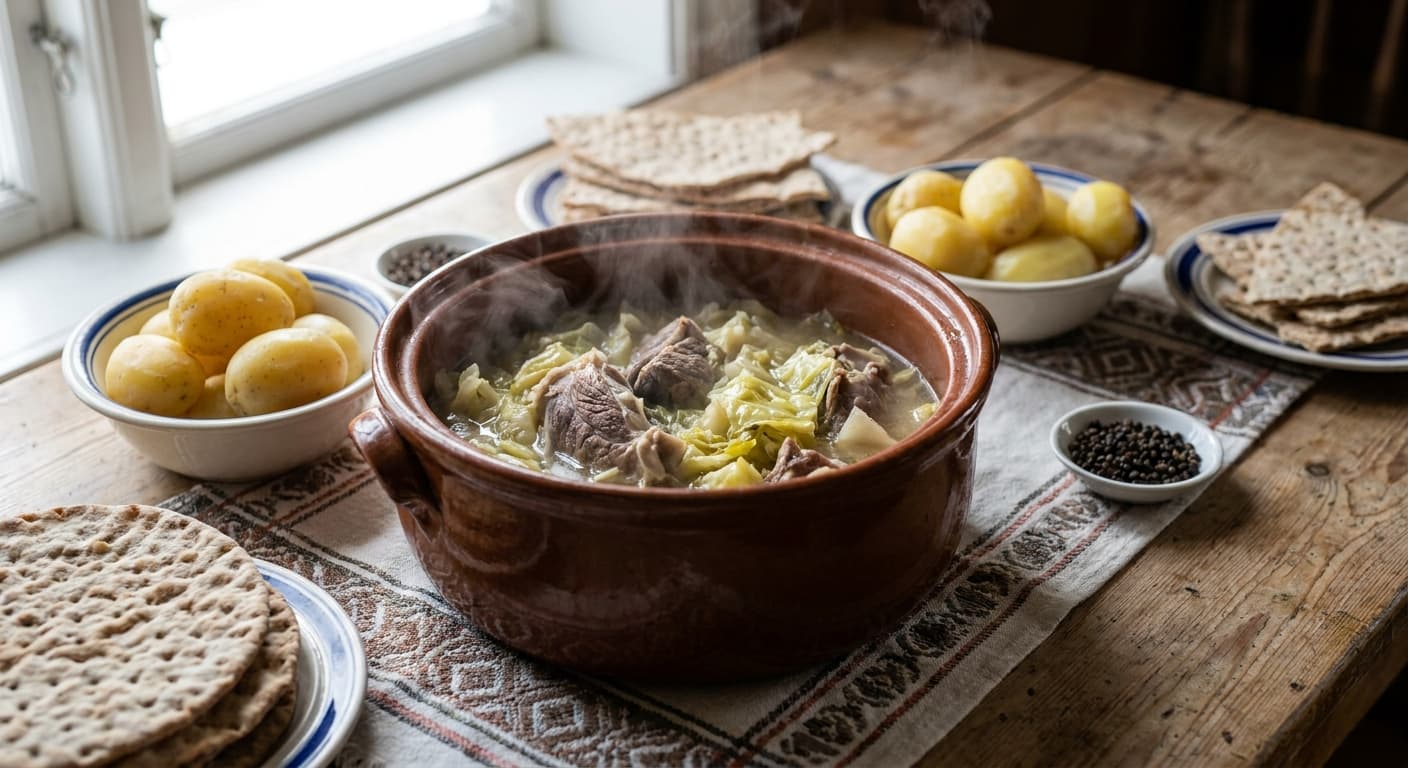
Norwegian Lamb and Cabbage Stew (Fårikål) — Peppery Autumn National Dish
Norwegian · Stews · 170 min
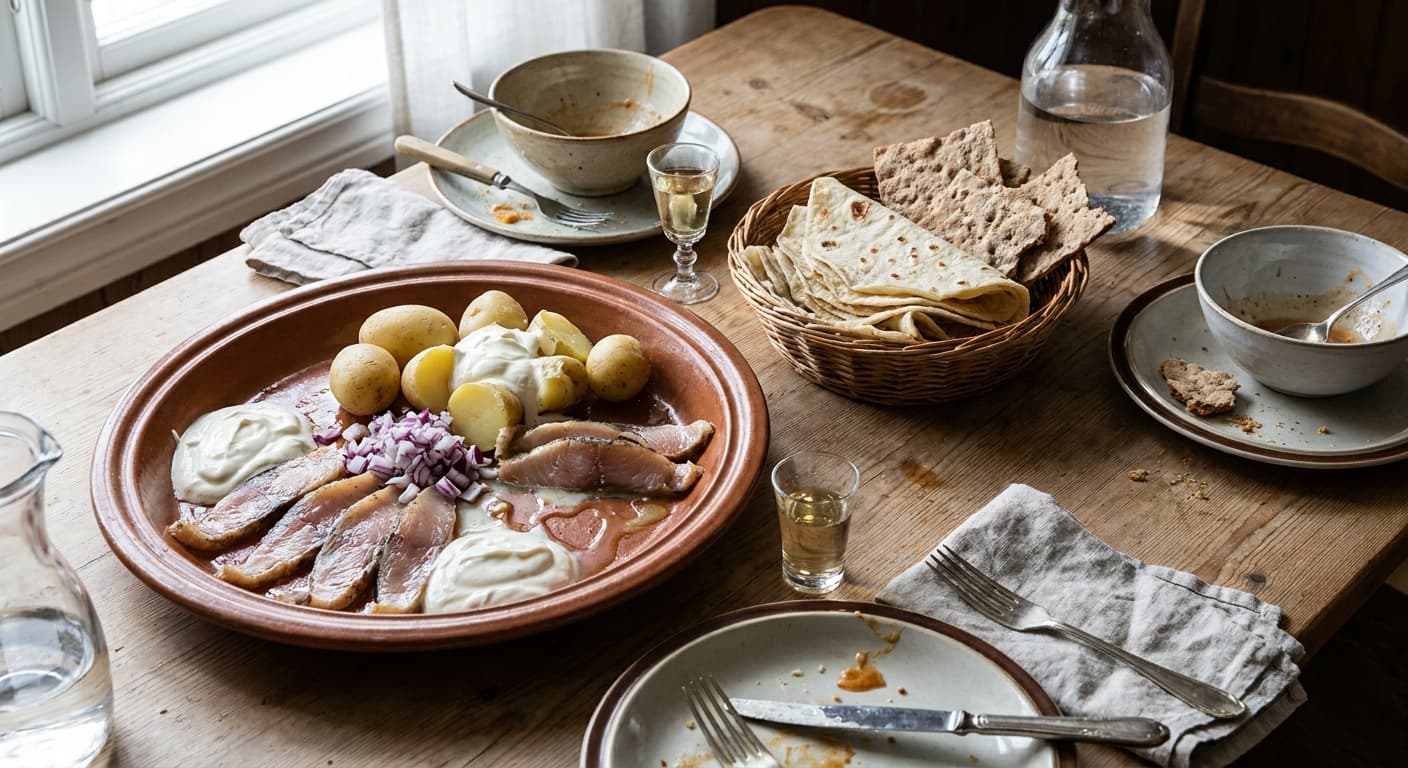
Rakfisk (Rakfisk) — Norwegian Fermented Trout with Lefse and Potatoes
Norwegian · Main Courses · 45 min
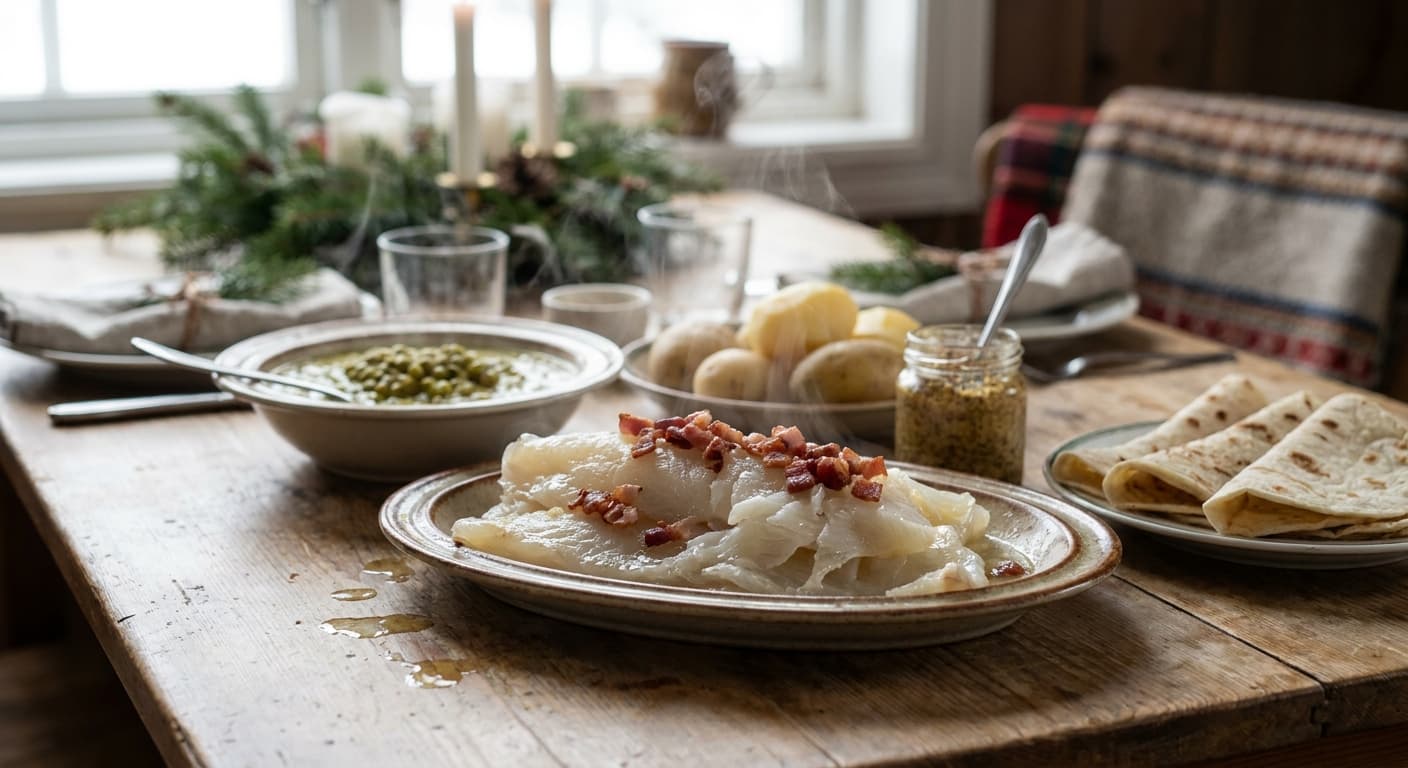
Lutefisk (lutefisk) — Lye-Cured Cod with Potatoes and Pea Stew
Norwegian · Main Courses · 90 min
Kongnamul Muchim (콩나물무침) — Korean Seasoned Soybean Sprout Banchan
Korean · Side Dishes · 16 min
Sweet-Spiced Tempeh Stir-Fry (Tempe Orek) — Crisp Indonesian Soy-Glazed Tempeh
Indonesian · Side Dishes · 45 min
Rye Bread and Beer Porridge (Øllebrød) — Traditional Danish Breakfast
Danish · Main Courses · 65 min
Swedish Crispbread (Knäckebröd) — Thin Rye Crackers for Smörgåsbord
Swedish · Breads · 105 min
Norwegian Fish Balls (Fiskeboller) — Tender whitefish dumplings in curry cream sauce
Norwegian · Main Courses · 70 min
Reviews
Cooked this recipe?
Tap the stars to rate it — that's all it takes. A few words are welcome but optional.
No ratings yet. Cooked this one? Be the first to rate it — it takes one tap.