Portuguese Duck Rice (Arroz de Pato) — Baked Duck Rice with Chouriço
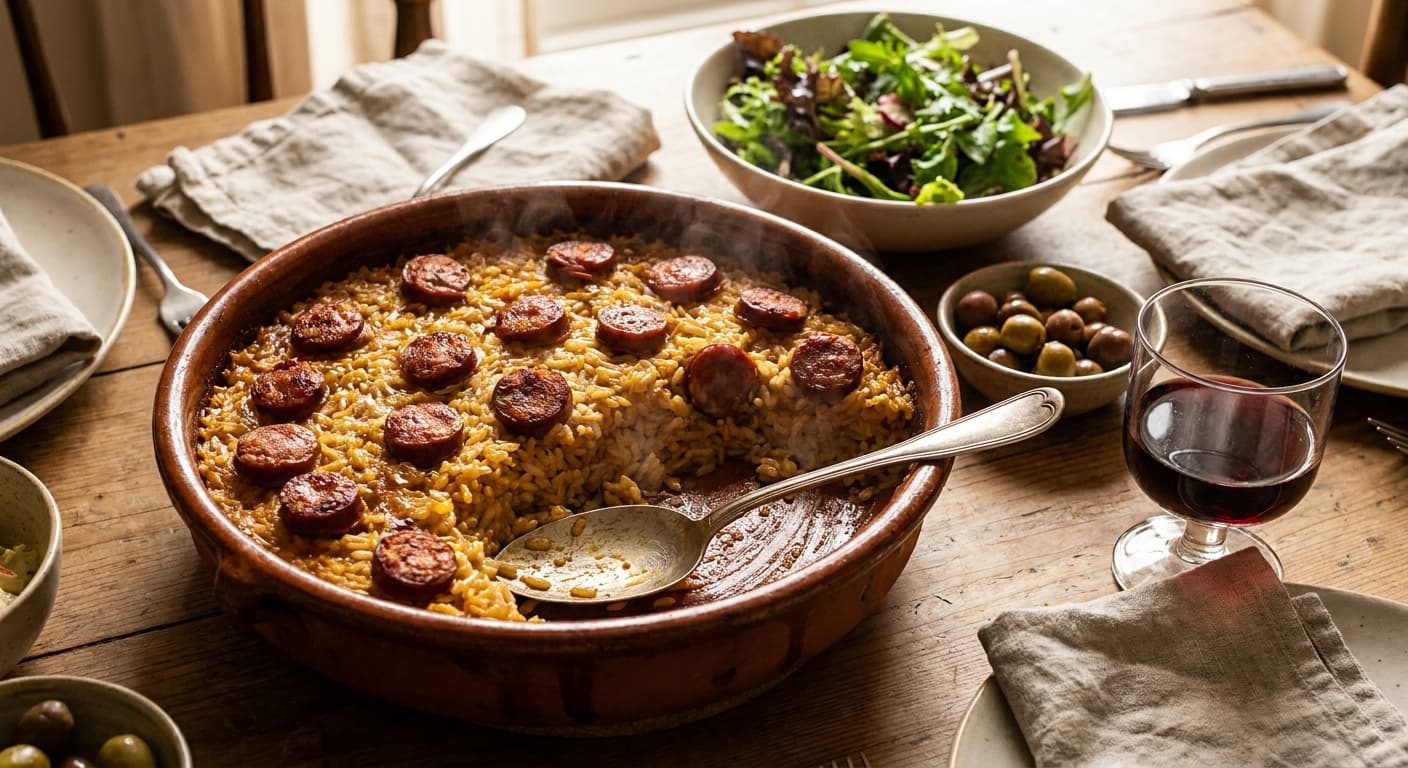
Arroz de Pato is a beloved Portuguese oven-baked duck rice, especially associated with generous family lunches. Duck is simmered for broth, shredded, folded through rice, and finished with smoky chouriço on top.
Printable Recipe Card
Servings: 6 · Total: 155 min · Difficulty: medium
Ingredients (quick list)
- 4 duck legs (about 1.4 kg total, skin-on)
- 2 l water
- 1 large yellow onion (peeled and halved)
- 1 carrot (peeled and cut into 3 pieces)
- 3 clove garlic (lightly crushed)
- 2 leaf bay leaves
- 4 sprig flat-leaf parsley
- 1 tsp whole black peppercorns
- 2 tsp fine sea salt
- 2 tbsp olive oil
- 1 tbsp tomato paste
- 400 g long-grain white rice (Carolino or agulha-style Portuguese rice if available)
+ 3 more in the full ingredients section below.
Steps (summary)
- Place the duck legs in a large heavy pot with 2 l water, the halved onion, carrot, 3 crushed garlic cloves, bay leaves, parsley…
- Lift the duck legs onto a tray and strain the broth through a fine sieve into a clean bowl or saucepan. Discard the cooked vege…
- When the duck is cool enough to handle, remove and discard the bones and any thick rubbery skin. Shred the meat into bite-size…
- Heat the oven to 200°C. In a wide ovenproof casserole or sauté pan, warm the olive oil over medium heat, add the finely chopped…
- Add the minced garlic and tomato paste to the onion and cook for 1 minute, stirring constantly so the garlic does not scorch. S…
- Pour in 900 ml hot reserved duck broth, then add 0.5 tsp fine sea salt and 0.5 tsp ground black pepper. Bring the rice to a liv…
+ 3 more steps in the full instructions section below.
Cultural Background
Arroz de Pato reflects Portugal’s practical genius for turning a slow-simmered bird into a festive rice dish. It is common at Sunday lunches, family gatherings, and restaurant menus from north to south.
Equipment
💡 Tips
- Use duck legs rather than breast alone because the bones and connective tissue create a deeper broth and more succulent shredded meat.
- Defat the broth carefully; enough duck fat should remain for flavor, but a thick layer will make the baked rice heavy.
- Do not fully cook the rice on the stovetop before baking, because the oven stage is what gives arroz de pato its characteristic dry, separate grains and browned top.
⚠️ Common Mistakes
❌ Using plain water for the rice
✅ Fix: Cook the rice in the strained duck broth so the grains carry the central flavor of the dish.
❌ Leaving too much fat in the broth
✅ Fix: Skim the surface well after simmering and use only a measured amount of duck fat if extra richness is desired.
❌ Stirring the rice repeatedly during baking
✅ Fix: Level it once before the oven and leave it undisturbed so the grains stay separate and the top browns.
🧊 How to Store
Cool leftovers within 2 hours and refrigerate in an airtight container for up to 3 days. Reheat covered at 180°C with 2 tbsp broth or water per serving, then uncover briefly to refresh the top.
📅 Make Ahead
Simmer and shred the duck up to 2 days ahead, then refrigerate the meat and strained broth separately. Assemble and bake the rice shortly before serving for the best texture.
🍽️ Pairs Well With
- Portuguese green salad
- olives
- roasted peppers
- broa de milho
- vinho verde.
Regional Variations
- In northern Portugal, cooks often use more chouriço and bake the rice until quite dry and deeply browned.
- Some Lisbon-style versions add a small amount of tomato or tomato paste for color and gentle acidity.
- Home cooks may garnish with black olives or add a little shredded cured ham when stretching the duck for a larger table.
Ingredients
- 4duck legs (about 1.4 kg total, skin-on)
- 2 lwater
- 1large yellow onion (peeled and halved)
- 1carrot (peeled and cut into 3 pieces)
- 3 clovegarlic (lightly crushed)
- 2 leafbay leaves
- 4 sprigflat-leaf parsley
- 1 tspwhole black peppercorns
- 2 tspfine sea salt
- 2 tbspolive oil
- 1 tbsptomato paste
- 400 glong-grain white rice (Carolino or agulha-style Portuguese rice if available)
- 900 mlreserved duck broth (hot and defatted, from simmering the duck)
- 0.5 tspground black pepper
- 150 ggluten-free Portuguese chouriço (thinly sliced)
🔄 Substitutions
- duck legs→ 1 whole duck, about 1.8 kg
- Portuguese chouriço→ Spanish cooking chorizo
- long-grain white rice→ Portuguese Carolino rice
Instructions
- 1
Place the duck legs in a large heavy pot with 2 l water, the halved onion, carrot, 3 crushed garlic cloves, bay leaves, parsley sprigs, peppercorns, and 2 tsp fine sea salt. Bring to a gentle boil over medium-high heat, then reduce the heat and simmer uncovered for 75 to 90 minutes, until the duck meat pulls easily from the bone.
- 2
Lift the duck legs onto a tray and strain the broth through a fine sieve into a clean bowl or saucepan. Discard the cooked vegetables and aromatics, then skim off and reserve 1 tbsp duck fat if you like a richer rice, removing the remaining surface fat so the finished dish is savory rather than greasy.
- 3
When the duck is cool enough to handle, remove and discard the bones and any thick rubbery skin. Shred the meat into bite-size strands, keeping the pieces moist with 2 tbsp of the strained broth while you prepare the rice.
- 4
Heat the oven to 200°C. In a wide ovenproof casserole or sauté pan, warm the olive oil over medium heat, add the finely chopped onion, and cook for 8 minutes until soft and lightly golden.
- 5
Add the minced garlic and tomato paste to the onion and cook for 1 minute, stirring constantly so the garlic does not scorch. Stir in the rice and cook for 2 minutes, coating every grain with the aromatic oil and tomato paste.
- 6
Pour in 900 ml hot reserved duck broth, then add 0.5 tsp fine sea salt and 0.5 tsp ground black pepper. Bring the rice to a lively simmer and cook uncovered for 6 minutes, stirring only once so the grains begin absorbing the broth without becoming starchy.
- 7
Fold the shredded duck evenly through the partly cooked rice and level the surface with a spoon. Arrange the chouriço slices across the top in neat overlapping rows, allowing their paprika-rich fat to season the rice as it bakes.
- 8
Transfer the casserole to the oven and bake for 25 to 30 minutes, until the rice is tender, the top is lightly browned, and the chouriço is sizzling at the edges. If the rice looks dry before it is tender, add 60 ml hot reserved broth around the edges and continue baking for 5 more minutes.
- 9
Rest the arroz de pato for 10 minutes before serving so the grains settle and the broth finishes absorbing. Sprinkle with chopped parsley and serve directly from the baking dish, making sure each portion gets duck, rice, and crisp-edged chouriço.
🪪 Recipe Passport
Cultural Background
Arroz de Pato reflects Portugal’s practical genius for turning a slow-simmered bird into a festive rice dish. It is common at Sunday lunches, family gatherings, and restaurant menus from north to south.
Regional Variations
Researched from multiple sources and validated by the Zaffaron editorial team. Every recipe is tested for accuracy, measurements, and cultural authenticity.
📚 Sources & Cultural References
- Maria de Lourdes Modesto — Cozinha Tradicional Portuguesa — (1982)
- Jean Anderson — The Food of Portugal — (1986)
Sources cited by the Zaffaron editorial team during recipe research. Cultural and culinary references supporting authenticity claims.
Nutrition per serving
Pairs well with
If you enjoyed this recipe, here are a few related Zaffaron recipes to try next.
Does your family make this differently?
Every family has their own version. Maybe your grandmother adds a secret ingredient, or your aunt has a completely different technique. Preserve your family's version — with their name on it, forever.
You Might Also Like
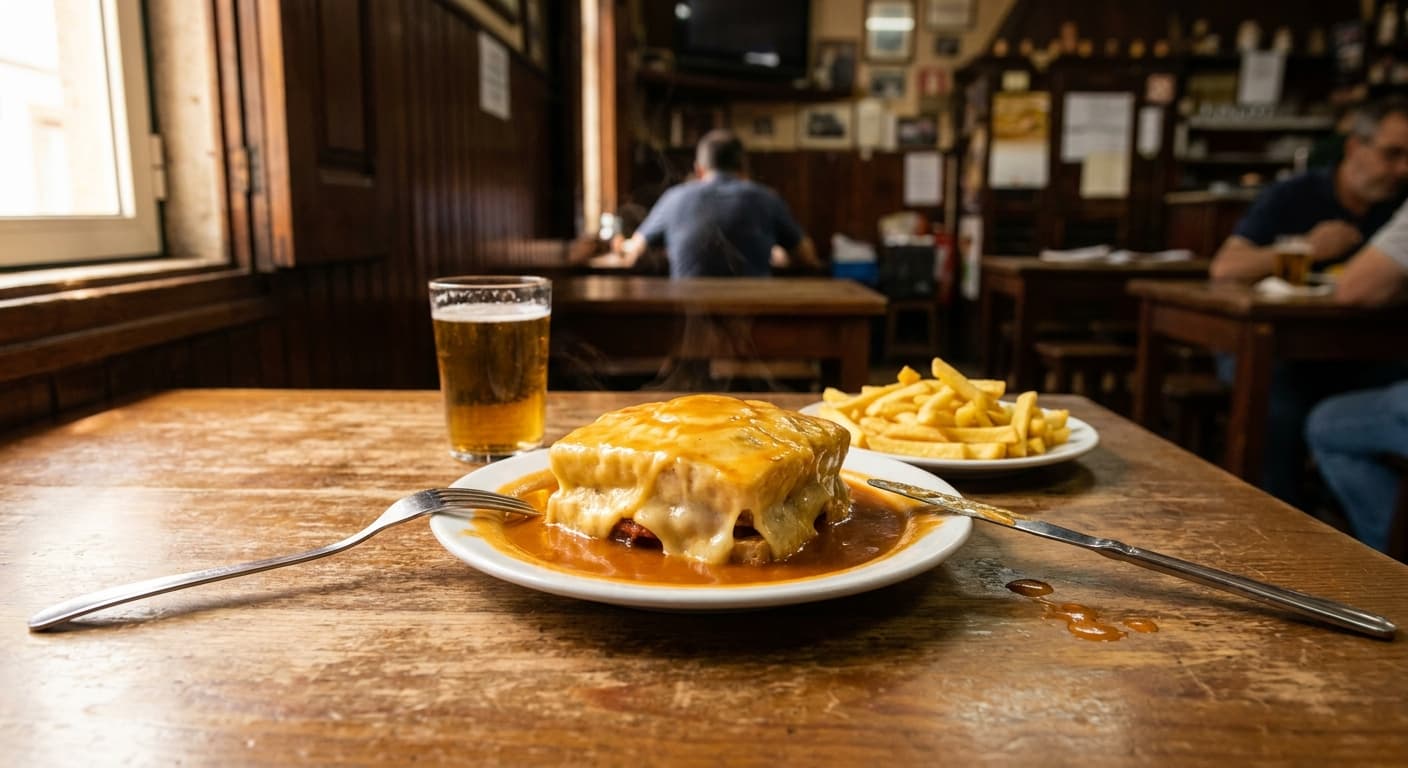
Francesinha (Francesinha) — Porto Beer-Sauce Steak Sandwich
Portuguese · Main Courses · 70 min
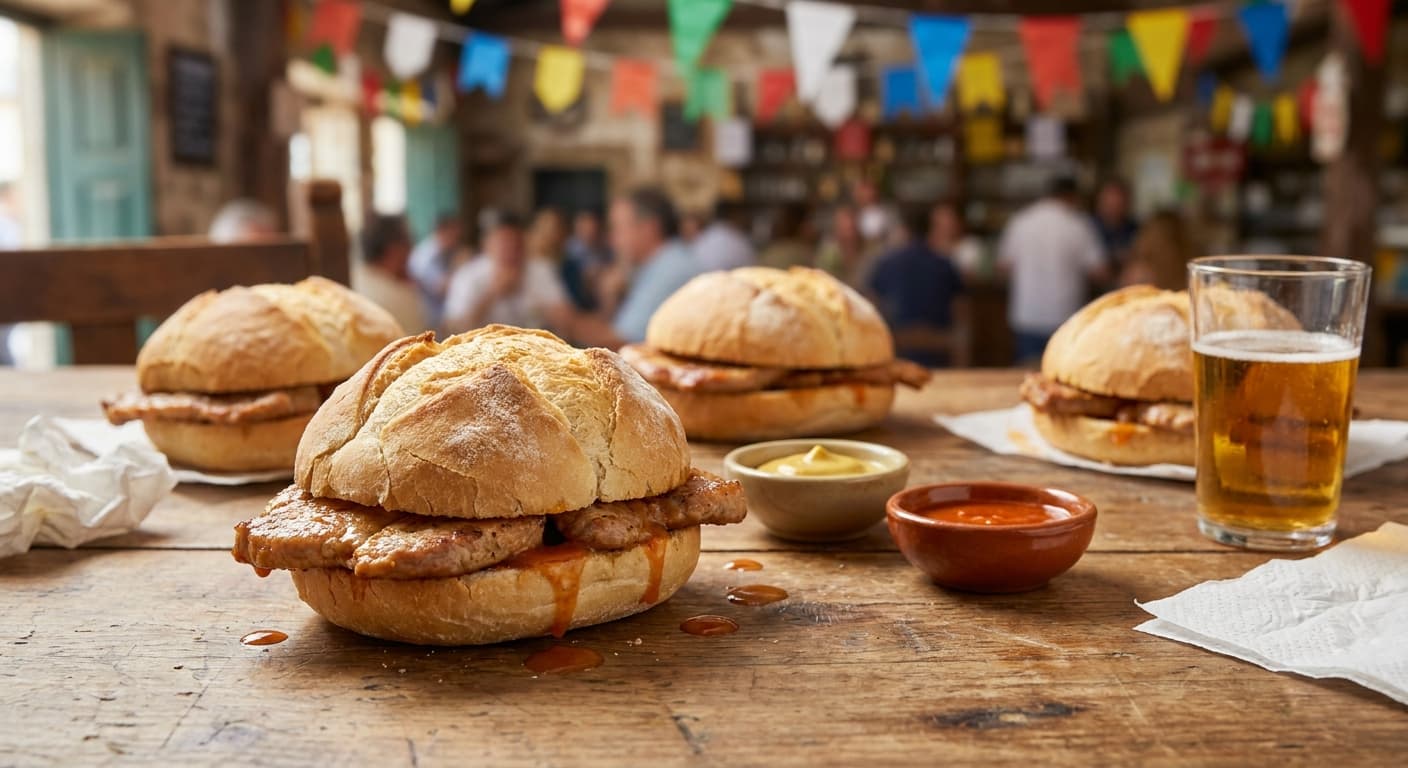
Portuguese Pork Sandwiches (Bifanas) — Garlicky Wine-Braised Pork Rolls
Portuguese · Main Courses · 60 min

Portuguese Custard Tarts (Pastéis de Nata) — Flaky Lisbon-Style Custard Pastries
Portuguese · Desserts · 87 min
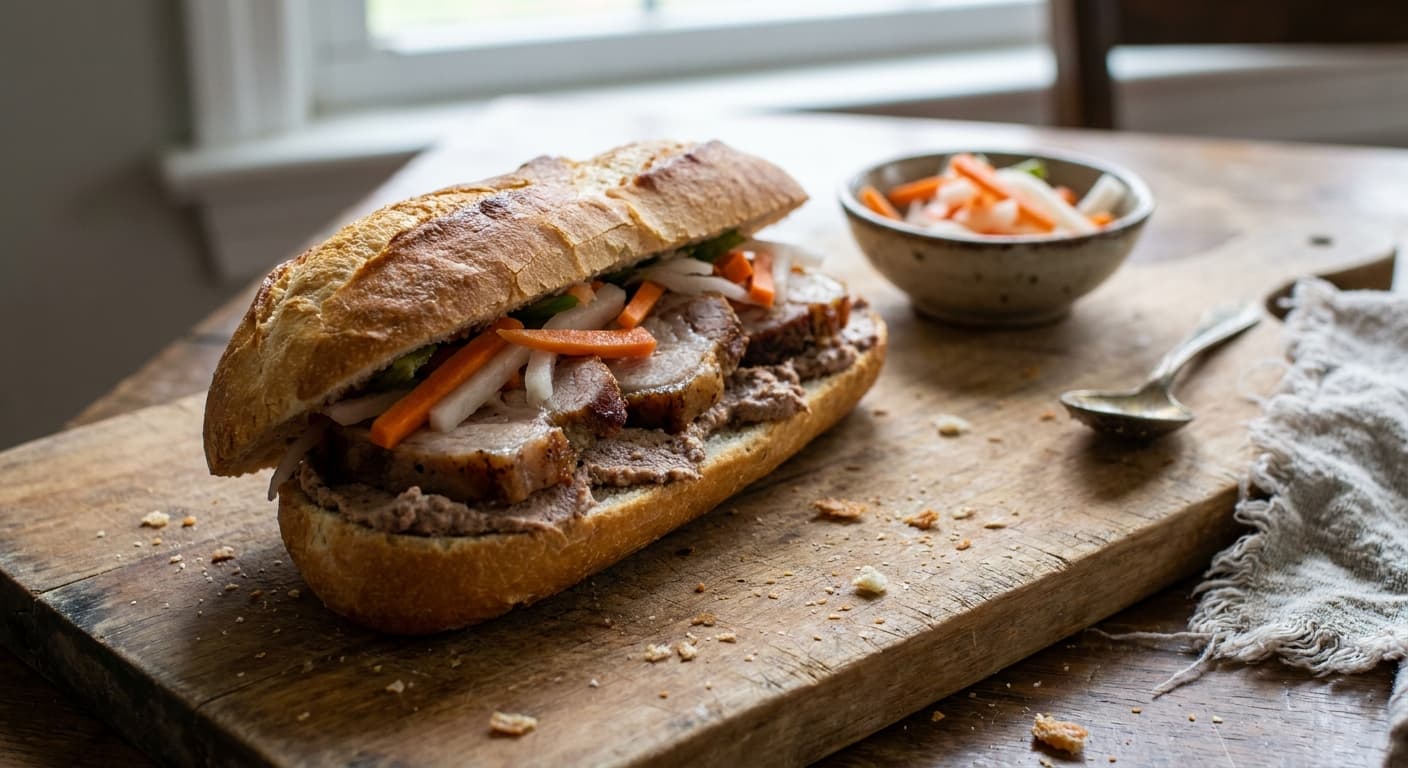
Num Pang Pate (នំប៉័ងប៉ាតេ) — Cambodian Baguette with Pate and Pickles
Cambodian · Main Courses · 60 min
Rye Bread and Beer Porridge (Øllebrød) — Traditional Danish Breakfast
Danish · Main Courses · 65 min
Andalusian Gazpacho (Gazpacho Andaluz) — Chilled Tomato and Pepper Soup
Spanish · Soups · 25 min
Brazilian Fish Moqueca (Moqueca) — Bahia-Style Coconut Seafood Stew
Brazilian · Stews · 55 min
Egyptian Karkadeh (كركديه) — Chilled Hibiscus Tea
Egyptian · Drinks · 18 min
Reviews
Cooked this recipe?
Tap the stars to rate it — that's all it takes. A few words are welcome but optional.
No ratings yet. Cooked this one? Be the first to rate it — it takes one tap.