Raib (رايب) — Moroccan Chilled Homemade Yogurt, Plain or Sweetened
Raib is a classic Moroccan set yogurt, gently fermented and served well chilled. It’s enjoyed plain for a clean tang or sweetened for a dessert-like finish, often alongside mint tea and pastries.
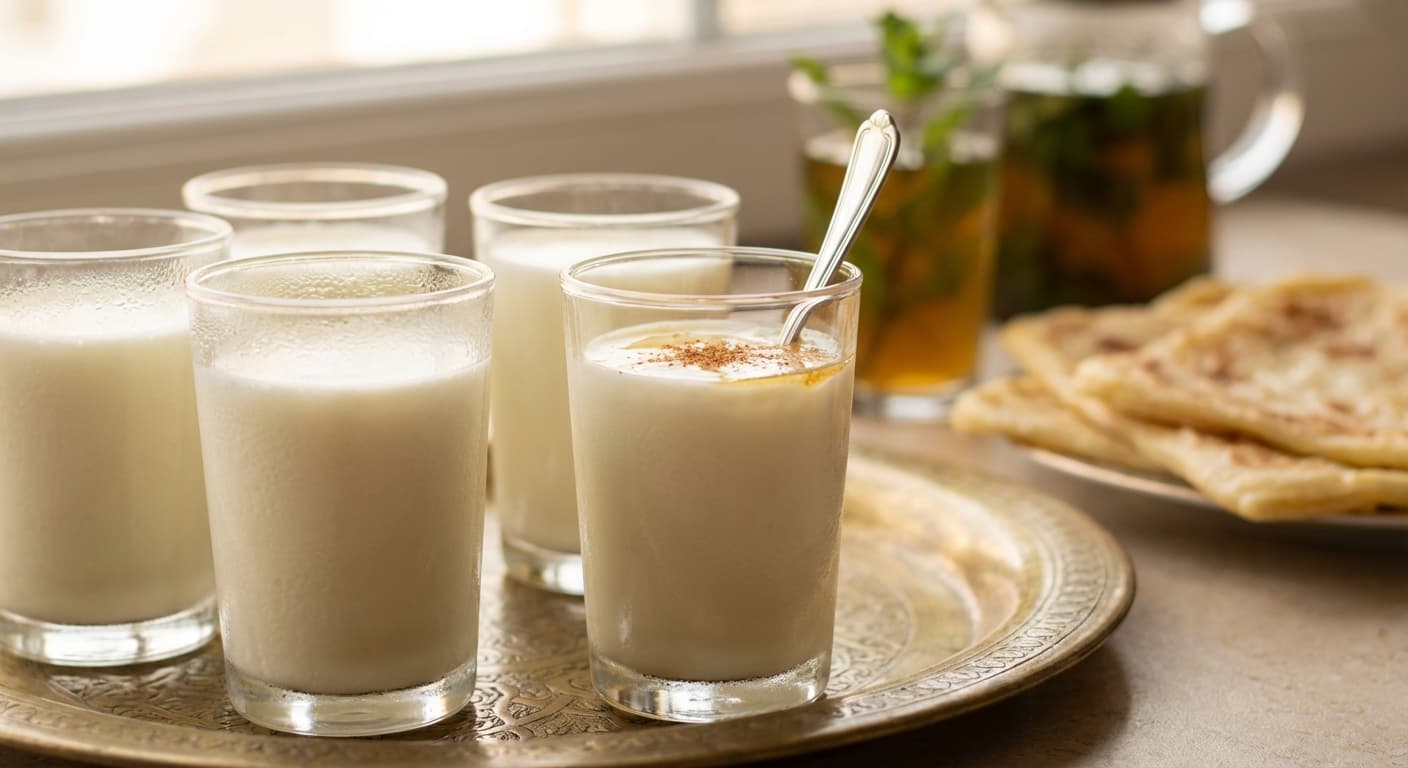
Printable Recipe Card
Servings: 6 · Total: 30 min · Difficulty: easy
Ingredients (quick list)
- 1500 ml whole milk (preferably not ultra-high-temperature (UHT) for best set)
- 60 g plain yogurt with live cultures (2 tbsp; use fresh, unsweetened yogurt)
- 60 g granulated sugar (for lightly sweet raib; omit for plain)
- 5 ml orange blossom water (1 tsp; optional, traditional aroma)
Steps (summary)
- Prepare a clean pot, whisk, and 6 small serving glasses or bowls. Clean equipment helps the yogurt culture ferment predictably,…
- Pour the milk into a heavy-bottomed pot and heat it over medium heat, stirring often, until it reaches 85°C and holds there for…
- Remove the pot from the heat and cool the milk to 43°C, stirring occasionally to prevent a skin from forming. If a skin does fo…
- In a small bowl, whisk the yogurt starter with 60 ml of the warm milk until completely smooth. This tempering step prevents the…
- Whisk the tempered starter back into the pot of warm milk for 20 seconds to distribute the cultures. If making sweet raib, whis…
- Immediately pour the inoculated milk into the serving glasses or bowls, filling them evenly. Cover loosely with clean lids or p…
+ 2 more steps in the full instructions section below.
Cultural Background
In Morocco, raib is a familiar homemade dairy staple served chilled after meals or with afternoon tea. Its simple fermentation reflects North African pantry traditions, where fresh milk is transformed into refreshing, nourishing desserts and snacks.
Equipment
💡 Tips
- For a thicker set, incubate closer to 43°C and avoid moving the cups until fully chilled.
- If you prefer a more tangy raib, extend incubation by 30–60 minutes, then chill immediately to stop further souring.
- To serve sweetened without fermenting with sugar, dissolve 10 g sugar per serving in 10 ml warm water and drizzle over chilled raib.
⚠️ Common Mistakes
❌ Incubating too hot, causing a grainy or separated yogurt.
✅ Fix: Keep incubation at 42–43°C and chill as soon as it sets; if your setup runs hot, crack the oven door slightly.
❌ Moving the cups during fermentation, leading to cracks and whey pockets.
✅ Fix: Place cups on a tray before incubating and do not jostle them until fully chilled.
❌ Adding starter when milk is too hot, which kills the cultures and prevents setting.
✅ Fix: Cool the milk to 43°C before adding starter, and verify with a thermometer rather than guessing.
🧊 How to Store
Store raib covered in the refrigerator at 2–4°C for up to 4 days. Keep it undisturbed to prevent whey separation, and serve straight from the fridge; do not reheat, as warming will break the set and make it grainy.
📅 Make Ahead
Raib is ideal to make a day ahead because chilling improves the set and flavor. Prepare and incubate in the evening, then refrigerate overnight and serve the next day straight from the cups.
🍽️ Pairs Well With
- Moroccan mint tea
- msemen
- baghrir
- chebakia
- fresh dates
- seasonal fruit.
Regional Variations
- Sweet raib: sugar is whisked in before incubation for a dessert-style set yogurt.
- Aromatic raib: orange blossom water or rose water is added for a perfumed finish, especially in warm months.
- Extra-thick raib: the set yogurt is drained for 30–60 minutes in the fridge to reduce whey and concentrate creaminess.
Ingredients
- 1500 mlwhole milk (preferably not ultra-high-temperature (UHT) for best set)
- 60 gplain yogurt with live cultures (2 tbsp; use fresh, unsweetened yogurt)
- 60 ggranulated sugar (for lightly sweet raib; omit for plain)
- 5 mlorange blossom water (1 tsp; optional, traditional aroma)
🔄 Substitutions
- whole milk→ 2% milk
- plain yogurt with live cultures→ freeze-dried yogurt starter
- orange blossom water→ rose water
Instructions
- 1
Prepare a clean pot, whisk, and 6 small serving glasses or bowls. Clean equipment helps the yogurt culture ferment predictably, so avoid any soapy residue and dry everything well.
- 2
Pour the milk into a heavy-bottomed pot and heat it over medium heat, stirring often, until it reaches 85°C and holds there for 5 minutes. This step denatures milk proteins so the raib sets thick and smooth, and it also reduces unwanted microbes.
- 3
Remove the pot from the heat and cool the milk to 43°C, stirring occasionally to prevent a skin from forming. If a skin does form, lift it off with a spoon rather than whisking it in, because it can create lumps in the final set.
- 4
In a small bowl, whisk the yogurt starter with 60 ml of the warm milk until completely smooth. This tempering step prevents the starter from clumping, which helps the raib ferment evenly and set with a clean, uniform texture.
- 5
Whisk the tempered starter back into the pot of warm milk for 20 seconds to distribute the cultures. If making sweet raib, whisk in the sugar now until fully dissolved, then stir in the orange blossom water for a gentle floral note.
- 6
Immediately pour the inoculated milk into the serving glasses or bowls, filling them evenly. Cover loosely with clean lids or plastic wrap, because a tight seal can trap condensation that drips onto the surface and causes watery spots.
- 7
Incubate at 42–43°C for 6 to 8 hours, keeping the cups very still so the curd can set without cracking. Start checking at 6 hours by gently tilting one cup; when it looks set like custard and smells pleasantly tangy, stop the fermentation.
- 8
Move the raib to the refrigerator and chill for at least 4 hours before serving. Chilling firms the set and mellows the acidity, giving the classic Moroccan raib texture that is spoonable and refreshing.
🪪 Recipe Passport
Cultural Background
In Morocco, raib is a familiar homemade dairy staple served chilled after meals or with afternoon tea. Its simple fermentation reflects North African pantry traditions, where fresh milk is transformed into refreshing, nourishing desserts and snacks.
Regional Variations
Researched from multiple sources and validated by the Zaffaron editorial team. Every recipe is tested for accuracy, measurements, and cultural authenticity.
Nutrition per serving
Pairs well with
If you enjoyed this recipe, here are a few related Zaffaron recipes to try next.
- Tagine of Lamb with Apricots and Almonds (طاجين لحم بالبرقوق والمشمش) — Moroccan sweet-savory lamb tagine with dried fruit
- Zemita (زمّيطا) — Moroccan Roasted Flour Energy Porridge
- Briouat with Almonds (بريوات باللوز) — Moroccan Sweet Almond and Honey Phyllo Triangles
- Rfissa (رفيسة) — Moroccan Shredded Msemen with Lentils and Chicken
Does your family make this differently?
Every family has their own version. Maybe your grandmother adds a secret ingredient, or your aunt has a completely different technique. Preserve your family's version — with their name on it, forever.
You Might Also Like

Moroccan Chicken Briouat (بريوات) — Crispy Phyllo Rolls with Chicken and Vermicelli
Moroccan · Appetizers · 80 min
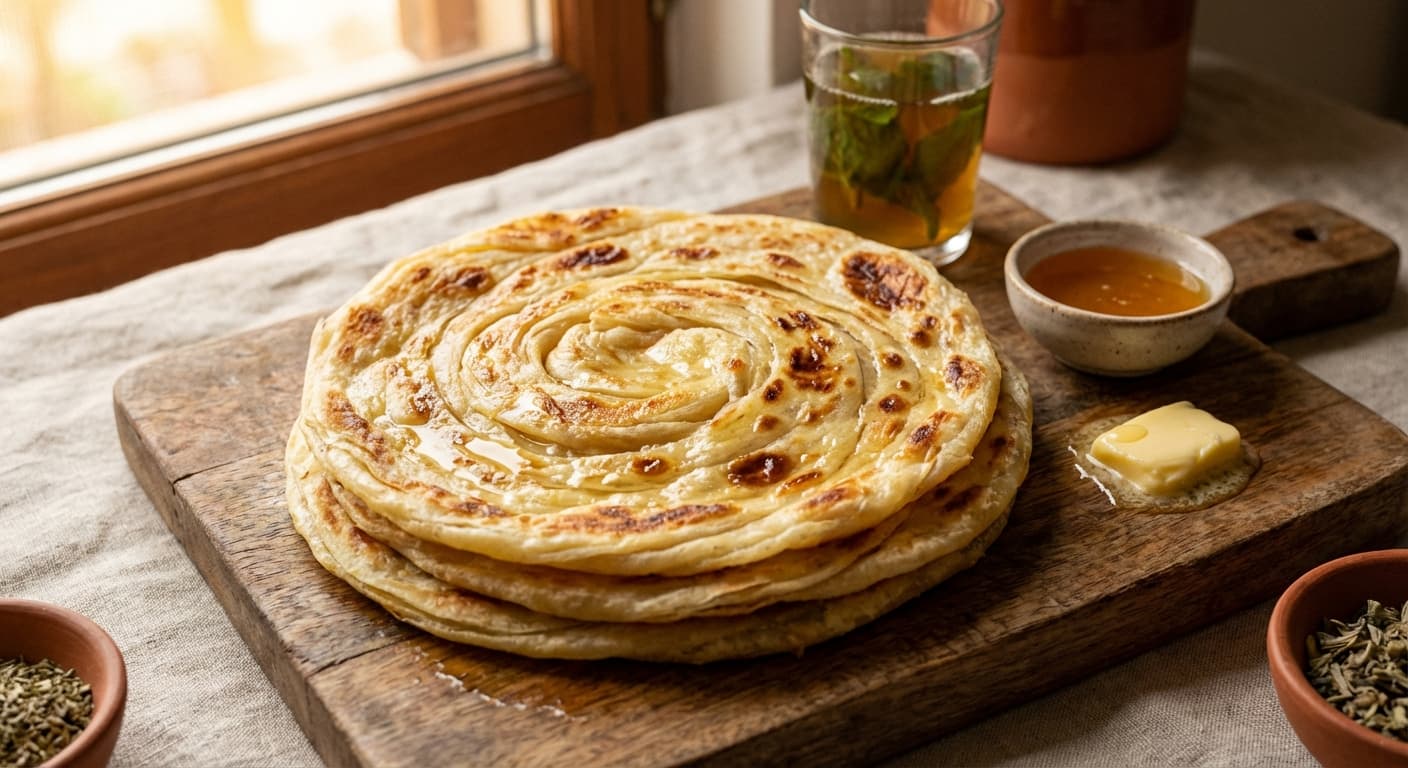
Meloui (ملوي) — Moroccan Spiral-Layered Pan-Fried Flatbread
Moroccan · Breads · 60 min

Sfenj (سفنج) — Moroccan Fried Doughnuts with Sugar
Moroccan · Desserts · 45 min
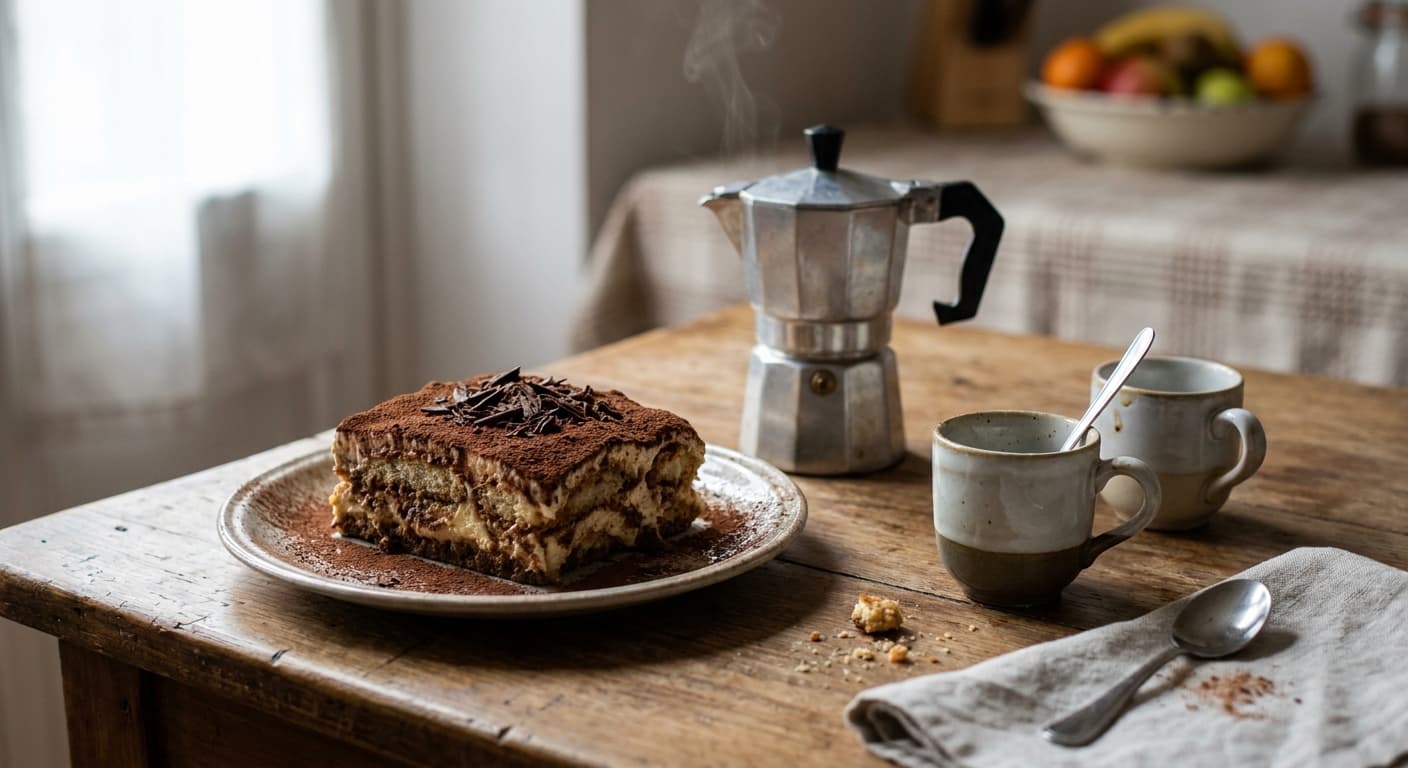
Tiramisu (Tiramisù) — Classic Coffee-Mascarpone Layered Dessert
Italian · Desserts · 35 min
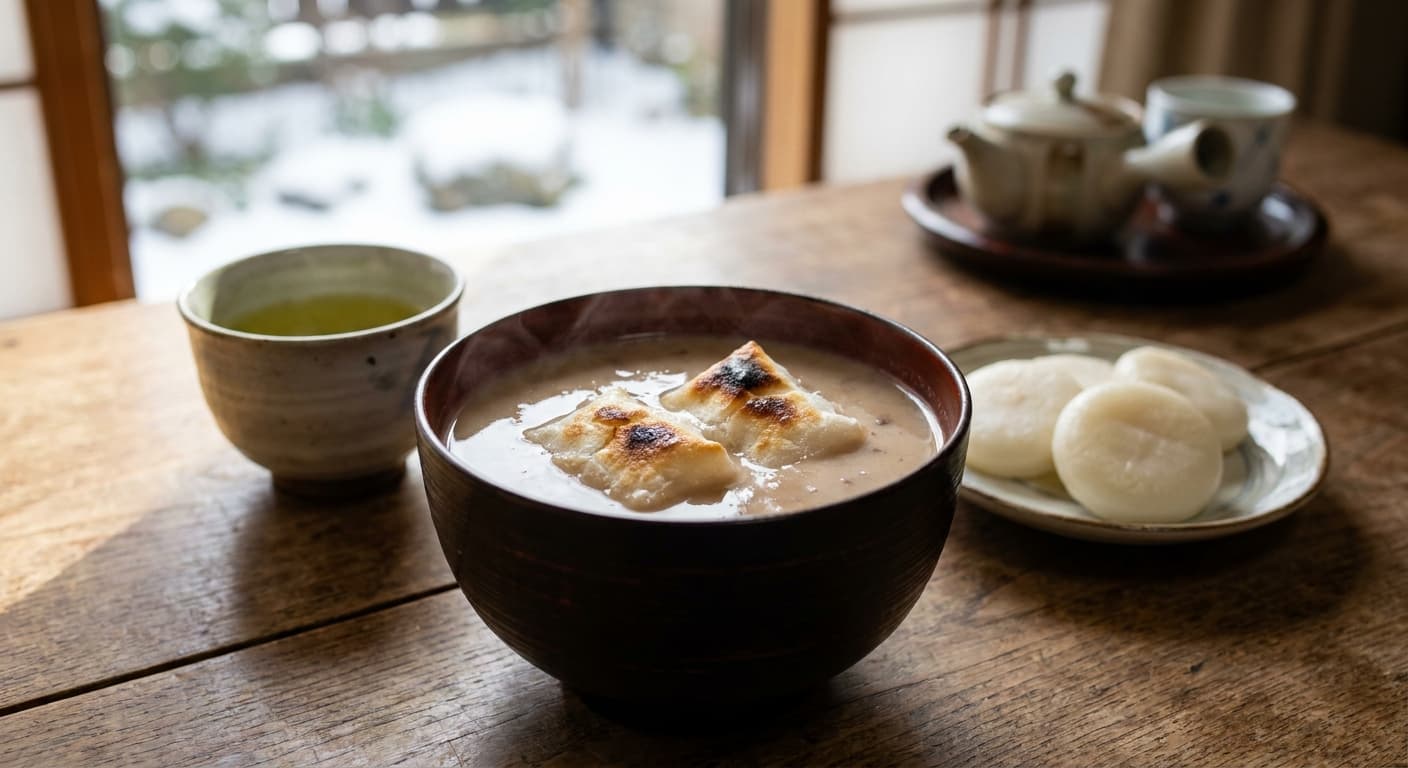
Kurumi Shiruko (くるみ汁粉) — Sendai-Style Sweet Walnut Azuki Soup with Mochi
Japanese · Desserts · 120 min
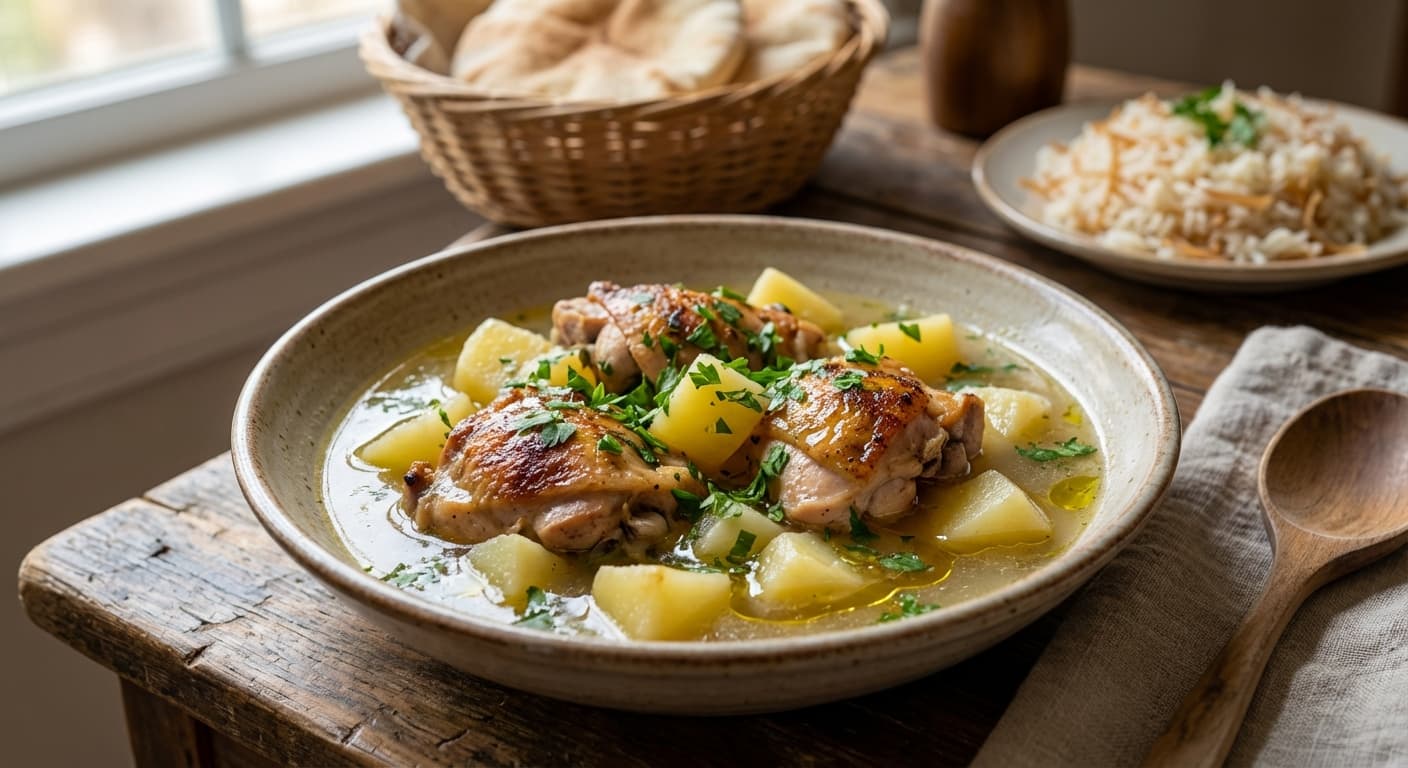
Djej Bi Batata (دجاج ببطاطا) — Lebanese Chicken Stew with Potatoes and Garlic
Lebanese · Stews · 75 min
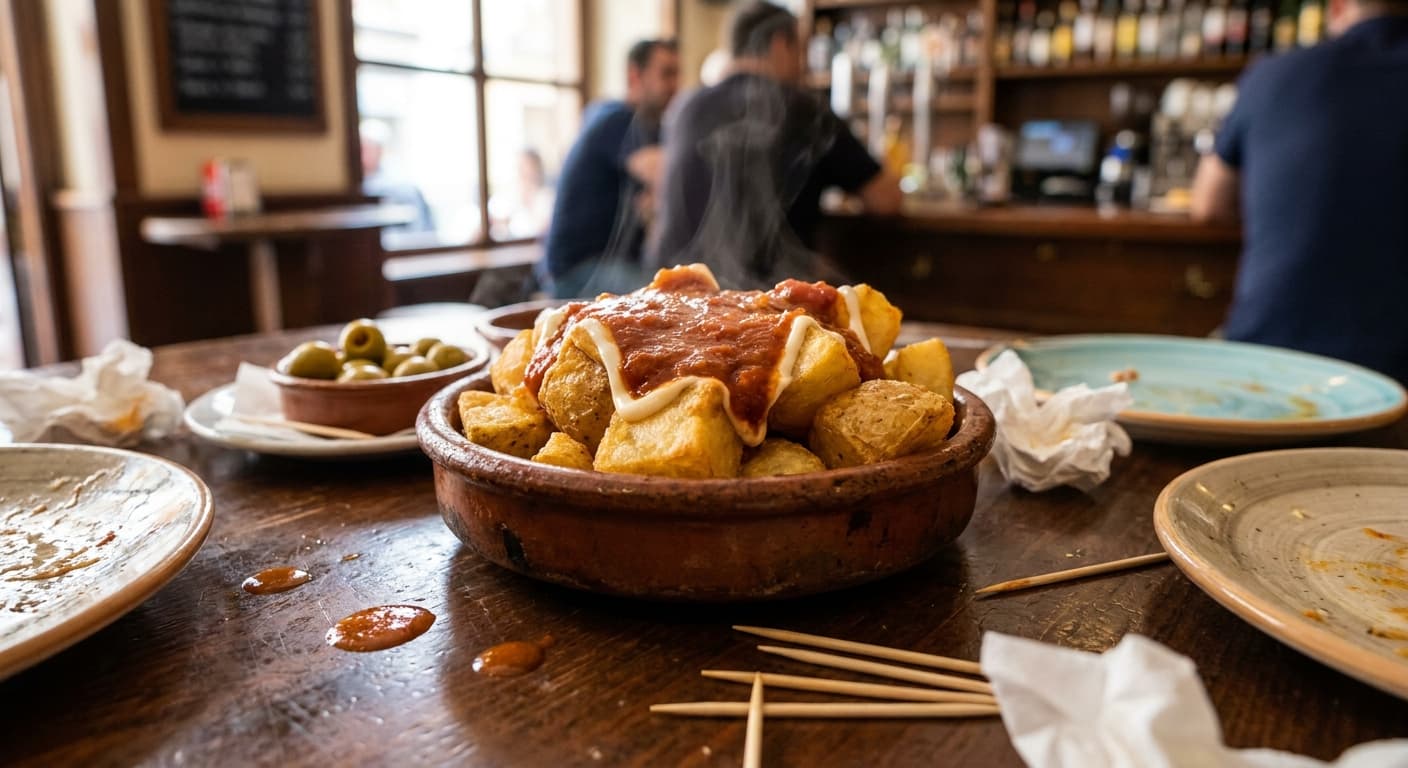
Patatas Bravas (Patatas bravas) — Crisp Spanish Tapas Potatoes with Spicy Brava Sauce
Spanish · Appetizers · 55 min
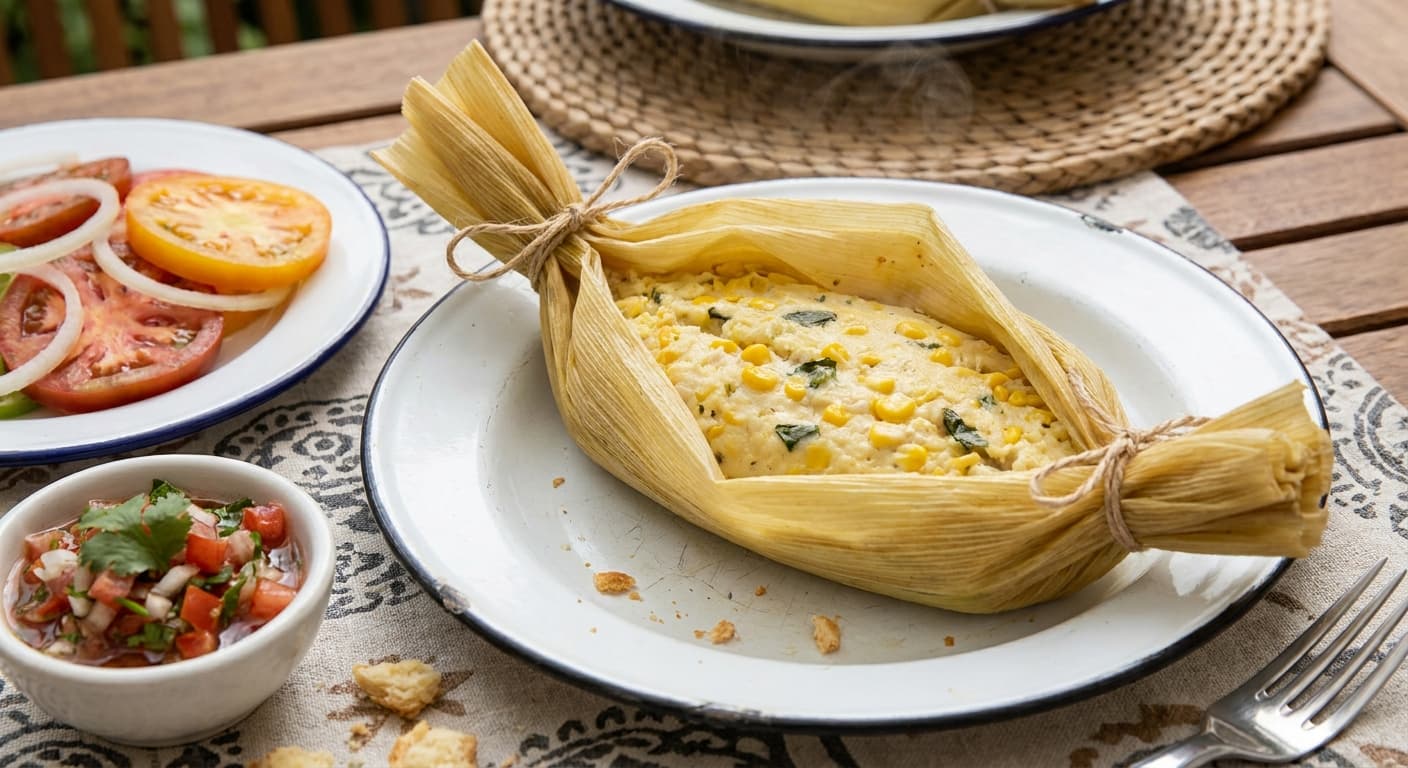
Chilean Humitas (Humitas) — Fresh Corn Parcels with Basil
Chilean · Main Courses · 90 min
Reviews
Cooked this recipe?
Tap the stars to rate it — that's all it takes. A few words are welcome but optional.
No ratings yet. Cooked this one? Be the first to rate it — it takes one tap.