Sfenj (سفنج) — Moroccan Fried Doughnuts with Sugar
Sfenj are airy Moroccan yeast doughnuts, traditionally fried until deeply golden and eaten hot. Often sold by street vendors, they’re finished with sugar for a simple, nostalgic treat with tea.
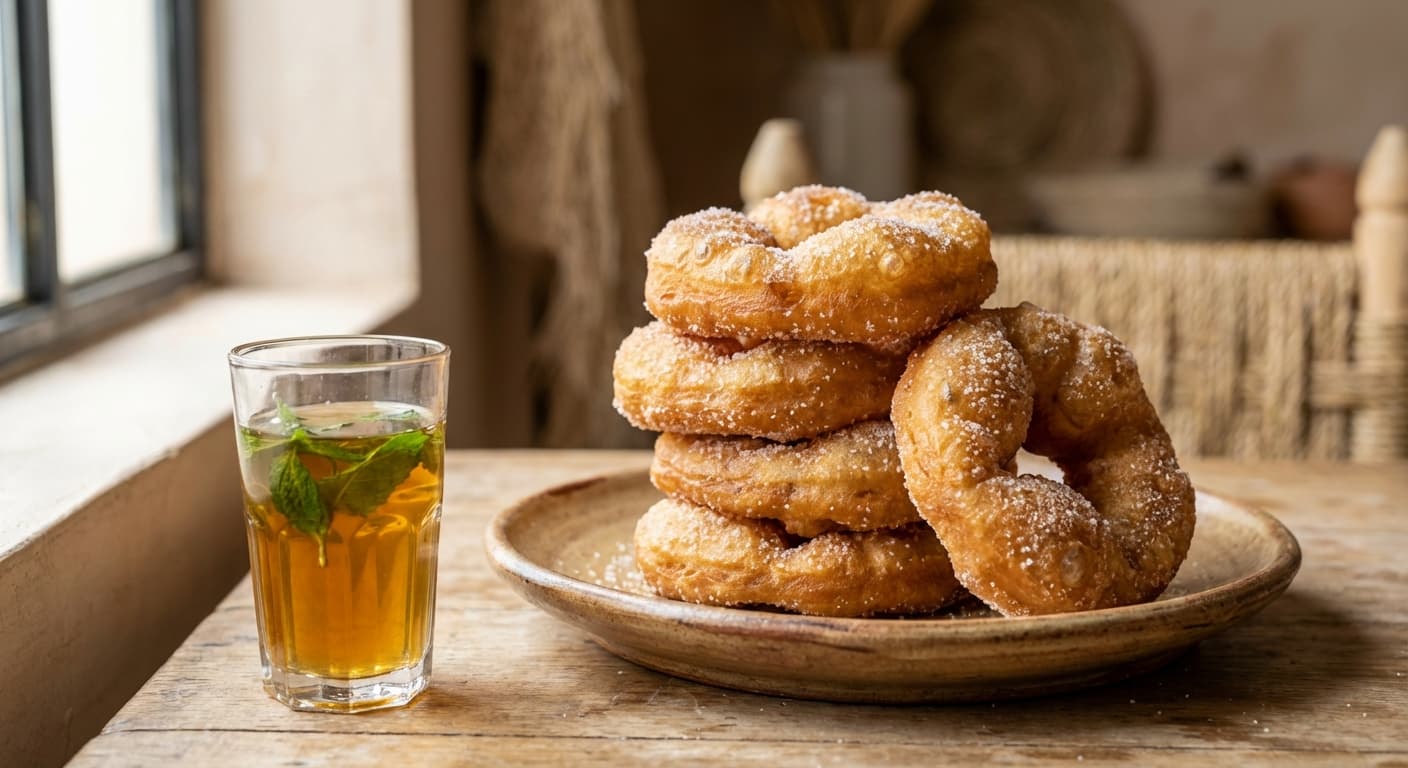
Printable Recipe Card
Servings: 10 · Total: 45 min · Difficulty: medium
Ingredients (quick list)
- 500 g All-purpose flour (Unbleached preferred)
- 50 g Fine semolina (Adds traditional texture and crispness)
- 15 g Granulated sugar
- 10 g Fine sea salt
- 7 g Instant yeast (1 standard packet)
- 420 ml Warm water (About 38–40°C)
- 1000 ml Vegetable oil (Neutral oil such as sunflower or canola)
Steps (summary)
- In a large bowl, whisk the flour and fine semolina until evenly combined. Add the sugar, salt, and instant yeast, then whisk ag…
- Pour in the warm water and mix with a sturdy spoon or your hand until no dry flour remains. The dough should be very sticky and…
- Beat the dough vigorously for 6 minutes, lifting and slapping it back into the bowl to develop gluten and trap air. When it’s r…
- Cover the bowl and let the dough rise at warm room temperature until doubled, about 60–75 minutes. You should see bubbles on th…
- Heat the vegetable oil in a deep, heavy pot to 180°C and keep a thermometer clipped to the side for accuracy. Set a wire rack o…
- Wet your hands with water to prevent sticking, then pinch off a portion of dough about 70 g. Poke your thumb through the center…
+ 3 more steps in the full instructions section below.
Cultural Background
In Morocco, sfenj are a beloved street snack, often eaten for breakfast or afternoon tea. Their simple yeast dough and quick frying reflect everyday home cooking and the vibrant culture of neighborhood bakeries and souks.
Equipment
💡 Tips
- Keep a small bowl of water nearby and re-wet your hands before shaping each ring to prevent sticking and tearing.
- If the dough feels too stiff to stretch, rest it covered for 10 minutes; hydration equalizes and shaping becomes easier.
- Fry one test piece first and adjust heat to keep the oil between 175–185°C for a crisp exterior without greasiness.
⚠️ Common Mistakes
❌ Oil temperature is too low, making the sfenj greasy and pale.
✅ Fix: Let the oil return to 180°C between batches and fry fewer pieces at once to prevent temperature drops.
❌ Dough tears while shaping, collapsing the ring.
✅ Fix: Wet your hands, stretch gently, and keep the ring thicker; if needed, rest the dough 10 minutes before shaping again.
❌ Dense interior with little bubbling.
✅ Fix: Beat the dough vigorously for the full 6 minutes and allow a complete rise until visibly bubbly and doubled.
🧊 How to Store
Sfenj are best eaten within 30 minutes of frying. Store cooled leftovers in an airtight container at room temperature up to 1 day; reheat on a rack in a 180°C oven for 5–7 minutes, then re-coat with 10 g sugar per piece if desired.
📅 Make Ahead
Mix and beat the dough, then refrigerate it covered for up to 12 hours to develop flavor. Bring to room temperature for 45 minutes until bubbly before frying, and prepare the sugar coating and rack in advance.
🍽️ Pairs Well With
- Moroccan mint tea
- café au lait
- orange wedges
- honey for dipping.
Regional Variations
- Coastal variations sometimes finish sfenj with honey instead of sugar for a glossy, sticky coating.
- Some home cooks add 5 g ground anise or 3 g orange blossom water to the dough for a fragrant twist.
- In some areas, sfenj are shaped smaller (40–50 g each) for quicker frying and extra crisp edges.
Ingredients
- 500 gAll-purpose flour (Unbleached preferred)
- 50 gFine semolina (Adds traditional texture and crispness)
- 15 gGranulated sugar
- 10 gFine sea salt
- 7 gInstant yeast (1 standard packet)
- 420 mlWarm water (About 38–40°C)
- 1000 mlVegetable oil (Neutral oil such as sunflower or canola)
🔄 Substitutions
- Fine semolina→
- Instant yeast→
- Granulated sugar (finishing)→
Instructions
- 1
In a large bowl, whisk the flour and fine semolina until evenly combined. Add the sugar, salt, and instant yeast, then whisk again so the yeast and salt are dispersed and don’t clump in one spot.
- 2
Pour in the warm water and mix with a sturdy spoon or your hand until no dry flour remains. The dough should be very sticky and loose, closer to a thick batter than a kneadable bread dough.
- 3
Beat the dough vigorously for 6 minutes, lifting and slapping it back into the bowl to develop gluten and trap air. When it’s ready, it will look smoother, stretch slightly, and feel elastic even though it remains sticky.
- 4
Cover the bowl and let the dough rise at warm room temperature until doubled, about 60–75 minutes. You should see bubbles on the surface and the dough should wobble when you gently shake the bowl.
- 5
Heat the vegetable oil in a deep, heavy pot to 180°C and keep a thermometer clipped to the side for accuracy. Set a wire rack over a tray and place the finishing sugar in a shallow bowl for quick coating.
- 6
Wet your hands with water to prevent sticking, then pinch off a portion of dough about 70 g. Poke your thumb through the center and gently stretch to form a ring about 8–10 cm wide, keeping the dough thick enough so it won’t tear.
- 7
Lower the ring into the hot oil carefully, releasing it close to the surface to avoid splashing. Fry for 2–3 minutes per side, turning with a slotted spoon, until deeply golden with a crisp exterior and airy interior.
- 8
Lift the sfenj from the oil and drain on the rack for 30 seconds so excess oil drips away. While still hot, roll it in the granulated sugar so the crystals adhere evenly, then return it to the rack.
- 9
Repeat shaping and frying, re-wetting your hands between pieces and maintaining the oil at 175–185°C for consistent results. Serve immediately while the sfenj are warm and at their lightest.
🪪 Recipe Passport
Cultural Background
In Morocco, sfenj are a beloved street snack, often eaten for breakfast or afternoon tea. Their simple yeast dough and quick frying reflect everyday home cooking and the vibrant culture of neighborhood bakeries and souks.
Regional Variations
Researched from multiple sources and validated by the Zaffaron editorial team. Every recipe is tested for accuracy, measurements, and cultural authenticity.
Nutrition per serving
Pairs well with
If you enjoyed this recipe, here are a few related Zaffaron recipes to try next.
Does your family make this differently?
Every family has their own version. Maybe your grandmother adds a secret ingredient, or your aunt has a completely different technique. Preserve your family's version — with their name on it, forever.
You Might Also Like
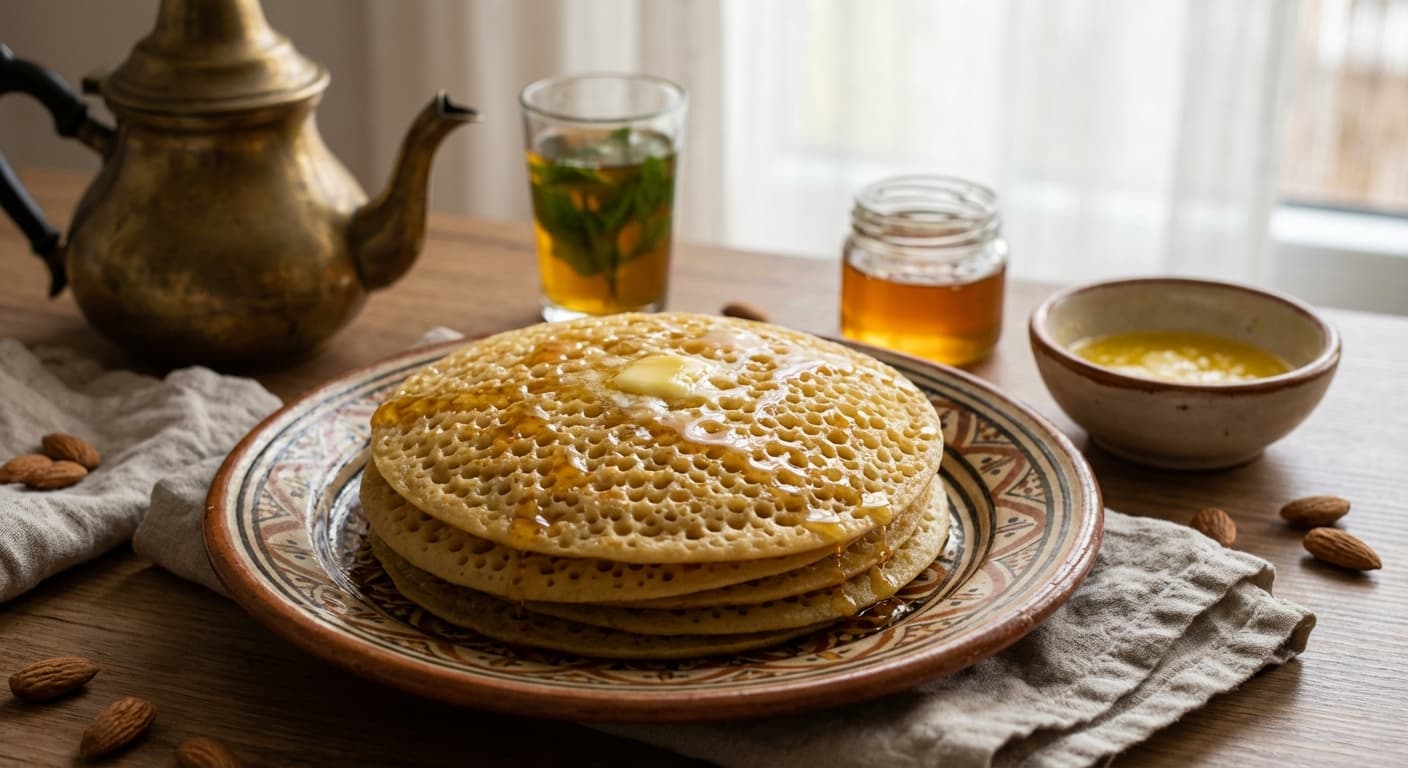
Beghrir (بغرير) — Moroccan Thousand-Hole Semolina Pancakes with Honey-Butter
Moroccan · Desserts · 40 min
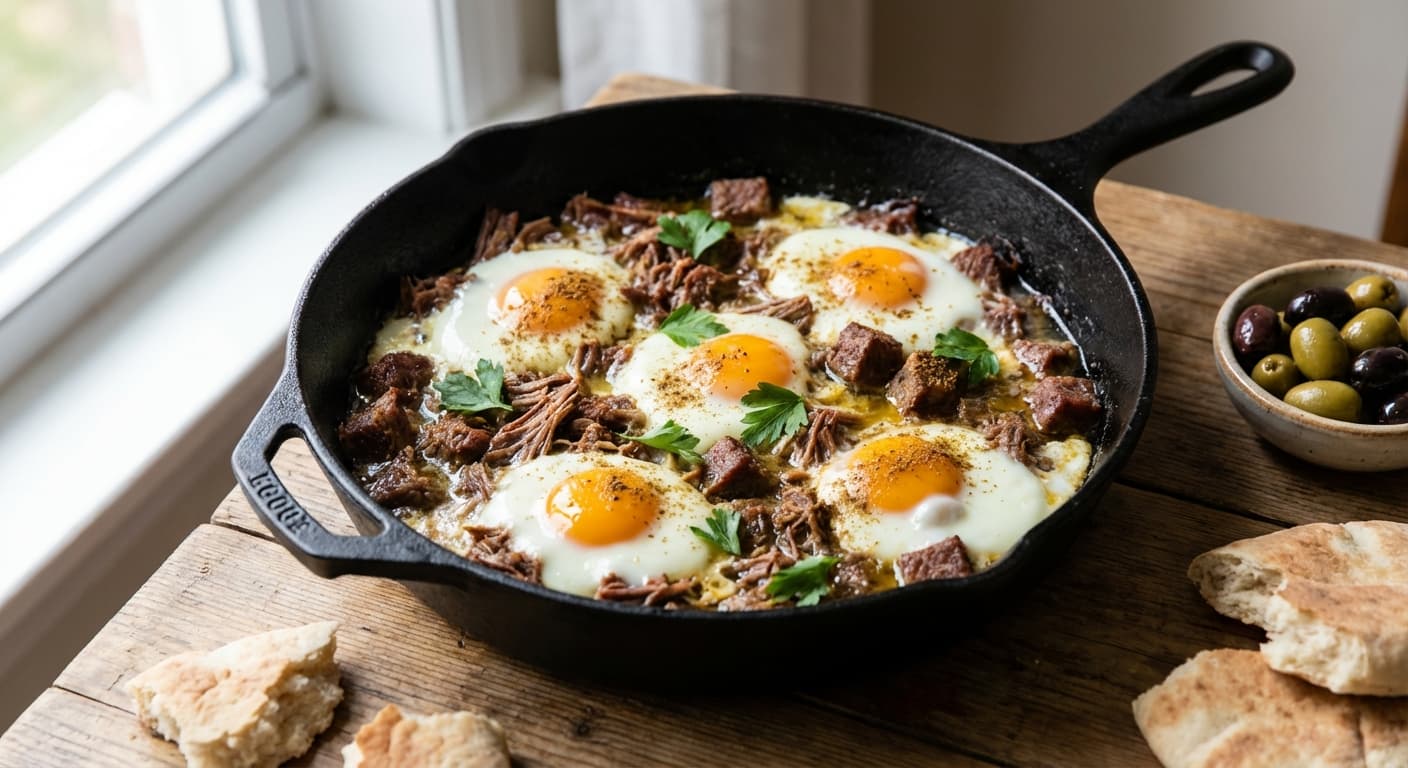
Khlea (خليع) — Moroccan Preserved Spiced Beef with Eggs
Moroccan · Main Courses · 285 min
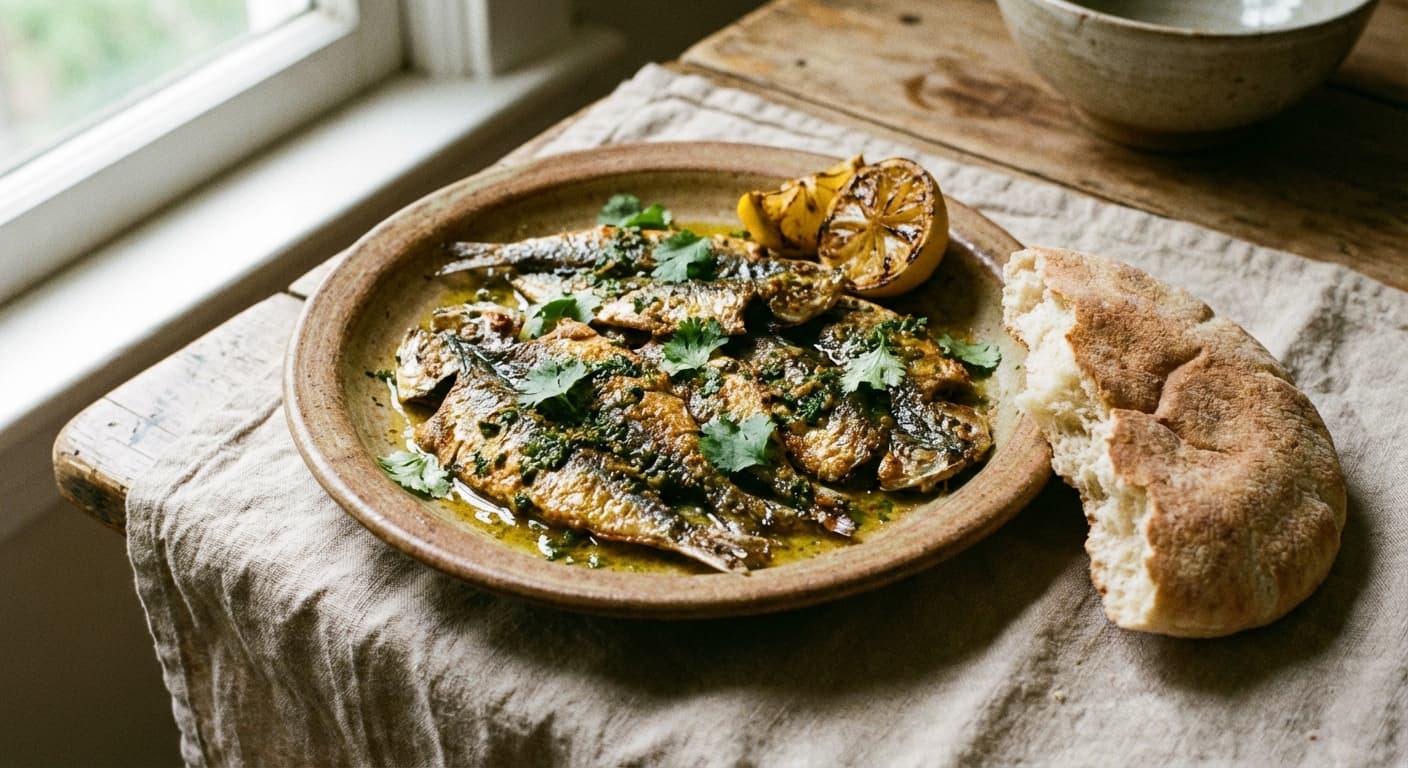
Sardines Chermoula (سردين شرمولة) — Moroccan chermoula-marinated sardines, pan-fried
Moroccan · Main Courses · 37 min
Potica (Potica) — Slovenian Walnut Holiday Roll
Slovenian · Desserts · 100 min
Romanian Cheese Doughnuts (Papanași) — Fried Curd-Cheese Rings with Sour Cream and Jam
Romanian · Desserts · 45 min
Soujouk (سجق) — Lebanese Spicy Sausage Served Sizzling with Lemon
Lebanese · Appetizers · 22 min
Asturian Bean Stew (Fabada Asturiana) — Smoky Spanish Bean and Pork Stew
Spanish · Stews · 210 min
Noodl Ba Sooya Va Felfel (نودل با سویا و فلفل) — Persian Soy and Pepper Noodles
Persian · Main Courses · 40 min
Reviews
Cooked this recipe?
Tap the stars to rate it — that's all it takes. A few words are welcome but optional.
No ratings yet. Cooked this one? Be the first to rate it — it takes one tap.