Tahchin Morgh or Bareh (ته چین مرغ یا بره) — Persian Saffron Rice Cake with Crispy Tahdig
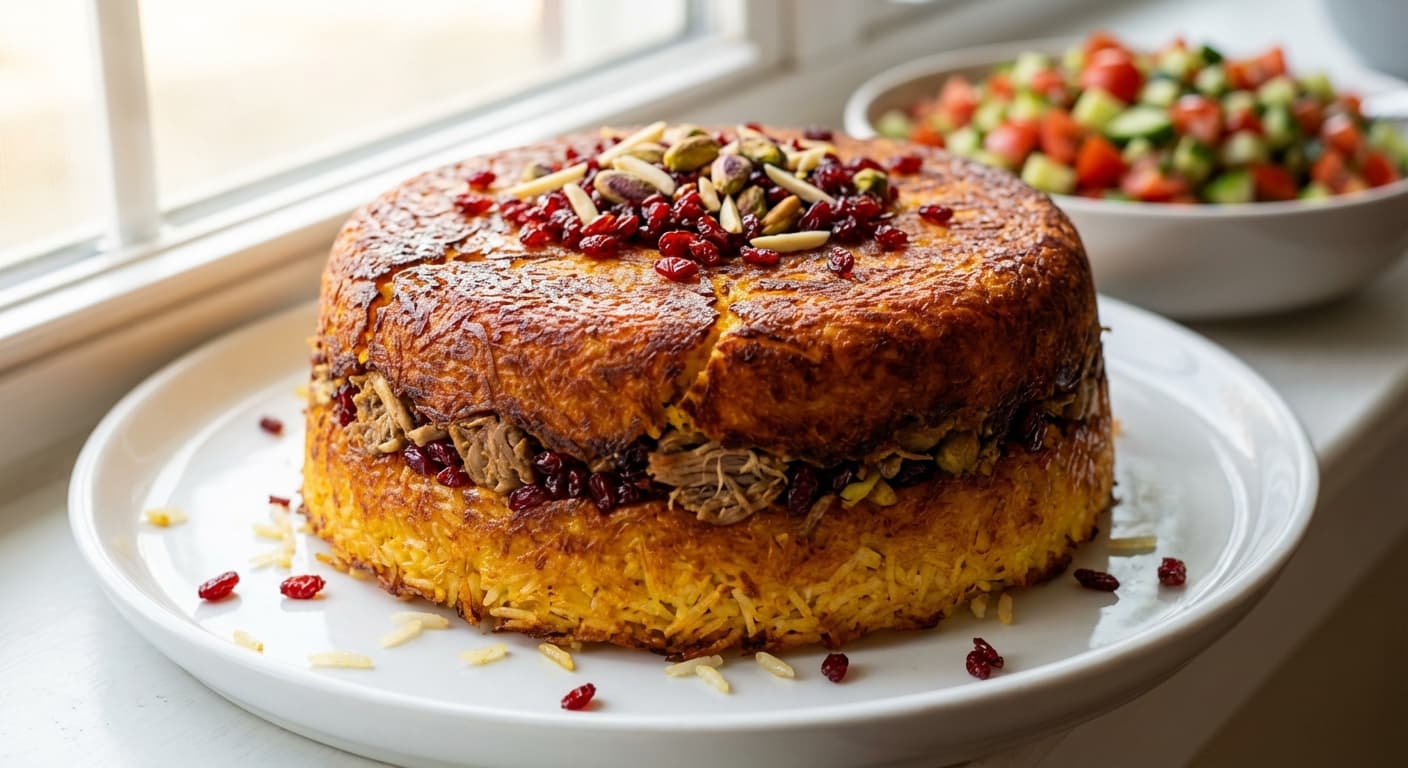
Tahchin is a celebratory Persian rice cake with a saffron-gold crust (tahdig) and a tender filling of chicken or lamb. It’s often served at gatherings, where the dramatic unmolding reveals crisp edges and jeweled barberries.
Printable Recipe Card
Servings: 6 · Total: 130 min · Difficulty: medium
Ingredients (quick list)
- 450 g Basmati rice (Rinsed until water runs mostly clear)
- 18 g Fine salt (For soaking and seasoning)
- 2500 ml Water (For boiling rice)
- 60 ml Vegetable oil (Plus extra 10 ml for greasing the pan)
- 300 g Strained yogurt (Thick Greek-style or Persian mast-e chakkideh)
- 4 Egg yolks (Large yolks)
- 1 tsp Persian saffron threads (Finely crushed)
- 60 ml Hot water (For blooming saffron)
- 1 tsp Ground turmeric (For warmth and color)
- 500 g Chicken thighs, boneless skinless (Cut into 3 cm pieces)
- 500 g Lamb shoulder, boneless (Cut into 2 cm pieces)
- 150 g Onion (Thinly sliced)
+ 2 more in the full ingredients section below.
Steps (summary)
- Bloom the saffron by stirring the crushed saffron threads into 60 ml hot water, then let it stand for 10 minutes to deepen in c…
- Rinse the basmati rice 4–5 times until the water runs mostly clear, then soak it in plenty of water with 12 g of the salt for 2…
- Prepare the filling using either chicken or lamb, not both, for a clean classic tahchin layer. Heat 15 ml oil in a pan over med…
- Add 200 ml water to the pan, cover, and simmer until tender: 18–22 minutes for chicken thighs or 45–60 minutes for lamb shoulde…
- Parboil the rice by bringing 2500 ml water to a rolling boil in a large pot and adding the remaining 6 g salt. Drain the soaked…
- Make the tahchin batter by whisking the strained yogurt and egg yolks until smooth and glossy, then whisk in the turmeric and m…
+ 5 more steps in the full instructions section below.
Cultural Background
Tahchin is a showpiece of Persian hospitality, prized for its dramatic unmolding and the prized tahdig crust. Often served at celebrations and family gatherings, it reflects Iran’s love of saffron, rice craft, and elegant contrasts of color and texture.
Equipment
💡 Tips
- For the crispest tahdig, drain the parboiled rice for 5 full minutes and keep the filling nearly dry before layering.
- If using a pot, choose a heavy-bottom nonstick with a tight lid; steady low heat prevents scorching while still building a golden crust.
- Press the bottom layer firmly and keep meat away from the edges so the crust forms as one continuous ring.
⚠️ Common Mistakes
❌ Rice is overboiled during parboil and turns mushy in the final cake.
✅ Fix: Boil only 6–7 minutes and drain when grains are soft outside but still firm in the center; they finish cooking during steaming/baking.
❌ Tahdig won’t crisp and the bottom is pale.
✅ Fix: Drain rice thoroughly, keep filling nearly dry, and maintain steady low heat for the full cook time with enough oil distributed across the base.
❌ Cake breaks when unmolding.
✅ Fix: Rest 10 minutes, loosen edges with a thin spatula, and invert in one decisive motion onto a warm platter.
🧊 How to Store
Cool leftovers within 1 hour, then refrigerate in an airtight container for up to 3 days. Reheat slices in a covered skillet over low heat with 10 ml water for 6–8 minutes, then uncover for 2 minutes to re-crisp the tahdig; avoid microwaving if you want a crunchy crust.
📅 Make Ahead
Cook the meat filling up to 2 days ahead and refrigerate it, then bring to room temperature before layering. You can also bloom saffron and rinse the rice earlier the same day; parboil and assemble just before cooking for best crust.
🍽️ Pairs Well With
- Shirazi salad
- mast-o-khiar
- torshi
- fresh herbs (sabzi khordan)
- pickled garlic (sir torshi).
Regional Variations
- Tahchin-e Morgh: the most common version with chicken, often topped with extra zereshk for a jeweled look.
- Tahchin-e Bareh: lamb version with a deeper, richer filling, popular for more festive tables.
- Oven-baked tahchin: made in a springform pan for clean slices and even browning.
Ingredients
- 450 gBasmati rice (Rinsed until water runs mostly clear)
- 18 gFine salt (For soaking and seasoning)
- 2500 mlWater (For boiling rice)
- 60 mlVegetable oil (Plus extra 10 ml for greasing the pan)
- 300 gStrained yogurt (Thick Greek-style or Persian mast-e chakkideh)
- 4Egg yolks (Large yolks)
- 1 tspPersian saffron threads (Finely crushed)
- 60 mlHot water (For blooming saffron)
- 1 tspGround turmeric (For warmth and color)
- 500 gChicken thighs, boneless skinless (Cut into 3 cm pieces)
- 500 gLamb shoulder, boneless (Cut into 2 cm pieces)
- 150 gOnion (Thinly sliced)
- 60 gBarberries (zereshk) (Rinsed quickly and drained)
- 15 mlBloomed saffron water (From the bloomed saffron mixture)
🔄 Substitutions
- Strained yogurt→ Full-fat Greek yogurt
- Barberries (zereshk)→ Dried cranberries (unsweetened)
- Lamb shoulder→ Chicken thighs, boneless skinless
Instructions
- 1
Bloom the saffron by stirring the crushed saffron threads into 60 ml hot water, then let it stand for 10 minutes to deepen in color. Reserve 15 ml of this saffron water for the barberries and keep the rest for the tahchin batter.
- 2
Rinse the basmati rice 4–5 times until the water runs mostly clear, then soak it in plenty of water with 12 g of the salt for 20 minutes. Soaking helps the grains elongate and reduces breakage during parboiling.
- 3
Prepare the filling using either chicken or lamb, not both, for a clean classic tahchin layer. Heat 15 ml oil in a pan over medium heat, sauté the sliced onion for 6–8 minutes until soft and lightly golden, then add the meat, 1 tsp turmeric, and 6 g salt and cook for 3 minutes to coat and lightly sear.
- 4
Add 200 ml water to the pan, cover, and simmer until tender: 18–22 minutes for chicken thighs or 45–60 minutes for lamb shoulder, stirring once or twice. When done, uncover and reduce any excess liquid until the pan is nearly dry, because watery filling can soften the tahdig and prevent a crisp crust.
- 5
Parboil the rice by bringing 2500 ml water to a rolling boil in a large pot and adding the remaining 6 g salt. Drain the soaked rice, add it to the boiling water, and boil 6–7 minutes until the grains are softened on the outside but still firm in the center, then drain thoroughly in a colander.
- 6
Make the tahchin batter by whisking the strained yogurt and egg yolks until smooth and glossy, then whisk in the turmeric and most of the bloomed saffron water (keep the reserved 15 ml aside). Fold in about two-thirds of the drained rice gently so the grains are well-coated but not crushed, creating the saffron-yogurt matrix that bakes into a sliceable cake.
- 7
Prepare the barberries by heating 10 ml oil in a small pan over low heat and sautéing the rinsed barberries for 60–90 seconds, just until they plump and shine. Stir in the reserved 15 ml saffron water, then remove from heat immediately to prevent bitterness from overcooking.
- 8
Assemble the tahchin in a nonstick pot or a 24 cm nonstick springform pan for easy unmolding. Grease the base and sides with 10 ml oil, then spread half of the saffron-coated rice mixture firmly into the bottom, pressing to eliminate air pockets that can cause cracking.
- 9
Add the cooked chicken or lamb in an even layer, keeping it about 1 cm away from the edges so the crust can form continuously. Sprinkle half of the barberries over the meat, then cover with the remaining plain drained rice (the uncoated third) to create a lighter top layer and a more dramatic color contrast when sliced.
- 10
Drizzle the remaining 60 ml vegetable oil evenly over the top so heat conducts and the crust browns reliably. Cover tightly with a lid wrapped in a clean towel (to catch steam), then cook on low heat for 60 minutes in a pot, or bake at 190°C for 55–65 minutes until the sides are deeply golden and the aroma is nutty and saffron-forward.
- 11
Rest the tahchin for 10 minutes off heat so the crust sets and releases more cleanly. Invert onto a platter in one confident motion, then top with the remaining barberries and slice with a sharp knife, wiping between cuts for clean layers.
🪪 Recipe Passport
Cultural Background
Tahchin is a showpiece of Persian hospitality, prized for its dramatic unmolding and the prized tahdig crust. Often served at celebrations and family gatherings, it reflects Iran’s love of saffron, rice craft, and elegant contrasts of color and texture.
Regional Variations
Researched from multiple sources and validated by the Zaffaron editorial team. Every recipe is tested for accuracy, measurements, and cultural authenticity.
Nutrition per serving
Pairs well with
If you enjoyed this recipe, here are a few related Zaffaron recipes to try next.
- Yatimcheh-ye Panir-Kesh (یتیمچه پنیرکش) — | Persian Rustic Vegetable Medley with Melted Cheese
- Tahchin Morgh (ته چین مرغ) — Persian Saffron Rice Cake with Chicken
- Tahchin-e Zereshk va Gerdoo (ته چین زرشک و گردو) — Persian Saffron Rice Cake with Barberries and Walnuts
- Kateh (کته) — Persian Absorption Rice
Does your family make this differently?
Every family has their own version. Maybe your grandmother adds a secret ingredient, or your aunt has a completely different technique. Preserve your family's version — with their name on it, forever.
You Might Also Like
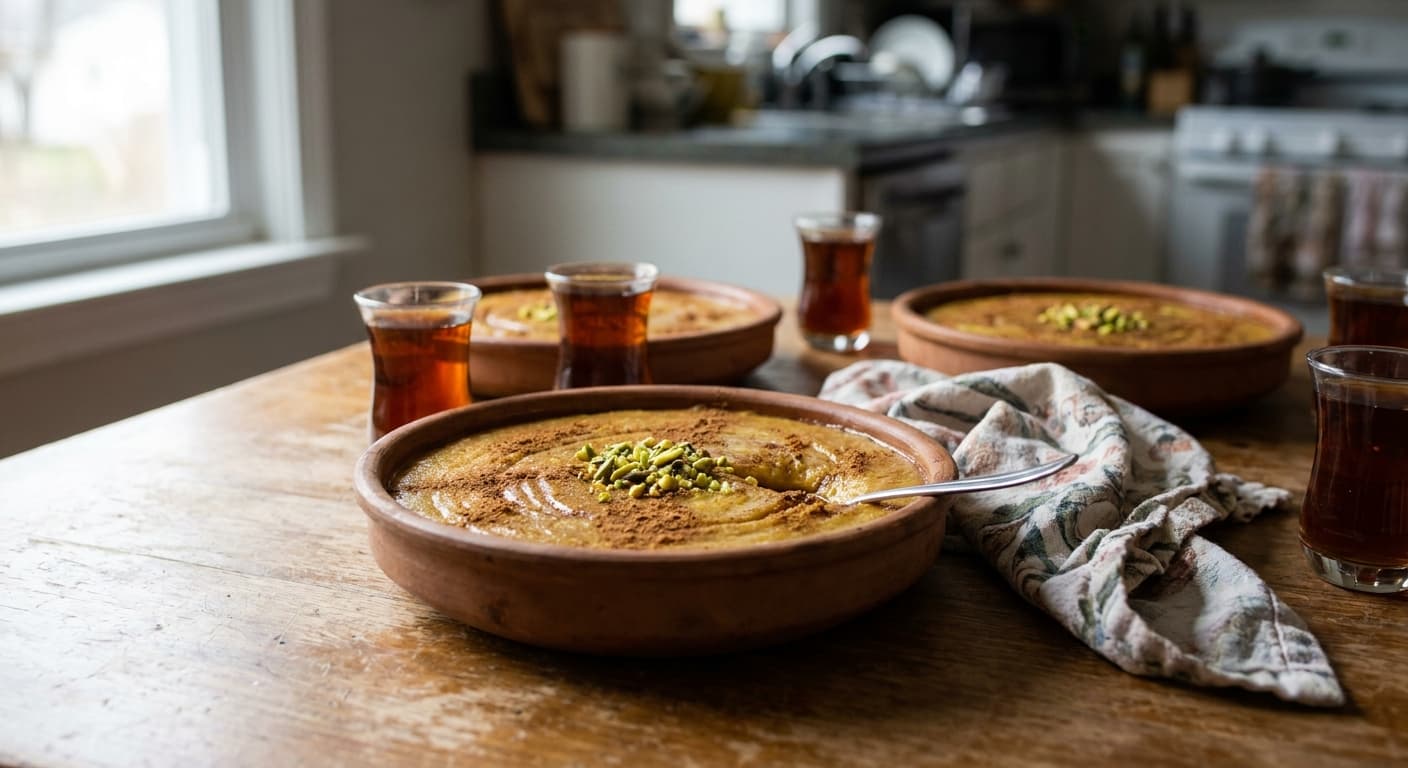
Persian Kachi (کاچی) — Saffron Rosewater Pudding
Persian · Desserts · 45 min
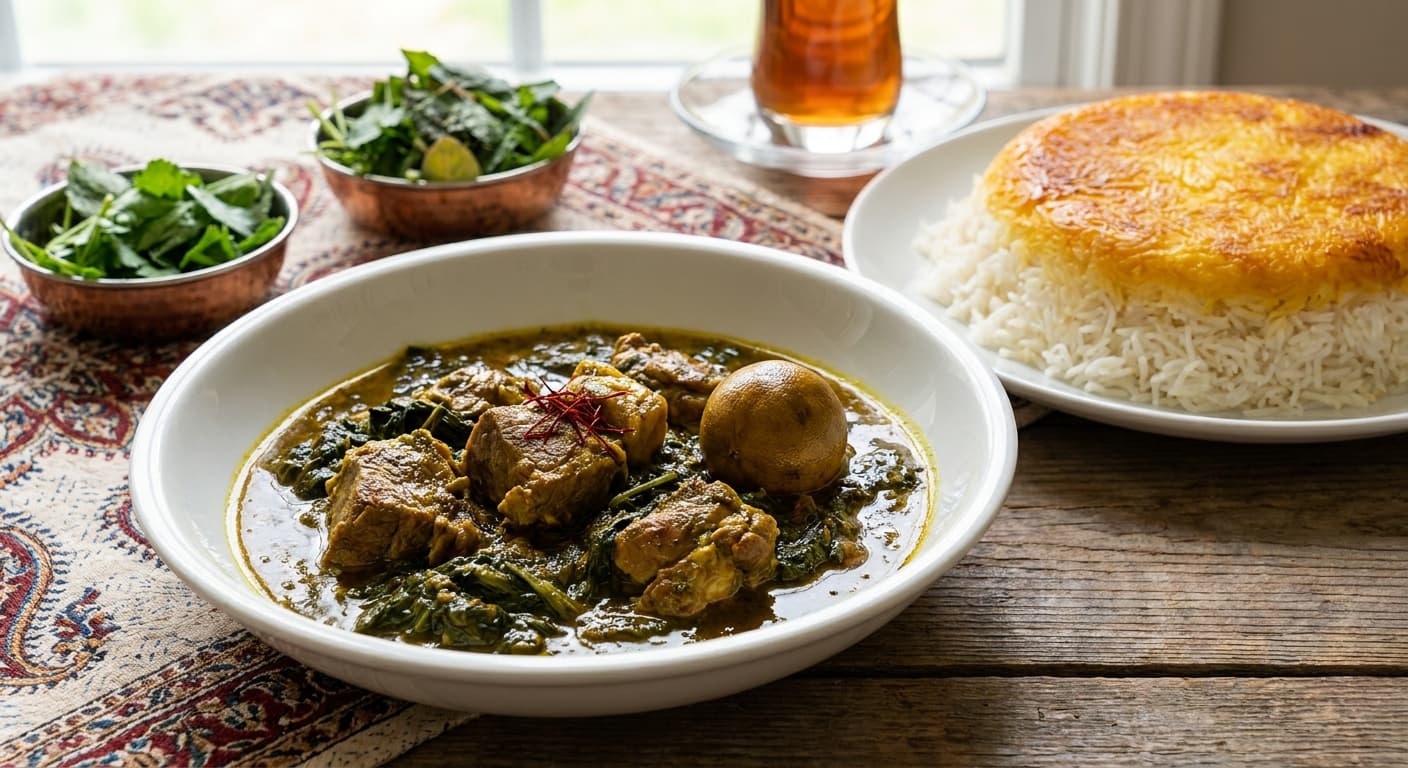
Persian Khoresht Saak (خورش ساک) — Saffron-Cardamom Lamb Stew with Saak Greens
Persian · Stews · 145 min
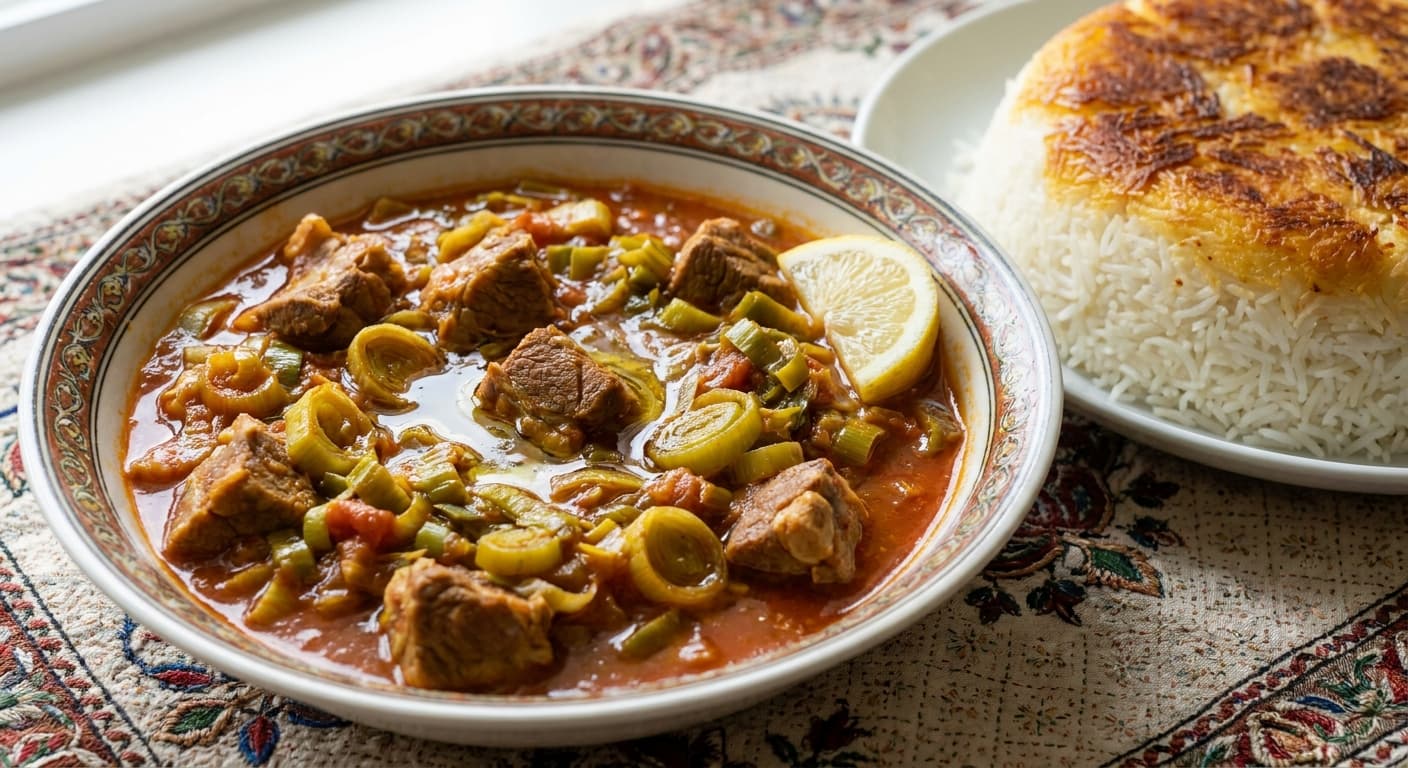
Khoresh Tareh Farangi (خورش تره فرنگی) — Persian Leek and Lamb Stew
Persian · Stews · 130 min
Japanese Oyakodon (親子丼) — Chicken and Egg Rice Bowl
Japanese · Rice Dishes · 29 min
Cantonese Chicken Congee (粵式雞粥) — Silky Rice Porridge with Ginger
Chinese · Rice Dishes · 95 min
Chicken Chygyrtma (Toyuq Çığırtması) — Azerbaijani Chicken with Eggs and Tomatoes
Azerbaijani · Main Courses · 65 min
Turkish Cağ Kebab (Cağ Kebabı) — Erzurum Slow-Roasted Charcoal Lamb Skewer
Turkish · Kebabs · 160 min
Samlor Machu Kroeung (សម្លម្ជូរគ្រឿង) — Cambodian Sour Kroeung Beef Soup
Cambodian · Soups · 130 min
Reviews
Cooked this recipe?
Tap the stars to rate it — that's all it takes. A few words are welcome but optional.
No ratings yet. Cooked this one? Be the first to rate it — it takes one tap.