Turşu (Turşu) — Azerbaijani Mixed Vegetable Pickle
Turşu is a beloved Azerbaijani mixed vegetable pickle served alongside kebabs, rice, and hearty stews. Crisp vegetables are packed in jars with garlic, herbs, and spices, then cured in a tangy brine for a bright, crunchy bite.
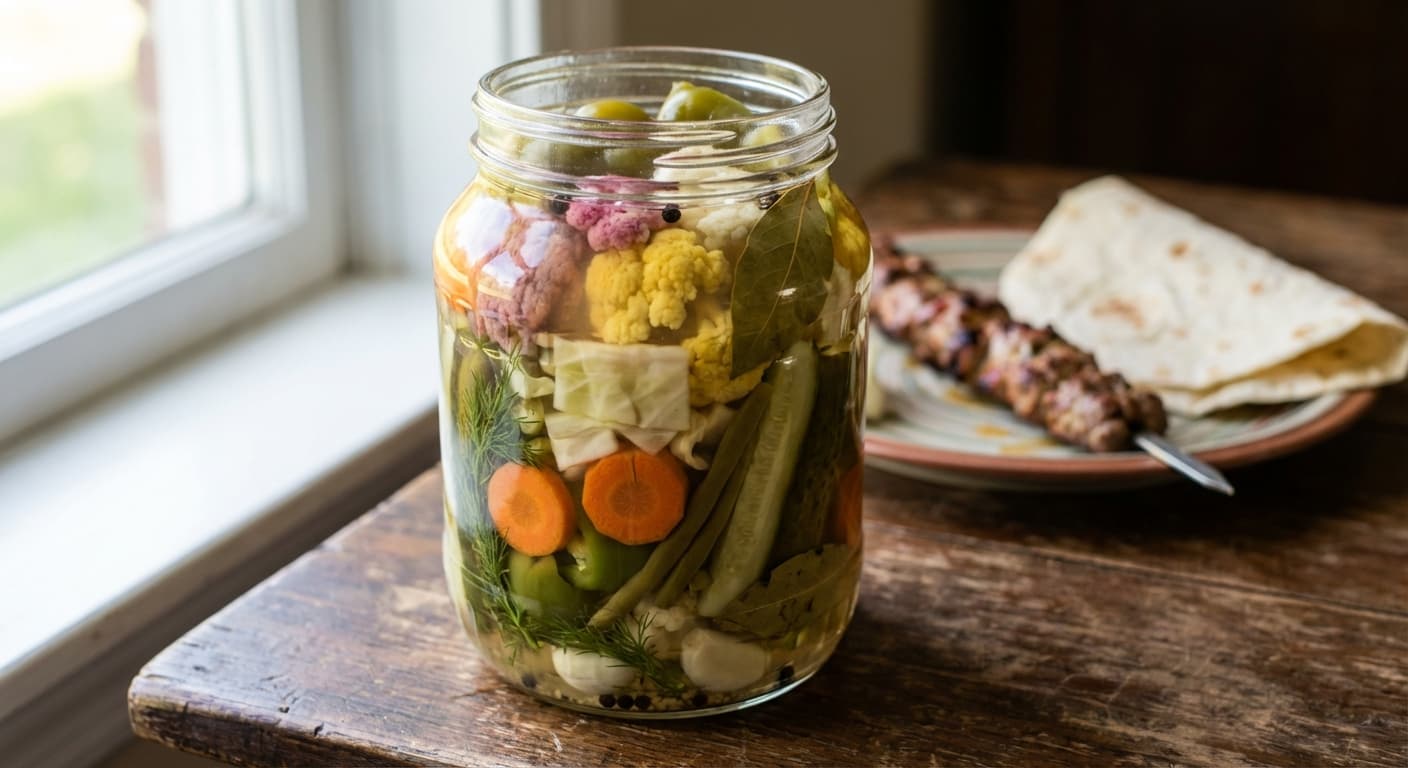
Printable Recipe Card
Servings: 16 · Total: 55 min · Difficulty: easy
Ingredients (quick list)
- 500 g cauliflower florets (cut into 3 cm florets)
- 300 g green cabbage (cut into 3 cm squares)
- 250 g carrots (peeled, cut into 6 mm rounds)
- 200 g green bell pepper (seeded, cut into 3 cm pieces)
- 250 g cucumber (cut into thick spears)
- 200 g green beans (trimmed, cut into 4 cm lengths)
- 30 g garlic cloves (about 8–10 cloves, lightly crushed)
- 20 g fresh dill (stems and fronds)
- 15 g fresh cilantro (optional but traditional in many homes)
- 3 leaf bay leaf
- 2 tsp black peppercorns
- 2 tsp coriander seeds (lightly crushed)
+ 5 more in the full ingredients section below.
Steps (summary)
- Wash and thoroughly dry all vegetables and herbs so no grit or excess water dilutes the brine. Cut everything to the sizes list…
- Bring a medium pot of water to a full boil and prepare a large bowl of cold water. Blanch the cauliflower and green beans for 6…
- Drain the blanched vegetables very well and let them air-dry for 10 minutes on a clean towel. Excess surface water can weaken f…
- Sterilize two 1-liter glass jars and their lids by boiling them for 10 minutes, then let them dry upside down. Clean jars help…
- Pack the jars tightly in layers: start with some dill, garlic, peppercorns, coriander seeds, mustard seeds, and a bay leaf. Add…
- Make the brine by combining water, vinegar, salt, and sugar in a pot and bringing it just to a boil while stirring until fully…
+ 2 more steps in the full instructions section below.
Cultural Background
Across Azerbaijan, turşu is a staple on the table, especially in cooler months when preserved vegetables brighten rich meals. Families often pickle what’s abundant from the market or garden, creating jars that accompany kebabs, plov, and festive spreads.
Equipment
💡 Tips
- Keep all vegetables fully submerged; if needed, use a small food-safe weight or a folded cabbage leaf to hold pieces under the brine.
- For extra crispness, chill the vegetables before packing and avoid over-blanching the cauliflower and beans beyond 60 seconds.
- Taste after 48 hours and after 7 days; the acidity stays similar, but the garlic and spices bloom noticeably with time.
⚠️ Common Mistakes
❌ Vegetables turn soft after a few days.
✅ Fix: Blanch only the cauliflower and beans for 60 seconds, dry vegetables well, and pack jars tightly so pieces do not float.
❌ Pickles taste flat or watered down.
✅ Fix: Measure salt by weight and avoid adding extra water from wet vegetables; fully dissolve salt and sugar in the brine before pouring.
❌ Cloudy brine and off odors develop.
✅ Fix: Use sterilized jars, keep everything submerged, and refrigerate after cooling; discard if you see mold or smell strong fermentation.
🧊 How to Store
Store sealed jars in the refrigerator at 2–4°C and keep vegetables submerged in brine. Flavor is best from day 3 to day 21; use within 4 weeks for peak crunch. Always use a clean utensil and re-chill promptly after serving.
📅 Make Ahead
Turşu is designed for making ahead: pack and brine the jars up to 4 weeks before serving. For entertaining, start the batch 7–10 days early so the garlic and spices fully infuse the vegetables.
🍽️ Pairs Well With
- Lamb kebab
- chicken shashlik
- plov
- dolma
- lentil soup
- fresh lavash.
Regional Variations
- Baku-style mixes often emphasize cauliflower, cabbage, and carrots with lots of garlic and dill.
- Some regions add small green tomatoes or hot peppers for a sharper, more pungent jar.
- A winter version may include turnip and beet for extra firmness and a rosy tint.
Ingredients
- 500 gcauliflower florets (cut into 3 cm florets)
- 300 ggreen cabbage (cut into 3 cm squares)
- 250 gcarrots (peeled, cut into 6 mm rounds)
- 200 ggreen bell pepper (seeded, cut into 3 cm pieces)
- 250 gcucumber (cut into thick spears)
- 200 ggreen beans (trimmed, cut into 4 cm lengths)
- 30 ggarlic cloves (about 8–10 cloves, lightly crushed)
- 20 gfresh dill (stems and fronds)
- 15 gfresh cilantro (optional but traditional in many homes)
- 3 leafbay leaf
- 2 tspblack peppercorns
- 2 tspcoriander seeds (lightly crushed)
- 1 tspmustard seeds (optional for extra crunch)
- 1000 mlwater
- 500 mlwhite vinegar (5% acidity)
- 30 gkosher salt (3% salt based on total liquid)
- 12 ggranulated sugar (balances acidity without making it sweet)
🔄 Substitutions
- white vinegar (5% acidity)→ apple cider vinegar (5% acidity)
- fresh cilantro→ fresh parsley
- green beans→ turnip
Instructions
- 1
Wash and thoroughly dry all vegetables and herbs so no grit or excess water dilutes the brine. Cut everything to the sizes listed so the vegetables pickle at the same rate and stay crisp.
- 2
Bring a medium pot of water to a full boil and prepare a large bowl of cold water. Blanch the cauliflower and green beans for 60 seconds, then immediately transfer them to the cold water to stop the cooking and lock in crunch.
- 3
Drain the blanched vegetables very well and let them air-dry for 10 minutes on a clean towel. Excess surface water can weaken flavor and reduce shelf life, so take this drying step seriously.
- 4
Sterilize two 1-liter glass jars and their lids by boiling them for 10 minutes, then let them dry upside down. Clean jars help the pickles keep their fresh flavor and prevent spoilage during storage.
- 5
Pack the jars tightly in layers: start with some dill, garlic, peppercorns, coriander seeds, mustard seeds, and a bay leaf. Add mixed vegetables, pressing down firmly, then repeat the aromatics and vegetables until the jars are full, leaving 2 cm headspace.
- 6
Make the brine by combining water, vinegar, salt, and sugar in a pot and bringing it just to a boil while stirring until fully dissolved. Boiling ensures the salt dissolves evenly and the brine penetrates the vegetables consistently.
- 7
Carefully pour the hot brine into the jars, fully submerging the vegetables and keeping the 2 cm headspace. Tap the jars gently on the counter and run a clean skewer down the sides to release trapped air bubbles.
- 8
Seal the jars and let them cool to room temperature on a towel, away from drafts. Once cool, refrigerate for at least 48 hours before eating; for deeper flavor and a more traditional taste, wait 5–7 days.
🪪 Recipe Passport
Cultural Background
Across Azerbaijan, turşu is a staple on the table, especially in cooler months when preserved vegetables brighten rich meals. Families often pickle what’s abundant from the market or garden, creating jars that accompany kebabs, plov, and festive spreads.
Regional Variations
Researched from multiple sources and validated by the Zaffaron editorial team. Every recipe is tested for accuracy, measurements, and cultural authenticity.
Nutrition per serving
Pairs well with
If you enjoyed this recipe, here are a few related Zaffaron recipes to try next.
- Dushbara Ash (Düşbərə Aşı) — Azerbaijani Dumpling Soup with Vinegar and Mint
- Ayran-Ashi (آیران آشی) — Azerbaijani Yogurt Soup with Rice and Herbs
- Badimjan Dolmasi (بادمجان دولماسی) — Azerbaijani Stuffed Eggplant with Lamb and Rice
- Cabbage Dolma (Kələm Dolması) — Azerbaijani stuffed cabbage rolls in tomato-saffron sauce
Does your family make this differently?
Every family has their own version. Maybe your grandmother adds a secret ingredient, or your aunt has a completely different technique. Preserve your family's version — with their name on it, forever.
You Might Also Like
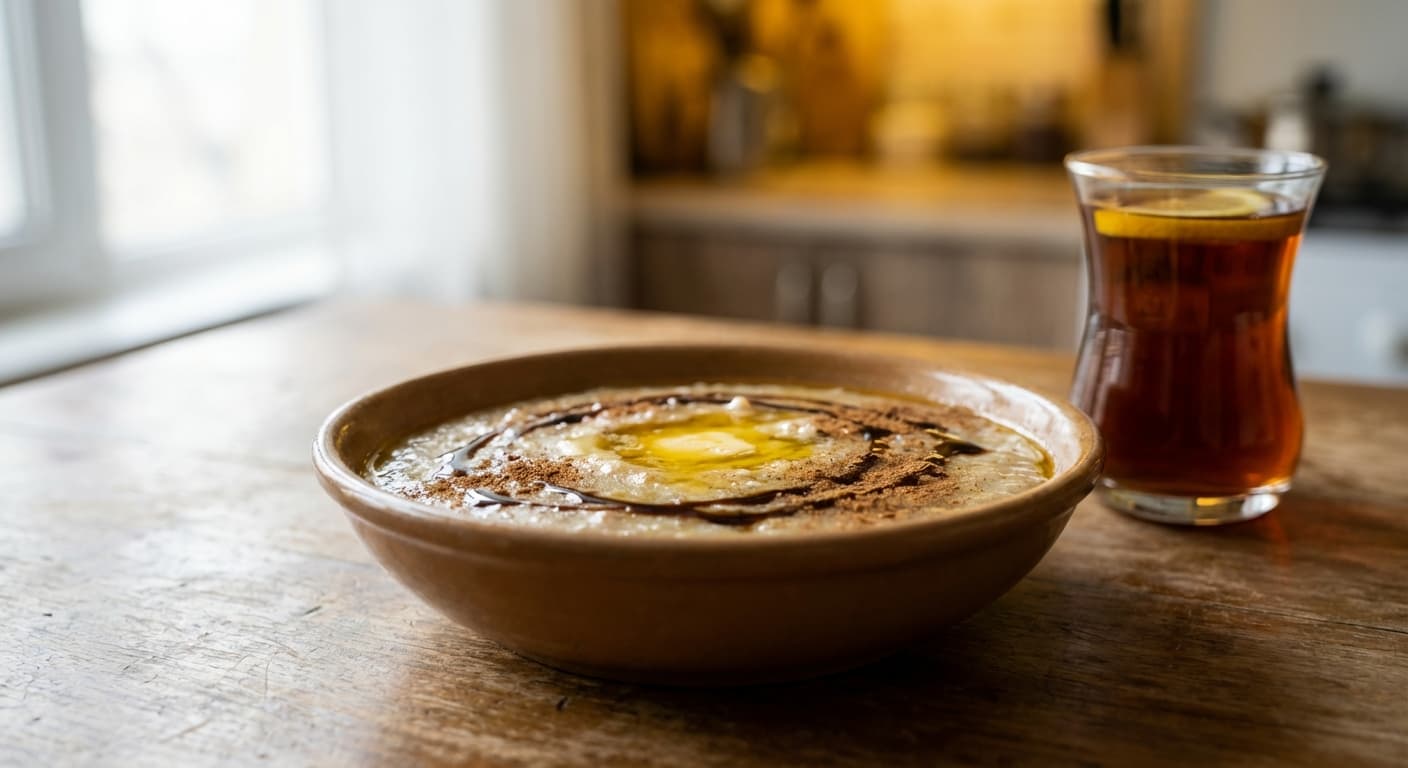
Khashil (Xəşil) — Azerbaijani wheat porridge with butter and grape molasses
Azerbaijani · Main Courses · 65 min
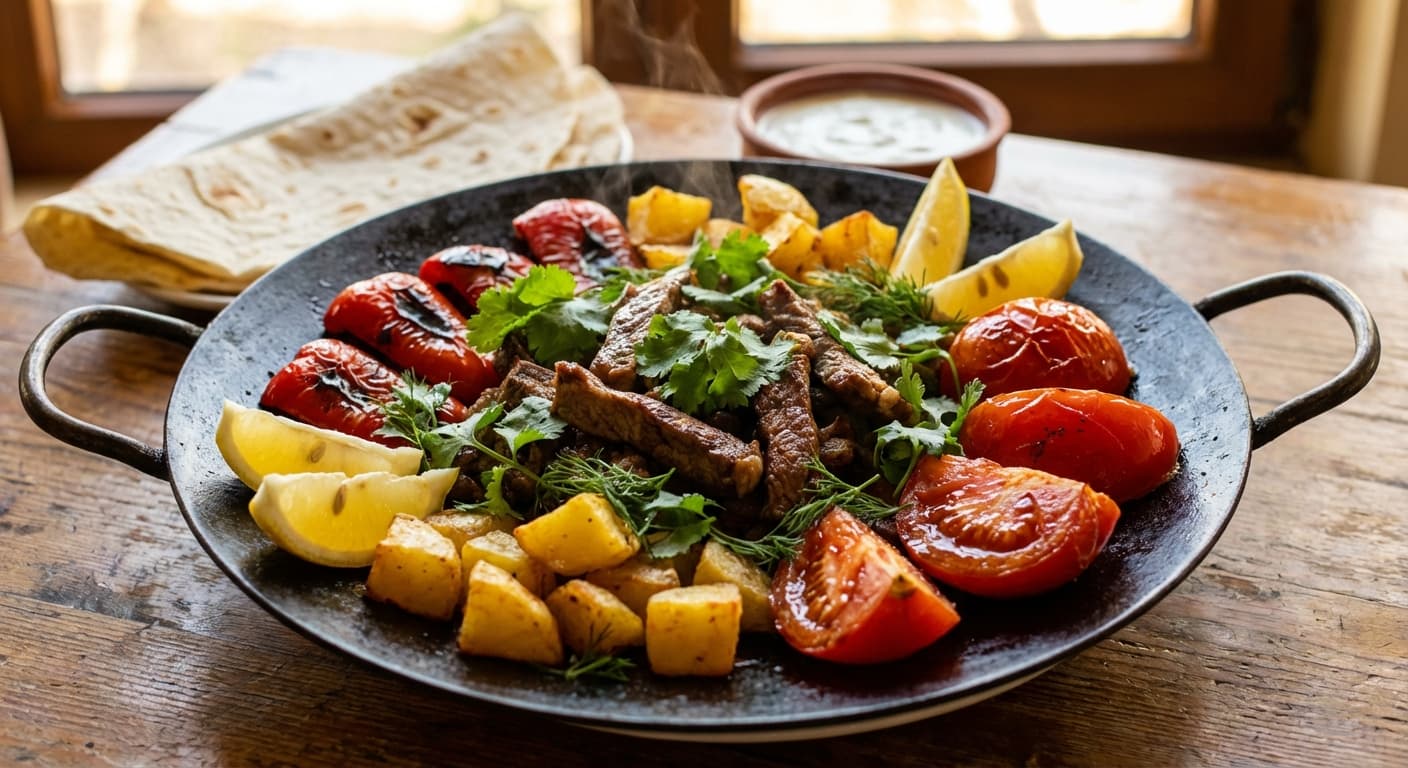
Sac Qovurma (Sacda ət və tərəvəz) — Fast-cooked Azerbaijani meat and vegetables on a saj
Azerbaijani · Main Courses · 38 min
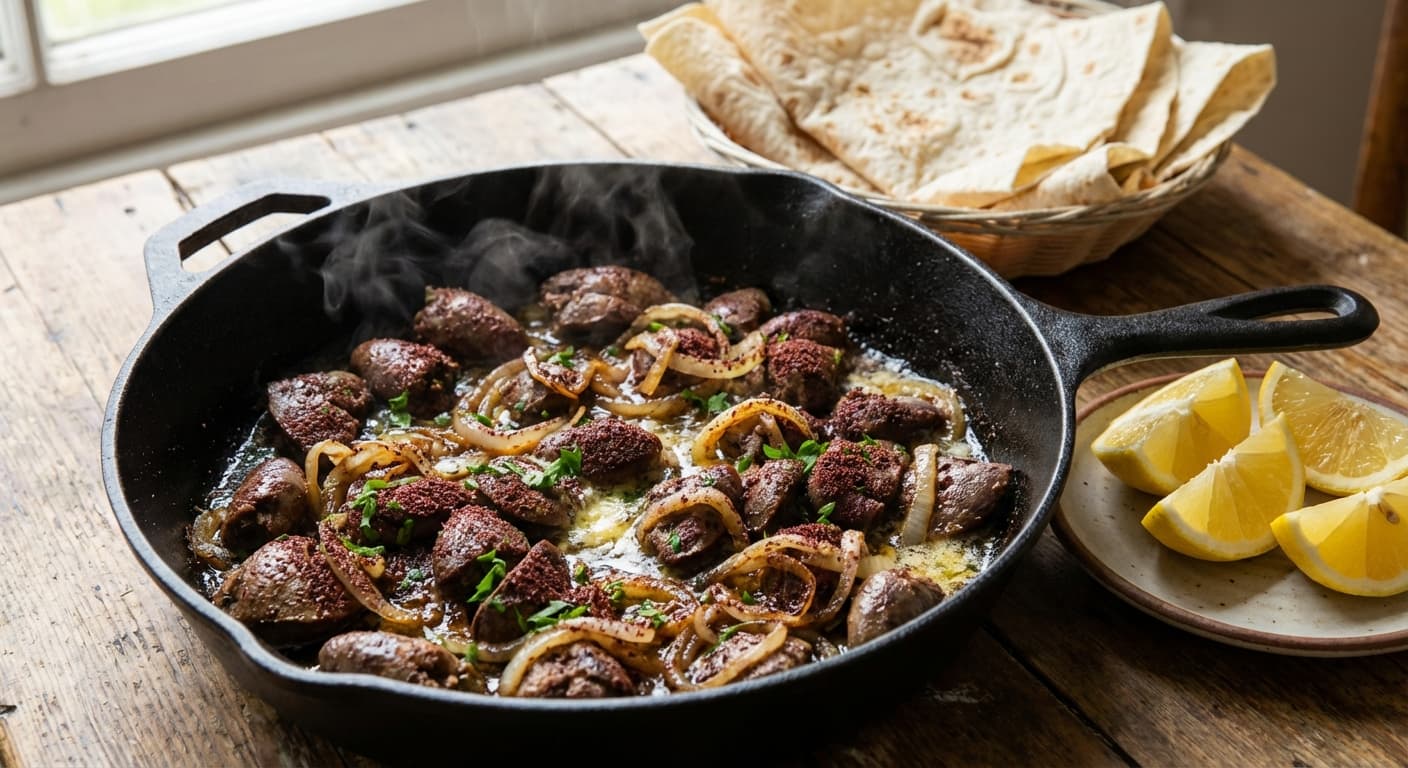
Cız-Bız (Cız-Bız) — Azerbaijani Lamb Offal Sauté with Onion and Spices
Azerbaijani · Main Courses · 45 min
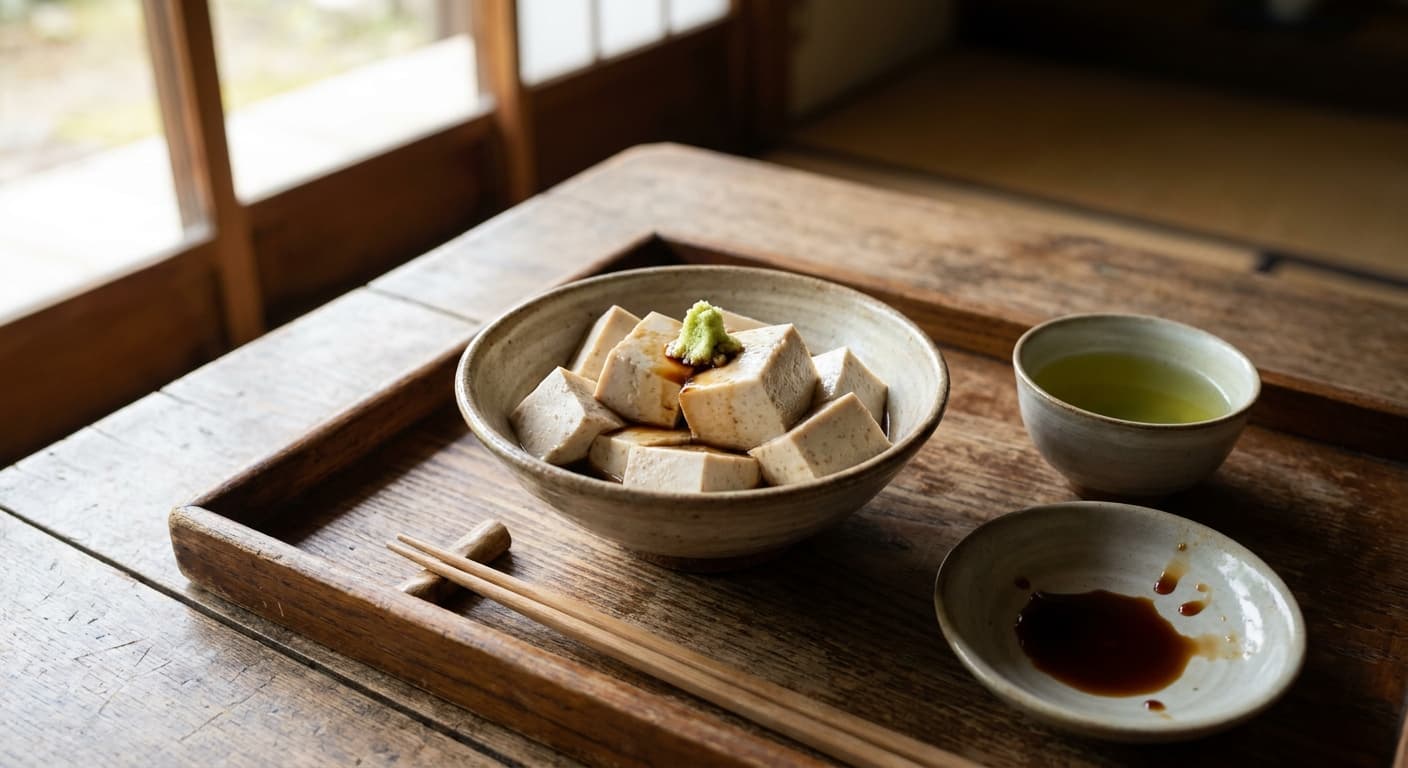
Goma-dofu (胡麻豆腐) — Shojin Sesame Kuzu Tofu
Japanese · Side Dishes · 28 min
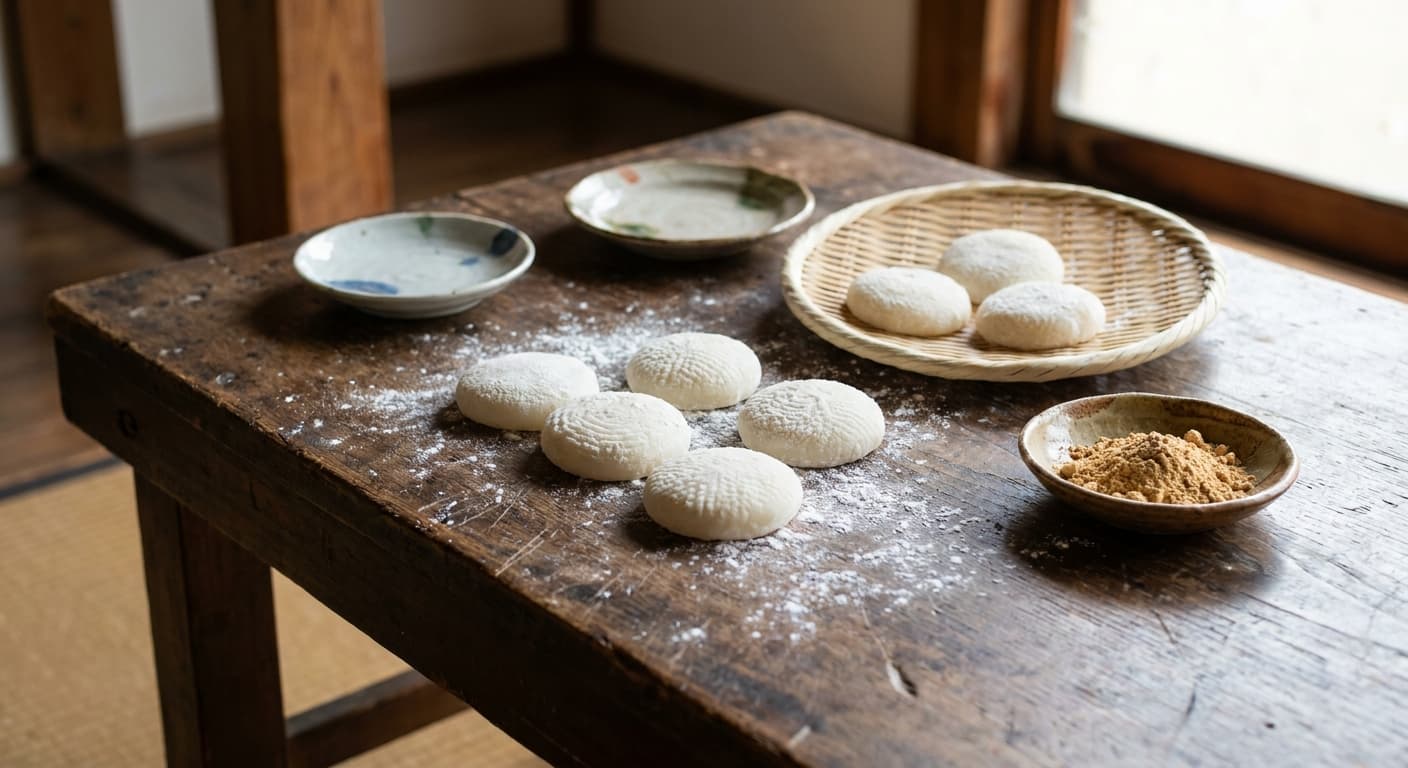
Mochi (餅) — Traditional Pounded Glutinous Rice Cakes
Japanese · Side Dishes · 100 min
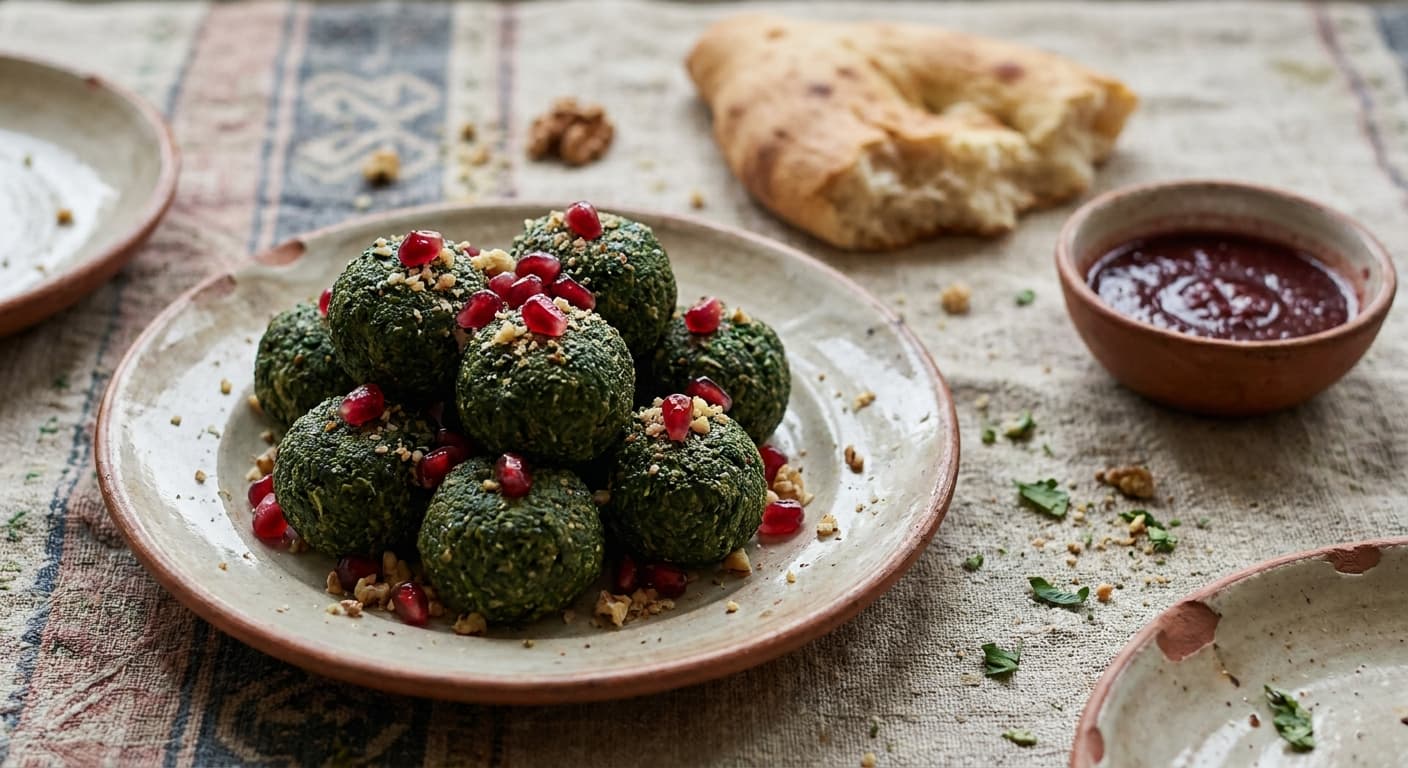
Pkhali (ფხალი) — Georgian Spinach-Walnut Appetizer
Georgian · Appetizers · 35 min
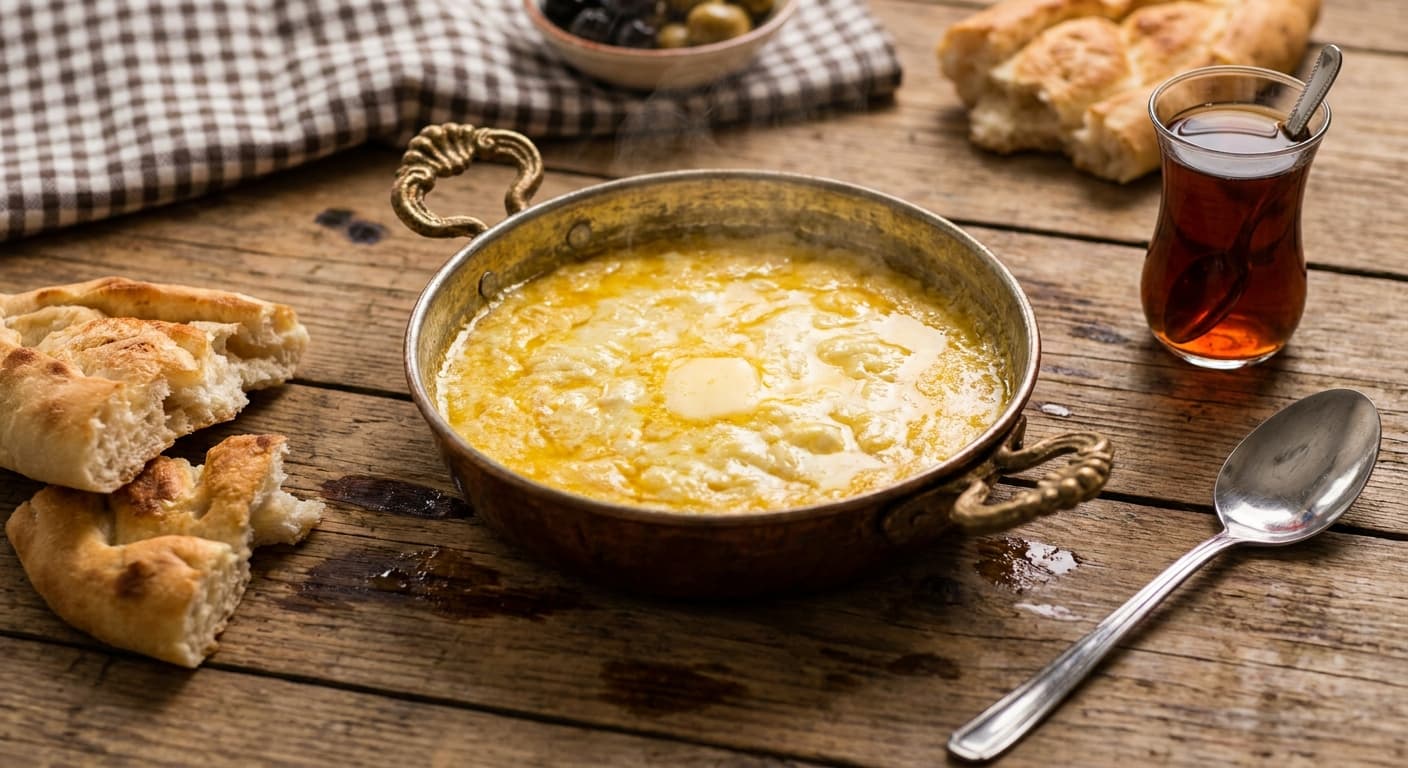
Mıhlama (Mıhlama) — Black Sea Cornmeal and Cheese Skillet
Turkish · Main Courses · 25 min
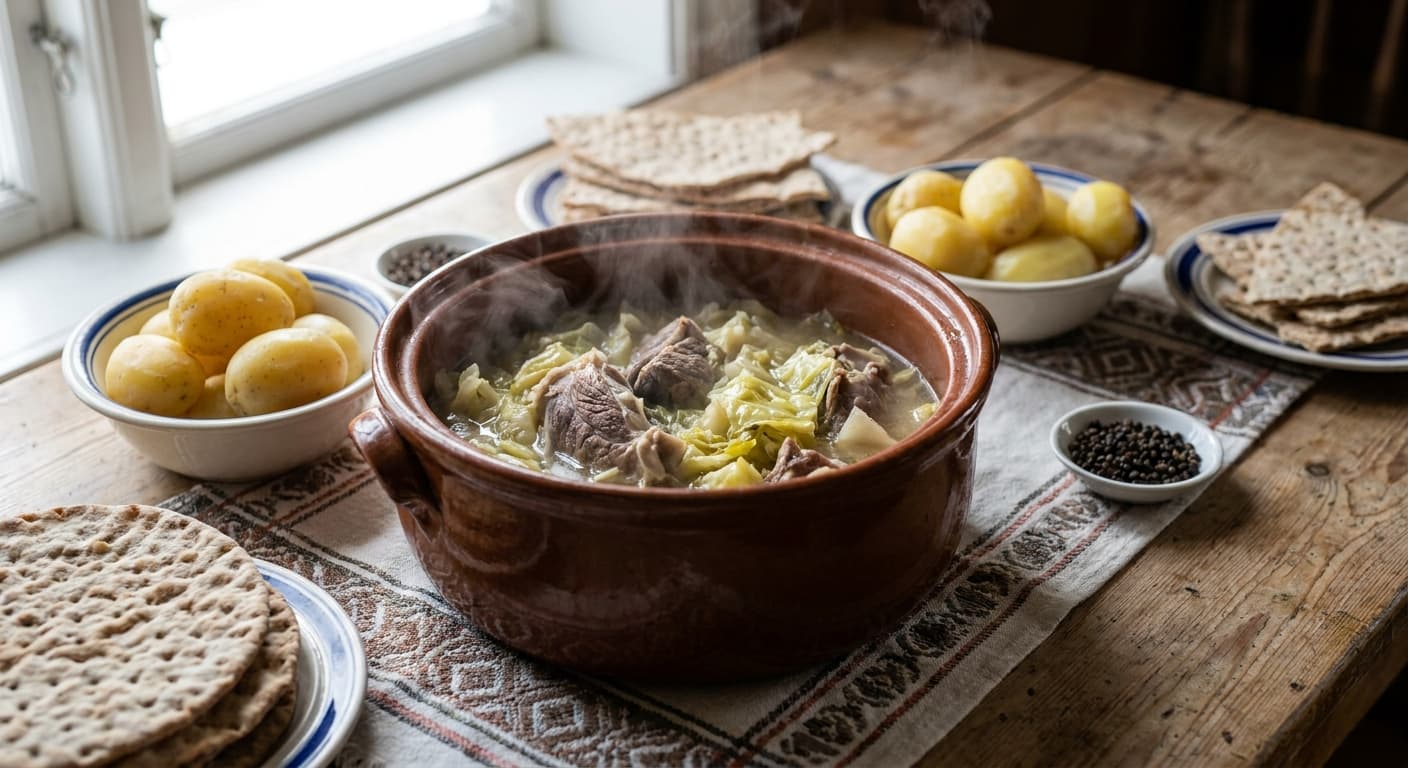
Norwegian Lamb and Cabbage Stew (Fårikål) — Peppery Autumn National Dish
Norwegian · Stews · 170 min
Reviews
Cooked this recipe?
Tap the stars to rate it — that's all it takes. A few words are welcome but optional.
No ratings yet. Cooked this one? Be the first to rate it — it takes one tap.