Vietnamese Sour Fish Soup (Canh Chua Cá) — Tamarind-Scented Mekong Soup
Canh chua is a bright southern Vietnamese soup built on tamarind, fish sauce, fresh herbs, and river fish. Its sweet-sour balance reflects Mekong Delta cooking, where pineapple, tomato, okra, and bạc hà make the broth lively and aromatic.
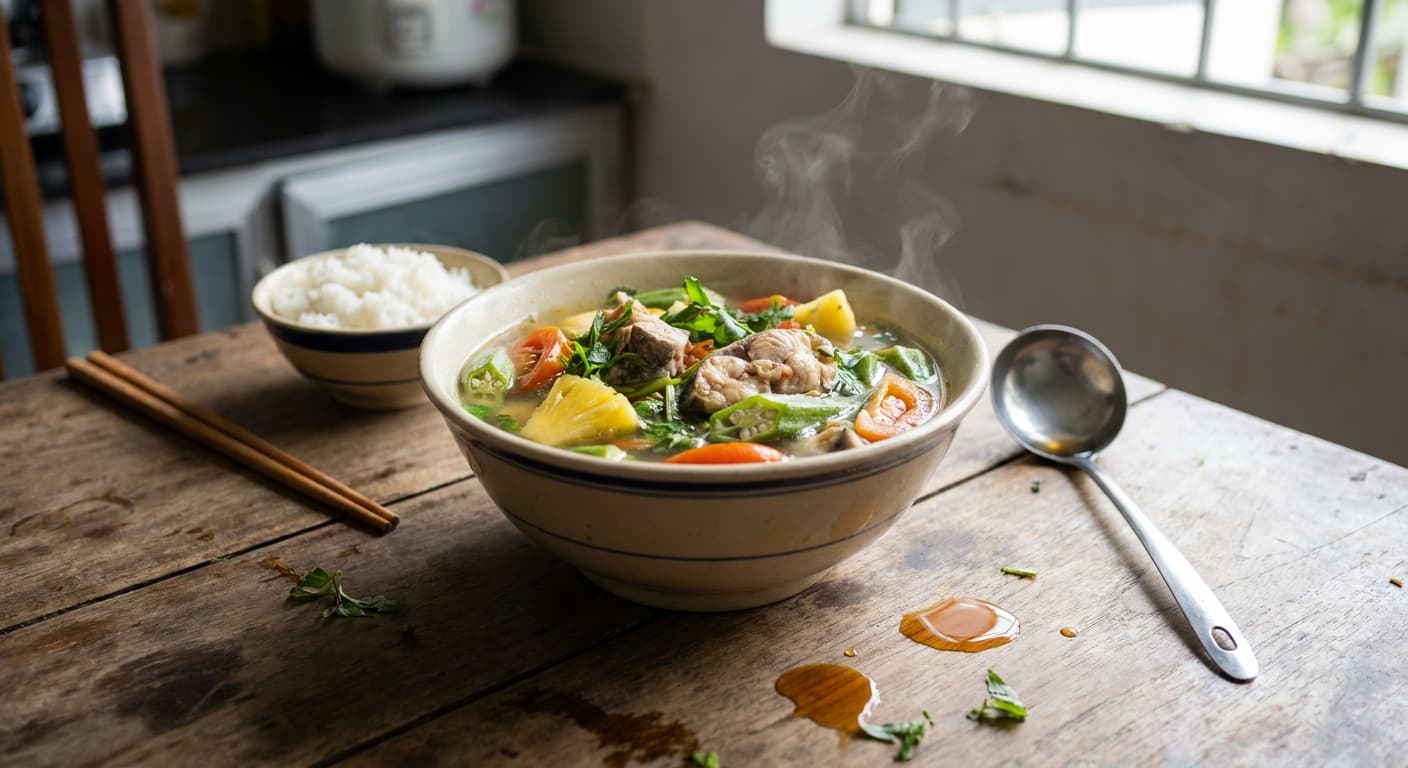
Printable Recipe Card
Servings: 4 · Total: 45 min · Difficulty: medium
Ingredients (quick list)
- 600 g catfish steaks or fillets (cut into 4 large portions)
- 3 g fine sea salt
- 1 g ground white pepper
- 50 g seedless tamarind pulp
- 240 ml boiling water (for extracting the tamarind)
- 1.25 l water
- 1 tbsp neutral cooking oil
- 2 medium shallots (thinly sliced)
- 3 clove garlic (finely chopped)
- 45 ml fish sauce
- 20 g granulated sugar
- 250 g pineapple (peeled, cored, and cut into bite-size wedges)
+ 7 more in the full ingredients section below.
Steps (summary)
- Season the catfish with 3 g fine sea salt and 1 g ground white pepper, then let it stand for 10 minutes while you prepare the v…
- Place the tamarind pulp in a heatproof bowl and pour over 240 ml boiling water. Mash thoroughly with a spoon for 2 minutes, the…
- Heat the oil in a 3 l pot over medium heat and cook the shallots for 2 minutes until fragrant and lightly softened. Add the gar…
- Pour in 1.25 l water, the strained tamarind liquid, fish sauce, and sugar, then bring the broth to a gentle boil. Add the pinea…
- Lower the heat to a steady simmer and slide in the seasoned catfish portions in a single layer. Cook for 6 to 8 minutes, turnin…
- Add the okra and elephant ear stem and simmer for 2 minutes, then add the bean sprouts, rice paddy herb, sawtooth coriander, an…
Cultural Background
Canh chua is a signature southern Vietnamese family soup, especially associated with the Mekong Delta’s river fish, tropical fruit, and abundant herbs. It is commonly served with rice as a balancing dish alongside richer braises.
Equipment
💡 Tips
- Keep the broth at a gentle simmer after adding the fish; a rolling boil can break the catfish into small flakes.
- Taste the broth before adding the fish and adjust only with measured additions: 5 ml fish sauce for saltiness, 5 g sugar for sweetness, or 15 ml tamarind liquid for more sourness.
- If using frozen elephant ear stem, thaw it fully and squeeze out excess water before adding it so the broth stays clean and bright.
⚠️ Common Mistakes
❌ Boiling the soup hard after adding the fish.
✅ Fix: Keep the heat at a gentle simmer and turn the fish only once so the pieces remain whole.
❌ Adding the herbs too early.
✅ Fix: Add rice paddy herb, sawtooth coriander, and scallions at the very end so their aroma stays bright.
❌ Using unstrained tamarind pulp.
✅ Fix: Always strain the soaked tamarind through a fine sieve to remove seeds and fibers.
🧊 How to Store
Store cooled soup in an airtight container for up to 2 days in the refrigerator. Reheat gently over medium-low heat until steaming, about 5 minutes, and avoid boiling because the fish and okra can break down.
📅 Make Ahead
The tamarind liquid and sliced vegetables can be prepared up to 1 day ahead and refrigerated separately. Cook the fish and herbs only just before serving for the cleanest texture.
🍽️ Pairs Well With
- Steamed jasmine rice
- caramelized clay-pot fish
- sliced fresh chiles
- extra fish sauce with lime.
Regional Variations
- Mekong Delta versions often use cá lóc, or snakehead fish, with pineapple and fresh rice paddy herb.
- Some households add bạc hà generously for a lighter, spongier texture in the broth.
- Coastal versions may use shrimp or mixed seafood instead of river fish, while keeping the tamarind-sweet-sour profile.
Ingredients
- 600 gcatfish steaks or fillets (cut into 4 large portions)
- 3 gfine sea salt
- 1 gground white pepper
- 50 gseedless tamarind pulp
- 240 mlboiling water (for extracting the tamarind)
- 1.25 lwater
- 1 tbspneutral cooking oil
- 2medium shallots (thinly sliced)
- 3 clovegarlic (finely chopped)
- 45 mlfish sauce
- 20 ggranulated sugar
- 250 gpineapple (peeled, cored, and cut into bite-size wedges)
- 300 gripe tomatoes (cut into wedges)
- 120 gokra (trimmed and sliced diagonally)
- 150 gelephant ear stem (also called bạc hà or taro stem; peeled and sliced diagonally)
- 120 gmung bean sprouts
- 8 sprigrice paddy herb (roughly chopped)
- 10 gsawtooth coriander (thinly sliced)
- 3scallions (cut into 3 cm lengths)
🔄 Substitutions
- catfish→ snakehead, cod, or sea bass
- elephant ear stem→ celery stems
- rice paddy herb→ Thai basil
Instructions
- 1
Season the catfish with 3 g fine sea salt and 1 g ground white pepper, then let it stand for 10 minutes while you prepare the vegetables. This short seasoning firms the surface slightly and helps the fish stay intact in the simmering broth.
- 2
Place the tamarind pulp in a heatproof bowl and pour over 240 ml boiling water. Mash thoroughly with a spoon for 2 minutes, then strain through a fine sieve and press firmly to extract a smooth sour tamarind liquid.
- 3
Heat the oil in a 3 l pot over medium heat and cook the shallots for 2 minutes until fragrant and lightly softened. Add the garlic and cook for 30 seconds, stirring constantly so it scents the oil without browning harshly.
- 4
Pour in 1.25 l water, the strained tamarind liquid, fish sauce, and sugar, then bring the broth to a gentle boil. Add the pineapple and tomatoes and simmer for 5 minutes so their sweetness rounds out the tamarind acidity.
- 5
Lower the heat to a steady simmer and slide in the seasoned catfish portions in a single layer. Cook for 6 to 8 minutes, turning the fish only once, until the flesh is opaque and just flakes at the thickest point.
- 6
Add the okra and elephant ear stem and simmer for 2 minutes, then add the bean sprouts, rice paddy herb, sawtooth coriander, and scallions. Turn off the heat after 30 seconds so the herbs stay fresh, then serve the soup immediately in deep bowls with plenty of vegetables and broth.
🪪 Recipe Passport
Cultural Background
Canh chua is a signature southern Vietnamese family soup, especially associated with the Mekong Delta’s river fish, tropical fruit, and abundant herbs. It is commonly served with rice as a balancing dish alongside richer braises.
Regional Variations
Researched from multiple sources and validated by the Zaffaron editorial team. Every recipe is tested for accuracy, measurements, and cultural authenticity.
📚 Sources & Cultural References
- Andrea Nguyen — Into the Vietnamese Kitchen: Treasured Foodways, Modern Flavors — (2006)
- Mai Pham — Pleasures of the Vietnamese Table — (2001)
Sources cited by the Zaffaron editorial team during recipe research. Cultural and culinary references supporting authenticity claims.
Nutrition per serving
Pairs well with
If you enjoyed this recipe, here are a few related Zaffaron recipes to try next.
- Banh Xeo (Bánh Xèo) — Crispy Vietnamese Turmeric Crepes
- Hue-Style Spicy Beef Noodle Soup (Bún Bò Huế) — Lemongrass Beef and Pork Rice Noodle Soup
- Vietnamese Fresh Spring Rolls (Gỏi Cuốn) — Shrimp, Pork, Herbs, and Peanut Sauce
- Vietnamese Grilled Pork with Rice Noodles (Bún Chả) — Hanoi-Style Charcoal Pork and Vermicelli
Does your family make this differently?
Every family has their own version. Maybe your grandmother adds a secret ingredient, or your aunt has a completely different technique. Preserve your family's version — with their name on it, forever.
You Might Also Like
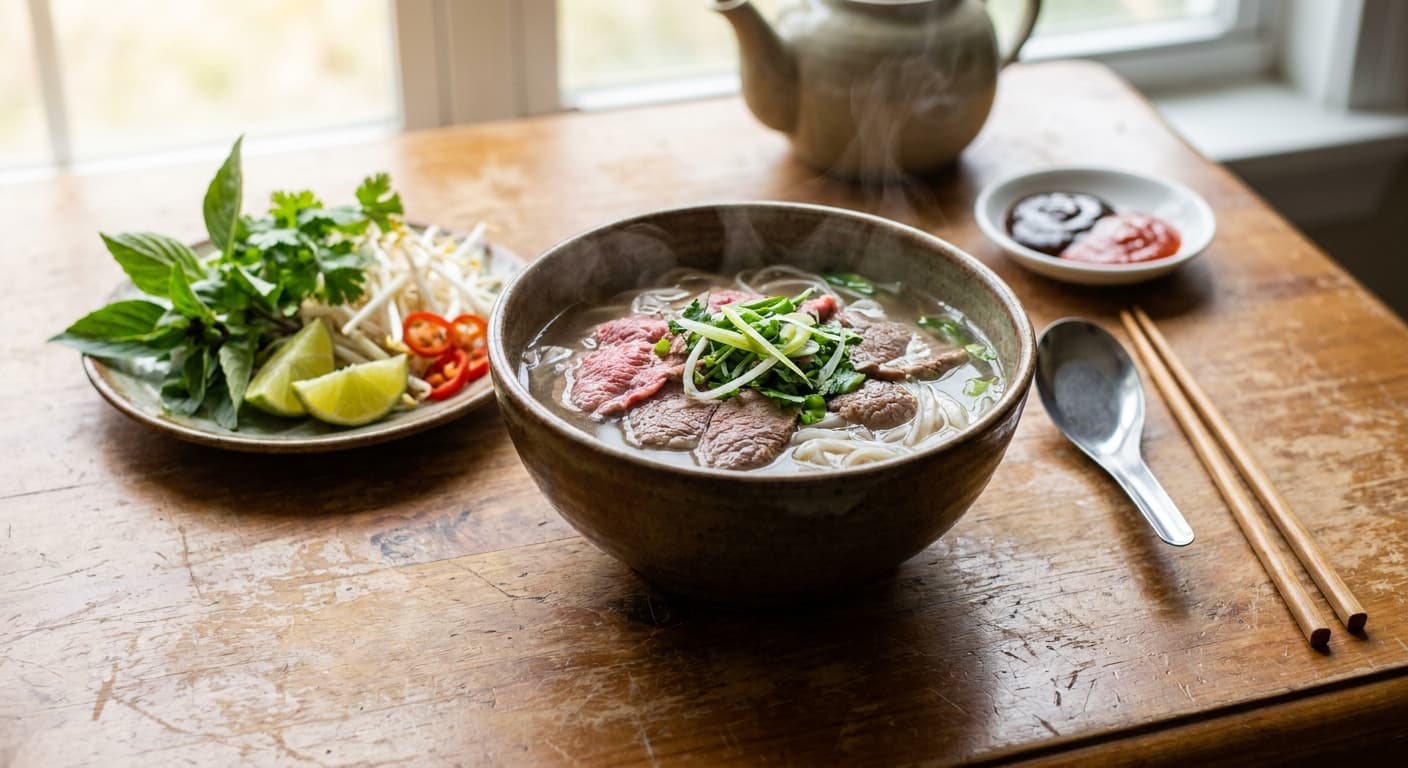
Beef Pho (Phở Bò) — Vietnamese Beef Noodle Soup
Vietnamese · Soups · 405 min
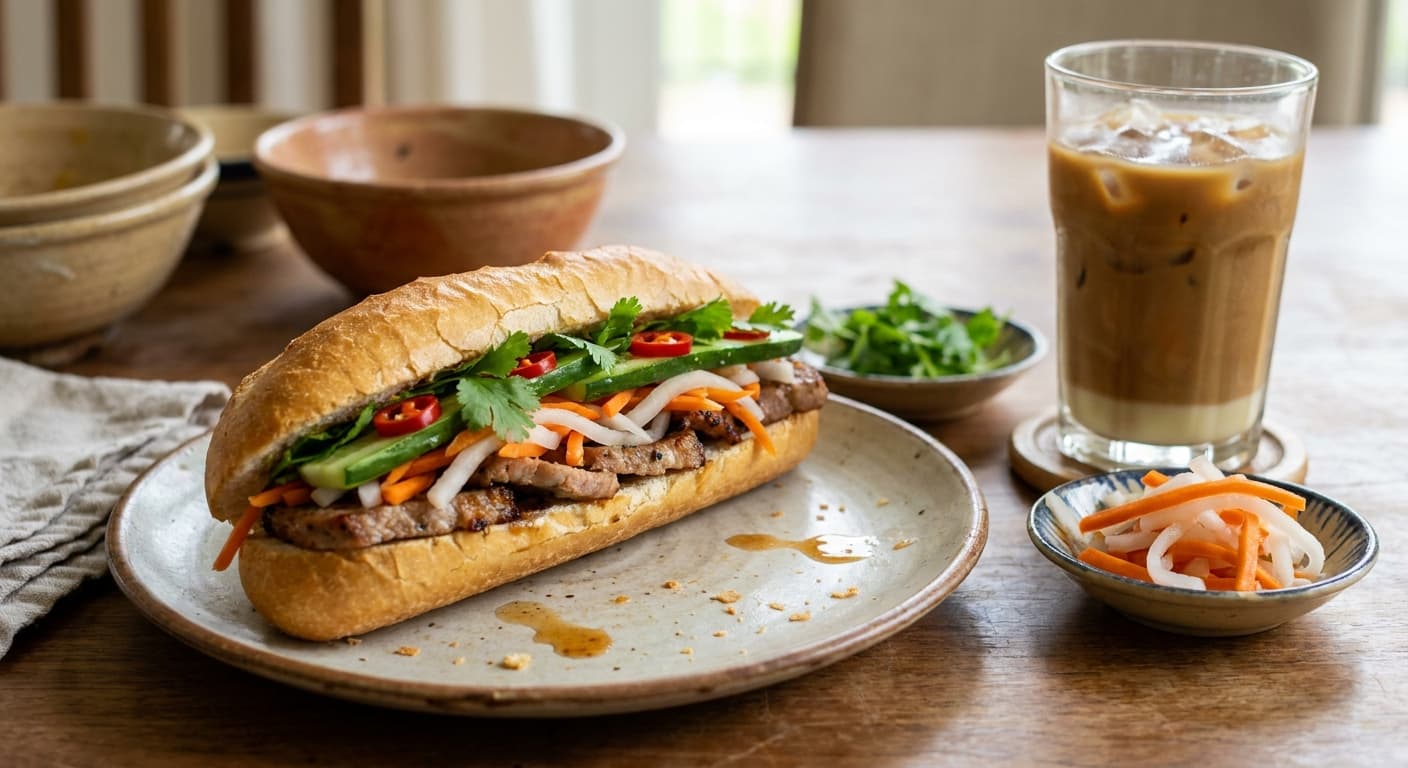
Vietnamese Pork Banh Mi (Bánh Mì Thịt) — Crisp Baguette Sandwich with Pickles, Pâté, and Herbs
Vietnamese · Main Courses · 60 min

Vietnamese Beef Stew (Bò Kho) — Lemongrass-Spiced Carrot Stew
Vietnamese · Stews · 185 min
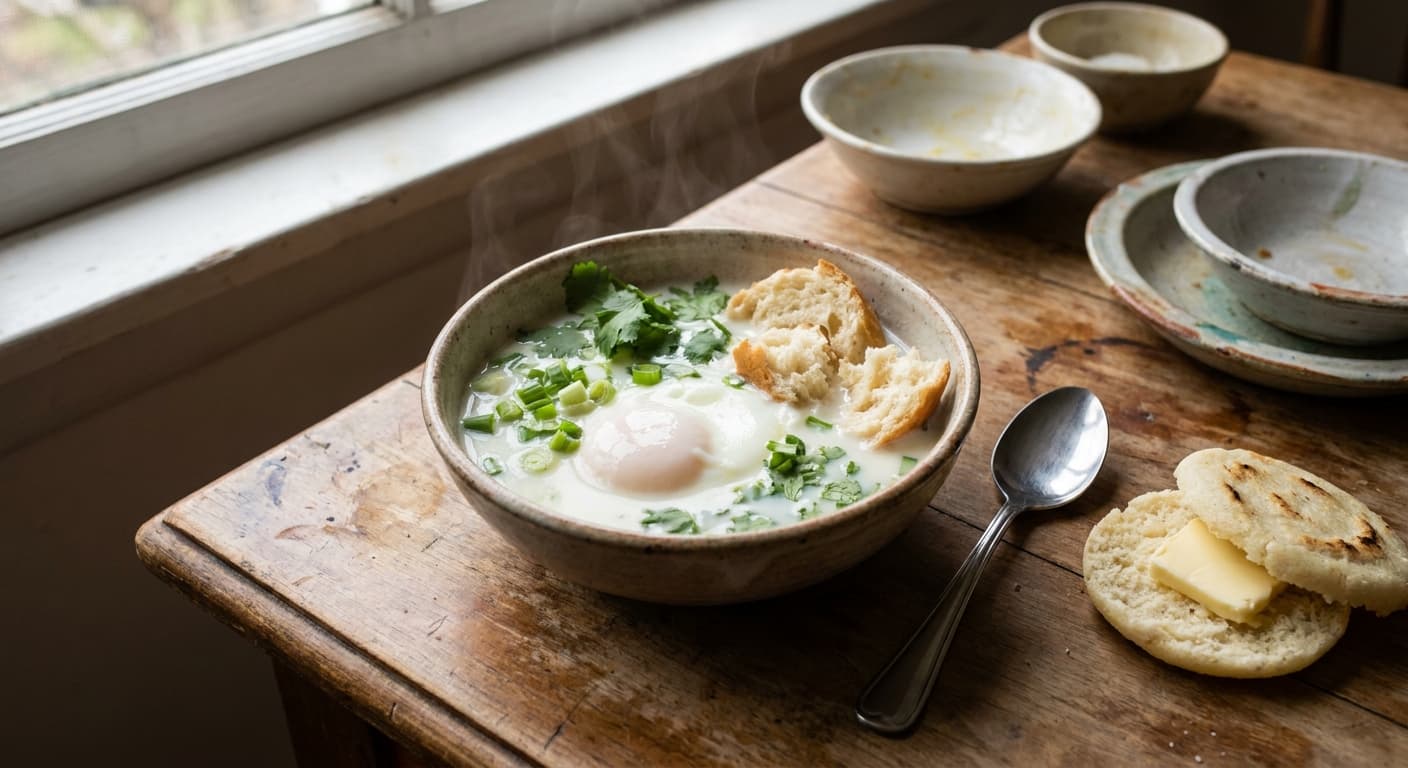
Changua (Changua) — Colombian Milk-and-Egg Breakfast Soup
Colombian · Soups · 25 min
Colombian Chicken and Potato Soup (Ajiaco Santafereño) — Bogotá-Style Guascas Soup
Colombian · Soups · 110 min
Cantonese Chicken Congee (粵式雞粥) — Silky Rice Porridge with Ginger
Chinese · Rice Dishes · 95 min
Gaeng Som (แกงส้ม) — Thai Sour Curry with Fish and Vegetables
Thai · Soups · 60 min
Estek Booghalamoon (استیک بوغلامون) — Pan-Seared Lemon Garlic Turkey Steaks
Persian · Main Courses · 27 min
Reviews
Cooked this recipe?
Tap the stars to rate it — that's all it takes. A few words are welcome but optional.
No ratings yet. Cooked this one? Be the first to rate it — it takes one tap.