Indian Curry vs Persian Khoresh: A Delicious Comparison
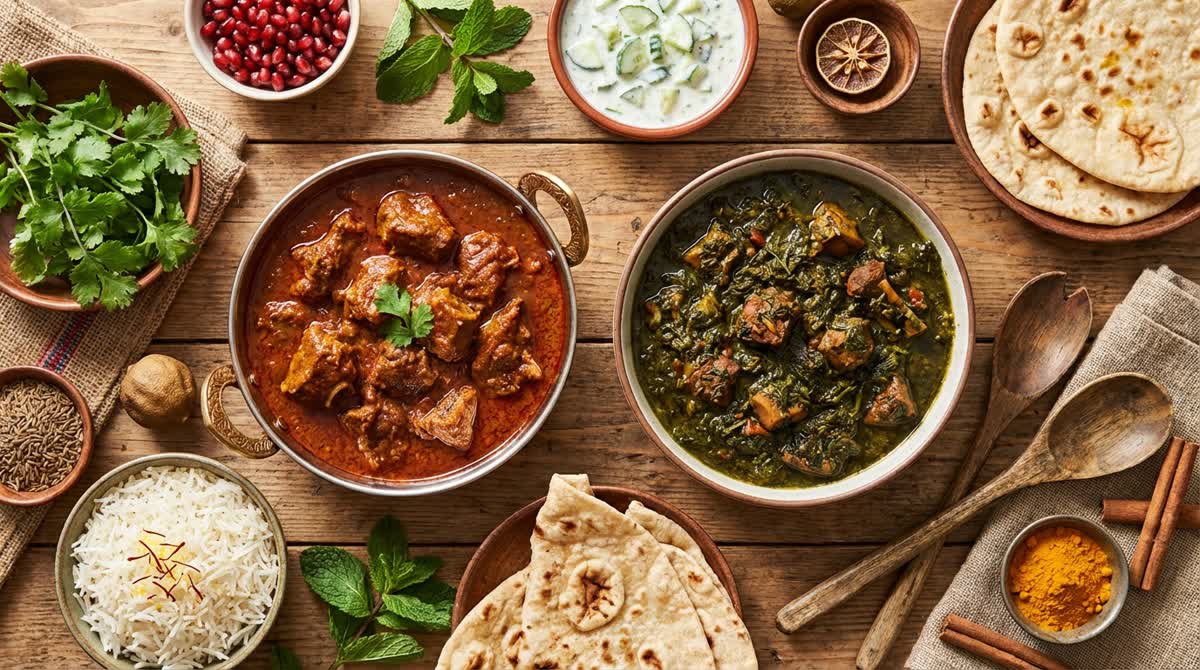
If you’ve ever stood over a bubbling pot of “curry” and wondered why one version tastes bright and tangy while another feels deep, herbaceous, and gently sweet—welcome. “Curry” and “khoresh” (خورش), the beloved Persian stew category, both deliver comfort in a bowl, but they get there by very different routes. Understanding those routes doesn’t just make you a better cook—it makes you a better eater.
In this guide, we’ll dig into khoresh vs curry with a cook’s eye: how each tradition builds flavor, what ingredients do the heavy lifting, and how to choose the right dish for your mood. Along the way, I’ll point you to Zaffaron favorites so you can taste the differences for yourself.
Curry and Khoresh: Same Idea, Different DNA
At a glance, both Indian curries and Persian khoresh are saucy, slow-simmered, and designed to be eaten with a starch—rice, bread, or both. But the resemblance is more like cousins than twins.
What “curry” means in Indian cooking
In India, “curry” is a flexible English umbrella term. In real kitchens, people talk about masala, gravy, saalan, korma, sambar, jhol, chettinad, kadhi—each with its own logic. That’s why exploring indian curry types is so delicious (and endless): the base, fat, souring agent, and spice profile can change dramatically from one region to the next.
Want a quick taste of that variety? Try a few classics:
- North Indian creamy tomato richness in Butter Chicken (मुरग मखनी) — Indian Creamy Tomato Butter Curry
- Charred, smoky restaurant-style comfort in Chicken Tikka Masala (چکن ٹِکا مسالا) — Creamy Indian Tomato Curry with Charred Chicken
- A spice-forward “wok-style” gravy in Kadai Paneer (कड़ाही पनीर) — Indian Paneer in Spicy Bell-Pepper Tomato Gravy
What “khoresh” means in Persian cooking
Khoresh is a defined Persian category: a stew built around a small set of signature flavor structures—often herbs, sour fruit, aromatics, and carefully managed fat. Khoresh tends to be less about heat and more about balance: sourness, fragrance, and slow-cooked depth.
A great example of khoresh-style comfort (even when it leans “khorak” in name) is Khorak Mahicheh va Morgh (خوراک ماهیچه و مرغ) — Saffron-Infused Lamb and Chicken Stew, where saffron warmth and gentle spice create a luxurious, stew-like richness.
So when people ask about persian stew vs indian curry, the best answer is: both are “stew-ish,” but they’re built on different flavor architectures.
Khoresh vs Curry: The 7 Big Differences That Matter on the Plate
1) The flavor “center of gravity”
Many Indian curries are built on a spice backbone: toasted whole spices, ground masalas, and layered aromatics. The flavor center is often the masala itself.
Persian khoresh often has a theme ingredient that leads the dish—herbs, pomegranate/walnut, dried limes, sour cherries, quince, eggplant—supported by warm spices rather than dominated by them.
Practical takeaway:
If you crave spice complexity and roasted aromatics, explore indian curry types like tomato-onion gravies and yogurt-based curries. If you crave fragrant, tart, and herb-forward depth, you’ll likely love khoresh.
2) How sourness is created
Sourness is one of the clearest tells in khoresh vs curry.
- In Indian cooking, sourness often comes from tomatoes, yogurt, tamarind, kokum, or dried mango powder (amchur).
- In Persian cooking, sourness frequently comes from dried limes, pomegranate molasses, verjuice, sumac, or sour fruits.
To taste how tamarind and coconut shape South Indian fish curries, try:
For a Persian table that loves bright accents alongside stews, pair your meal with something like:
3) The role of herbs (supporting vs starring)
Indian curries use herbs—cilantro, mint, curry leaves—but often as finishing notes or aromatic layers.
Persian khoresh can be unapologetically herb-centric. Herbs are not garnish; they’re structure. That’s why Persian food pairs so naturally with herb rice dishes, which echo that green fragrance.
If you want that herb-and-saffron comfort with a tangy edge, explore:
4) Texture: creamy gravies vs glossy stews
Many popular restaurant curries lean creamy—thanks to cream, butter, yogurt, cashews, or coconut milk. Think of the velvet sauce in:
- Butter Chicken (मुरग मखनी) — Indian Creamy Tomato Butter Curry
- Malai Kofta (मलाई कोफ्ता) — Indian Cottage Cheese Dumplings in Creamy Cashew Sauce
Khoresh textures often aim for a glossy, cohesive stew—rich but not necessarily dairy-creamy. The “finish” is frequently achieved through slow simmering and careful oil management rather than heavy dairy.
Cook’s tip:
If your Persian-style stew tastes “thin,” it often needs either (1) more simmer time uncovered, or (2) better browning of onions/meat at the start. If an Indian curry tastes thin, it may need (1) longer masala frying, or (2) a thickener like blended onions/tomatoes, yogurt reduction, or ground nuts—depending on the curry style.
5) Heat level and spice perception
India has plenty of mild curries, but overall the cuisine offers a wider “heat spectrum.” Persian khoresh is typically aromatic and gently spiced, with heat used more sparingly.
That’s why the persian stew vs indian curry debate often comes down to what you mean by “spicy.” If you mean “hot,” many Indian curries win. If you mean “fragrant, layered, and warming,” Persian stews can feel just as complex—just in a different register.
6) Cooking fats and finishing techniques
Indian curries often start with blooming spices in ghee or oil, then building a masala base. Finishing might involve cream, butter, kasuri methi, or a tadka (tempered spices) poured on top.
Persian stews often begin with slow-cooked onions, turmeric, and measured browning. Saffron may appear in rice more than in the stew itself—but when it does show up, it’s unmistakable.
For a dish that highlights saffron’s role in Persian comfort cooking (even beyond stews), try:
7) What they’re served with (and why it matters)
Indian curries are often paired with roti, naan, paratha, rice, or fermented batters (idli/dosa). Persian khoresh is classically served with chelow (steamed rice) or polow (mixed rice), sometimes with tahdig.
To experience the Persian rice culture that often frames khoresh, explore:
- Loobia Polo ba File Murg (لوبیا پلو با فیله مرغ) — Persian Green Bean Rice with Saffron Chicken
- Reshteh Polo Gheysi (رشته پلو قیسی) — Persian Noodle Rice with Apricots
A Friendly Map of Indian Curry Types (So “Curry” Stops Feeling Vague)
One reason “curry” is hard to compare is that it isn’t one thing. Here’s a practical, kitchen-minded map of indian curry types you’ll actually encounter—and how they behave:
Tomato-onion masala gravies (bold, versatile)
These are the crowd-pleasers: sauté onions, ginger-garlic, tomatoes, spices; simmer into a thick gravy.
- Try: Chicken Tikka Masala (چکن ٹِکا مسالا) — Creamy Indian Tomato Curry with Charred Chicken
- Try vegetarian: Chana Masala (चना मसाला) — Indian Spiced Chickpea Curry with Tomato and Onion
Creamy “makhani” style (butter + cream + tomato)
Silky, mildly spiced, and deeply comforting.
Yogurt-based gravies (tangy, aromatic)
Yogurt brings acidity and tenderness, especially with lamb.
Coconut-based coastal curries (fragrant, round, often tangy)
Coconut milk + curry leaves + tamarind is a signature South Indian harmony.
- Try: Kerala Fish Curry (മീൻ കറി) — Coconut and Tamarind Fish Curry from Kerala
- Or: Meen Moilee (മീൻ മോളി) — Kerala Coconut Fish Curry
Lentil curries (simple, nourishing, endlessly adaptable)
These are weeknight heroes and comfort food staples.
- Try: Dal Tadka (दाल तड़का) — Indian Tempered Yellow Lentils with Ghee and Spices
- Or richer: Dal Makhani (दाल मखनी) — Indian Slow-Cooked Black Lentils with Cream and Butter
This variety is exactly why comparisons like khoresh vs curry are fun: you’re not comparing one dish to one dish—you’re comparing two entire philosophies.
Cultural Context: How These Dishes Fit Into Real Life
Indian curry: everyday flexibility
In many Indian homes, “what’s for dinner?” might mean a dal, a sabzi, a quick chicken curry, rice, and something crunchy. Curries can be fast or slow, simple or celebratory. The technique scales.
If you want a meal that feels like a complete South Indian comfort spread, pair:
- Idli Sambar (इडली सांभर) — South Indian Steamed Rice Cakes with Lentil Stew
with something crisp and snacky on the side like: - Samosa (समोसा) — Indian Crispy Spiced Potato and Pea Pastry
Persian khoresh: patient, purposeful, and often rice-centered
Khoresh often implies a certain rhythm: prep, sauté, simmer, adjust sourness, and serve with beautiful rice. It’s not necessarily “hard,” but it rewards patience. And it’s deeply tied to hospitality—stews that taste even better after they rest.
To build a Persian-style table that complements stews, include a rice dish and a vegetable side:
- Polo va Sabzijat (پلو و سبزیجات) — Persian Saffron Vegetable Rice
- Dolmeh Kalam Ba Goosht (دلمه کلم با گوشت) — Persian Stuffed Cabbage Rolls in Tomato-Herb Sauce
Practical Cooking Tips: How to Nail Either Style at Home
Tips for better Indian curries
-
Fry the masala until it changes.
If onions and spices still smell raw, the curry will taste “flat.” Give the base time until it darkens slightly and the oil starts to separate (for many styles). -
Use the right thickener for the right curry.
Cashews for korma-like creaminess, yogurt for tang, coconut milk for coastal curries, or simply reduced onions/tomatoes for body. -
Control heat at the end.
Many curries taste hotter the next day. Start moderate; you can always add chili later.
Tips for better Persian khoresh (and stew-like dishes)
-
Brown onions properly—this is your foundation.
Persian stews often rely on onion sweetness and depth. Don’t rush this step. -
Adjust sourness gradually.
Persian souring agents can intensify as the stew reduces. Add, taste, simmer, then decide. -
Let it rest.
Like many stews, khoresh often tastes better after 30–60 minutes off the heat (or the next day). Flavors knit together and the texture becomes more cohesive. -
Serve with something that catches sauce.
Persian rice is designed for this job. If you want a saffron-forward, celebratory rice centerpiece, try:
Which Should You Cook Tonight? A Simple Decision Guide
When you’re choosing between khoresh vs curry, ask yourself what kind of comfort you want:
Choose an Indian curry if you want…
- A bold spice profile and roasted aromatics
- Creamy, restaurant-style richness
- A fast weeknight dal or a big-flavor gravy
Start here:
- Chana Masala (चना मसाला) — Indian Spiced Chickpea Curry with Tomato and Onion
- Dal Tadka (दाल तड़का) — Indian Tempered Yellow Lentils with Ghee and Spices
- Butter Chicken (मुरग मखनी) — Indian Creamy Tomato Butter Curry
Choose Persian khoresh (or Persian stew-style comfort) if you want…
- Herbaceous, fragrant depth with gentle warmth
- A sweet-sour balance that feels elegant, not heavy
- A meal that shines with saffron rice and a shared table vibe
Start here:
- Khorak Mahicheh va Morgh (خوراک ماهیچه و مرغ) — Saffron-Infused Lamb and Chicken Stew
- Polo va Sabzijat (پلو و سبزیجات) — Persian Saffron Vegetable Rice
- Persian Moutabal with Kashk (متبل با کشک) — Smoky Roasted Eggplant Dip
A Delicious Middle Ground: When Cuisines Cross Paths
Food cultures don’t live in boxes, and neither do home cooks. Some of the most exciting meals happen in the overlap—shared love for rice, aromatics, slow cooking, and smart sourness.
If you’re curious about a dish that nods to curry flavors in a Persian-friendly format, check out:
It’s a reminder that “either/or” is optional.
Final Thoughts on Persian Stew vs Indian Curry (and How to Explore Both)
The best way to understand persian stew vs indian curry isn’t to debate which is “better.” It’s to notice what each tradition prioritizes:
- Indian curries often celebrate spice architecture—toasting, blooming, layering, finishing.
- Persian khoresh often celebrates balance and fragrance—herbs, fruit-sour notes, slow simmering, and rice as a true partner.
And if you only remember one thing: khoresh vs curry is less about “stew vs curry” and more about how flavor is built.
Ready to Taste the Difference?
Pick one Indian dish and one Persian dish this week and cook them back-to-back—you’ll learn more in two dinners than in hours of reading. Start with a creamy classic like Chicken Tikka Masala (چکن ٹِکا مسالا) — Creamy Indian Tomato Curry with Charred Chicken, then go Persian with a saffron-and-stew comfort dish like Khorak Mahicheh va Morgh (خوراک ماهیچه و مرغ) — Saffron-Infused Lamb and Chicken Stew. Round it out with a rice showstopper such as Loobia Polo ba File Murg (لوبیا پلو با فیله مرغ) — Persian Green Bean Rice with Saffron Chicken.
Explore more on Zaffaron, and build your own delicious bridge between these two incredible traditions—one pot at a time.