Ethiopian Red Lentil Stew (ምስር ወጥ) — Berbere-Spiced Fasting Wot
Misir wot is a deeply flavored Ethiopian red lentil stew built on slow-cooked onions, berbere, garlic, and ginger. It is a staple of home meals and Ethiopian Orthodox fasting tables, usually served with injera.
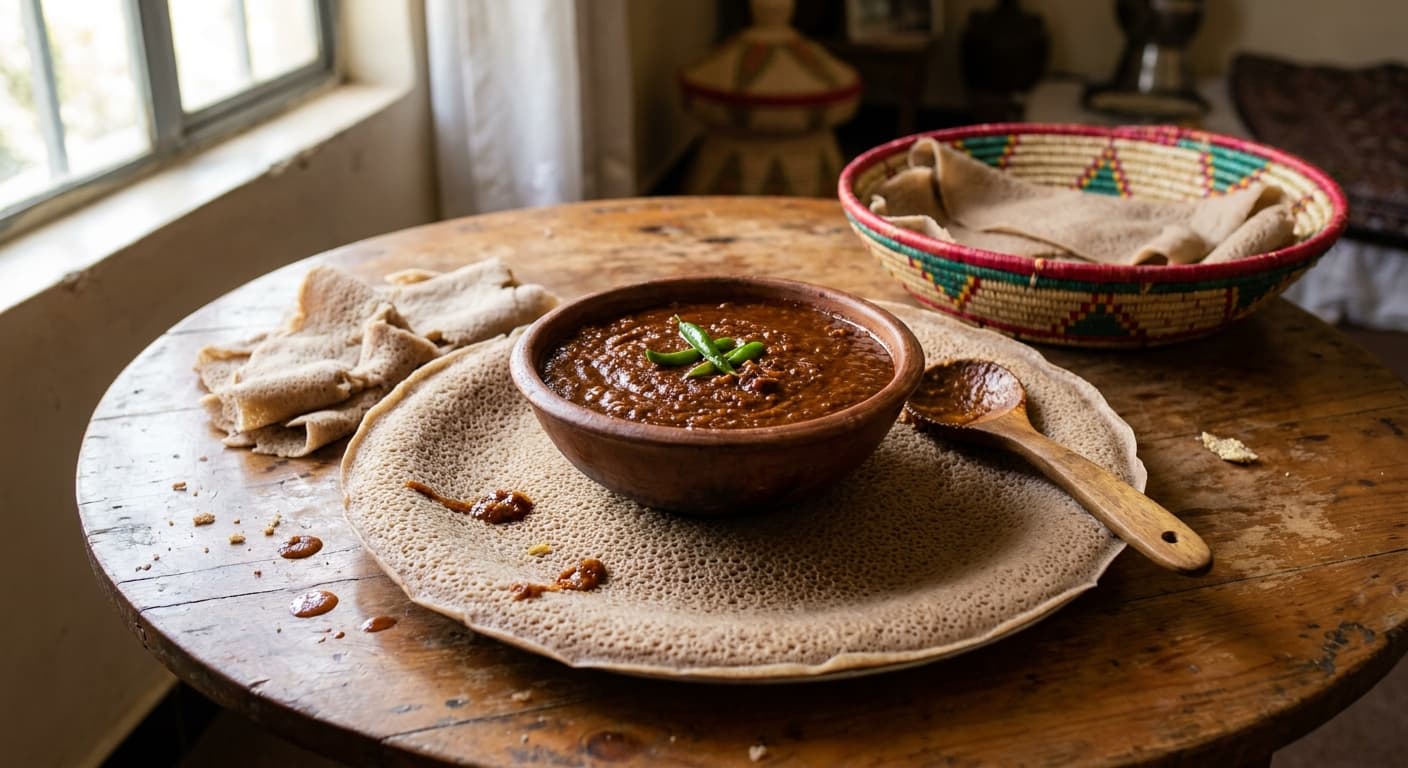
Printable Recipe Card
Servings: 6 · Total: 60 min · Difficulty: medium
Ingredients (quick list)
- 400 g split red lentils
- 450 g yellow onions (finely diced)
- 80 ml neutral oil (sunflower, canola, or other mild oil)
- 6 clove garlic (finely minced)
- 2 inch fresh ginger (peeled and finely grated)
- 30 g tomato paste
- 30 g berbere spice blend
- 1 tsp ground turmeric
- 10 g fine sea salt
- 950 ml water
Steps (summary)
- Place the red lentils in a fine-mesh sieve and rinse them under cool running water for 2 minutes, rubbing them lightly with you…
- Set a heavy 4 l pot over medium heat and add the diced onions without oil. Cook for 10 minutes, stirring every 60 seconds, unti…
- Add the neutral oil and stir it through the onions for 3 minutes so the onion base becomes glossy and sweet. Add the garlic and…
- Stir in the tomato paste, berbere, and turmeric, coating the onions evenly with the spices. Add 100 ml of the measured water an…
- Add the rinsed lentils, 750 ml of the measured water, and the fine sea salt. Bring to a gentle boil, then reduce the heat to lo…
- Add the remaining 100 ml water and mash the stew lightly with the back of a wooden spoon to thicken it while leaving some lenti…
+ 1 more steps in the full instructions section below.
Cultural Background
Misir wot is central to Ethiopian home cooking and fasting cuisine, where plant-based stews are served communally on injera. Its flavor depends on patient onion cooking and the distinctive heat of berbere.
Equipment
💡 Tips
- The dry onion cook at the beginning is important because it concentrates sweetness before oil is added.
- Use fresh, fragrant berbere; old berbere tastes dusty and will make the stew flat rather than warm and complex.
- Keep the heat low after the lentils are added because red lentils settle quickly and can scorch on the bottom of the pot.
⚠️ Common Mistakes
❌ Adding oil before the onions have cooked down.
✅ Fix: Cook the onions dry first so their moisture evaporates and their sweetness concentrates.
❌ Letting berbere burn on the bottom of the pot.
✅ Fix: Bloom it with the tomato paste and 100 ml water, scraping constantly for an even paste.
❌ Cooking the lentils at a hard boil.
✅ Fix: Use a low simmer and stir regularly because split lentils thicken quickly and scorch easily.
🧊 How to Store
Refrigerate misir wot in an airtight container for up to 4 days. Reheat gently in a saucepan over low heat with 45 ml water per 2 servings, stirring often until hot and smooth.
📅 Make Ahead
Dice the onions, mince the garlic, grate the ginger, and rinse the lentils up to 1 day ahead. The finished stew also improves after an overnight rest in the refrigerator.
🍽️ Pairs Well With
- Teff injera
- gomen
- atkilt wot
- tomato salad
- green chile relish.
Regional Variations
- Some households add niter kibbeh instead of oil for a buttery version outside fasting periods.
- A milder family version may use less berbere and more turmeric for color.
- Some cooks finish the stew with a small amount of mekelesha spice for a more aromatic final note.
Ingredients
- 400 gsplit red lentils
- 450 gyellow onions (finely diced)
- 80 mlneutral oil (sunflower, canola, or other mild oil)
- 6 clovegarlic (finely minced)
- 2 inchfresh ginger (peeled and finely grated)
- 30 gtomato paste
- 30 gberbere spice blend
- 1 tspground turmeric
- 10 gfine sea salt
- 950 mlwater
🔄 Substitutions
- neutral oil→ niter kibbeh
- berbere spice blend→ 20 g mild berbere plus 5 g smoked paprika
- split red lentils→ whole red lentils
Instructions
- 1
Place the red lentils in a fine-mesh sieve and rinse them under cool running water for 2 minutes, rubbing them lightly with your fingers. Drain well so the stew does not begin with excess surface starch and cloudy water.
- 2
Set a heavy 4 l pot over medium heat and add the diced onions without oil. Cook for 10 minutes, stirring every 60 seconds, until the onions soften, lose their raw smell, and begin to stick lightly to the bottom of the pot.
- 3
Add the neutral oil and stir it through the onions for 3 minutes so the onion base becomes glossy and sweet. Add the garlic and ginger, then cook for 2 minutes until fragrant but not browned.
- 4
Stir in the tomato paste, berbere, and turmeric, coating the onions evenly with the spices. Add 100 ml of the measured water and cook for 3 minutes, scraping the pot so the berbere blooms in the oil without scorching.
- 5
Add the rinsed lentils, 750 ml of the measured water, and the fine sea salt. Bring to a gentle boil, then reduce the heat to low and simmer uncovered for 25 minutes, stirring every 5 minutes to prevent sticking.
- 6
Add the remaining 100 ml water and mash the stew lightly with the back of a wooden spoon to thicken it while leaving some lentils intact. Simmer for 8 minutes more, until the texture is spoonable, glossy, and thicker than soup.
- 7
Turn off the heat, cover the pot, and let the misir wot rest for 10 minutes so the berbere and lentils settle into a rounded flavor. Stir once before serving and spoon it onto injera or into a shared serving bowl.
🪪 Recipe Passport
Cultural Background
Misir wot is central to Ethiopian home cooking and fasting cuisine, where plant-based stews are served communally on injera. Its flavor depends on patient onion cooking and the distinctive heat of berbere.
Regional Variations
Researched from multiple sources and validated by the Zaffaron editorial team. Every recipe is tested for accuracy, measurements, and cultural authenticity.
📚 Sources & Cultural References
- Yohanis Gebreyesus — Ethiopia: Recipes and Traditions from the Horn of Africa — (2018)
- Daniel J. Mesfin — Exotic Ethiopian Cooking — (2006)
Sources cited by the Zaffaron editorial team during recipe research. Cultural and culinary references supporting authenticity claims.
Nutrition per serving
Pairs well with
If you enjoyed this recipe, here are a few related Zaffaron recipes to try next.
Does your family make this differently?
Every family has their own version. Maybe your grandmother adds a secret ingredient, or your aunt has a completely different technique. Preserve your family's version — with their name on it, forever.
You Might Also Like
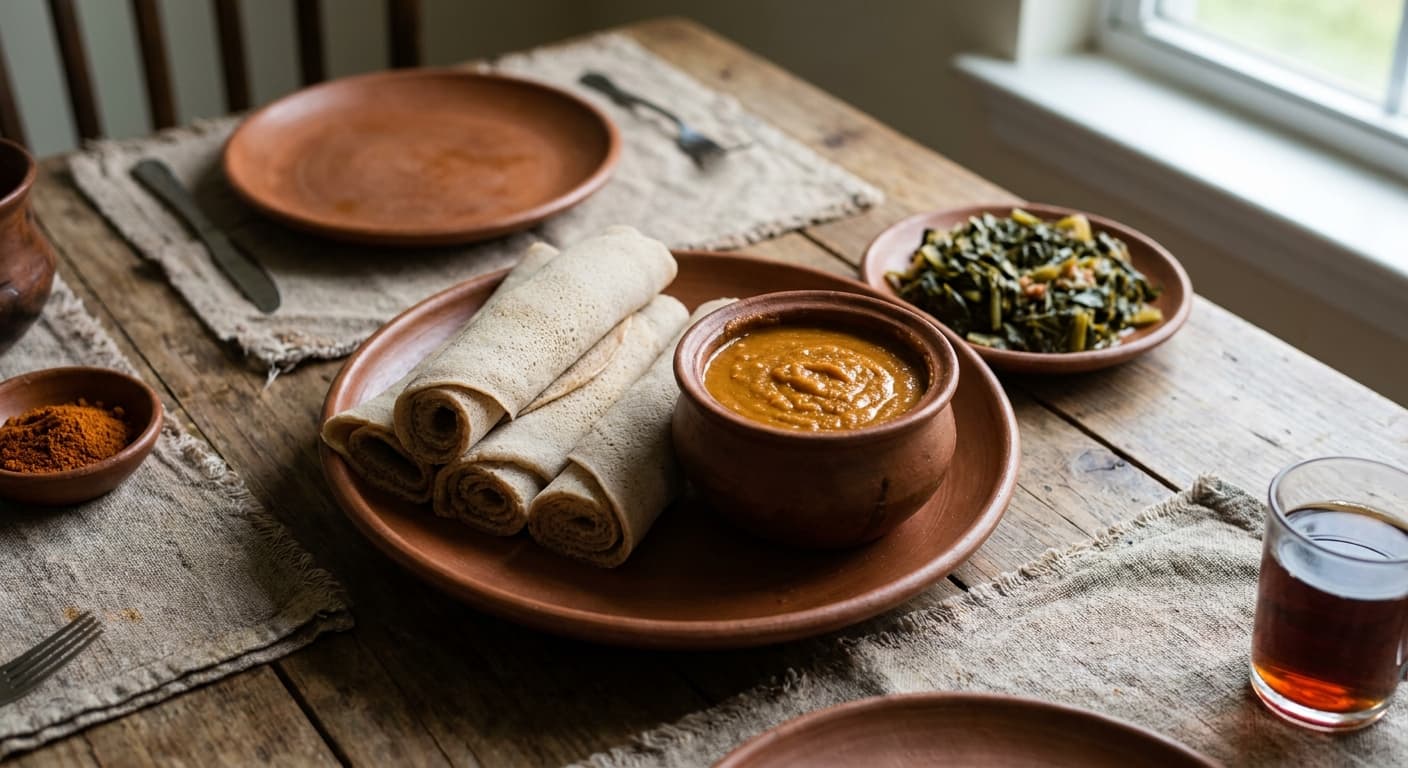
Injera (እንጀራ) — Fermented Ethiopian Teff Flatbread
Ethiopian · Breads · 70 min
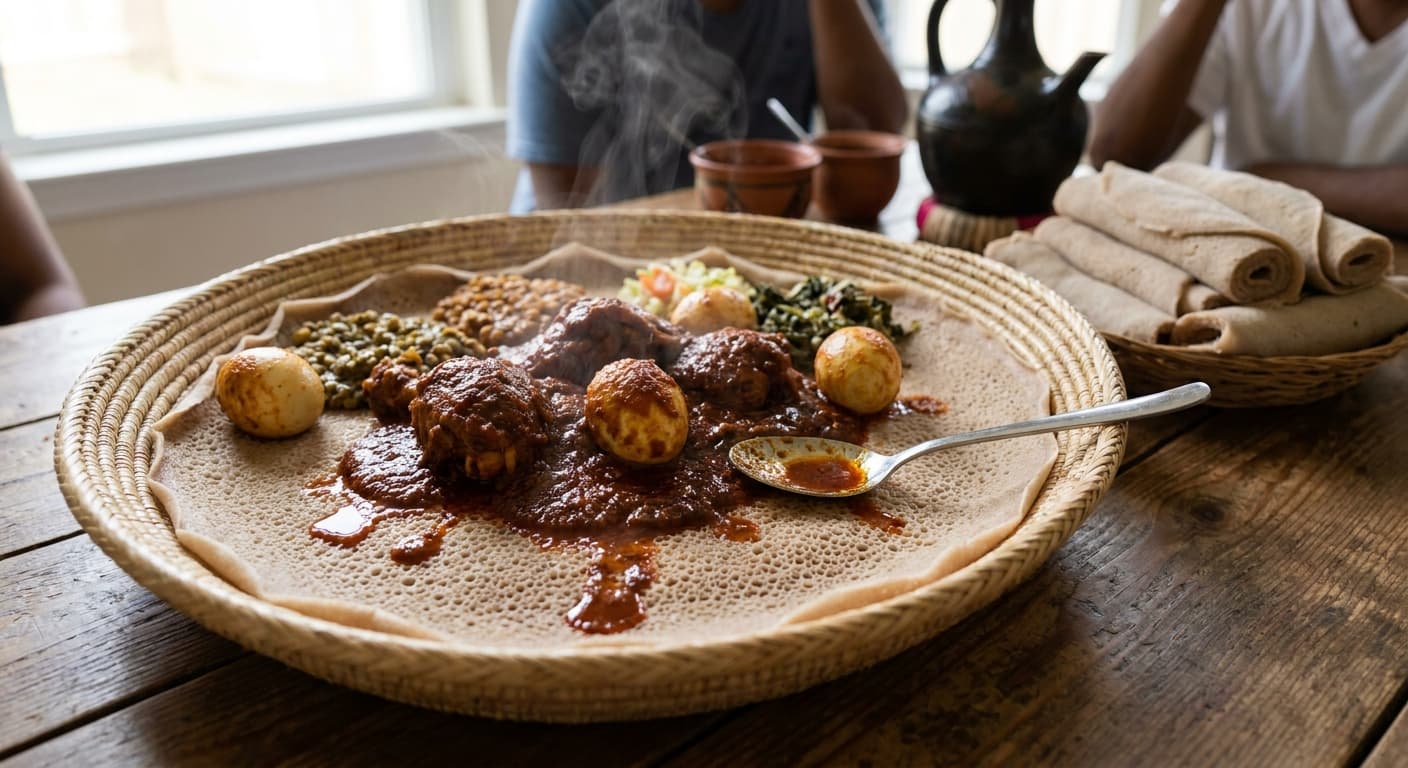
Ethiopian Doro Wat (ዶሮ ወጥ) — Berbere Chicken Stew with Eggs
Ethiopian · Stews · 130 min
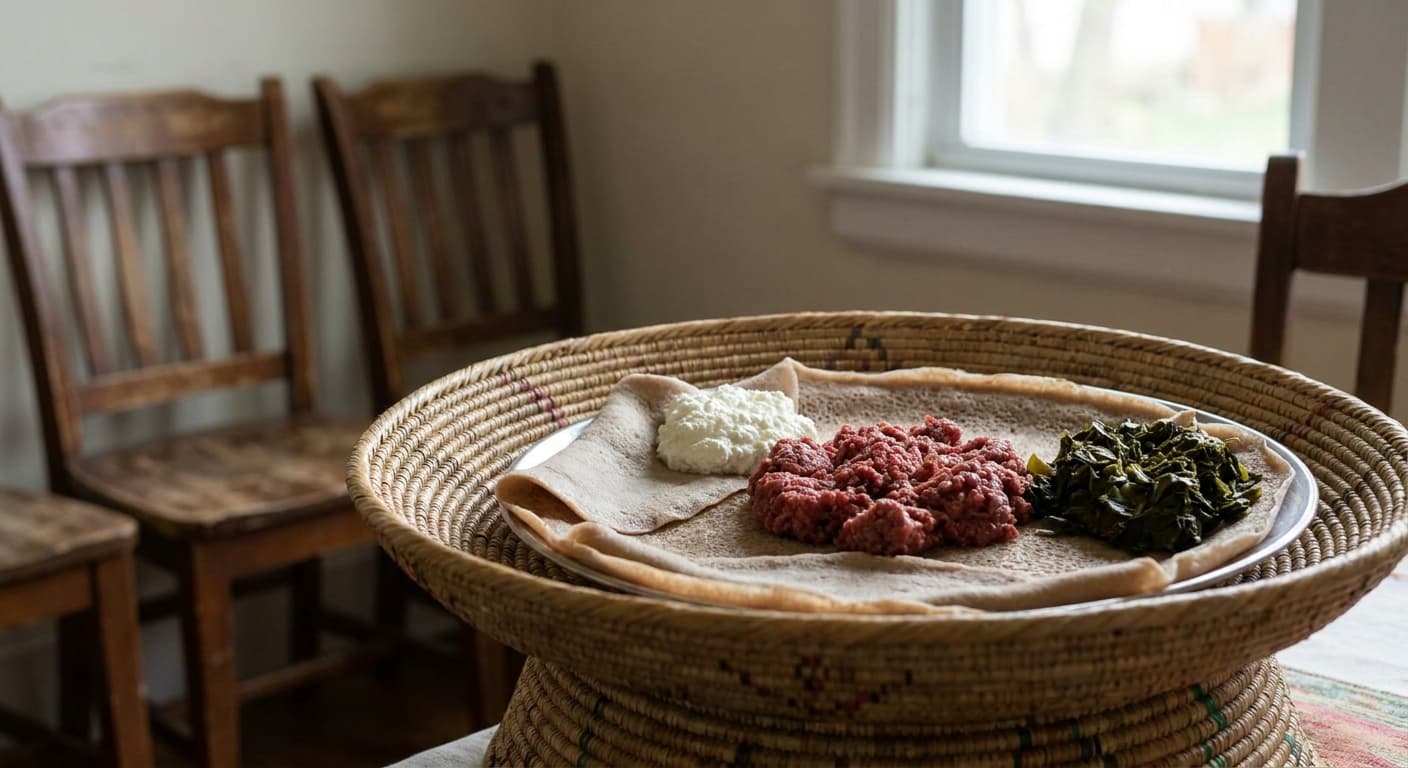
Kitfo (ክትፎ) — Ethiopian Spiced Minced Beef with Niter Kibbeh
Ethiopian · Main Courses · 35 min
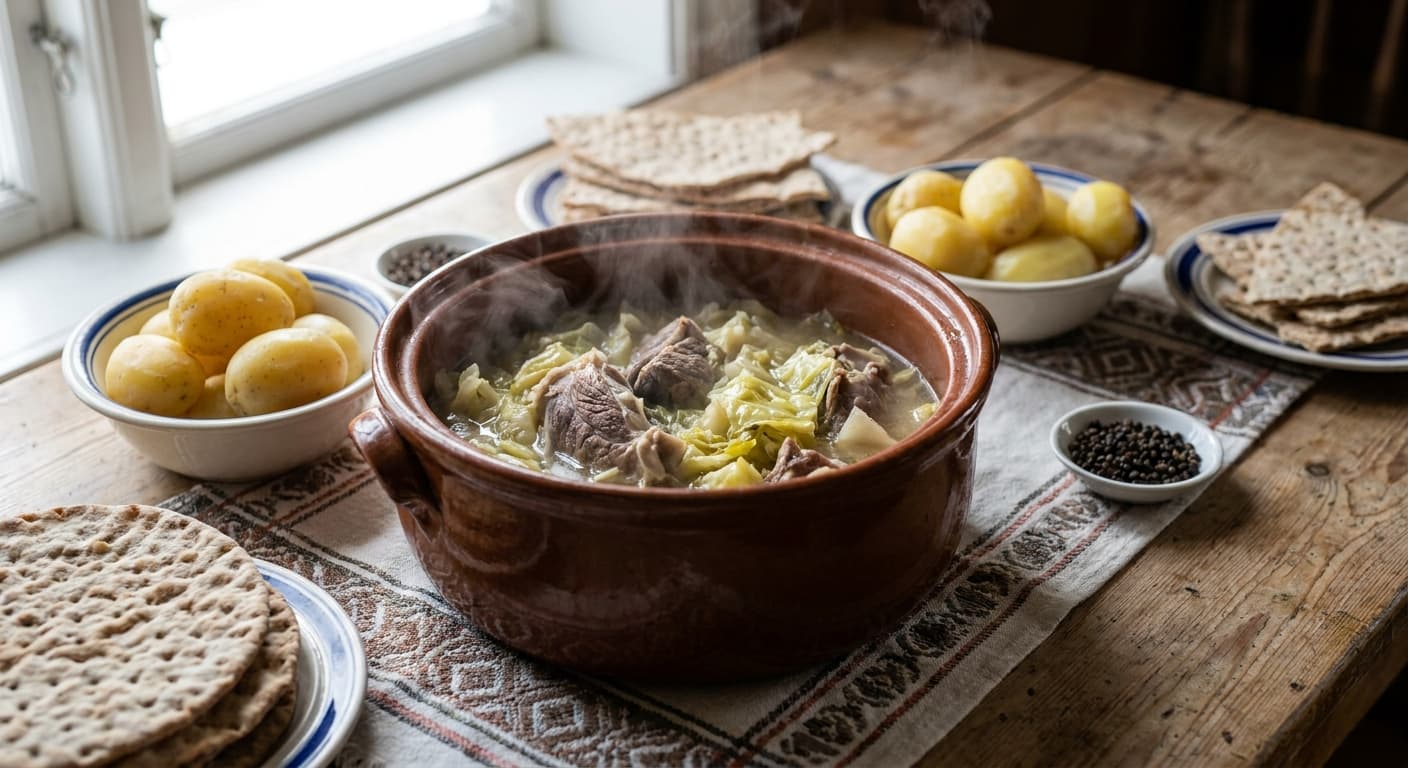
Norwegian Lamb and Cabbage Stew (Fårikål) — Peppery Autumn National Dish
Norwegian · Stews · 170 min
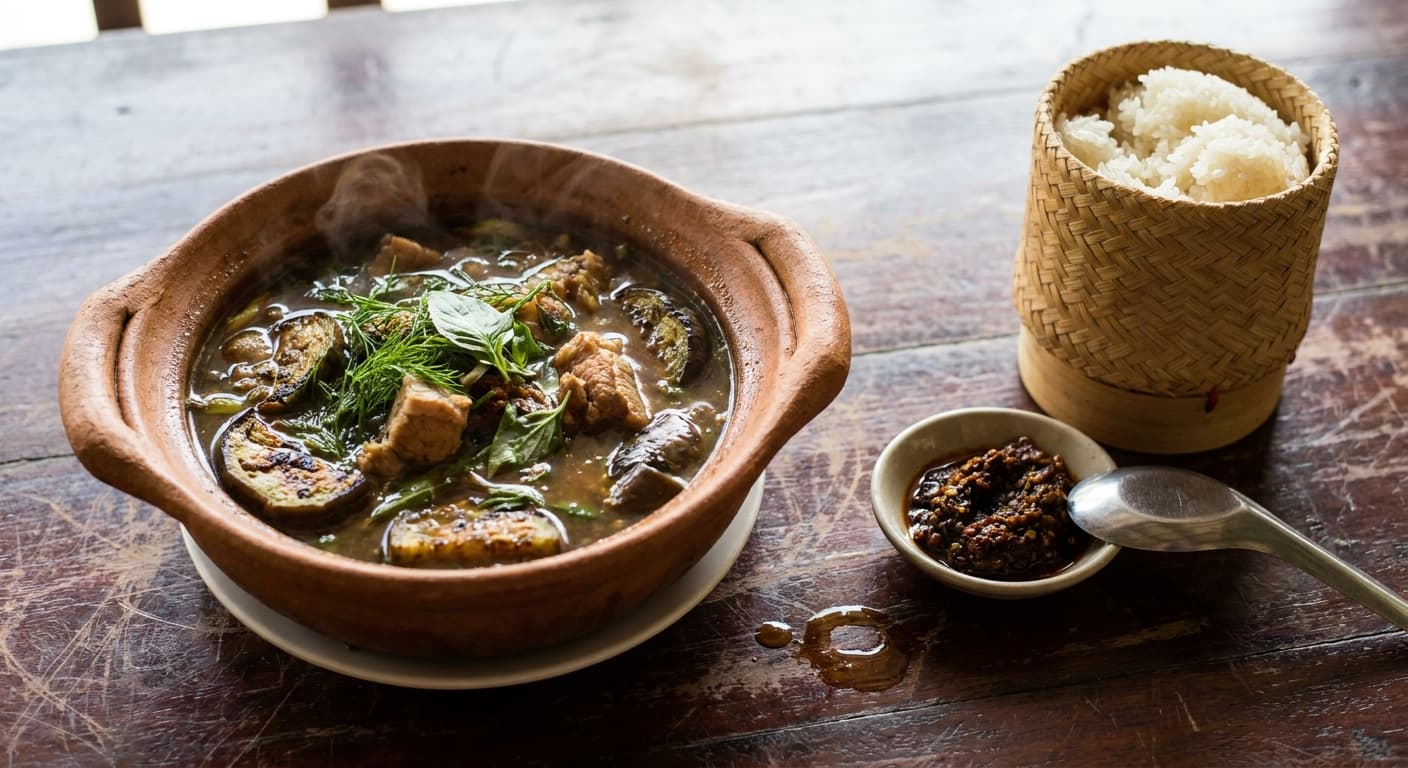
Or Lam (ເອາະຫຼາມ) — Luang Prabang Herb Stew
Laotian · Stews · 155 min
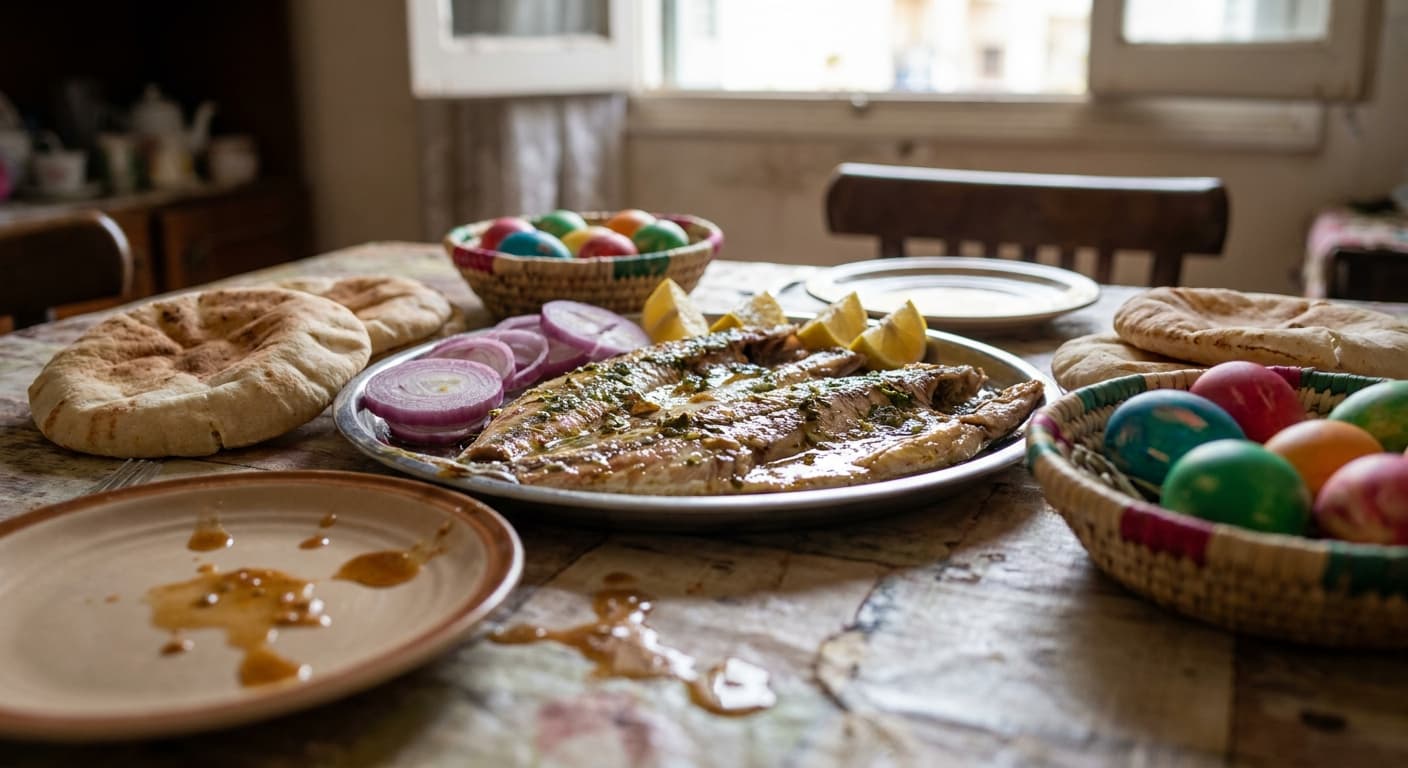
Feseekh (فسيخ) — Egyptian Salt-Cured Mullet for Sham el-Nessim
Egyptian · Main Courses · 30 min
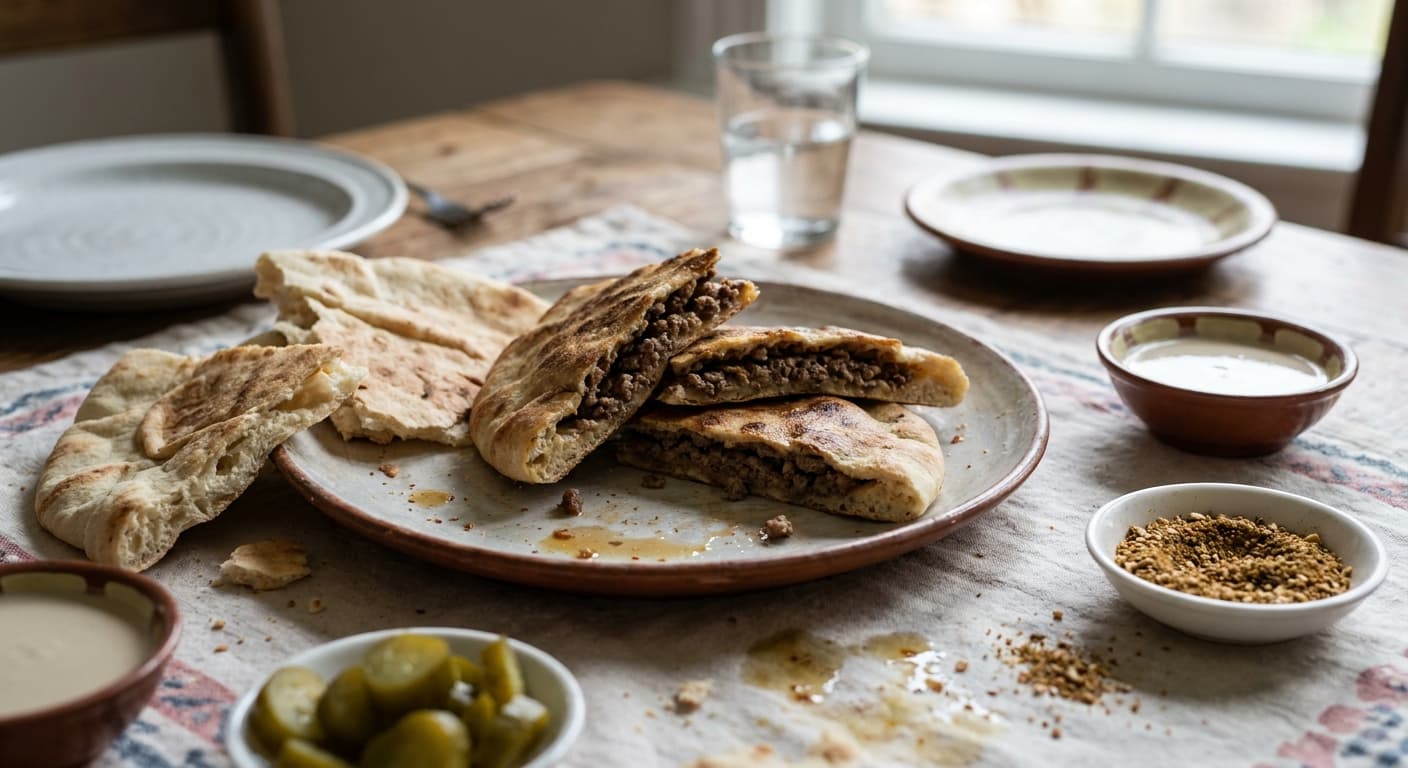
Hawawshi (حواوشي) — Egyptian Spiced Meat-Stuffed Baladi Bread
Egyptian · Main Courses · 55 min
Asturian Bean Stew (Fabada Asturiana) — Smoky Spanish Bean and Pork Stew
Spanish · Stews · 210 min
Reviews
Cooked this recipe?
Tap the stars to rate it — that's all it takes. A few words are welcome but optional.
No ratings yet. Cooked this one? Be the first to rate it — it takes one tap.