Eggplant and Tomato Stew (خورش بادمجان)
Khoresh-e Bademjan is a classic Persian eggplant and tomato stew with tender meat, saffron, and bright lime notes. Silky fried eggplant melts into a rich sauce—perfect over fluffy chelow rice.
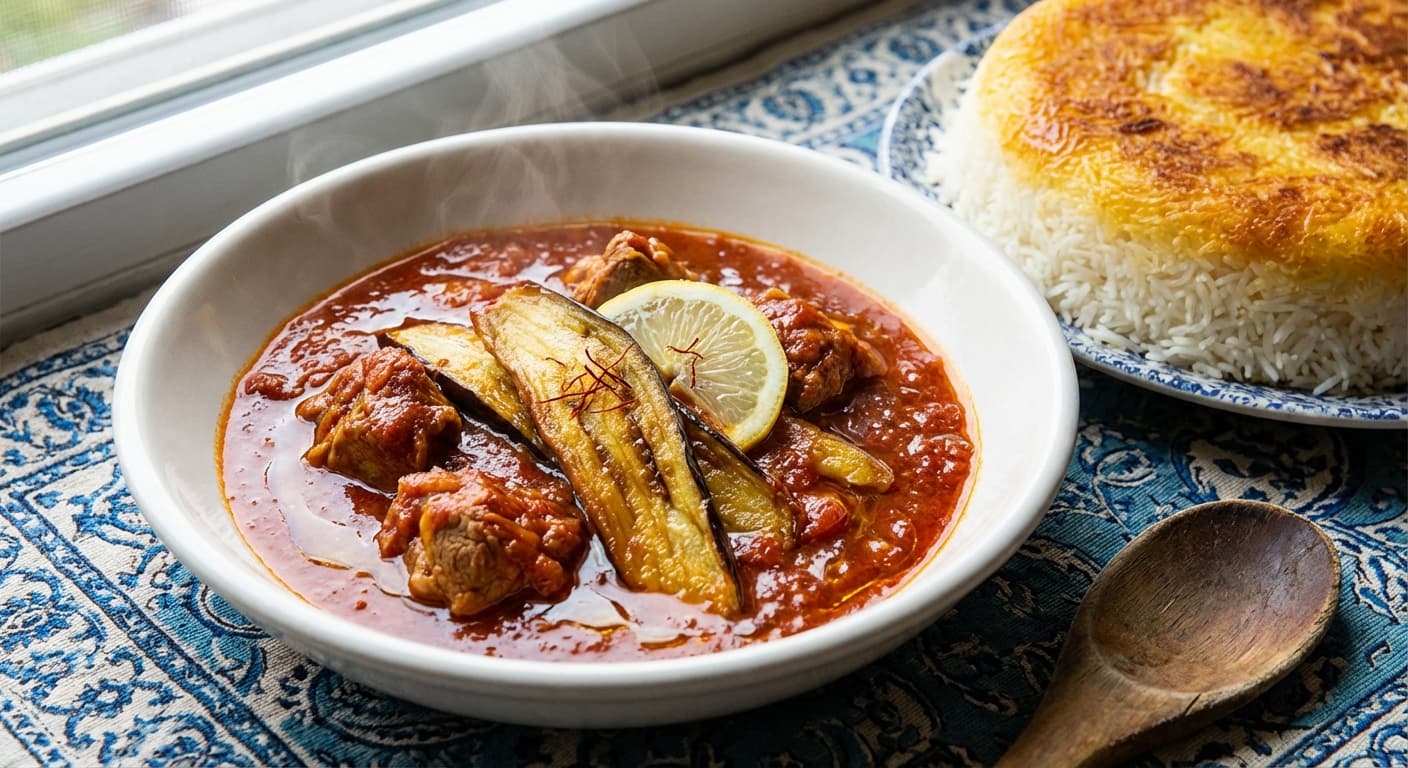
Printable Recipe Card
Servings: 6 · Total: 180 min · Difficulty: medium
Ingredients (quick list)
- 900 g Eggplant (6–7 medium, peeled in stripes, cut lengthwise into 2.5 cm planks)
- 18 g Kosher salt (for salting eggplant (about 1 tbsp); also Stew: 10 g)
- 120 ml Neutral oil (for frying eggplant (grapeseed/sunflower); also Stew: 30 ml)
- 250 g Yellow onion (1 large, finely sliced)
- 600 g Lamb shoulder or beef chuck (cut into 4 cm cubes)
- 3 g Turmeric (1 tsp)
- 1 g Ground black pepper (1/2 tsp)
- 45 g Tomato paste (3 tbsp)
- 500 g Roma tomatoes (about 5, grated or finely chopped)
- 3 each Dried limes (limoo amani) (pierced 4–5 times)
- 0.2 g Saffron threads (about 1/4 tsp, finely crushed)
- 45 ml Hot water (3 tbsp, to bloom saffron)
+ 4 more in the full ingredients section below.
Steps (summary)
- Prepare the eggplant: peel in alternating stripes, then cut lengthwise into 2.5 cm planks. Sprinkle evenly with 18 g kosher sal…
- Bloom the saffron: crush 0.2 g saffron threads to a powder, add 45 ml hot water (not boiling—about 80°C), cover, and steep 15 m…
- Sauté the base: heat 30 ml oil in a heavy pot over medium heat. Add sliced onion and cook 10–12 minutes until deeply golden, st…
- Brown the meat: add 600 g lamb or beef cubes and raise heat to medium-high. Sear 6–8 minutes, turning to brown most sides. Stir…
- Build the stew and simmer: add grated/chopped tomatoes (500 g), pierced dried limes (3), 600 ml of the water, and the bloomed s…
- Fry the eggplant: while the stew simmers, heat 120 ml oil in a wide skillet over medium-high heat. Fry eggplant planks in batch…
+ 2 more steps in the full instructions section below.
Cultural Background
Khoresh-e Bademjan is one of Iran’s most beloved home stews, commonly served with chelow at family lunches and gatherings. Its balance of tomato, saffron, and limoo amani reflects the classic Persian preference for layered sour-sweet depth rather than heat.
Equipment
💡 Tips
- Choose firm, slender eggplants with fewer seeds; they absorb less oil and turn silky faster.
- Pierce dried limes before simmering so they release flavor gradually; remove them before serving if bitterness develops.
- Keep the stew at a gentle simmer (small bubbles). A hard boil can toughen meat and break eggplant.
⚠️ Common Mistakes
❌ Skipping the eggplant salting/resting step
💡 Why: Unsalted eggplant can taste bitter and absorbs significantly more oil, making the khoresh heavy and greasy.
✅ Fix: Salt with 18 g kosher salt for 30 minutes, then rinse and dry thoroughly before frying or roasting.
❌ Boiling the stew hard instead of simmering
💡 Why: A rolling boil can toughen meat and causes eggplant to break down into mush, clouding the sauce.
✅ Fix: Maintain a gentle simmer (small bubbles) and stir only occasionally; adjust heat as needed.
❌ Adding all the water at once and ending with a thin sauce
💡 Why: Eggplant releases moisture and the stew needs time to reduce; too much liquid prevents proper concentration.
✅ Fix: Start with 600 ml, then add up to 300 ml gradually only if the meat isn’t barely covered during simmering.
🧊 How to Store
Cool completely, then refrigerate in an airtight container up to 4 days. Reheat gently over low heat with 30–60 ml water if thickened. Freeze up to 2 months; thaw overnight in the fridge and rewarm slowly to keep eggplant from breaking apart.
📅 Make Ahead
Salt and dry the eggplant up to 24 hours ahead (store uncovered on a rack in the fridge). Fry or roast eggplant up to 2 days ahead and refrigerate. The full khoresh tastes even better the next day; cook completely, chill overnight, then reheat gently and adjust acidity right before serving.
🍽️ Pairs Well With
- Serve over chelow (Persian steamed rice) with tahdig
- plus torshi (pickles)
- fresh herbs (sabzi khordan)
- and mast-o-khiar if desired.
Regional Variations
- TehranOften made with beef and a slightly thicker, darker sauce by frying tomato paste well; some cooks add a small amount of brewed tea for color and serve with crisp tahdig.
- Shiraz (Fars)Tends to be more sour-forward, using extra limoo amani or a final splash of fresh lime juice; some households add a little more tomato for a brighter, redder stew.
Ingredients
- 900 gEggplant (6–7 medium, peeled in stripes, cut lengthwise into 2.5 cm planks)
- 18 gKosher salt (for salting eggplant (about 1 tbsp); also Stew: 10 g)
- 120 mlNeutral oil (for frying eggplant (grapeseed/sunflower); also Stew: 30 ml)
- 250 gYellow onion (1 large, finely sliced)
- 600 gLamb shoulder or beef chuck (cut into 4 cm cubes)
- 3 gTurmeric (1 tsp)
- 1 gGround black pepper (1/2 tsp)
- 45 gTomato paste (3 tbsp)
- 500 gRoma tomatoes (about 5, grated or finely chopped)
- 3 eachDried limes (limoo amani) (pierced 4–5 times)
- 0.2 gSaffron threads (about 1/4 tsp, finely crushed)
- 45 mlHot water (3 tbsp, to bloom saffron)
- 900 mlWater (to simmer (add gradually as needed))
- 2 gGround dried lime (optional) (1 tsp, for extra tang)
- 15 mlFresh lemon juice (1 tbsp, added at the end if needed)
- 60 mlBrewed black tea (1/4 cup, optional for deeper color)
🔄 Substitutions
- Lamb shoulder or beef chuck→ Boneless chicken thighs (700 g)
- Dried limes (limoo amani)→ Fresh lime juice (30–45 ml) + lime zest (1 tsp)
- Frying eggplant in oil→ Oven-roasted eggplant
Instructions
- 1
Prepare the eggplant: peel in alternating stripes, then cut lengthwise into 2.5 cm planks. Sprinkle evenly with 18 g kosher salt and rest on a rack or colander for 30 minutes to draw out bitterness and reduce oil absorption. Rinse quickly under cool water, then pat very dry with towels.
- 2
Bloom the saffron: crush 0.2 g saffron threads to a powder, add 45 ml hot water (not boiling—about 80°C), cover, and steep 15 minutes. This short resting time extracts maximum color and aroma so it disperses evenly in the khoresh instead of staying in streaks.
- 3
Sauté the base: heat 30 ml oil in a heavy pot over medium heat. Add sliced onion and cook 10–12 minutes until deeply golden, stirring often. Add turmeric (3 g) and black pepper (1 g) and cook 30 seconds to toast the spices without burning them, which keeps the stew fragrant rather than bitter.
- 4
Brown the meat: add 600 g lamb or beef cubes and raise heat to medium-high. Sear 6–8 minutes, turning to brown most sides. Stir in tomato paste (45 g) and cook 2–3 minutes until it darkens slightly and smells sweet. This step builds the khoresh’s signature deep red color.
- 5
Build the stew and simmer: add grated/chopped tomatoes (500 g), pierced dried limes (3), 600 ml of the water, and the bloomed saffron. Bring to a gentle boil, then reduce to a low simmer, cover, and cook 75 minutes, stirring every 20 minutes. Add up to 300 ml more water gradually to keep the meat barely submerged.
- 6
Fry the eggplant: while the stew simmers, heat 120 ml oil in a wide skillet over medium-high heat. Fry eggplant planks in batches 3–4 minutes per side until golden and tender. Transfer to a paper-towel-lined tray. Keep heat steady; if oil smokes, lower to medium to avoid bitterness and overly dark eggplant.
- 7
Finish cooking with eggplant: when the meat is tender, stir in 10 g salt and optional ground dried lime (2 g). Gently nestle fried eggplant into the sauce, spooning some liquid over the top. Cover and simmer 25–30 minutes on low until eggplant becomes silky and the stew thickens slightly.
- 8
Final balance and resting: uncover and simmer 5 minutes to concentrate the sauce. Taste and adjust acidity with 15 ml lemon juice if needed; for a darker, restaurant-style color add 60 ml brewed black tea. Turn off heat and rest the khoresh, covered, 10 minutes so flavors meld and oil rises lightly to the surface.
🪪 Recipe Passport
Cultural Background
Khoresh-e Bademjan is one of Iran’s most beloved home stews, commonly served with chelow at family lunches and gatherings. Its balance of tomato, saffron, and limoo amani reflects the classic Persian preference for layered sour-sweet depth rather than heat.
Regional Variations
Researched from multiple sources and validated by the Zaffaron editorial team. Every recipe is tested for accuracy, measurements, and cultural authenticity.
Nutrition per serving
Pairs well with
If you enjoyed this recipe, here are a few related Zaffaron recipes to try next.
Does your family make this differently?
Every family has their own version. Maybe your grandmother adds a secret ingredient, or your aunt has a completely different technique. Preserve your family's version — with their name on it, forever.
You Might Also Like
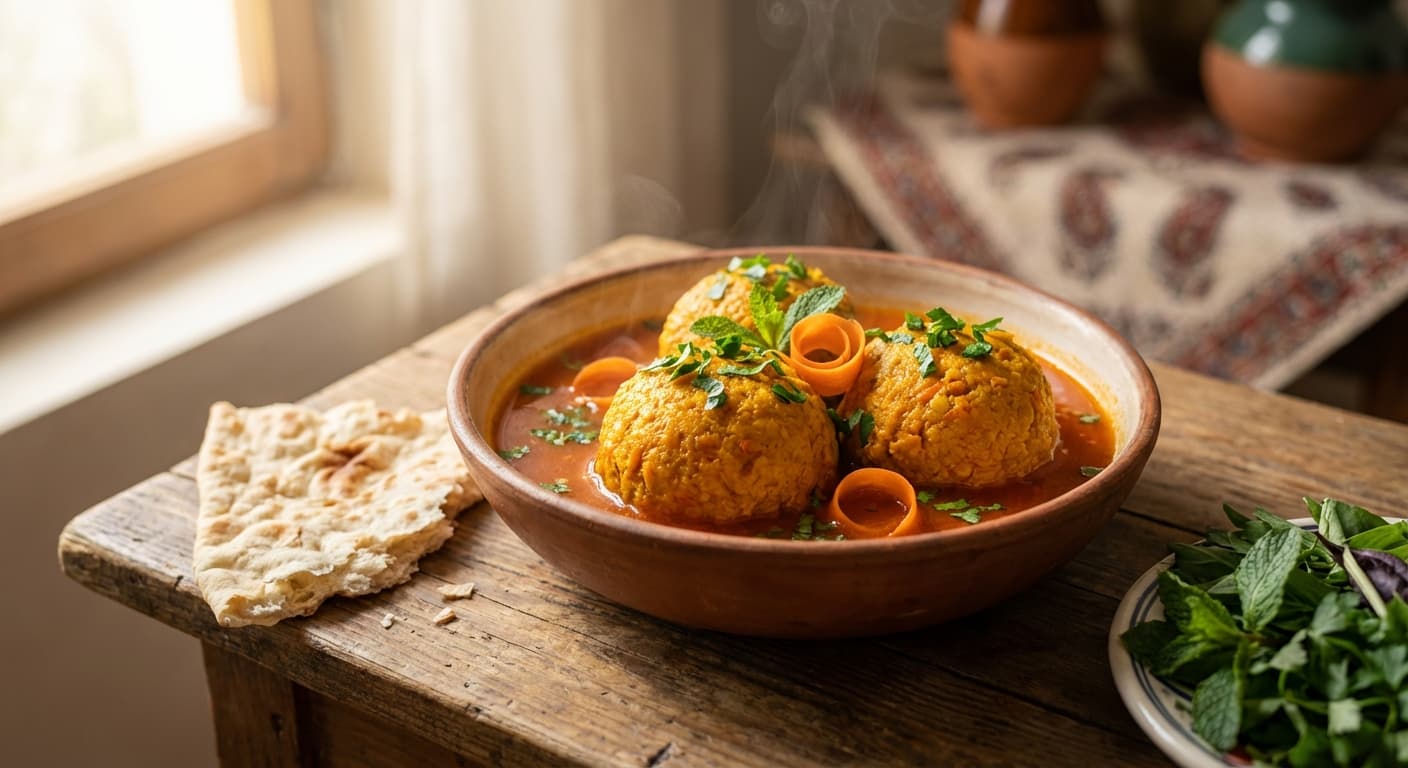
Koofteh Havij (کوفته هویج) — Persian Carrot Meatballs in Saffron-Tomato Broth
Persian · Main Courses · 120 min
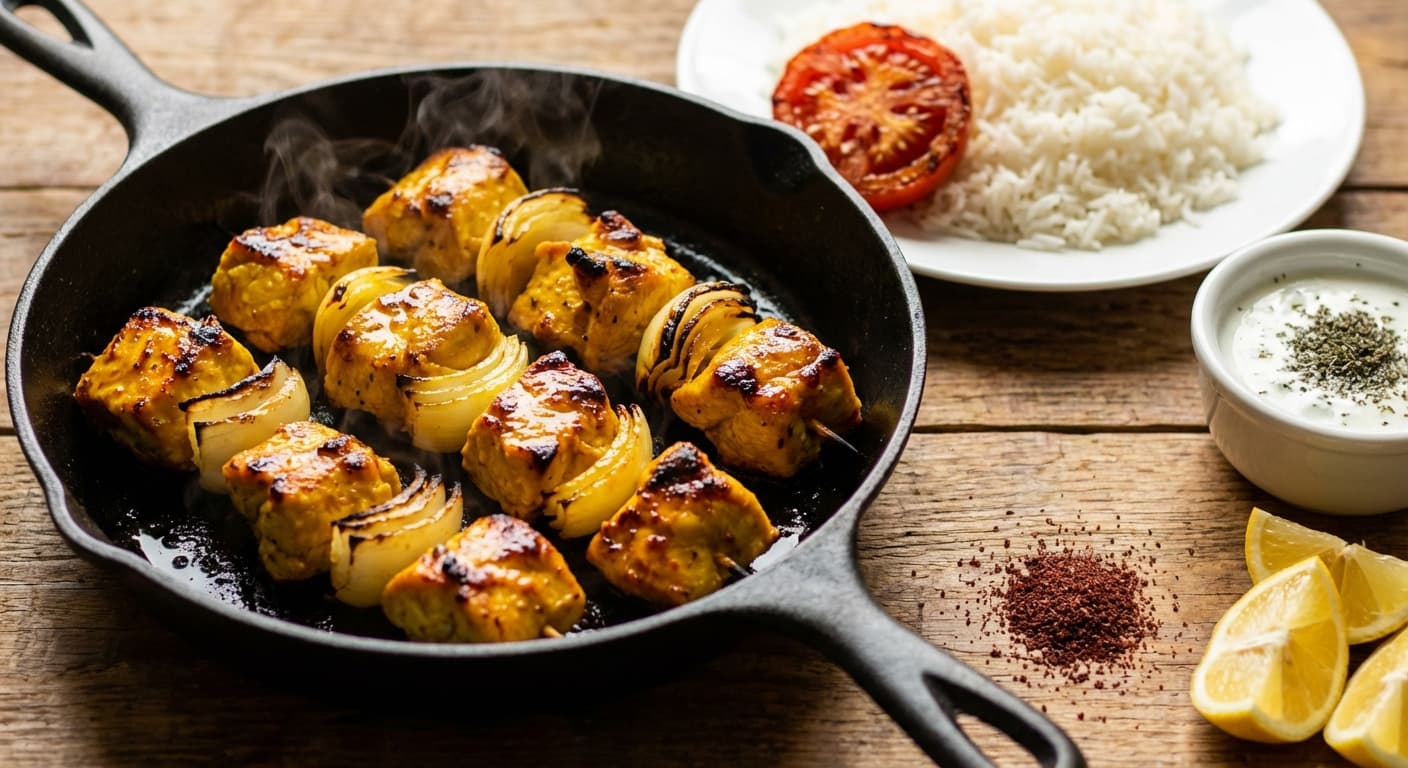
Pan-Seared Joojeh Kebab (جوجه کباب تابهای) — Persian Saffron Skillet Chicken
Persian · Kebabs · 34 min
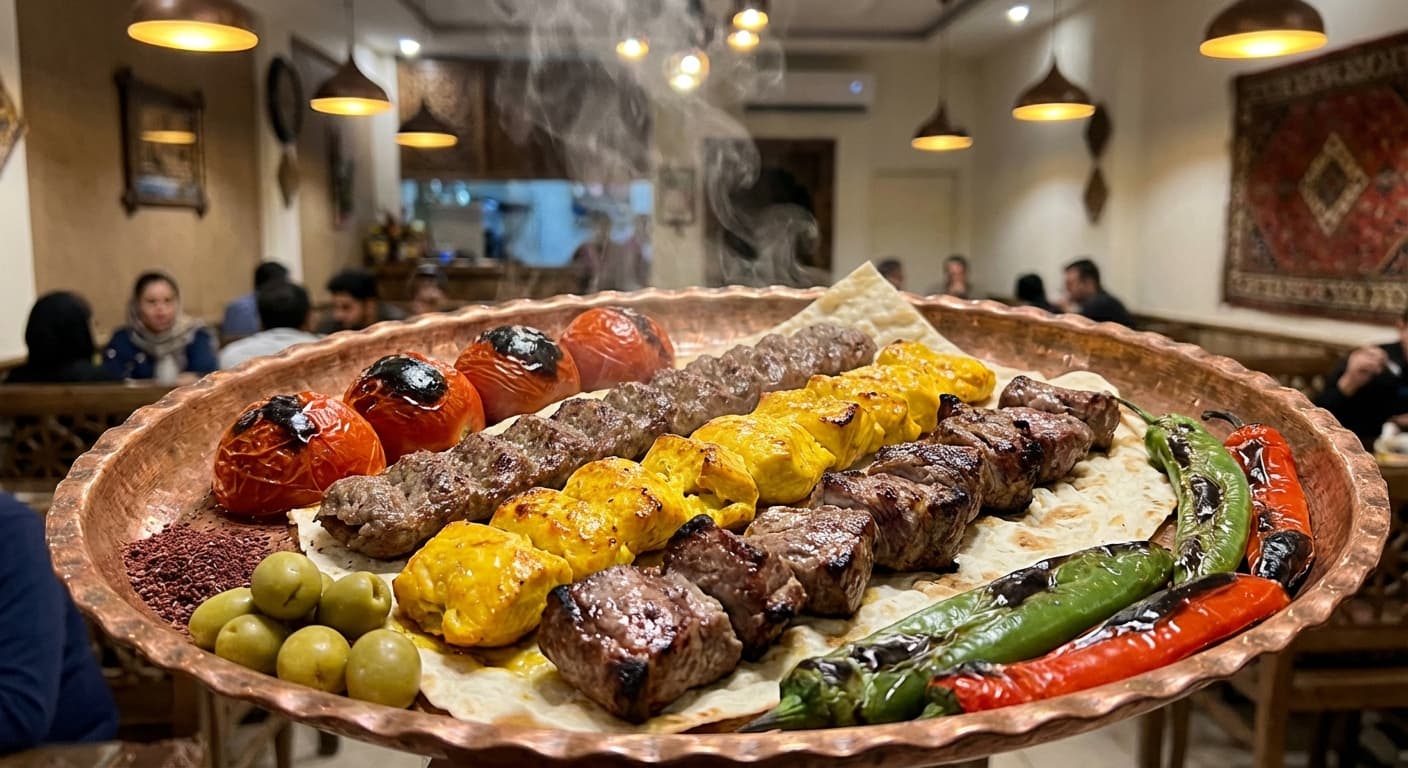
Kabab Vijeh (کباب ویژه) — Royal Persian Mixed Grill Platter
Persian · Kebabs · 70 min
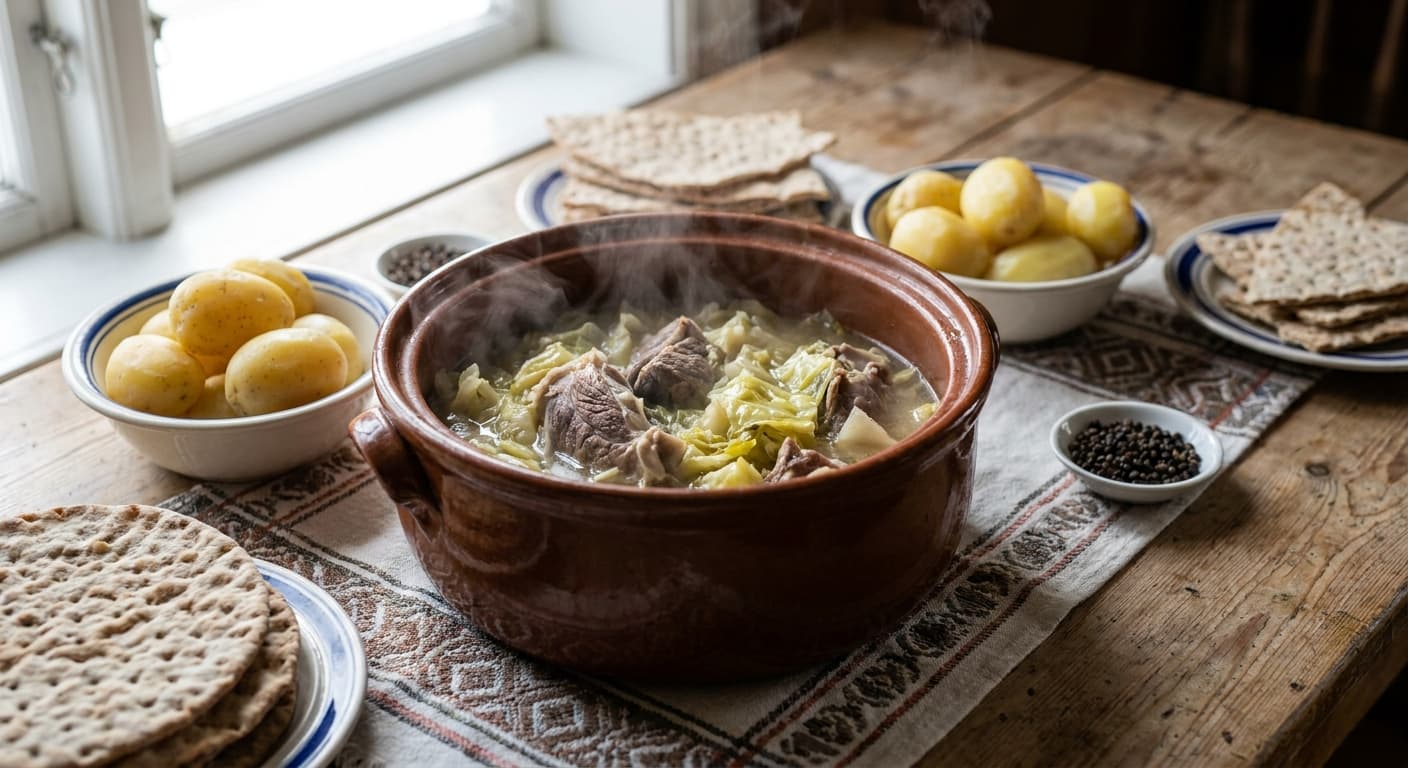
Norwegian Lamb and Cabbage Stew (Fårikål) — Peppery Autumn National Dish
Norwegian · Stews · 170 min
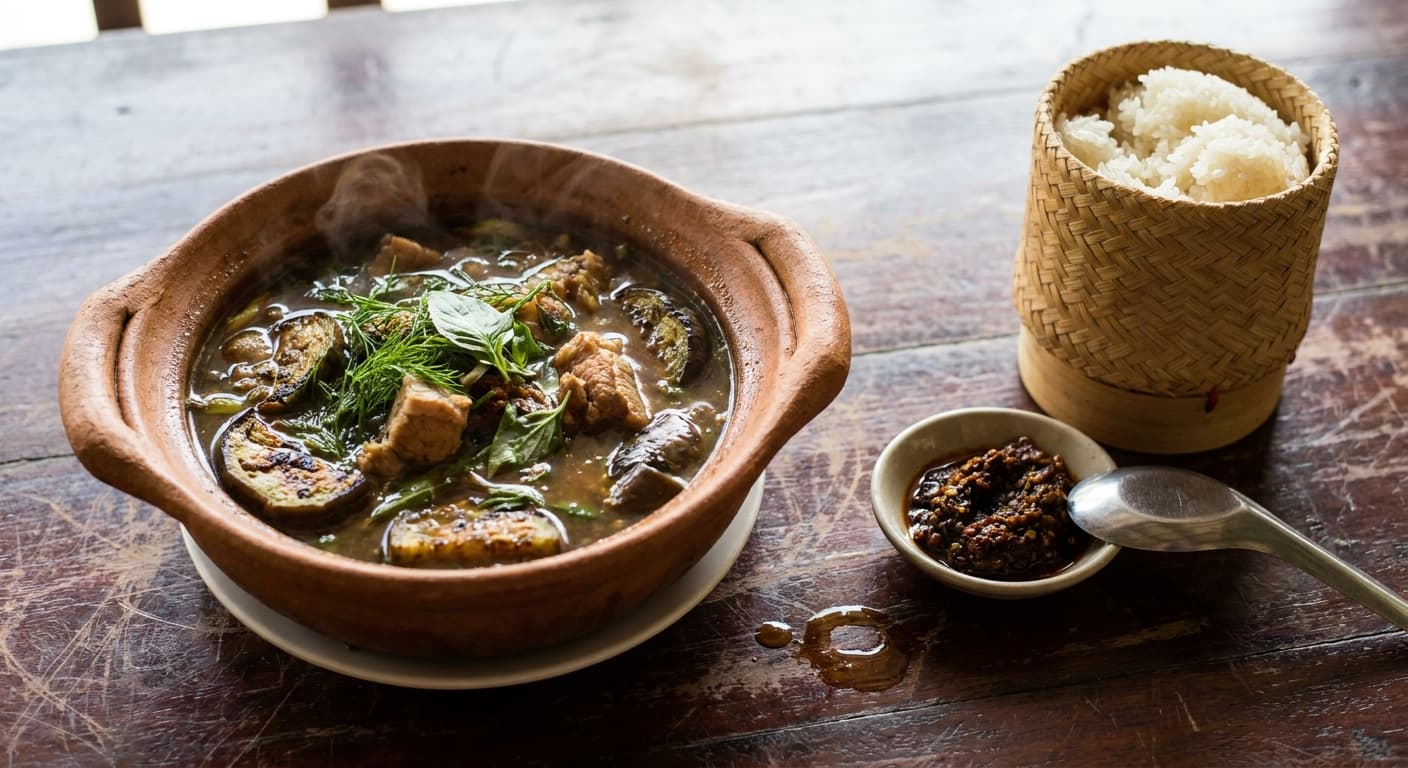
Or Lam (ເອາະຫຼາມ) — Luang Prabang Herb Stew
Laotian · Stews · 155 min
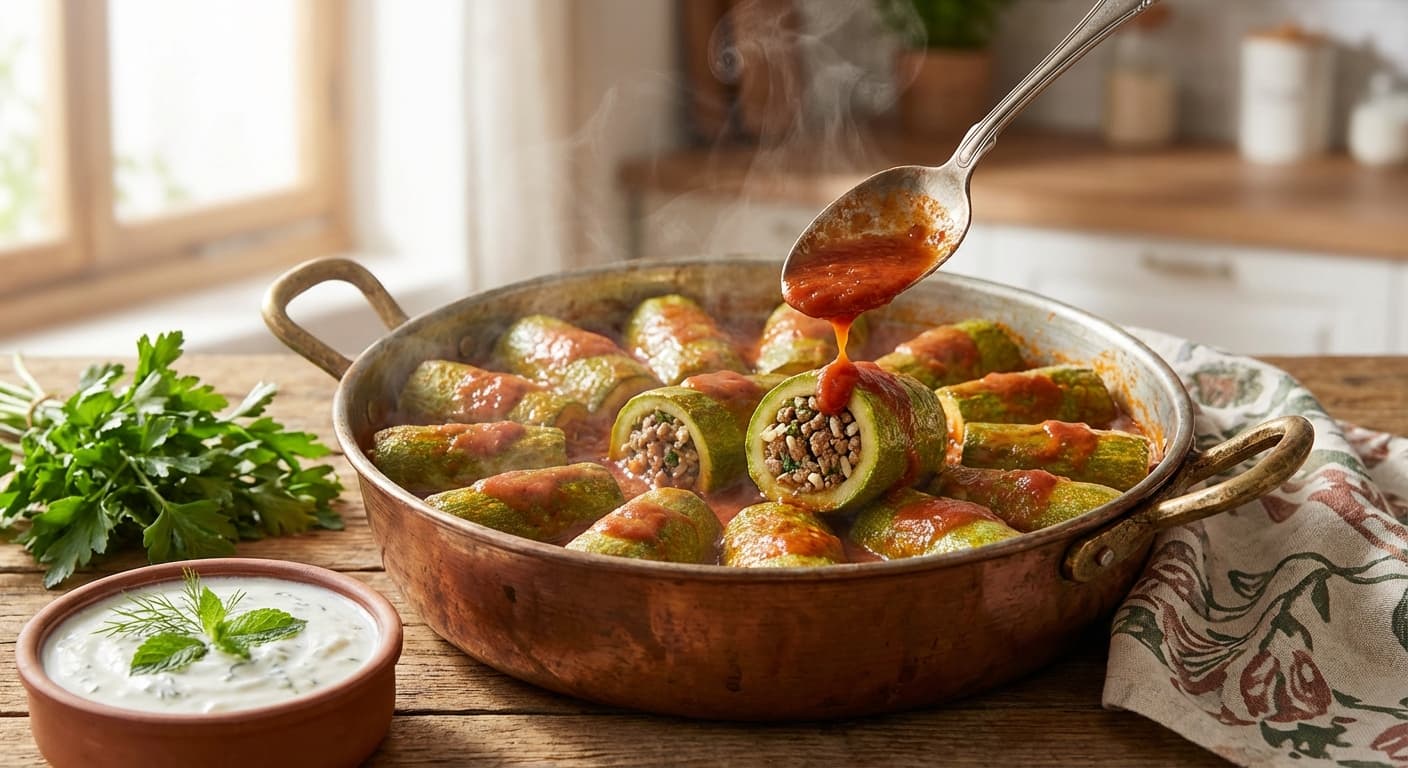
Stuffed Zucchini (Kabak Dolması) — Hollowed zucchini filled with spiced minced meat and rice
Turkish · Main Courses · 90 min
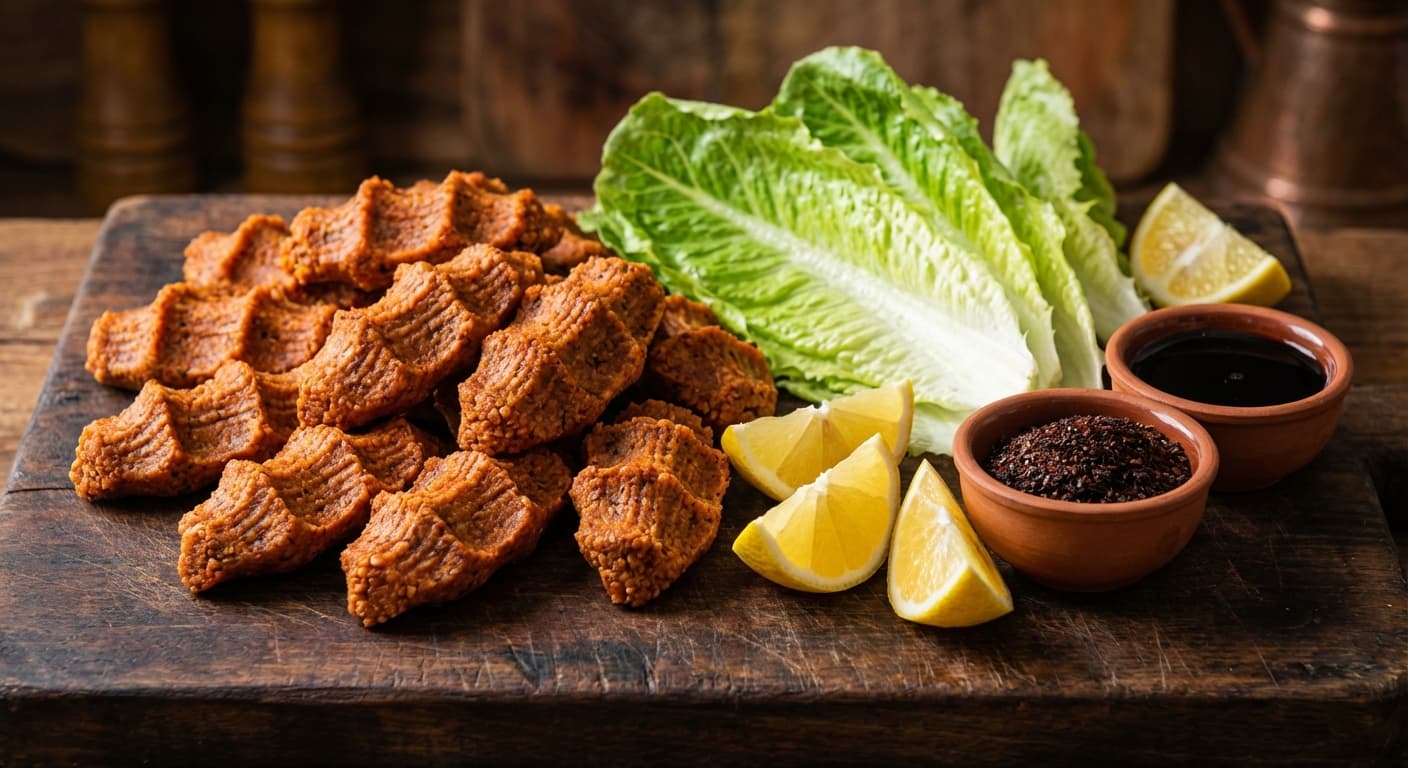
Cig Kofte (Çiğ Köfte) — Isot-kissed bulgur kneaded and served in lettuce
Turkish · Appetizers · 25 min
Buckwheat Žganci (Ajdovi žganci) — Slovenian Buckwheat Crumbs with Cracklings
Slovenian · Side Dishes · 45 min
Reviews
Cooked this recipe?
Tap the stars to rate it — that's all it takes. A few words are welcome but optional.
No ratings yet. Cooked this one? Be the first to rate it — it takes one tap.