Lagana (Λαγάνα) — Clean Monday Sesame Flatbread
Lagana is the iconic Greek flatbread baked for Clean Monday, the start of Lent. Light, dimpled, and topped with sesame, it’s traditionally enjoyed with fasting foods like taramasalata, olives, and legumes.
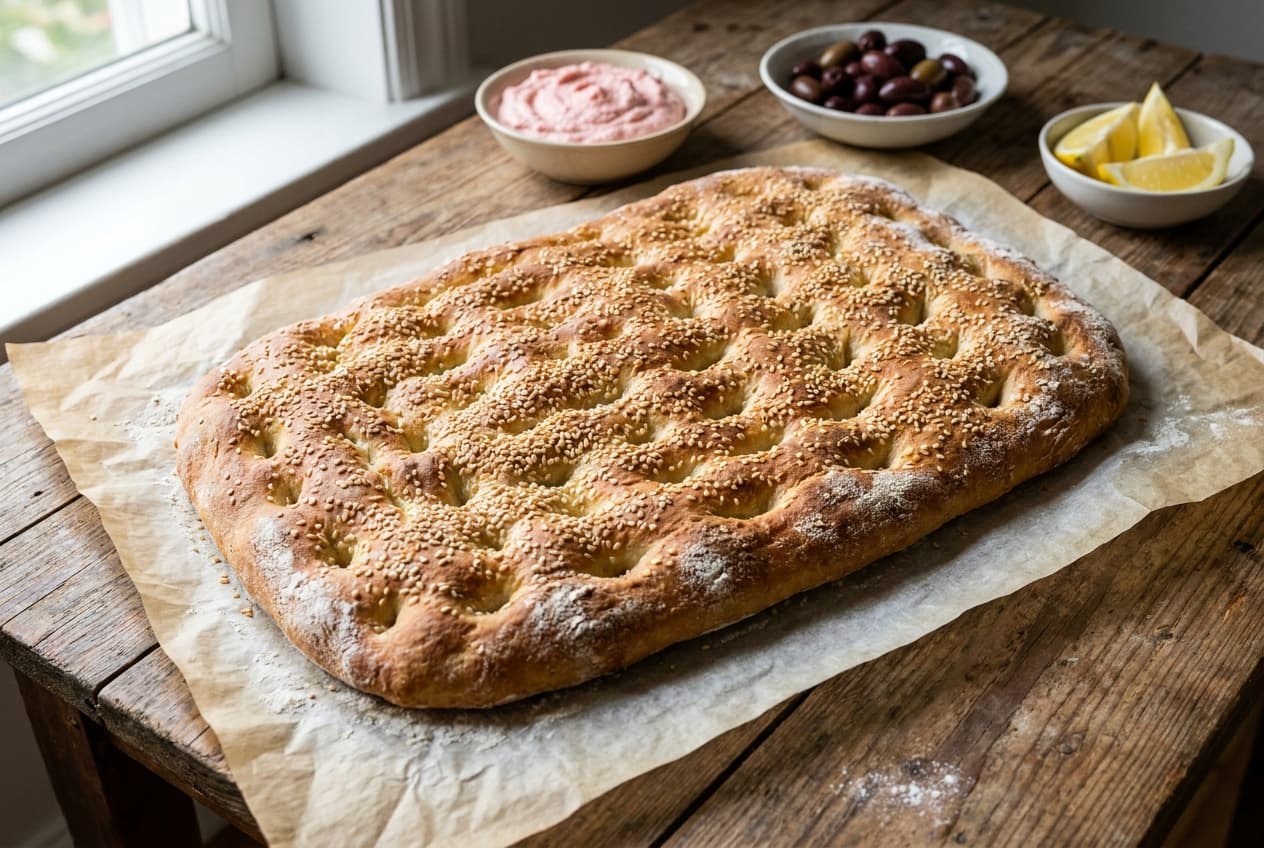
Printable Recipe Card
Servings: 8 · Total: 43 min · Difficulty: medium
Ingredients (quick list)
- 500 g bread flour (plus 20 g for dusting)
- 350 ml water (lukewarm, about 35°C)
- 7 g instant yeast (1 standard packet)
- 10 g granulated sugar (helps fermentation)
- 10 g fine sea salt
- 30 ml extra-virgin olive oil
- 35 g sesame seeds (white sesame)
- 5 g honey (optional, for sheen and color)
Steps (summary)
- Combine the lukewarm water, sugar, and instant yeast in a large bowl and whisk for 10 seconds to hydrate the yeast. Let it stan…
- Add the bread flour and salt to the bowl, then pour in the olive oil. Mix with a spoon until a shaggy dough forms, then switch…
- Knead the dough for 8 minutes on a lightly floured surface until it becomes elastic and smoother. If it feels very sticky, dust…
- Place the dough in a lightly oiled bowl, cover, and let it rise at warm room temperature for 60–75 minutes until doubled. This…
- Line a large baking sheet with parchment and lightly oil the parchment to prevent sticking. Tip the dough onto the sheet and ge…
- Cover the shaped dough and let it proof for 25–35 minutes until it looks puffy and relaxed. Meanwhile, preheat the oven to 230°…
+ 2 more steps in the full instructions section below.
Cultural Background
Baked specifically for Clean Monday, Lagana marks the opening of Greek Lent and is central to the outdoor picnic tradition of “koulouma.” Its simple, oil-based dough aligns with fasting customs while celebrating community and seasonal renewal.
Equipment
💡 Tips
- For a more traditional look, stretch the dough wider and keep it slightly thinner, then dimple more aggressively to create an even, pitted surface.
- Steam in the first minutes helps the bread expand and keeps the crumb light; if you skip it, the crust can set too fast and reduce oven spring.
- Toasting the sesame seeds for 4 minutes at 160°C before topping boosts aroma, but cool them fully so they don’t melt into the dough.
⚠️ Common Mistakes
❌ Dough tears while stretching into a rectangle.
✅ Fix: Let it rest 10 minutes, then stretch again gently; resting relaxes gluten and prevents ripping.
❌ Sesame falls off after baking.
✅ Fix: Brush evenly, then press the seeds in after dimpling so they embed into the surface rather than sitting loose.
❌ Bread bakes pale and dense.
✅ Fix: Ensure the oven is fully preheated to 230°C and avoid adding too much flour during kneading; also bake until clearly golden.
🧊 How to Store
Store Lagana tightly wrapped at room temperature for up to 24 hours for best texture. For longer storage, freeze slices up to 1 month; reheat at 180°C for 6–8 minutes or toast to refresh the crust and crumb.
📅 Make Ahead
Mix and knead the dough, then refrigerate it covered for up to 16 hours for slower fermentation and deeper flavor. Bring to room temperature for 45 minutes, shape, proof, and bake as written.
🍽️ Pairs Well With
- Taramasalata
- olives
- dolmades
- fava puree
- gigantes beans
- halva
- sliced tomatoes and cucumbers.
Regional Variations
- Athens-style Lagana is often wider and thinner with very pronounced dimples and a generous sesame coating.
- Some island versions include a small portion of whole wheat flour (up to 20%) for a more rustic flavor and darker crumb.
- A few bakeries add a pinch of ground anise or mahleb for a subtly aromatic note, especially when serving with sweet Lenten spreads.
Ingredients
- 500 gbread flour (plus 20 g for dusting)
- 350 mlwater (lukewarm, about 35°C)
- 7 ginstant yeast (1 standard packet)
- 10 ggranulated sugar (helps fermentation)
- 10 gfine sea salt
- 30 mlextra-virgin olive oil
- 35 gsesame seeds (white sesame)
- 5 ghoney (optional, for sheen and color)
🔄 Substitutions
- bread flour→ all-purpose flour
- instant yeast→ active dry yeast
- honey→ granulated sugar
- honey→ maple syrup, agave, or date syrup
Instructions
- 1
Combine the lukewarm water, sugar, and instant yeast in a large bowl and whisk for 10 seconds to hydrate the yeast. Let it stand for 5 minutes until it looks slightly foamy, which confirms the yeast is active.
- 2
Add the bread flour and salt to the bowl, then pour in the olive oil. Mix with a spoon until a shaggy dough forms, then switch to your hands and squeeze/fold the dough until no dry flour remains.
- 3
Knead the dough for 8 minutes on a lightly floured surface until it becomes elastic and smoother. If it feels very sticky, dust with up to 20 g extra flour, adding it gradually so the bread stays airy rather than dense.
- 4
Place the dough in a lightly oiled bowl, cover, and let it rise at warm room temperature for 60–75 minutes until doubled. This first rise builds the open, chewy crumb that Lagana is known for.
- 5
Line a large baking sheet with parchment and lightly oil the parchment to prevent sticking. Tip the dough onto the sheet and gently stretch it into a rectangle about 35 cm by 25 cm, keeping the thickness around 1.5–2 cm.
- 6
Cover the shaped dough and let it proof for 25–35 minutes until it looks puffy and relaxed. Meanwhile, preheat the oven to 230°C and place an empty metal tray on the bottom rack to create steam later.
- 7
Stir the topping water with the honey until dissolved, then brush it evenly over the surface. Sprinkle the sesame seeds across the top, then use your fingertips to press deep dimples all over the dough so the classic Lagana pattern forms and the sesame adheres.
- 8
Put the bread in the oven and immediately pour 150 ml of hot water into the preheated empty tray to generate steam, then close the door quickly. Bake for 16–18 minutes until golden with a lightly crisp top, then cool on a rack for at least 20 minutes so the crumb sets before slicing.
🪪 Recipe Passport
Cultural Background
Baked specifically for Clean Monday, Lagana marks the opening of Greek Lent and is central to the outdoor picnic tradition of “koulouma.” Its simple, oil-based dough aligns with fasting customs while celebrating community and seasonal renewal.
Regional Variations
Researched from multiple sources and validated by the Zaffaron editorial team. Every recipe is tested for accuracy, measurements, and cultural authenticity.
Nutrition per serving
Pairs well with
If you enjoyed this recipe, here are a few related Zaffaron recipes to try next.
Does your family make this differently?
Every family has their own version. Maybe your grandmother adds a secret ingredient, or your aunt has a completely different technique. Preserve your family's version — with their name on it, forever.
You Might Also Like
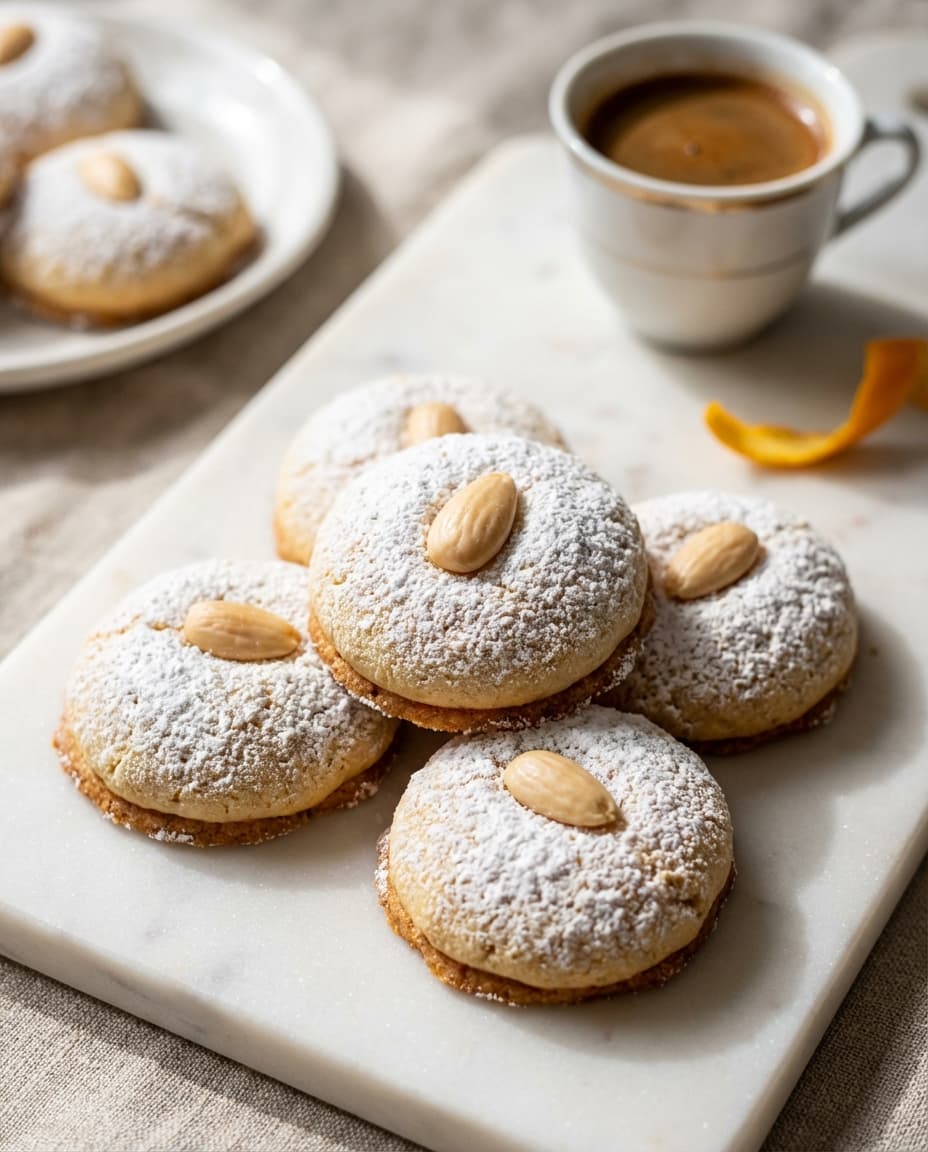
Amygdalota (Αμυγδαλωτά) — Chewy Greek Almond Cookies with Orange and Almond
Greek · Desserts · 38 min
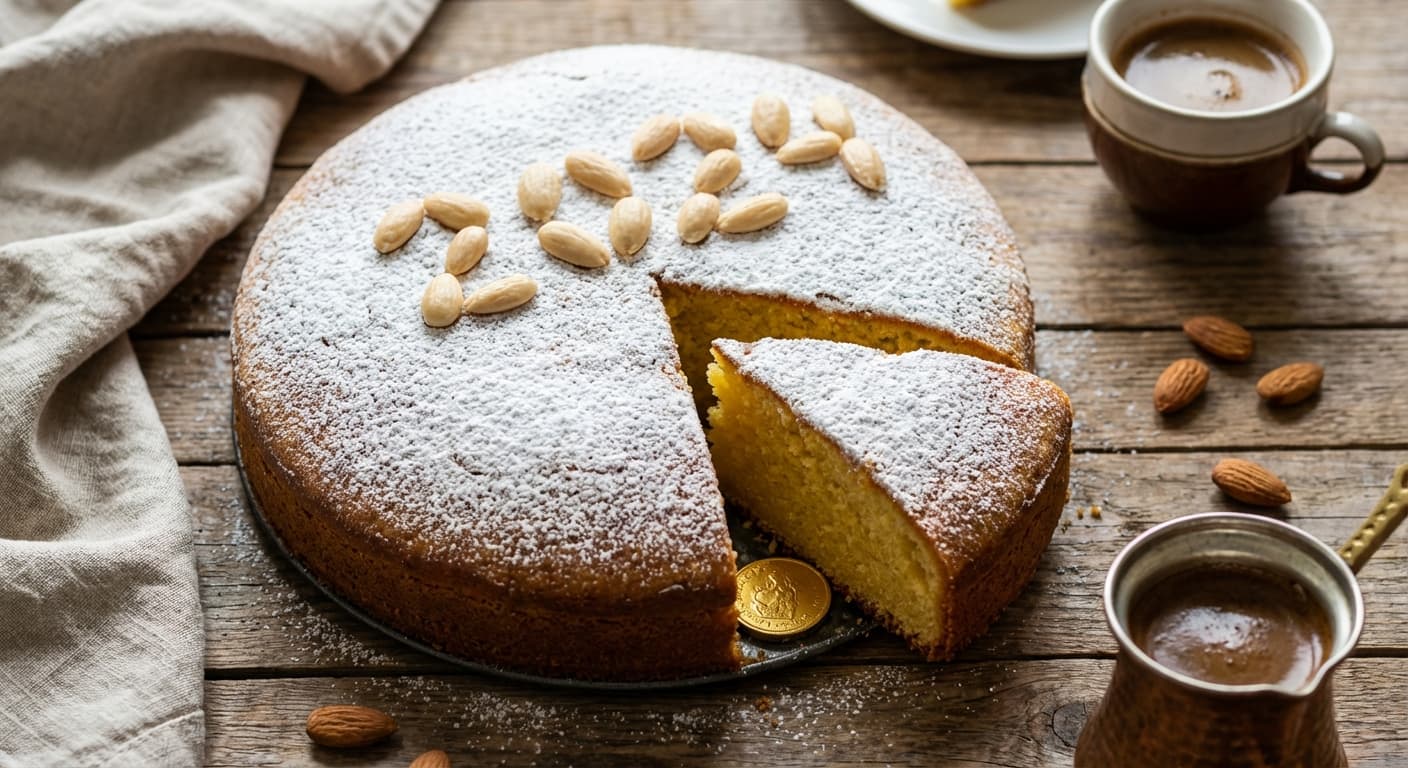
Vasilopita (Βασιλόπιτα) — Greek New Year cake with a hidden coin
Greek · Desserts · 80 min
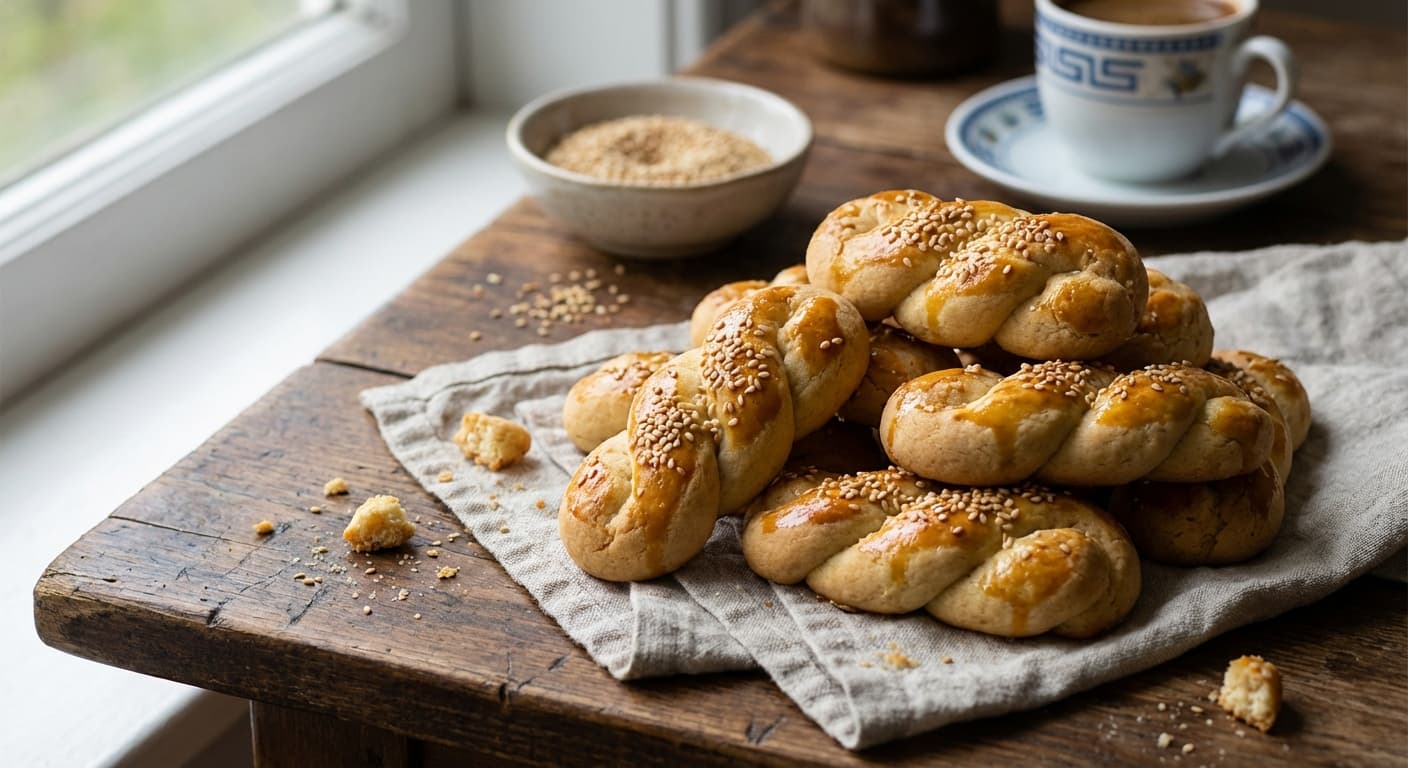
Koulourakia (Κουλουράκια) — Greek Sesame-Topped Easter Butter Cookies
Greek · Desserts · 43 min
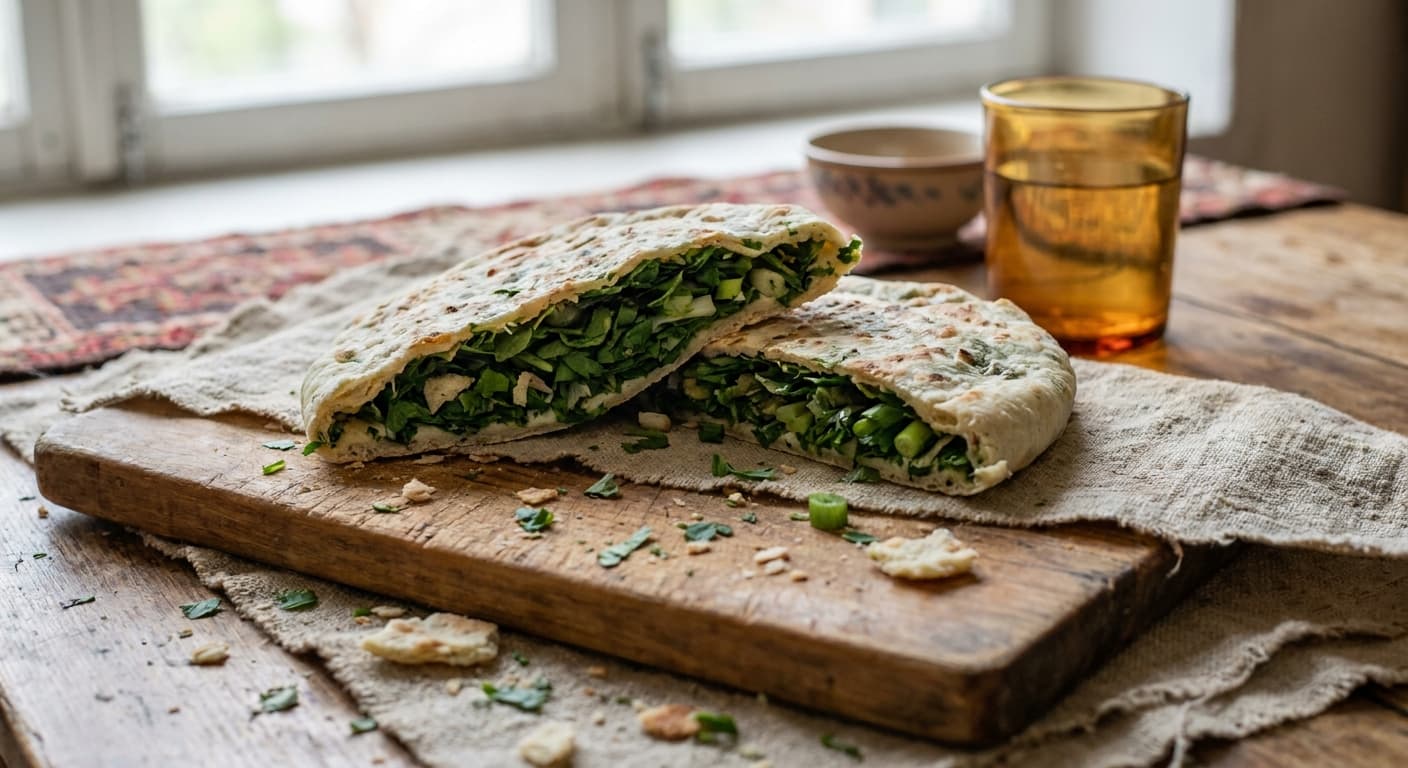
Zhingyalov Hats (Ժենգյալով հաց) — Artsakh Herb-Stuffed Flatbread
Armenian · Breads · 73 min
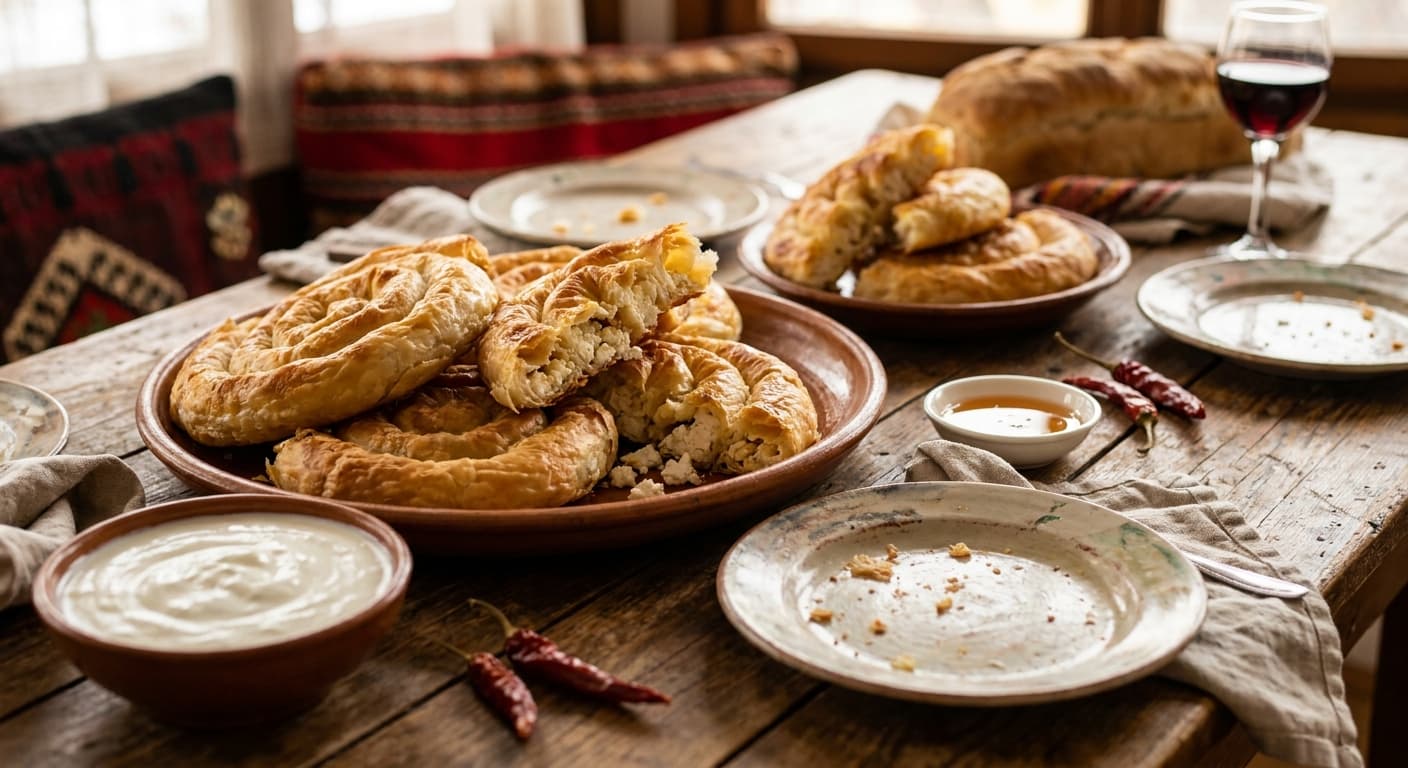
Bulgarian Banitsa (Баница) — Flaky Sirene-Filled Phyllo Pie
Bulgarian · Breads · 68 min
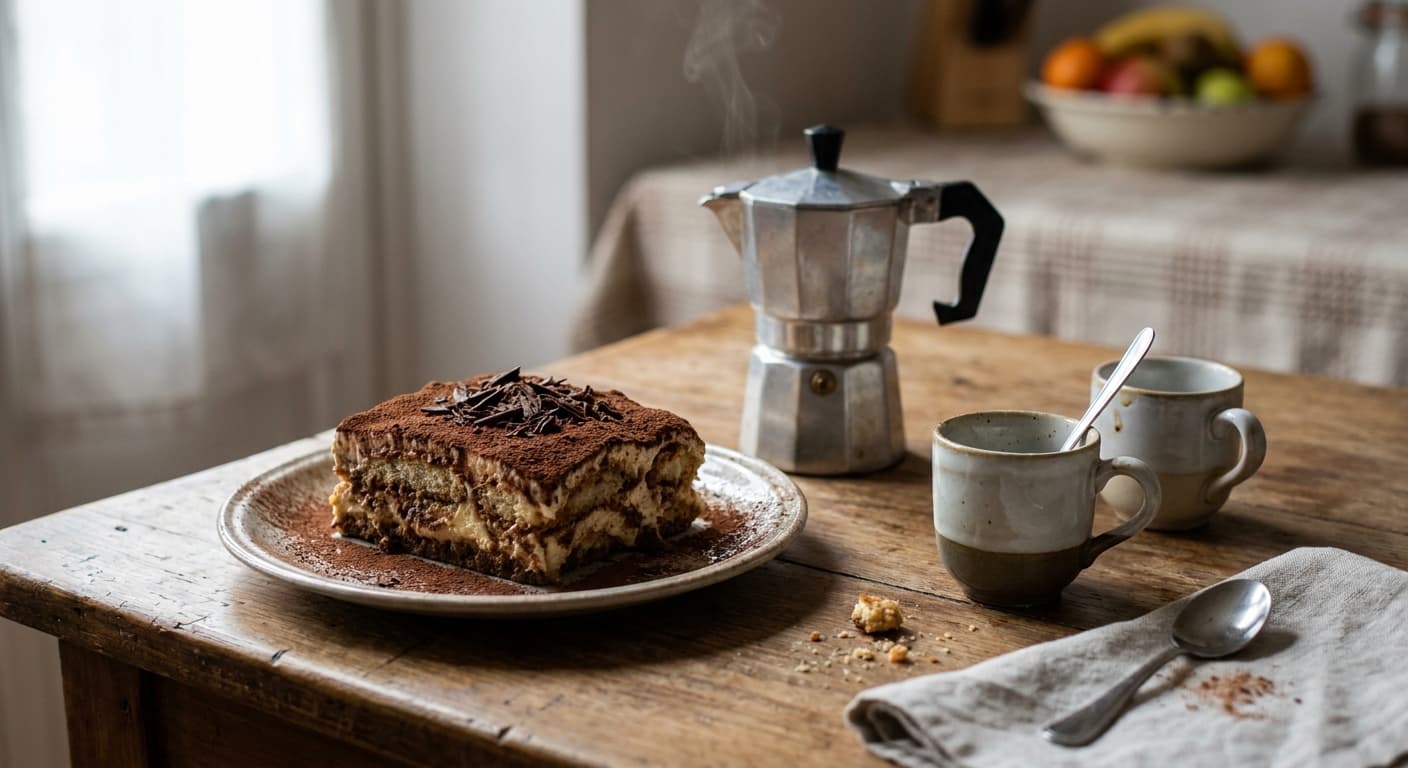
Tiramisu (Tiramisù) — Classic Coffee-Mascarpone Layered Dessert
Italian · Desserts · 35 min
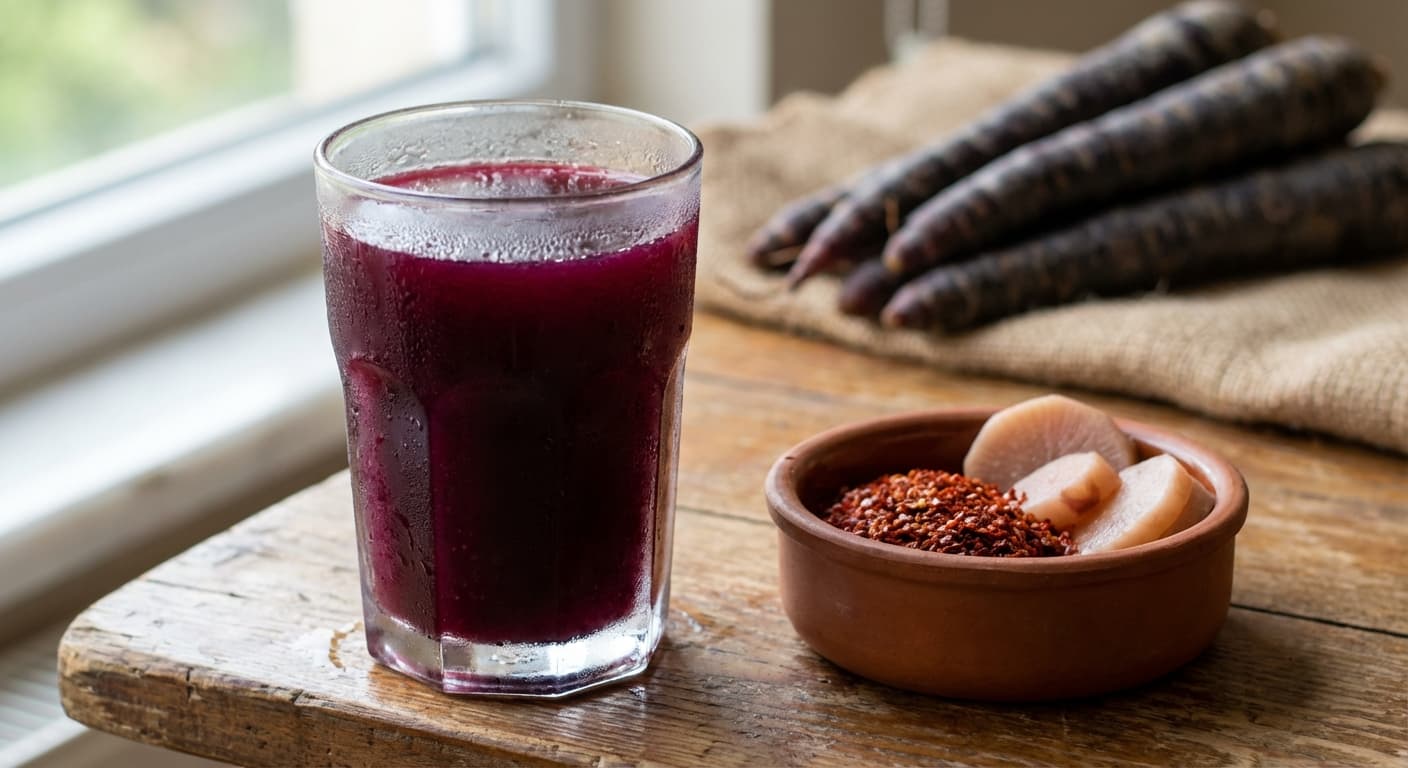
Salgam Juice (Şalgam) — Spicy, tangy fermented black-carrot drink
Turkish · Drinks · 25 min
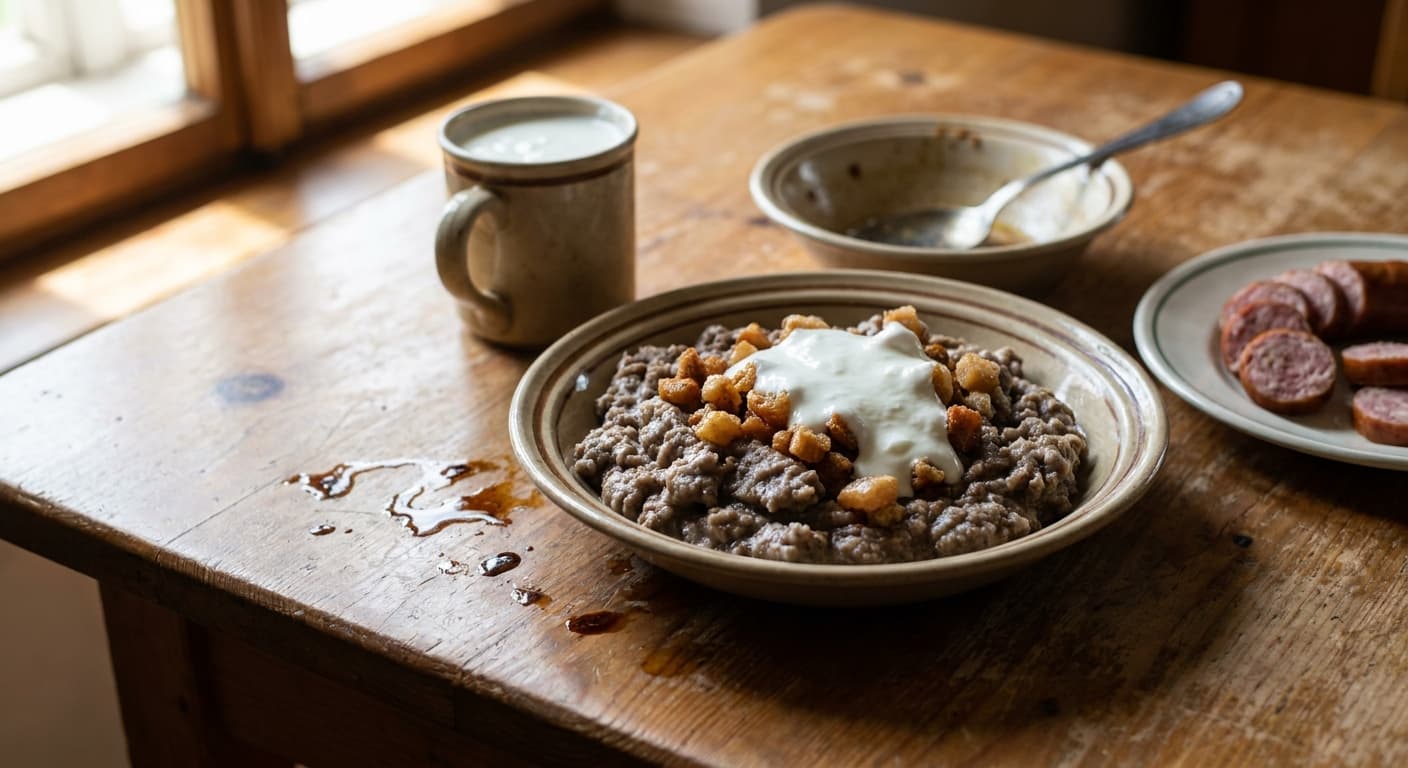
Buckwheat Žganci (Ajdovi žganci) — Slovenian Buckwheat Crumbs with Cracklings
Slovenian · Side Dishes · 45 min
Reviews
Cooked this recipe?
Tap the stars to rate it — that's all it takes. A few words are welcome but optional.
No ratings yet. Cooked this one? Be the first to rate it — it takes one tap.