Scrambled Hominy and Eggs (Mote pillo) — Ecuadorian Highland Breakfast
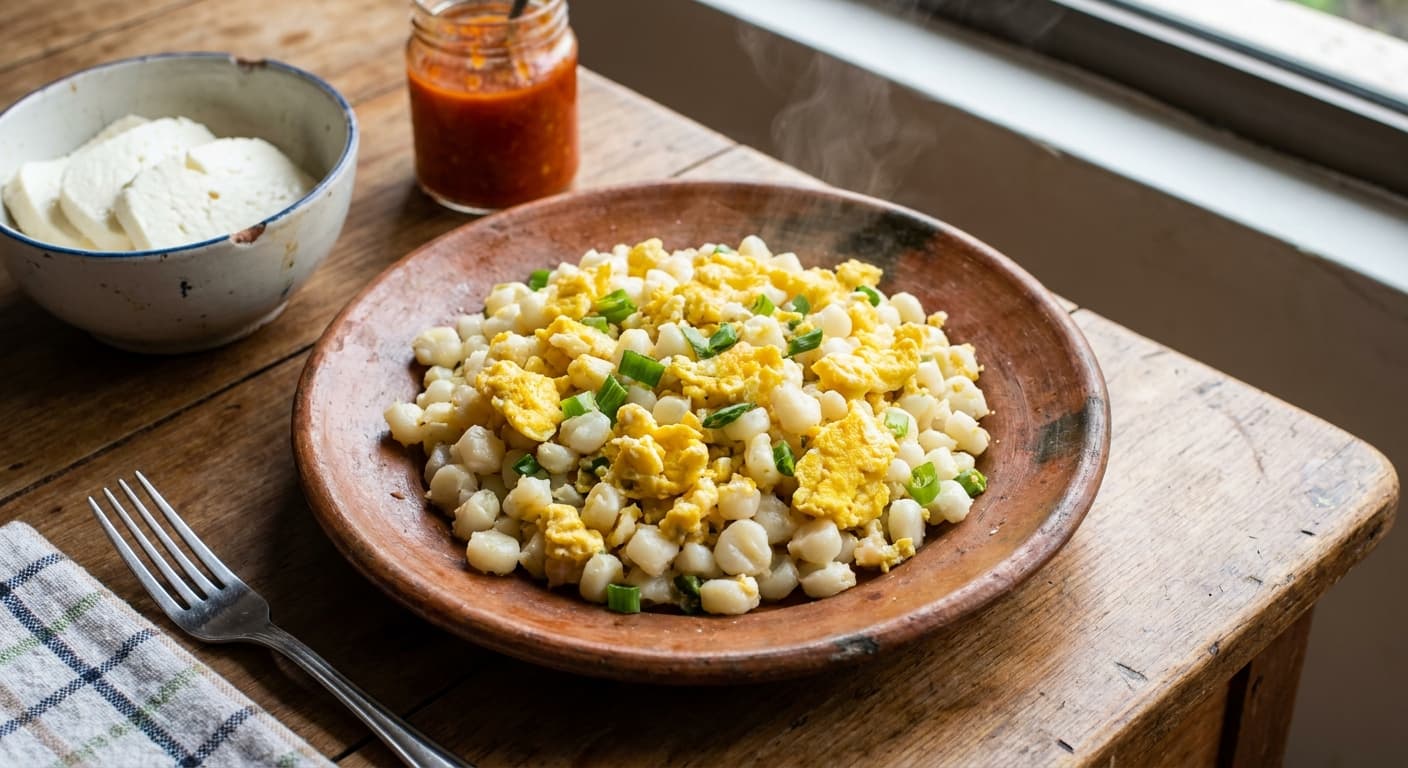
Mote pillo is a comforting combination of cooked mote, eggs, scallions, and achiote from Cuenca and Ecuador's southern highlands. Enjoy it for breakfast or as a hearty accompaniment to fritada or hornado.
Printable Recipe Card
Servings: 4 · Total: 25 min · Difficulty: easy
Ingredients (quick list)
- 600 g cooked white hominy (Known as mote in Ecuador; use fully tender, unsalted kernels, weighed after draining.)
- 4 large eggs
- 28 g unsalted butter
- 4 scallions (Approximately 60 g total; finely chop the white and pale-green sections and reserve the dark-green tops.)
- 2 clove garlic (Finely minced.)
- 0.5 tsp ground achiote (Pure ground annatto, not a salted seasoning blend.)
- 120 ml whole milk
- 3 g fine salt
- 0.25 bunch fresh cilantro (Use 5 g of leaves and tender stems, finely chopped.)
Steps (summary)
- Drain the cooked mote thoroughly and check that the kernels are tender all the way through. This recipe starts with fully cooke…
- Crack the eggs into a bowl and beat until the whites and yolks are evenly combined. Thinly slice the reserved scallion tops and…
- Melt the butter in a wide skillet over medium-low heat. Add the white and pale-green scallions and cook for 3 minutes, stirring…
- Stir in the garlic and ground achiote and cook for 30 seconds, keeping the heat low enough that the spices do not scorch. Add t…
- Pour in the milk and bring it to a gentle simmer over medium-low heat. Cook for 4 to 5 minutes, stirring occasionally, until th…
- Reduce the heat to low and pour in the beaten eggs. Fold slowly with a spatula for 2 to 4 minutes, scraping the skillet bottom,…
+ 1 more steps in the full instructions section below.
Cultural Background
Closely associated with Cuenca and Azuay, mote pillo reflects the importance of maize in Ecuadorian highland cooking. Maricel Presilla's Gran Cocina Latina provides broader context for these maize traditions; household versions vary in herbs and cooking fat.
Equipment
💡 Tips
- Use large, tender white hominy rather than sweet corn; the chewy, starchy kernels are essential to the dish.
- Keep the scallion base pale and soft. Browning it heavily changes the gentle flavor of this breakfast preparation.
- The milk should nearly disappear before the eggs go in, but the skillet should not become dry; begin checking after 4 minutes.
⚠️ Common Mistakes
❌ Using undercooked mote and expecting the brief skillet cooking to soften it.
✅ Fix: Start with fully tender hominy. Simmer firm kernels separately in water until their centers are no longer chalky, then drain.
❌ Adding eggs while a pool of milk remains in the skillet.
✅ Fix: Let the milk reduce to a moist coating first so the eggs form soft curds rather than a watery mixture.
❌ Cooking the eggs over high heat until dry and crumbly.
✅ Fix: Reduce the heat to low before adding the eggs and remove the skillet as soon as they are set.
🧊 How to Store
Refrigerate leftovers in a sealed container within 2 hours and use within 3 days. Reheat gently in a covered skillet with 15 ml milk per serving, stirring until the center reaches 74°C. Freezing is not recommended because the eggs become rubbery.
📅 Make Ahead
Cook and drain the mote up to 3 days ahead and refrigerate in a sealed container. Chop the scallions up to 1 day ahead, but scramble the eggs into the mote immediately before serving for the best texture.
🍽️ Pairs Well With
- Fresh white cheese
- aji criollo
- black coffee
- fritada or hornado for a larger meal
Regional Variations
- Cuenca and Azuay household preparations vary between butter and achiote oil, with cilantro or parsley providing the herbal finish.
- Related Azuay preparations include mote sucio, flavored with pork cooking fat, and mote pata, a richer Carnival soup; neither is simply another name for mote pillo.
Ingredients
- 600 gcooked white hominy (Known as mote in Ecuador; use fully tender, unsalted kernels, weighed after draining.)
- 4large eggs
- 28 gunsalted butter
- 4scallions (Approximately 60 g total; finely chop the white and pale-green sections and reserve the dark-green tops.)
- 2 clovegarlic (Finely minced.)
- 0.5 tspground achiote (Pure ground annatto, not a salted seasoning blend.)
- 120 mlwhole milk
- 3 gfine salt
- 0.25 bunchfresh cilantro (Use 5 g of leaves and tender stems, finely chopped.)
🔄 Substitutions
- cooked white hominy→ 600 g drained canned white hominy
- 28 g unsalted butter and 0.5 tsp ground achiote→ 2 tbsp unsalted achiote-infused oil
- fresh cilantro→ 5 g finely chopped flat-leaf parsley
Instructions
- 1
Drain the cooked mote thoroughly and check that the kernels are tender all the way through. This recipe starts with fully cooked hominy; firm or chalky kernels need further simmering in water before proceeding.
- 2
Crack the eggs into a bowl and beat until the whites and yolks are evenly combined. Thinly slice the reserved scallion tops and keep them separate from the chopped white and pale-green sections.
- 3
Melt the butter in a wide skillet over medium-low heat. Add the white and pale-green scallions and cook for 3 minutes, stirring frequently, until softened without browning.
- 4
Stir in the garlic and ground achiote and cook for 30 seconds, keeping the heat low enough that the spices do not scorch. Add the drained mote and salt, then stir for 2 minutes to coat the kernels evenly in the colored butter.
- 5
Pour in the milk and bring it to a gentle simmer over medium-low heat. Cook for 4 to 5 minutes, stirring occasionally, until the kernels are hot and most of the milk has been absorbed or evaporated, leaving a moist coating rather than a puddle.
- 6
Reduce the heat to low and pour in the beaten eggs. Fold slowly with a spatula for 2 to 4 minutes, scraping the skillet bottom, until soft curds cling to the mote and no liquid egg remains.
- 7
Remove the skillet from the heat and fold in the cilantro and reserved scallion tops. Divide among four plates and serve immediately, while the eggs remain soft and the mote is steaming.
🪪 Recipe Passport
Cultural Background
Closely associated with Cuenca and Azuay, mote pillo reflects the importance of maize in Ecuadorian highland cooking. Maricel Presilla's Gran Cocina Latina provides broader context for these maize traditions; household versions vary in herbs and cooking fat.
Regional Variations
Researched from multiple sources and validated by the Zaffaron editorial team. Every recipe is tested for accuracy, measurements, and cultural authenticity.
📚 Sources & Cultural References
- Maricel E. Presilla — Gran Cocina Latina: The Food of Latin America — (2012)
Sources cited by the Zaffaron editorial team during recipe research. Cultural and culinary references supporting authenticity claims.
Nutrition per serving
Pairs well with
If you enjoyed this recipe, here are a few related Zaffaron recipes to try next.
Does your family make this differently?
Every family has their own version. Maybe your grandmother adds a secret ingredient, or your aunt has a completely different technique. Preserve your family's version — with their name on it, forever.
You Might Also Like
Ecuadorian Tuna Encebollado (Encebollado ecuatoriano) — Coastal Yuca and Tuna Soup
Ecuadorian · Soups · 85 min
Ecuadorian Peanut Tripe Stew (Guatita) — Creamy Potato and Peanut Stew
Ecuadorian · Stews · 180 min
Fanesca (Fanesca) — Ecuadorian Holy Week Cod and Grain Soup
Ecuadorian · Soups · 180 min
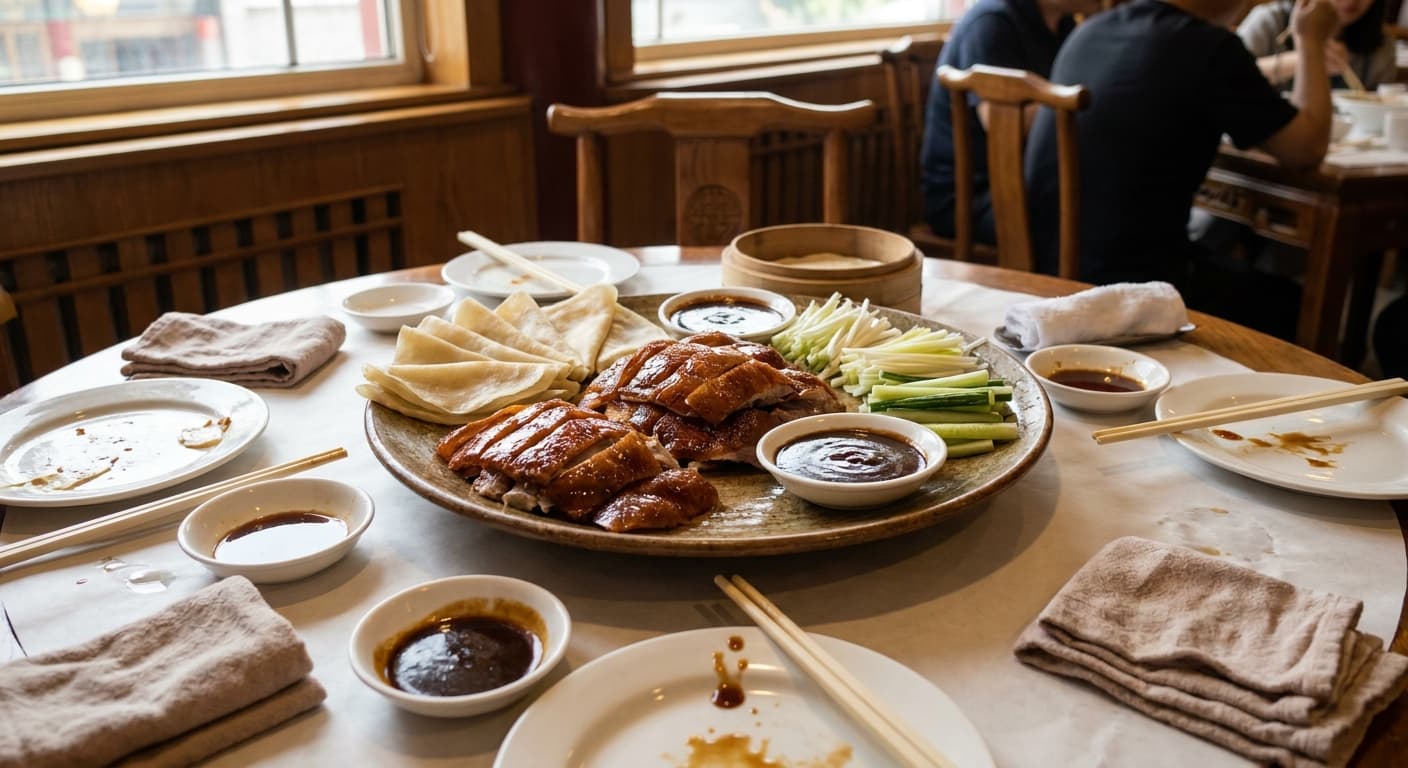
Peking Duck (北京烤鸭) — Crisp-Skinned Beijing Roast Duck
Chinese · Main Courses · 180 min
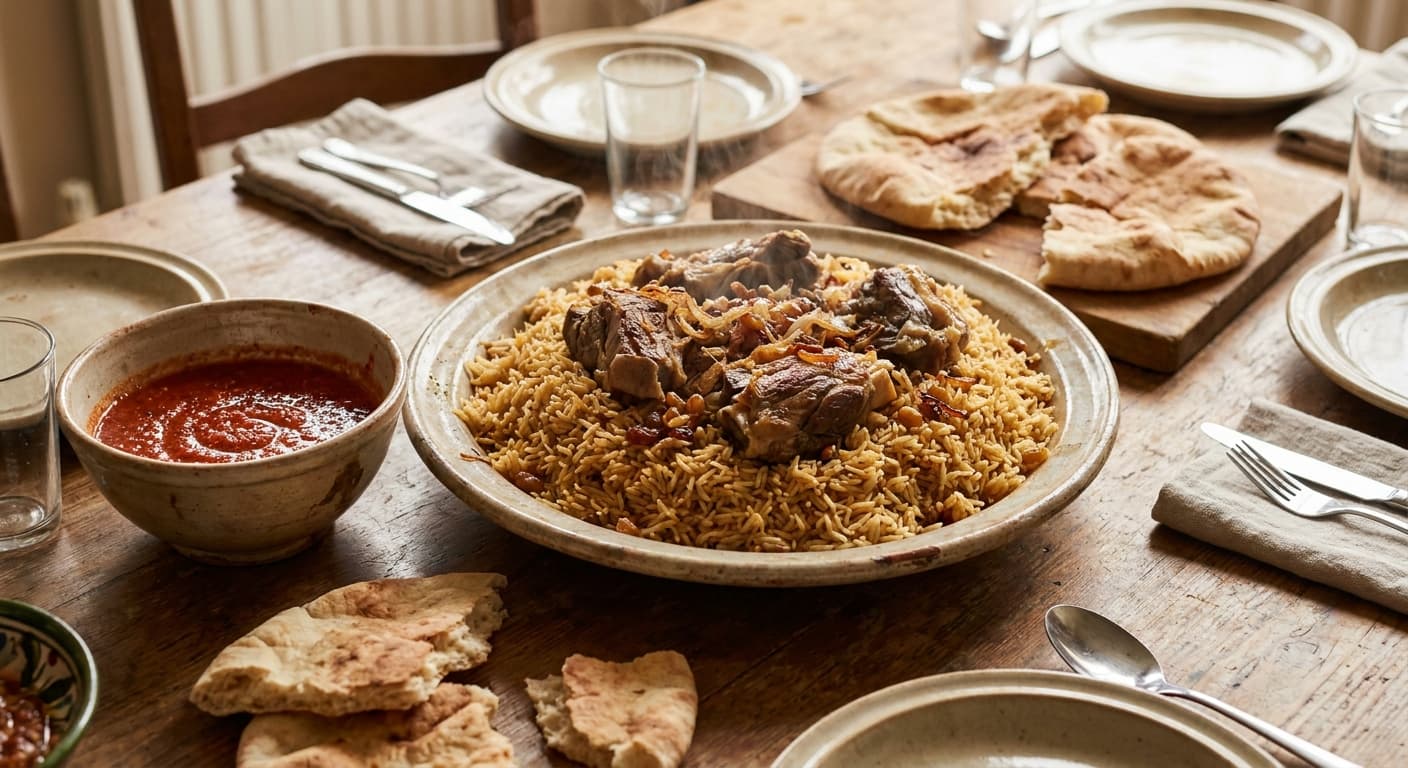
Yemeni Mandi (مندي) — Smoke-Scented Spiced Rice and Lamb
Yemeni · Main Courses · 170 min
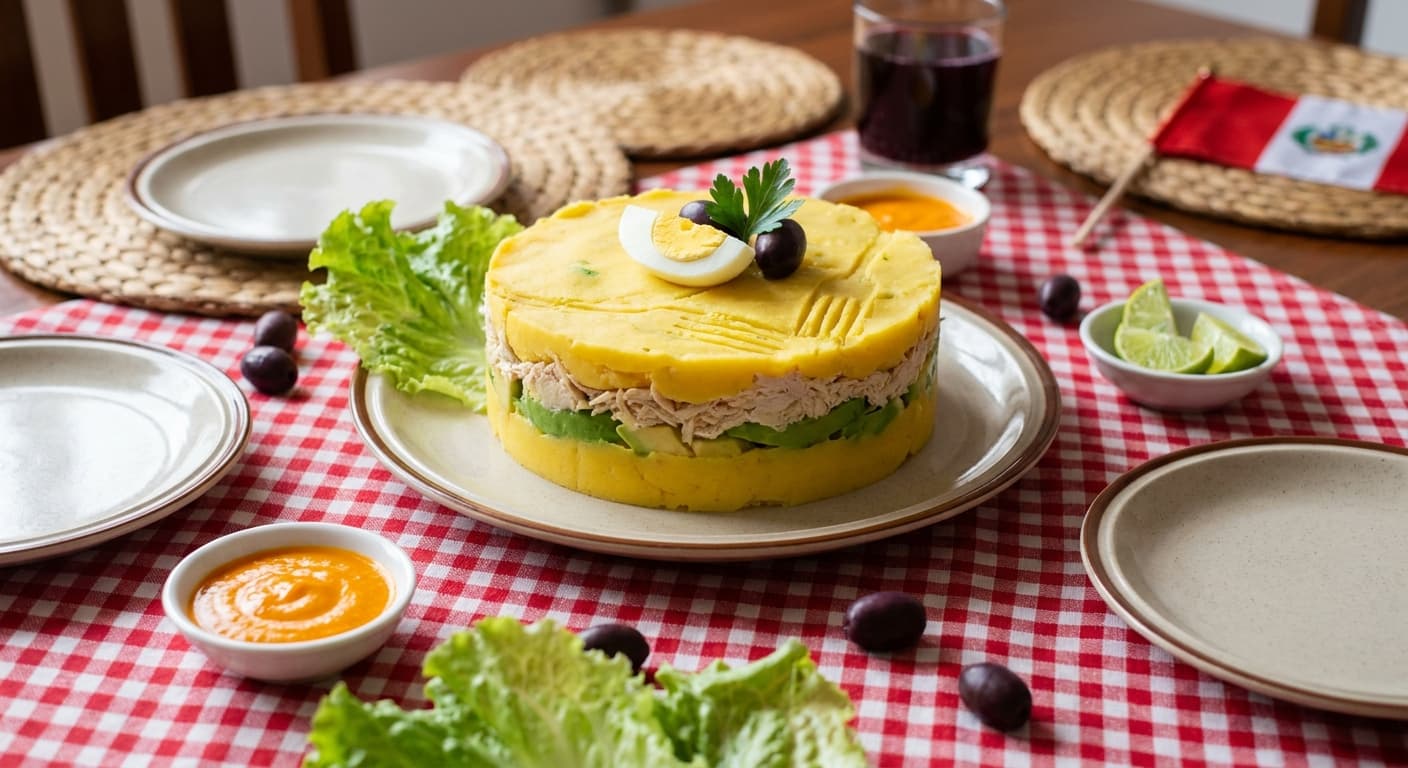
Lima-Style Causa (Causa Limeña) — Chilled Potato Terrine with Chicken and Avocado
Peruvian · Appetizers · 70 min
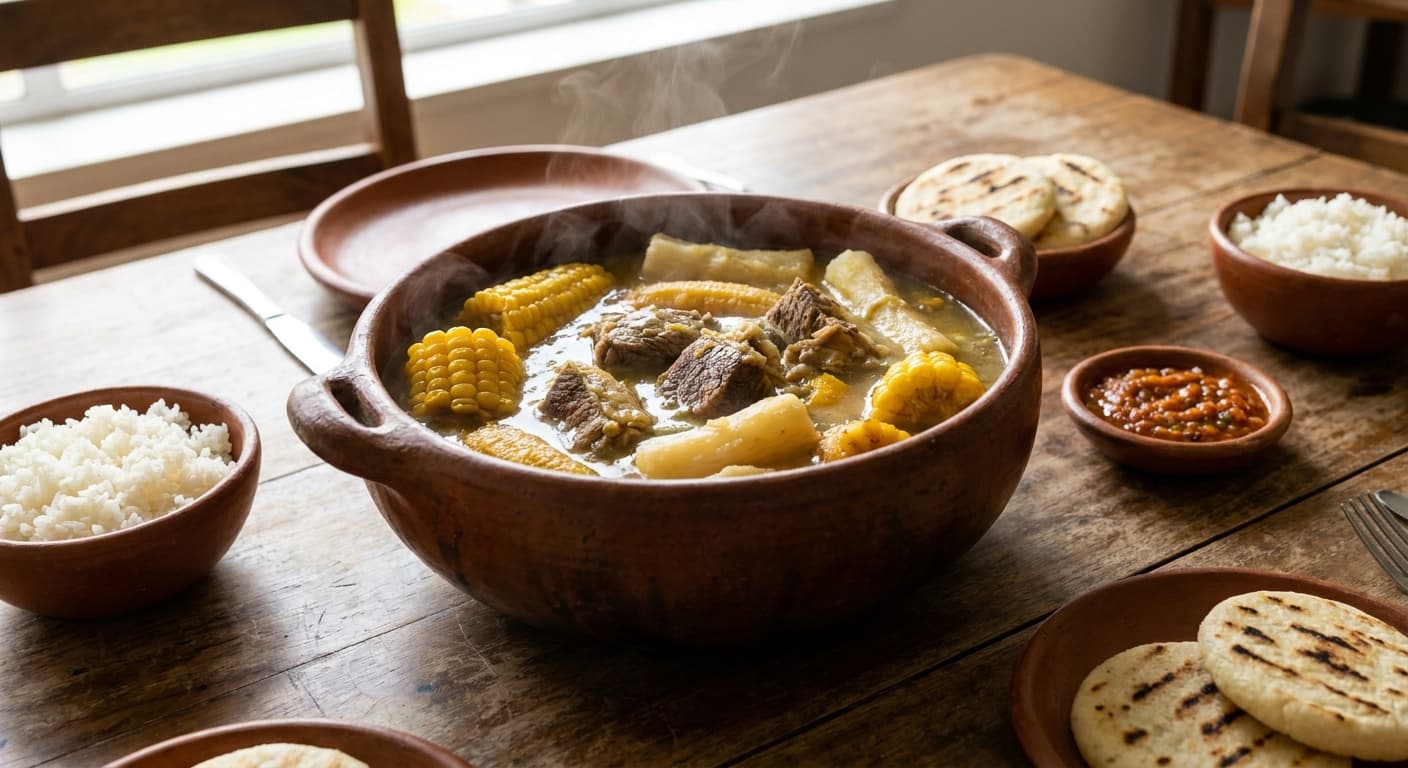
Colombian Sancocho (Sancocho Colombiano) — Hearty Three-Meat Root Vegetable Stew
Colombian · Stews · 170 min
Changua (Changua) — Colombian Milk-and-Egg Breakfast Soup
Colombian · Soups · 25 min
Reviews
Cooked this recipe?
Tap the stars to rate it — that's all it takes. A few words are welcome but optional.
No ratings yet. Cooked this one? Be the first to rate it — it takes one tap.