Omelet Shekar (املت شکر) — Persian Sweet Sugar Omelette
A nostalgic Iranian sweet omelette that cooks thin like a crepe, then caramelizes lightly with sugar. Soft, silky, and vanilla-scented, it’s a comforting breakfast treat served warm with black tea.
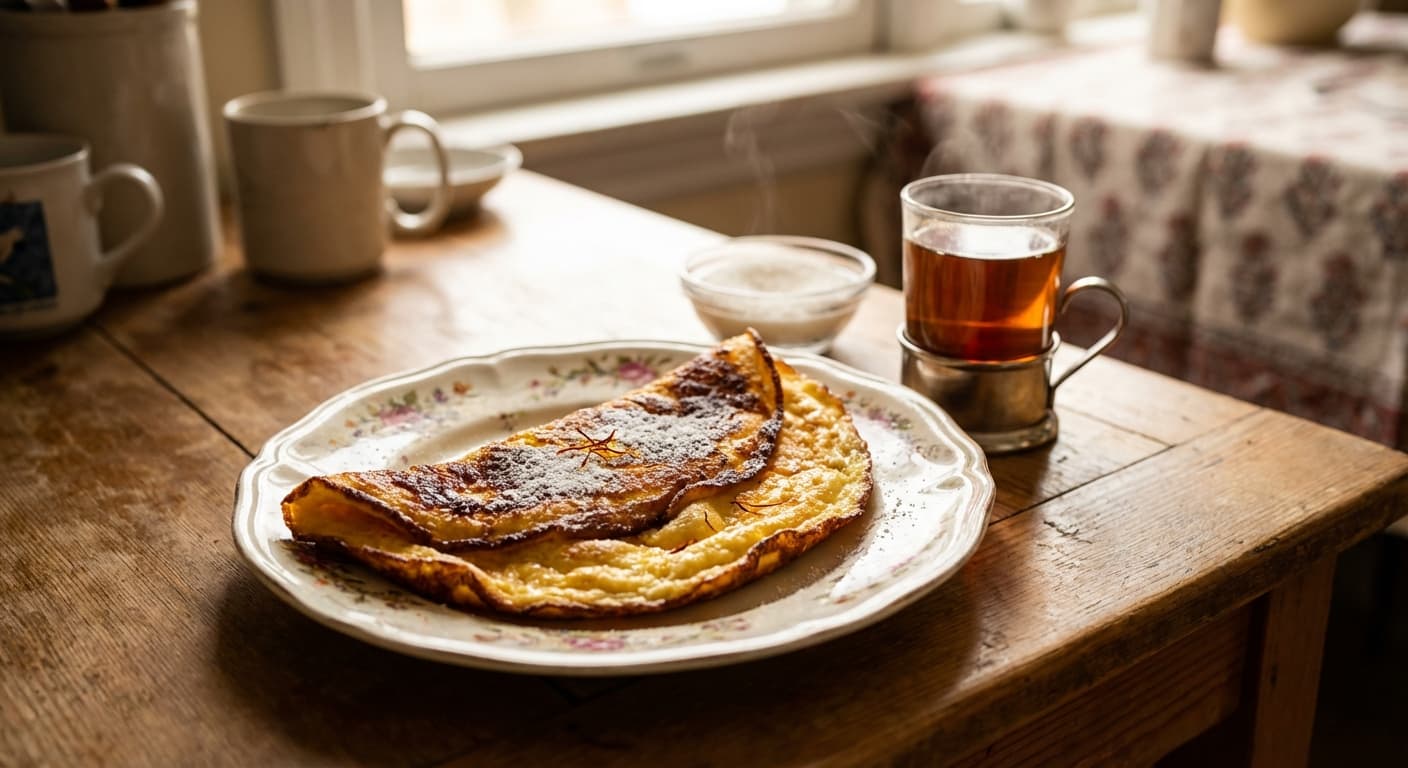
Printable Recipe Card
Servings: 2 · Total: 20 min · Difficulty: easy
Ingredients (quick list)
- 4 each Large eggs (room temperature for a smoother batter)
- 50 g Granulated sugar (plus 10 g for sprinkling (included here; measure separately while cooking))
- 1 tsp Vanilla extract (pure vanilla preferred)
- 0.5 tsp Fine salt (balances sweetness)
- 20 g Unsalted butter (or neutral oil; used for frying)
Steps (summary)
- Warm the eggs to room temperature for 10 minutes if they are cold; this helps the omelette cook evenly and stay silky. In a med…
- Set a 24–26 cm nonstick skillet over medium-low heat for 2 minutes. Add the butter and swirl until fully melted and lightly foa…
- Cook on medium-low for 3–4 minutes, until the edges look set and the center is just barely moist. Sprinkle 10 g granulated suga…
- Using a wide spatula, gently fold the omelette in half, then fold again into quarters, keeping the sugared side inside so it me…
Cultural Background
Sweet omelettes are a familiar home-style breakfast in Iran, often associated with simple pantry cooking and childhood nostalgia. They are commonly served warm with black tea, especially when a quick, comforting morning meal is desired.
Equipment
💡 Tips
- Keep the heat medium-low; high heat makes the eggs rubbery before the sugar melts.
- Whisk just until combined and slightly foamy—over-whisking can make the omelette puff and lose its delicate, crepe-like texture.
- If your pan is larger than 26 cm, the omelette will be thinner and cook faster; start checking 1 minute earlier.
- For a cleaner fold, loosen the edges first by running the spatula around the pan before folding.
⚠️ Common Mistakes
❌ Cooking over high heat
💡 Why: Eggs set too fast and become rubbery before the sugar can melt, and the butter may brown or burn.
✅ Fix: Use medium-low heat; extend cooking time slightly and watch for gentle bubbling and a glossy sugar melt.
❌ Not dissolving the sugar enough in the eggs
💡 Why: Undissolved crystals can sink and scorch, creating bitter spots and uneven sweetness.
✅ Fix: Whisk 60–90 seconds until the mixture looks slightly foamy and less gritty; let it sit 1 minute, then whisk briefly again.
❌ Flipping or folding too early
💡 Why: A wet center tears easily and leaks syrup, making the omelette messy and uneven.
✅ Fix: Wait until edges are set and the center is just barely moist; loosen the perimeter first, then fold gently with a wide spatula.
🧊 How to Store
Best eaten immediately. If needed, cool completely, wrap, and refrigerate up to 24 hours. Reheat in a covered nonstick skillet over low heat for 2–3 minutes, flipping once; avoid microwaving as it can toughen the eggs and weep syrup.
📅 Make Ahead
You can whisk the eggs, sugar, vanilla, and salt up to 30 minutes ahead and keep covered at room temperature; whisk again for 10 seconds before cooking. For best texture, cook right before serving.
🍽️ Pairs Well With
- Hot Persian-style black tea
- Fresh berries or sliced banana
- A spoonful of thick yogurt (optional
- for contrast)
Regional Variations
- Tehran and central IranOften kept very thin like a crepe, folded into quarters, and served simply with tea; vanilla is common in modern home kitchens.
- Northern Iran (Caspian regions)Sometimes cooked slightly thicker and finished with extra sugar to create a more pronounced caramel layer, then served with seasonal fruit.
Ingredients
- 4 eachLarge eggs (room temperature for a smoother batter)
- 50 gGranulated sugar (plus 10 g for sprinkling (included here; measure separately while cooking))
- 1 tspVanilla extract (pure vanilla preferred)
- 0.5 tspFine salt (balances sweetness)
- 20 gUnsalted butter (or neutral oil; used for frying)
🔄 Substitutions
- Unsalted butter→ Neutral oil (sunflower, canola, grapeseed)
- Vanilla extract→ Ground cardamom
Instructions
- 1
Warm the eggs to room temperature for 10 minutes if they are cold; this helps the omelette cook evenly and stay silky. In a medium bowl, whisk the eggs, 50 g granulated sugar, vanilla, and salt for 60–90 seconds until the sugar starts dissolving and the mixture looks slightly lighter and foamy.
- 2
Set a 24–26 cm nonstick skillet over medium-low heat for 2 minutes. Add the butter and swirl until fully melted and lightly foaming, not browned. Pour in the egg mixture and immediately tilt the pan to spread it into a thin, crepe-like layer; aim for an even thickness across the surface.
- 3
Cook on medium-low for 3–4 minutes, until the edges look set and the center is just barely moist. Sprinkle 10 g granulated sugar evenly over the top. Continue cooking 60–90 seconds so the sugar begins to melt and turn glossy; reduce heat slightly if you see smoking.
- 4
Using a wide spatula, gently fold the omelette in half, then fold again into quarters, keeping the sugared side inside so it melts into a syrupy layer. Cook 30–45 seconds per side to lightly caramelize without drying the eggs. Slide onto plates and rest 1 minute before serving warm.
🪪 Recipe Passport
Cultural Background
Sweet omelettes are a familiar home-style breakfast in Iran, often associated with simple pantry cooking and childhood nostalgia. They are commonly served warm with black tea, especially when a quick, comforting morning meal is desired.
Regional Variations
Researched from multiple sources and validated by the Zaffaron editorial team. Every recipe is tested for accuracy, measurements, and cultural authenticity.
Nutrition per serving
Pairs well with
If you enjoyed this recipe, here are a few related Zaffaron recipes to try next.
Does your family make this differently?
Every family has their own version. Maybe your grandmother adds a secret ingredient, or your aunt has a completely different technique. Preserve your family's version — with their name on it, forever.
You Might Also Like
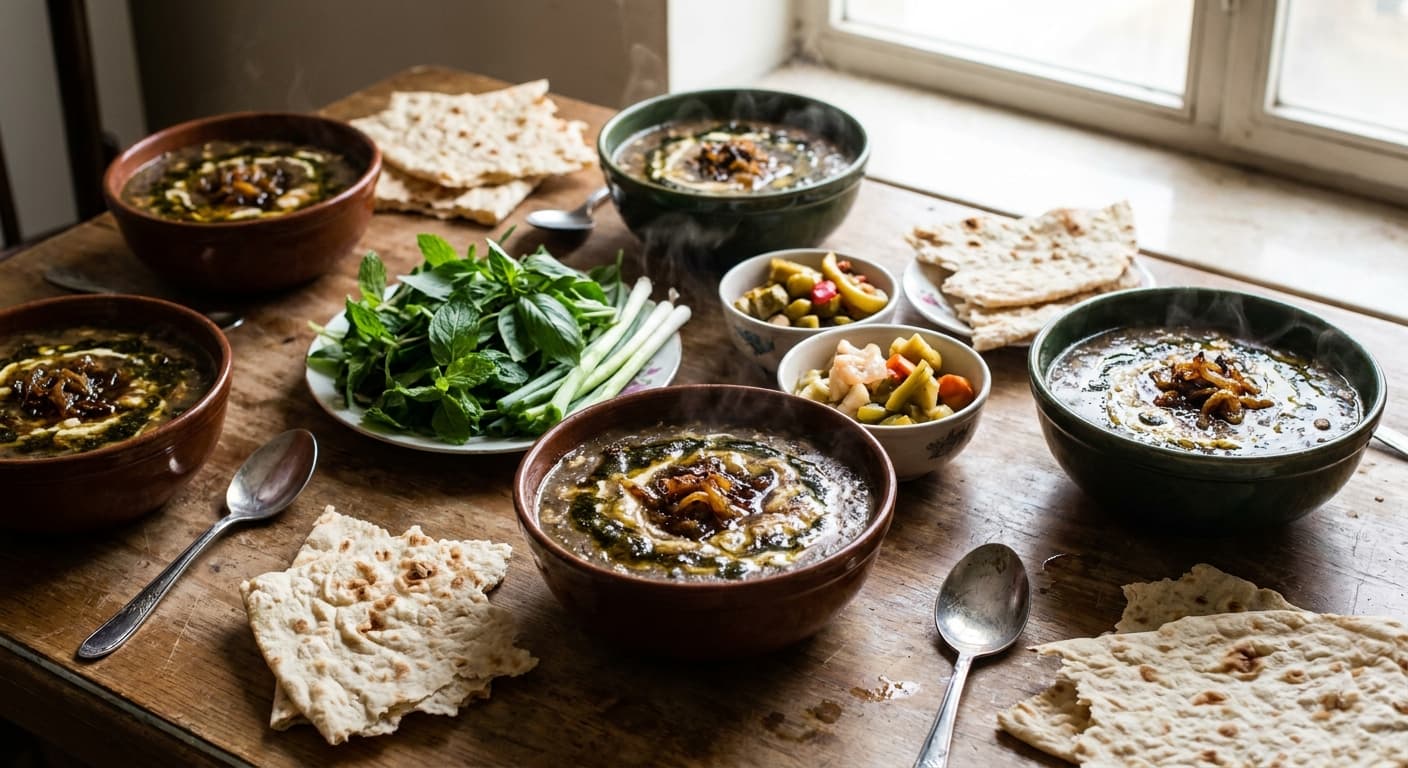
Ash-e Torsh (آش ترش) — Sour Herb and Legume Soup
Persian · Soups · 145 min
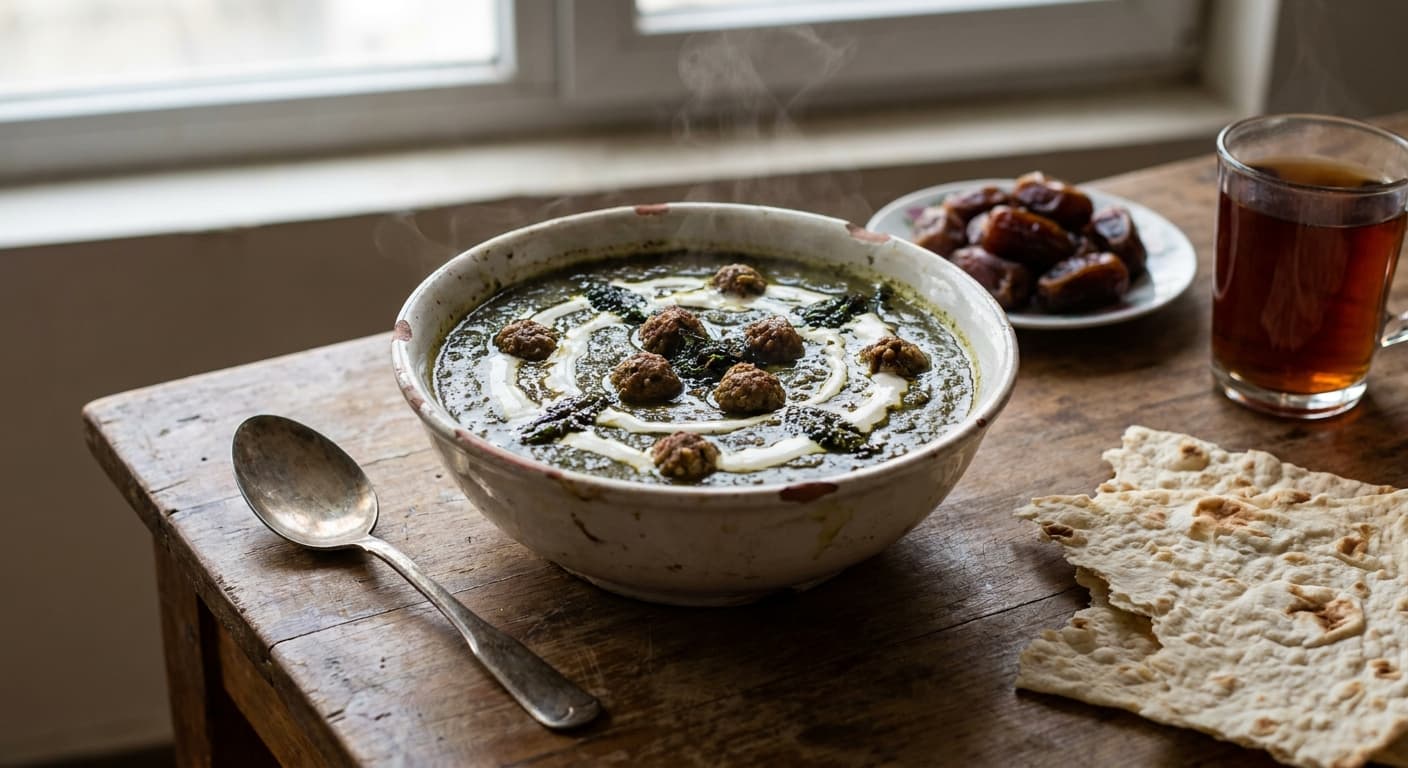
Ash-e Sak (آش ساک) — Golestani Spinach, Legume, and Meatball Soup
Persian · Soups · 175 min
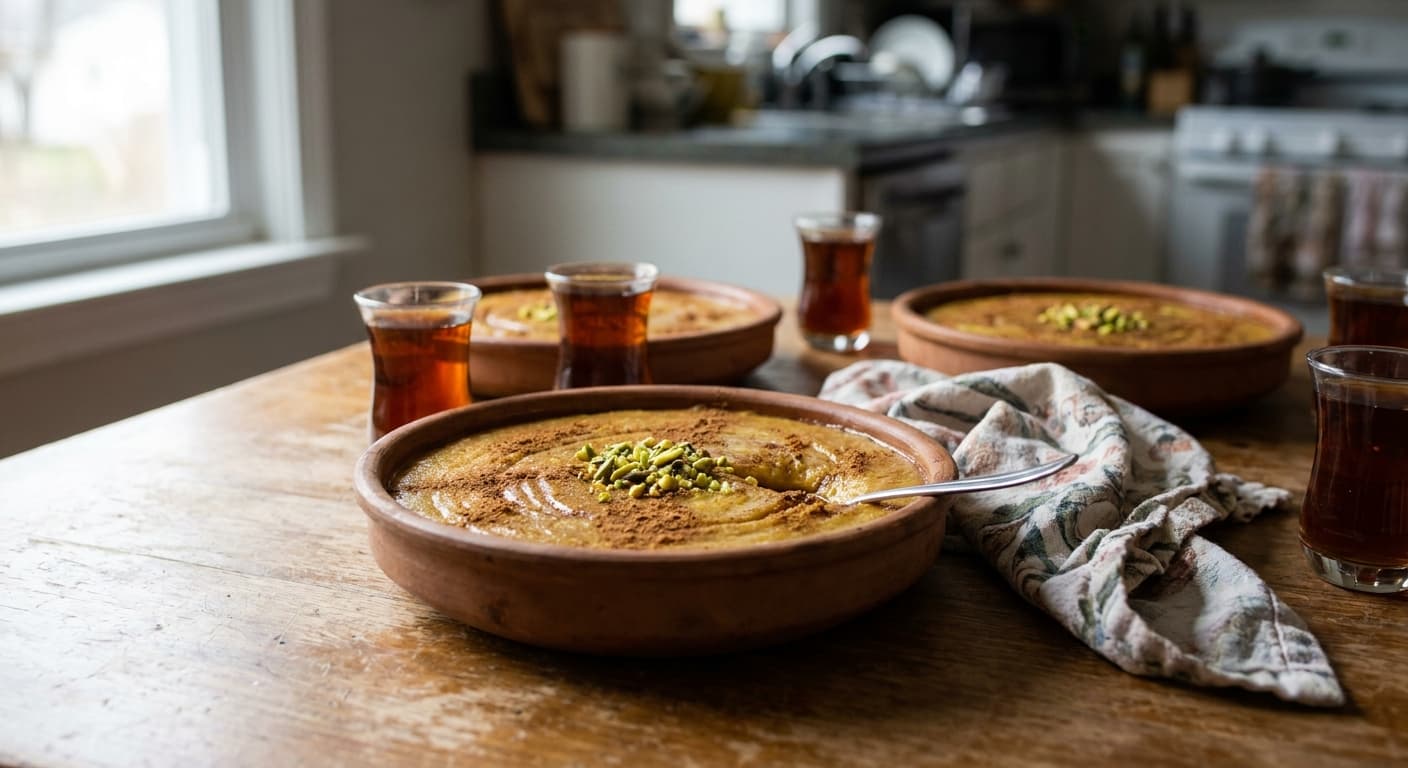
Persian Kachi (کاچی) — Saffron Rosewater Pudding
Persian · Desserts · 45 min
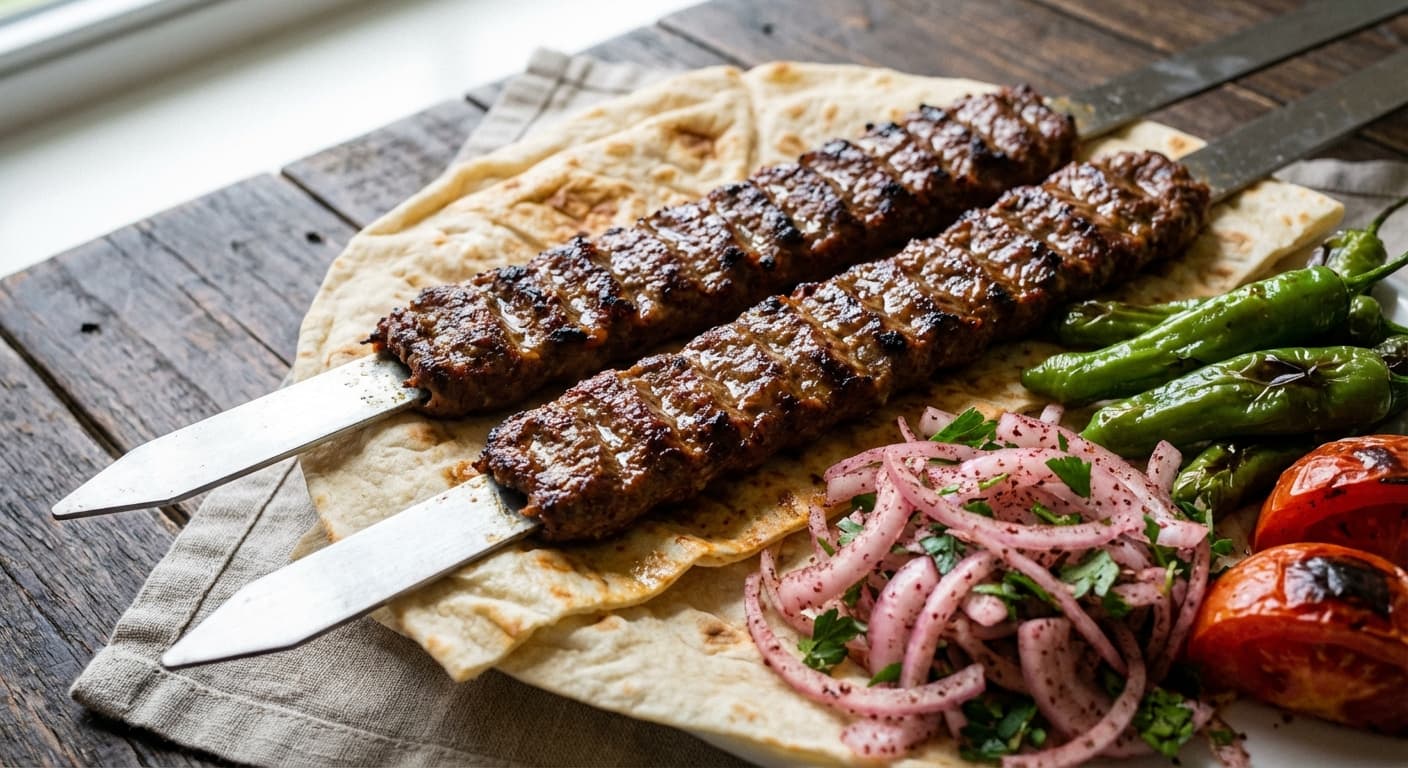
Urfa Kebab (اورفا کباب) — Mild Turkish minced skewer with sumac onions
Turkish · Kebabs · 37 min
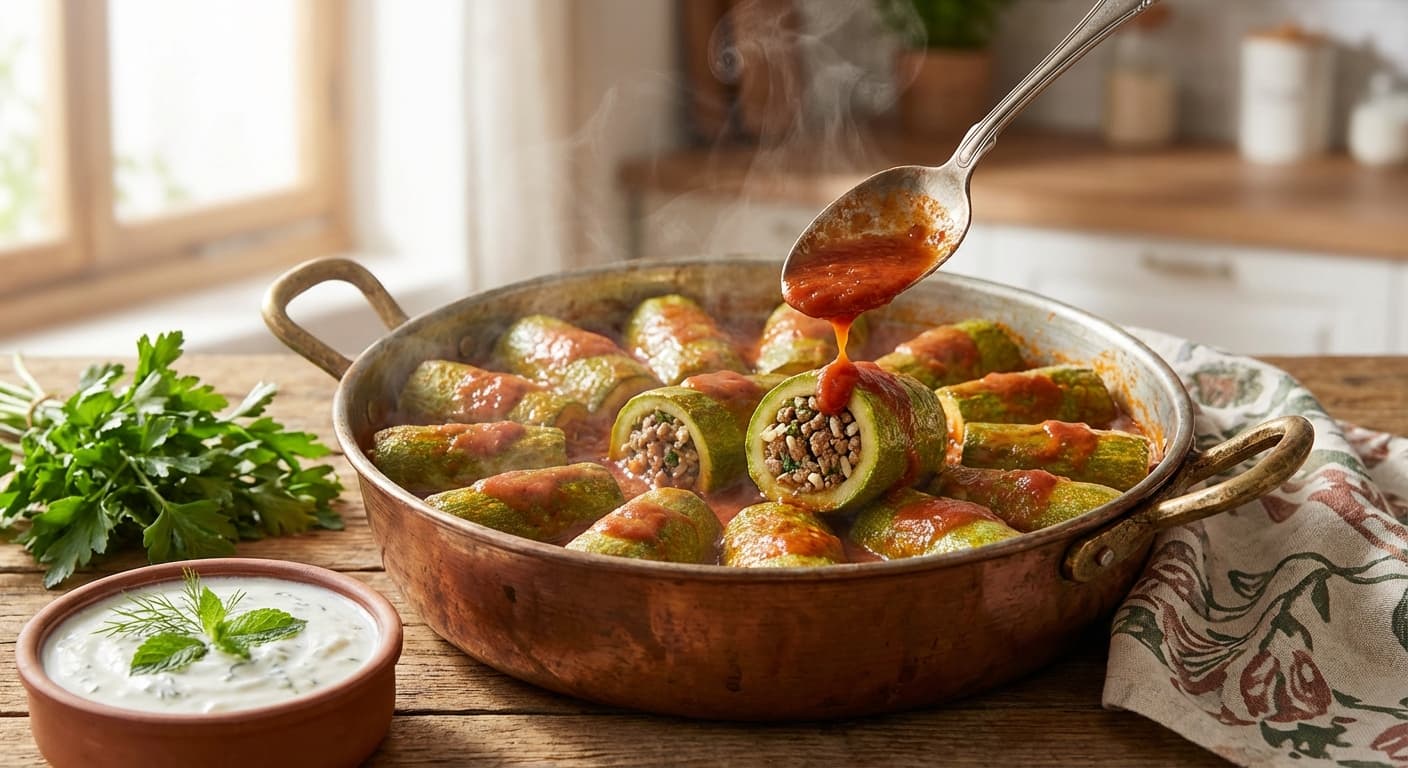
Stuffed Zucchini (Kabak Dolması) — Hollowed zucchini filled with spiced minced meat and rice
Turkish · Main Courses · 90 min
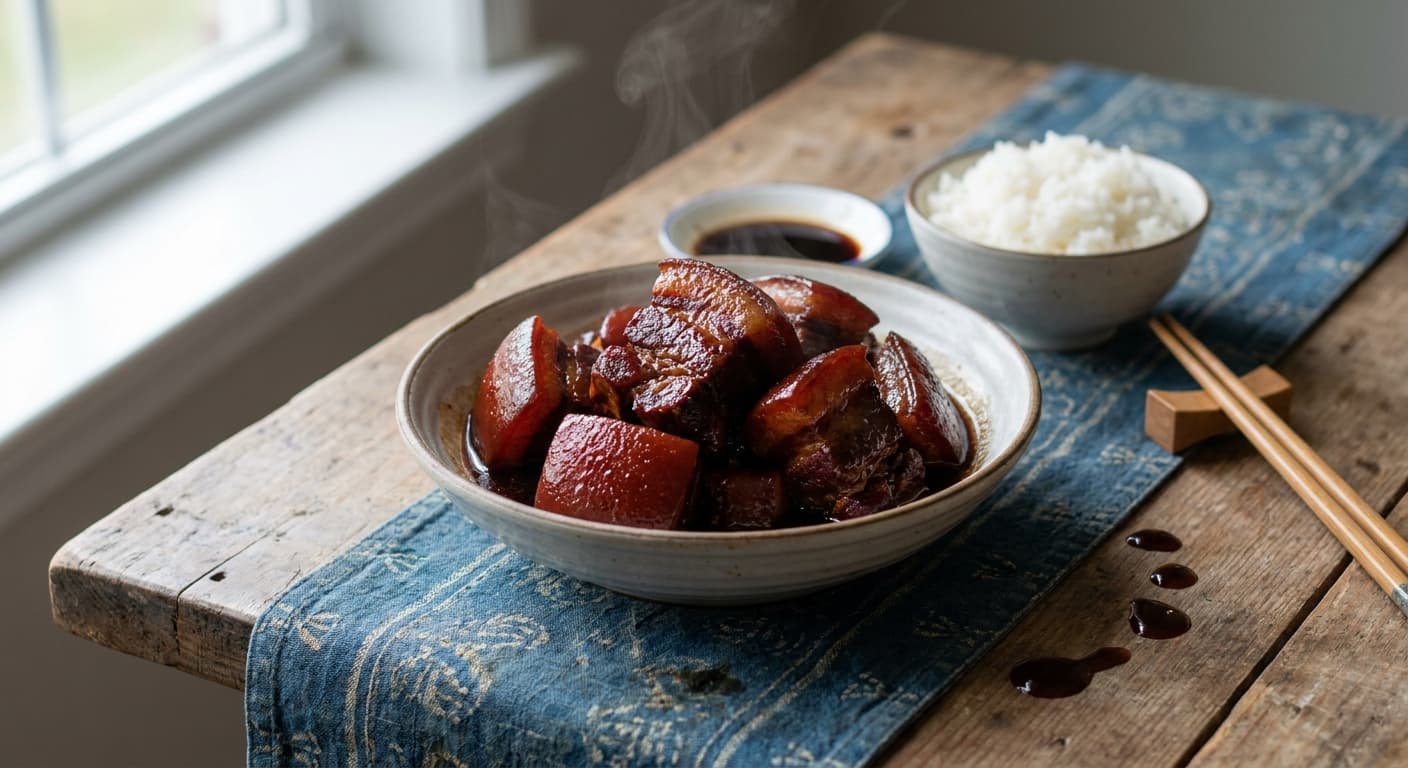
Dongpo Pork (东坡肉) — Hangzhou Red-Braised Pork Belly
Chinese · Main Courses · 205 min
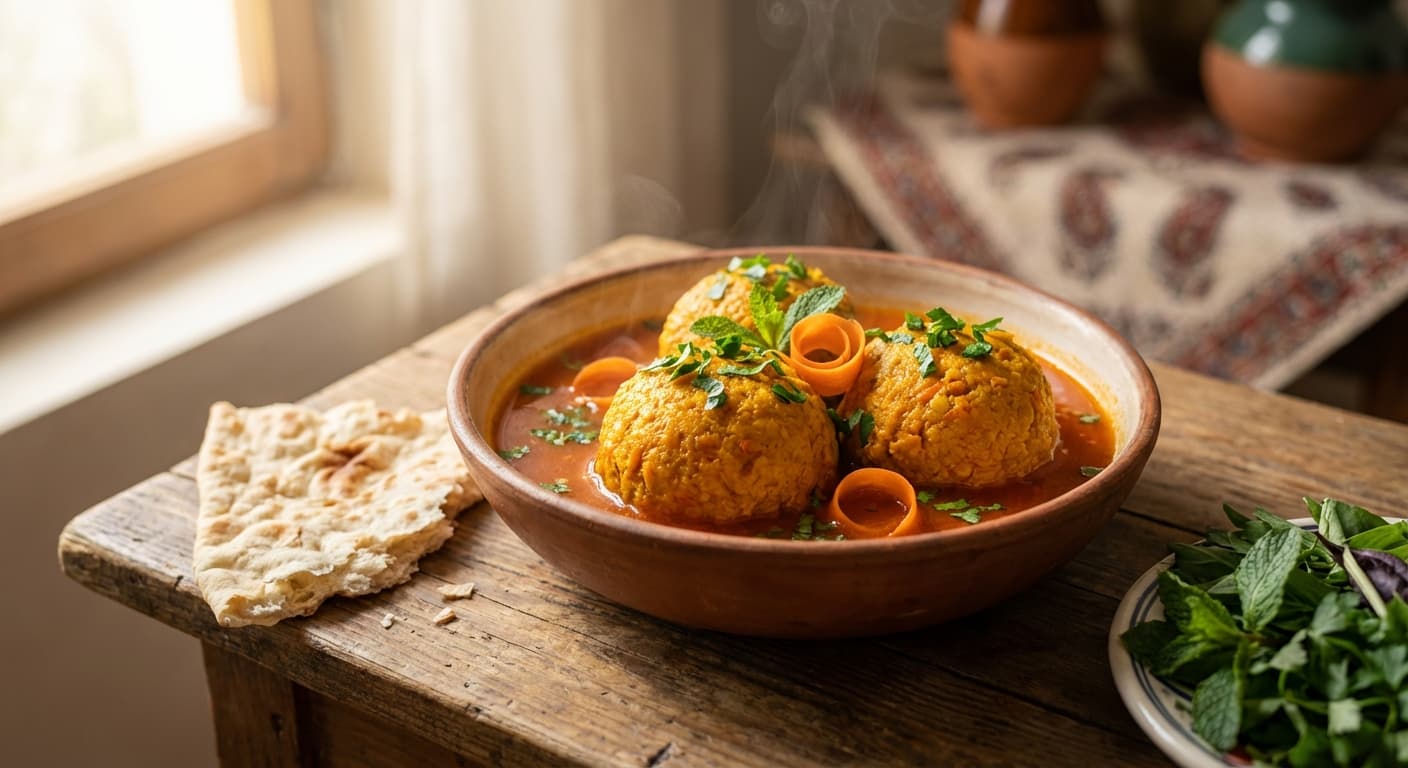
Koofteh Havij (کوفته هویج) — Persian Carrot Meatballs in Saffron-Tomato Broth
Persian · Main Courses · 120 min
Pan-Seared Joojeh Kebab (جوجه کباب تابهای) — Persian Saffron Skillet Chicken
Persian · Kebabs · 34 min
Reviews
Cooked this recipe?
Tap the stars to rate it — that's all it takes. A few words are welcome but optional.
No ratings yet. Cooked this one? Be the first to rate it — it takes one tap.