Polo Sabzijat (پلو سبزیجات) — Persian-Style Vegetable Pilaf with Ginger and Soy
Polo Sabzijat is a Persian-inspired rice dish where fluffy basmati meets colorful vegetables and fragrant aromatics. This version nods to modern Iranian home cooking by pairing classic polo technique with ginger, garlic, and a light soy-sesame finish.
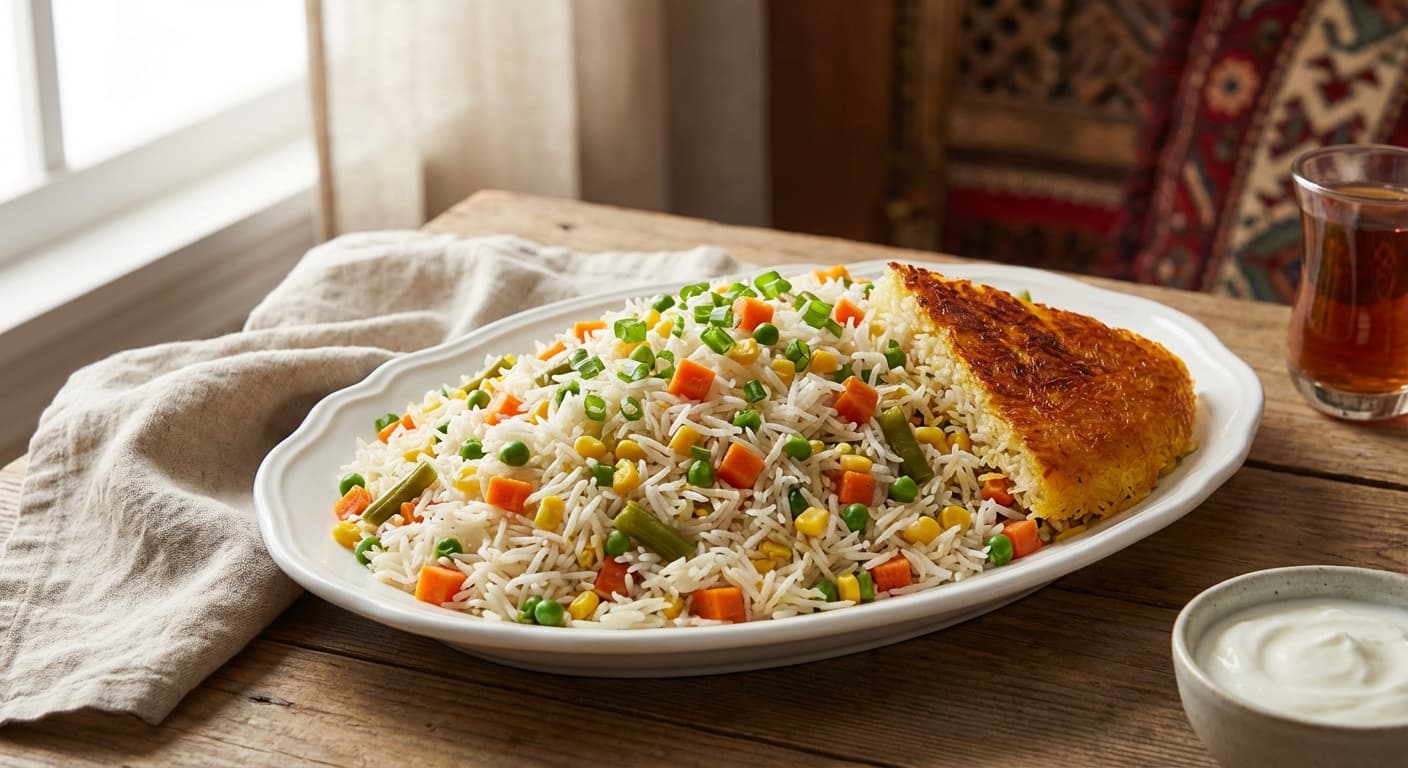
Printable Recipe Card
Servings: 4 · Total: 55 min · Difficulty: medium
Ingredients (quick list)
- 300 g Basmati rice (Rinsed until water runs mostly clear)
- 2000 ml Water (For parboiling the rice)
- 12 g Salt (For salting parboil water)
- 30 ml Vegetable oil (Neutral oil such as sunflower or canola)
- 450 g Mixed vegetables (Small dice; e.g., carrot, peas, corn, green beans, bell pepper)
- 12 g Garlic (Finely minced (about 4 cloves))
- 10 g Fresh ginger (Finely grated)
- 60 g Green onions (Thinly sliced; white and green parts separated)
- 30 ml Soy sauce (Regular or low-sodium)
- 10 ml Sesame oil (Toasted sesame oil for aroma)
- 2 g Black pepper (Freshly ground)
Steps (summary)
- Rinse the basmati rice in several changes of cold water until the water runs mostly clear, then drain well. Let it sit in a bow…
- Bring 2000 ml water to a boil in a large pot and stir in 12 g salt. Add the drained rice and boil for 6–7 minutes, stirring onc…
- Drain the parboiled rice in a fine colander and rinse briefly with 250 ml cold water to stop the cooking. Shake the colander we…
- In a wide skillet, heat 15 ml of the vegetable oil over medium heat and add the sliced white parts of the green onions, garlic,…
- Add the mixed vegetables and cook for 5–7 minutes, stirring, until they are bright and just tender. Stir in the soy sauce, sesa…
- Set a heavy-bottomed nonstick pot over medium heat and add the remaining 15 ml vegetable oil. When the oil is warm, spread a th…
+ 3 more steps in the full instructions section below.
Cultural Background
Vegetable polo is a beloved Iranian home-style format, built on the classic parboil-and-steam method that yields distinct, fragrant grains. This modern take keeps the spirit of sabzi-based pilafs while using soy and sesame for a contemporary pantry-friendly depth.
Equipment
💡 Tips
- Dice vegetables to 8–10 mm so they cook evenly and distribute through the rice without sinking.
- Keep the parboil short; basmati should be firm before steaming or it can turn soft after the final cook.
- Wrap the lid with a towel to prevent condensation dripping back onto the rice and making it sticky.
⚠️ Common Mistakes
❌ Boiling the rice until fully tender before steaming
✅ Fix: Parboil only until the grain is long but firm in the center, then finish by steaming so it stays fluffy.
❌ Skipping steam holes and trapping too little steam
✅ Fix: Poke 5–6 holes to the bottom and keep the lid tightly covered with a towel-wrapped lid to hold steam.
❌ Overcooking vegetables until soft and watery
✅ Fix: Cook vegetables just until bright and tender, then steam them with the rice to finish gently.
🧊 How to Store
Cool leftovers within 1 hour, then refrigerate in an airtight container for up to 3 days. Reheat covered with 15 ml water in a pot over low heat for 8–10 minutes, or microwave covered for 2–3 minutes, stirring once to heat evenly.
📅 Make Ahead
Rinse and drain the rice up to 4 hours ahead and keep it covered at room temperature. Chop vegetables and aromatics up to 24 hours ahead and refrigerate; cook the pilaf fresh for the best fluffy texture.
🍽️ Pairs Well With
- Mast-o-khiar
- torshi
- Shirazi salad
- grilled chicken
- pan-seared fish.
Regional Variations
- Herb-forward Sabzi Polo style: replace 200 g of the mixed vegetables with 200 g chopped dill, parsley, and cilantro, and reduce soy sauce to 20 ml.
- Tahdig version: add 1 piece lavash or 1 tbsp yogurt mixed with 10 ml oil to the pot base for a thicker, crispier crust.
- Protein add-in: stir in 250 g cooked chickpeas with the vegetables for a heartier vegan meal.
Ingredients
- 300 gBasmati rice (Rinsed until water runs mostly clear)
- 2000 mlWater (For parboiling the rice)
- 12 gSalt (For salting parboil water)
- 30 mlVegetable oil (Neutral oil such as sunflower or canola)
- 450 gMixed vegetables (Small dice; e.g., carrot, peas, corn, green beans, bell pepper)
- 12 gGarlic (Finely minced (about 4 cloves))
- 10 gFresh ginger (Finely grated)
- 60 gGreen onions (Thinly sliced; white and green parts separated)
- 30 mlSoy sauce (Regular or low-sodium)
- 10 mlSesame oil (Toasted sesame oil for aroma)
- 2 gBlack pepper (Freshly ground)
🔄 Substitutions
- Soy sauce→ Tamari
- Vegetable oil→ Grapeseed oil
- Mixed vegetables→ Fresh seasonal mix (zucchini, carrots, peas, green beans)
Instructions
- 1
Rinse the basmati rice in several changes of cold water until the water runs mostly clear, then drain well. Let it sit in a bowl with fresh water for 10 minutes while you prep the vegetables, then drain again so the grains stay separate during cooking.
- 2
Bring 2000 ml water to a boil in a large pot and stir in 12 g salt. Add the drained rice and boil for 6–7 minutes, stirring once or twice, until the grains are elongated but still firm in the center.
- 3
Drain the parboiled rice in a fine colander and rinse briefly with 250 ml cold water to stop the cooking. Shake the colander well so excess water drains away, because wet rice can turn mushy during steaming.
- 4
In a wide skillet, heat 15 ml of the vegetable oil over medium heat and add the sliced white parts of the green onions, garlic, and ginger. Cook for 60–90 seconds, stirring constantly, until fragrant but not browned so the aromatics stay sweet and clean.
- 5
Add the mixed vegetables and cook for 5–7 minutes, stirring, until they are bright and just tender. Stir in the soy sauce, sesame oil, and black pepper, then cook 1 minute more so the vegetables absorb the seasoning and the sauce reduces slightly.
- 6
Set a heavy-bottomed nonstick pot over medium heat and add the remaining 15 ml vegetable oil. When the oil is warm, spread a thin layer of rice on the bottom, then add a layer of vegetables, and continue layering until everything is used, finishing with rice on top.
- 7
Use the handle of a spoon to poke 5–6 steam holes down through the rice to the bottom of the pot. Drizzle 60 ml water around the edges, cover the lid with a clean kitchen towel, and place it tightly on the pot to trap steam and keep the rice fluffy.
- 8
Steam over medium heat for 8 minutes to build heat, then reduce to low and steam for 22–25 minutes until the rice is fully tender and aromatic. Turn off the heat and rest the pot, covered, for 5 minutes so the grains set and the bottom develops a light crust.
- 9
Gently fluff the rice with a fork, mixing the vegetables through without breaking the grains. Fold in the sliced green parts of the green onions, then serve immediately while the rice is hot and the aromas are at their peak.
🪪 Recipe Passport
Cultural Background
Vegetable polo is a beloved Iranian home-style format, built on the classic parboil-and-steam method that yields distinct, fragrant grains. This modern take keeps the spirit of sabzi-based pilafs while using soy and sesame for a contemporary pantry-friendly depth.
Regional Variations
Researched from multiple sources and validated by the Zaffaron editorial team. Every recipe is tested for accuracy, measurements, and cultural authenticity.
Nutrition per serving
Pairs well with
If you enjoyed this recipe, here are a few related Zaffaron recipes to try next.
Does your family make this differently?
Every family has their own version. Maybe your grandmother adds a secret ingredient, or your aunt has a completely different technique. Preserve your family's version — with their name on it, forever.
You Might Also Like
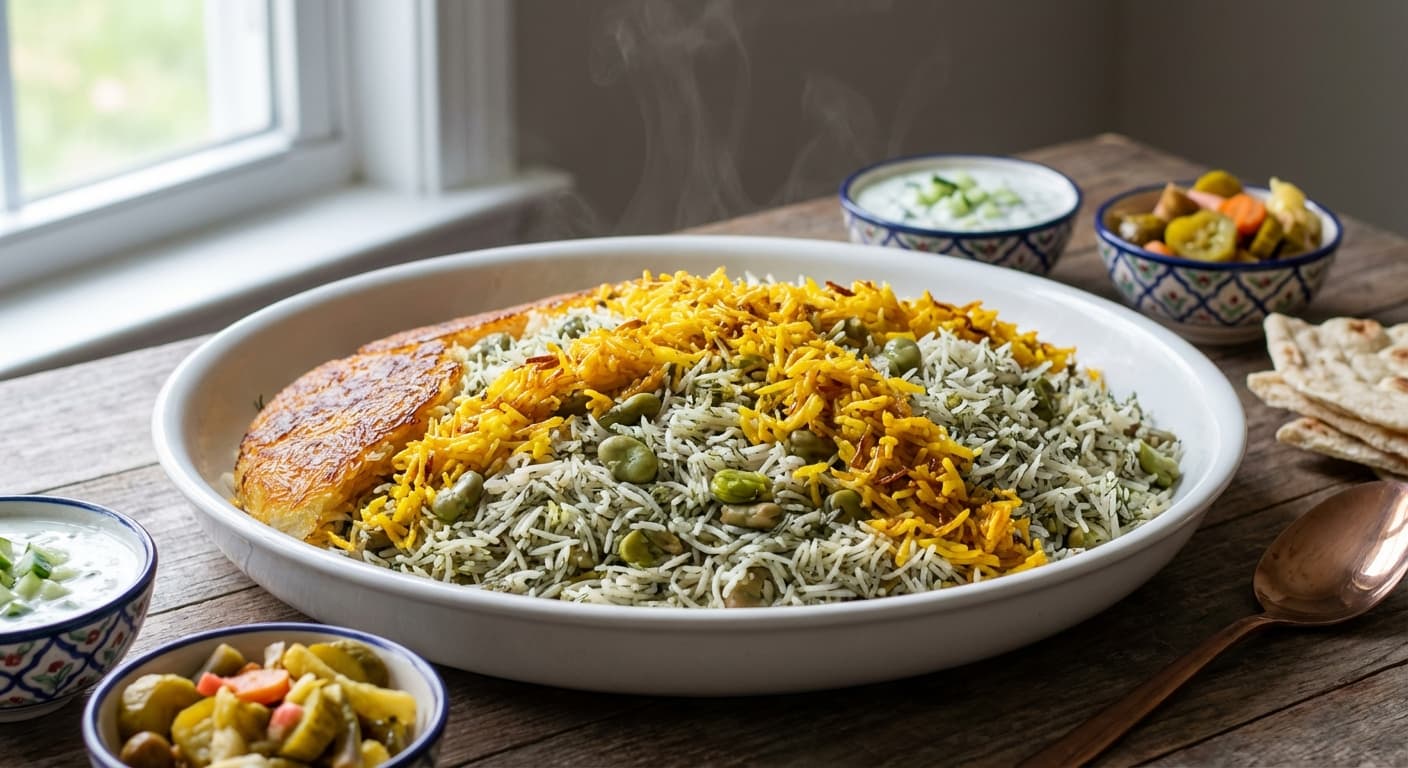
Baghali Polo (باقالی پلو) — Persian Dill and Fava Bean Rice with Saffron
Persian · Rice Dishes · 95 min
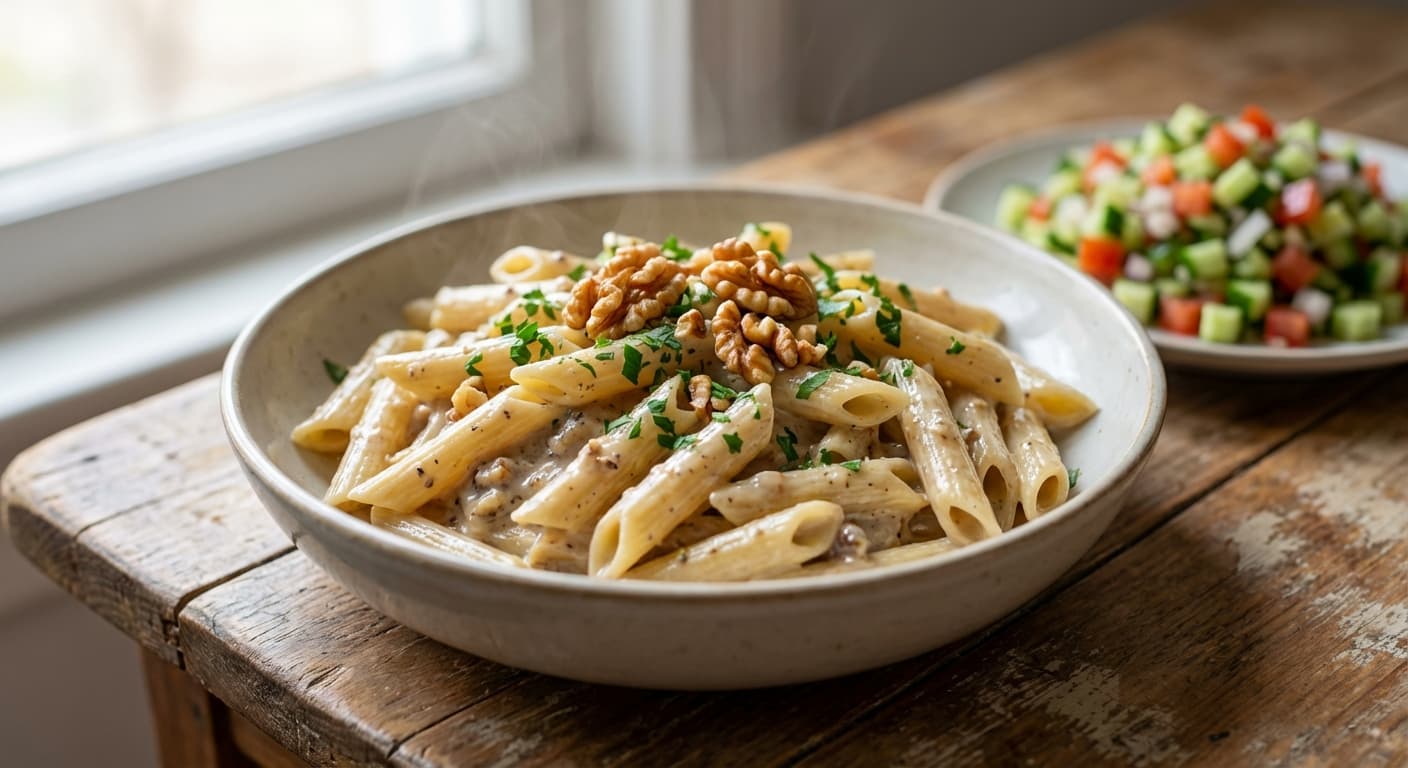
Pasta with Walnut Sauce (پاستا با سس گردو) — Creamy Persian Walnut-Yogurt Pasta
Persian · Main Courses · 35 min
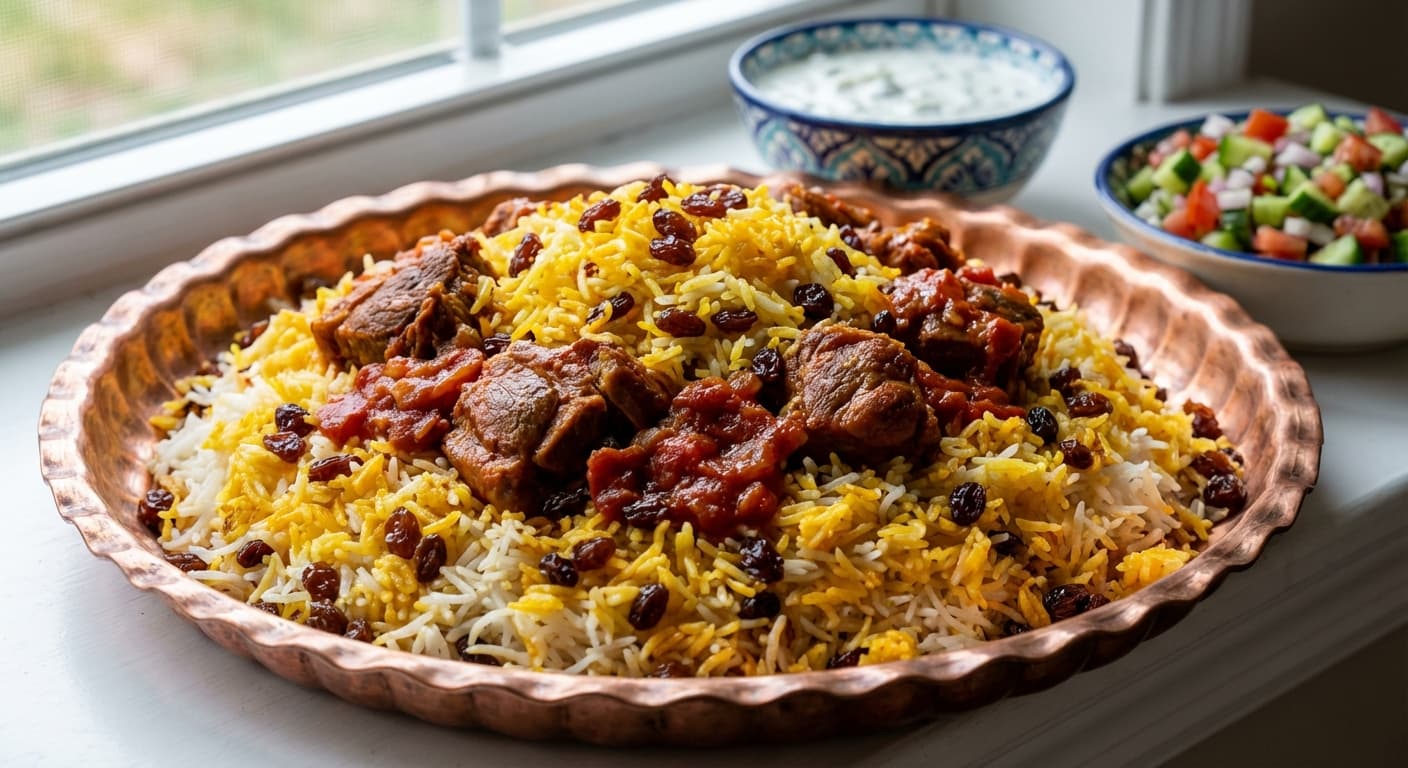
Kashmish Polow (کشمش پلو) — Persian Raisin Rice with Slow-Cooked Lamb
Persian · Rice Dishes · 155 min
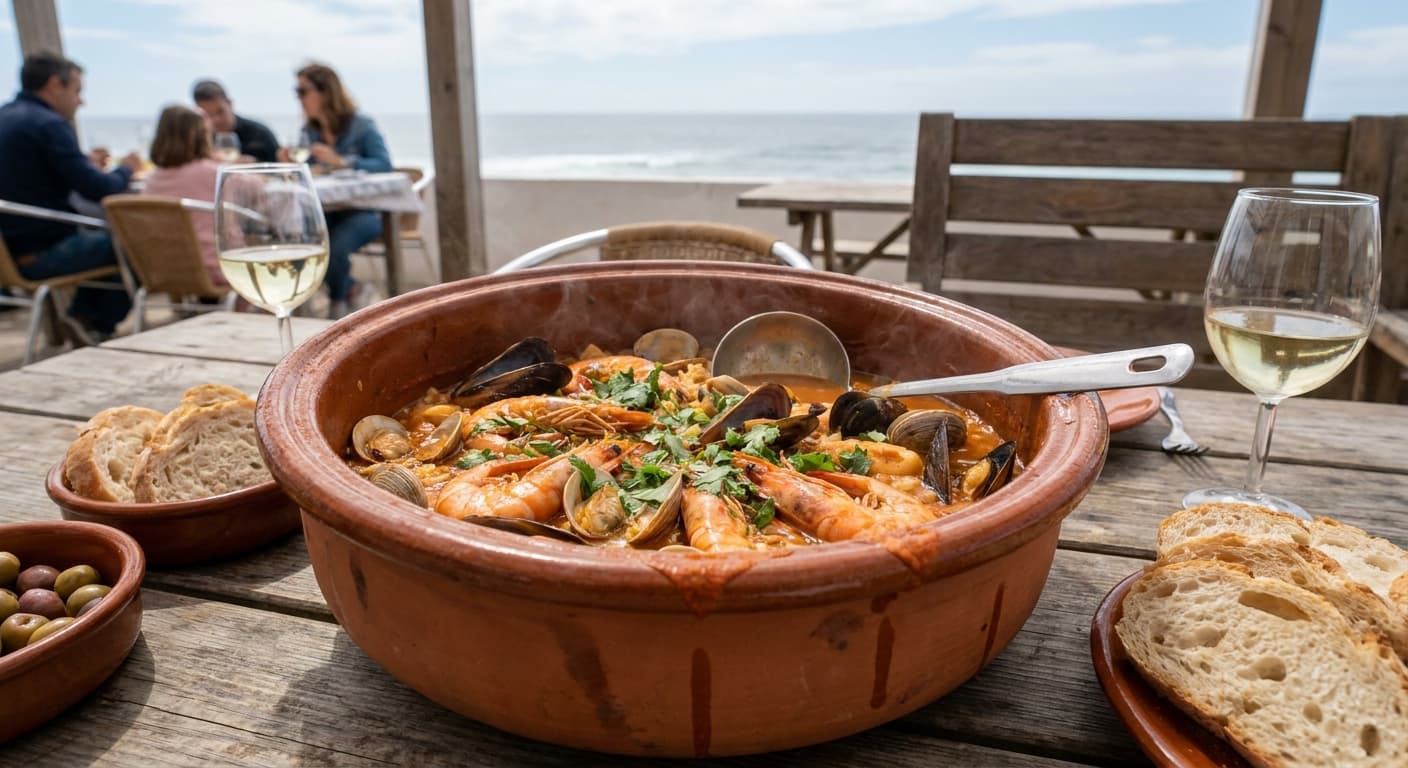
Seafood Rice (Arroz de Marisco) — Saucy Portuguese Shellfish Rice
Portuguese · Rice Dishes · 65 min
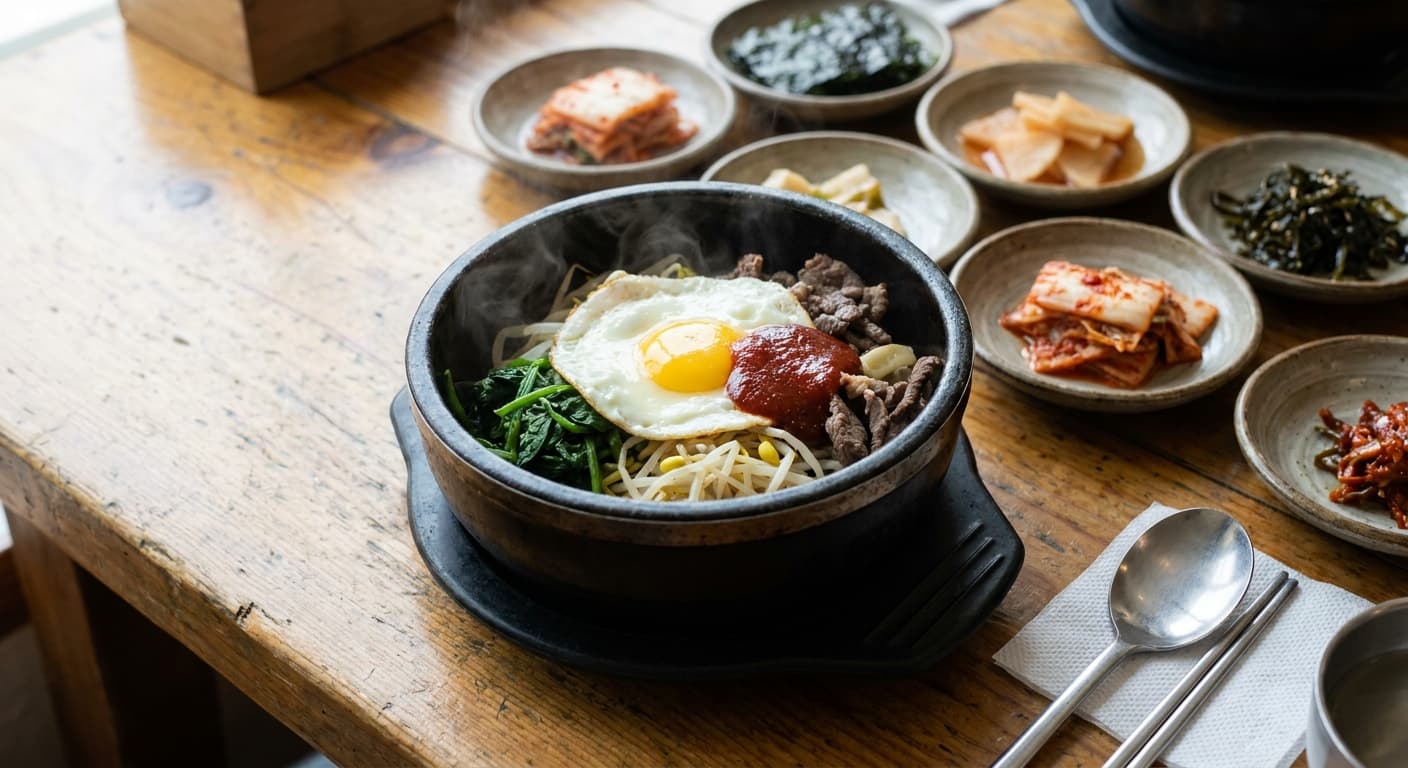
Bibimbap (비빔밥) — Korean Mixed Rice Bowl
Korean · Rice Dishes · 80 min
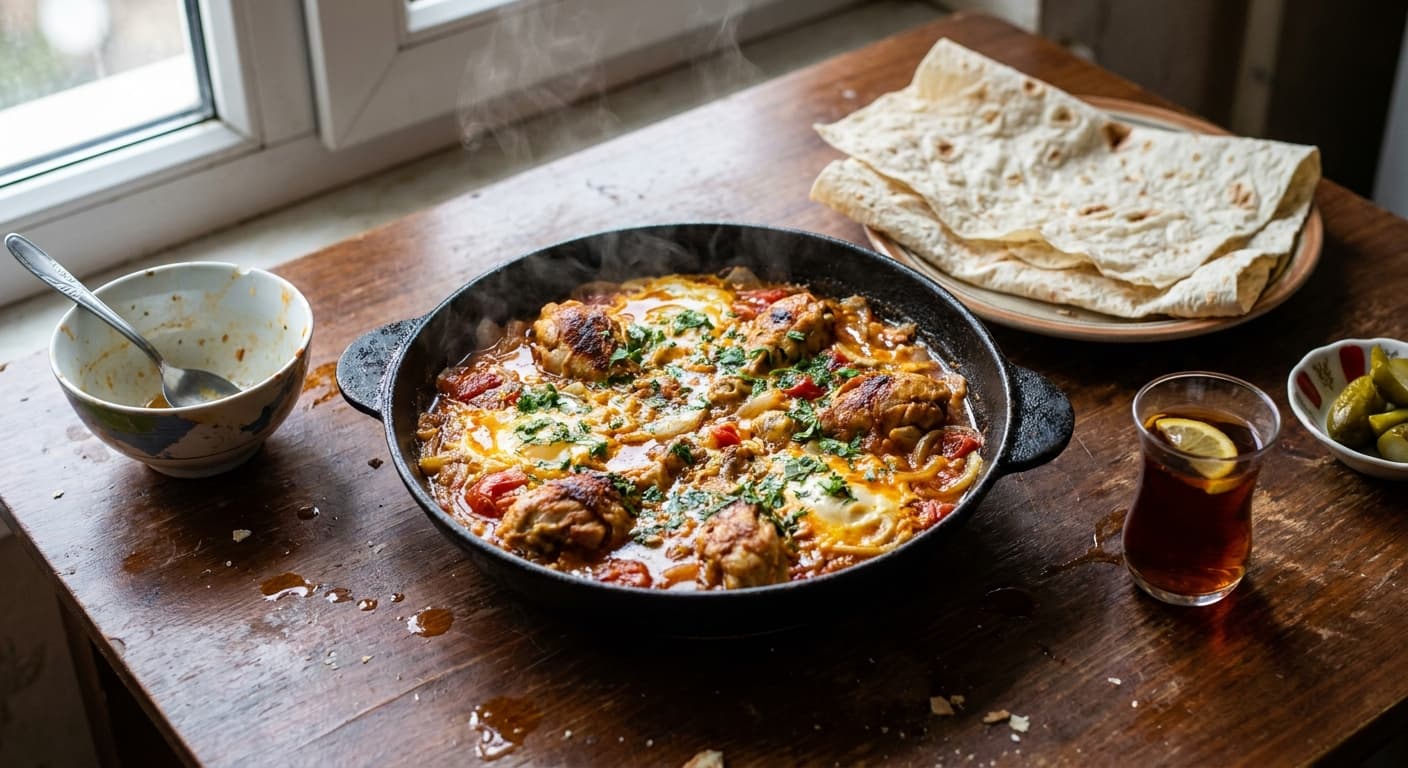
Chicken Chygyrtma (Toyuq Çığırtması) — Azerbaijani Chicken with Eggs and Tomatoes
Azerbaijani · Main Courses · 65 min
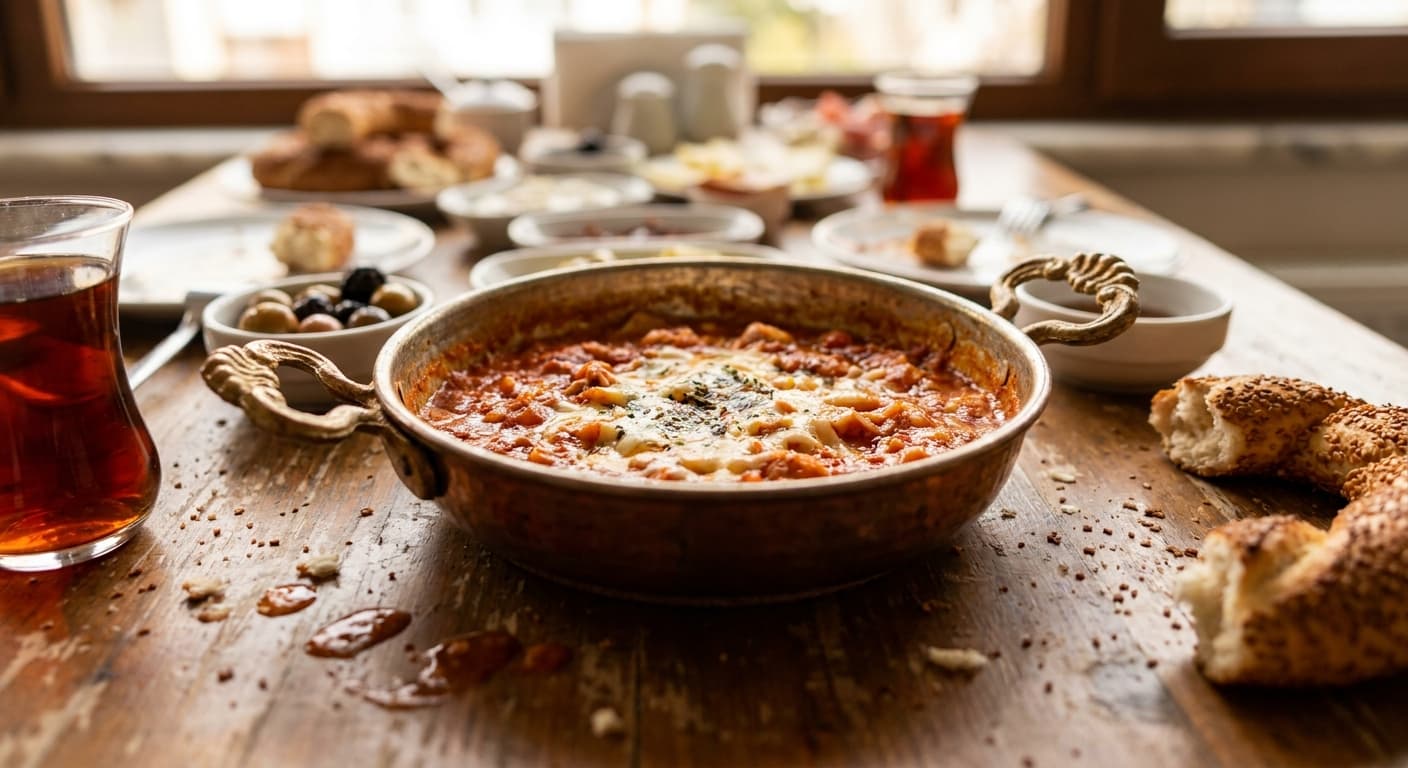
Turkish Menemen (Menemen) — Soft Eggs with Tomatoes and Peppers
Turkish · Main Courses · 37 min
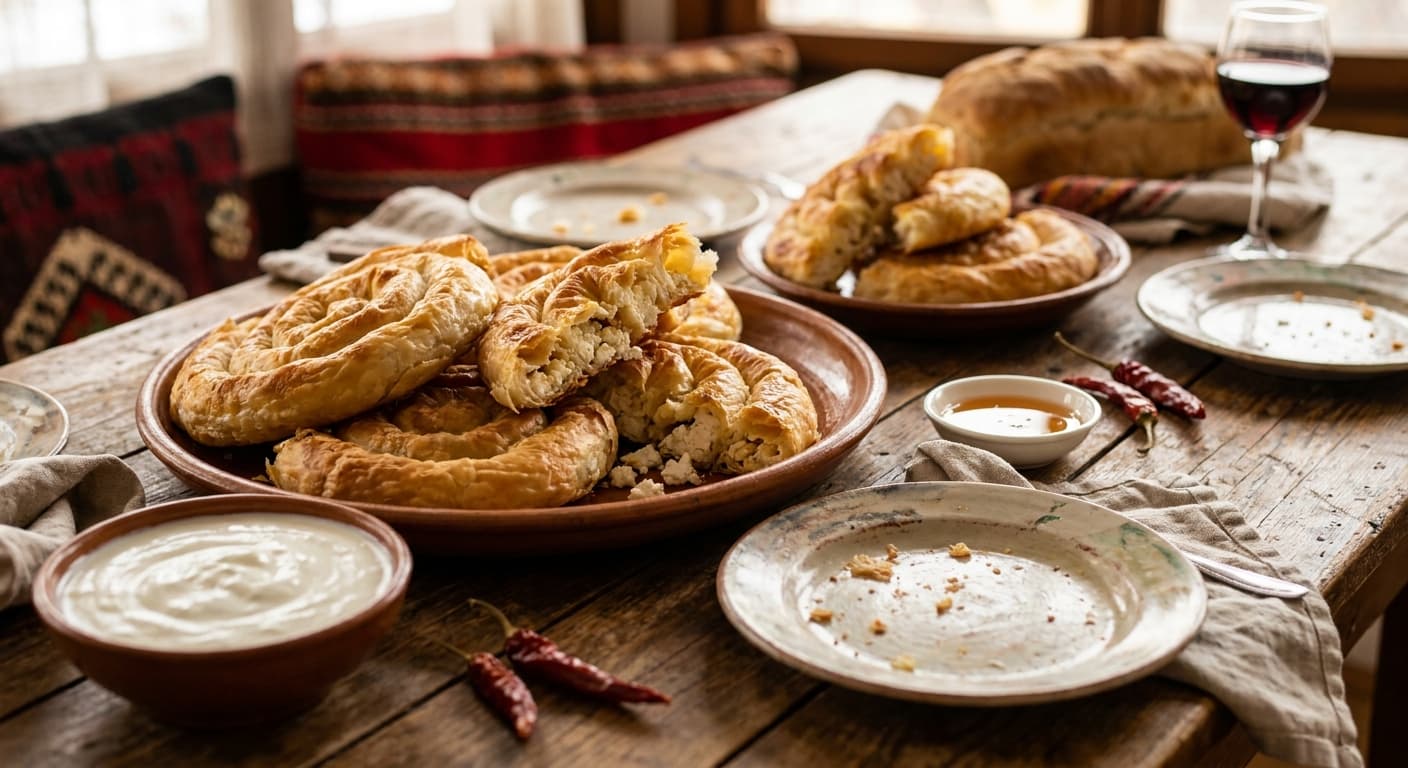
Bulgarian Banitsa (Баница) — Flaky Sirene-Filled Phyllo Pie
Bulgarian · Breads · 68 min
Reviews
Cooked this recipe?
Tap the stars to rate it — that's all it takes. A few words are welcome but optional.
No ratings yet. Cooked this one? Be the first to rate it — it takes one tap.