Polow-e Estanbuli (استانبولی پلو) — Persian Tomato Rice with Mutton
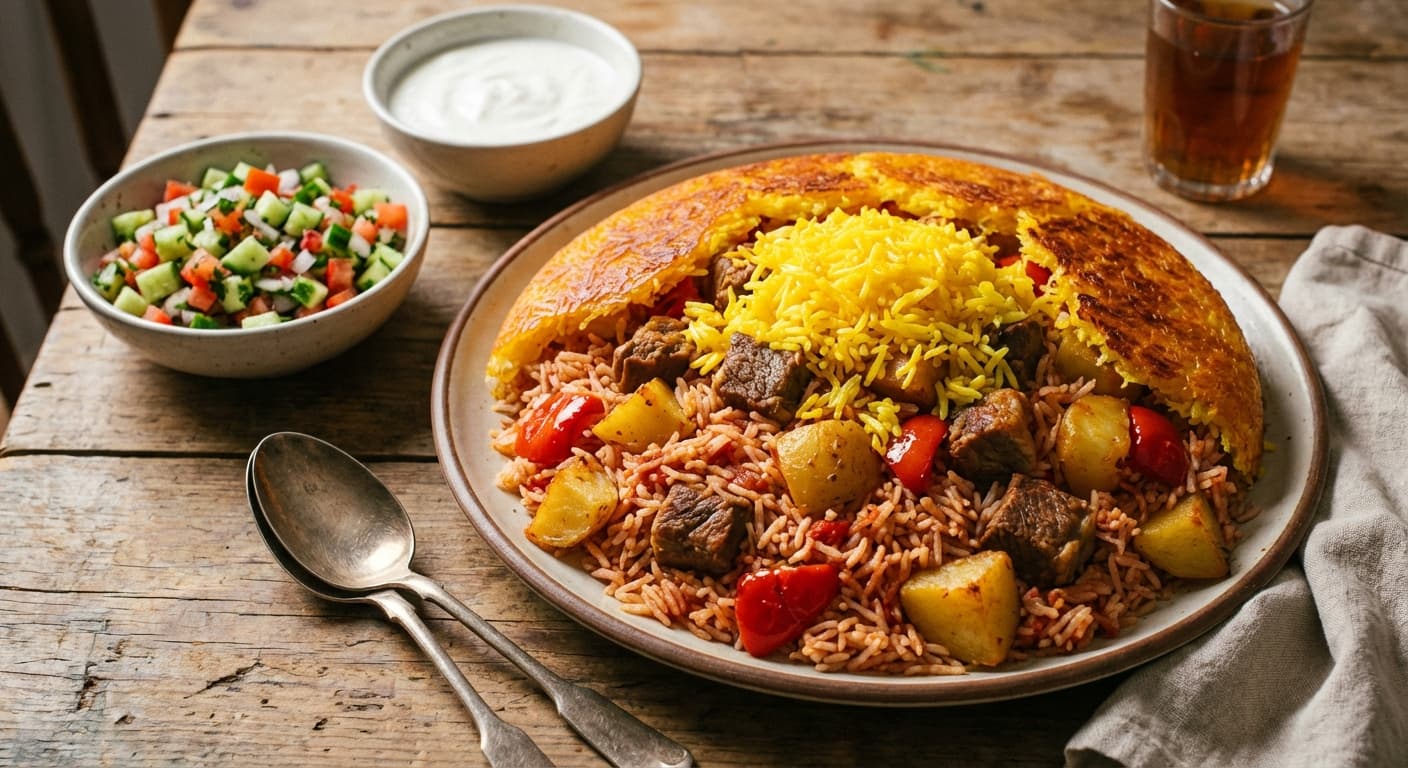
Polow-e Estanbuli is a beloved Persian tomato rice layered with tender mutton, potatoes, and bell pepper. Butter, tomato paste, and warm spices create a comforting, tangy one-pot meal ideal for family tables.
Printable Recipe Card
Servings: 6 · Total: 175 min · Difficulty: medium
Ingredients (quick list)
- 500 g Basmati rice (washed until water runs mostly clear)
- 2000 ml Water (for soaking rice)
- 18 g Fine sea salt (for soaking rice (about 1 tbsp))
- 700 g Mutton shoulder, boneless (cut into 3 cm cubes)
- 250 g Yellow onion (finely diced)
- 60 g Unsalted butter (divided)
- 30 ml Neutral oil (such as grapeseed or sunflower)
- 90 g Tomato paste (about 5 tbsp; sautéed to remove raw taste)
- 150 g Red bell pepper (cut into 1 cm dice)
- 350 g Potato (peeled and cut into 1.5 cm cubes)
- 2 g Ground black pepper (about 1 tsp)
- 2 g Ground turmeric (about 1 tsp)
+ 5 more in the full ingredients section below.
Steps (summary)
- Soak the rice: Place basmati rice in a bowl, cover with 2000 ml water, and stir in 18 g salt. Let soak 60 minutes at room tempe…
- Cook the mutton: In a heavy pot, heat 15 ml oil over medium-high. Add mutton cubes and sear 6–8 minutes, turning until lightly…
- Build the tomato base: In a wide sauté pan, melt 30 g butter with remaining 15 ml oil over medium heat. Add diced onion and coo…
- Fry tomato paste properly: Add tomato paste and sauté 4–5 minutes over medium heat, stirring constantly, until it darkens to br…
- Combine with mutton: Add the cooked mutton (drained) to the pan and toss 2 minutes. Pour in 450 ml of the reserved mutton broth…
- Parboil the rice: Bring a large pot of water to a rolling boil (about 3 liters). Add drained rice and boil 6–7 minutes, stirrin…
+ 2 more steps in the full instructions section below.
Cultural Background
Estanbuli polo is a home-style Persian rice dish often cooked on busy weekdays because it is hearty, economical, and feeds a crowd. Many Iranian families associate its tomato aroma with school-day lunches and casual gatherings, and it is commonly served with yogurt and fresh herbs.
Equipment
💡 Tips
- Sautéing tomato paste until it darkens is essential; it removes bitterness and gives the classic Estanbuli color.
- If your mutton is fatty, chill the broth 10 minutes and skim excess fat; the dish should be rich but not greasy.
- For stronger tang, increase dried lime powder to 3 g, or add 10 ml fresh lemon juice at the table (not during cooking).
- To encourage a crisp tahdig, keep the first 10 minutes of steaming at medium-low, then lower to gentle heat for the remainder.
⚠️ Common Mistakes
❌ Skipping the rice soak or soaking too briefly
💡 Why: The grains absorb unevenly and can break or clump during steaming.
✅ Fix: Soak 60 minutes in salted water, then drain well before parboiling.
❌ Not frying the tomato paste long enough
💡 Why: Raw paste tastes metallic and the dish turns pale instead of deep red.
✅ Fix: Sauté 4–5 minutes until brick-red and fragrant, stirring constantly to prevent scorching.
❌ Overboiling rice during parboil
💡 Why: Rice finishes cooking too early and becomes mushy during the final steam.
✅ Fix: Boil only until the outside is tender but the center is firm (6–7 minutes), then drain immediately.
❌ Adding too much broth to the layers
💡 Why: Excess liquid makes the rice gummy and prevents proper steaming.
✅ Fix: Use 450 ml broth in the filling and only 30 ml more if the pot seems dry before final steam.
🧊 How to Store
Cool to room temperature within 2 hours, then refrigerate in an airtight container up to 3 days. Reheat covered with 2 tbsp water in a pot over low heat 12–15 minutes, or microwave covered 2–3 minutes, stirring once. Freeze up to 2 months; thaw overnight in the fridge before reheating.
📅 Make Ahead
Soak and drain the rice up to 2 hours ahead. Cook the mutton and tomato base up to 1 day ahead; cool, refrigerate, and rewarm with 60 ml water before layering. Parboil and steam the rice only when ready to serve for best texture.
🍽️ Pairs Well With
- Shirazi salad (cucumber
- tomato
- onion
- lime)
- Plain yogurt or mast-o-khiar
- Torshi (Persian pickles)
- Fresh herbs (sabzi khordan) and radishes
Regional Variations
- TehranOften made without meat as a simple tomato-potato rice, served with fried eggs or yogurt; when meat is used, it is commonly lamb and the dish is kept mildly spiced.
- Azerbaijan (Northwest Iran)Some households add a little more cinnamon and a touch of dried mint, and may include small diced carrots alongside potatoes for sweetness and color.
- Shiraz (Fars)A brighter version may include extra limu omani (powder or whole) for tang, and it is frequently served with a larger portion of Shirazi salad.
Ingredients
- 500 gBasmati rice (washed until water runs mostly clear)
- 2000 mlWater (for soaking rice)
- 18 gFine sea salt (for soaking rice (about 1 tbsp))
- 700 gMutton shoulder, boneless (cut into 3 cm cubes)
- 250 gYellow onion (finely diced)
- 60 gUnsalted butter (divided)
- 30 mlNeutral oil (such as grapeseed or sunflower)
- 90 gTomato paste (about 5 tbsp; sautéed to remove raw taste)
- 150 gRed bell pepper (cut into 1 cm dice)
- 350 gPotato (peeled and cut into 1.5 cm cubes)
- 2 gGround black pepper (about 1 tsp)
- 2 gGround turmeric (about 1 tsp)
- 1 gGround cinnamon (about 1/2 tsp (traditional with mutton))
- 1.5 gGround cumin (about 1/2 tsp)
- 2 gDried lime powder (limu omani powder) (about 1 tsp; optional but authentic)
- 0.15 gSaffron threads (about 1/8 tsp)
- 45 mlHot water (for blooming saffron)
🔄 Substitutions
- Mutton shoulder→ Lamb shoulder or beef chuck
- Unsalted butter→ Ghee or 45 ml olive oil
- Dried lime powder→ 1 whole dried lime (limu omani), pierced, removed after simmering
Instructions
- 1
Soak the rice: Place basmati rice in a bowl, cover with 2000 ml water, and stir in 18 g salt. Let soak 60 minutes at room temperature. This firms the grains so they stay long and separate during steaming; drain in a fine sieve right before parboiling.
- 2
Cook the mutton: In a heavy pot, heat 15 ml oil over medium-high. Add mutton cubes and sear 6–8 minutes, turning until lightly browned. Add 1200 ml water, bring to a boil, skim foam, then cover and simmer on low 60–75 minutes until fork-tender; reserve 600 ml broth.
- 3
Build the tomato base: In a wide sauté pan, melt 30 g butter with remaining 15 ml oil over medium heat. Add diced onion and cook 10–12 minutes until deeply golden. Stir in turmeric, cumin, cinnamon, black pepper, and 8 g salt; cook 30 seconds to bloom the spices.
- 4
Fry tomato paste properly: Add tomato paste and sauté 4–5 minutes over medium heat, stirring constantly, until it darkens to brick red and smells sweet rather than raw. Add diced bell pepper and cook 3 minutes, then add potato cubes and cook 6–8 minutes, coating everything in the paste.
- 5
Combine with mutton: Add the cooked mutton (drained) to the pan and toss 2 minutes. Pour in 450 ml of the reserved mutton broth and stir well, scraping the bottom. Simmer uncovered 8–10 minutes until the liquid reduces slightly and the potatoes are about 70% cooked; adjust salt to taste.
- 6
Parboil the rice: Bring a large pot of water to a rolling boil (about 3 liters). Add drained rice and boil 6–7 minutes, stirring gently once or twice, until the grain is soft on the outside but still firm in the center. Drain immediately and rinse briefly with 250 ml cool water to stop cooking.
- 7
Layer and steam (dam): In a nonstick pot, melt 30 g butter over medium. Add 2–3 tbsp parboiled rice to cover the base. Layer half the rice, then all the mutton-tomato mixture, then the remaining rice. Poke 5–6 holes to the bottom, cover with a towel-wrapped lid, and steam 10 minutes on medium-low.
- 8
Finish with saffron and final steam: Bloom saffron in 45 ml hot water for 10 minutes. Drizzle saffron water over the top rice and add 2 tbsp (30 ml) of remaining broth if the pot seems dry. Reduce heat to low and steam 35–45 minutes until fragrant and fully cooked; rest off-heat 10 minutes before serving.
🪪 Recipe Passport
Cultural Background
Estanbuli polo is a home-style Persian rice dish often cooked on busy weekdays because it is hearty, economical, and feeds a crowd. Many Iranian families associate its tomato aroma with school-day lunches and casual gatherings, and it is commonly served with yogurt and fresh herbs.
Regional Variations
Researched from multiple sources and validated by the Zaffaron editorial team. Every recipe is tested for accuracy, measurements, and cultural authenticity.
Nutrition per serving
Pairs well with
If you enjoyed this recipe, here are a few related Zaffaron recipes to try next.
- Rolet Esfenaj va Panir (رولت اسفناج و پنیر) — Persian Spinach and Cheese Puff Pastry Roll
- Polow Zaferani Fasl (پلو زعفرانی فصل) — Persian Seasonal Saffron Jeweled Rice
- Qolqoli Gooshti (قلقلی گوشتی) — Persian-Style Creamy Beef Meatballs
- Reshteh Polo Gheysi (رشته پلو قیسی) — Persian Noodle Rice with Apricots
Does your family make this differently?
Every family has their own version. Maybe your grandmother adds a secret ingredient, or your aunt has a completely different technique. Preserve your family's version — with their name on it, forever.
You Might Also Like
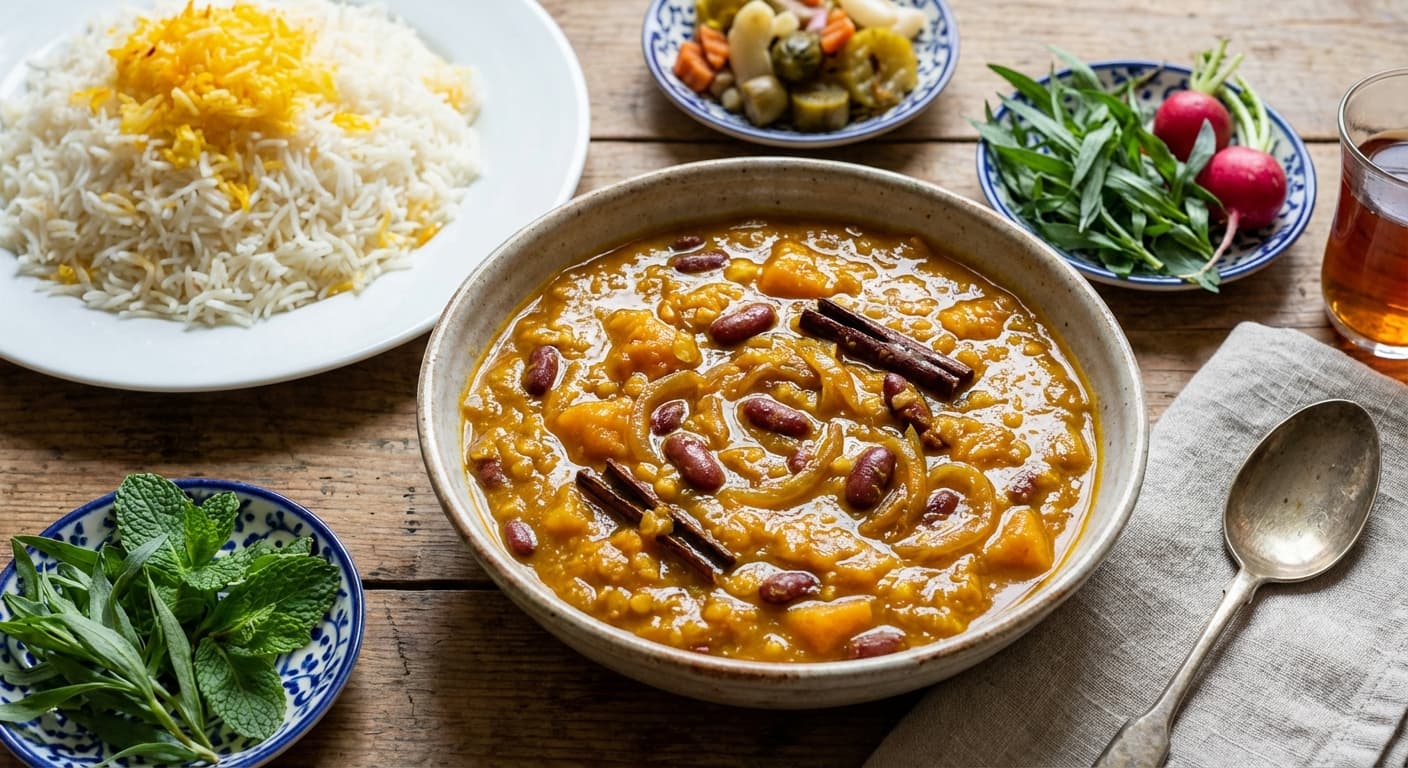
Gheimeh Kadoo Halvai (قیمه کدو حلوایی) — Sweet Pumpkin & Legume Stew
Persian · Stews · 110 min
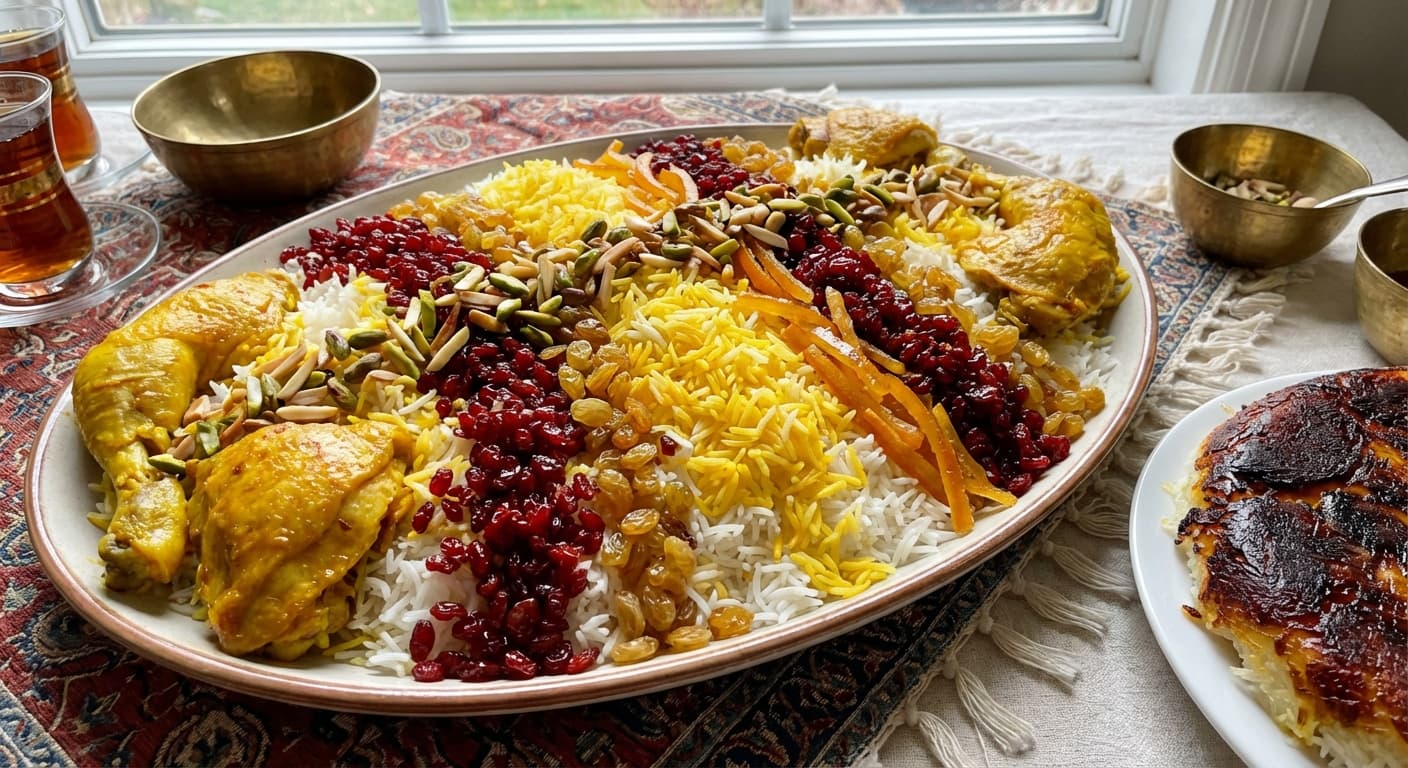
Jeweled Rice (مرصع پلو) — Festive Persian rice with saffron chicken and jeweled fruits
Persian · Rice Dishes · 135 min
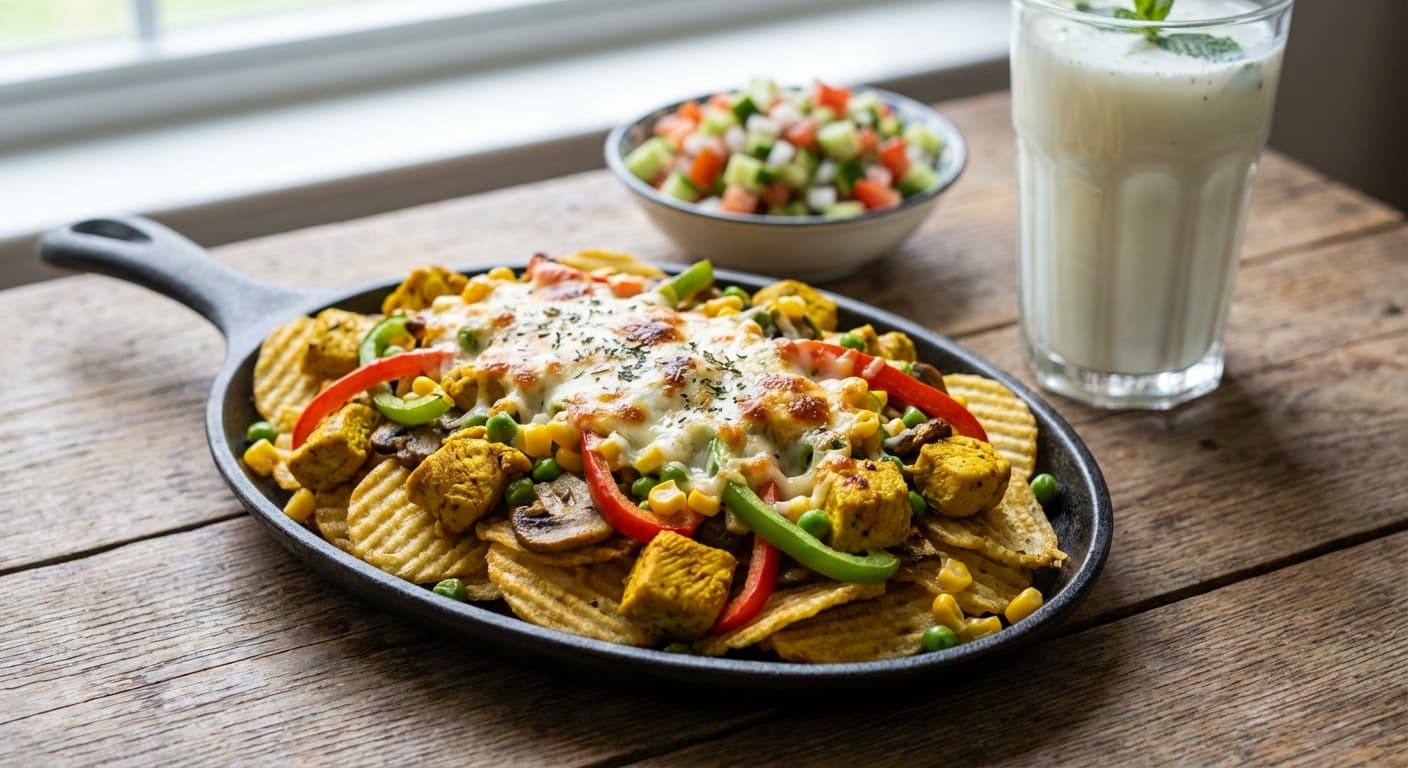
Persian-Style Pizza-Chips (خوراک چیپس و پنیر) — Street-Food Chip Bake with Chicken and Mozzarella
Persian · Main Courses · 45 min
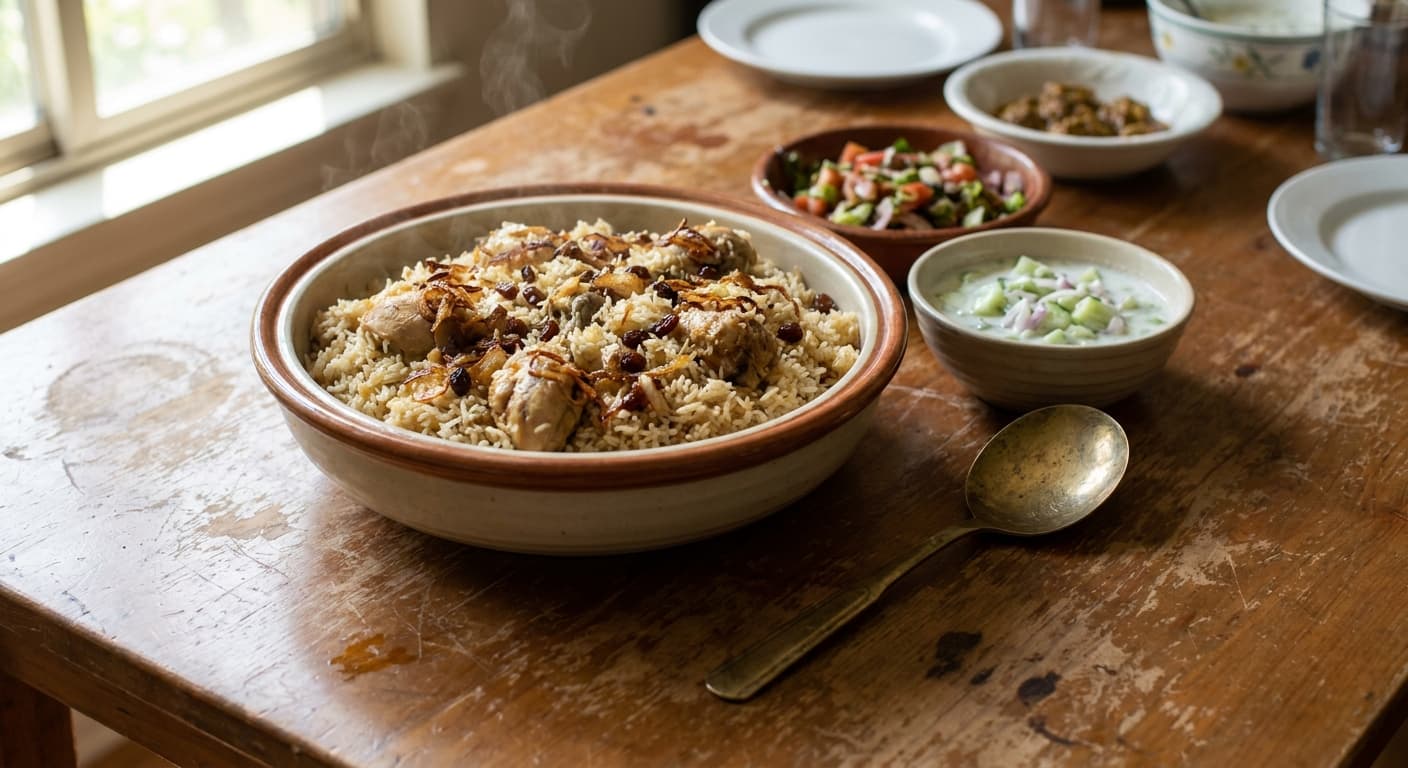
Morog Polao (মোরগ পোলাও) — Bangladeshi Chicken Pilaf
Bangladeshi · Rice Dishes · 100 min
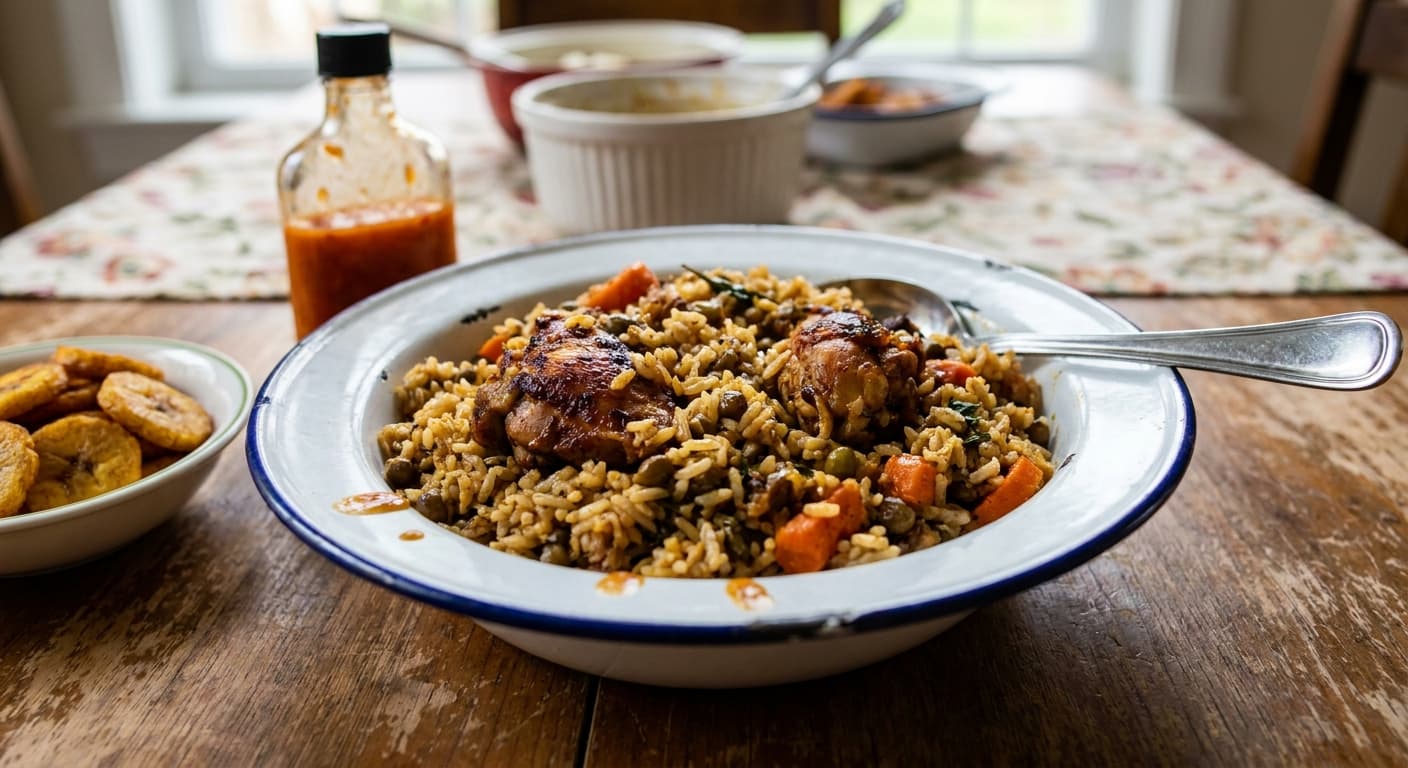
Trinidadian Pelau (Pelau) — Caramel-Browned Chicken, Rice, and Pigeon Peas
Trinidadian · Rice Dishes · 85 min
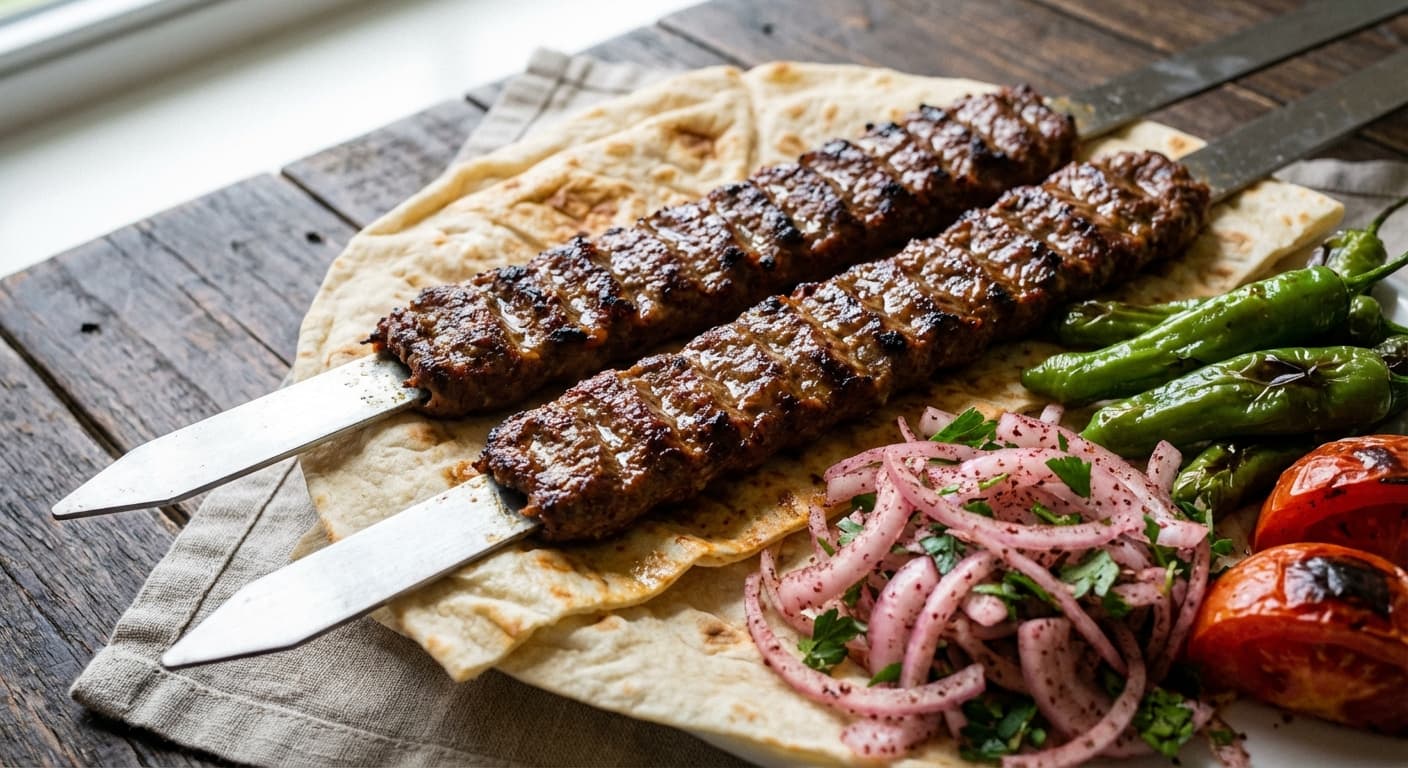
Urfa Kebab (اورفا کباب) — Mild Turkish minced skewer with sumac onions
Turkish · Kebabs · 37 min
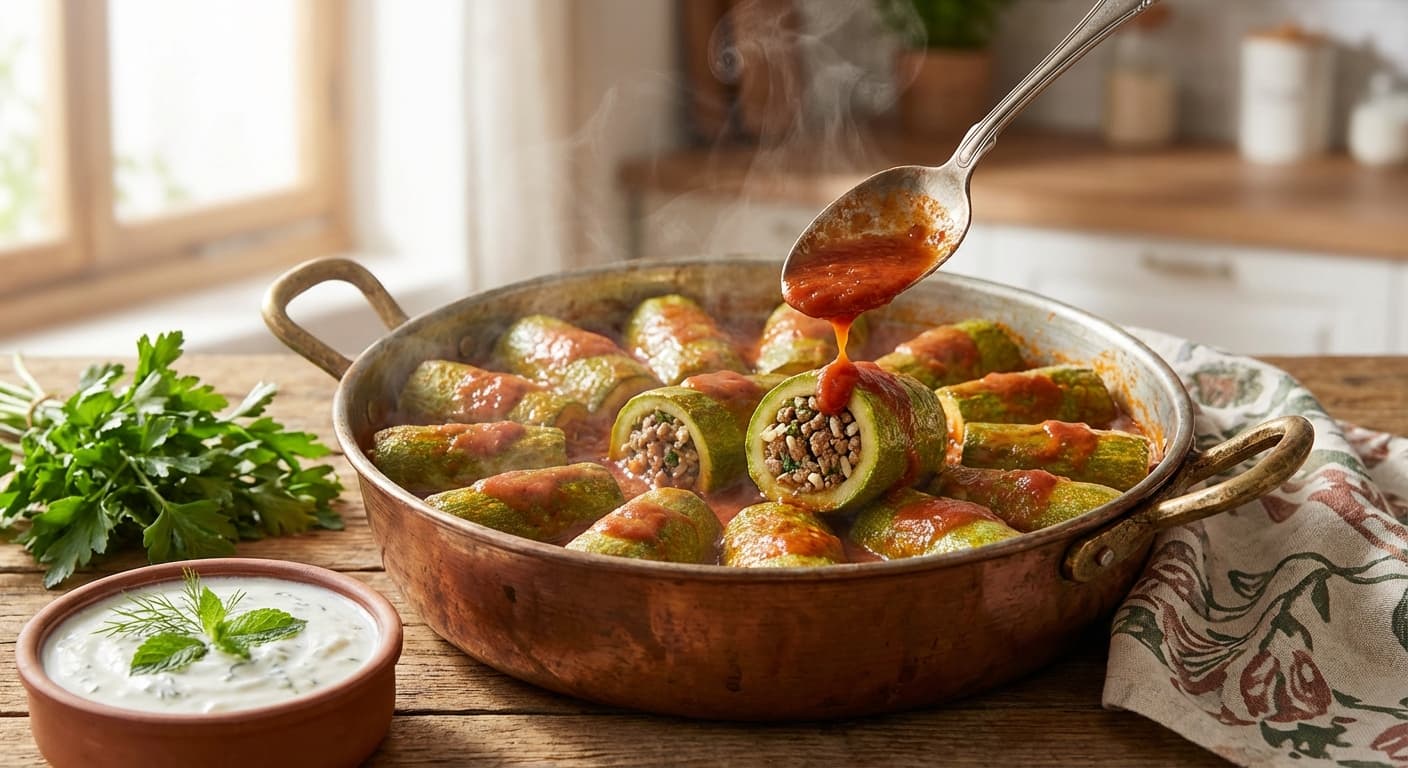
Stuffed Zucchini (Kabak Dolması) — Hollowed zucchini filled with spiced minced meat and rice
Turkish · Main Courses · 90 min
Egyptian Karkadeh (كركديه) — Chilled Hibiscus Tea
Egyptian · Drinks · 18 min
Reviews
Cooked this recipe?
Tap the stars to rate it — that's all it takes. A few words are welcome but optional.
No ratings yet. Cooked this one? Be the first to rate it — it takes one tap.