Santorini Fava (Φάβα Σαντορίνης) — Creamy yellow split pea purée with capers
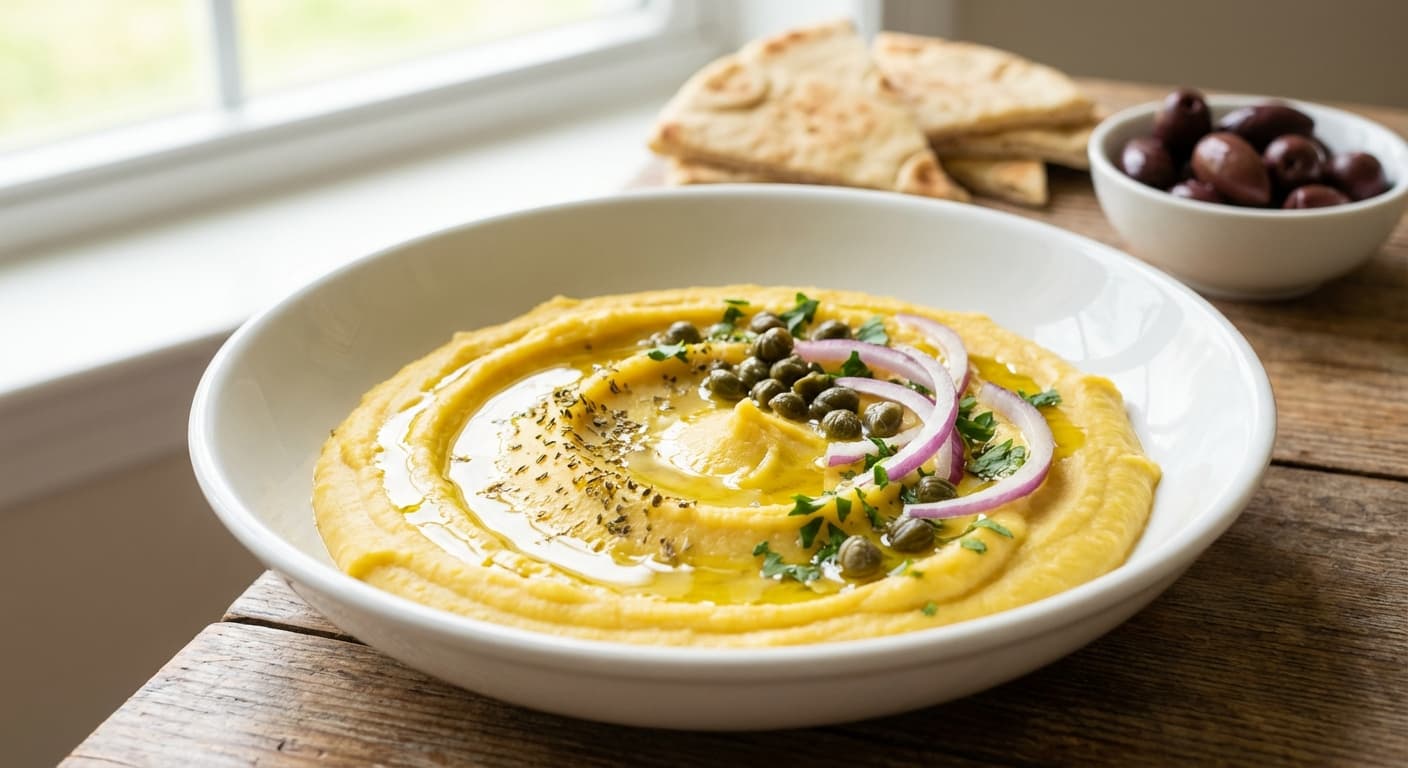
A signature dish from Santorini, this silky purée of yellow split peas is simmered with onion and bay until spoon-soft, then finished with olive oil and capers. It’s a humble meze that highlights the island’s prized fava and bright, briny toppings.
Printable Recipe Card
Servings: 6 · Total: 65 min · Difficulty: easy
Ingredients (quick list)
- 300 g Greek yellow split peas (fava) (rinsed well)
- 180 g Yellow onion (finely chopped)
- 80 g Carrot (peeled and diced)
- 60 ml Extra-virgin olive oil (plus 15 ml for serving)
- 1100 ml Water (hot, plus up to 100 ml if needed)
- 1 leaf Bay leaf
- 6 g Fine sea salt (about 1 tsp)
- 30 ml Fresh lemon juice (about 2 tbsp)
- 30 g Capers in brine (rinsed and drained)
- 60 g Red onion (thinly sliced)
- 1 tsp Dried oregano
- 10 g Fresh parsley (finely chopped)
Steps (summary)
- Rinse the yellow split peas under cold water until the water runs mostly clear, then drain well. This removes excess starch so…
- Set a pot over medium heat and add 60 ml olive oil, then sauté the chopped yellow onion for 6 minutes until translucent but not…
- Add the drained split peas and stir for 30 seconds to coat them in the oil and aromatics. Pour in 1100 ml hot water and add the…
- Reduce the heat to low and simmer uncovered for 45–55 minutes, stirring every 8–10 minutes to prevent sticking. Skim off any fo…
- When the peas are very soft and the mixture looks thick, remove and discard the bay leaf. Stir in the salt and cook 2 minutes,…
- Blend the mixture until completely smooth using an immersion blender, or transfer to a blender in batches and blend carefully.…
+ 1 more steps in the full instructions section below.
Cultural Background
Santorini fava is a hallmark of Cycladic cooking, traditionally served as a meze in tavernas with olive oil and sharp garnishes. It reflects island frugality and the celebration of local legumes, especially the famed Santorini split peas.
Equipment
💡 Tips
- Keep the simmer gentle and stir regularly so the split peas don’t catch on the bottom and taste smoky.
- For an ultra-silky texture, blend for a full 60 seconds and pass the purée through a fine sieve.
- Rinse capers well; 30 g of unrinsed capers can make the dish overly salty.
⚠️ Common Mistakes
❌ Boiling hard so the mixture reduces too fast and scorches on the bottom.
✅ Fix: Lower to a gentle simmer and stir every 8–10 minutes; add 50–100 ml hot water if the pot looks dry.
❌ Adding lemon early, which can slow softening and leave a grainy texture.
✅ Fix: Add lemon only after the peas are fully tender and blended smooth.
❌ Over-salting because capers add hidden salt.
✅ Fix: Use 6 g salt in the base and rinse capers thoroughly; adjust only after topping.
🧊 How to Store
Cool fava to room temperature within 1 hour, then refrigerate in an airtight container for up to 4 days. Reheat gently with 30–60 ml water, stirring often, or serve at cool room temperature with a fresh drizzle of olive oil.
📅 Make Ahead
Cook and blend the fava up to 2 days ahead and refrigerate tightly covered. Rewarm gently with a splash of water, then add lemon, capers, herbs, and the final olive-oil drizzle right before serving.
🍽️ Pairs Well With
- Warm pita
- grilled octopus
- Greek salad
- olives
- pickled vegetables
- crusty bread
Regional Variations
- Santorini style: very smooth purée topped with capers and raw onion, finished with generous olive oil.
- Taverna style: topped with caramelized onions (sauté 150 g sliced onion in 30 ml olive oil for 15 minutes) instead of raw onion.
- Lenten version: keep it simple with only olive oil and lemon, skipping herbs for a cleaner legume flavor.
Ingredients
- 300 gGreek yellow split peas (fava) (rinsed well)
- 180 gYellow onion (finely chopped)
- 80 gCarrot (peeled and diced)
- 60 mlExtra-virgin olive oil (plus 15 ml for serving)
- 1100 mlWater (hot, plus up to 100 ml if needed)
- 1 leafBay leaf
- 6 gFine sea salt (about 1 tsp)
- 30 mlFresh lemon juice (about 2 tbsp)
- 30 gCapers in brine (rinsed and drained)
- 60 gRed onion (thinly sliced)
- 1 tspDried oregano
- 10 gFresh parsley (finely chopped)
🔄 Substitutions
- Greek yellow split peas (fava)→ yellow split peas (standard)
- Fresh lemon juice→ red wine vinegar
- Fresh parsley→ fresh dill
Instructions
- 1
Rinse the yellow split peas under cold water until the water runs mostly clear, then drain well. This removes excess starch so the purée tastes clean and cooks evenly.
- 2
Set a pot over medium heat and add 60 ml olive oil, then sauté the chopped yellow onion for 6 minutes until translucent but not browned. Stir in the diced carrot and cook 2 minutes more to lightly soften and sweeten the base.
- 3
Add the drained split peas and stir for 30 seconds to coat them in the oil and aromatics. Pour in 1100 ml hot water and add the bay leaf, then bring to a gentle boil.
- 4
Reduce the heat to low and simmer uncovered for 45–55 minutes, stirring every 8–10 minutes to prevent sticking. Skim off any foam in the first 10 minutes, because it can dull the flavor and color.
- 5
When the peas are very soft and the mixture looks thick, remove and discard the bay leaf. Stir in the salt and cook 2 minutes, adding up to 100 ml hot water only if the pot looks dry or the peas are not collapsing.
- 6
Blend the mixture until completely smooth using an immersion blender, or transfer to a blender in batches and blend carefully. Add the lemon juice and blend again for 10 seconds, because the acidity brightens the fava without making it sharp.
- 7
Spoon the fava into a shallow serving dish and smooth the top with the back of a spoon. Top with the sliced red onion, capers, oregano, and parsley, then drizzle 15 ml olive oil over everything for a glossy, island-style finish.
🪪 Recipe Passport
Cultural Background
Santorini fava is a hallmark of Cycladic cooking, traditionally served as a meze in tavernas with olive oil and sharp garnishes. It reflects island frugality and the celebration of local legumes, especially the famed Santorini split peas.
Regional Variations
Researched from multiple sources and validated by the Zaffaron editorial team. Every recipe is tested for accuracy, measurements, and cultural authenticity.
Nutrition per serving
Pairs well with
If you enjoyed this recipe, here are a few related Zaffaron recipes to try next.
Does your family make this differently?
Every family has their own version. Maybe your grandmother adds a secret ingredient, or your aunt has a completely different technique. Preserve your family's version — with their name on it, forever.
You Might Also Like
Soutzoukakia Smyrneika (Σουτζουκάκια Σμυρνέικα) — Greek Spiced Meatballs in Tomato Sauce
Greek · Main Courses · 70 min
Greek Spinach Pie (Σπανακόπιτα) — Flaky Feta and Spinach Phyllo Pie
Greek · Main Courses · 95 min
Bifteki (Μπιφτέκι) — Greek Grilled Beef Patties with Herbs
Greek · Main Courses · 39 min
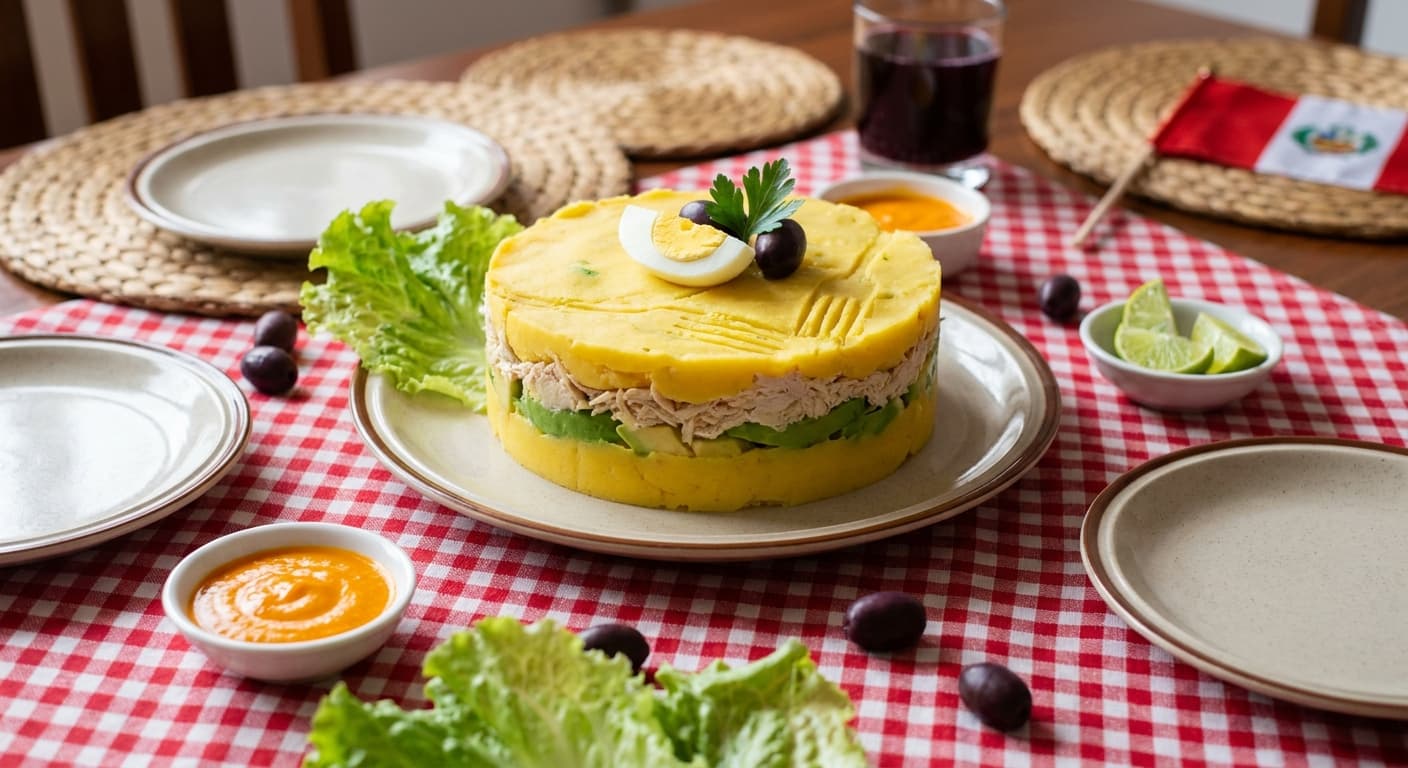
Lima-Style Causa (Causa Limeña) — Chilled Potato Terrine with Chicken and Avocado
Peruvian · Appetizers · 70 min
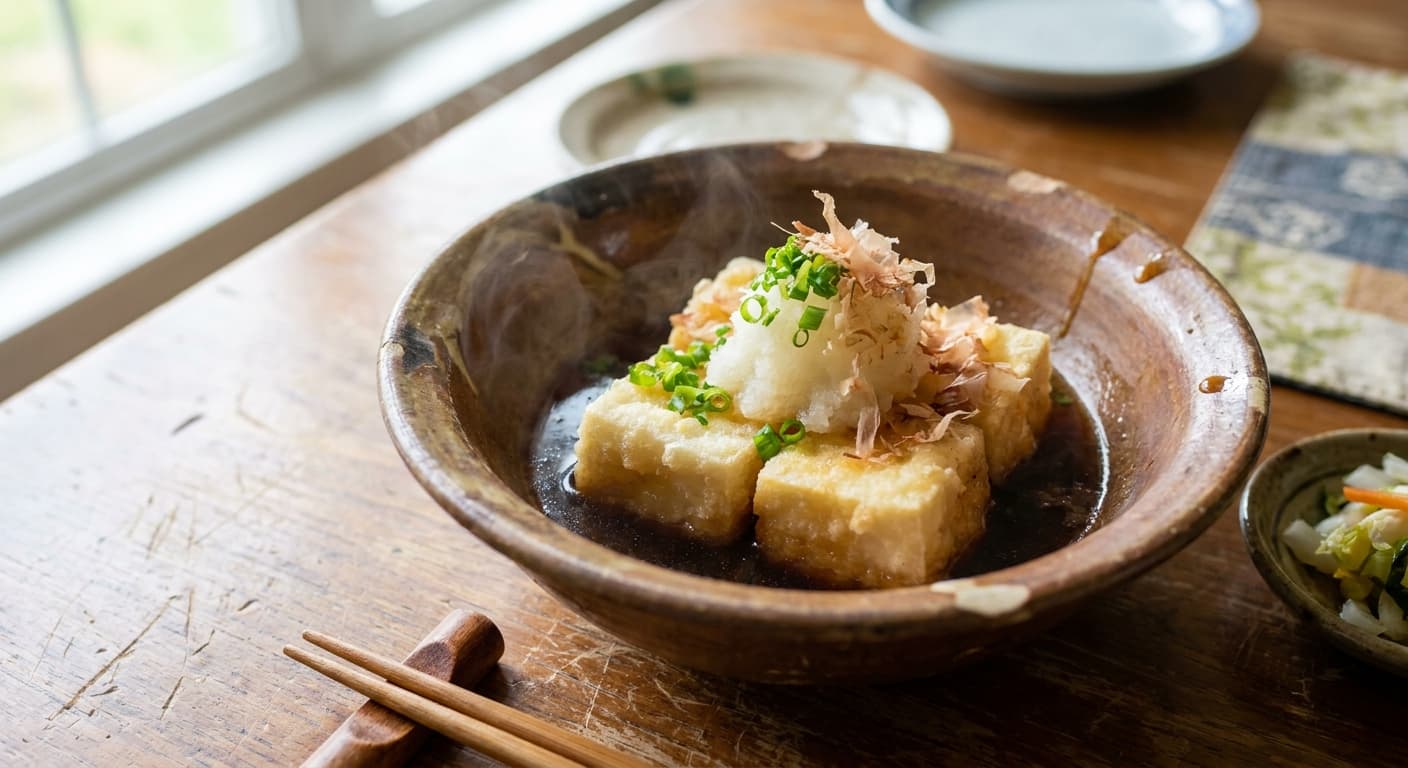
Agedashi Tofu (揚げ出し豆腐) — Crisp Tofu in Savory Broth
Japanese · Appetizers · 40 min
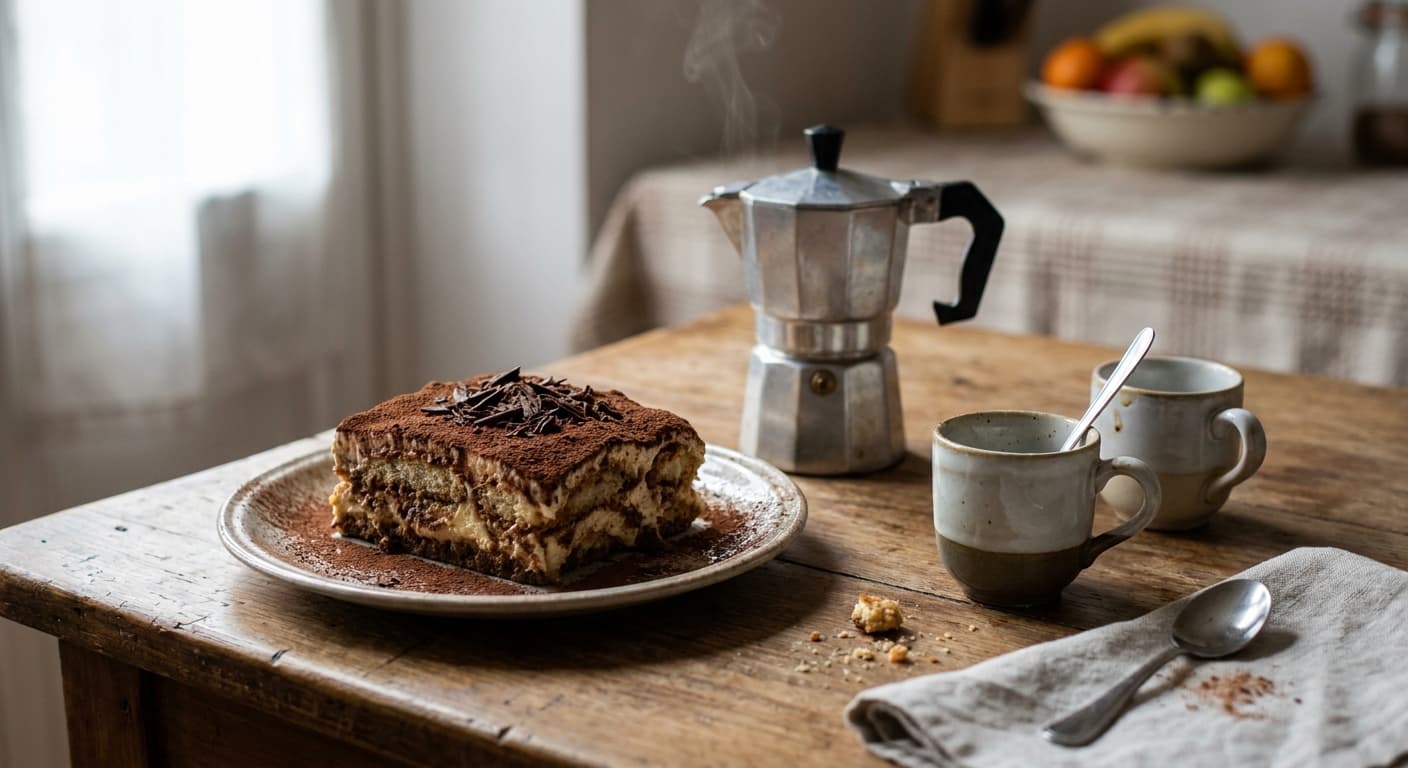
Tiramisu (Tiramisù) — Classic Coffee-Mascarpone Layered Dessert
Italian · Desserts · 35 min
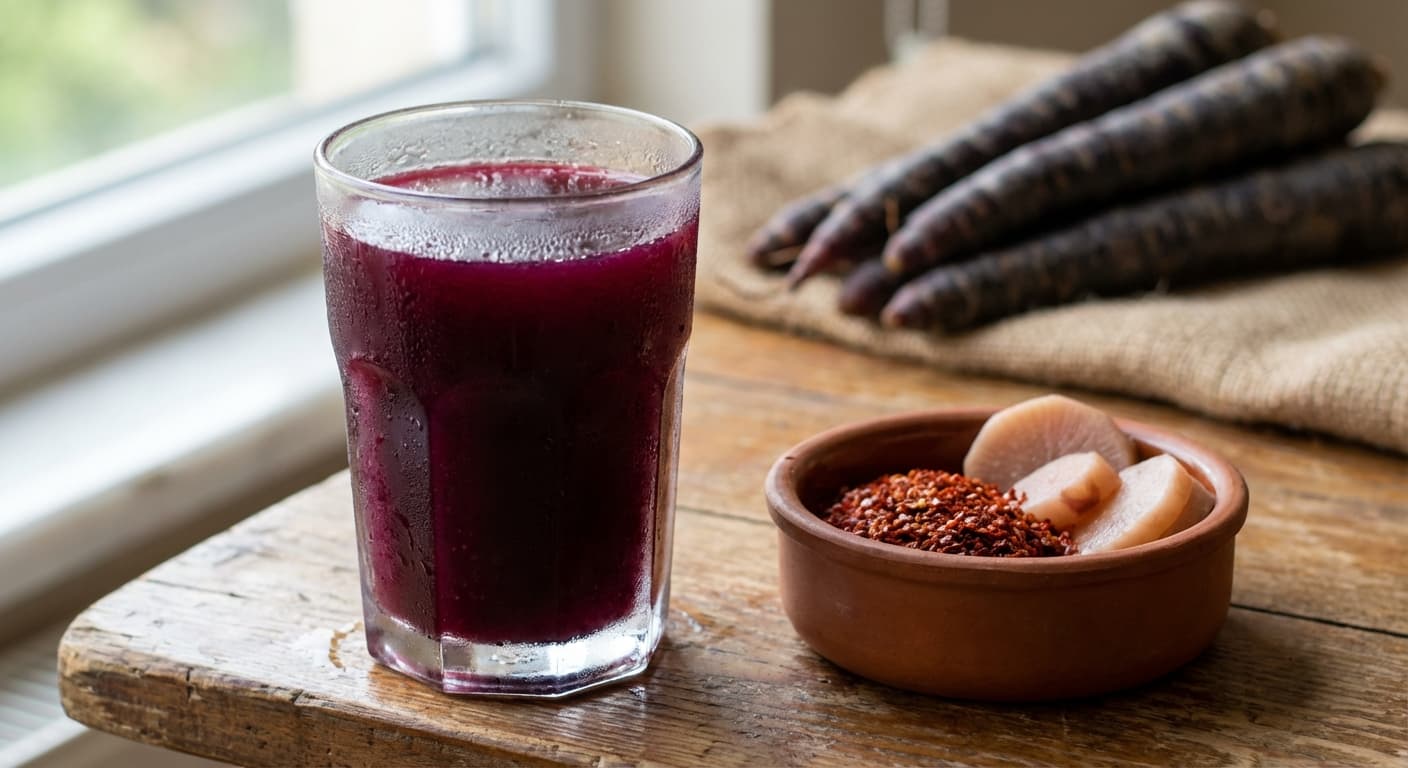
Salgam Juice (Şalgam) — Spicy, tangy fermented black-carrot drink
Turkish · Drinks · 25 min
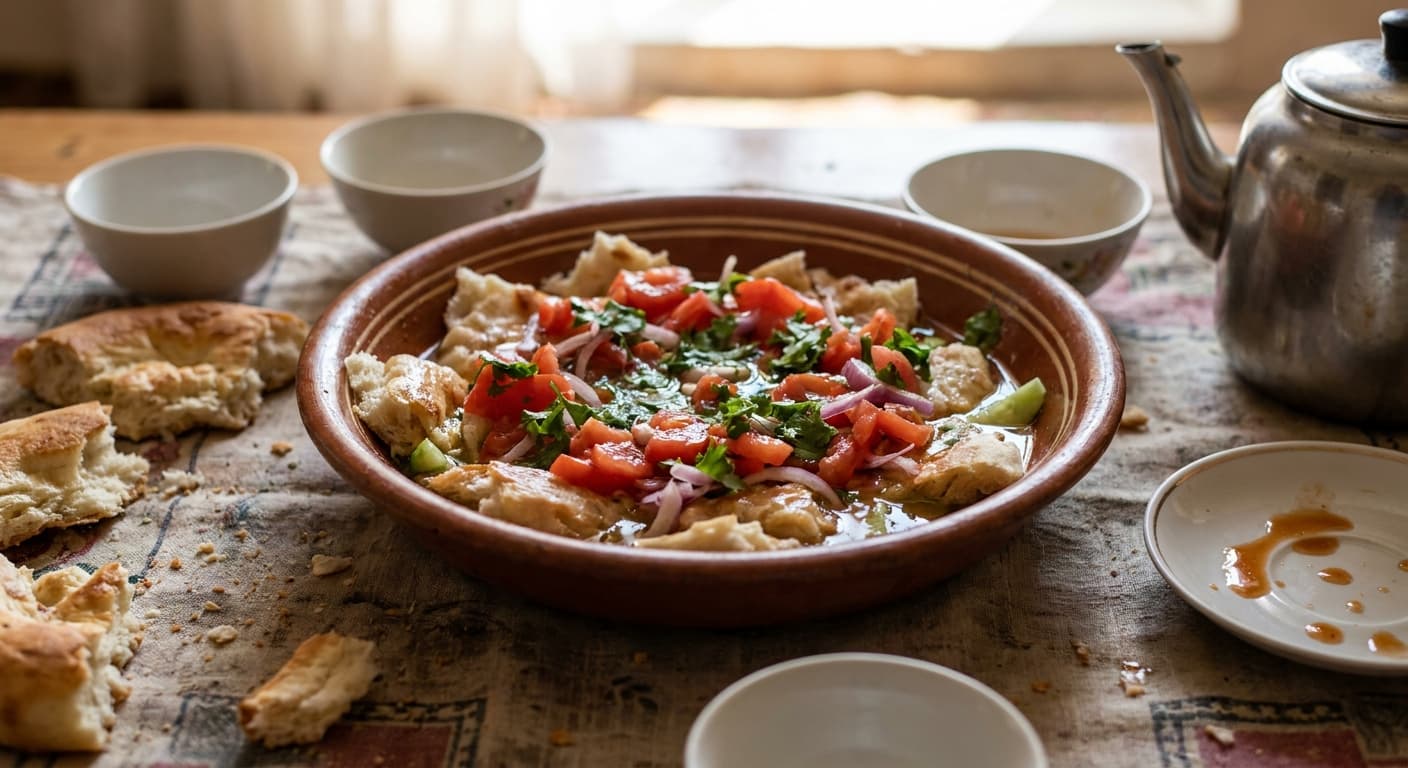
Shakarob (Шакароб) — Tajik Tomato-Onion Bread Salad
Tajik · Salads · 25 min
Reviews
Cooked this recipe?
Tap the stars to rate it — that's all it takes. A few words are welcome but optional.
No ratings yet. Cooked this one? Be the first to rate it — it takes one tap.