Pork Sinigang (Sinigang na Baboy) — Filipino Tamarind-Sour Pork Soup
Sinigang na Baboy is a beloved Filipino pork soup defined by a clean tamarind sourness, tender meat, and generous vegetables. It is everyday home cooking, especially comforting with steamed rice on rainy days.
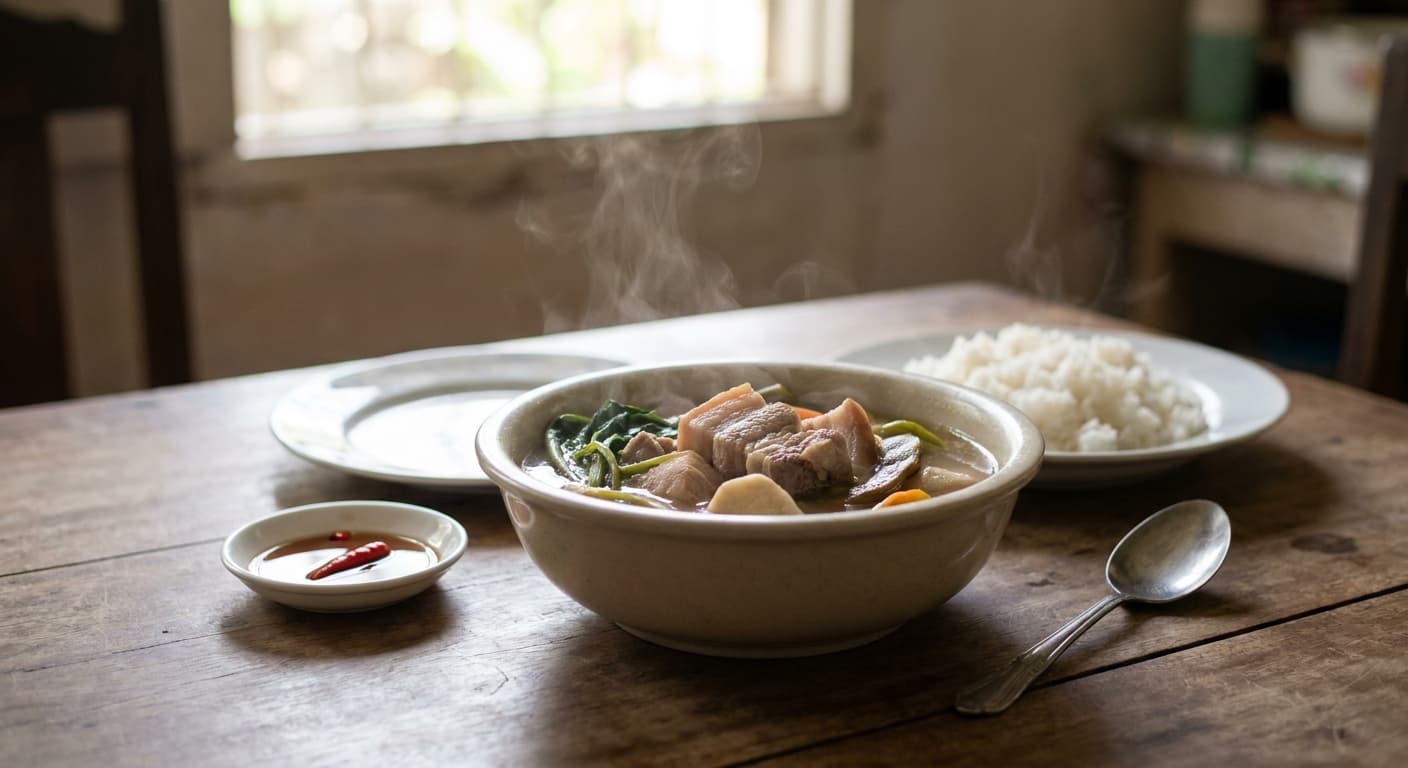
Printable Recipe Card
Servings: 6 · Total: 120 min · Difficulty: medium
Ingredients (quick list)
- 900 g pork spareribs (cut across the bone into 5 cm sections)
- 300 g pork belly (skin-on, cut into 4 cm chunks)
- 2.2 l water
- 1 yellow onion (peeled and quartered)
- 3 ripe plum tomatoes (quartered)
- 60 ml gluten-free fish sauce
- 4 g fine sea salt
- 250 g fresh tamarind pods (ripe brown pods, shells removed)
- 300 ml broth from the pot (used to soften and extract the tamarind pulp)
- 300 g taro root (peeled and cut into 4 cm chunks)
- 250 g daikon radish (peeled and sliced 1 cm thick)
- 200 g Asian eggplant (cut into 5 cm pieces)
+ 4 more in the full ingredients section below.
Steps (summary)
- Rinse the pork spareribs and pork belly under cold running water, then drain them well. Put the pork in a large pot with 2.2 l…
- When gray foam rises to the surface, skim it carefully with a ladle for 5 minutes. Add the quartered onion and tomatoes, then r…
- Simmer the pork uncovered for 60 minutes, skimming again whenever necessary. Add 45 ml fish sauce and continue simmering for 15…
- While the pork simmers, place the shelled tamarind pods in a heatproof bowl. Ladle 300 ml hot broth from the pot over the tamar…
- Press the tamarind mixture through a fine sieve directly into a bowl, scraping the underside to collect as much pulp as possibl…
- Add the taro root to the pot and simmer for 12 minutes. Stir gently so the taro thickens the broth slightly without breaking in…
+ 4 more steps in the full instructions section below.
Cultural Background
Sinigang is one of the Philippines' defining sour soups, with the souring agent changing by region and season. Pork sinigang is a common family-table version, valued for balancing richness with bright acidity.
Equipment
💡 Tips
- Use pork with bones because ribs give the broth body and a deeper savory flavor.
- Keep the soup at a gentle simmer after the first boil; a rolling boil can make the broth greasy and cloudy.
- Add water spinach at the very end because it wilts quickly and loses its fresh color if boiled.
⚠️ Common Mistakes
❌ Boiling the pork hard for the entire cooking time
✅ Fix: Boil only at the start, then reduce to a gentle simmer and skim well for a clearer, cleaner broth.
❌ Adding leafy greens too early
✅ Fix: Add water spinach in the final minute so it wilts without becoming dull and stringy.
❌ Using sweetened tamarind products
✅ Fix: Use fresh tamarind or unsweetened tamarind concentrate because sugar changes the clean sour profile of sinigang.
🧊 How to Store
Cool leftovers within 2 hours, then refrigerate in an airtight container for up to 3 days. Reheat gently on the stove until steaming; add fresh water spinach after reheating if possible for better texture.
📅 Make Ahead
The pork broth can be simmered 1 day ahead and refrigerated. Add the souring liquid and vegetables when reheating so the vegetables stay bright and properly textured.
🍽️ Pairs Well With
- Steamed jasmine rice
- fish sauce with sliced chile
- fried fish
- salted duck egg and tomato salad.
Regional Variations
- Some households use green mango, kamias, guava, or calamansi instead of tamarind depending on region and season.
- Sinigang sa miso adds fermented soybean paste and is especially common with fish or seafood versions.
- Pork shoulder, neck bones, or ham hock may replace ribs when a richer and more gelatinous broth is preferred.
Ingredients
- 900 gpork spareribs (cut across the bone into 5 cm sections)
- 300 gpork belly (skin-on, cut into 4 cm chunks)
- 2.2 lwater
- 1yellow onion (peeled and quartered)
- 3ripe plum tomatoes (quartered)
- 60 mlgluten-free fish sauce
- 4 gfine sea salt
- 250 gfresh tamarind pods (ripe brown pods, shells removed)
- 300 mlbroth from the pot (used to soften and extract the tamarind pulp)
- 300 gtaro root (peeled and cut into 4 cm chunks)
- 250 gdaikon radish (peeled and sliced 1 cm thick)
- 200 gAsian eggplant (cut into 5 cm pieces)
- 150 glong beans (cut into 7 cm lengths)
- 120 gokra (stem ends trimmed)
- 2green finger chiles (left whole)
- 1 bunchwater spinach (kangkong, tough stems discarded)
🔄 Substitutions
- fresh tamarind pods→ 45 ml unsweetened tamarind concentrate
- water spinach→ 150 g fresh spinach
- long beans→ 150 g green beans
Instructions
- 1
Rinse the pork spareribs and pork belly under cold running water, then drain them well. Put the pork in a large pot with 2.2 l water and bring it to a boil over medium-high heat.
- 2
When gray foam rises to the surface, skim it carefully with a ladle for 5 minutes. Add the quartered onion and tomatoes, then reduce the heat to a gentle simmer so the broth stays clear rather than violently cloudy.
- 3
Simmer the pork uncovered for 60 minutes, skimming again whenever necessary. Add 45 ml fish sauce and continue simmering for 15 minutes, or until the ribs are tender but not falling apart.
- 4
While the pork simmers, place the shelled tamarind pods in a heatproof bowl. Ladle 300 ml hot broth from the pot over the tamarind and mash the pulp with a spoon until the liquid becomes thick and sour.
- 5
Press the tamarind mixture through a fine sieve directly into a bowl, scraping the underside to collect as much pulp as possible. Discard the seeds and fibers, then reserve the strained tamarind liquid for the soup.
- 6
Add the taro root to the pot and simmer for 12 minutes. Stir gently so the taro thickens the broth slightly without breaking into paste.
- 7
Add the daikon, strained tamarind liquid, remaining 15 ml fish sauce, and 4 g fine sea salt. Simmer for 8 minutes, allowing the sour broth to penetrate the pork and radish.
- 8
Add the eggplant, long beans, okra, and whole green finger chiles. Simmer for 6 minutes, keeping the vegetables bright and tender rather than overcooked.
- 9
Add the water spinach last and press it under the hot broth. Cook for 1 minute, then turn off the heat so the leaves wilt while staying green.
- 10
Let the sinigang rest for 5 minutes before serving so the sourness settles into the broth. Serve hot in bowls with steamed jasmine rice and extra fish sauce with sliced chile on the side.
🪪 Recipe Passport
Cultural Background
Sinigang is one of the Philippines' defining sour soups, with the souring agent changing by region and season. Pork sinigang is a common family-table version, valued for balancing richness with bright acidity.
Regional Variations
Researched from multiple sources and validated by the Zaffaron editorial team. Every recipe is tested for accuracy, measurements, and cultural authenticity.
📚 Sources & Cultural References
- Amy Besa and Romy Dorotan — Memories of Philippine Kitchens — (2006)
- Doreen G. Fernandez — Tikim: Essays on Philippine Food and Culture — (1994)
Sources cited by the Zaffaron editorial team during recipe research. Cultural and culinary references supporting authenticity claims.
Nutrition per serving
Pairs well with
If you enjoyed this recipe, here are a few related Zaffaron recipes to try next.
Does your family make this differently?
Every family has their own version. Maybe your grandmother adds a secret ingredient, or your aunt has a completely different technique. Preserve your family's version — with their name on it, forever.
You Might Also Like
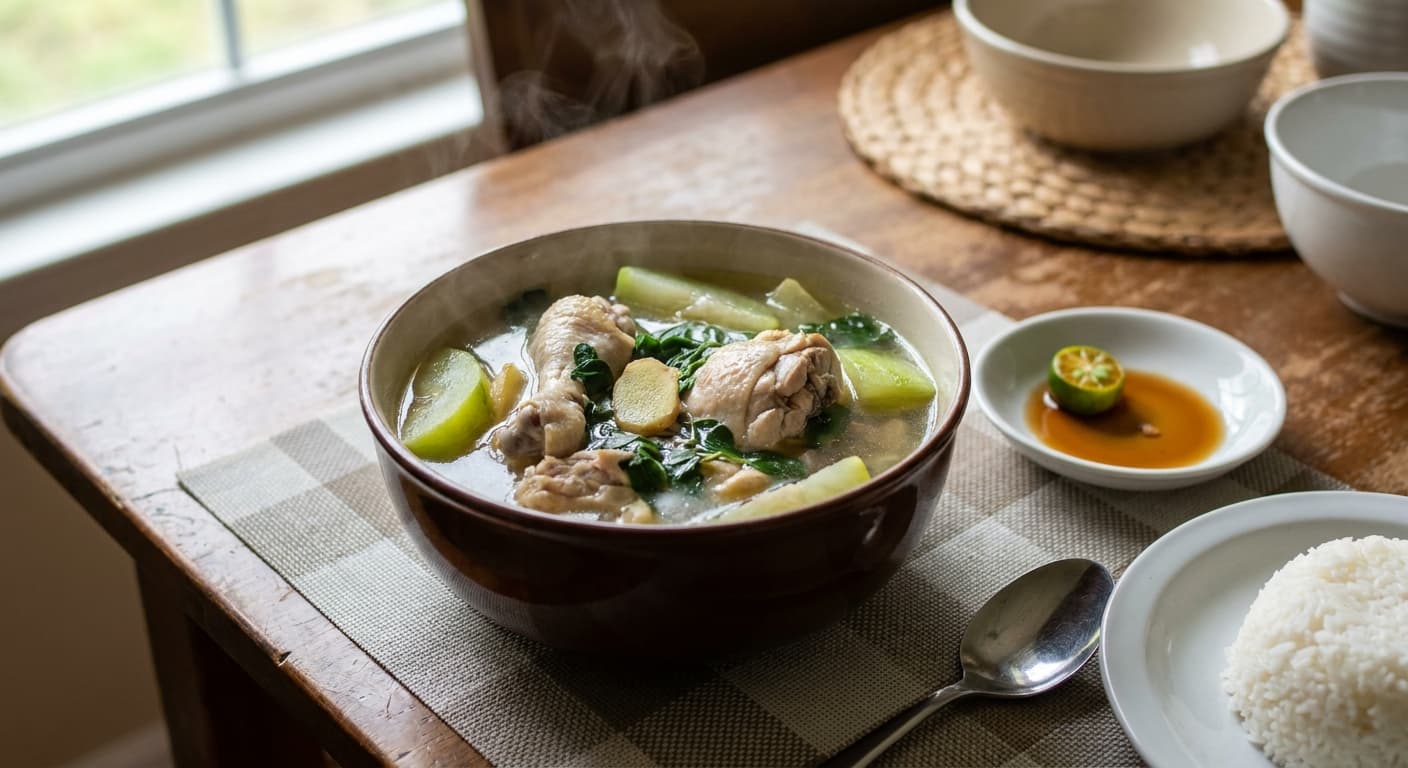
Tinolang Manok (Tinolang Manok) — Filipino Ginger Chicken Soup
Filipino · Soups · 65 min
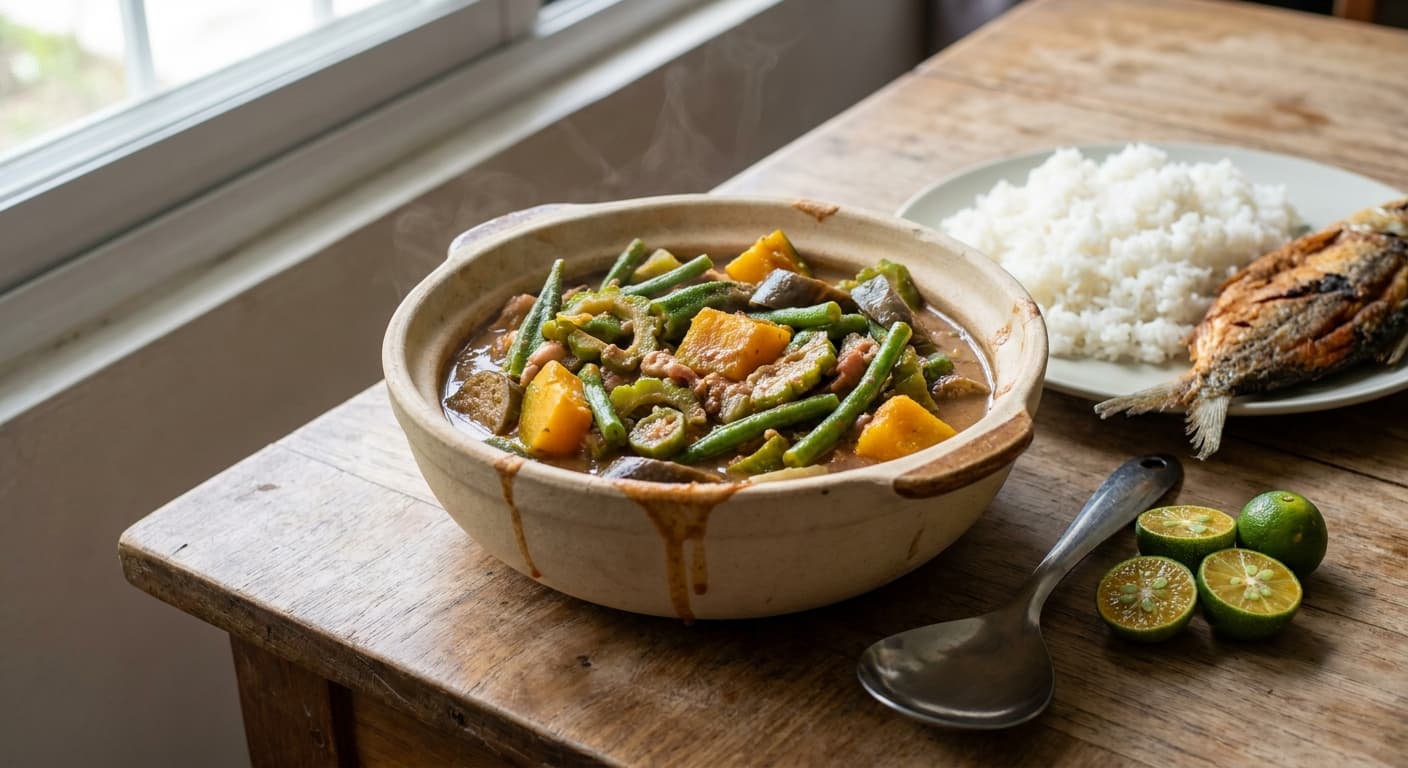
Pinakbet (Pinakbet) — Ilocano Vegetable Stew with Bagoong
Filipino · Stews · 60 min
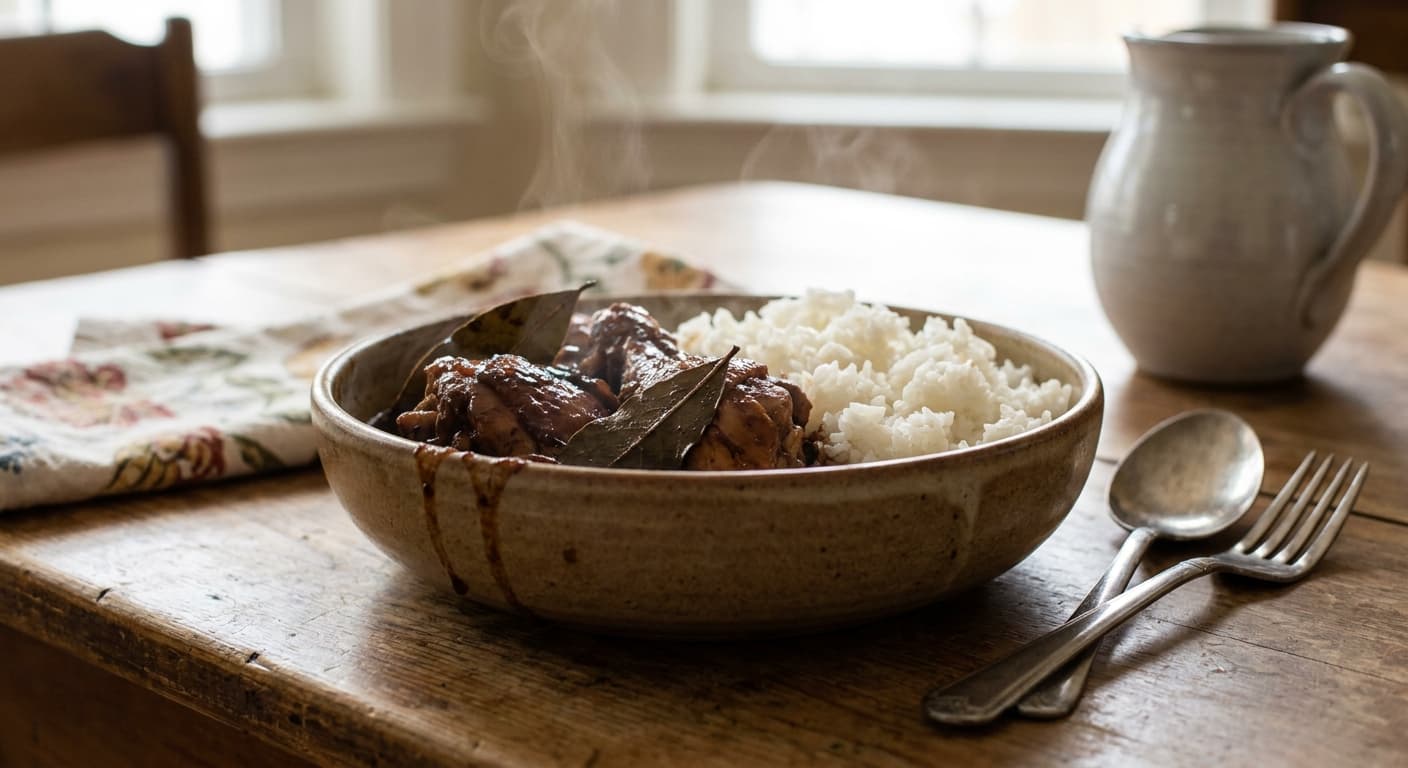
Filipino Chicken Adobo (Adobong Manok) — Vinegar-Soy Braised Chicken
Filipino · Main Courses · 70 min
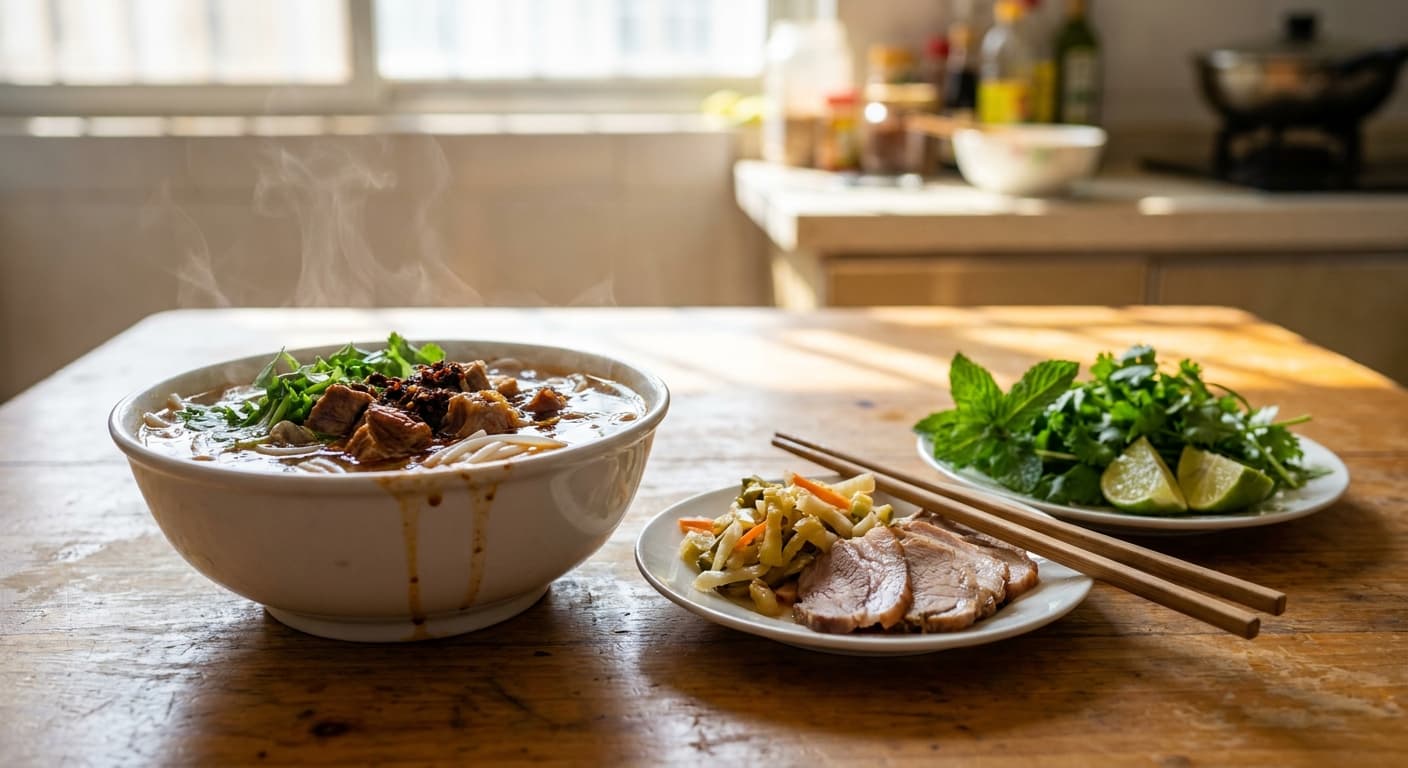
Crossing-the-Bridge Rice Noodles (过桥米线) — Yunnan Hot Broth Noodle Soup
Chinese · Soups · 195 min
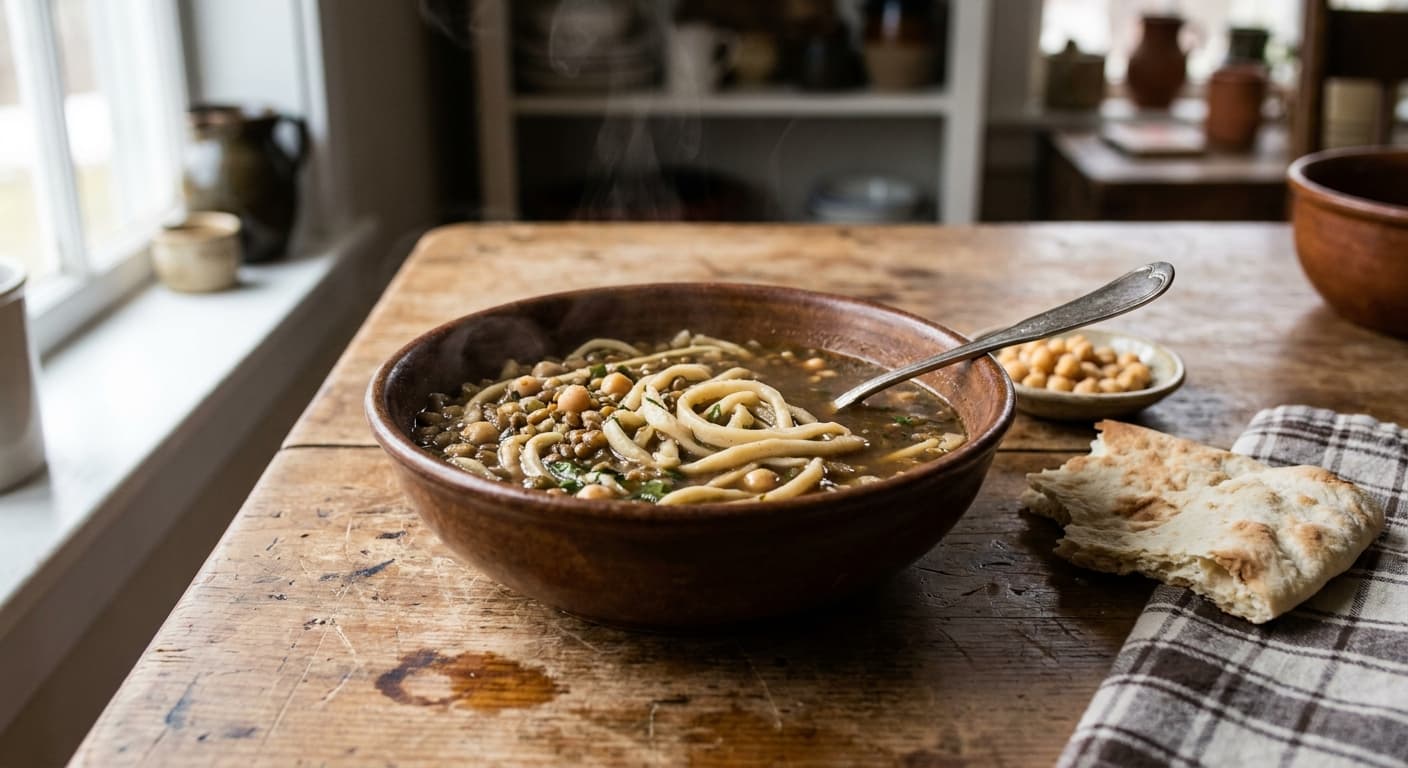
Arishta (Արիշտա) — Armenian Homemade Noodle Soup
Armenian · Soups · 115 min
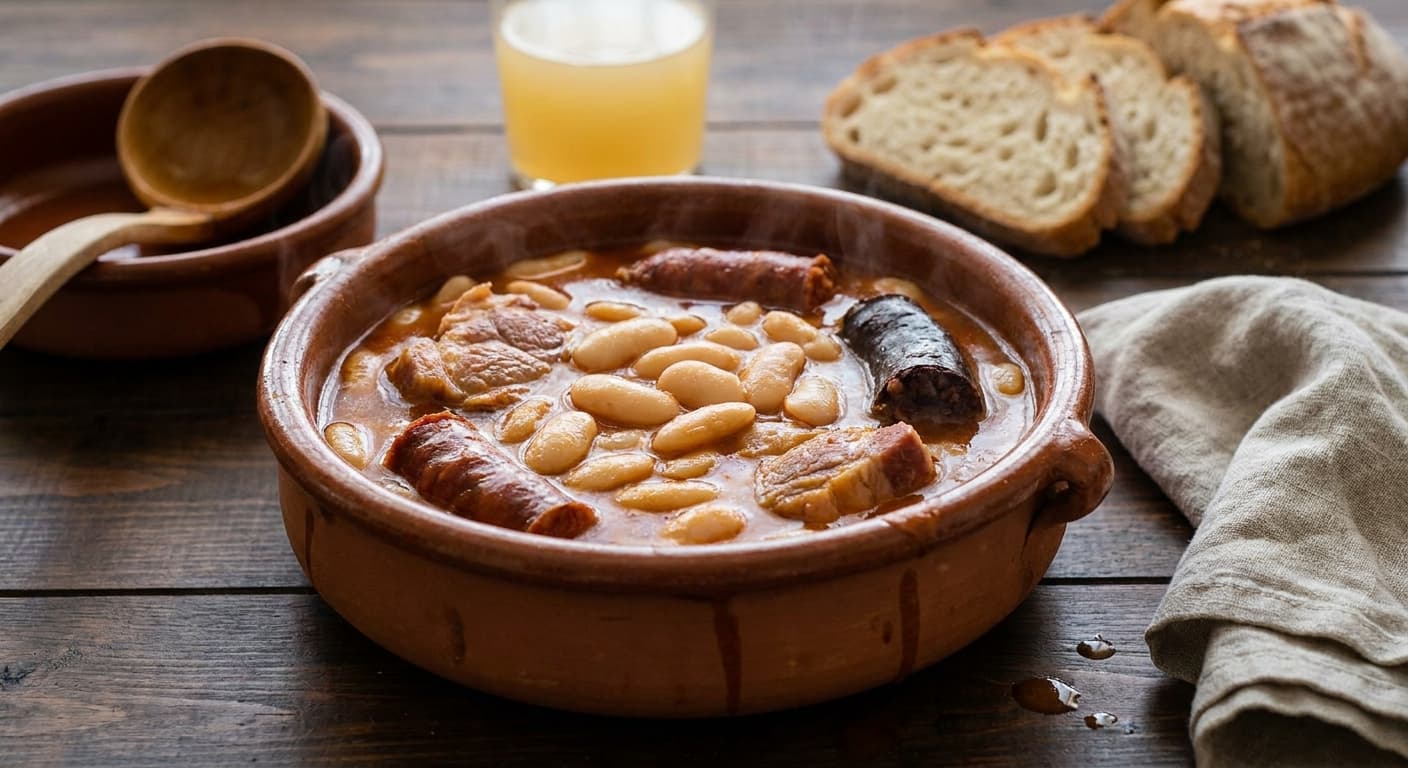
Asturian Bean Stew (Fabada Asturiana) — Smoky Spanish Bean and Pork Stew
Spanish · Stews · 210 min
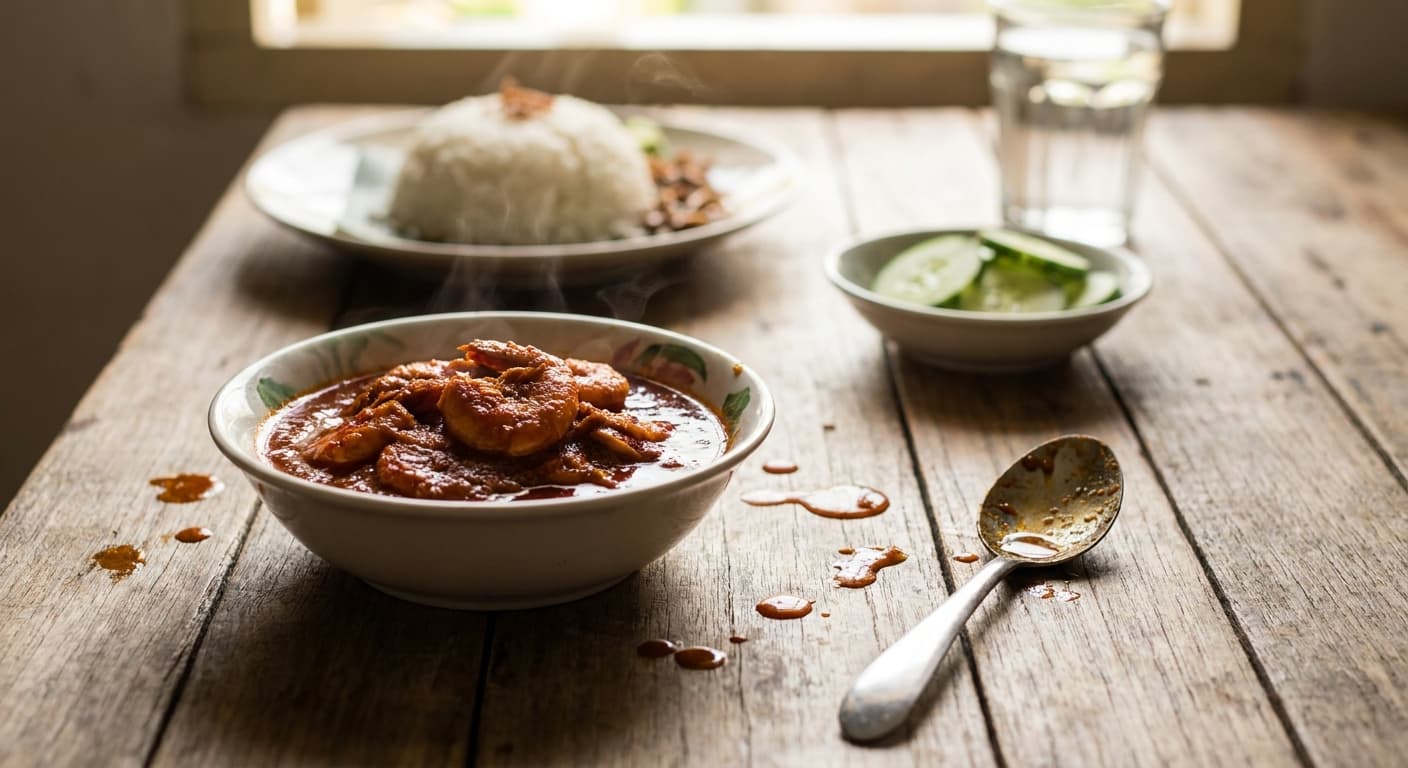
Sambal Udang (Sambal Udang) — Malaysian Chili Prawns
Malaysian · Main Courses · 47 min
Shakarob (Шакароб) — Tajik Tomato-Onion Bread Salad
Tajik · Salads · 25 min
Reviews
Cooked this recipe?
Tap the stars to rate it — that's all it takes. A few words are welcome but optional.
No ratings yet. Cooked this one? Be the first to rate it — it takes one tap.