Nukazuke (糠漬け) — Japanese Rice Bran Pickles
Nukazuke are Japanese vegetables fermented in a living rice bran bed, valued for their salty-sour depth, crunch, and subtle lactic tang. They are a classic home pickle served with rice, miso soup, and everyday meals.
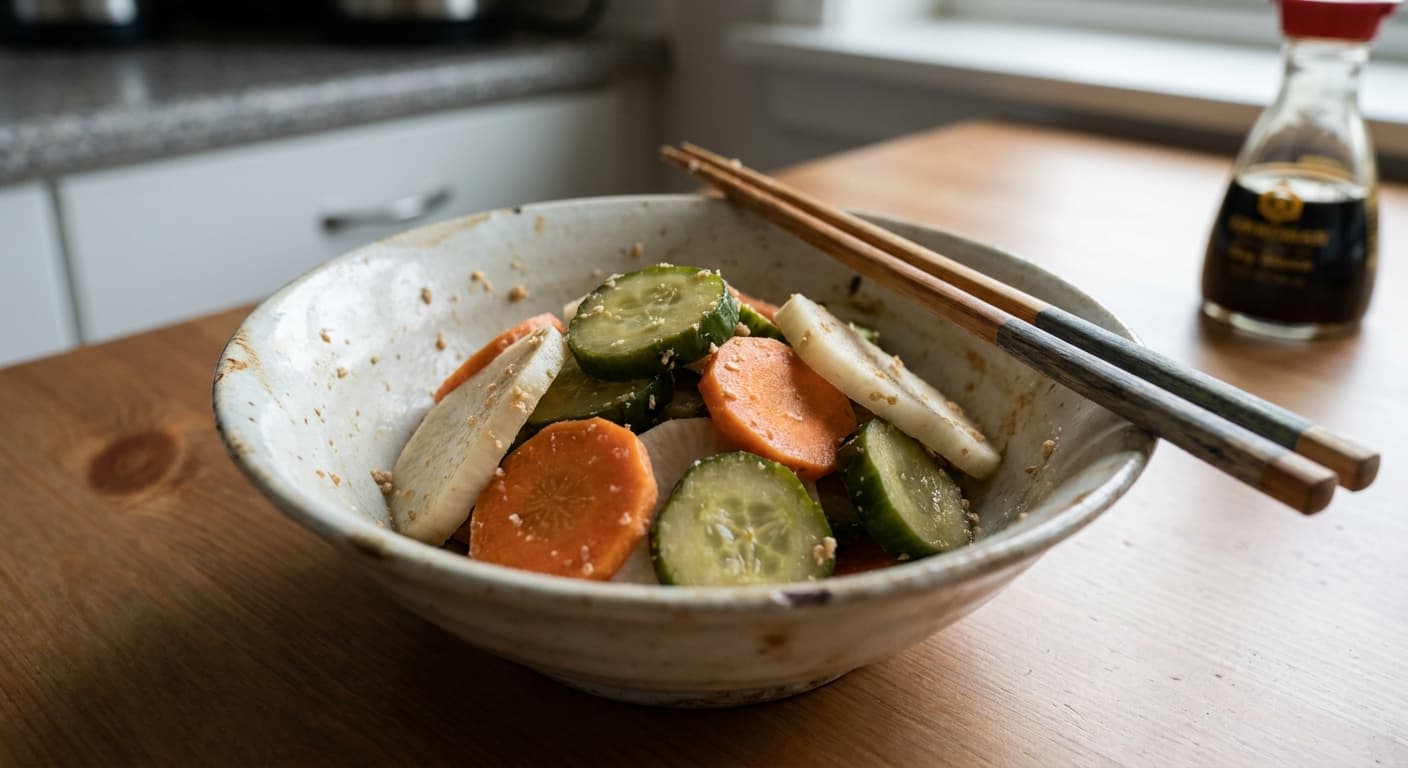
Printable Recipe Card
Servings: 8 · Total: 40 min · Difficulty: medium
Ingredients (quick list)
- 1000 g fresh rice bran (use fresh or stabilized rice bran)
- 1000 ml water (boiled, then cooled to 40 C)
- 130 g fine sea salt
- 10 g kombu (wiped clean, cut into 4 pieces)
- 2 dried red chiles (stems removed)
- 1 inch fresh ginger (thinly sliced)
- 4 cabbage leaves (used to season and mature the bed, then discarded)
- 4 Japanese cucumbers
- 300 g daikon (peeled and cut into 4 thick batons)
- 2 carrots (peeled)
- 2 Japanese eggplant (trimmed)
Steps (summary)
- Toast the rice bran in a wide dry skillet over medium-low heat for 8 to 10 minutes, stirring constantly, until it smells nutty…
- Dissolve 130 g fine sea salt in the boiled water while the water is still warm, then let the brine cool to about 40 C. Put the…
- Mix the kombu, dried red chiles, and sliced ginger evenly through the rice bran bed. Press the surface flat, wipe the inner sid…
- Bury the cabbage leaves completely in the bran, cover the container with a loose lid or clean cloth, and keep it at 20 to 24 C.…
- After 24 hours, remove the cabbage leaves, squeeze their moisture back into the bran, and discard the leaves. Add fresh cabbage…
- When the bed is active, prepare the vegetables by washing and drying them very well. Rub the cucumbers, daikon, carrots, and eg…
+ 4 more steps in the full instructions section below.
Cultural Background
Nukazuke reflects the Japanese home practice of maintaining a living pickle bed over time. The daily stirring, seasonal vegetables, and small servings alongside rice make it a practical expression of preservation, thrift, and household flavor.
Equipment
💡 Tips
- A healthy rice bran bed should smell savory, nutty, salty, and gently tangy; harsh rot, paint-like aromas, or fuzzy colored mold indicate poor maintenance.
- Small, firm vegetables pickle more evenly than large watery ones, so choose slender cucumbers, young carrots, and compact eggplant.
- Fermentation speeds up in warm weather, so reduce the pickling time by 2 hours when the room is above 25 C.
⚠️ Common Mistakes
❌ The rice bran bed develops a harsh rotten smell.
✅ Fix: Stir the bed more thoroughly, remove old vegetable fragments, and keep it at 20 to 24 C. If the smell remains putrid after 2 days of careful stirring, discard the bed and restart.
❌ The pickles become overwhelmingly salty.
✅ Fix: Shorten the next fermentation by 2 to 4 hours and rinse the finished vegetables for 5 seconds under cold water before slicing.
❌ The bed becomes watery and sticky.
✅ Fix: Mix in 30 g toasted rice bran and 4 g fine sea salt, then stir well and leave the surface level and clean.
🧊 How to Store
Serve sliced nukazuke soon after rinsing for the best crunch. Leftover pickles can be refrigerated in an airtight container for up to 2 days, but they will continue to soften and become saltier. Do not freeze the pickles or the rice bran bed.
📅 Make Ahead
The rice bran bed should be started 5 to 7 days before the first serving. Once active, vegetables can be buried the night before and sliced just before the meal.
🍽️ Pairs Well With
- Steamed Japanese rice
- miso soup
- grilled fish
- tamagoyaki
- ochazuke.
Regional Variations
- Kyoto-style home pickles often emphasize delicate seasonal vegetables and shorter fermentation for a cleaner flavor.
- Some households add dried citrus peel, mustard powder, or dried persimmon peel to perfume the rice bran bed.
- In warmer regions, the bed is commonly refrigerated between batches to slow fermentation and prevent over-souring.
Ingredients
- 1000 gfresh rice bran (use fresh or stabilized rice bran)
- 1000 mlwater (boiled, then cooled to 40 C)
- 130 gfine sea salt
- 10 gkombu (wiped clean, cut into 4 pieces)
- 2dried red chiles (stems removed)
- 1 inchfresh ginger (thinly sliced)
- 4cabbage leaves (used to season and mature the bed, then discarded)
- 4Japanese cucumbers
- 300 gdaikon (peeled and cut into 4 thick batons)
- 2carrots (peeled)
- 2Japanese eggplant (trimmed)
🔄 Substitutions
- fresh rice bran→ stabilized rice bran
- Japanese cucumbers→ Persian cucumbers
- Japanese eggplant→ small Italian eggplant
Instructions
- 1
Toast the rice bran in a wide dry skillet over medium-low heat for 8 to 10 minutes, stirring constantly, until it smells nutty but does not brown deeply. Spread it on a tray and let it cool completely, because hot bran can weaken the fermentation microbes you want to encourage.
- 2
Dissolve 130 g fine sea salt in the boiled water while the water is still warm, then let the brine cool to about 40 C. Put the cooled rice bran in a 3 l nonreactive crock or food-safe container and add the brine gradually, mixing with clean hands until the texture resembles damp sand that holds its shape when squeezed.
- 3
Mix the kombu, dried red chiles, and sliced ginger evenly through the rice bran bed. Press the surface flat, wipe the inner sides of the container clean, and make sure there are no dry pockets of bran at the corners.
- 4
Bury the cabbage leaves completely in the bran, cover the container with a loose lid or clean cloth, and keep it at 20 to 24 C. Stir the bed thoroughly with clean hands twice daily, lifting the bran from the bottom to the top so oxygen is distributed evenly.
- 5
After 24 hours, remove the cabbage leaves, squeeze their moisture back into the bran, and discard the leaves. Add fresh cabbage leaves and repeat this daily for 5 to 7 days, until the bed smells pleasantly nutty, salty, and lightly sour rather than raw or dusty.
- 6
When the bed is active, prepare the vegetables by washing and drying them very well. Rub the cucumbers, daikon, carrots, and eggplant with 10 g fine sea salt, paying special attention to the eggplant skin so it softens and colors evenly.
- 7
Bury each vegetable completely in the rice bran bed with at least 2 cm of bran covering every surface. At 22 C, ferment cucumbers for 8 hours, eggplant for 10 hours, and daikon and carrots for 12 hours for a balanced first batch.
- 8
Remove the pickled vegetables from the bed, brushing off excess bran with your fingers before giving them a very quick rinse under cold water. Pat them dry, slice into bite-size pieces, and serve immediately while the texture is crisp and the aroma is fresh.
- 9
After removing vegetables, stir the rice bran bed thoroughly and level the surface again. If liquid pools on top, mix in 30 g additional toasted rice bran; if the bed feels dry and crumbly, mix in 30 ml boiled and cooled water.
- 10
Maintain the bed by stirring it once daily at room temperature or every 2 to 3 days if refrigerated. Always use clean hands, remove old vegetable fragments, and wipe the container walls so mold does not develop above the surface of the bran.
🪪 Recipe Passport
Cultural Background
Nukazuke reflects the Japanese home practice of maintaining a living pickle bed over time. The daily stirring, seasonal vegetables, and small servings alongside rice make it a practical expression of preservation, thrift, and household flavor.
Regional Variations
Researched from multiple sources and validated by the Zaffaron editorial team. Every recipe is tested for accuracy, measurements, and cultural authenticity.
📚 Sources & Cultural References
- Nancy Singleton Hachisu — Preserving the Japanese Way — (2015)
- Elizabeth Andoh — Washoku: Recipes from the Japanese Home Kitchen — (2005)
Sources cited by the Zaffaron editorial team during recipe research. Cultural and culinary references supporting authenticity claims.
Nutrition per serving
Pairs well with
If you enjoyed this recipe, here are a few related Zaffaron recipes to try next.
Does your family make this differently?
Every family has their own version. Maybe your grandmother adds a secret ingredient, or your aunt has a completely different technique. Preserve your family's version — with their name on it, forever.
You Might Also Like
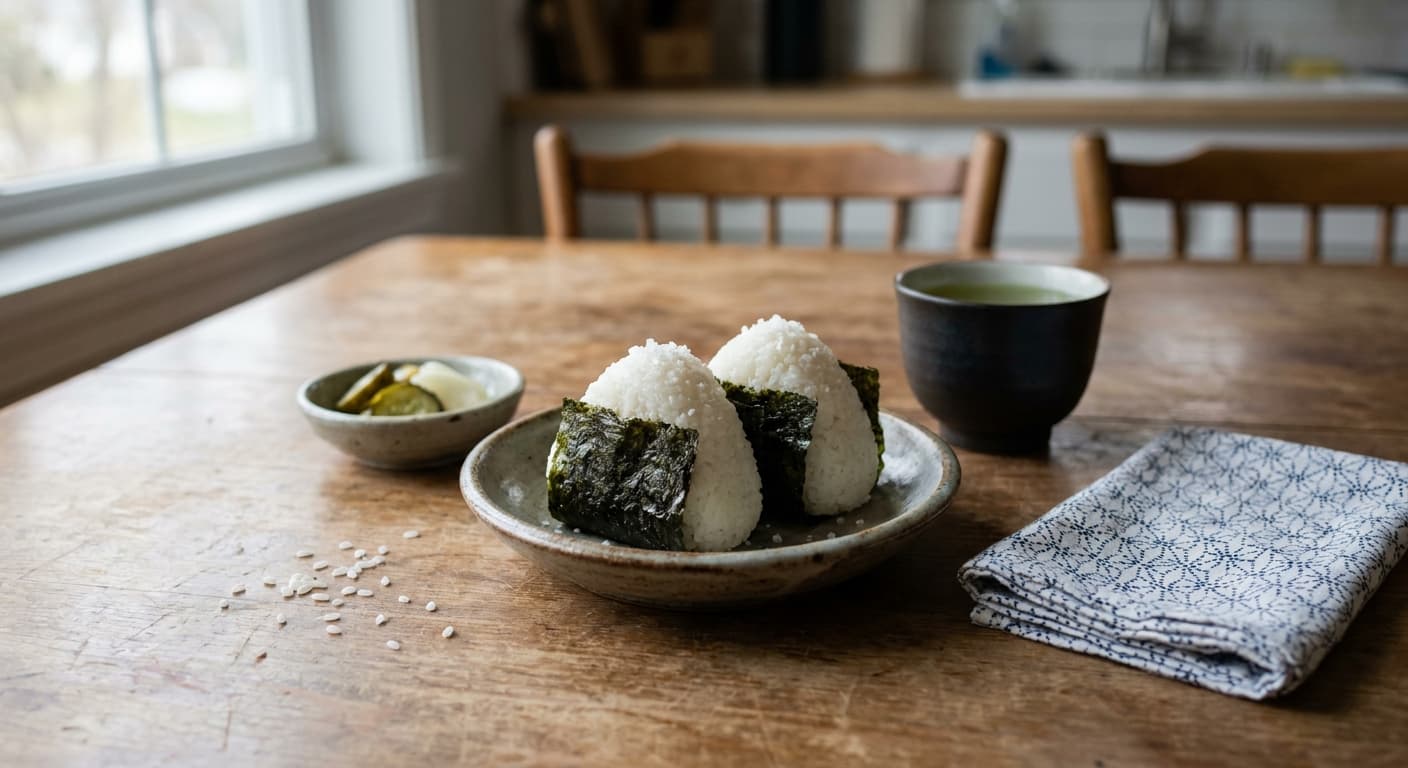
Salted Rice Balls (塩おにぎり) — Simple Japanese Hand-Pressed Rice
Japanese · Rice Dishes · 65 min
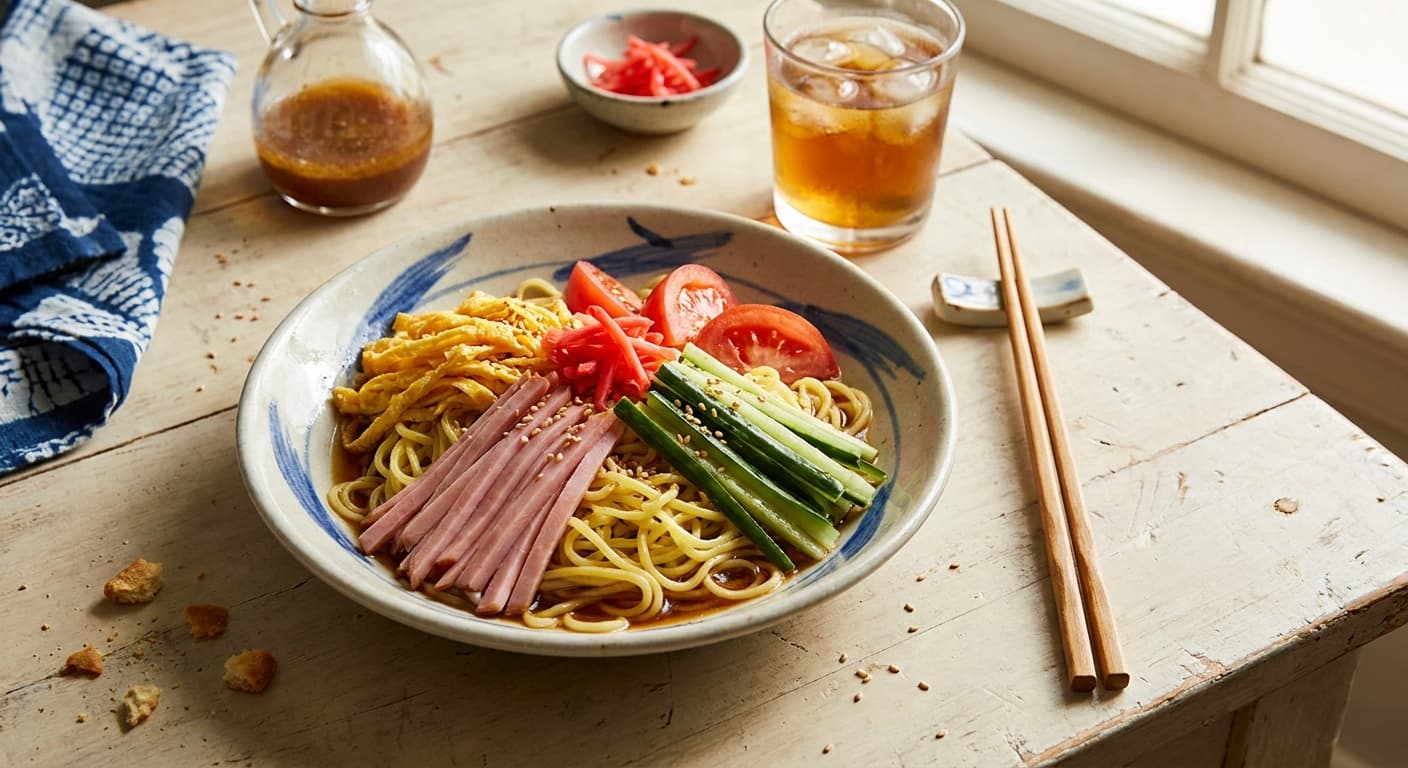
Hiyashi Chuka (冷やし中華) — Chilled Ramen Salad with Soy-Vinegar Dressing
Japanese · Main Courses · 40 min
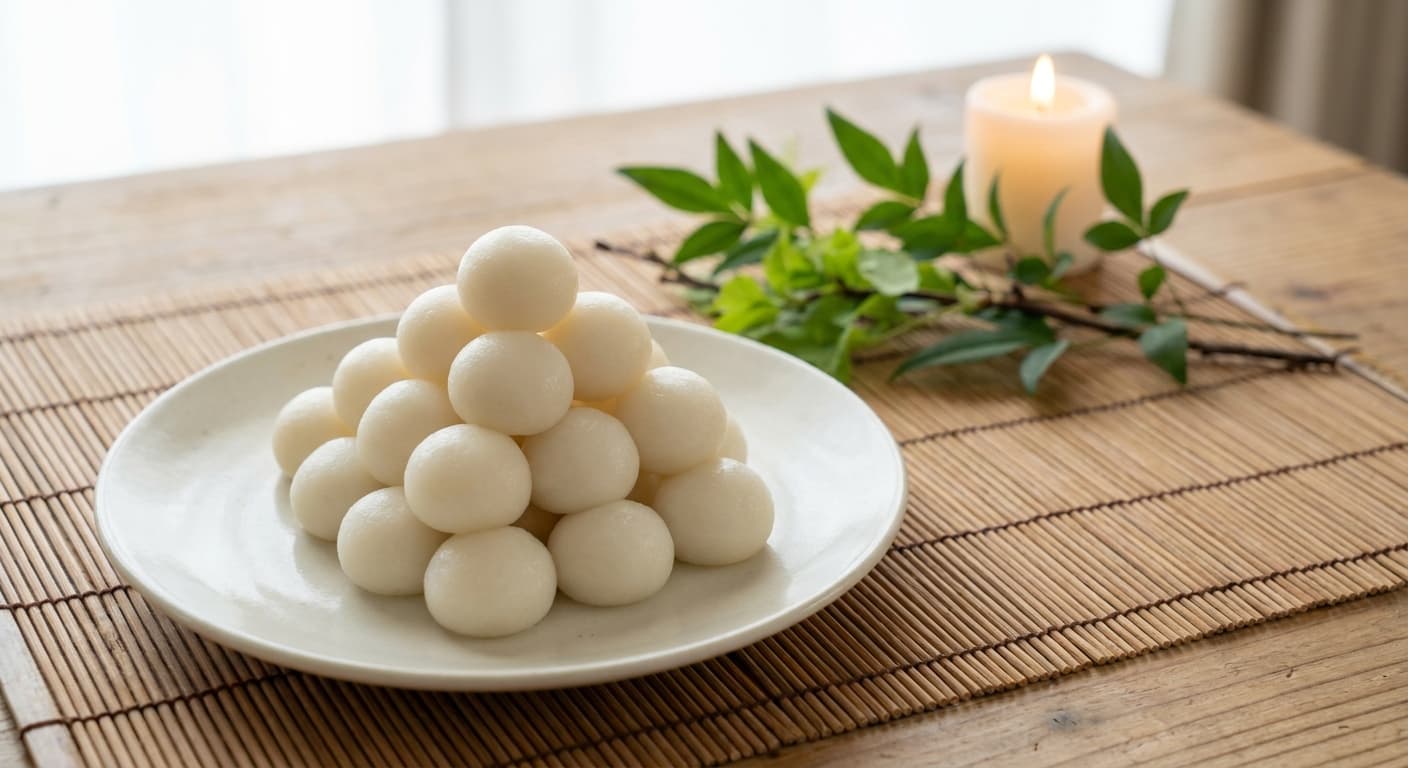
Obon Dango (お盆団子) — Plain Rice Dumplings for Ancestral Offerings
Japanese · Desserts · 37 min
Jben (جبن) — Moroccan Fresh Soft Cheese, Lightly Salted and Milky
Moroccan · Side Dishes · 35 min
Bakoula (باقولة) — Moroccan Stewed Mallow Greens with Garlic and Preserved Lemon
Moroccan · Side Dishes · 55 min
Har Gow Shrimp Dumplings (虾饺) — Translucent Cantonese Dim Sum
Chinese · Appetizers · 68 min
Galbi Jjim (갈비찜) — Korean Braised Short Ribs
Korean · Main Courses · 175 min
Kombu no Tsukudani (昆布の佃煮) — Soy-Simmered Kelp Relish
Japanese · Side Dishes · 65 min
Reviews
Cooked this recipe?
Tap the stars to rate it — that's all it takes. A few words are welcome but optional.
No ratings yet. Cooked this one? Be the first to rate it — it takes one tap.