Persian vs Turkish vs Lebanese Cuisine: Key Differences Explained
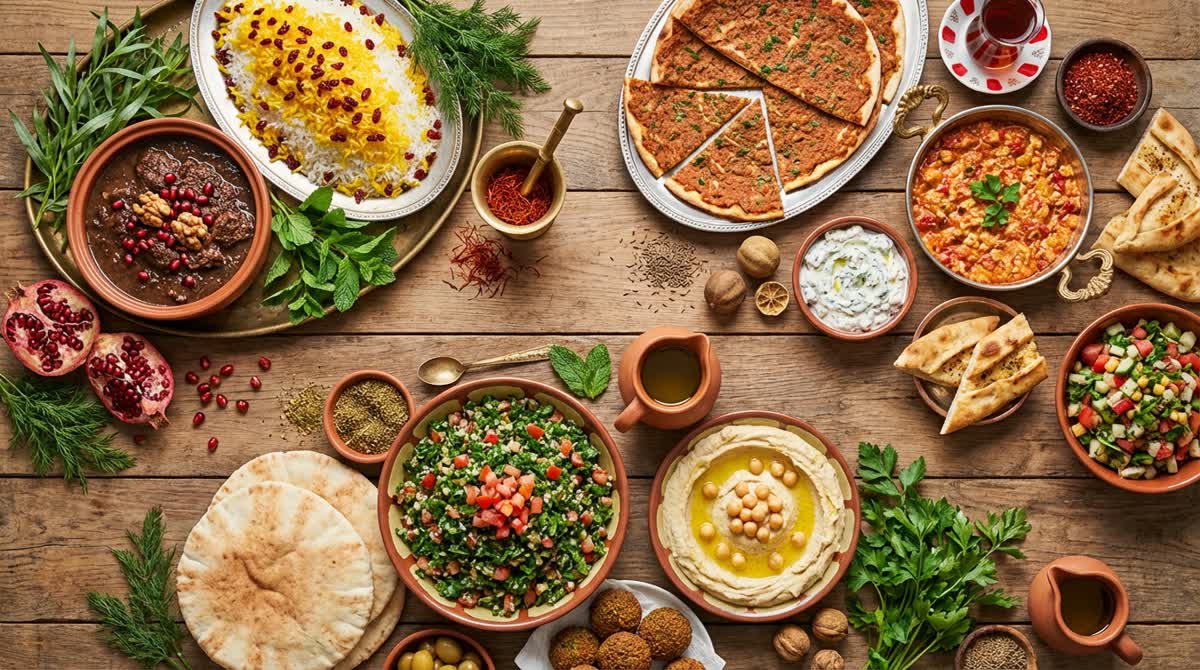
If you’ve ever sat down at a restaurant and thought, “Is this Persian… or Turkish… or Lebanese?”—you’re not alone. These cuisines share ingredients, geography, and centuries of cultural exchange. But they taste different in ways that are surprisingly consistent once you know what to look for.
This guide breaks down Persian vs Turkish vs Lebanese cuisine in a practical, delicious way: how each cuisine builds flavor, what staples show up on the table, and which dishes best represent the differences. By the end, you’ll be able to spot the signatures of persian vs turkish food, understand the most common middle eastern cuisine differences, and finally untangle the delicious overlap in lebanese vs turkish favorites.
The big picture: why these cuisines feel similar (and why they’re not)
Persian (Iranian), Turkish (Anatolian/Ottoman), and Lebanese (Levantine) cuisines sit along historic trade routes—spice roads, silk roads, and maritime networks. Ingredients moved. Techniques spread. Empires rose and fell. Communities migrated. So yes: you’ll find kebabs, stuffed vegetables, rice, flatbreads, yogurt, eggplant, chickpeas, and fragrant spices across all three.
But here’s the key: they use similar building blocks to create different “architectures” of flavor.
- Persian cuisine leans into aroma, balance, and layered complexity—often sweet-sour, herb-forward, and saffron-perfumed.
- Turkish cuisine emphasizes hearty, savory clarity—grilling, dough craft, bold pepper-tomato bases, and yogurt as a cooling counterpoint.
- Lebanese cuisine celebrates brightness and freshness—lemon, olive oil, garlic, herbs, and mezze culture designed for sharing.
Think of them as three dialects of a shared culinary language.
Flavor signatures: what your palate notices first
Persian cuisine: perfumed, sweet-sour, and herb-lush
Persian food often feels “composed.” Flavors are layered, not loud—built with saffron, turmeric, dried limes, rose, barberries, pomegranate, and abundant herbs. You’ll also see a love of contrasts: tart + sweet, rich + fresh, crisp + tender.
A perfect example of Persian aroma and structure is rice cookery—especially saffron rice and tahdig (that coveted crispy crust). If you want a dish that tastes unmistakably Persian, explore a saffron-forward pilaf like Gol Kalam Polo (گل کلم پلو) — Saffron Cauliflower Rice with Spiced Minced Meat.
And if you want to see how Persian cooking can be both familiar and uniquely Iranian, try the homey comfort of Eslamboli Polo (اسلامبولی پلو) — Persian Tomato Rice with Tender Beef, where tomato and rice become something deeper than the sum of their parts.
Turkish cuisine: grilled depth, peppery warmth, and dough mastery
Turkish food often hits with savory confidence—char, caramelization, and a strong tomato-pepper backbone. Yogurt appears everywhere: sauces, marinades, soups, and sides. Turkish cuisine is also a wonderland of breads and pastries: simit, börek, lahmacun, and more.
If you want a single plate that captures Turkish balance—meat, sauce, bread, yogurt—start with İskender Kebab (İskender Kebap) — Turkish Sliced Döner with Tomato Sauce and Yogurt. It’s the “aha” moment for many people exploring persian vs turkish food: Turkish flavors often feel more roast-and-grill driven, with tangy yogurt and tomato-rich sauces front and center.
Lebanese cuisine: lemony brightness, olive oil elegance, mezze energy
Lebanese food is famously vibrant. It’s built around olive oil, lemon, garlic, sumac, fresh herbs, and seasonal vegetables—often served as mezze (small plates). Even when dishes are rich, they’re usually lifted with acidity or herbs.
A dish like Fattoush (فتوش) — Lebanese Crispy Bread Salad with Sumac Dressing captures that Lebanese signature: crunchy, tart, herbaceous, and impossible to stop eating.
Staples and structure: how meals are built
Persian table: rice-centered meals and composed mains
Persian meals often revolve around polow/chelow (rice) paired with a stew, kebab, or layered rice dish. The rice isn’t a side—it’s a centerpiece, frequently perfumed with saffron and finished with crisp tahdig.
To taste Persian rice culture in action, try:
- Reshteh Polo Gheysi (رشته پلو قیسی) — Persian Noodle Rice with Apricots (a beautiful sweet-savory balance)
- Tahchin Goosht va Bademjan (تهچین گوشت و بادمجان) — Saffron Rice Cake with Meat and Eggplant (a showstopper with that golden crust)
Persian cuisine also loves herb-forward dishes. If you’re curious how herbs can become a main character, Sabzi Polo ba Tahchin-e Morgh-e Torsh (سبزی پلو با تهچین مرغ ترش) — Tart Herb Rice with Saffron Chicken Tahchin is a perfect “only-in-Iran” kind of experience.
Turkish table: soups, grills, and bakery culture
Turkish meals often begin with soup and move into grilled meats, vegetable stews, pilafs, and an endless parade of breads and pastries. There’s also a strong street-food culture—wraps, flatbreads, and quick bites that still taste deeply traditional.
Two iconic “day-to-day Turkey” dishes:
- Menemen (منمن) — Turkish Scrambled Eggs with Tomato and Pepper for breakfast or any time
- Lahmacun (لحم عجين) — Turkish Thin Flatbread with Spiced Minced Meat for that crisp, spiced, handheld joy
And if you want Turkish comfort with craftsmanship, Mantı (مانتی) — Turkish Mini Dumplings with Garlic Yogurt and Paprika Butter is the dish that proves Turkish cuisine is as much about technique as it is about flavor.
Lebanese table: mezze spreads and seasonal rhythm
Lebanese meals often feel like a celebration even on a regular day: multiple small plates, fresh vegetables, dips, salads, and grilled items. The structure encourages sharing—people reaching across the table, building bites, mixing textures.
Two Lebanese anchors that show the cuisine’s range:
- Baba Ghanoush (بابا غنّوج) — Lebanese Smoky Eggplant Dip with Tahini (smoke + sesame richness + lemony lift)
- Mujadara (مجدرة) — Lebanese Lentils and Rice with Crispy Fried Onions (humble ingredients, deeply satisfying)
This mezze culture is one of the most important middle eastern cuisine differences to understand: Persian meals are often plated as a main + rice; Lebanese meals often arrive as a landscape of small plates.
Ingredient “tells”: how to identify each cuisine quickly
Saffron, dried lime, barberry: Persian fingerprints
If a dish is fragrant with saffron, tangy from dried lime, or dotted with barberries, you’re likely in Persian territory. Persian cooking also uses walnuts and pomegranate in distinctive ways, and it often builds depth through slow simmering and careful balance.
A simple way to taste Persian eggplant in its own accent is Persian Moutabal with Kashk (متبل با کشک) — Smoky Roasted Eggplant Dip. Kashk (fermented whey) adds a tangy, savory depth that’s very different from tahini-based dips.
Yogurt, paprika butter, pepper paste: Turkish signposts
Turkish cuisine loves yogurt—not just as a side, but as a sauce element that cools and rounds out spice. Pepper paste (biber salçası), paprika, and tomato are frequent foundations. Grilling and roasting add a smoky backbone.
A dish like Ali Nazik Kebab (علی نازیک کباب) — Turkish smoky eggplant-yogurt with lamb kebab is a great example: eggplant + yogurt + meat, but in a distinctly Turkish style—savory, smoky, and balanced by dairy.
Lemon, garlic, olive oil, sumac: Lebanese signatures
Lebanese food often tastes “alive” from acidity and herbs. Sumac, lemon juice, garlic, and olive oil show up constantly. Tahini is used widely in dips and sauces, and many dishes feel lighter even when they’re filling.
If you want a single bite that screams Lebanese brightness, revisit Fattoush (فتوش) — Lebanese Crispy Bread Salad with Sumac Dressing—sumac is one of the most recognizable Lebanese flavor cues.
Shared dishes, different identities (the fun part)
Stuffed grape leaves: Persian vs Lebanese approaches
Stuffed grape leaves are a perfect case study in middle eastern cuisine differences. The concept is shared, but the fillings and flavor goals shift.
- Persian-style grape leaves often lean into herbs, aromatics, and a more “stewed” comfort profile.
- Lebanese versions frequently highlight lemony brightness and a clean, tangy finish.
Compare:
- Dolmeh-ye Barg-e Mo (دلمه برگ مو) — Persian Stuffed Grape Leaves with Chicken
- Warak Enab (ورق عنب) — Lebanese Stuffed Grape Leaves with Rice and Lamb
If you’re exploring lebanese vs turkish or Lebanese vs Persian overlaps, grape leaves are a delicious place to start because the differences are subtle but unmistakable once you taste them side by side.
Flatbreads: lahmacun and lahm bi ajeen
This is where people get especially confused when comparing lebanese vs turkish food: both cuisines have thin flatbreads topped with spiced meat.
- Turkish lahmacun tends to be very thin and crisp, often rolled with herbs and lemon.
- Lebanese lahm bi ajeen can be slightly softer and carries a Levantine spice profile that often feels brighter and more aromatic.
Try:
- Lahmacun (لحم عجين) — Turkish Thin Flatbread with Spiced Minced Meat
- Lahm bi Ajeen (لحم بعجين) — Lebanese Lamb-Topped Flatbread with Spiced Tomato
Same idea, different accent—exactly why “shared dishes” can still define regional identity.
Eggplant dips: tahini vs kashk
Eggplant is a regional obsession. But the “creamy element” changes the entire personality of the dip.
- Lebanese baba ghanoush usually uses tahini + lemon + garlic for a silky, nutty tang.
- Persian moutabal with kashk brings a fermented dairy depth that feels richer and funkier (in the best way).
Taste both:
- Baba Ghanoush (بابا غنّوج) — Lebanese Smoky Eggplant Dip with Tahini
- Persian Moutabal with Kashk (متبل با کشک) — Smoky Roasted Eggplant Dip
Cooking techniques: what happens in the kitchen
Persian technique: layering, steaming rice, and slow-building flavor
Persian cooking rewards patience. Rice is often parboiled, then steamed to finish—creating distinct grains and a fragrant, fluffy texture. Many dishes are built in layers (literally), and the “final touch” matters: saffron water, a sprinkle of herbs, a spoon of tangy yogurt, or a crisp crust.
If you want a dish that shows Persian love for layered rice, Tahchin Goosht va Bademjan (تهچین گوشت و بادمجان) — Saffron Rice Cake with Meat and Eggplant is a masterclass.
Turkish technique: grilling, roasting, and dough work
Turkey’s culinary range is enormous, but technique often centers on:
- Live-fire grilling and skewers
- Oven roasting and braising
- An extraordinary tradition of pastry and bread
If you want to taste Turkish dough culture at home, Börek (Börek) — Turkish Flaky Phyllo Pastry with Cheese and Spinach is a classic entry point—crispy, savory, and deeply satisfying.
Lebanese technique: chopping, dressing, and balancing acidity
Lebanese technique often looks simple—but it’s precision disguised as ease. The way herbs are chopped, the timing of lemon, the balance of garlic, and the quality of olive oil matter a lot. Lebanese food is also seasonal by nature: what’s fresh shapes what’s served.
A mezze table lives or dies by this balance, and that’s why dishes like Fattoush (فتوش) — Lebanese Crispy Bread Salad with Sumac Dressing are so iconic: they’re technique-driven even without complicated cooking.
Spice profiles compared (what “spicy” means in each cuisine)
One reason people searching persian vs turkish food get confused is that “spice” can mean heat, aroma, or both.
- Persian spices: more aromatic than hot—saffron, turmeric, cardamom, cinnamon, rose, dried lime. Heat exists, but it’s not the main point.
- Turkish spices: paprika, pul biber (Aleppo-style pepper flakes), cumin, oregano, mint—more warmth and pepper presence.
- Lebanese spices: sumac, allspice, cinnamon (in savory), black pepper, za’atar blends—often paired with lemon and garlic for brightness.
So when comparing middle eastern cuisine differences, remember: Persian food often perfumes; Turkish food often roasts and warms; Lebanese food often brightens and lifts.
Meat, seafood, and vegetarian comfort: who does what best?
Persian: rice + meat is classic, but vegetables shine too
Persian cuisine is famous for kebabs and stews, but it’s also deeply vegetable-smart—eggplant, herbs, legumes, and seasonal greens.
If you want a Persian dish that feels hearty and modern while staying rooted, Khorak Roz-e Bademjan (خوراک رز بادمجان) — Persian Eggplant Rose Bake with Spiced Meat Filling is both comforting and dinner-party beautiful.
Turkish: meat-forward variety and street-food energy
Turkey offers huge variety in meat preparations—from kebabs to stews to offal specialties—often served with bread, salads, and yogurt.
For a bold, iconic kebab that highlights Turkish spice and grilling, Adana Kebab (آدانا کباب) — Turkish Spicy Minced Lamb Skewers is the move.
Lebanese: vegetarian excellence and grill classics
Lebanese cuisine is one of the easiest in the region for plant-forward eating—lentils, beans, vegetables, herbs, and olive oil are everyday staples. But it also has beloved grilled chicken and meat dishes.
For a Lebanese grill classic, Shish Taouk (شيش طاووق) — Lebanese Garlic-Marinated Chicken Skewers captures that garlicky, lemony, tender style that’s hard to replicate without the right marinade.
Dessert culture: syrup, dairy, and fragrance
Turkish sweets: pastry craft and dairy desserts
Turkish desserts often showcase technique—layers, syrups, nuts, and dairy-based puddings. If you want a dessert that’s both dramatic and beloved, Künefe (كنافة) — Turkish Cheese Pastry with Pistachio and Syrup is a must.
Lebanese sweets: floral notes and orange blossom
Lebanese desserts frequently feature orange blossom and rosewater. If you’re comparing lebanese vs turkish sweets, Lebanese versions often feel more floral and perfumed.
Try Mhalabiyeh (مهلبية) — Lebanese Milk Pudding with Orange Blossom for a gentle, fragrant finish.
Persian sweets (and the Persian “sweet touch” in savory food)
While this post focuses on cuisine differences broadly, it’s worth noting that Persian food often builds sweetness into savory dishes (dried fruit in rice, sweet-sour stews). That’s one of the quickest ways to recognize Persian cooking in the persian vs turkish food comparison: Persian cuisine is more comfortable letting fruit and sweetness play a serious role in main dishes.
Practical tips: how to choose what to cook (based on your mood)
Choose Persian when you want…
- A “centerpiece” rice dish with aroma and elegance
- Sweet-sour complexity (dried fruit, saffron,