Bukme (Bükmə) — Azerbaijani Thin Layered Pastry with Herbs
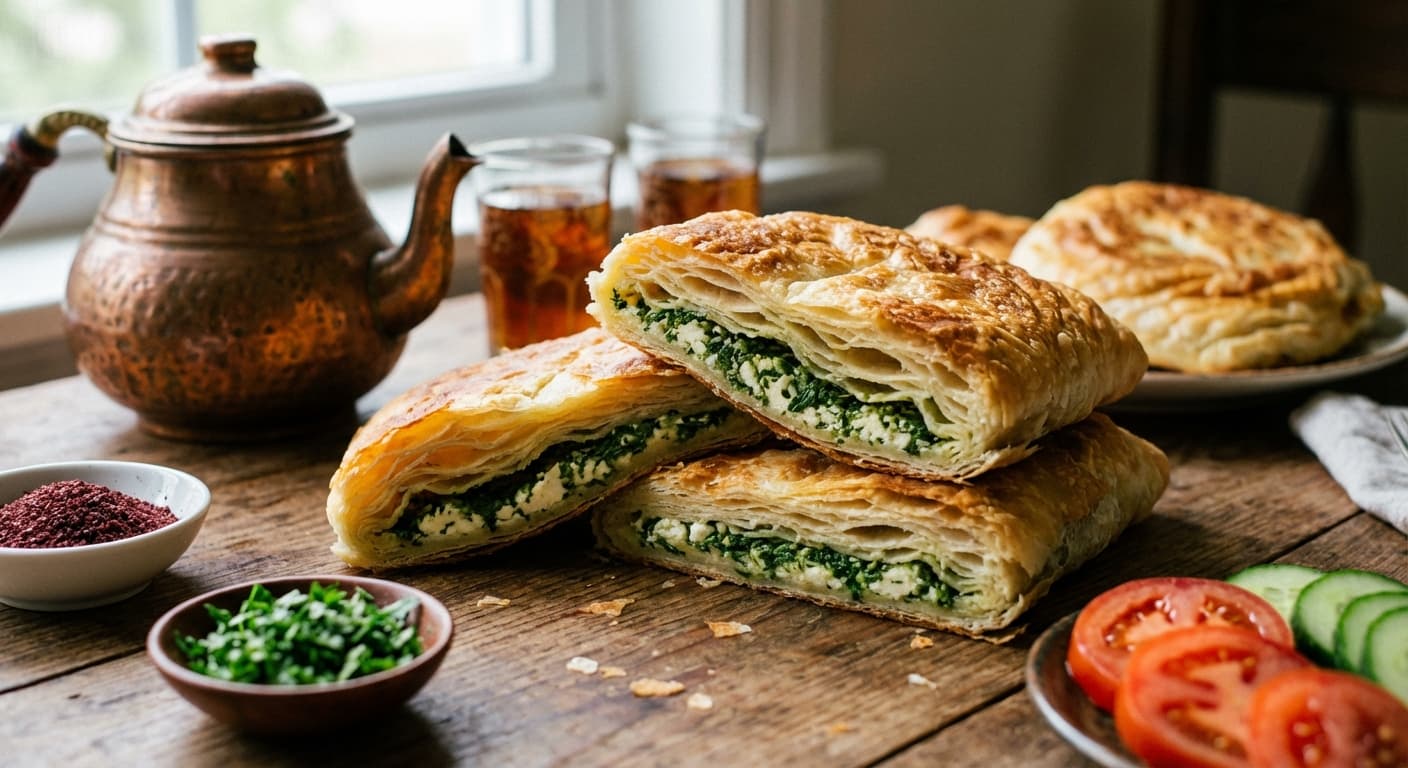
Bukme is a beloved Azerbaijani griddle pastry made from thin, layered dough wrapped around a fragrant herb filling. Often cooked on a saj or skillet, it’s a practical home food tied to spring greens and tea-table hospitality.
Printable Recipe Card
Servings: 6 · Total: 70 min · Difficulty: medium
Ingredients (quick list)
- 420 g all-purpose flour (plus 20 g for dusting)
- 6 g fine salt
- 240 ml warm water (about 40°C)
- 20 ml sunflower oil (for elasticity)
- 60 g unsalted butter (melted, for brushing layers)
- 120 g scallions (finely sliced)
- 50 g cilantro (finely chopped)
- 35 g dill (finely chopped)
- 35 g parsley (finely chopped)
- 10 g mint (finely chopped)
- 120 g spinach (finely chopped)
- 1 tsp ground black pepper
+ 1 more in the full ingredients section below.
Steps (summary)
- Make the dough by mixing the flour and salt in a large bowl until evenly distributed. Add the warm water and 20 ml sunflower oi…
- Cover the dough and let it rest for 20 minutes so the gluten relaxes and rolling becomes easier. While it rests, melt the butte…
- Prepare the herb filling by combining scallions, cilantro, dill, parsley, mint, and spinach in a bowl. Add 4 g salt, black pepp…
- Divide the rested dough into 6 equal pieces and roll each into a smooth ball on a lightly floured surface. Keep the balls cover…
- Roll one dough ball into a very thin round about 28–30 cm wide, dusting with flour only as needed. Brush the surface with about…
- Repeat the rolling, buttering, folding, and coiling with the remaining dough balls until you have 6 spirals. Rest the spirals f…
+ 4 more steps in the full instructions section below.
Cultural Background
Bukme is associated with everyday Azerbaijani home cooking, especially when markets overflow with spring herbs. Cooked on a saj or skillet, it reflects the region’s love of portable breads served with tea, cheese, and fresh vegetables.
Equipment
💡 Tips
- Dry the washed herbs well; aim for less than 10 ml visible moisture in the bowl to prevent soggy layers.
- If the dough springs back, rest it 5 more minutes before rolling; relaxed dough rolls thinner and layers better.
- Cook on medium heat for even browning; a surface temperature around 180–200°C gives crisp layers without scorching.
⚠️ Common Mistakes
❌ Overfilling so the seam opens during cooking.
✅ Fix: Keep a 1.5 cm border and use about 90–100 g filling per pastry; press and crimp the edge firmly before cooking.
❌ Dough tears while rolling thin.
✅ Fix: Rest the dough longer and dust lightly; roll from the center outward and avoid pressing too hard on the edges.
❌ Burnt spots with raw interior.
✅ Fix: Lower to medium heat and extend cooking time; aim for steady browning over 3–4 minutes per side.
🧊 How to Store
Cool completely, then wrap tightly and refrigerate up to 3 days. Reheat on a dry skillet over medium-low for 2–3 minutes per side to re-crisp the layers, or warm in a 180°C oven for 6–8 minutes; avoid microwaving to prevent softness.
📅 Make Ahead
You can mix and chop the herbs up to 12 hours ahead and refrigerate them well covered, then squeeze out any liquid before filling. The dough can be kneaded and rested, then refrigerated for up to 24 hours; bring to room temperature for 30 minutes before rolling.
🍽️ Pairs Well With
- Black tea
- ayran
- fresh tomatoes and cucumbers
- feta-style cheese
- pickled vegetables.
Regional Variations
- Some Azerbaijani households add 1 beaten egg (50 g) to the herb filling for a richer, set interior.
- In some regions, bukme is shaped into smaller triangles or rectangles for easier serving at gatherings.
- A pinch of dried fenugreek (0.5 tsp) is sometimes used to deepen the herb aroma.
Ingredients
- 420 gall-purpose flour (plus 20 g for dusting)
- 6 gfine salt
- 240 mlwarm water (about 40°C)
- 20 mlsunflower oil (for elasticity)
- 60 gunsalted butter (melted, for brushing layers)
- 120 gscallions (finely sliced)
- 50 gcilantro (finely chopped)
- 35 gdill (finely chopped)
- 35 gparsley (finely chopped)
- 10 gmint (finely chopped)
- 120 gspinach (finely chopped)
- 1 tspground black pepper
- 2 tspsumac (optional but traditional with herbs)
🔄 Substitutions
- unsalted butter→ ghee
- spinach→ Swiss chard
- sumac→ lemon zest
Instructions
- 1
Make the dough by mixing the flour and salt in a large bowl until evenly distributed. Add the warm water and 20 ml sunflower oil, then knead for 8 minutes until smooth and elastic; the dough should feel soft but not sticky.
- 2
Cover the dough and let it rest for 20 minutes so the gluten relaxes and rolling becomes easier. While it rests, melt the butter and keep it warm so it brushes on in a thin, even film.
- 3
Prepare the herb filling by combining scallions, cilantro, dill, parsley, mint, and spinach in a bowl. Add 4 g salt, black pepper, and sumac, then mix well and squeeze the herbs lightly once to reduce excess moisture without turning them wet.
- 4
Divide the rested dough into 6 equal pieces and roll each into a smooth ball on a lightly floured surface. Keep the balls covered with a towel so they do not dry out while you work.
- 5
Roll one dough ball into a very thin round about 28–30 cm wide, dusting with flour only as needed. Brush the surface with about 10 g of melted butter, then fold the round into a long strip and coil it into a tight spiral like a snail.
- 6
Repeat the rolling, buttering, folding, and coiling with the remaining dough balls until you have 6 spirals. Rest the spirals for 10 minutes under a towel so the layers set and the dough relaxes again.
- 7
Flatten one spiral gently with your palm, then roll it into a thin round about 22–24 cm wide. Spread one-sixth of the herb mixture evenly over half the round, leaving a 1.5 cm border so the filling stays sealed.
- 8
Fold the empty half over the filling to form a half-moon, then press the edges firmly to seal. Crimp the edge with your fingertips for a tighter seal, and lightly roll once over the top to even the thickness without tearing the layers.
- 9
Heat a large skillet over medium heat and add 5 ml sunflower oil, swirling to coat the surface. Cook the bukme for 3–4 minutes per side until golden with darker toasted spots, adjusting the heat so it cooks through without burning.
- 10
Transfer the cooked bukme to a rack or towel-lined plate so steam does not soften the crust. Repeat with the remaining pastries, using the remaining oil in small measured additions, then rest 5 minutes before slicing so the layers stay distinct.
🪪 Recipe Passport
Cultural Background
Bukme is associated with everyday Azerbaijani home cooking, especially when markets overflow with spring herbs. Cooked on a saj or skillet, it reflects the region’s love of portable breads served with tea, cheese, and fresh vegetables.
Regional Variations
Researched from multiple sources and validated by the Zaffaron editorial team. Every recipe is tested for accuracy, measurements, and cultural authenticity.
Nutrition per serving
Pairs well with
If you enjoyed this recipe, here are a few related Zaffaron recipes to try next.
Does your family make this differently?
Every family has their own version. Maybe your grandmother adds a secret ingredient, or your aunt has a completely different technique. Preserve your family's version — with their name on it, forever.
You Might Also Like
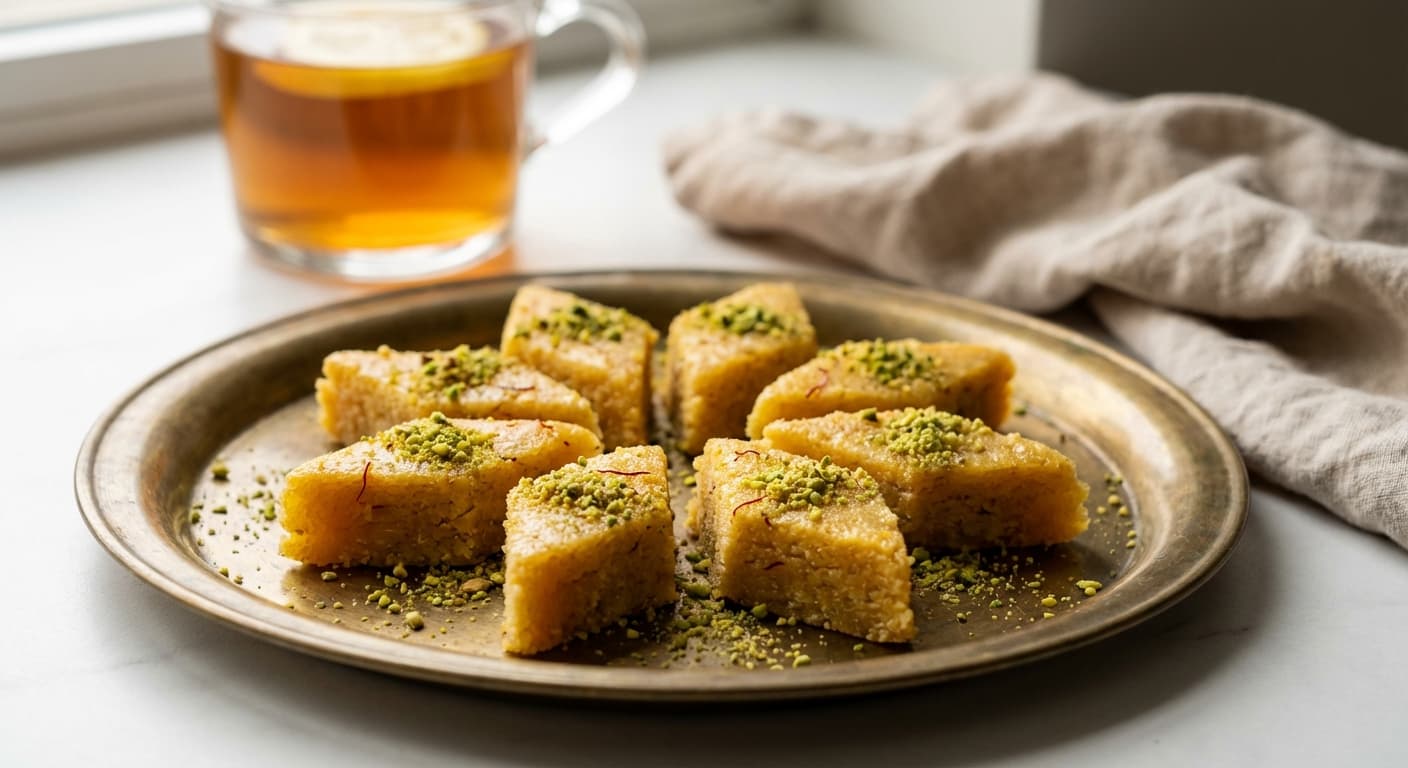
Badam Halva (بادام حلوا) — Azerbaijani Crumbly Almond Festival Sweet
Azerbaijani · Desserts · 45 min
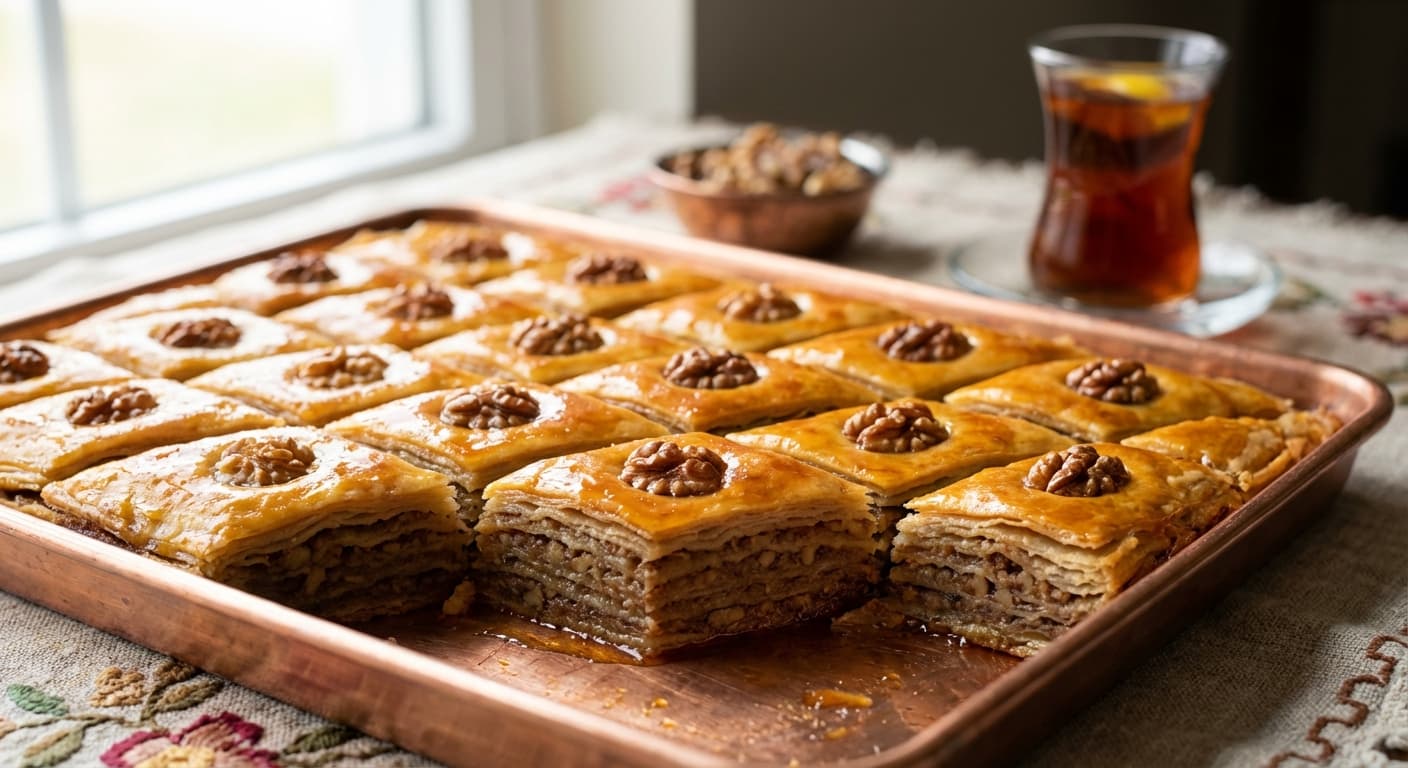
Baku Pakhlava (باكو پخلاوا) — Azerbaijani Diamond-layer pastry with nuts and saffron syrup
Azerbaijani · Desserts · 115 min
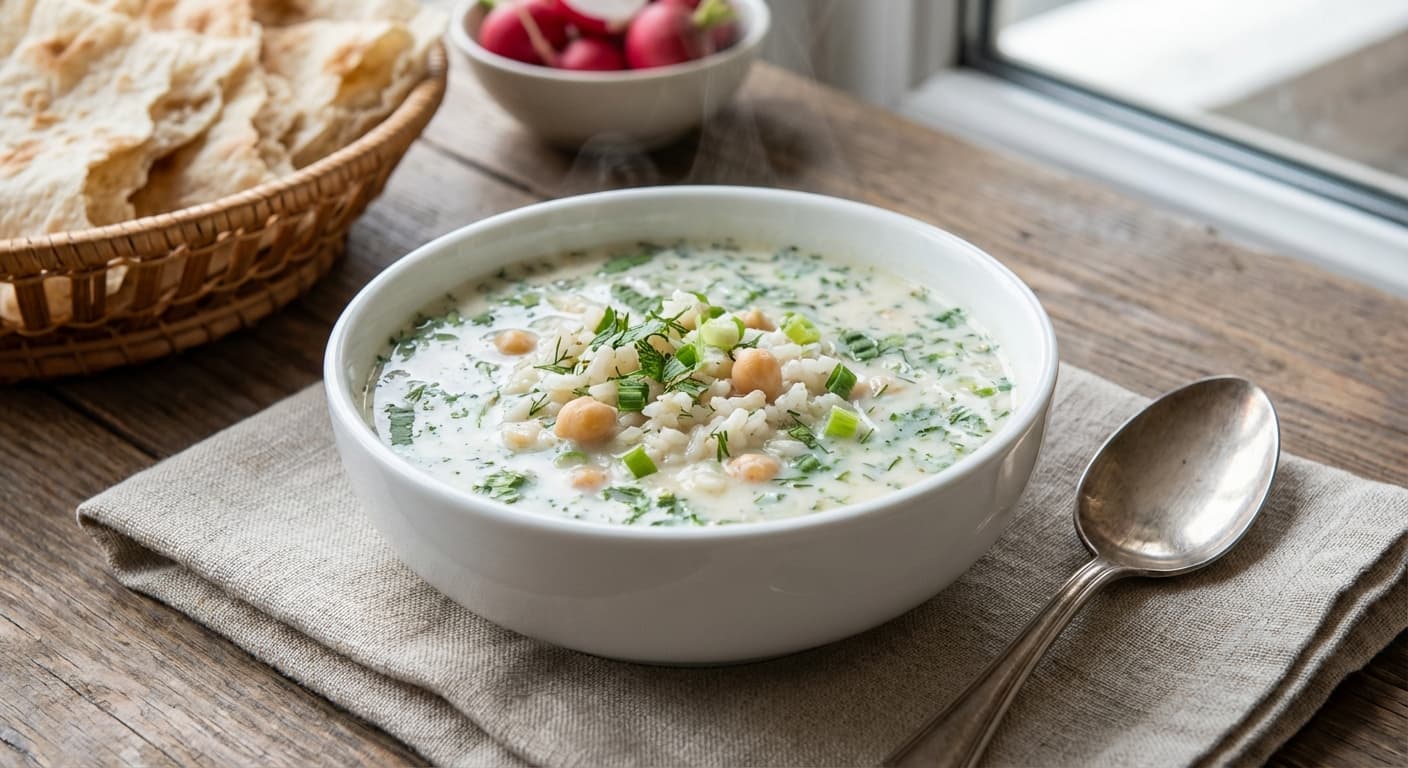
Hot Dovgha (دوغا) — Azerbaijani Warm Yogurt-Herb Soup with Rice and Chickpeas
Azerbaijani · Soups · 55 min
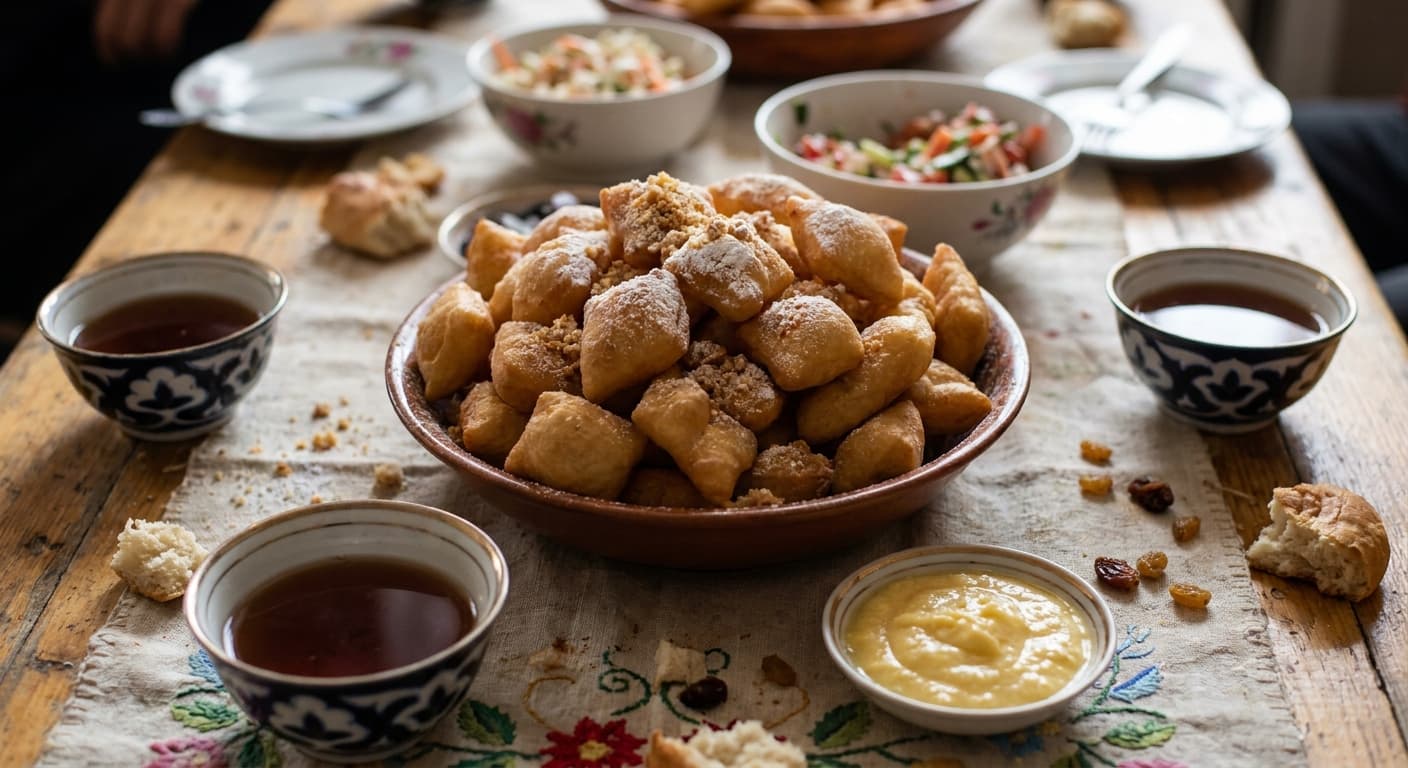
Boorsok (Боорсок) — Kyrgyz Fried Celebration Bread
Kyrgyz · Breads · 120 min
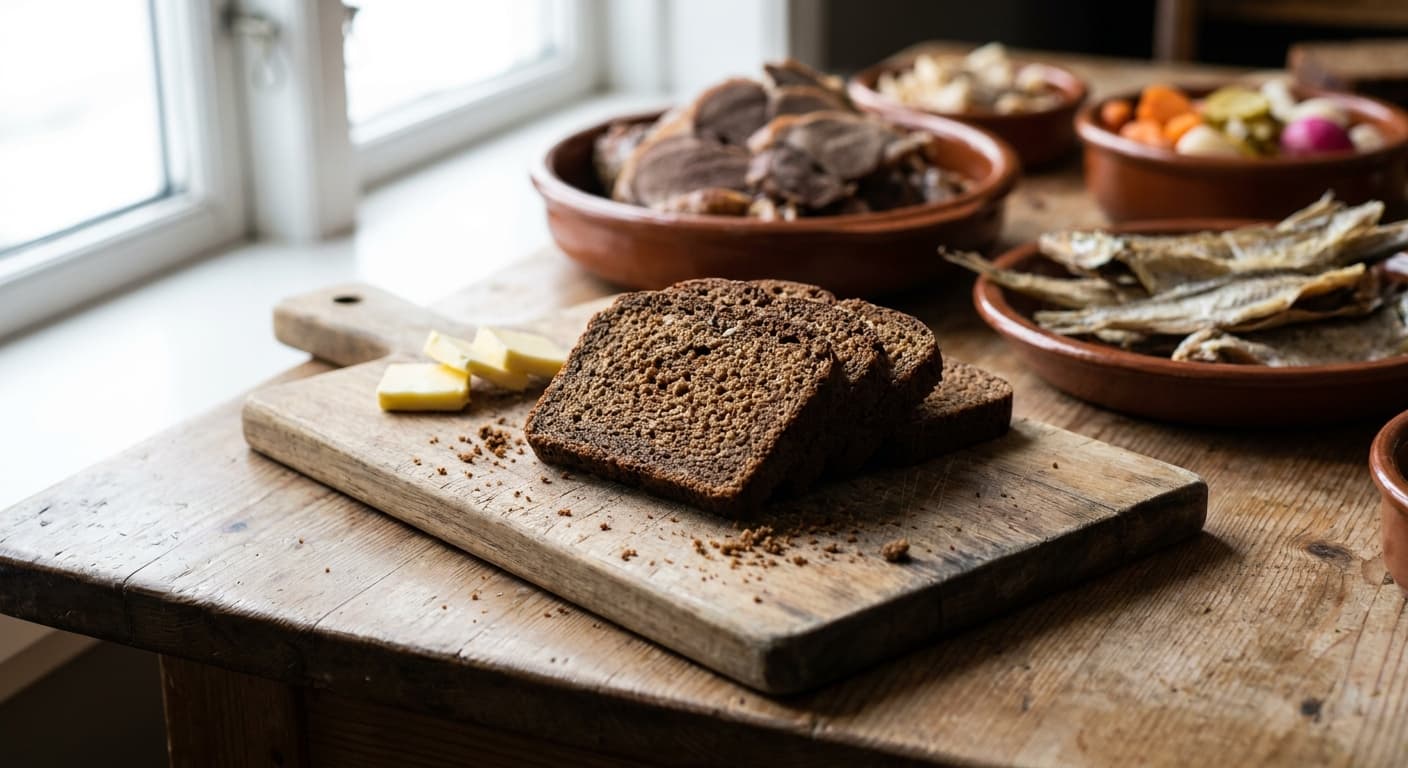
Icelandic Rye Bread (Rúgbrauð) — Dense Geothermal-Style Rye Loaf
Icelandic · Breads · 440 min
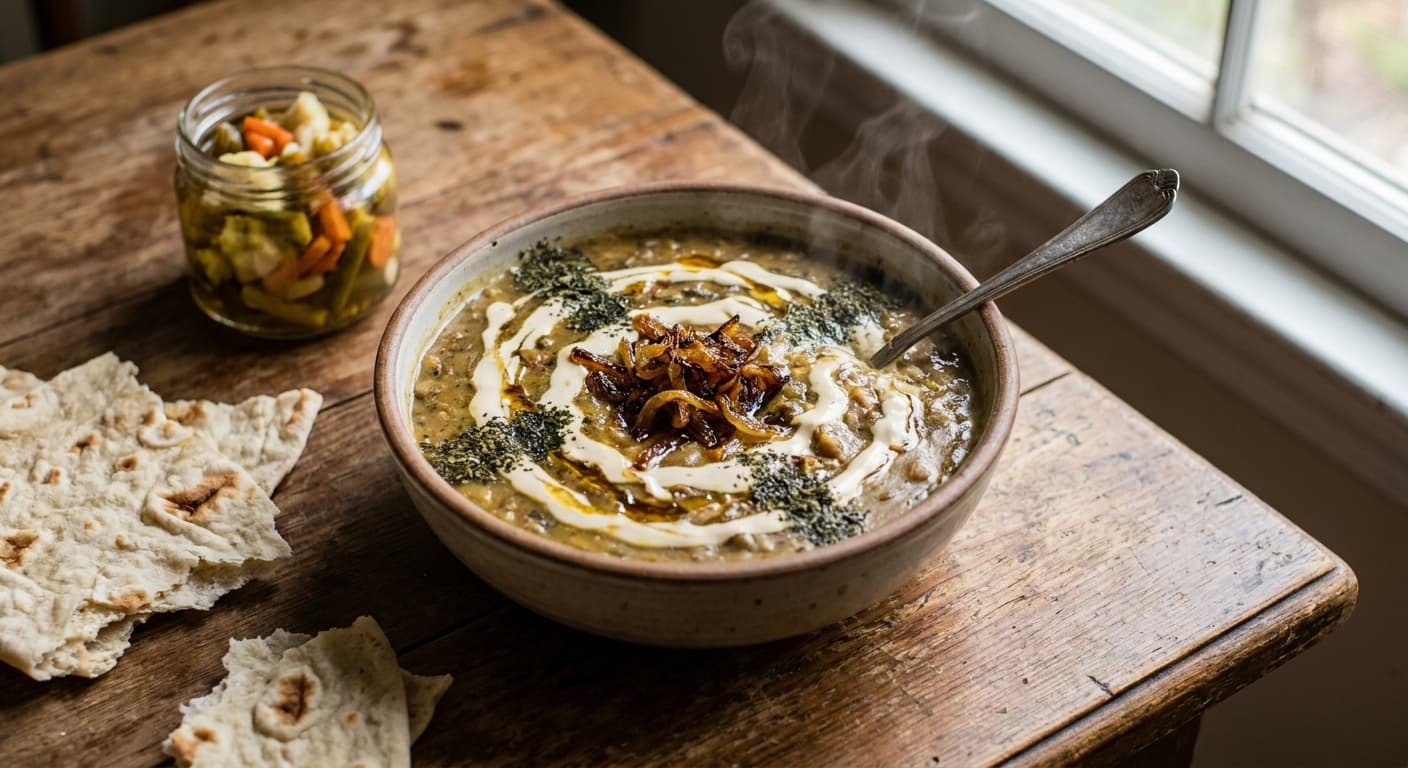
Ash-e Sak (آش ساک) — Gorgani Spinach and Lamb Ash
Persian · Soups · 175 min
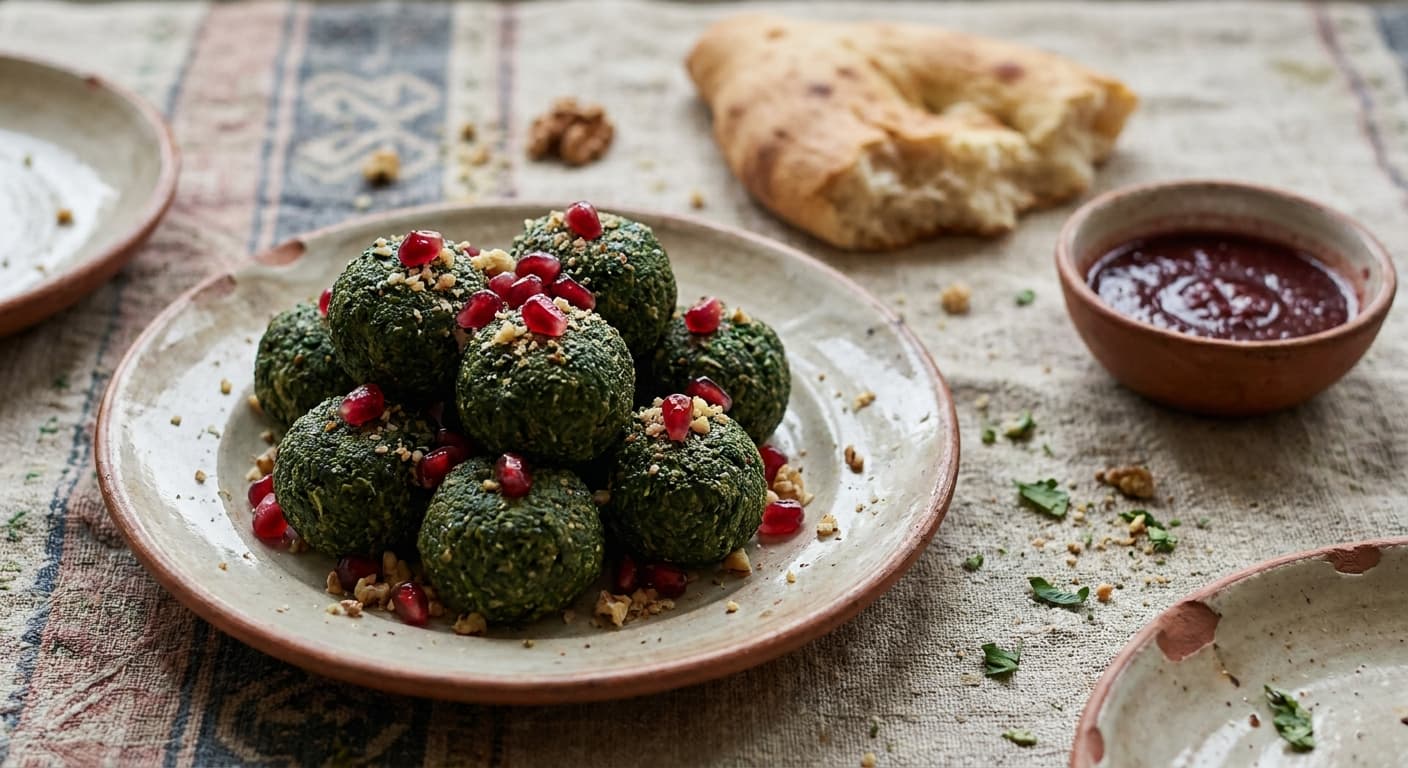
Pkhali (ფხალი) — Georgian Spinach-Walnut Appetizer
Georgian · Appetizers · 35 min
Indonesian Grilled Chicken (Ayam Bakar) — Sweet Soy-Spiced Charred Chicken
Indonesian · Main Courses · 85 min
Reviews
Cooked this recipe?
Tap the stars to rate it — that's all it takes. A few words are welcome but optional.
No ratings yet. Cooked this one? Be the first to rate it — it takes one tap.