Hamaguri Ushio-jiru (蛤潮汁) — Japanese Clear Clam Soup
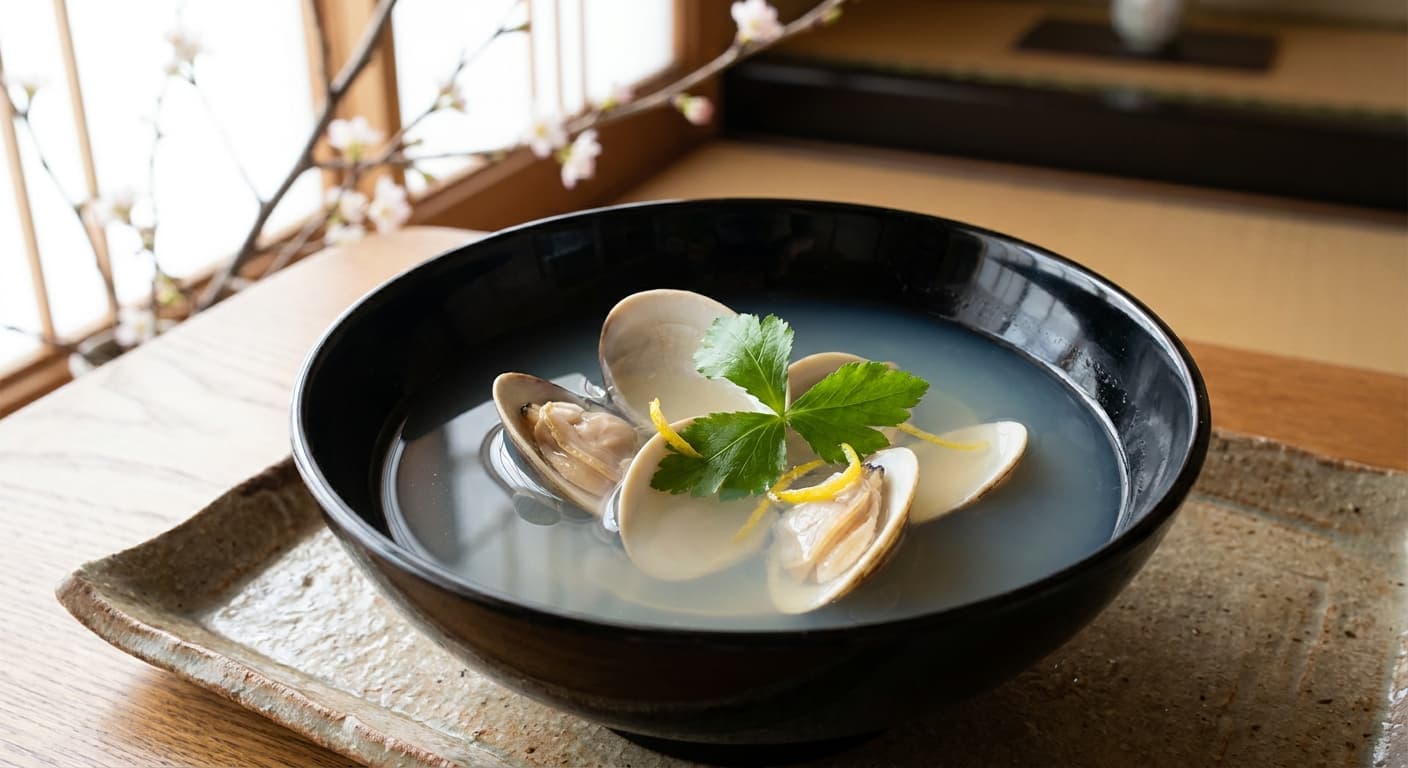
Hamaguri ushio-jiru is a refined Japanese clear soup made with clams, kombu, sake, and salt. It is especially associated with spring meals and Hinamatsuri, where paired clam shells symbolize harmony.
Printable Recipe Card
Servings: 4 · Total: 62 min · Difficulty: easy
Ingredients (quick list)
- 12 hamaguri clams (live, shells scrubbed)
- 1900 water (1 l for the purging brine, 900 ml for the soup)
- 34 fine sea salt (30 g for the purging brine, 4 g for seasoning)
- 10 g kombu (wiped gently with a barely damp cloth)
- 30 ml sake
- 5 ml usukuchi soy sauce (light-colored Japanese soy sauce)
- 4 sprig mitsuba
- 2 g yuzu zest (cut into very fine strips)
Steps (summary)
- Dissolve 30 g fine sea salt in 1 l water to make a 3 percent brine, then place the scrubbed clams in it. Leave them in a cool,…
- Rinse the clams under cold running water and rub the shells against one another to remove any grit from the ridges. Discard any…
- Put 900 ml water and the kombu in a medium saucepan and let it stand for 10 minutes before heating. Warm it slowly over medium-…
- Add the purged clams and sake to the kombu-infused water and bring the soup to a gentle simmer over medium heat. Skim any foam…
- As soon as the clams open, transfer them to warm soup bowls, dividing them evenly with 3 clams per serving. Do not continue boi…
- Season the broth with 4 g fine sea salt and 5 ml usukuchi soy sauce, then simmer for 1 minute to integrate the seasoning. Taste…
+ 1 more steps in the full instructions section below.
Cultural Background
In Japan, hamaguri clams are prized for ceremonial meals because the two shells fit only with their original partner. This symbolism makes the soup especially meaningful for Hinamatsuri and spring family celebrations.
Equipment
💡 Tips
- Use live, heavy clams with tightly closed shells for the cleanest flavor and safest result.
- Keep the soup at a gentle simmer rather than a rolling boil to preserve the clarity of the broth.
- Add yuzu zest at the very end so its citrus aroma floats above the hot broth instead of disappearing into it.
⚠️ Common Mistakes
❌ Boiling the kombu hard.
✅ Fix: Remove the kombu just before the water reaches a simmer to keep the broth clean-tasting and free of bitterness.
❌ Skipping the clam purging step.
✅ Fix: Soak the clams in a 3 percent salt brine for at least 30 minutes so grit settles out before cooking.
❌ Cooking clams long after they open.
✅ Fix: Move each opened clam to the serving bowls promptly, then finish seasoning the broth separately.
🧊 How to Store
This soup is best served immediately. Refrigerate leftovers in a covered container for up to 1 day, storing clams in the broth. Reheat gently below a boil and discard any clams that never opened during cooking.
📅 Make Ahead
The clams can be scrubbed and purged up to 4 hours ahead, then refrigerated under a damp towel. The kombu can be soaked in the measured water for 30 minutes before cooking.
🍽️ Pairs Well With
- Steamed rice
- chirashi sushi
- grilled fish
- seasonal pickles
- spinach ohitashi.
Regional Variations
- Some Kansai-style versions keep the seasoning very pale with salt only and omit soy sauce entirely.
- A more aromatic spring presentation may add a tiny strip of kinome or extra yuzu zest just before serving.
- For a formal meal, the clams may be arranged in their paired shells to emphasize the ceremonial symbolism.
Ingredients
- 12hamaguri clams (live, shells scrubbed)
- 1900water (1 l for the purging brine, 900 ml for the soup)
- 34fine sea salt (30 g for the purging brine, 4 g for seasoning)
- 10 gkombu (wiped gently with a barely damp cloth)
- 30 mlsake
- 5 mlusukuchi soy sauce (light-colored Japanese soy sauce)
- 4 sprigmitsuba
- 2 gyuzu zest (cut into very fine strips)
🔄 Substitutions
- hamaguri clams→ littleneck clams
- mitsuba→ flat-leaf parsley
- yuzu zest→ lemon zest
- usukuchi soy sauce→ regular Japanese soy sauce
Instructions
- 1
Dissolve 30 g fine sea salt in 1 l water to make a 3 percent brine, then place the scrubbed clams in it. Leave them in a cool, dark place for 30 to 45 minutes so they expel sand, then lift them out rather than pouring the sandy brine over them.
- 2
Rinse the clams under cold running water and rub the shells against one another to remove any grit from the ridges. Discard any clam with a cracked shell, any clam that smells unpleasant, or any open clam that does not close when tapped.
- 3
Put 900 ml water and the kombu in a medium saucepan and let it stand for 10 minutes before heating. Warm it slowly over medium-low heat and remove the kombu just before the liquid reaches a simmer, because boiling kombu can make the broth slimy and bitter.
- 4
Add the purged clams and sake to the kombu-infused water and bring the soup to a gentle simmer over medium heat. Skim any foam from the surface with a ladle so the finished ushio-jiru stays clear and elegant.
- 5
As soon as the clams open, transfer them to warm soup bowls, dividing them evenly with 3 clams per serving. Do not continue boiling the opened clams, because even a few extra minutes can make them tough and rubbery.
- 6
Season the broth with 4 g fine sea salt and 5 ml usukuchi soy sauce, then simmer for 1 minute to integrate the seasoning. Taste the broth carefully, remembering that the clams have already contributed natural salinity.
- 7
Ladle the hot clear broth over the clams in each bowl. Garnish each serving with 1 sprig of mitsuba and a small pinch of yuzu zest, then serve immediately while the fragrance is at its freshest.
🪪 Recipe Passport
Cultural Background
In Japan, hamaguri clams are prized for ceremonial meals because the two shells fit only with their original partner. This symbolism makes the soup especially meaningful for Hinamatsuri and spring family celebrations.
Regional Variations
Researched from multiple sources and validated by the Zaffaron editorial team. Every recipe is tested for accuracy, measurements, and cultural authenticity.
📚 Sources & Cultural References
- Shizuo Tsuji — Japanese Cooking: A Simple Art — (1980)
- Elizabeth Andoh — Washoku: Recipes from the Japanese Home Kitchen — (2005)
Sources cited by the Zaffaron editorial team during recipe research. Cultural and culinary references supporting authenticity claims.
Nutrition per serving
Pairs well with
If you enjoyed this recipe, here are a few related Zaffaron recipes to try next.
Does your family make this differently?
Every family has their own version. Maybe your grandmother adds a secret ingredient, or your aunt has a completely different technique. Preserve your family's version — with their name on it, forever.
You Might Also Like

Kakigori (かき氷) — Japanese Shaved Ice with Strawberry Syrup
Japanese · Desserts · 50 min
Chazuke (茶漬け) — Japanese Tea-Poured Rice with Grilled Salmon
Japanese · Rice Dishes · 35 min
Onsen Tamago (温泉卵) — Silky Japanese Hot-Spring Egg
Japanese · Side Dishes · 40 min
Uzbek Shurpa (Шўрпа) — Lamb and Vegetable Soup
Uzbek · Soups · 160 min
Begova Corba (Begova čorba) — Bosnian Chicken and Okra Soup
Bosnian · Soups · 110 min
Har Gow Shrimp Dumplings (虾饺) — Translucent Cantonese Dim Sum
Chinese · Appetizers · 68 min
Galbi Jjim (갈비찜) — Korean Braised Short Ribs
Korean · Main Courses · 175 min
Buckwheat Žganci (Ajdovi žganci) — Slovenian Buckwheat Crumbs with Cracklings
Slovenian · Side Dishes · 45 min
Reviews
Cooked this recipe?
Tap the stars to rate it — that's all it takes. A few words are welcome but optional.
No ratings yet. Cooked this one? Be the first to rate it — it takes one tap.