Kakigori (かき氷) — Japanese Shaved Ice with Strawberry Syrup
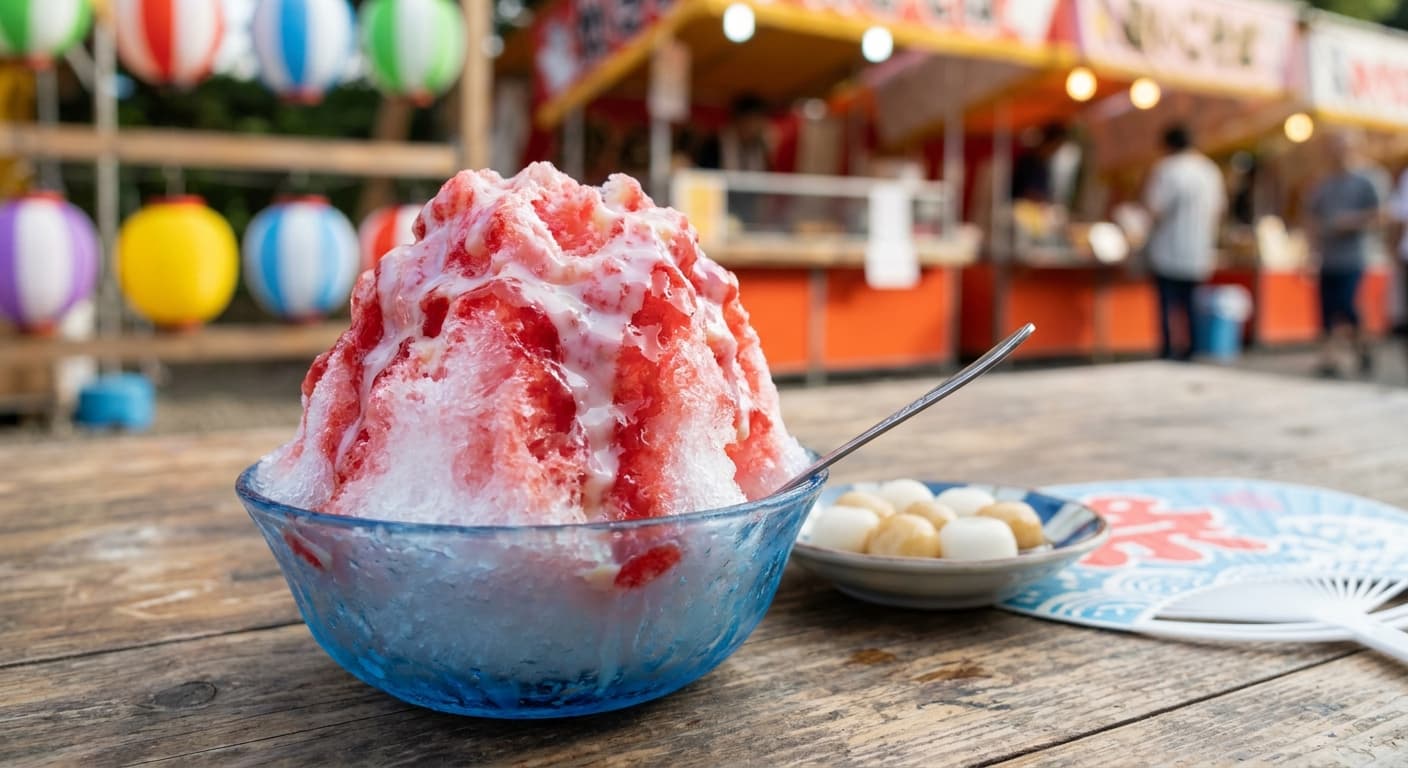
Kakigori is Japan’s beloved summer shaved-ice dessert, served at festivals, beach stalls, cafes, and family tables. This version uses fresh strawberry syrup, condensed milk, red bean paste, and chewy shiratama dumplings.
Printable Recipe Card
Servings: 4 · Total: 50 min · Difficulty: medium
Ingredients (quick list)
- 300 g fresh strawberries (hulled and quartered)
- 120 g granulated sugar
- 45 ml water
- 15 ml fresh lemon juice
- 1 g fine sea salt
- 80 g shiratama-ko glutinous rice flour
- 500 ml cold water (for cooling cooked dumplings)
- 900 g clear ice (made from filtered water if possible)
- 80 ml sweetened condensed milk
- 120 g tsubuan sweet red bean paste
Steps (summary)
- Make the strawberry syrup first so it has time to cool fully. Combine the strawberries, sugar, 45 ml water, lemon juice, and sa…
- Set the saucepan over medium heat and bring the mixture to a gentle simmer. Cook for 6 minutes, stirring and lightly crushing t…
- Remove the pan from the heat and cool the syrup for 15 minutes, then refrigerate it until cold. For a smoother syrup, pass half…
- Prepare the shiratama dumplings while the syrup chills. Put the shiratama-ko in a bowl, add the 70 ml water gradually, and knea…
- Divide the dough into 16 small dumplings and press a shallow dimple into the center of each one so they cook evenly. Boil 1.5 l…
- Transfer the cooked dumplings to 500 ml cold water and let them cool for 5 minutes. Drain them well just before serving, becaus…
+ 4 more steps in the full instructions section below.
Cultural Background
Kakigori is strongly tied to Japanese summers, especially festival stalls, fireworks nights, and seaside shops. Its appeal lies in transforming simple ice and syrup into a seasonal treat that feels cooling, nostalgic, and communal.
Equipment
💡 Tips
- Use a block-style shaved-ice machine if available; it produces a finer, snowier texture than a blender or crushed-ice machine.
- Chill the syrup thoroughly before serving, because warm syrup melts the ice too quickly and makes the dessert watery.
- Do not pack the shaved ice into the bowl; a light mound absorbs syrup better and gives kakigori its signature airy texture.
⚠️ Common Mistakes
❌ Using crushed ice instead of shaved ice.
✅ Fix: Use a proper shaved-ice machine and tempered ice so the texture is fine, light, and snow-like.
❌ Pouring warm syrup over the ice.
✅ Fix: Chill the syrup completely before assembly so it flavors the ice without melting it immediately.
❌ Overworking the shiratama dough or adding all the water at once.
✅ Fix: Add water gradually and knead only until the dough is smooth, soft, and pliable.
🧊 How to Store
Store strawberry syrup in an airtight jar in the refrigerator for up to 5 days. Keep cooked shiratama in cold water for up to 6 hours, then drain before serving. Do not store assembled kakigori, as the shaved ice melts quickly.
📅 Make Ahead
Make the strawberry syrup up to 5 days ahead and keep it refrigerated. Shiratama can be cooked earlier the same day, but shave the ice and assemble only at the moment of serving.
🍽️ Pairs Well With
- Green tea
- roasted barley tea
- extra shiratama dumplings
- sweet red bean paste
- fresh sliced strawberries.
Regional Variations
- Uji kintoki uses matcha syrup, sweet red bean paste, and often shiratama dumplings.
- Shirokuma from Kagoshima is topped with condensed milk, fruit, and sweet beans.
- Okinawan zenzai style serves shaved ice over sweetened beans, often with chewy rice dumplings.
- Festival-style kakigori is often simpler, using brightly colored syrups such as melon, lemon, strawberry, or blue Hawaii.
Ingredients
- 300 gfresh strawberries (hulled and quartered)
- 120 ggranulated sugar
- 45 mlwater
- 15 mlfresh lemon juice
- 1 gfine sea salt
- 80 gshiratama-ko glutinous rice flour
- 500 mlcold water (for cooling cooked dumplings)
- 900 gclear ice (made from filtered water if possible)
- 80 mlsweetened condensed milk
- 120 gtsubuan sweet red bean paste
🔄 Substitutions
- fresh strawberries→ frozen strawberries
- sweetened condensed milk→ sweetened condensed coconut milk
- tsubuan sweet red bean paste→ smooth koshian red bean paste
Instructions
- 1
Make the strawberry syrup first so it has time to cool fully. Combine the strawberries, sugar, 45 ml water, lemon juice, and salt in a small saucepan, stir well, and let the fruit macerate for 10 minutes until the sugar begins drawing out the juices.
- 2
Set the saucepan over medium heat and bring the mixture to a gentle simmer. Cook for 6 minutes, stirring and lightly crushing the berries, until the syrup is glossy and the fruit has softened but still tastes fresh.
- 3
Remove the pan from the heat and cool the syrup for 15 minutes, then refrigerate it until cold. For a smoother syrup, pass half of it through a fine sieve and stir it back into the chunky portion so the kakigori has both bright syrup and small fruit pieces.
- 4
Prepare the shiratama dumplings while the syrup chills. Put the shiratama-ko in a bowl, add the 70 ml water gradually, and knead until the dough feels like a soft earlobe and holds together without cracking.
- 5
Divide the dough into 16 small dumplings and press a shallow dimple into the center of each one so they cook evenly. Boil 1.5 l water in a small pot, add the dumplings, and cook for about 3 minutes after they float to the surface.
- 6
Transfer the cooked dumplings to 500 ml cold water and let them cool for 5 minutes. Drain them well just before serving, because leaving them in water too long dulls their flavor and makes the surface too slippery for the syrup.
- 7
Temper the ice for 5 minutes at room temperature if it is very hard from the freezer. This slight softening helps the shaving machine create fine, fluffy ice rather than brittle shards.
- 8
Chill 4 serving bowls for 10 minutes, then divide the red bean paste among them. Shave about 225 g ice into each bowl, building a loose mound without pressing it down, because compacting the ice makes the texture heavy.
- 9
Spoon the cold strawberry syrup over each mound, letting it run naturally through the shaved ice. Drizzle each serving with 20 ml condensed milk and finish with 4 shiratama dumplings around the side.
- 10
Serve immediately with a spoon before the ice collapses. Kakigori is best eaten as soon as it is assembled, when the contrast between fluffy ice, thick syrup, creamy milk, red bean paste, and chewy dumplings is at its peak.
🪪 Recipe Passport
Cultural Background
Kakigori is strongly tied to Japanese summers, especially festival stalls, fireworks nights, and seaside shops. Its appeal lies in transforming simple ice and syrup into a seasonal treat that feels cooling, nostalgic, and communal.
Regional Variations
Researched from multiple sources and validated by the Zaffaron editorial team. Every recipe is tested for accuracy, measurements, and cultural authenticity.
📚 Sources & Cultural References
- Japan National Tourism Organization — Official Japan travel food coverage on kakigori and summer festival foods
- Elizabeth Andoh — Washoku: Recipes from the Japanese Home Kitchen — (2005)
Sources cited by the Zaffaron editorial team during recipe research. Cultural and culinary references supporting authenticity claims.
Nutrition per serving
Pairs well with
If you enjoyed this recipe, here are a few related Zaffaron recipes to try next.
Does your family make this differently?
Every family has their own version. Maybe your grandmother adds a secret ingredient, or your aunt has a completely different technique. Preserve your family's version — with their name on it, forever.
You Might Also Like
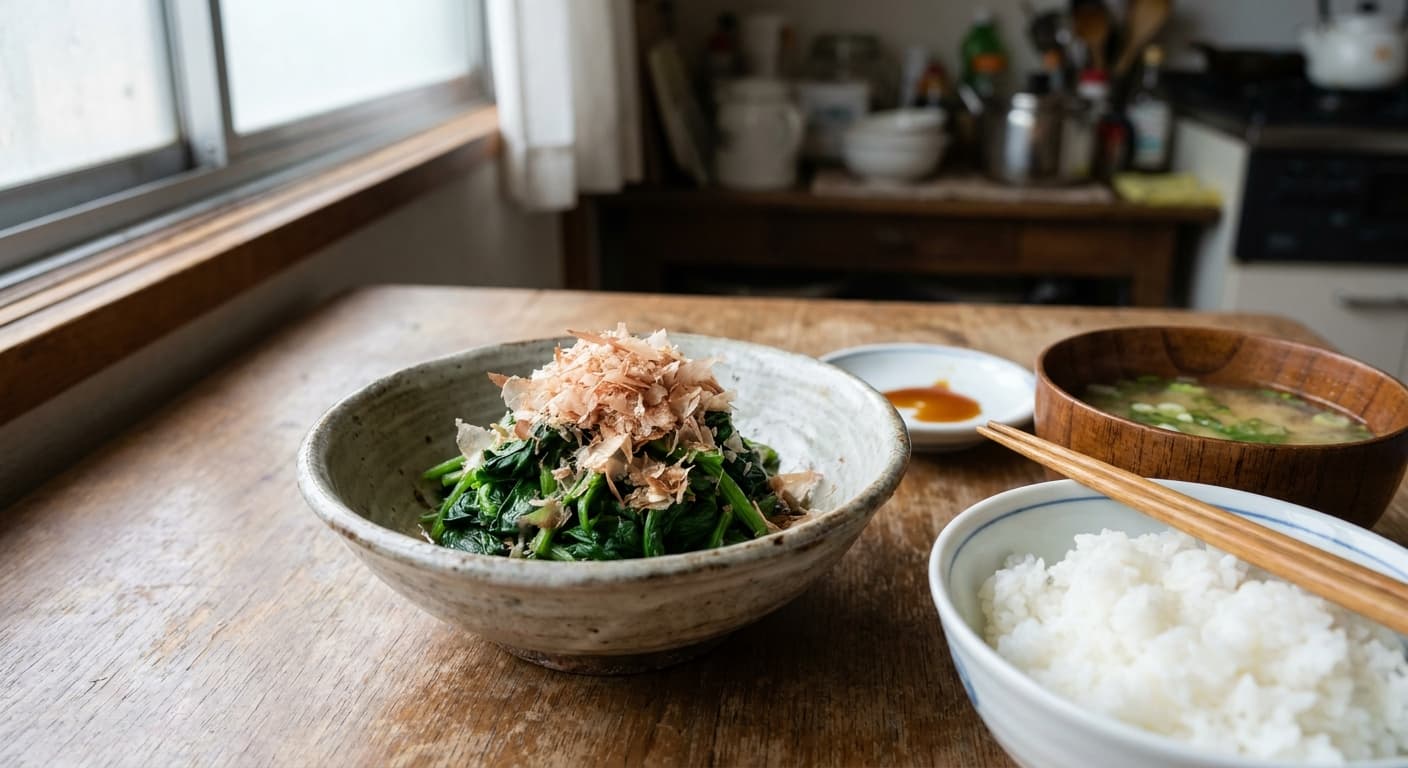
Ohitashi (お浸し) — Japanese Dashi-Soaked Greens
Japanese · Side Dishes · 20 min
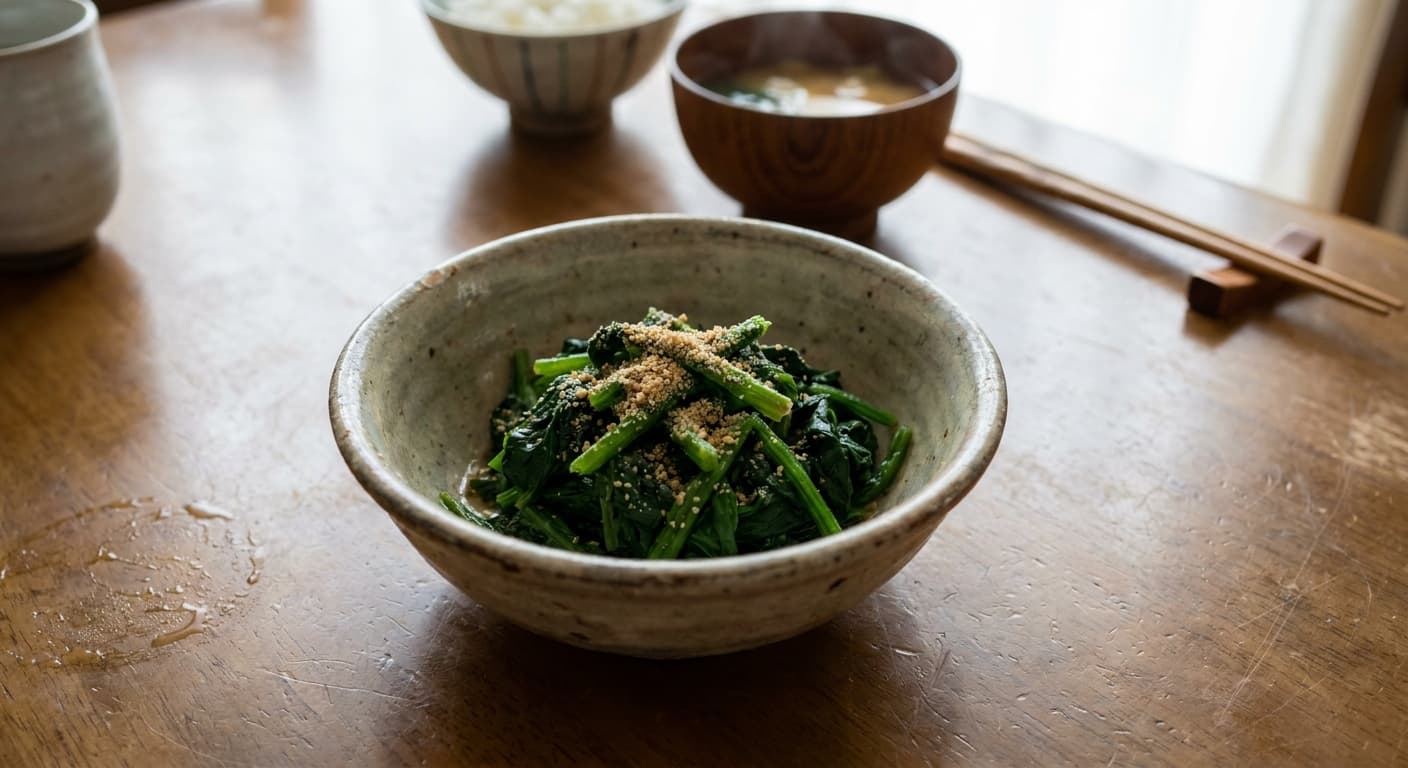
Gomaae (ごまあえ) — Japanese Spinach with Sesame Dressing
Japanese · Side Dishes · 18 min
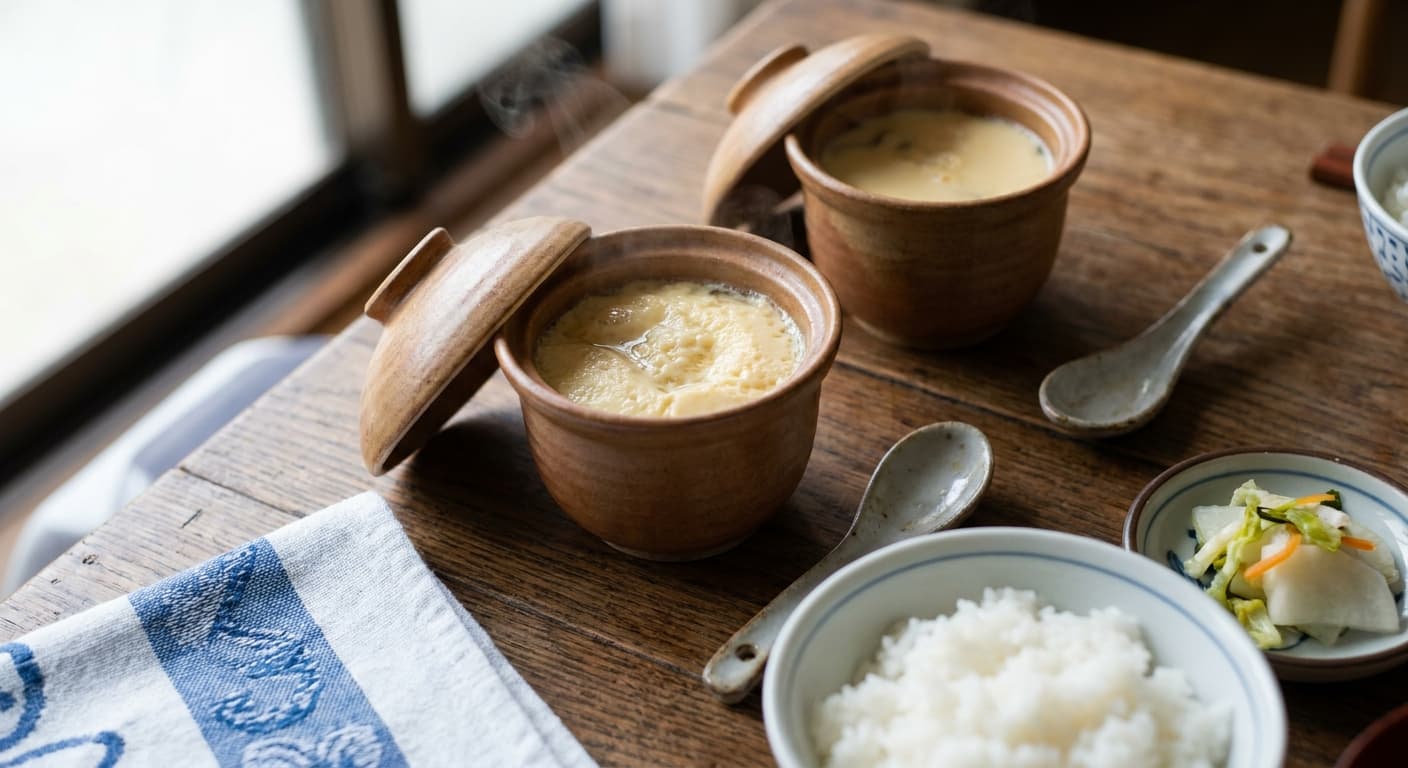
Chawanmushi (茶碗蒸し) — Silky Japanese Savory Egg Custard
Japanese · Appetizers · 43 min
Brigadeiro (Brigadeiro) — Brazilian Chocolate Party Truffles
Brazilian · Desserts · 37 min

Crème Brûlée (Crème brûlée) — Classic Vanilla Custard with Caramelized Sugar
French · Desserts · 60 min
Buddha Jumps Over the Wall (佛跳墙) — Fujian Banquet Treasure Soup
Chinese · Soups · 540 min
Kongnamul Muchim (콩나물무침) — Korean Seasoned Soybean Sprout Banchan
Korean · Side Dishes · 16 min
Dongpo Pork (东坡肉) — Hangzhou Red-Braised Pork Belly
Chinese · Main Courses · 205 min
Reviews
Cooked this recipe?
Tap the stars to rate it — that's all it takes. A few words are welcome but optional.
No ratings yet. Cooked this one? Be the first to rate it — it takes one tap.