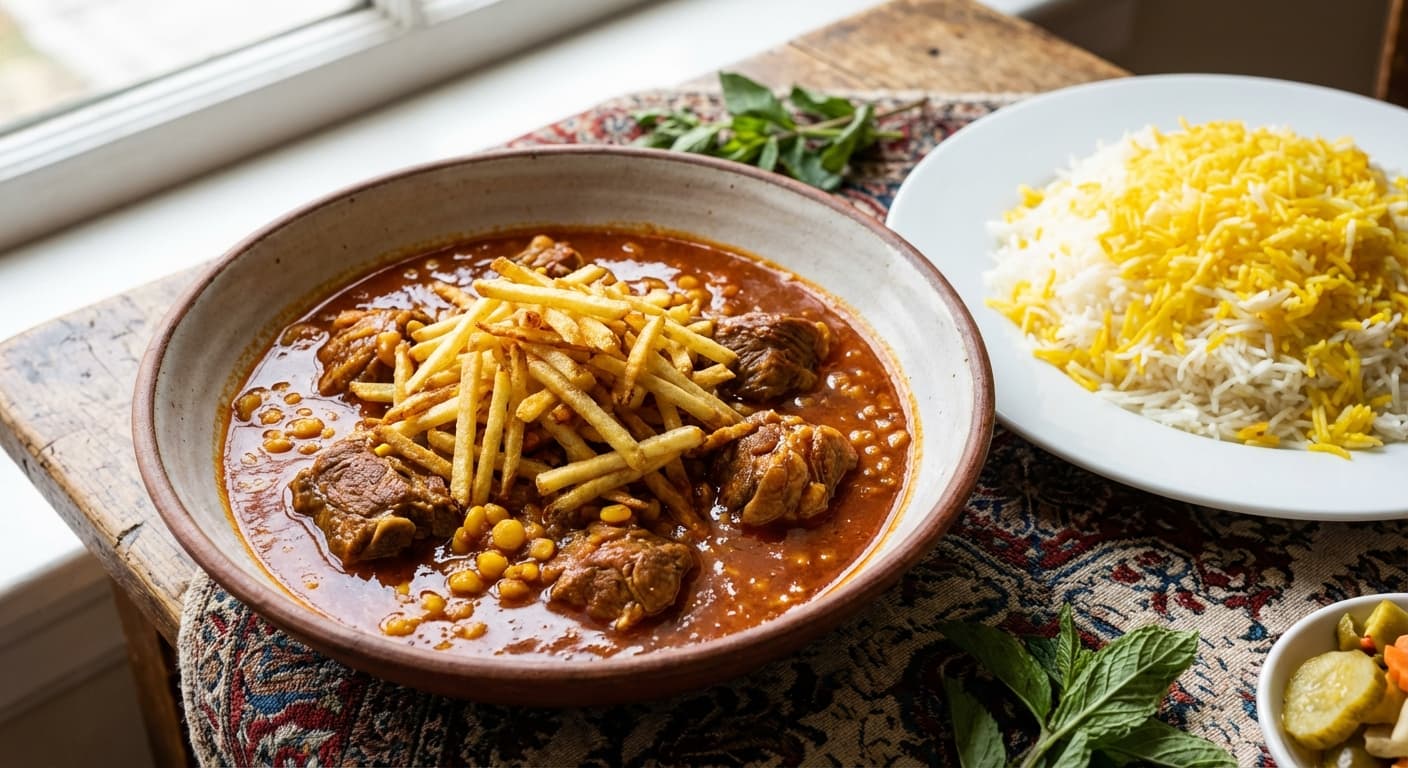
Khoresh-e Gheimeh (قیمه) — Persian Split Pea and Lamb Stew
A technique-forward Persian khoresh built on golden fried onions, slow-simmered lamb, split peas, and balanced sour notes. Learn timing, heat control, and oil separation for a glossy, restaurant-style stew at home.
Printable Recipe Card
Servings: 6 · Total: 180 min · Difficulty: medium
Ingredients (quick list)
- 450 g Yellow onions (thinly sliced into half-moons)
- 90 ml Neutral cooking oil (such as sunflower or canola, divided)
- 8 g Fine salt (divided, plus more to taste)
- 700 g Lamb shoulder (boneless, cut into 3 cm cubes)
- 3 tsp Ground turmeric (divided)
- 1 tsp Ground black pepper
- 60 g Tomato paste (about 4 tbsp)
- 180 g Dried split peas (rinsed until water runs mostly clear)
- 3 Dried Persian lime (pierced 4–5 times each with a skewer)
- 30 ml Fresh lemon juice (about 2 tbsp, to adjust sourness at the end)
- 0.5 tsp Ground cinnamon (optional, for warmth)
- 1200 ml Water (hot, plus more as needed)
+ 1 more in the full ingredients section below.
Steps (summary)
- Make the fried onion base: heat 90 ml oil in a heavy pot over medium heat. Add sliced onions and 4 g salt. Cook 18–25 minutes,…
- Build flavor layers: push onions aside and raise heat to medium-high. Add lamb and sear 6–8 minutes, turning to brown lightly.…
- Roast the tomato paste: clear a small spot in the pot, add tomato paste, and fry 3–4 minutes, stirring constantly, until darker…
- Add split peas at the right time: stir in rinsed split peas and the remaining 1 tsp turmeric. Simmer partially covered for 45–5…
- Balance sourness without bitterness: add pierced dried limes, cinnamon (if using), and the remaining 4 g salt. Simmer 25–35 min…
- Fry the potato topping: while the stew finishes, soak potato matchsticks in cold water 10 minutes, then drain and pat very dry.…
+ 2 more steps in the full instructions section below.
Cultural Background
Khoresh stews are a central part of Persian home cooking, commonly served with rice and prepared through slow simmering that develops layered flavor. Gheimeh is widely associated with family meals and gatherings, and it is also prepared in some communities for large-scale communal cooking during events.
Equipment
💡 Tips
- For deeper flavor, cook the onions slower rather than darker; bitter onion can flatten the stew.
- Always fry tomato paste in oil until it darkens; this removes raw acidity and boosts color.
- Keep the simmer gentle; hard boiling breaks meat fibers and turns split peas grainy.
- Pierce dried limes so they release flavor gradually; removing them early prevents bitterness.
- If the stew looks thin, reduce uncovered at the end instead of adding flour or starch.
⚠️ Common Mistakes
❌ Browning onions too fast on high heat
💡 Why: Fast browning can create bitterness and uneven sweetness, weakening the stew’s base.
✅ Fix: Use medium heat and stir often for 18–25 minutes; lower heat whenever edges darken ahead of the rest.
❌ Skipping the tomato paste fry step
💡 Why: Uncooked paste tastes raw and acidic, and the stew color stays dull.
✅ Fix: Fry paste in oil for 3–4 minutes until darker and aromatic before adding water.
❌ Boiling the stew aggressively
💡 Why: Hard boiling toughens meat and breaks split peas into a gritty texture, making the stew cloudy.
✅ Fix: Keep a gentle simmer with small bubbles; partially cover and stir regularly to prevent sticking.
❌ Leaving dried limes in too long when they turn bitter
💡 Why: Over-extraction from dried lime pith can dominate the stew with harsh bitterness.
✅ Fix: Pierce limes, taste after 20 minutes, and remove if bitterness appears; adjust sourness with lemon juice at the end.
🧊 How to Store
Cool to room temperature within 2 hours, then refrigerate in a sealed container up to 4 days. Reheat gently over low heat with 60–120 ml water as needed. Freeze stew (without potatoes) up to 3 months; thaw overnight in the refrigerator. Fry fresh potatoes for serving.
📅 Make Ahead
Cook the stew 1 day ahead; refrigerate overnight to let flavors meld and fat rise for easy removal if desired. Reheat slowly over low heat, adding 60–120 ml water to loosen. Fry potatoes just before serving for best crispness.
🍽️ Pairs Well With
- Steamed basmati rice
- Shirazi salad
- Plain yogurt with cucumber and dried mint
- Pickled vegetables
Regional Variations
- Tehran-styleOften finished slightly thicker with a more pronounced tomato color, and commonly topped with abundant thin fried potatoes served separately to stay crisp.
- Southern IranMay lean more tart with additional dried lime and sometimes a touch more spice warmth; simmering is kept gentle to preserve a clean, bright sour note.
Ingredients
- 450 gYellow onions (thinly sliced into half-moons)
- 90 mlNeutral cooking oil (such as sunflower or canola, divided)
- 8 gFine salt (divided, plus more to taste)
- 700 gLamb shoulder (boneless, cut into 3 cm cubes)
- 3 tspGround turmeric (divided)
- 1 tspGround black pepper
- 60 gTomato paste (about 4 tbsp)
- 180 gDried split peas (rinsed until water runs mostly clear)
- 3Dried Persian lime (pierced 4–5 times each with a skewer)
- 30 mlFresh lemon juice (about 2 tbsp, to adjust sourness at the end)
- 0.5 tspGround cinnamon (optional, for warmth)
- 1200 mlWater (hot, plus more as needed)
- 450 gRusset potatoes (peeled and cut into 7–8 mm matchsticks)
🔄 Substitutions
- Lamb shoulder→ Beef chuck
- Dried Persian lime→ Lime zest (1 tsp) plus lime juice (30–45 ml)
- Split peas→ Yellow lentils
Instructions
- 1
Make the fried onion base: heat 90 ml oil in a heavy pot over medium heat. Add sliced onions and 4 g salt. Cook 18–25 minutes, stirring often, until deeply golden with some caramelized edges. Lower heat if browning too fast; slow color builds sweetness and body, the foundation of a glossy khoresh.
- 2
Build flavor layers: push onions aside and raise heat to medium-high. Add lamb and sear 6–8 minutes, turning to brown lightly. Add 2 tsp turmeric and black pepper; cook 60–90 seconds until fragrant. This short spice-fry step blooms aroma in oil, preventing a raw turmeric taste later in the stew.
- 3
Roast the tomato paste: clear a small spot in the pot, add tomato paste, and fry 3–4 minutes, stirring constantly, until darker and brick-red. Pour in 1200 ml hot water, scraping the bottom. Bring to a boil, then reduce to a gentle simmer, cover, and cook 60 minutes, skimming foam in the first 10 minutes.
- 4
Add split peas at the right time: stir in rinsed split peas and the remaining 1 tsp turmeric. Simmer partially covered for 45–55 minutes, stirring every 10 minutes so peas do not stick. Maintain a slow bubble; add 60–120 ml hot water only if needed to keep meat just submerged for even braising.
- 5
Balance sourness without bitterness: add pierced dried limes, cinnamon (if using), and the remaining 4 g salt. Simmer 25–35 minutes until lamb is tender and peas are soft but not mushy. If the limes taste bitter, remove them early; their role is gentle tartness, not harshness.
- 6
Fry the potato topping: while the stew finishes, soak potato matchsticks in cold water 10 minutes, then drain and pat very dry. Heat 350 ml oil to 175°C. Fry in 2–3 batches for 5–7 minutes each until golden. Drain on a rack and season lightly with salt while hot.
- 7
Finish for the classic khoresh sheen: uncover and simmer 10–15 minutes to thicken slightly. Spoon off excess surface oil only if heavy; a thin layer is desirable. Adjust with lemon juice 1 tbsp at a time. The stew is ready when it coats a spoon and small oil droplets appear around the edges.
- 8
Serve correctly: rest the stew off heat 10 minutes so flavors settle. Ladle over steamed rice on a warm platter and top with fried potatoes. For best texture, keep potatoes separate until serving. Taste again at the table; Persian stews often need a final tiny adjustment of salt or acidity.
🪪 Recipe Passport
Cultural Background
Khoresh stews are a central part of Persian home cooking, commonly served with rice and prepared through slow simmering that develops layered flavor. Gheimeh is widely associated with family meals and gatherings, and it is also prepared in some communities for large-scale communal cooking during events.
Regional Variations
Researched from multiple sources and validated by the Zaffaron editorial team. Every recipe is tested for accuracy, measurements, and cultural authenticity.
Nutrition per serving
Pairs well with
If you enjoyed this recipe, here are a few related Zaffaron recipes to try next.
Does your family make this differently?
Every family has their own version. Maybe your grandmother adds a secret ingredient, or your aunt has a completely different technique. Preserve your family's version — with their name on it, forever.
You Might Also Like
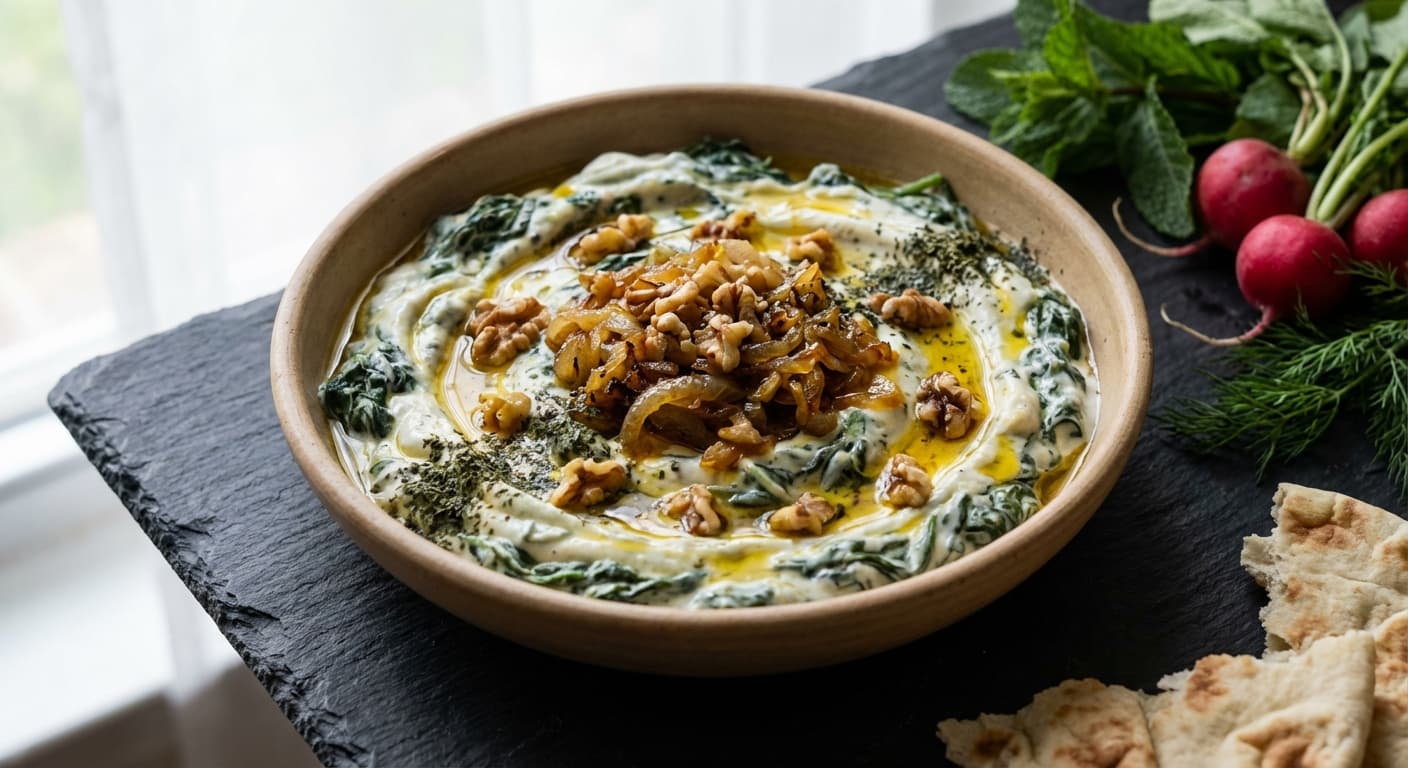
Borani Esfenaj (بورانی اسفناج) — Persian Spinach and Yogurt Dip with Saffron and Walnuts
Persian · Appetizers · 40 min
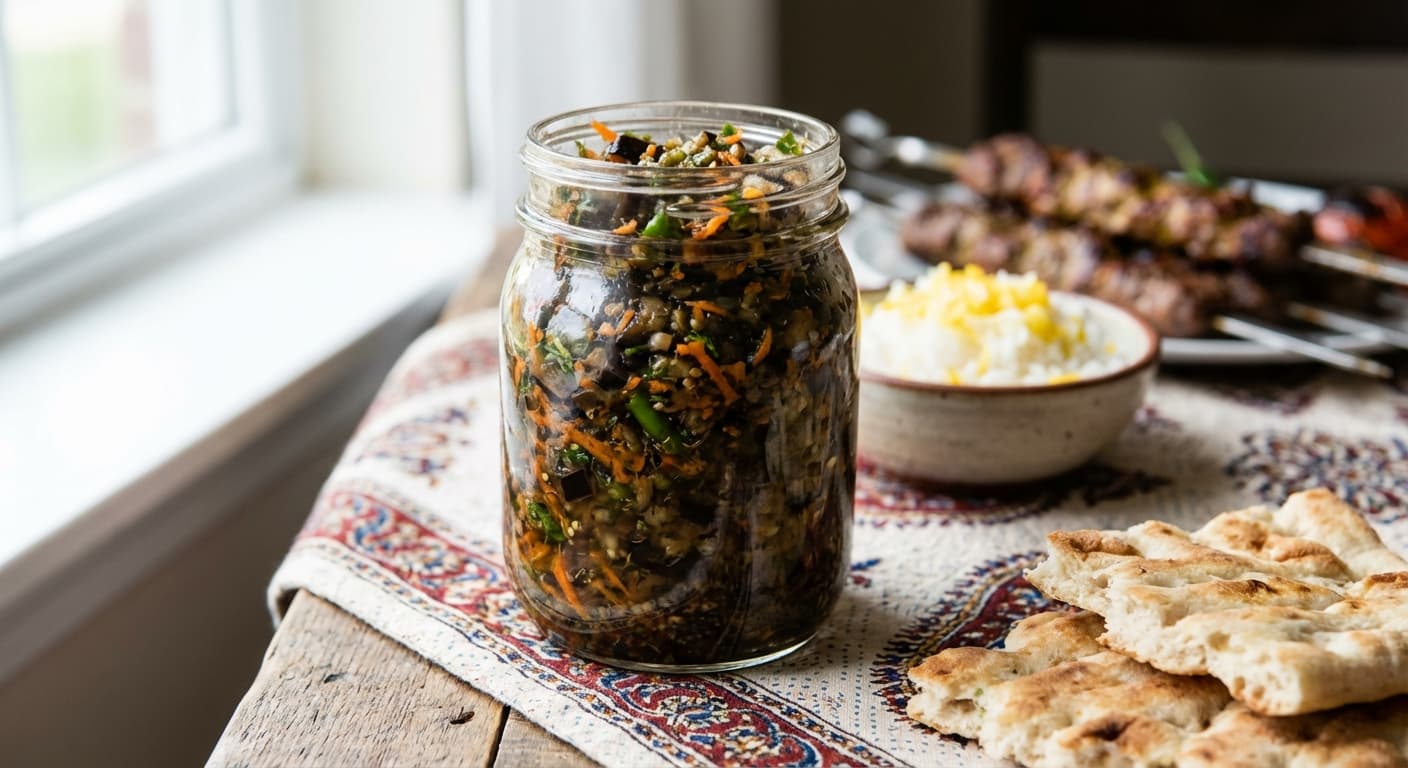
Persian Smoked Torshi Liteh (ترشی لیته) — Caspian-style smoky mixed vegetable pickle
Persian · Side Dishes · 60 min
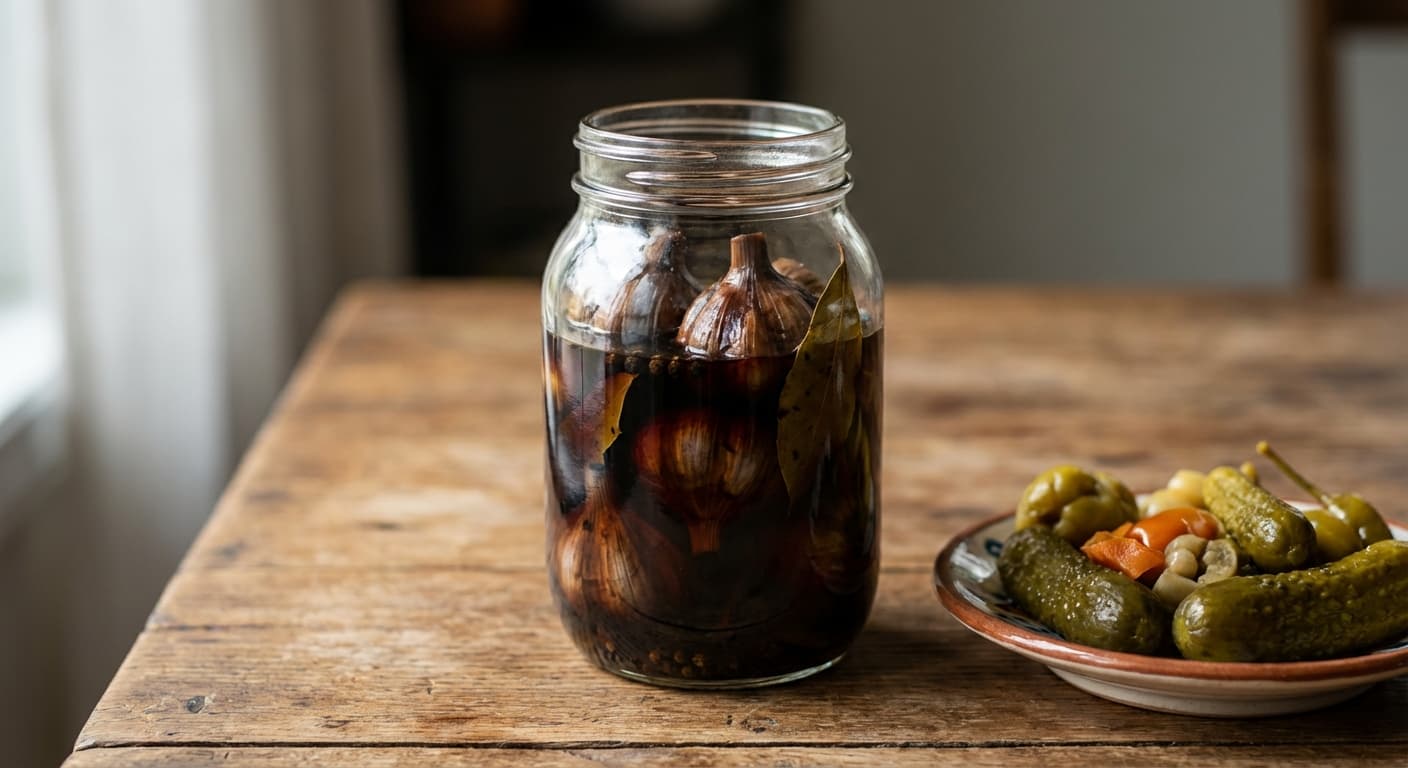
Aged Garlic Pickle (سیر ترشی) — Gilan’s seven-year-style black garlic torshi
Persian · Side Dishes · 45 min
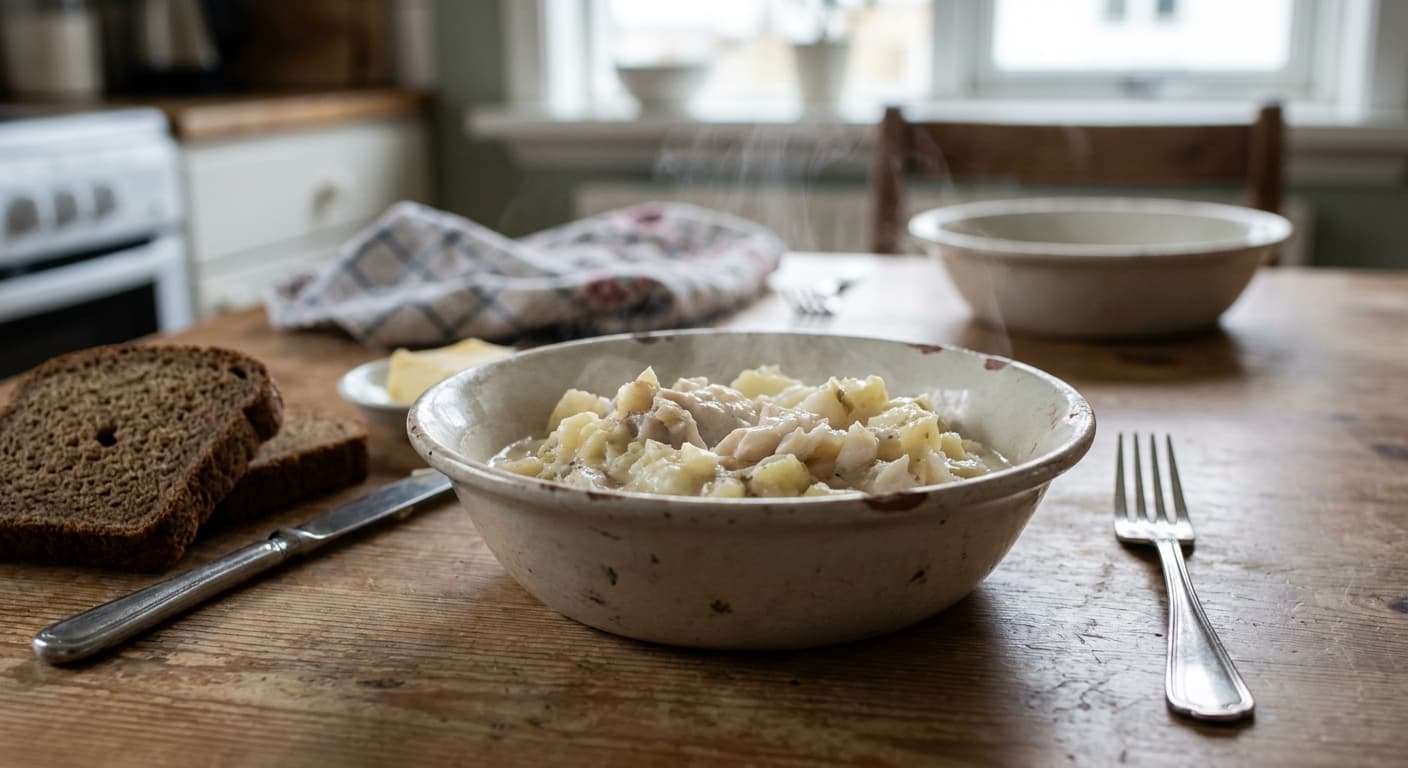
Icelandic Fish Stew (Plokkfiskur) — Creamy Cod and Potato Mash
Icelandic · Stews · 55 min
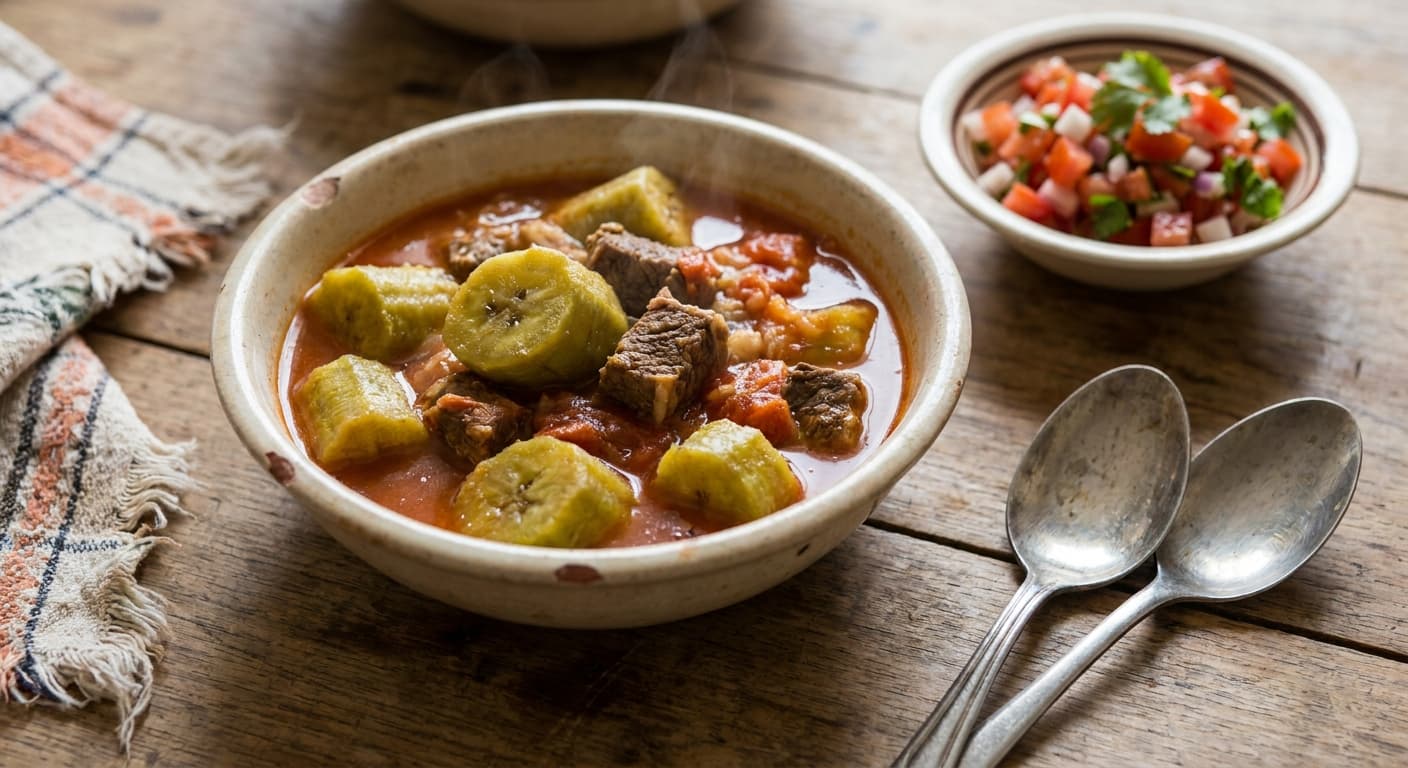
Matoke (Matoke) — Tanzanian Green Banana and Beef Stew
Tanzanian · Stews · 135 min
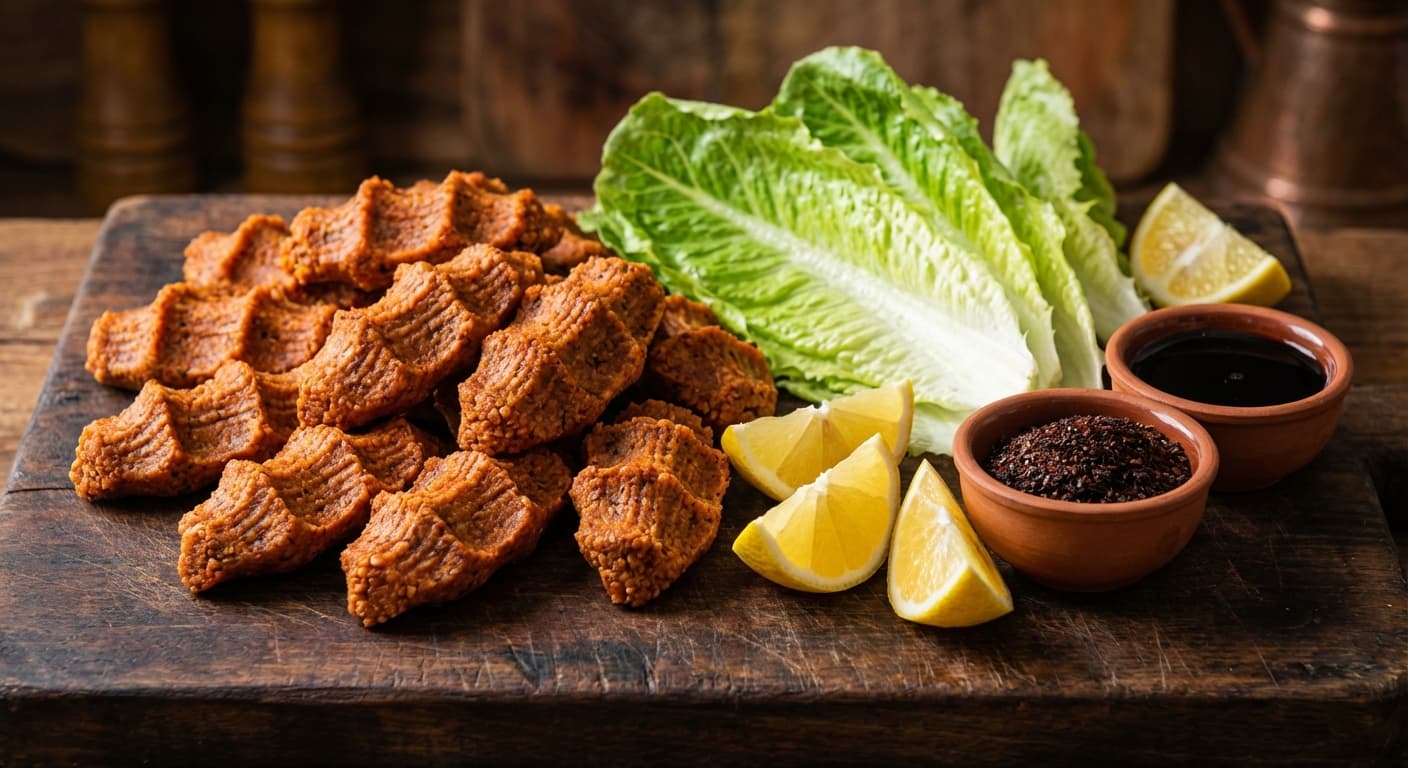
Cig Kofte (Çiğ Köfte) — Isot-kissed bulgur kneaded and served in lettuce
Turkish · Appetizers · 25 min
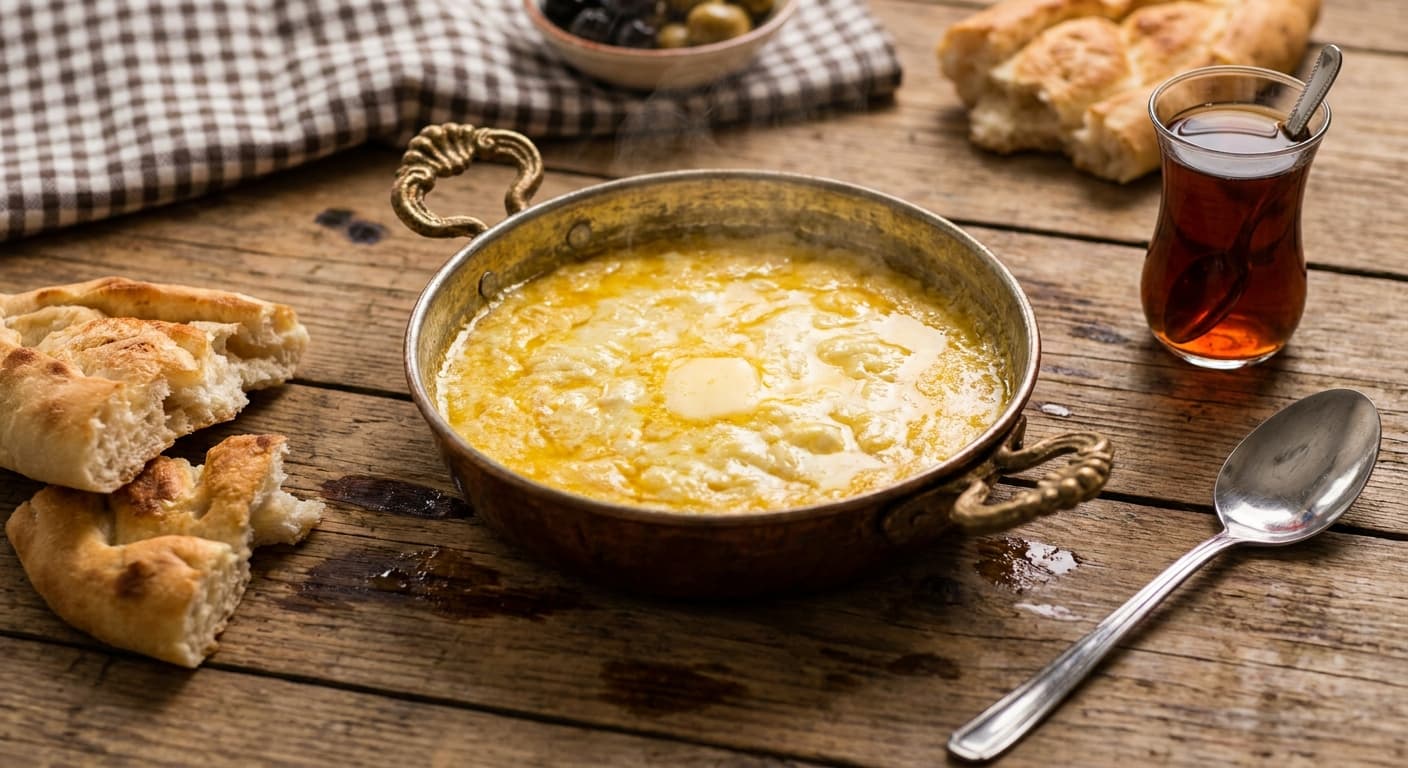
Mıhlama (Mıhlama) — Black Sea Cornmeal and Cheese Skillet
Turkish · Main Courses · 25 min
Bossam (보쌈) — Korean Boiled Pork Lettuce Wraps
Korean · Main Courses · 135 min
Reviews
Cooked this recipe?
Tap the stars to rate it — that's all it takes. A few words are welcome but optional.
No ratings yet. Cooked this one? Be the first to rate it — it takes one tap.