Kuku-ye Bademjan-e Kababi (کوکو بادمجان کبابی) — Smoked Eggplant Frittata
Grilled eggplant kuku is one of the beloved dishes of northern Iran; slender fire-roasted eggplants are combined with eggs, garlic, onion, and brewed saffron to make a light kuku with a deeply smoky, fragrant flavor for the Iranian table.
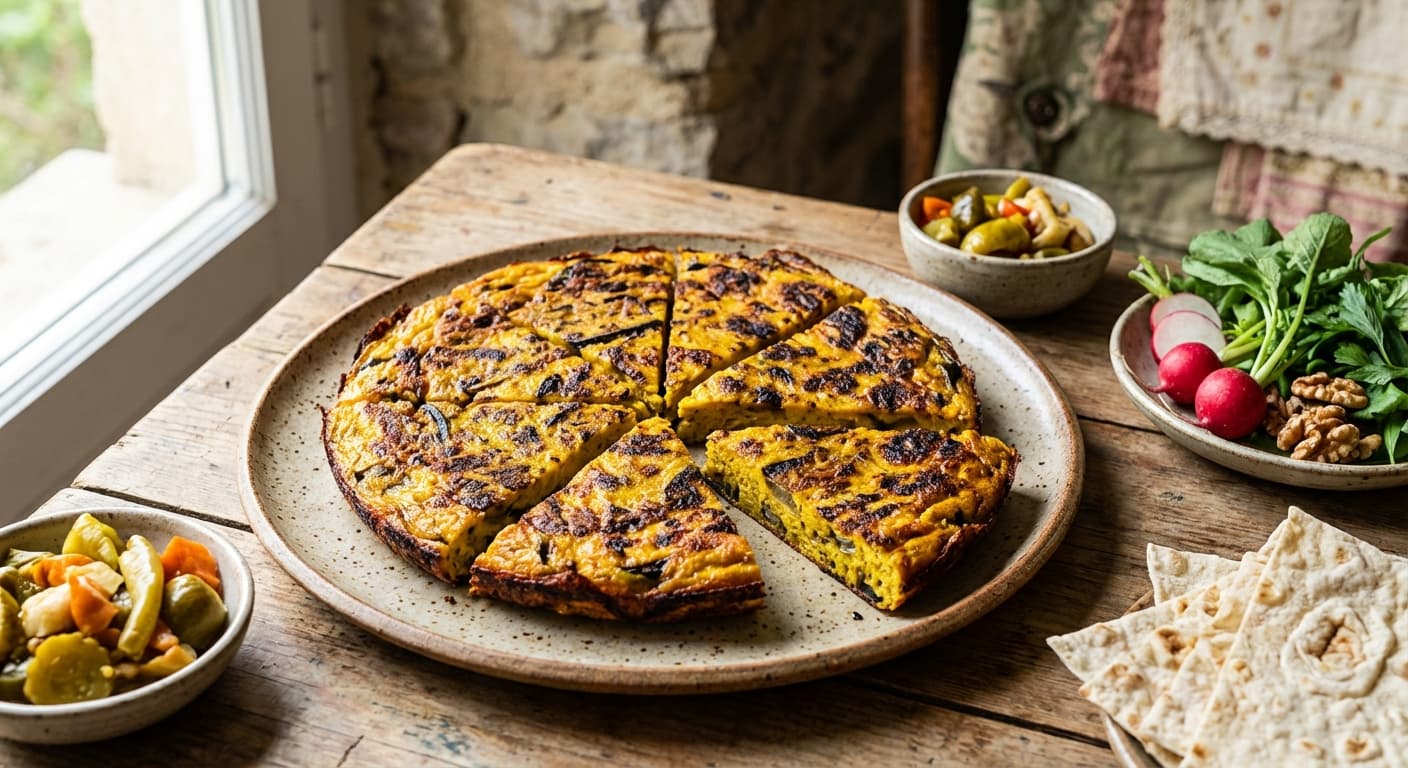
Printable Recipe Card
Servings: 4 · Total: 70 min · Difficulty: medium
Ingredients (quick list)
- 800 g Slim eggplants (thin, long eggplants) (about 4–5 slim eggplants; washed and dried)
- 180 g Yellow onion (1 medium; finely grated then squeezed lightly)
- 12 g Garlic cloves (about 3 large cloves; finely grated)
- 4 large Eggs (room temperature)
- 1 tsp Turmeric powder (fresh, bright yellow)
- 1.25 tsp Fine salt (adjust to taste after mixing)
- 0.5 tsp Black pepper (freshly ground)
- 24 g Potato flour (about 3 tbsp; helps bind and crisp edges)
- 0.25 tsp Saffron threads (ground, then bloomed)
- 45 ml Boiling water (3 tbsp; for blooming saffron)
- 60 ml Cooking oil (4 tbsp total for frying; neutral (sunflower/canola))
Steps (summary)
- Fire-roast the slim eggplants for maximum smokiness: place directly over a gas flame or hot charcoal, turning every 2–3 minutes…
- Drain and concentrate flavor: chop the peeled eggplant flesh and place in a fine sieve over a bowl. Press gently with the back…
- Build the kuku mixture: finely grate onion and squeeze lightly to reduce wateriness. In a bowl, whisk 4 eggs for 30–40 seconds…
- Rest for better binding: let the mixture stand 10 minutes at room temperature so the potato flour hydrates and the batter thick…
- Pan-fry the kuku: heat 30 ml oil in a 24–26 cm nonstick or well-seasoned skillet over medium heat (about 175–180°C surface temp…
- Flip and finish: slide kuku onto a plate, add remaining 30 ml oil to the pan, then invert the kuku back into the skillet. Cook…
Cultural Background
In Iranian cooking, kukus are quick, crowd-pleasing dishes, and in northern Iran, “grilled eggplant” is a hallmark of the smoky flavor that comes from open flame and charcoal. This kuku is commonly served at gatherings and on light spreads alongside bread, fresh herbs (sabzi khordan), and pickles (torshi), either as a main dish or a snack.
Equipment
💡 Tips
- For the most authentic smoky profile, roast eggplants directly on flame or charcoal—oven roasting is milder and less “kabaabi.”
- Squeezing onion too aggressively can remove aroma; squeeze just enough to prevent a watery batter.
- If you want a thicker, cake-like kuku, use a smaller pan (22–24 cm) and add 1 extra egg yolk (see substitutions).
⚠️ Common Mistakes
❌ Not draining roasted eggplant before mixing
💡 Why: Eggplant releases a lot of water, making the batter loose and causing steaming instead of browning.
✅ Fix: Press eggplant in a sieve 8–10 minutes; if still wet, extend to 15 minutes or add 1 tsp (8 g) extra potato flour.
❌ Roasting eggplants until only lightly browned
💡 Why: Insufficient blistering reduces the signature smoky “kabaabi” aroma.
✅ Fix: Roast until skins are deeply charred all around and flesh collapses; then steam covered 10 minutes for easy peeling.
❌ Cooking on high heat to rush browning
💡 Why: The outside burns before the center sets, leading to a raw, eggy middle.
✅ Fix: Use medium heat and cover for the first side; aim for 10–12 minutes before flipping, then finish uncovered 8–10 minutes.
❌ Flipping too early
💡 Why: A soft, unset base tears and breaks the kuku.
✅ Fix: Wait until edges are firm and the center jiggles only slightly; loosen edges with a spatula and flip using a plate.
🧊 How to Store
Cool completely, then refrigerate in an airtight container up to 3 days. Reheat in a skillet with 1 tsp oil over medium-low for 3–4 minutes per side, or in a 180°C oven for 8–10 minutes. Freezing is possible up to 1 month; thaw overnight in the fridge and re-crisp in a pan.
📅 Make Ahead
Roast and peel eggplants up to 24 hours ahead; refrigerate sealed and drain again before mixing. You can also mix the batter (without oil) up to 6 hours ahead; keep chilled, then bring to room temperature 15 minutes before frying for even cooking.
🍽️ Pairs Well With
- Persian flatbread (lavash or sangak)
- Torshi (Persian pickles)
- Sabzi khordan (fresh herb platter)
- Tomato-cucumber salad (salad-e shirazi)
Regional Variations
- GilanOften served with abundant torshi and sabzi khordan; some cooks increase garlic and keep the kuku thinner for crispier edges, echoing Gilani preference for bright, punchy flavors.
- MazandaranMay be made slightly thicker and softer, sometimes with more saffron aroma and a gentler garlic profile, suited to serving alongside rice or as a hearty breakfast with bread.
Ingredients
- 800 gSlim eggplants (thin, long eggplants) (about 4–5 slim eggplants; washed and dried)
- 180 gYellow onion (1 medium; finely grated then squeezed lightly)
- 12 gGarlic cloves (about 3 large cloves; finely grated)
- 4 largeEggs (room temperature)
- 1 tspTurmeric powder (fresh, bright yellow)
- 1.25 tspFine salt (adjust to taste after mixing)
- 0.5 tspBlack pepper (freshly ground)
- 24 gPotato flour (about 3 tbsp; helps bind and crisp edges)
- 0.25 tspSaffron threads (ground, then bloomed)
- 45 mlBoiling water (3 tbsp; for blooming saffron)
- 60 mlCooking oil (4 tbsp total for frying; neutral (sunflower/canola))
🔄 Substitutions
- Potato flour (24 g)→ Cornstarch (22 g)
- Cooking oil (neutral)→ Olive oil (60 ml)
- 4 large eggs→ 3 large eggs + 1 large egg yolk
Instructions
- 1
Fire-roast the slim eggplants for maximum smokiness: place directly over a gas flame or hot charcoal, turning every 2–3 minutes, until skins are fully blistered and flesh is very soft, 18–22 minutes total. Transfer to a bowl, cover 10 minutes to steam, then peel and discard skins.
- 2
Drain and concentrate flavor: chop the peeled eggplant flesh and place in a fine sieve over a bowl. Press gently with the back of a spoon to remove excess liquid for 8–10 minutes. Meanwhile, bloom saffron by grinding threads and mixing with 45 ml boiling water; cover and steep 10 minutes.
- 3
Build the kuku mixture: finely grate onion and squeeze lightly to reduce wateriness. In a bowl, whisk 4 eggs for 30–40 seconds until homogeneous. Add drained eggplant, grated onion, grated garlic, turmeric, salt, black pepper, potato flour, and all saffron water; mix 1 minute until evenly combined.
- 4
Rest for better binding: let the mixture stand 10 minutes at room temperature so the potato flour hydrates and the batter thickens. If it still looks loose, rest an additional 5 minutes; the mixture should mound on a spoon rather than pour like a thin omelet batter.
- 5
Pan-fry the kuku: heat 30 ml oil in a 24–26 cm nonstick or well-seasoned skillet over medium heat (about 175–180°C surface temp). Pour in the mixture and spread evenly. Cover and cook 10–12 minutes until edges set and the bottom is deep golden.
- 6
Flip and finish: slide kuku onto a plate, add remaining 30 ml oil to the pan, then invert the kuku back into the skillet. Cook uncovered 8–10 minutes until the second side is golden and the center reaches 72°C. Rest 5 minutes before slicing to keep clean wedges.
🪪 Recipe Passport
Cultural Background
In Iranian cooking, kukus are quick, crowd-pleasing dishes, and in northern Iran, “grilled eggplant” is a hallmark of the smoky flavor that comes from open flame and charcoal. This kuku is commonly served at gatherings and on light spreads alongside bread, fresh herbs (sabzi khordan), and pickles (torshi), either as a main dish or a snack.
Regional Variations
Researched from multiple sources and validated by the Zaffaron editorial team. Every recipe is tested for accuracy, measurements, and cultural authenticity.
Nutrition per serving
Pairs well with
If you enjoyed this recipe, here are a few related Zaffaron recipes to try next.
Does your family make this differently?
Every family has their own version. Maybe your grandmother adds a secret ingredient, or your aunt has a completely different technique. Preserve your family's version — with their name on it, forever.
You Might Also Like
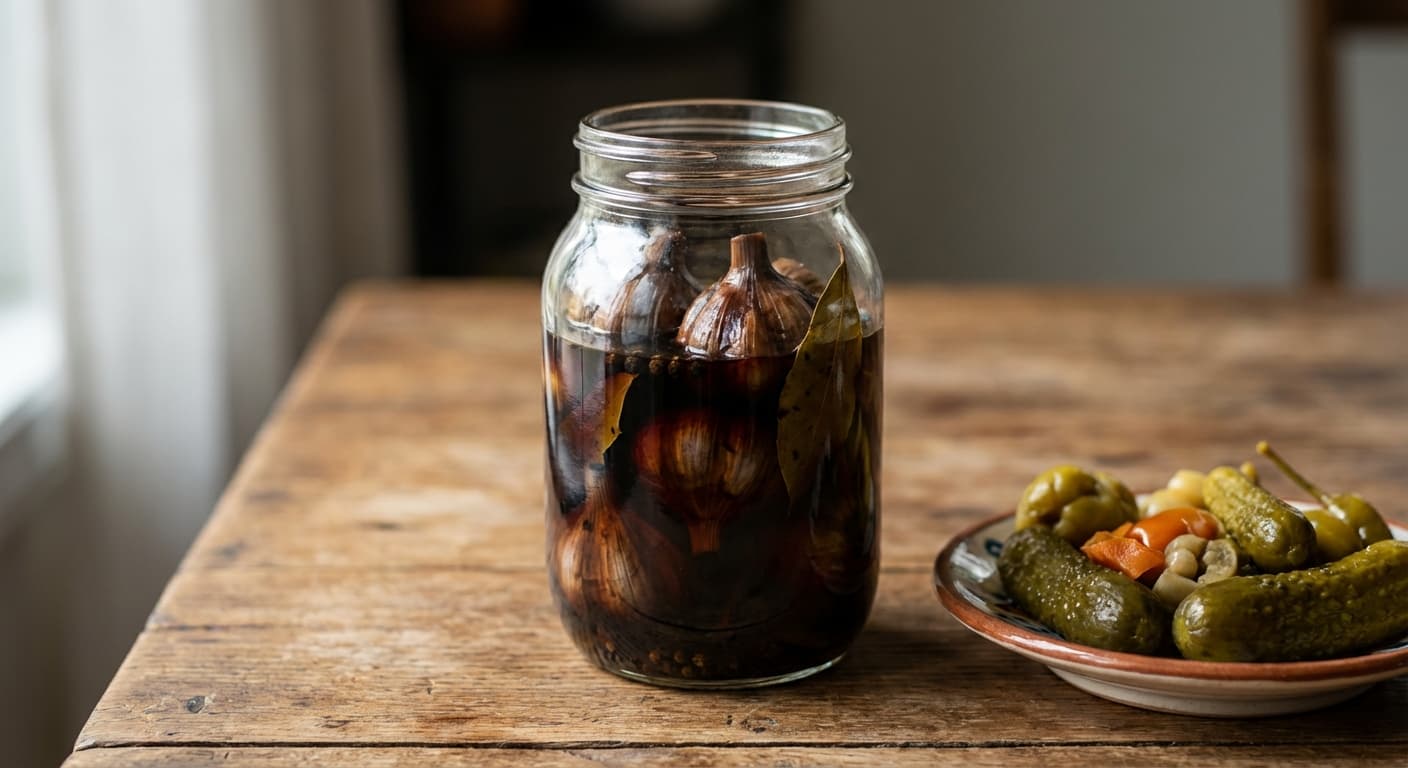
Aged Garlic Pickle (سیر ترشی) — Gilan’s seven-year-style black garlic torshi
Persian · Side Dishes · 45 min
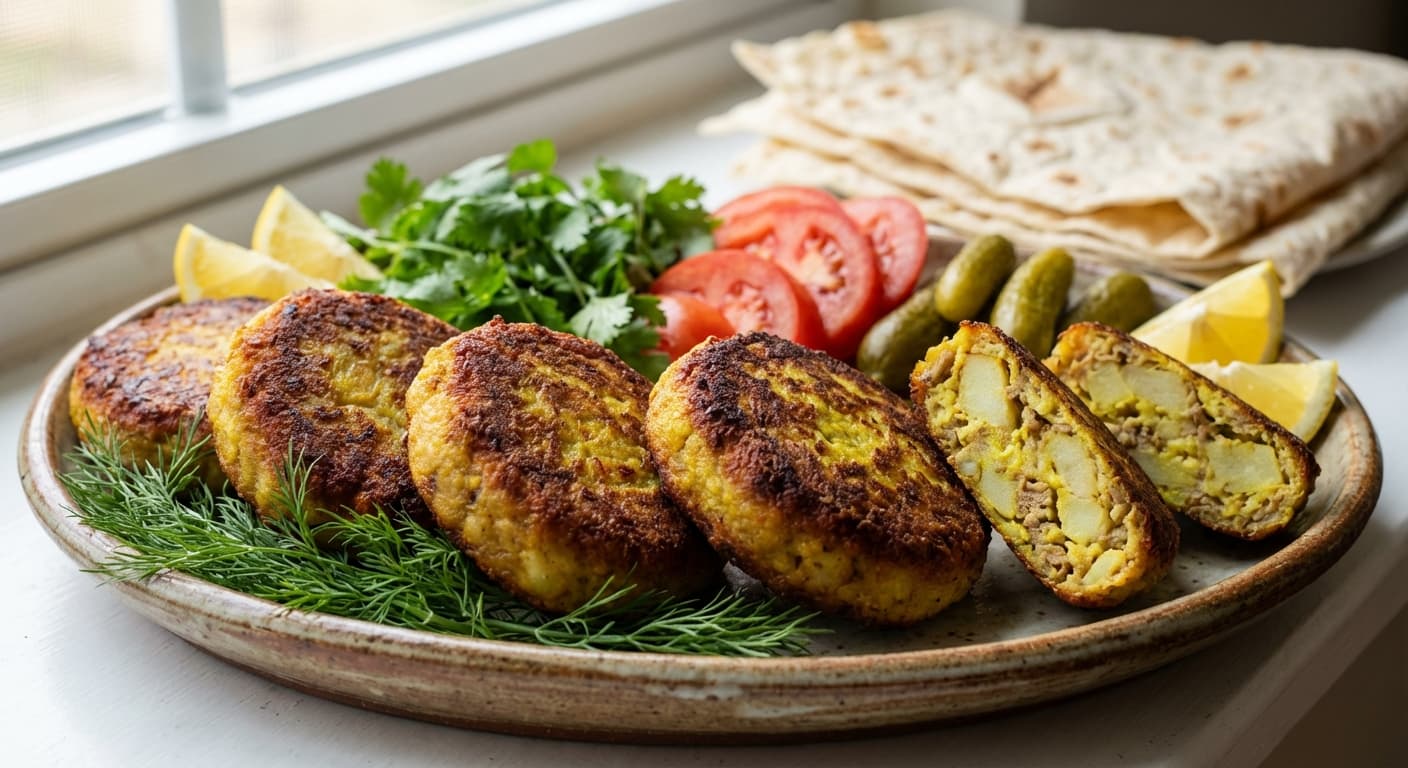
Persian Kotlet (کتلت) — Saffron-Infused Meat & Potato Patties
Persian · Main Courses · 55 min
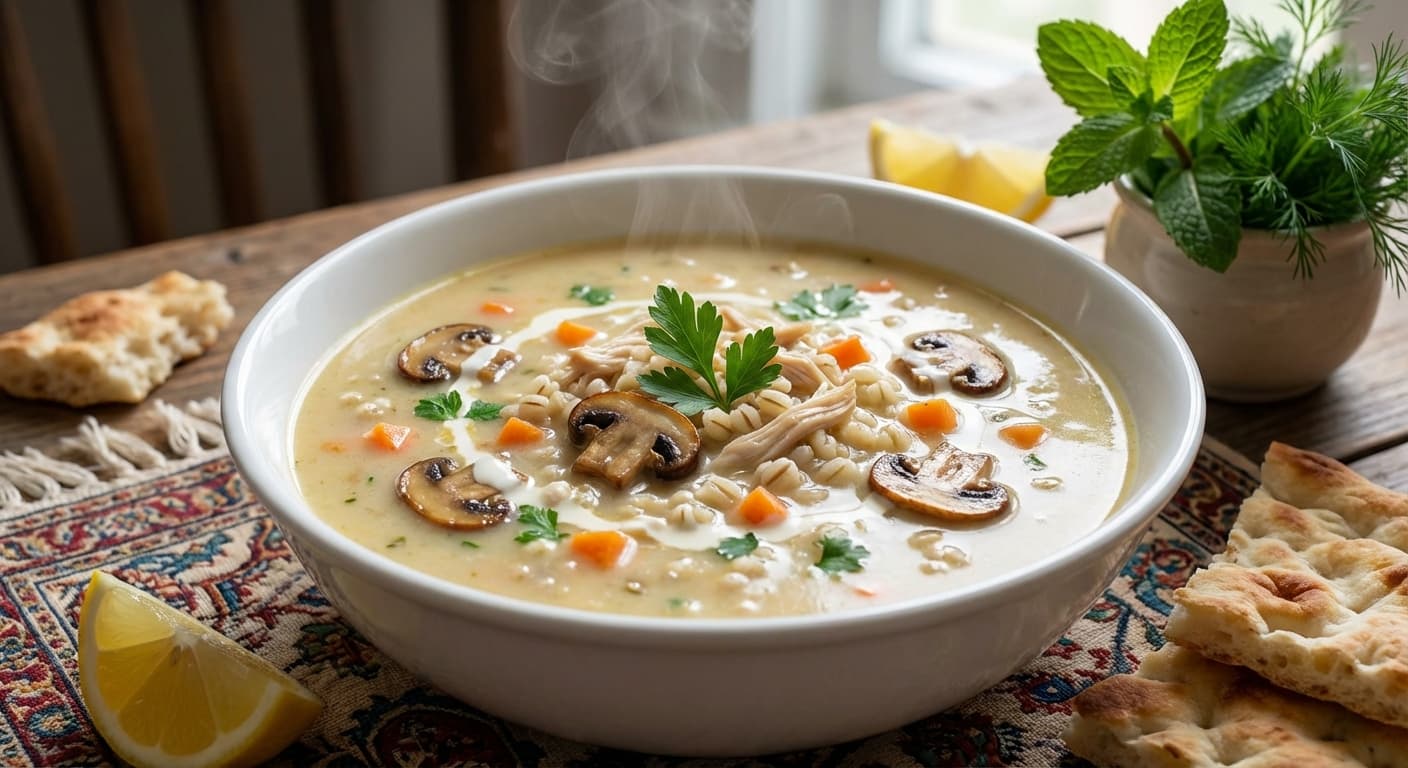
Soup-e Jo (سوپ جو) — Persian Creamy Barley Soup
Persian · Soups · 90 min
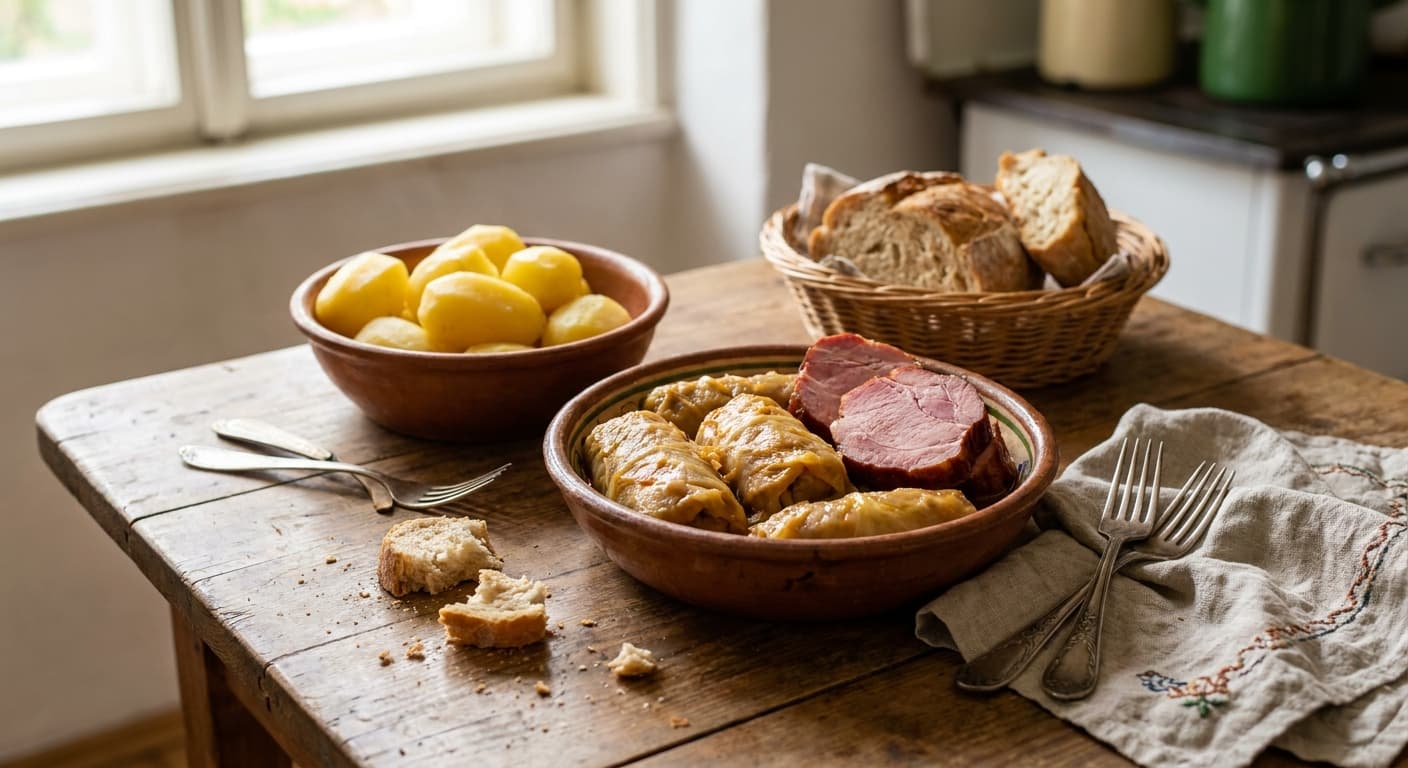
Sinj Stuffed Cabbage Rolls (Sinjski arambaši) — Hand-Chopped Meat in Sour Cabbage
Croatian · Main Courses · 245 min
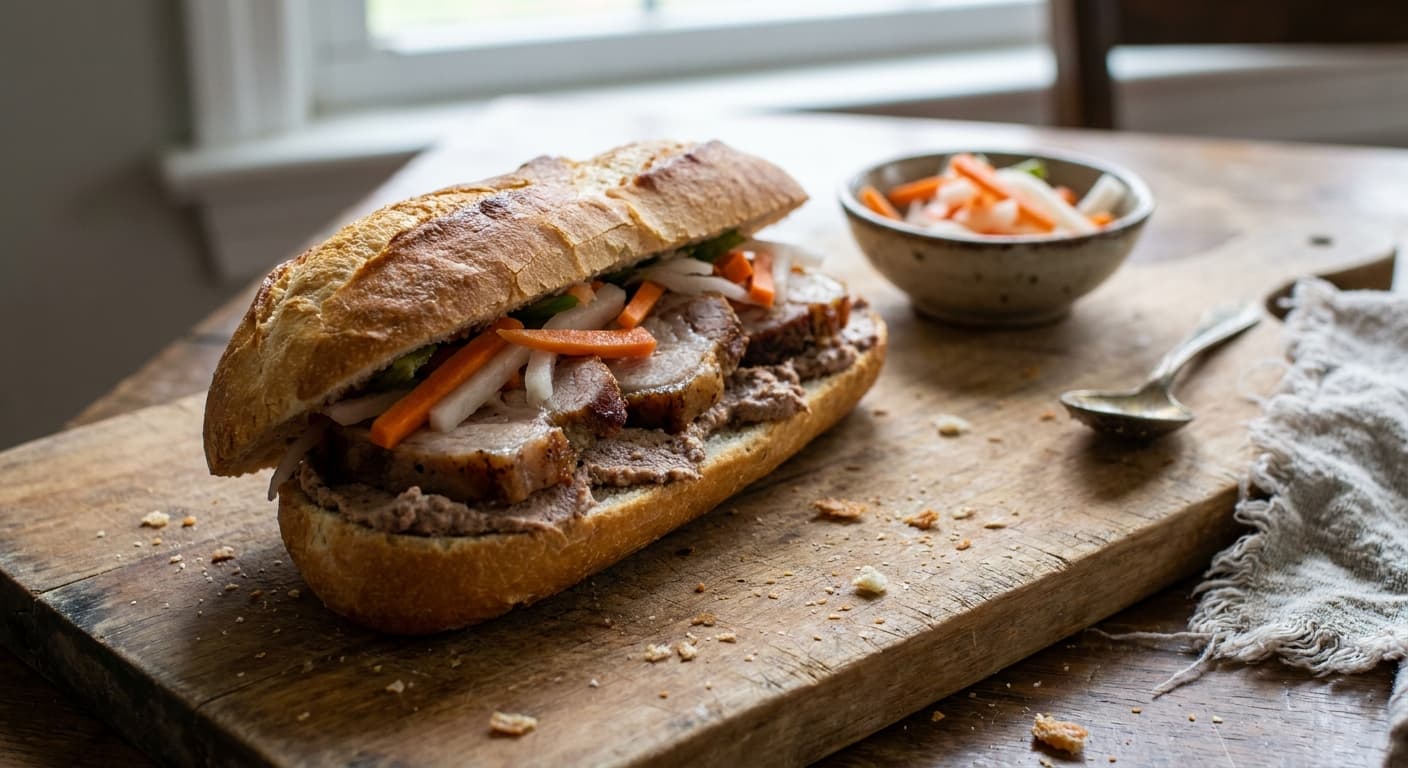
Num Pang Pate (នំប៉័ងប៉ាតេ) — Cambodian Baguette with Pate and Pickles
Cambodian · Main Courses · 60 min
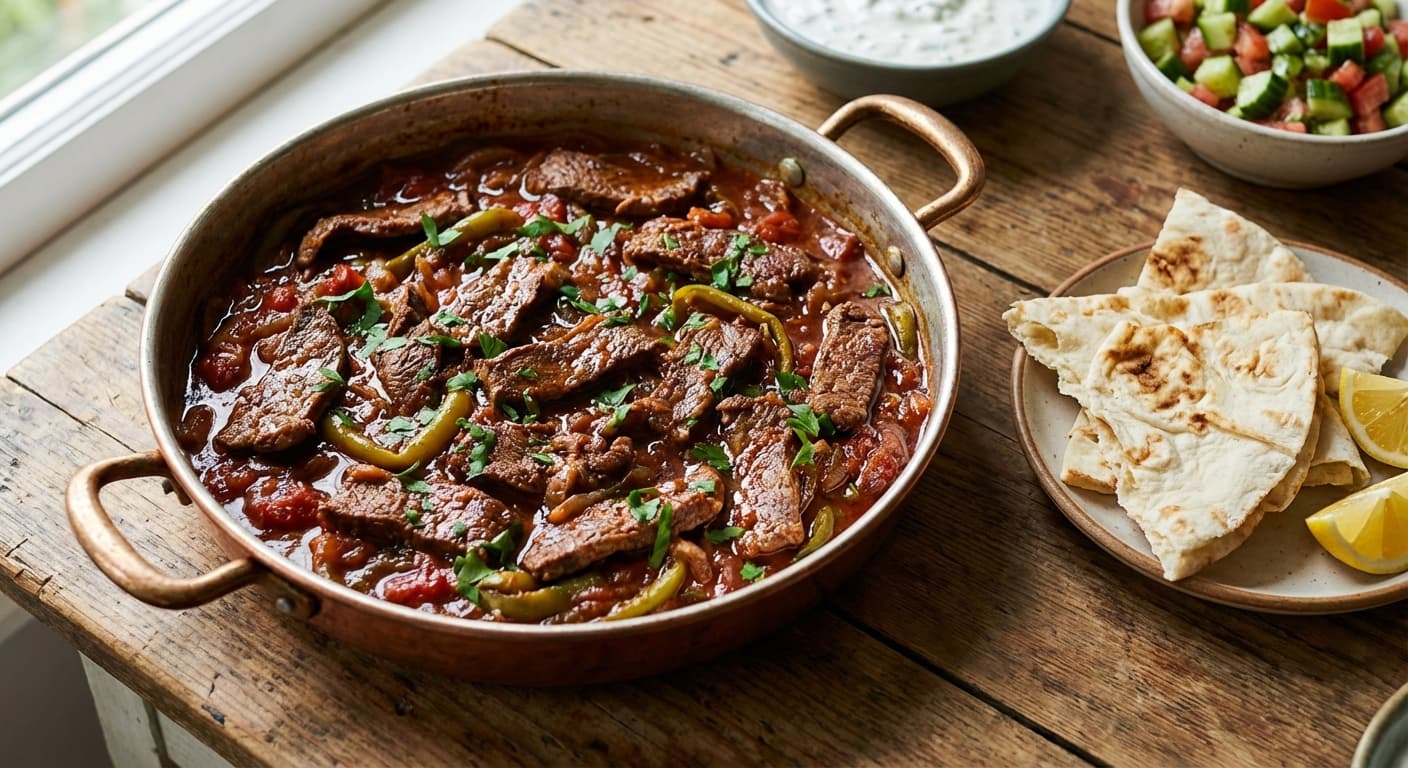
Sac Kavurma (Saç Kavurma) — Thin-Sliced Turkish Meat Sautéed with Onions
Turkish · Main Courses · 38 min
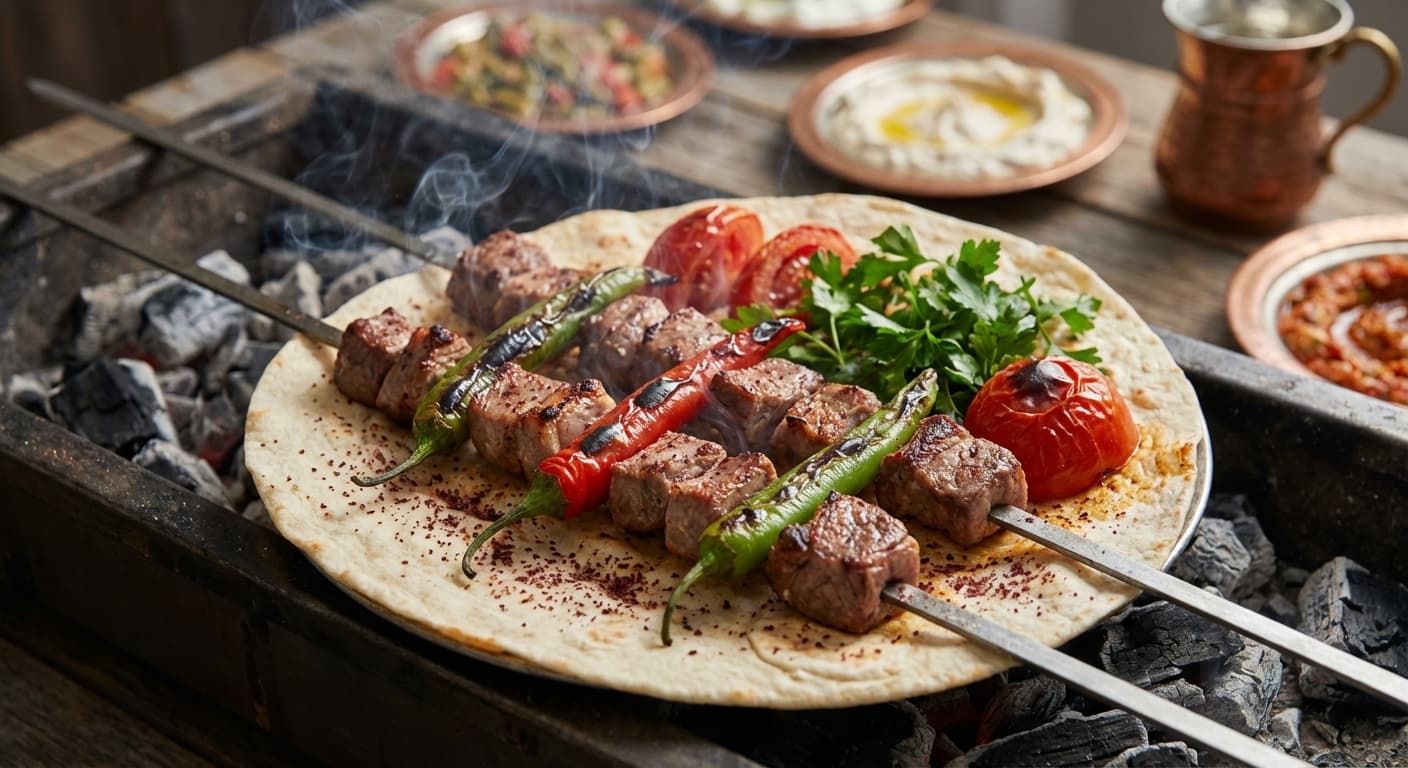
Turkish Shish Kebab (Şiş Kebap) — Charcoal-Grilled Marinated Lamb Skewers
Turkish · Kebabs · 37 min
Or Lam (ເອາະຫຼາມ) — Luang Prabang Herb Stew
Laotian · Stews · 155 min
Reviews
Cooked this recipe?
Tap the stars to rate it — that's all it takes. A few words are welcome but optional.
No ratings yet. Cooked this one? Be the first to rate it — it takes one tap.