Kung Pao Chicken (宫保鸡丁) — Sichuan Stir-Fry with Peanuts and Dried Chilies
A classic Sichuan stir-fry of diced chicken, scorched dried chilies, Sichuan peppercorns, peanuts, and a glossy sweet-sour-savory sauce. The dish is fast, aromatic, and built on precise wok timing.
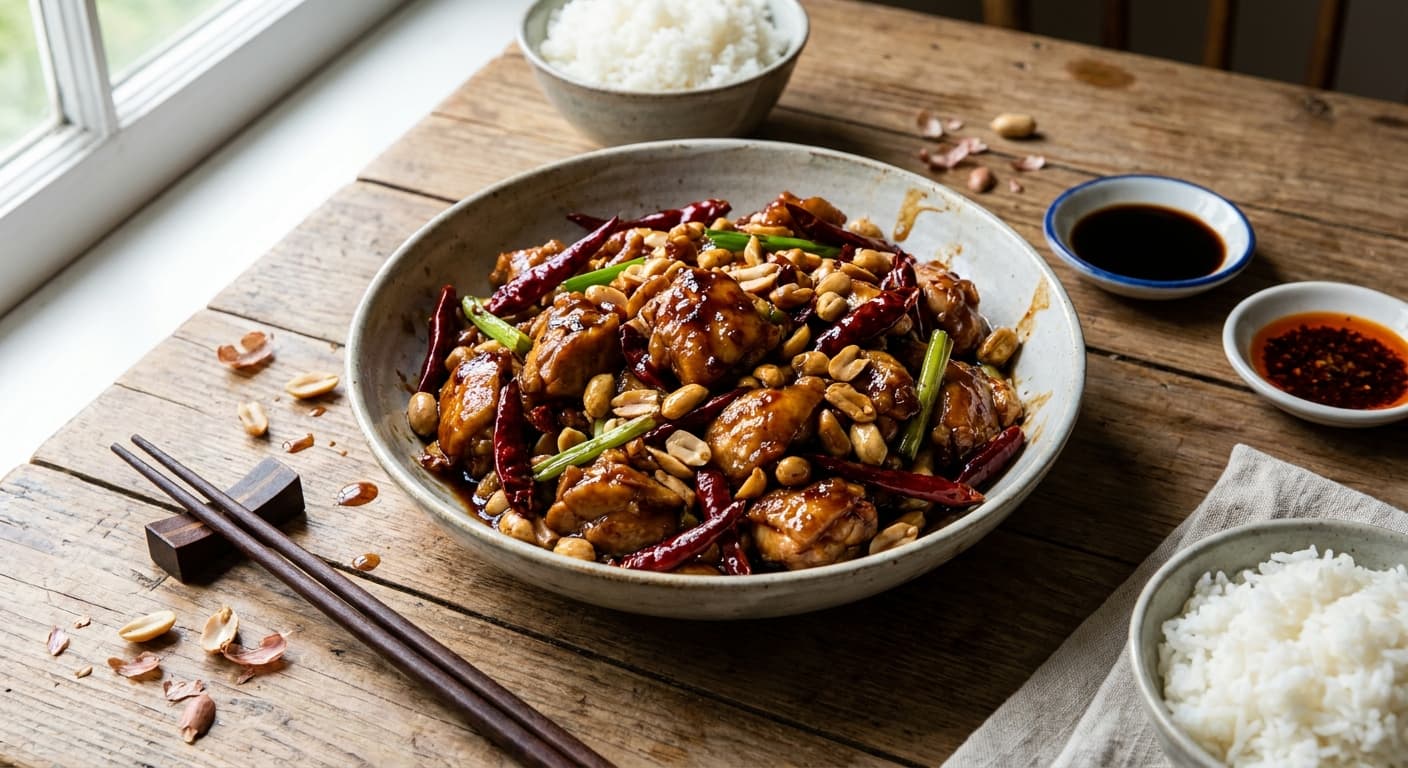
Printable Recipe Card
Servings: 4 · Total: 33 min · Difficulty: medium
Ingredients (quick list)
- 450 g boneless skinless chicken thighs (cut into 1.5 cm dice)
- 10 ml light soy sauce
- 10 ml Shaoxing wine
- 8 g potato starch
- 2 g fine sea salt
- 0.5 g ground white pepper
- 20 ml Chinkiang black vinegar
- 5 ml dark soy sauce
- 16 g granulated sugar
- 30 ml water
- 5 ml toasted sesame oil
- 45 ml neutral rapeseed oil
+ 6 more in the full ingredients section below.
Steps (summary)
- Place the diced chicken in a bowl with the marinade soy sauce, Shaoxing wine, potato starch, salt, and white pepper. Mix firmly…
- In a small bowl, whisk together the Chinkiang vinegar, light soy sauce, dark soy sauce, Shaoxing wine, sugar, potato starch, wa…
- Arrange the dried chiles, Sichuan peppercorns, garlic, ginger, scallions, and peanuts beside the stove before heating the wok.…
- Heat a seasoned wok over high heat until a faint wisp of smoke appears, then add the rapeseed oil and swirl to coat the surface…
- Immediately add the marinated chicken and spread it into a single layer against the hot wok surface. Let it sear undisturbed fo…
- Add the garlic, ginger, and scallions, then stir-fry for 45 seconds so their aroma blooms without burning. Give the sauce anoth…
+ 1 more steps in the full instructions section below.
Cultural Background
This dish is one of Sichuan cuisine's best-known exports, named for a Qing-era official and prized for its balanced hot, numbing, sweet, sour, and savory profile. The authentic version is compact, quick, and peanut-studded.
Equipment
💡 Tips
- Use thigh meat for a juicier result, or cut breast meat very evenly and avoid overcooking it.
- The dried chiles should fragrance the oil and darken, not burn; blackened chiles will make the whole dish bitter.
- Stir the sauce immediately before adding it to the wok because potato starch settles quickly.
⚠️ Common Mistakes
❌ Adding the sauce without re-stirring it.
✅ Fix: Whisk the sauce immediately before it enters the wok so the starch thickens the liquid evenly.
❌ Burning the dried chiles and peppercorns.
✅ Fix: Lower the heat slightly after the oil is hot and fry the spices only until fragrant and dark red-brown.
❌ Crowding the wok with large chicken pieces.
✅ Fix: Cut the chicken into 1.5 cm dice and spread it briefly against the wok so it sears instead of steams.
🧊 How to Store
Refrigerate leftovers in an airtight container for up to 3 days. Reheat quickly in a hot skillet with 15 ml water to loosen the sauce; avoid microwaving too long, which toughens the chicken and softens the peanuts.
📅 Make Ahead
Dice and marinate the chicken up to 4 hours ahead, and mix the sauce up to 1 day ahead. Keep aromatics cut separately and add peanuts only at the end of cooking.
🍽️ Pairs Well With
- Steamed jasmine rice
- stir-fried Chinese greens
- smashed cucumber salad
- hot green tea.
Regional Variations
- Sichuan restaurant versions often keep the dice small and emphasize a balanced sweet-sour sauce with fragrant dried chiles.
- Some home cooks use chicken breast instead of thigh and increase the scallions for a lighter texture.
- Western takeout versions often add bell peppers, celery, or extra sugar, but those additions move the dish away from the classic Sichuan profile.
Ingredients
- 450 gboneless skinless chicken thighs (cut into 1.5 cm dice)
- 10 mllight soy sauce
- 10 mlShaoxing wine
- 8 gpotato starch
- 2 gfine sea salt
- 0.5 gground white pepper
- 20 mlChinkiang black vinegar
- 5 mldark soy sauce
- 16 ggranulated sugar
- 30 mlwater
- 5 mltoasted sesame oil
- 45 mlneutral rapeseed oil
- 12dried red chiles (cut into 2 cm segments, most seeds shaken out)
- 2 gSichuan peppercorns
- 3 clovegarlic (thinly sliced)
- 1 inchfresh ginger (peeled and thinly sliced)
- 4scallions (white and tender green parts cut into 1.5 cm lengths)
- 70 groasted unsalted peanuts
🔄 Substitutions
- Shaoxing wine→ dry sherry
- Chinkiang black vinegar→ 15 ml rice vinegar mixed with 5 ml balsamic vinegar
- potato starch→ cornstarch
- chicken thighs→ chicken breast
Instructions
- 1
Place the diced chicken in a bowl with the marinade soy sauce, Shaoxing wine, potato starch, salt, and white pepper. Mix firmly for 1 minute until the pieces feel slightly tacky, then let the chicken stand for 15 minutes while you prepare the sauce and aromatics.
- 2
In a small bowl, whisk together the Chinkiang vinegar, light soy sauce, dark soy sauce, Shaoxing wine, sugar, potato starch, water, and sesame oil. Stir until the starch is fully suspended, because any dry starch at the bottom will prevent the sauce from thickening evenly in the wok.
- 3
Arrange the dried chiles, Sichuan peppercorns, garlic, ginger, scallions, and peanuts beside the stove before heating the wok. This dish cooks in only a few minutes, so every ingredient must be cut, measured, and within reach before the oil goes in.
- 4
Heat a seasoned wok over high heat until a faint wisp of smoke appears, then add the rapeseed oil and swirl to coat the surface. Reduce the heat to medium-high, add the dried chiles and Sichuan peppercorns, and stir-fry for 20 to 30 seconds until the chiles darken to a deep red-brown but do not turn black.
- 5
Immediately add the marinated chicken and spread it into a single layer against the hot wok surface. Let it sear undisturbed for 20 seconds, then stir-fry briskly for 2 to 3 minutes until the cubes are mostly opaque and separated.
- 6
Add the garlic, ginger, and scallions, then stir-fry for 45 seconds so their aroma blooms without burning. Give the sauce another quick stir, pour it around the edge of the wok, and toss continuously for 30 to 45 seconds until it turns glossy and clings to the chicken.
- 7
Add the roasted peanuts and toss for 15 seconds, just long enough to coat them while keeping their crunch. Transfer the dish to a warm serving plate immediately, because the sauce should be shiny, the chicken tender, and the peanuts still crisp.
🪪 Recipe Passport
Cultural Background
This dish is one of Sichuan cuisine's best-known exports, named for a Qing-era official and prized for its balanced hot, numbing, sweet, sour, and savory profile. The authentic version is compact, quick, and peanut-studded.
Regional Variations
Researched from multiple sources and validated by the Zaffaron editorial team. Every recipe is tested for accuracy, measurements, and cultural authenticity.
📚 Sources & Cultural References
- Fuchsia Dunlop — The Food of Sichuan — (2019)
Sources cited by the Zaffaron editorial team during recipe research. Cultural and culinary references supporting authenticity claims.
Nutrition per serving
Pairs well with
If you enjoyed this recipe, here are a few related Zaffaron recipes to try next.
Does your family make this differently?
Every family has their own version. Maybe your grandmother adds a secret ingredient, or your aunt has a completely different technique. Preserve your family's version — with their name on it, forever.
You Might Also Like
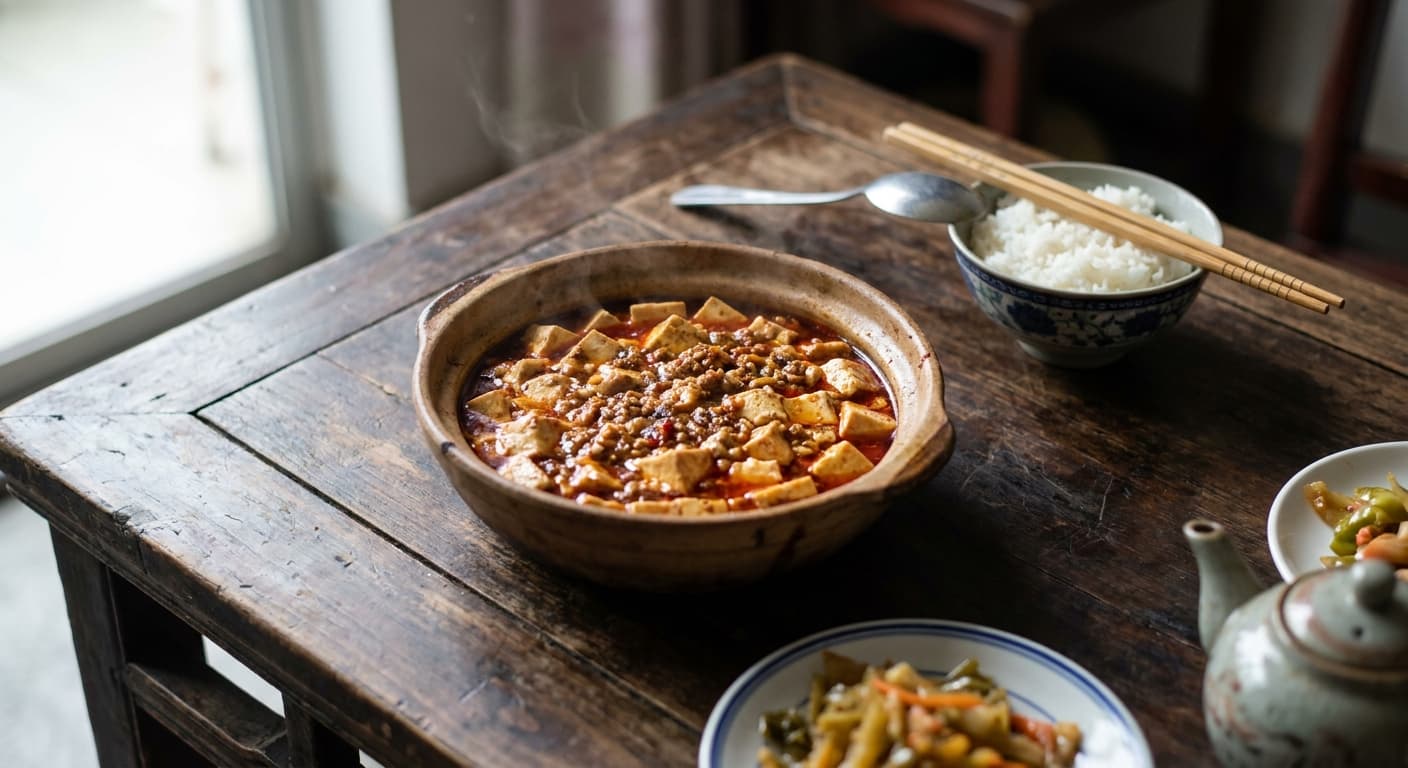
Mapo Tofu (麻婆豆腐) — Sichuan Silken Tofu in Spicy Fermented Bean Sauce
Chinese · Main Courses · 35 min
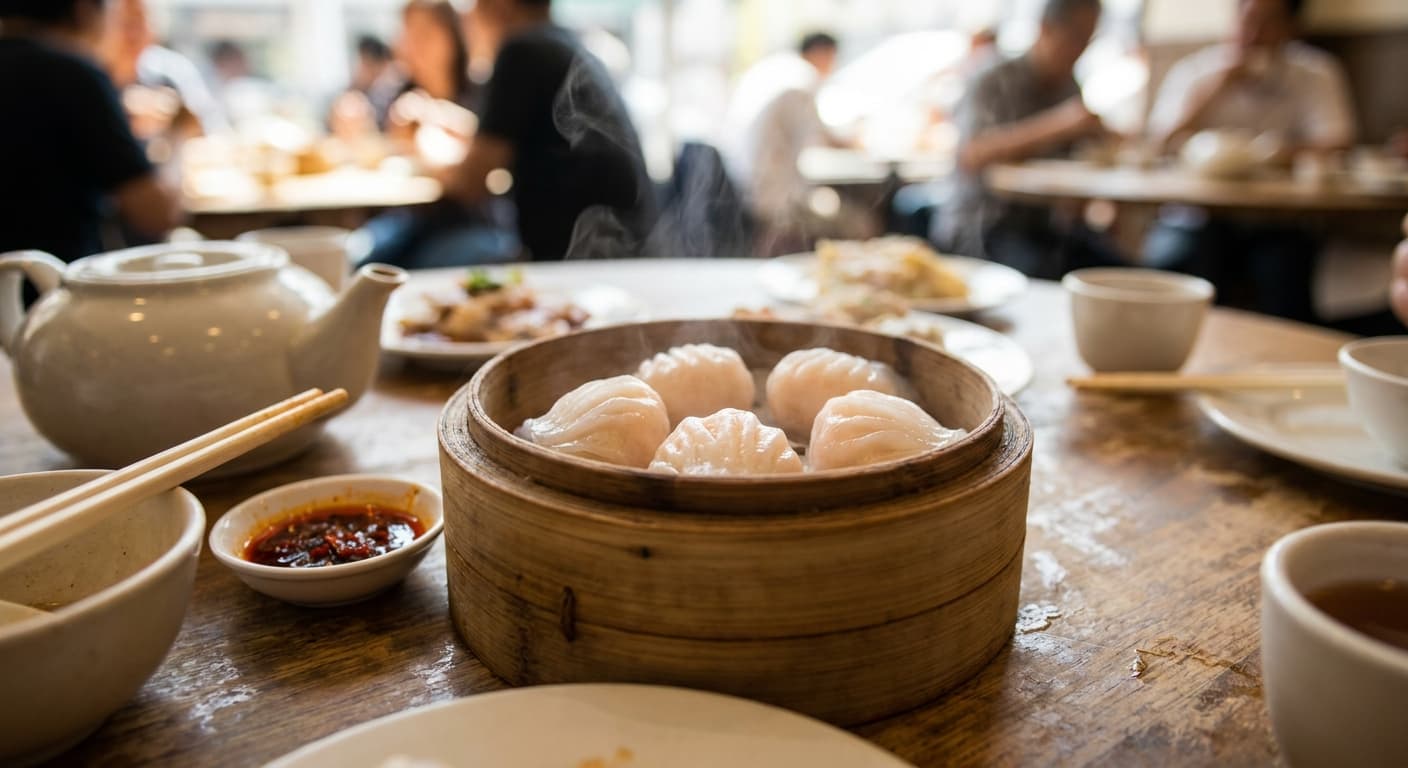
Har Gow Shrimp Dumplings (虾饺) — Translucent Cantonese Dim Sum
Chinese · Appetizers · 68 min
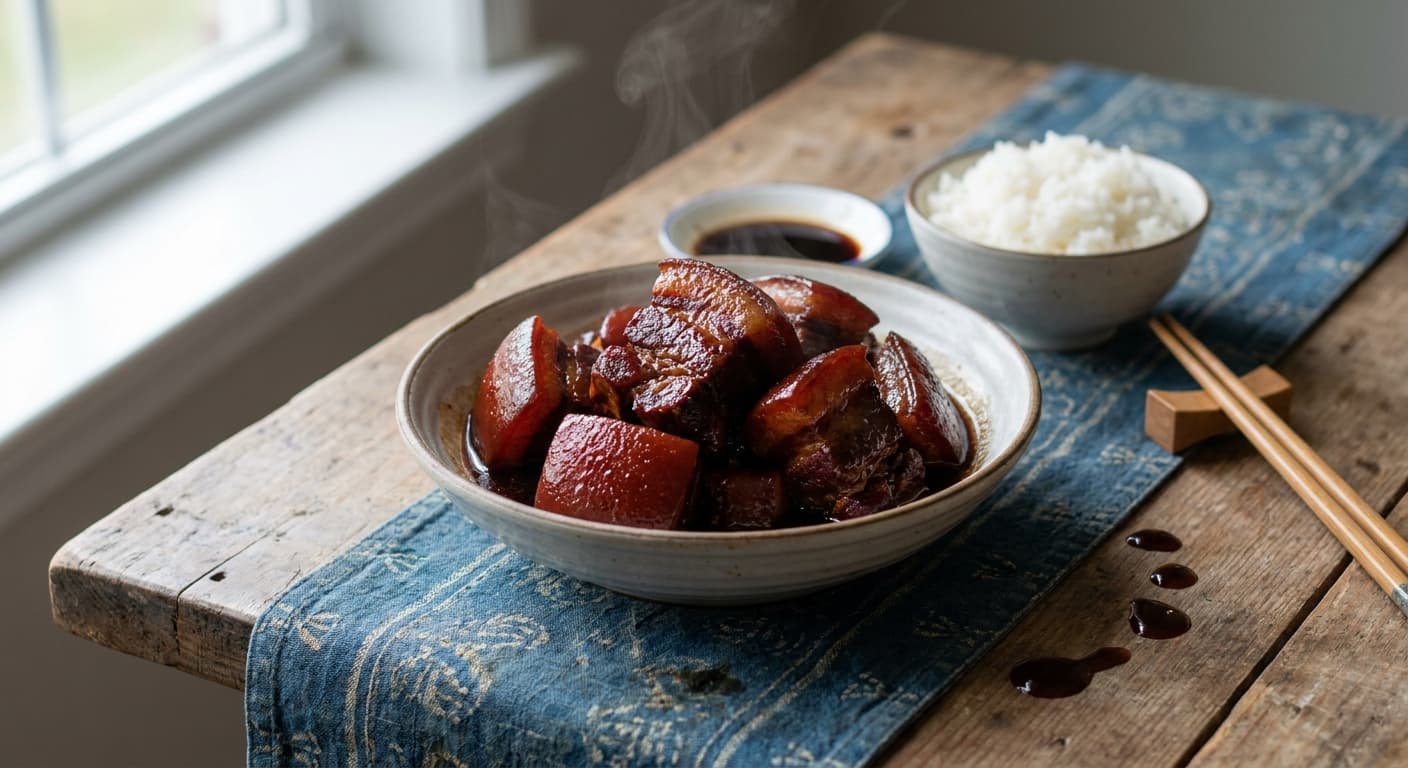
Dongpo Pork (东坡肉) — Hangzhou Red-Braised Pork Belly
Chinese · Main Courses · 205 min
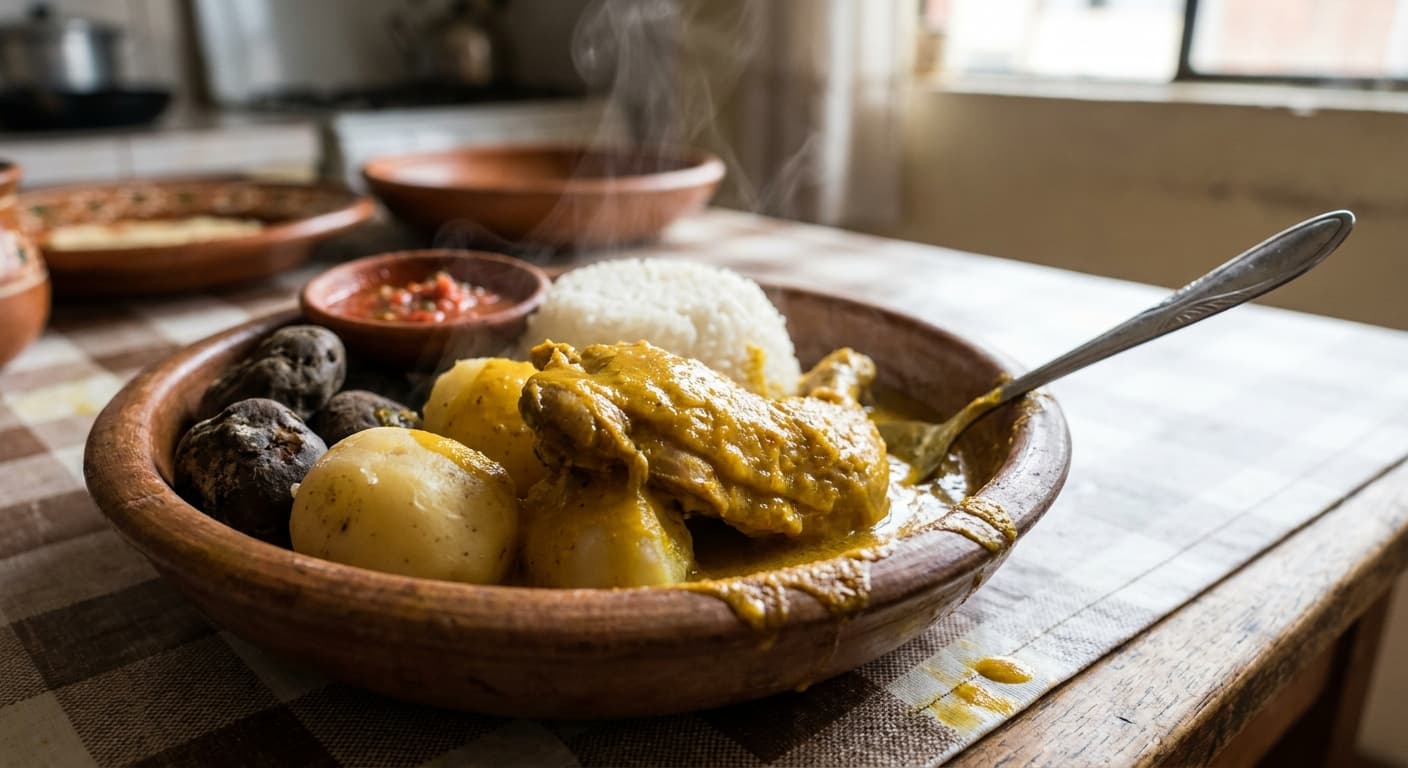
Bolivian Spicy Chicken Stew (Sajta de Pollo) — Aji Amarillo Chicken with Chuño
Bolivian · Main Courses · 95 min
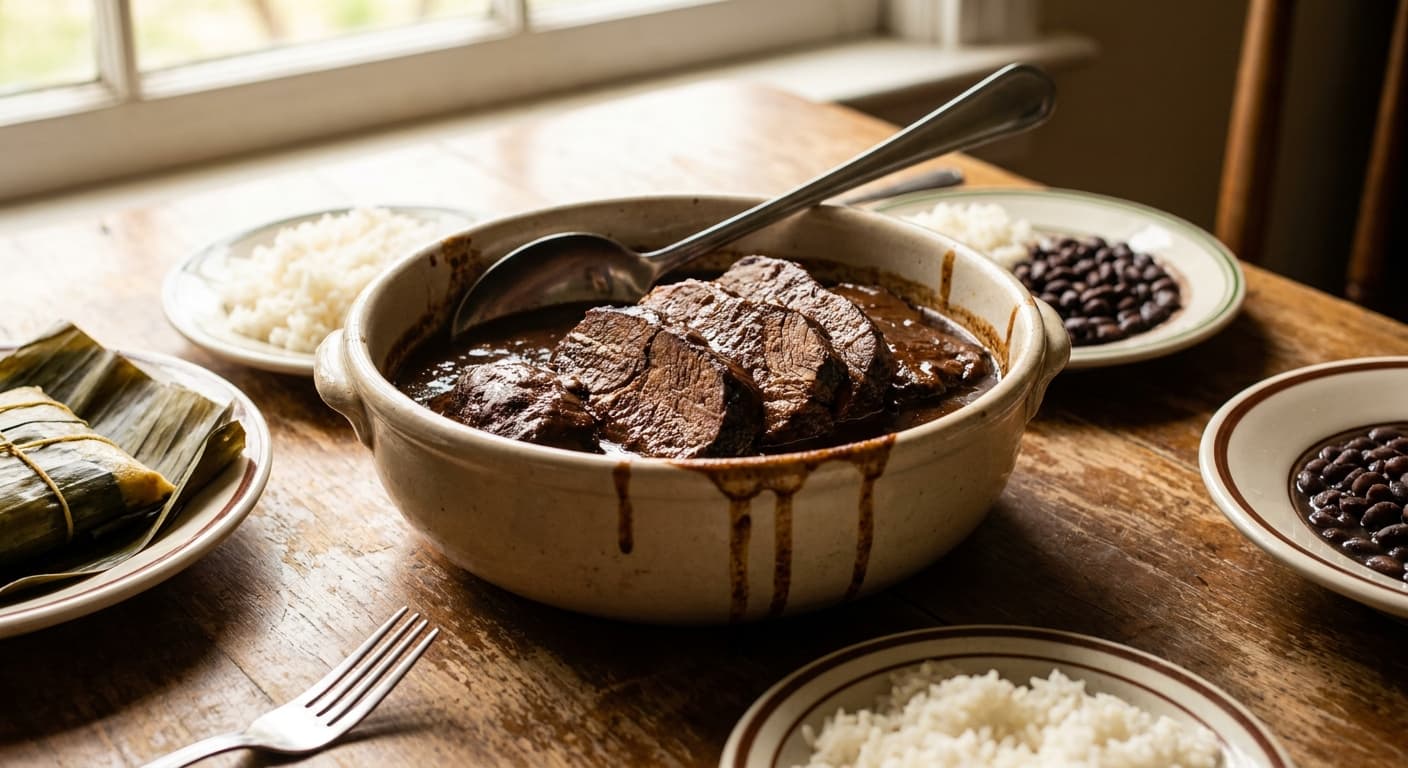
Asado Negro (Asado negro) — Venezuelan Dark-Caramel Beef Roast
Venezuelan · Main Courses · 245 min

Banh Xeo (Bánh Xèo) — Crispy Vietnamese Turmeric Crepes
Vietnamese · Main Courses · 85 min
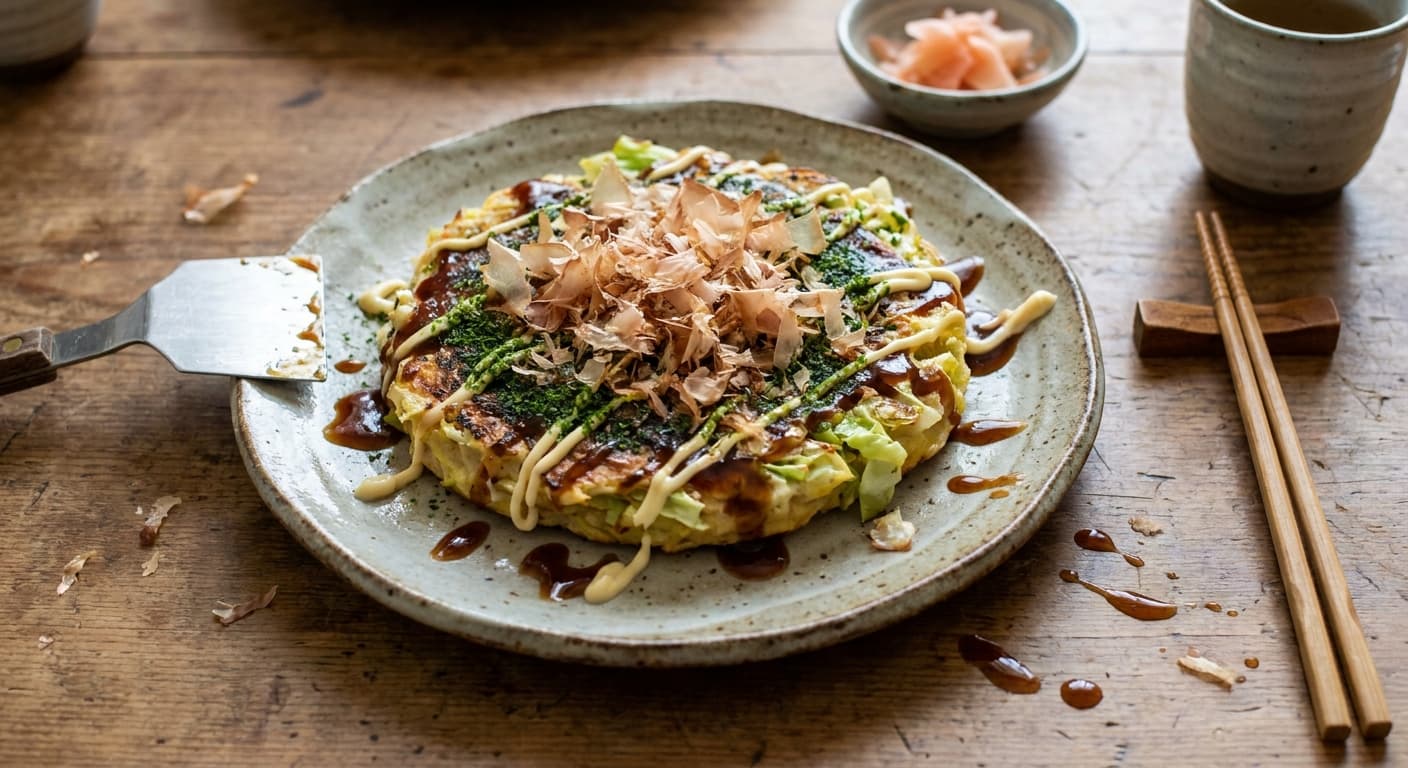
Okonomiyaki (お好み焼き) — Osaka-Style Savory Cabbage Pancake
Japanese · Main Courses · 49 min
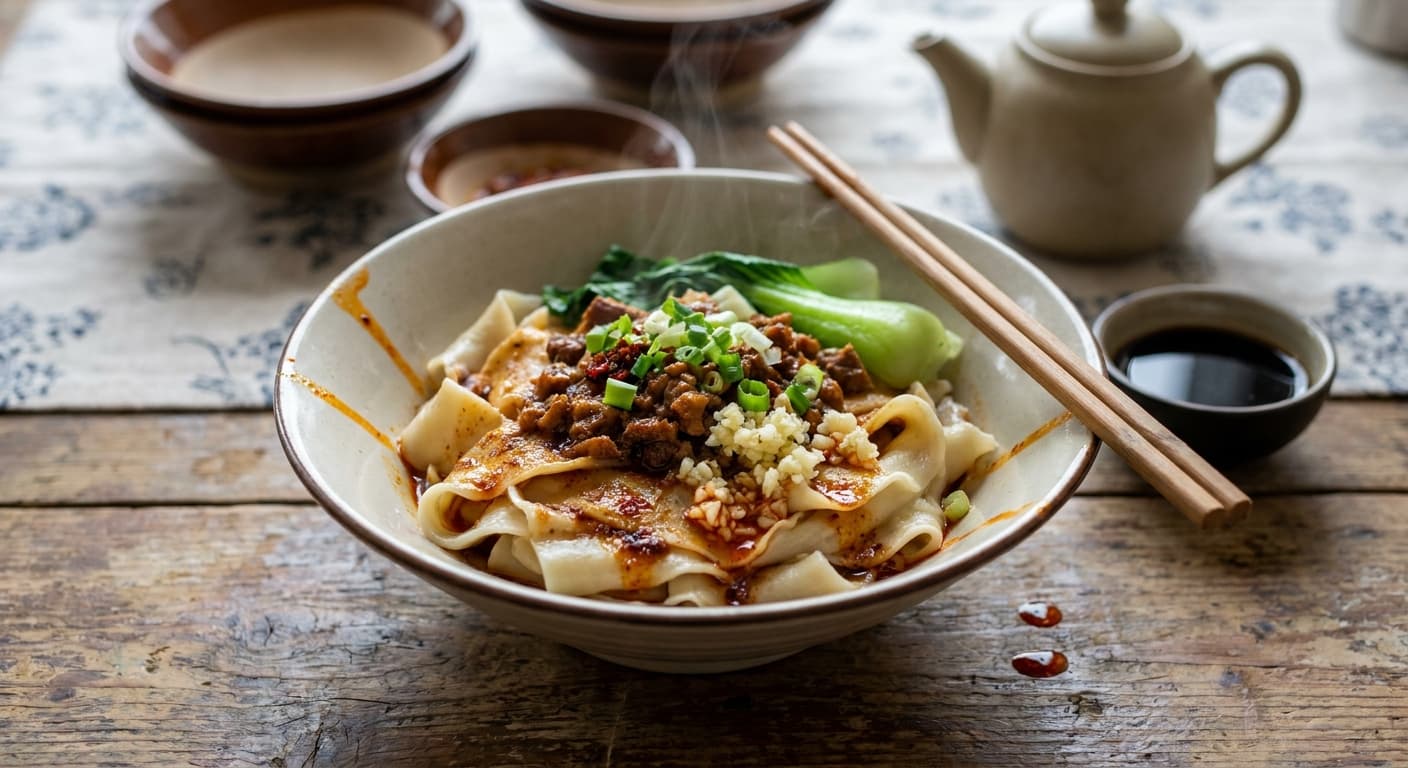
Biangbiang Noodles (油泼扯面) — Xi'an Hand-Pulled Belt Noodles
Chinese · Main Courses · 65 min
Reviews
Cooked this recipe?
Tap the stars to rate it — that's all it takes. A few words are welcome but optional.
No ratings yet. Cooked this one? Be the first to rate it — it takes one tap.