The Ultimate Guide to Nowruz (Persian New Year) Foods
Discover the rich culinary traditions of Nowruz. From the symbolic Sabzi Polo Mahi to the sweet Samanu, explore the dishes that celebrate the arrival of spring.
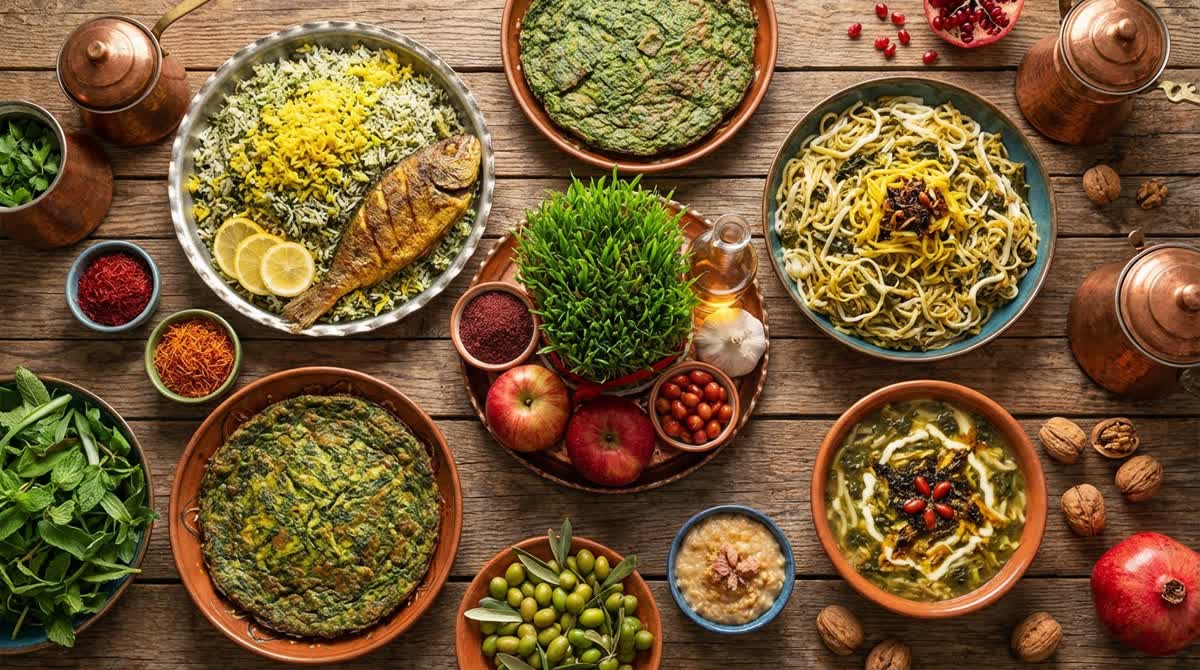
Nowruz (نوروز), the Persian New Year, is far more than a date on the calendar. It’s a seasonal and spiritual reset—an ancient celebration of spring, balance, and renewal that arrives precisely at the vernal equinox. For many families, the real “arrival” of Nowruz isn’t just the moment the new year turns; it’s the days (and sometimes weeks) of preparation that lead up to it: deep cleaning the home, sprouting greens, visiting elders, and—most memorably—cooking food that tastes like the first bright day after winter.
Food is central to Nowruz because it turns big ideas—rebirth, abundance, health, sweetness, hope—into something you can share at a table. Herbs show up in handfuls. Rice becomes jeweled with saffron and greens. Noodles are eaten to “untangle” the year ahead. Desserts lean into wheat, rosewater, and the promise of prosperity. In every region of Iran, the New Year table carries local accents, but the message is consistent: welcome spring with generosity.
Below is a comprehensive guide to Nowruz foods and traditions—what Nowruz means, how the Haft-Sin table works, what people cook for the New Year, how sweets fit into the celebration, and how to host a Nowruz dinner that feels both authentic and welcoming (even if it’s your first time).
What Is Nowruz, and Why Is It So Significant?
Nowruz literally means “new day,” and it is celebrated at the exact moment of the spring equinox, when day and night are equal. Its roots stretch back over 3,000 years, with strong connections to ancient Iranian and Zoroastrian worldviews that emphasize cosmic order, truth, and the triumph of light over darkness. Over centuries, Nowruz has traveled across empires and borders, becoming a shared cultural holiday for millions of people—especially in Iran, Afghanistan, Tajikistan, parts of the Caucasus and Central Asia, and throughout the global Iranian diaspora.
Nowruz as a season, not a single day
Although the equinox is the official “new year moment,” Nowruz is best understood as a season of rituals:
- Khaneh tekani (خانهتکانی): a thorough spring cleaning that symbolically clears away the old year’s dust—both literal and emotional.
- Sabzeh growing: sprouting wheat, lentils, or mung beans to represent new life.
- Chaharshanbe Suri: the last Wednesday night before Nowruz, marked by bonfires and the tradition of jumping over flames (with phrases asking to take the fire’s health and give away one’s sickness).
- Did-o-bazdid: visiting elders and relatives in the days after Nowruz.
- Sizdah Bedar: the 13th day of the new year, traditionally spent outdoors, picnicking and “releasing” the sabzeh into nature.
Food threads through every step: snacks for visitors, sweets for gifting, and a New Year’s meal built around symbolism as much as flavor.
The Haft-Sin Table, Explained (and What Each Item Symbolizes)
At the heart of many Nowruz homes is the Haft-Sin (هفتسین) table—literally “seven S’s”—a curated arrangement of items whose names begin with the Persian letter “س” (sin). Families often add other meaningful objects too, but the seven core “S” items are the classic foundation.
The seven “S” items and their meanings
Sabzeh (سبزه) — sprouts
Sprouted wheat, lentils, or mung beans grown in a dish.
Symbolism: rebirth, renewal, and the return of life after winter.
Samanu (سمنو) — sweet wheat pudding
A thick, caramel-brown pudding made from germinated wheat.
Symbolism: abundance, strength, patience, and the sweetness earned through effort.
Senjed (سنجد) — dried oleaster fruit
Often placed as dried fruit or berries from the oleaster tree.
Symbolism: love, wisdom, and the awakening of affection (sometimes also associated with fertility).
Seer (سیر) — garlic
A few heads or cloves of garlic.
Symbolism: health, protection, and medicine—warding off illness as the year begins.
Seeb (سیب) — apple
Usually red apples, polished and bright.
Symbolism: beauty, vitality, and good health.
Serkeh (سرکه) — vinegar
A small bowl of vinegar.
Symbolism: patience, maturity, and the acceptance of life’s sourness alongside its sweetness.
Somāq (سماق) — sumac
A dish of deep red sumac.
Symbolism: sunrise and the victory of light; also a reminder that new beginnings can be tart and bracing.
Common additions (not “Sin,” but culturally widespread)
Many families include extra items that carry meaning, even if they don’t start with “س”:
- Sonbol (سنبل) — hyacinth: fragrance of spring, beauty, and new growth.
- Sekkeh (سکه) — coins: prosperity and financial well-being.
- A mirror (آینه): reflection, clarity, and self-knowledge.
- Candles (شمع): light, warmth, and spiritual presence.
- Painted eggs: fertility and creation.
- Goldfish (ماهی قرمز): life and movement (more modern and sometimes debated for ethical reasons; many families now choose symbolic alternatives).
- A book: often the Divan of Hafez, the Shahnameh, or a religious text depending on the family’s tradition—representing wisdom and guidance.
The Haft-Sin is not just decoration; it’s a visual “prayer” for the year ahead. And once guests arrive, the table becomes a gathering point—tea poured, sweets offered, stories exchanged.
Traditional Nowruz Dishes: The Flavors of Renewal
Nowruz foods tend to be bright, herb-forward, and celebratory. Herbs (sabzi) are especially prominent because they embody spring itself—green, aromatic, alive. Rice dishes are equally central, often perfumed with saffron and layered with textures like crispy tahdig.
Below are some of the most iconic dishes associated with Nowruz, including classics and closely related holiday favorites.
Sabzi Polo ba Mahi: Herbed Rice with Fish
If one dish could represent Nowruz on a plate, it’s Sabzi Polo ba Mahi—fluffy rice mixed with abundant herbs (typically dill, parsley, cilantro, chives/green onion) served with fish. The herbs signal rebirth and greenery; fish is often read as a symbol of life and motion.
Families prepare it in different ways: some go heavy on dill, others balance herbs evenly; fish may be white fish, trout, or Caspian-style preparations depending on region and availability. What remains consistent is the sense that this is “spring on a platter.”
If you love herb rice, you may also enjoy herb-forward pilafs that echo the same seasonal mood, such as Valak Polo, made with wild garlic—one of the most spring-specific ingredients in Persian cooking:
And for a more elaborate herb-rice centerpiece with a festive structure, consider this tart, saffron-rich option:
Kuku Sabzi: The Herb Frittata of Nowruz
Kuku sabzi is a Nowruz essential in many households: a dense herb frittata packed with greens and often accented with walnuts and barberries. It’s frequently served as part of a spread—warm or room temperature—making it ideal for visiting days when guests come and go.
While “kuku sabzi” itself isn’t in the recipe list provided, a closely related Persian kuku that captures the same celebratory, layered style is:
Reshteh Polo: Noodles for Direction and Good Fortune
Reshteh polo is rice cooked with toasted noodles (reshteh), often served around the New Year because noodles symbolize the “threads” or “strings” of life. The idea is that eating them helps you hold the threads—guiding your path and bringing good fortune in the year ahead.
One especially festive variation includes fruit, which adds a sweet counterpoint and makes it feel even more like a holiday dish:
Ash Reshteh: The Comforting New Year Soup
Ash reshteh is a thick Persian noodle-and-herb soup often made with legumes, greens, and noodles, then topped with kashk (whey), fried onions, and sometimes mint oil. It’s deeply comforting—exactly what you want while winter is still fading and spring is arriving in bursts.
Culturally, it’s also a “gathering” food: big pot, shared bowls, lots of toppings, lots of conversation. Even when it’s not served on the exact equinox meal, it’s a staple across the Nowruz season.
If you’re looking for a soup course with a similarly soothing feel (and a simpler technique), this Persian-style egg drop soup is a lovely addition to a Nowruz menu:
Dolmeh: Stuffed Vegetables for Abundance
Stuffed vegetables—collectively dolmeh—often appear during festive seasons because they’re generous and celebratory: leaves wrapped around fragrant fillings, vegetables packed with herbs and rice, trays bubbling with tomato-herb sauce.
Two excellent dolmeh options to anchor a Nowruz spread are:
- Dolmeh-ye Barg-e Mo (دلمه برگ مو) — Persian Stuffed Grape Leaves with Chicken
- Dolmeh Kalam Ba Goosht (دلمه کلم با گوشت) — Persian Stuffed Cabbage Rolls in Tomato-Herb Sauce
For a bright variation that feels especially spring-friendly, stuffed tomatoes are also a beautiful table dish:
Tahchin and Layered Rice Cakes: A Festive Showpiece
Tahchin is one of the most celebratory forms of Persian rice: a saffron-stained, yogurt-enriched rice cake with a crisp crust and a tender interior, often layered with meat or chicken. It looks dramatic when unmolded and sliced—perfect for a holiday table where presentation matters.
A classic-style option that feels like a true centerpiece is:
Spring Stews and Seasonal Ingredients
Nowruz overlaps with early spring, and Persian cuisine has specific seasonal ingredients that show up right now—especially chaghaleh badoom (green almonds), tart and crisp, often cooked into a stew that tastes unmistakably like spring.
For a quintessential seasonal khoresh:
Herbs and greens also continue into other stews; for example, spinach with fruit (a classic Persian sweet-sour balance) is a common flavor logic in springtime cooking:
Rice Dishes Beyond the Classics (Great for a Nowruz Menu)
Not every Nowruz table looks identical. Some families keep the equinox meal traditional and then serve a variety of rice dishes and stews throughout the visiting days. If you’re building a Nowruz menu and want options that still feel deeply Persian (and celebratory), these are excellent choices:
- Shushtari Polo (شوشترى پلو) — Black-Eyed Pea and Dill Layered Rice with Chicken
- Loobia Polo ba File Murg (لوبیا پلو با فیله مرغ) — Persian Green Bean Rice with Saffron Chicken
- Eslamboli Polo (اسلامبولی پلو) — Persian Tomato Rice with Tender Beef
- Polo va Sabzijat (پلو و سبزیجات) — Persian Saffron Vegetable Rice
- Gol Kalam Polo (گل کلم پلو) — Saffron Cauliflower Rice with Spiced Minced Meat
These dishes work well for hosting because they scale, hold heat, and feel special without requiring the exact fish-and-herb-rice combination.
Nowruz Sweets and Desserts: Sweetness as a New-Year Blessing
In Persian hospitality, sweets aren’t just dessert—they’re part of welcoming. During Nowruz visits, guests are commonly offered tea with pastries, cookies, or confections. Sweetness is symbolic: it’s a wish that the year ahead will be sweet, that speech will be kind, that gatherings will be joyful.
Samanu: the most symbolic Nowruz sweet
Samanu is one of the seven items on the Haft-Sin, but it’s also a food with its own deep story. Made from germinated wheat, it transforms grain into a naturally sweet, thick pudding—no added sugar required in traditional methods. The process takes time: sprouting, grinding, slow cooking, constant stirring. In many communities, samanu-making is communal, with women gathering to stir the pot, sing, tell stories, and keep the mixture moving for hours.
What it represents: prosperity, patience, strength, and the idea that sweetness can come from what initially seems plain.
Other common Nowruz sweets (culturally important)
While recipes vary by family and region, these are among the best-known sweets served during the Nowruz season:
- Nan-e nokhodchi: chickpea flour cookies, often flavored with cardamom and dusted with powdered sugar.
- Berenji: rice flour cookies, delicate and fragrant (often with rosewater).
- Baqlava (baghlava): layered nut pastry found across the region, with Iranian regional styles.
- Zoolbia and bamieh: syrup-soaked fritters (more common in Ramadan in Iran but also appear in celebratory contexts in some families).
- Sohan (especially from Qom): brittle-like saffron toffee with nuts.
- Halva variations: saffron, rosewater, or flour-based sweets served for both celebrations and commemorations, depending on context.
Even if you don’t make a full dessert spread, offering a small plate of cookies, dates, nuts, and tea instantly makes a Nowruz gathering feel authentic.
Regional Variations Across Iran: One Holiday, Many Tables
Iran’s cuisine is famously diverse. Geography, climate, local agriculture, and historical trade routes all shape what ends up on the New Year table. The broad themes—herbs, renewal, abundance—stay consistent, but the expression changes.
Northern Iran (Caspian regions: Gilan, Mazandaran)
The north is lush, humid, and green—so food often features herbs, garlic, sour flavors, and fish. Rice culture is strong here, and the herb-and-fish combination of Nowruz feels especially “native” to the region.
A simple, everyday rice style that reflects Caspian cooking traditions is:
Tehran and central Iran
In many central households, Nowruz meals lean into widely recognized “national classics”: sabzi polo with fish, kuku sabzi, ash reshteh, and a variety of rice dishes served during visiting days. Presentation is often part of the celebration—beautiful rice, saffron accents, crisp tahdig.
Western and northwestern Iran (Azerbaijani influences)
You’ll see more stuffed vegetables, richer meat dishes, and regional sweets. Dolmeh traditions are especially strong, and celebratory rice dishes can be more layered and ornate.
Southern Iran (Persian Gulf and Hormozgan influences)
The south often features bolder spices, tangy notes, and seafood. If you want a Nowruz menu that nods to southern flavors, a spiced shrimp stew can be a striking addition:
And for a coastal, curry-leaning fish dish with Persian sensibilities:
A note on tradition vs. “family tradition”
One of the most culturally accurate things you can say about Nowruz food is that there is no single, universally enforced menu. Many families have a “must-have” dish, but the full spread is shaped by region, preference, availability, and the rhythm of hosting. What matters most is that the food expresses hospitality and springtime renewal.
How to Host a Nowruz Dinner (A Practical, Traditional-Feeling Plan)
Hosting Nowruz can be as simple as tea and sweets around the