Moroccan Tagine: The Complete Guide to North Africa's Iconic Dish
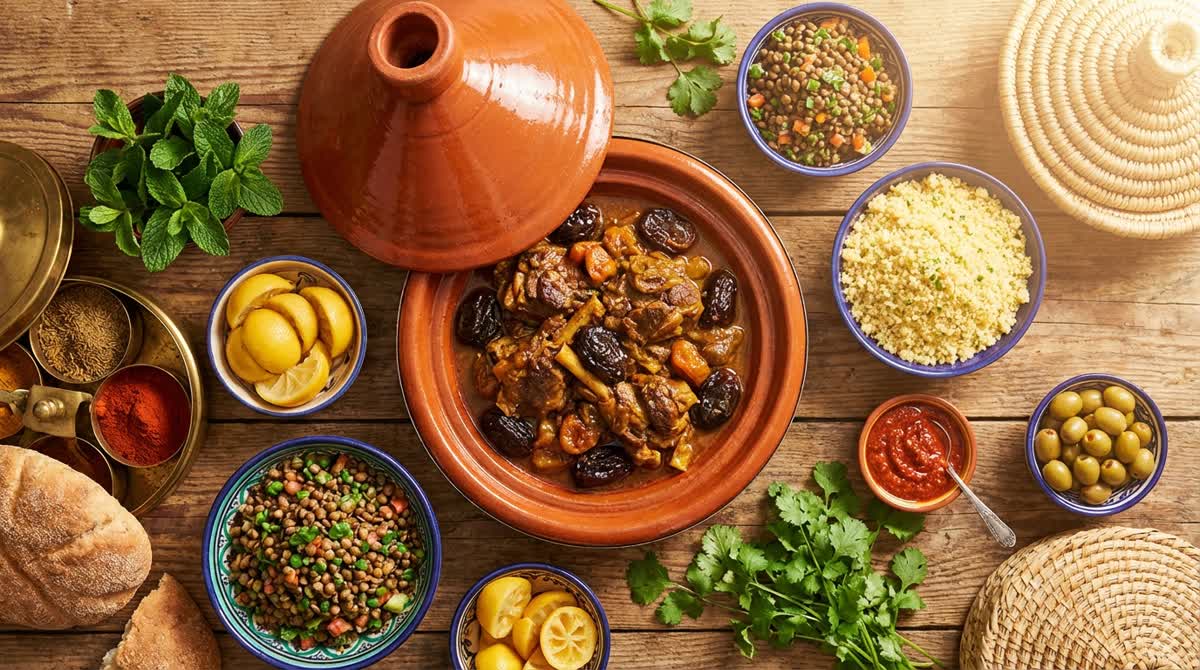
Moroccan tagine isn’t just a dish—it’s a whole way of cooking, serving, and gathering. If you’ve ever lifted the conical lid and watched fragrant steam roll out (saffron, ginger, preserved lemon, toasted cumin), you know the feeling: cozy, dramatic, and deeply comforting all at once. But if you’ve also wondered why tagines taste so layered, how to avoid watery sauce, or whether you really need the clay pot—this is for you.
This complete tagine cooking guide will walk you through the essentials: the equipment, the flavor logic, the techniques Moroccan cooks rely on, and the most beloved variations (chicken, lamb, kefta, fish). You’ll finish with the confidence to follow any moroccan tagine recipe, or even build your own.
What Is a Tagine, Exactly?
“Tagine” (also spelled tajine) refers to two things:
- The vessel: a wide, shallow base topped with a conical lid (traditionally clay).
- The dish: a slow-cooked stew/braise made in that vessel, designed to concentrate aromas and create a rich sauce with minimal liquid.
The lid’s shape matters: as steam rises, it cools against the cone and drips back down, basting the food. That gentle circulation is part of why tagines taste so integrated—spices, aromatics, fat, and juices become one cohesive sauce rather than separate “layers.”
A Quick Cultural Note: Tagine as a Table Tradition
In Morocco, tagine is often served in the cooking vessel and placed in the center of the table. People eat together, typically with bread (khobz), using the bread to scoop and swipe sauce. It’s communal, relaxed, and meant to be savored slowly.
If you want the full experience, pair your tagine with something to scoop—like homemade flatbreads. Zaffaron’s flaky, pan-cooked Msemen (مسمن) — Moroccan Square-Shaped Flaky Flatbread is a dream alongside a saucy tagine.
Tagine vs. Other Moroccan Slow-Cooked Dishes
Moroccan cuisine loves slow cooking, but each method has its own personality:
- Tagine: shallow braise, sauce-forward, served from the pot.
- Tanjia/Tangia: famously Marrakeshi, cooked in a clay urn, often lamb, more “sealed” and deeply infused. If you’re curious, explore Tanjia Marrakchia (طنجية مراكشية) — Moroccan Slow-cooked lamb in clay urn or Tangia Marrakchia (طنجية مراكشية) — Moroccan Slow-Cooked Lamb Shoulder in a Clay Urn.
- Harira: a soup with legumes and tomatoes—more sippable, equally iconic. Try Harira (الحريرة) — Moroccan Tomato and Lentil Ramadan Soup or Marrakeshi Harira (حريرة مراكشية) — Moroccan Lamb and Chickpea Soup.
Tagine is the “everyday-special” dish: flexible, seasonal, and endlessly personal.
The Essential Tagine Flavor Blueprint (So You Can Improvise)
Before we get into how to make tagine, it helps to understand the core flavor architecture. Most tagines balance:
1) Aromatics
- Onions (often lots—sliced, grated, or chopped)
- Garlic
- Herbs: cilantro and parsley are common
2) Warm spices (not necessarily “hot”)
- Ginger
- Turmeric
- Black pepper
- Cumin
- Paprika
- Saffron (if using, a little goes far)
A spice blend like Ras el Hanout can be used too. For a related flavor profile, check out Ras El Hanout Chicken (رأس الحانوت) — Moroccan Spiced Roasted Chicken with Aromatic Blend.
3) A “bright” element
- Preserved lemon
- Fresh lemon juice
- Tomatoes
- Vinegar (less common, but used)
4) A “sweet” counterpoint (optional but classic)
- Prunes, apricots, raisins
- Honey
- Caramelized onions
That sweet-savory style is celebrated in dishes like Lamb Tagine with Prunes and Almonds (طاجين لحم بالبرقوق واللوز) — Moroccan sweet-and-savory saffron stew and festive Lamb Mrouzia (المروزية) — Moroccan Festive Honeyed Lamb with Raisins and Almonds. For a tagine-adjacent topping that transforms simple chicken or lamb, try Tfaya (تفيا) — Moroccan Caramelized Onion and Raisin Relish.
5) Good fat
- Olive oil is common
- Sometimes smen (aged butter) in traditional kitchens
Fat isn’t just richness—it carries spice aromas and gives the sauce its signature gloss.
Do You Need a Clay Tagine Pot?
A clay tagine is wonderful, but it’s not the only path to a great moroccan tagine recipe.
Cooking options that work well
- Traditional clay tagine (best for the full experience)
- Dutch oven (excellent heat retention; easiest for most home cooks)
- Heavy lidded sauté pan (works, but watch evaporation)
Clay tagine tips (important)
- Season it (if unglazed): soak, dry, rub with oil, gently heat.
- Avoid thermal shock: don’t go from fridge to high flame.
- Use a diffuser on gas stoves to prevent cracking and promote even heat.
If you’re new, start with a Dutch oven to learn the technique—then “graduate” to clay when you’re ready.
The Complete Tagine Cooking Guide: Step-by-Step Technique
This section is your practical tagine cooking guide—the repeatable method behind most tagines.
Step 1: Build the base (onions + spices + oil)
Start with olive oil and onions (sliced or grated). Add garlic, then spices. You’re not trying to brown aggressively; you’re coaxing out aroma.
Tip: Grated onion almost melts into the sauce, giving you that classic tagine texture without needing flour or heavy reduction.
Step 2: Add protein and coat it in the spice base
Chicken pieces, lamb chunks, kefta (meatballs), or fish go in next. Turn to coat.
Tip: If using lamb, give it extra time at this stage to take on flavor and start rendering.
Step 3: Add “just enough” liquid
Tagine is not soup. Many beginners add too much water or stock.
- If using juicy ingredients (tomatoes, onions, zucchini), you may need very little added liquid.
- If using tougher cuts (lamb shoulder), a bit more helps early on.
Rule of thumb: Add liquid to come up about ¼ of the way up the ingredients, not to cover.
Step 4: Arrange vegetables strategically
Hard vegetables near the bottom, quick-cooking ones toward the top. In many Moroccan kitchens, vegetables are arranged in a beautiful radial pattern—practical and pretty.
Step 5: Cover and simmer gently
Low heat is the secret. Tagine should barely bubble.
- Clay tagine: low flame, longer time
- Dutch oven: low simmer in the oven works beautifully
Step 6: Reduce and finish uncovered (when needed)
If the sauce is thin near the end, remove the lid and simmer to reduce. Taste and adjust salt, lemon, and spice.
Tip: Add delicate herbs (cilantro) late to keep them bright.
Common Mistakes (and How to Fix Them)
Mistake 1: Watery sauce
Fix: Use less liquid, cook uncovered at the end, and rely on onions/tomatoes for body.
Mistake 2: Spices taste harsh or dusty
Fix: Bloom spices in oil with onions/garlic first. Also check spice freshness—old turmeric and paprika taste flat.
Mistake 3: Meat is tough
Fix: Lower heat + longer time. Tagine rewards patience. For lamb, choose shoulder/shank and give it time.
Mistake 4: Everything tastes the same
Fix: Add contrast: preserved lemon, olives, a pinch of saffron, fresh herbs, or a sweet element like prunes.
Mistake 5: Burnt bottom
Fix: Lower heat, use a diffuser (clay), and ensure there’s enough oil/onion base to protect the pot.
Classic Types of Moroccan Tagine (With Real Examples)
If you’re looking for a reliable starting point, these are the “big three” families of tagine—each with a different personality.
1) Chicken Tagine: Bright, briny, and herbaceous
The most famous version pairs chicken with preserved lemons and olives. It’s sunny, savory, and incredibly satisfying.
Serving tip: Add fries or roasted potatoes on the side, and lots of bread for the sauce.
2) Lamb Tagine: Deep, sweet-savory comfort
Lamb with prunes and almonds is a masterpiece of Moroccan balance—warm spices plus fruit sweetness, finished with nuts for crunch.
Cook it here: Lamb Tagine with Prunes and Almonds (طاجين لحم بالبرقوق واللوز) — Moroccan sweet-and-savory saffron stew
Personal touch: If you’ve never cooked with prunes in savory food, this is the dish that changes minds. The sauce turns glossy and complex, like it’s been simmering all day (even when it hasn’t).
3) Kefta Tagine: Weeknight-friendly and saucy
Kefta (seasoned meatballs) simmered in tomato sauce, often finished with eggs cracked on top. It’s fast, family-friendly, and made for scooping.
Try it: Kefta Tagine with Eggs (طاجين الكفتة بالبيض) — Moroccan Meatballs in Tomato Sauce
Timing tip: Crack eggs in near the end and cover just until set—jammy yolks are the prize.
4) Fish Tagine: Fresh, aromatic, and chermoula-forward
Fish tagine often uses chermoula (an herb-garlic-spice paste) and bakes gently until flaky.
Make it: Tagine of Fish Chermoula (شرمولة) — Moroccan Baked Fish with Herb and Spice Paste
Extra credit: If you love chermoula flavors, you’ll also enjoy Sardines Chermoula (سردين شرمولة) — Moroccan chermoula-marinated sardines, pan-fried.
How to Make Tagine Without a Tagine Pot (Dutch Oven Method)
If you’re searching how to make tagine and you only have a Dutch oven, you’re in great shape. Here’s the approach:
- Build onion-spice base on the stovetop.
- Brown lightly (optional): You can brown meat more than you would in clay—just don’t overdo it.
- Add minimal liquid, cover tightly.
- Oven simmer at 300–325°F (150–165°C) until tender.
- Reduce sauce on the stovetop if needed.
- Finish with fresh herbs, lemon, olives, toasted almonds, etc.
Why oven works: heat is even and gentle, mimicking the low, steady environment a tagine loves.
Ingredient Deep Dive: Preserved Lemons, Olives, and Saffron
Preserved lemons
They bring a floral, fermented citrus intensity that fresh lemon can’t replicate. Use mostly the peel; the pulp can be intense.
Shortcut: If you don’t have preserved lemon, use lemon zest + a small squeeze of juice at the end. It’s not identical, but it’s still delicious.
Olives
Green olives are classic in chicken tagine. Rinse if very salty.
Saffron
A pinch adds honeyed aroma and subtle color. Bloom it in a tablespoon of warm water and add with the liquid.
What to Serve With Moroccan Tagine
A tagine meal is often about contrasts: saucy main dish, something starchy to scoop, and something fresh on the side.
Bread and starches
- Harcha (حرشة) — Moroccan Semolina Griddle Bread for a tender, corn-bread-like bite
- Msemen (مسمن) — Moroccan Square-Shaped Flaky Flatbread for flaky layers that soak up sauce
Fresh sides
- Moroccan Carrot Salad (سلطة الجزر المغربية) — Spiced Carrot Salad with Cumin and Orange Blossom adds brightness and crunch
Starters that fit beautifully
- Bissara (بصارة) — Moroccan Fava Bean Soup with Cumin and Olive Oil as a warming opener
- Harira (الحريرة) — Moroccan Tomato and Lentil Ramadan Soup when you want a full Moroccan spread
Something sweet to finish
If you’re building a full North African table, end with:
- Ghriba (غريبة) — Moroccan crumbly almond cookies with orange blossom
or - Chebakia (الشباكية) — Moroccan Sesame and Honey Cookie Roses
Make-Ahead, Storage, and Reheating (Tagine Gets Better Tomorrow)
One of my favorite things about tagine is that it’s often even better the next day. The sauce thickens slightly, the spices mellow, and everything tastes more unified.
- Make ahead: Cook fully, cool, refrigerate.
- Store: 3–4 days in the fridge.
- Freeze: Most tagines freeze well (eggs and some vegetables can change texture).
- Reheat: Low and slow on the stovetop with a splash of water if needed.
A Simple “Choose-Your-Own” Moroccan Tagine Formula
Once you’ve cooked a couple of classics, you can improvise confidently. Use this as your flexible tagine cooking guide template:
- Protein: chicken thighs / lamb shoulder / kefta / fish
- Aromatics: onion + garlic + cilantro stems
- Spices: ginger + turmeric + pepper (+ saffron if you like)
- Vegetables: carrots, potatoes, zucchini, peppers, tomatoes
- Signature twist (pick one):
- Preserved lemon + olives
- Prunes/raisins + honey + almonds
- Tomato + eggs
- Chermoula + peppers + potatoes
- Finish: fresh cilantro, lemon, toasted nuts, good olive oil
If you’re ever unsure, return to a trusted moroccan tagine recipe and let it remind you what “balanced” tastes like.
Frequently Asked Questions
Is tagine spicy?
Usually aromatic, not hot. Heat (chili) is optional and regional.
Can I use beef?
Yes—choose a cut that likes slow cooking (chuck). Expect a different character than lamb.
Why does my tagine taste flat?
It usually needs one of these: salt, acid (lemon/preserved lemon), or fresh herbs at the end.
What’s the difference between a tagine and curry?
They’re both spiced stews, but tagine typically uses less liquid, leans on onion-based sauce, and often features preserved lemon/olives or fruit-and-nut sweetness that’s distinctively Moroccan.
Your Next Step: Pick a Tagine and Cook It This Week
If you’ve read this far, you’re ready. Choose one dish and go all in—shop for fresh spices, give it low heat, and let the sauce do its thing. For a first run, I recommend starting with the bright classic Chicken Tagine with Preserved Lemons and Olives, then trying the deeper sweet-savory Lamb Tagine with Prunes and Almonds when you want something truly special.
And when your tagine is bubbling away, explore more Moroccan favorites on Zaffaron—from breads like Harcha and Msemen, to sides like Moroccan Carrot Salad, to cozy soups like Harira. Your next great meal is one click away.