Dan Dan Noodles (担担面) — Sichuan Noodles with Spicy Sesame-Chili Pork Sauce
A classic Sichuan noodle bowl built from chewy wheat noodles, aromatic chili oil, sesame paste, preserved mustard greens, and crisp minced pork. Traditionally a street snack, it is served in small, intensely seasoned portions.
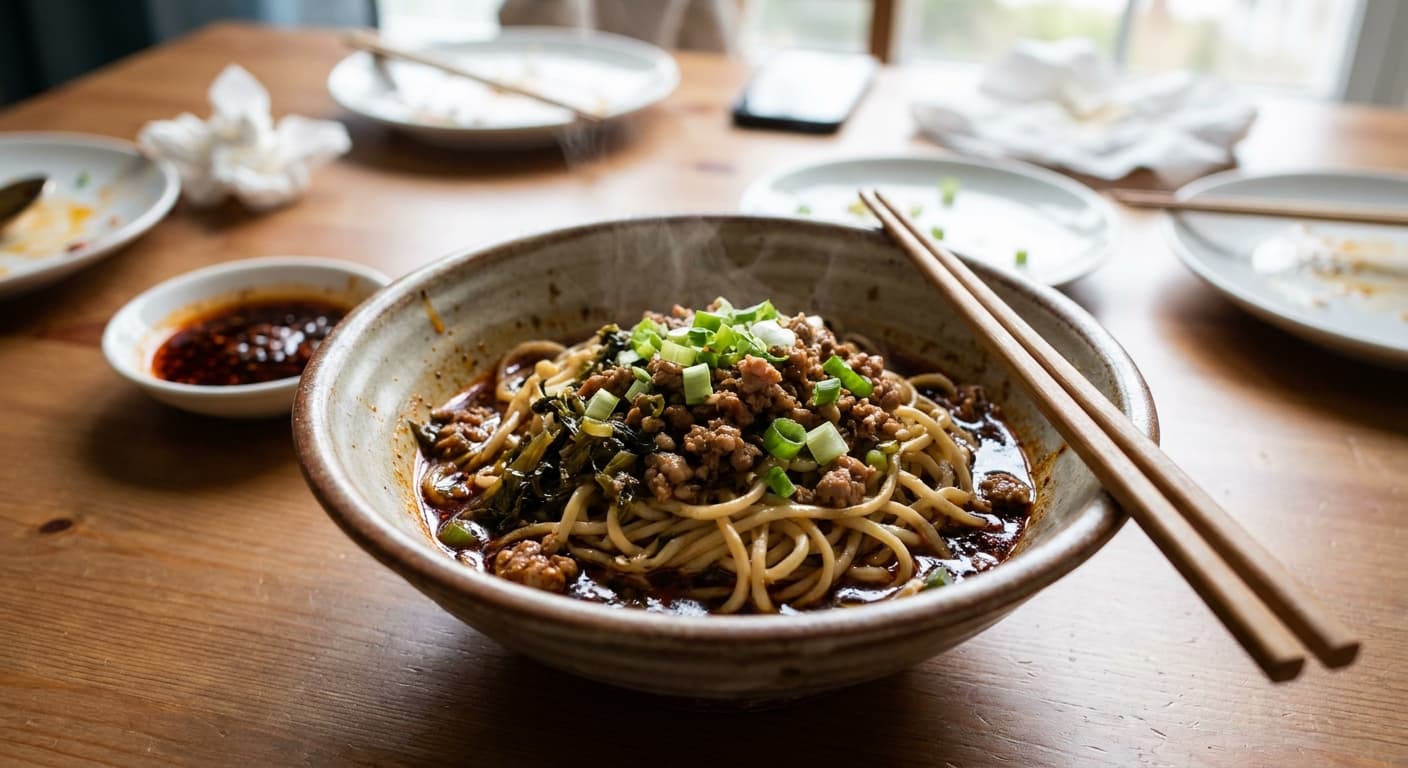
Printable Recipe Card
Servings: 4 · Total: 45 min · Difficulty: medium
Ingredients (quick list)
- 480 g fresh Chinese wheat noodles
- 250 g ground pork shoulder (20 percent fat preferred)
- 80 g Sichuan ya cai preserved mustard greens (finely chopped)
- 1 tbsp neutral cooking oil
- 1 tbsp Shaoxing wine
- 1 tbsp light soy sauce
- 1 tsp dark soy sauce
- 1 tsp granulated sugar
- 80 g Chinese sesame paste
- 4 tbsp Sichuan chili oil with sediment
- 2 tbsp Chinkiang black vinegar
- 2 clove garlic (finely grated)
+ 6 more in the full ingredients section below.
Steps (summary)
- Stir the Chinese sesame paste thoroughly in its jar before measuring, because the solids and oil often separate. In a bowl, whi…
- Heat a wok or heavy skillet over medium-high heat, then add the neutral oil and swirl to coat the surface. Add the ground pork…
- Add the chopped ya cai to the pork and stir-fry for 2 minutes so its briny aroma seasons the fat. Pour in the Shaoxing wine, li…
- Bring 3 l of water to a rolling boil in a large pot and cook the fresh wheat noodles for 2 to 3 minutes, or according to the pa…
- Divide the sauce evenly among 4 warmed serving bowls, placing it at the bottom in the Sichuan style rather than coating the noo…
- Finish each bowl with sliced scallions and crushed roasted peanuts. Serve immediately and instruct diners to stir from the bott…
Cultural Background
Dan dan noodles began as a Sichuan street food named for the carrying pole used by vendors. The dish remains valued for its compact balance of heat, numbing fragrance, salt, vinegar, and rich sesame.
Equipment
💡 Tips
- Use chili oil that contains toasted chile sediment, not only clear red oil, because the sediment gives the sauce its roasted depth.
- Fry the pork until the fat renders and the pieces become slightly crisp; soft, pale pork makes the noodle bowl taste flat.
- If the sauce tightens before serving, whisk in an additional 1 tbsp hot noodle water per bowl.
⚠️ Common Mistakes
❌ Adding the sauce directly to cold noodles
✅ Fix: Use hot, freshly drained noodles so the sesame paste loosens and coats each strand properly.
❌ Under-frying the pork
✅ Fix: Cook until the pork has rendered fat and browned edges, which creates the signature savory topping.
❌ Using plain sesame oil instead of sesame paste
✅ Fix: Use thick sesame paste for body; sesame oil alone cannot create the creamy sauce.
🧊 How to Store
Store noodles, sauce, and pork topping separately in airtight containers for up to 3 days. Reheat the pork in a skillet for 3 minutes and loosen the sauce with 1 tbsp hot water per serving before tossing with freshly boiled noodles.
📅 Make Ahead
The pork and ya cai topping can be cooked 2 days ahead and refrigerated. The sauce base can be mixed 1 day ahead, but add hot noodle water only just before serving.
🍽️ Pairs Well With
- Cucumber salad
- smashed garlic cucumbers
- stir-fried greens
- hot jasmine tea.
Regional Variations
- Chengdu versions are often served in smaller portions with a strong chili oil and Sichuan pepper finish.
- Chongqing-style bowls may be sharper, oilier, and less sesame-forward.
- Restaurant versions outside Sichuan often add more broth, but traditional servings are usually saucy rather than soupy.
Ingredients
- 480 gfresh Chinese wheat noodles
- 250 gground pork shoulder (20 percent fat preferred)
- 80 gSichuan ya cai preserved mustard greens (finely chopped)
- 1 tbspneutral cooking oil
- 1 tbspShaoxing wine
- 1 tbsplight soy sauce
- 1 tspdark soy sauce
- 1 tspgranulated sugar
- 80 gChinese sesame paste
- 4 tbspSichuan chili oil with sediment
- 2 tbspChinkiang black vinegar
- 2 clovegarlic (finely grated)
- 1 inchfresh ginger (peeled and finely grated)
- 1.5 tsptoasted Sichuan peppercorns (finely ground)
- 0.5 tspfine sea salt
- 120 mlhot noodle cooking water
- 3scallions (thinly sliced)
- 40 groasted peanuts (roughly crushed)
🔄 Substitutions
- Chinese sesame paste→ unsweetened tahini mixed with toasted sesame oil in a 4:1 ratio
- Sichuan ya cai preserved mustard greens→ finely chopped Tianjin preserved vegetable
- ground pork shoulder→ ground chicken thigh
Instructions
- 1
Stir the Chinese sesame paste thoroughly in its jar before measuring, because the solids and oil often separate. In a bowl, whisk the sesame paste, chili oil, light soy sauce, black vinegar, garlic, ginger, ground Sichuan peppercorns, sugar, and salt until the sauce looks glossy and thick.
- 2
Heat a wok or heavy skillet over medium-high heat, then add the neutral oil and swirl to coat the surface. Add the ground pork and fry for 6 to 8 minutes, breaking it into small granules, until the meat loses moisture and begins to brown at the edges.
- 3
Add the chopped ya cai to the pork and stir-fry for 2 minutes so its briny aroma seasons the fat. Pour in the Shaoxing wine, light soy sauce, dark soy sauce, and sugar, then cook for 2 more minutes until the pork is dark, fragrant, and slightly crisp.
- 4
Bring 3 l of water to a rolling boil in a large pot and cook the fresh wheat noodles for 2 to 3 minutes, or according to the package timing for a springy texture. Before draining, ladle 120 ml of the hot noodle cooking water into the sauce and whisk until pourable but still creamy.
- 5
Divide the sauce evenly among 4 warmed serving bowls, placing it at the bottom in the Sichuan style rather than coating the noodles in advance. Drain the noodles well, divide them over the sauce, and top each bowl with one-quarter of the pork and ya cai mixture.
- 6
Finish each bowl with sliced scallions and crushed roasted peanuts. Serve immediately and instruct diners to stir from the bottom for 20 to 30 seconds, so the chili oil, sesame paste, pork, and noodles form a clinging sauce.
🪪 Recipe Passport
Cultural Background
Dan dan noodles began as a Sichuan street food named for the carrying pole used by vendors. The dish remains valued for its compact balance of heat, numbing fragrance, salt, vinegar, and rich sesame.
Regional Variations
Researched from multiple sources and validated by the Zaffaron editorial team. Every recipe is tested for accuracy, measurements, and cultural authenticity.
📚 Sources & Cultural References
- Fuchsia Dunlop — The Food of Sichuan — (2019)
Sources cited by the Zaffaron editorial team during recipe research. Cultural and culinary references supporting authenticity claims.
Nutrition per serving
Pairs well with
If you enjoyed this recipe, here are a few related Zaffaron recipes to try next.
Does your family make this differently?
Every family has their own version. Maybe your grandmother adds a secret ingredient, or your aunt has a completely different technique. Preserve your family's version — with their name on it, forever.
You Might Also Like
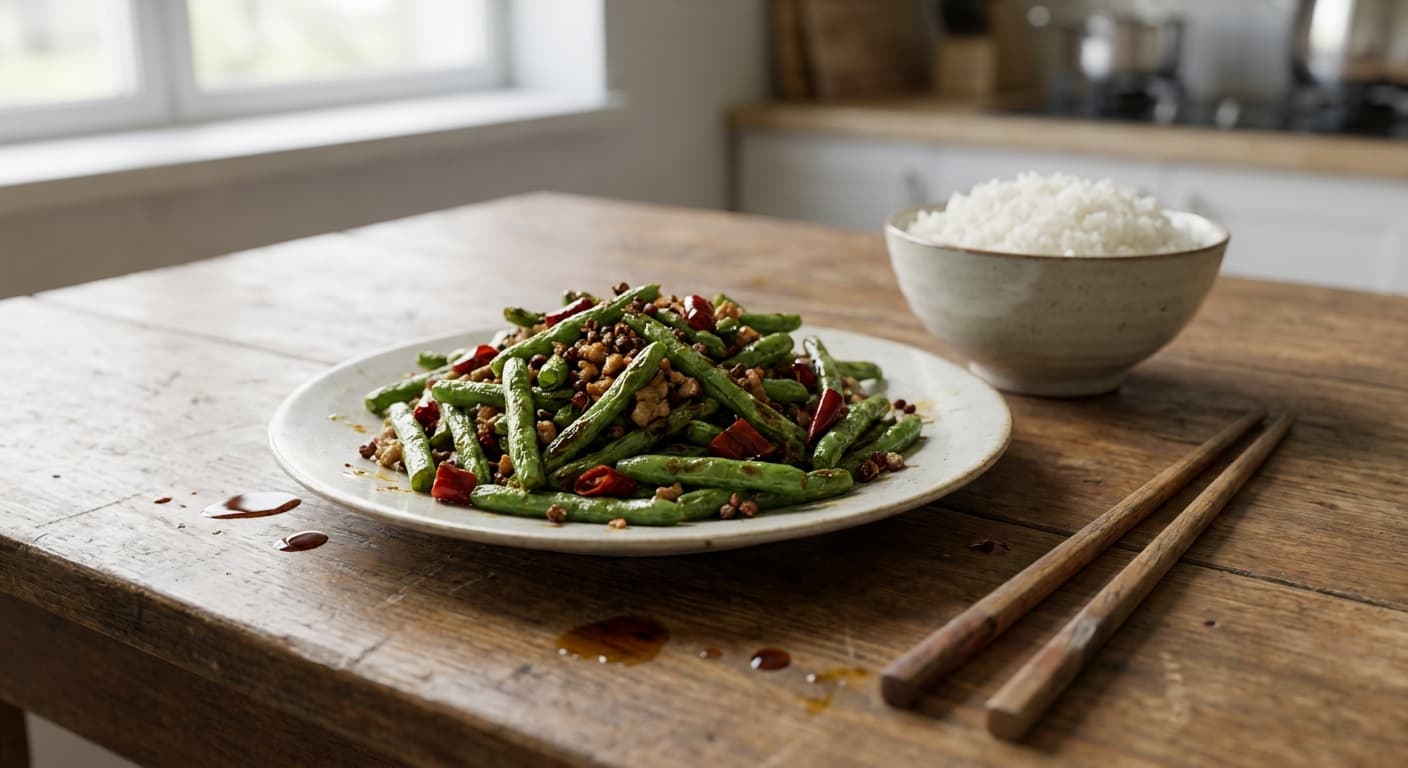
Dry-Fried Green Beans (干煸四季豆) — Sichuan Wok-Blistered Beans with Pork
Chinese · Side Dishes · 27 min
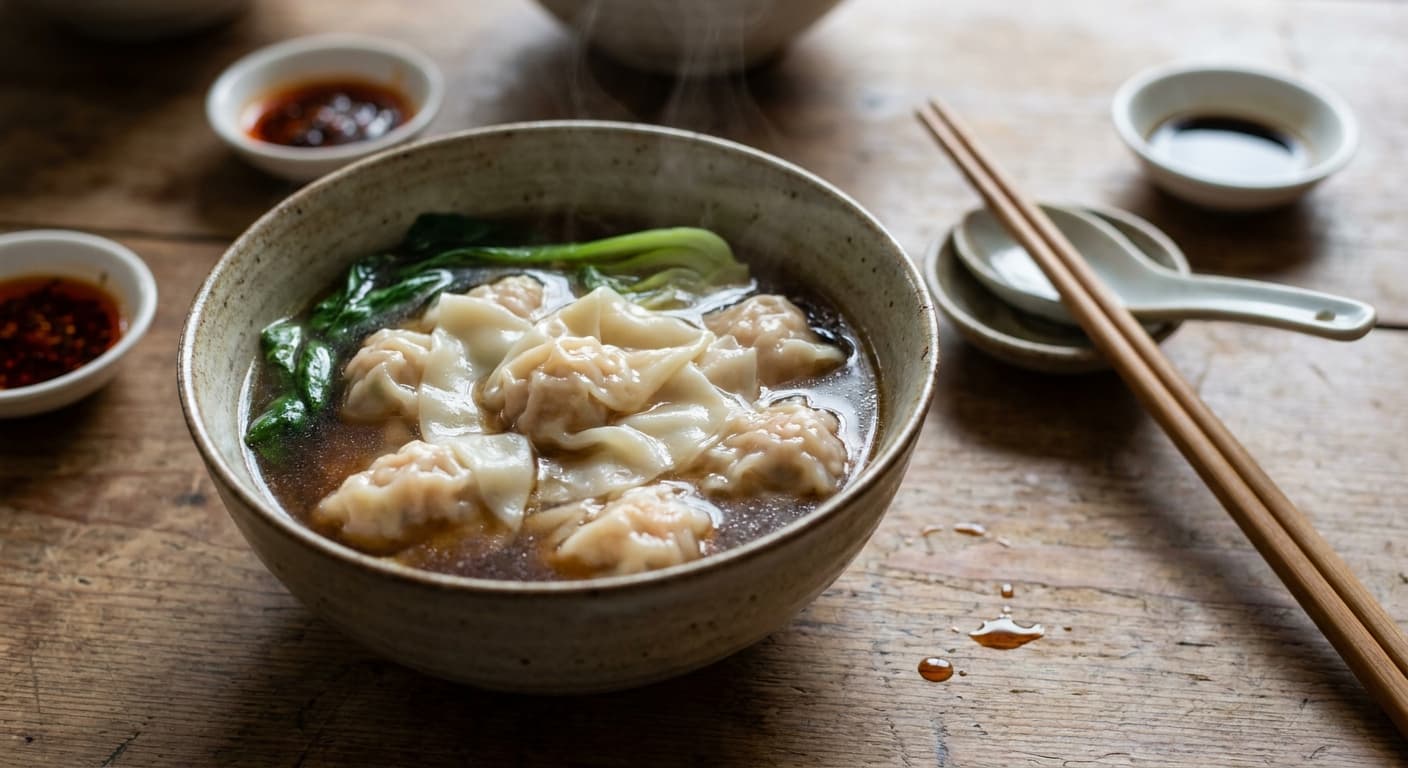
Wonton Soup (雲吞湯) — Cantonese Pork and Shrimp Dumpling Broth
Chinese · Soups · 70 min
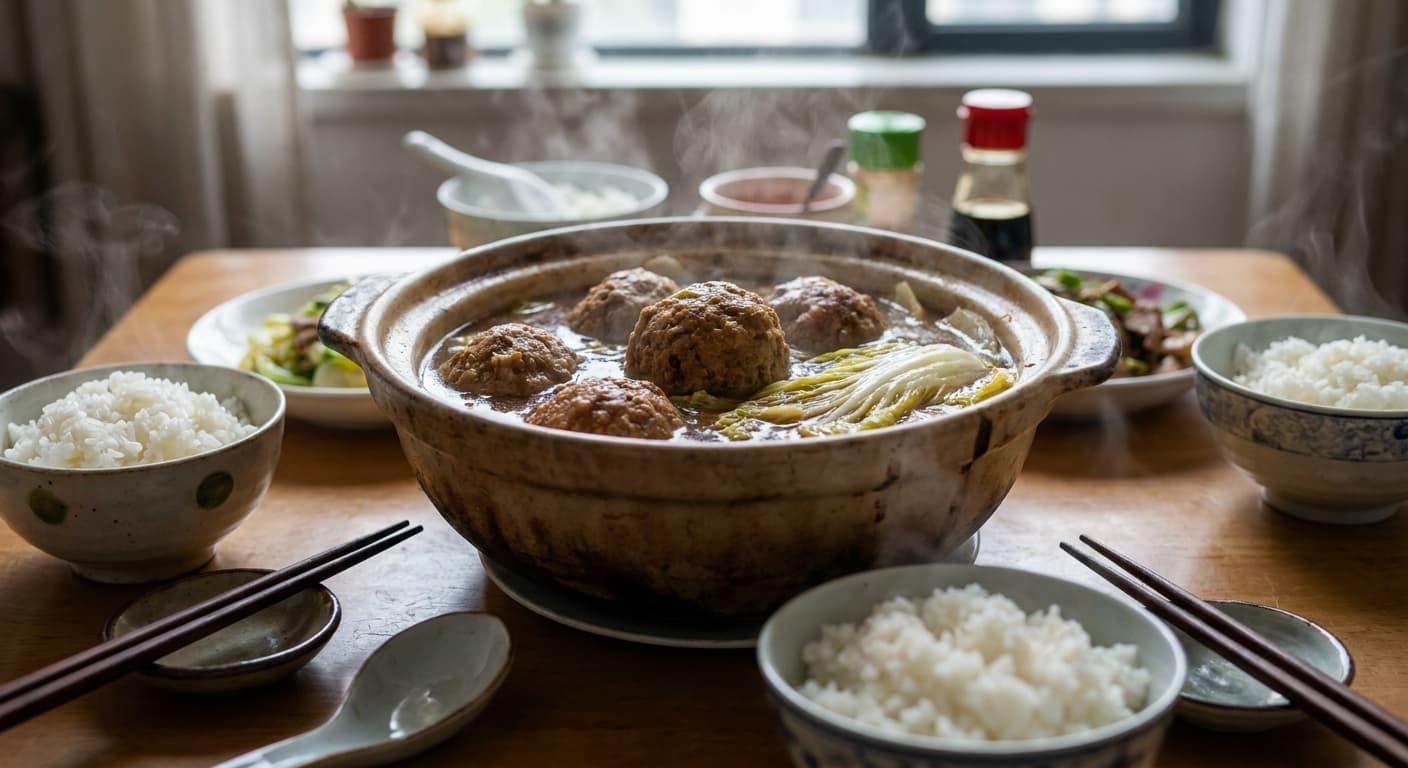
Lion's Head Meatballs (狮子头) — Braised Huaiyang Pork Meatballs
Chinese · Main Courses · 110 min
Egyptian Fatta (فتة) — Layered Meat, Rice, and Crisp Bread
Egyptian · Main Courses · 145 min
Chorrillana (Chorrillana) — Chilean Loaded Fries with Beef and Eggs
Chilean · Main Courses · 60 min
Japanese Oyakodon (親子丼) — Chicken and Egg Rice Bowl
Japanese · Rice Dishes · 29 min
Galbi Jjim (갈비찜) — Korean Braised Short Ribs
Korean · Main Courses · 175 min
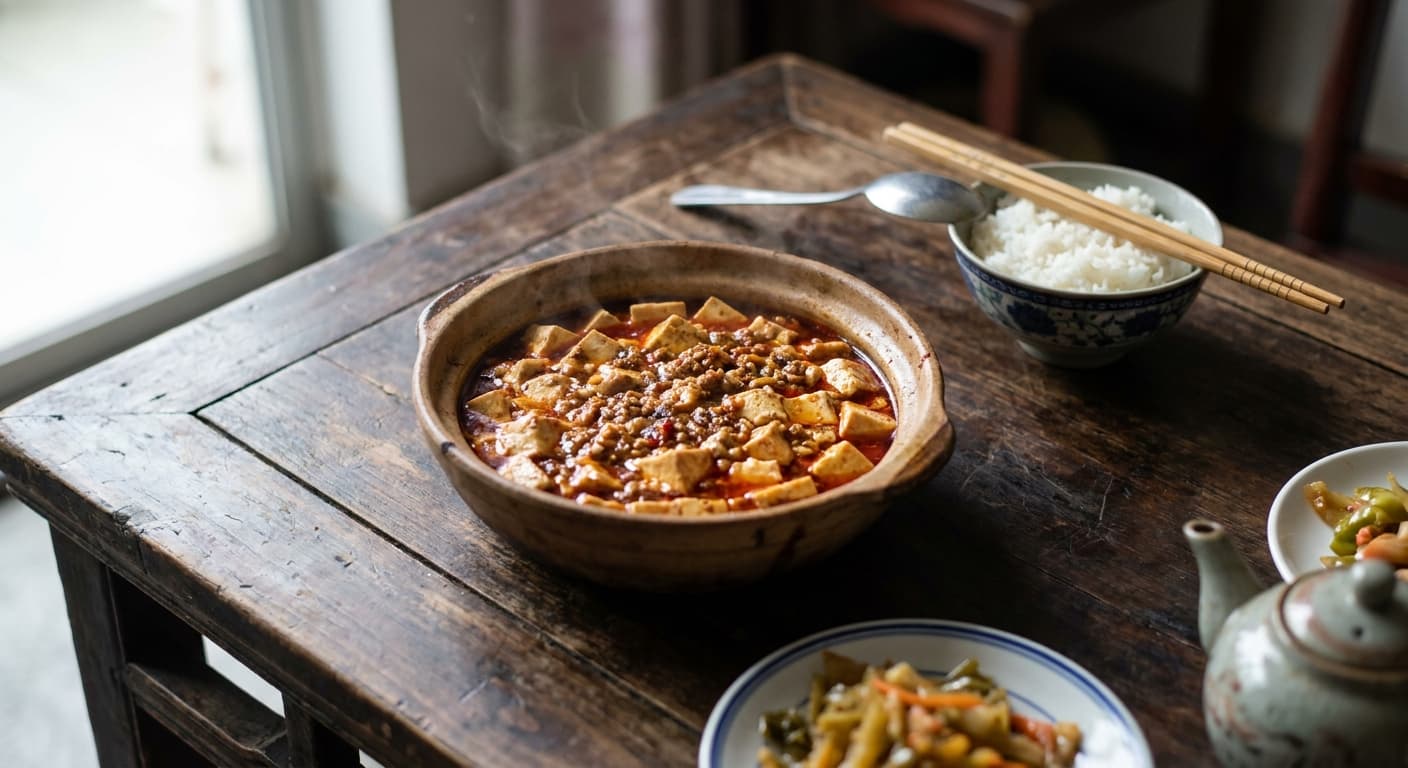
Mapo Tofu (麻婆豆腐) — Sichuan Silken Tofu in Spicy Fermented Bean Sauce
Chinese · Main Courses · 35 min
Reviews
Cooked this recipe?
Tap the stars to rate it — that's all it takes. A few words are welcome but optional.
No ratings yet. Cooked this one? Be the first to rate it — it takes one tap.