Gomaae (ごまあえ) — Japanese Spinach with Sesame Dressing
Gomaae is a classic Japanese side dish of blanched vegetables dressed with ground sesame, soy sauce, and sugar. This spinach version is common in home meals, lunch boxes, and small washoku plates.
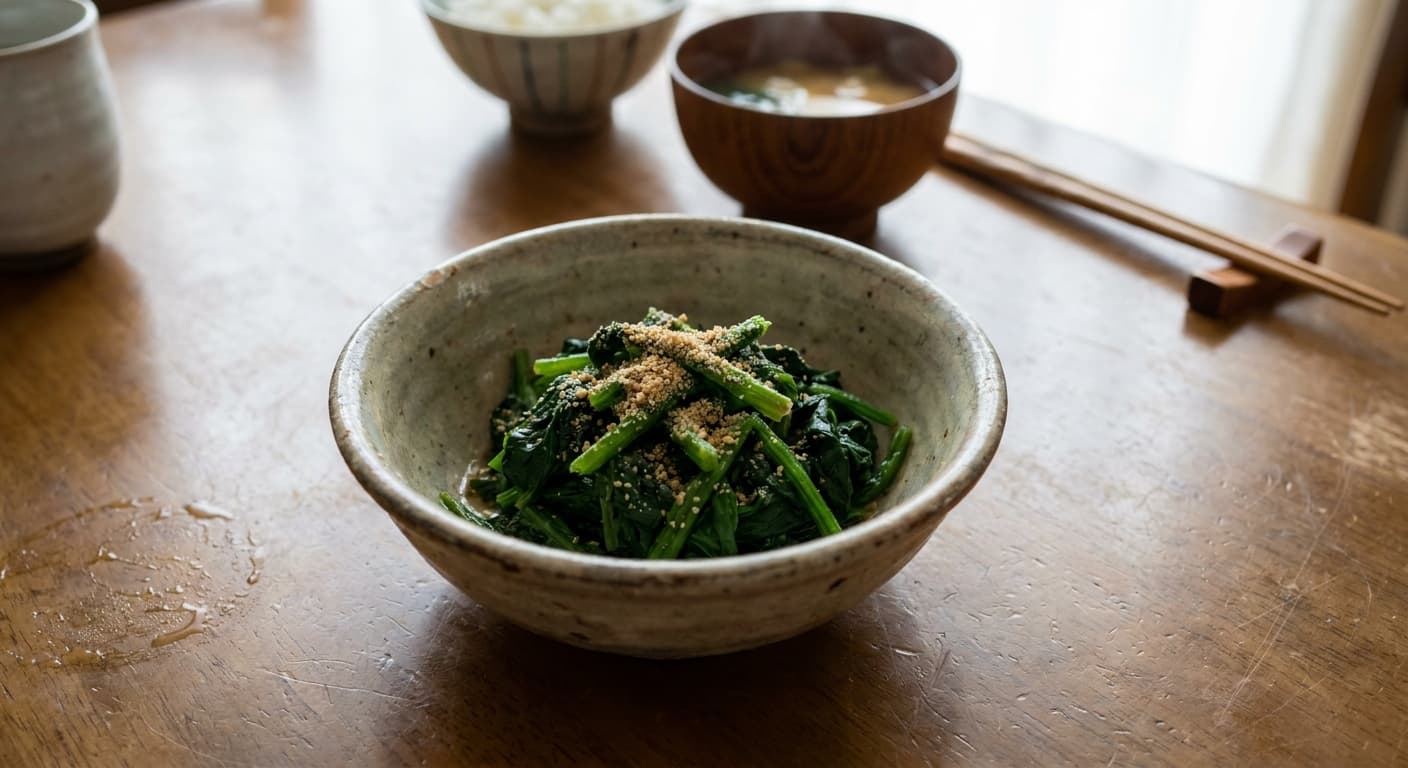
Printable Recipe Card
Servings: 4 · Total: 18 min · Difficulty: easy
Ingredients (quick list)
- 450 g fresh spinach (mature bunch spinach is best because the stems hold texture after blanching)
- 2 l water
- 12 g fine sea salt
- 300 g ice (for chilling the spinach after blanching)
- 40 g toasted white sesame seeds
- 30 ml Japanese soy sauce
- 12 g granulated sugar
Steps (summary)
- Wash the spinach in several changes of cold water, paying close attention to the base of the stems where grit often collects. K…
- Bring 2 l water to a strong boil in a wide pot and dissolve 12 g fine sea salt in it. Hold the spinach by the leaves, dip the t…
- Transfer the spinach immediately to a bowl filled with cold water and 300 g ice. Once fully chilled, gather the spinach into a…
- Cut the squeezed spinach into 4 cm lengths and squeeze the cut pieces once more with your hands. Separate the pieces lightly so…
- Grind the toasted white sesame seeds in a suribachi or mortar until most seeds are crushed and the mixture looks moist and frag…
- Add the spinach to the sesame dressing and fold gently until every piece is lightly coated. Serve at room temperature or slight…
Cultural Background
Gomaae belongs to everyday Japanese home cooking, where small vegetable dishes balance rice, soup, and a main protein. The technique reflects washoku values of seasonality, restraint, and careful handling of simple ingredients.
Equipment
💡 Tips
- Toast untoasted sesame seeds in a dry pan over medium heat for 3 to 4 minutes, shaking often, until fragrant and lightly golden.
- Squeeze the spinach more thoroughly than feels necessary; watery greens are the most common reason gomaae tastes flat.
- For the best texture, dress the spinach within 30 minutes of serving rather than storing it overnight already mixed.
⚠️ Common Mistakes
❌ Leaving too much water in the spinach
✅ Fix: Squeeze the blanched spinach in a firm bundle, cut it, and squeeze it again before dressing.
❌ Grinding the sesame seeds into a completely smooth paste
✅ Fix: Stop when the seeds are mostly crushed but still slightly coarse, which gives gomaae its characteristic texture.
❌ Boiling the leaves as long as the stems
✅ Fix: Blanch stems first, then submerge the leaves briefly so both parts finish tender but not limp.
🧊 How to Store
Store leftovers in an airtight container in the refrigerator for up to 2 days. Serve cold or let stand at room temperature for 15 minutes; reheating is not recommended because the spinach softens and the sesame aroma fades.
📅 Make Ahead
Blanch, chill, squeeze, and cut the spinach up to 1 day ahead, then refrigerate it covered. Grind and mix the sesame dressing up to 6 hours ahead, but combine with the spinach shortly before serving.
🍽️ Pairs Well With
- Steamed Japanese rice
- miso soup
- grilled salmon
- tamagoyaki
- pickled cucumber.
Regional Variations
- Green bean gomaae uses blanched green beans cut on the diagonal and is especially popular in lunch boxes.
- Chrysanthemum greens gomaae has a more herbal, slightly bitter profile and is often served in colder months.
- Black sesame gomaae is darker, earthier, and sometimes paired with root vegetables or firm greens.
Ingredients
- 450 gfresh spinach (mature bunch spinach is best because the stems hold texture after blanching)
- 2 lwater
- 12 gfine sea salt
- 300 gice (for chilling the spinach after blanching)
- 40 gtoasted white sesame seeds
- 30 mlJapanese soy sauce
- 12 ggranulated sugar
🔄 Substitutions
- fresh spinach→ green beans
- Japanese soy sauce→ tamari
- granulated sugar→ light brown sugar
Instructions
- 1
Wash the spinach in several changes of cold water, paying close attention to the base of the stems where grit often collects. Keep the leaves attached to the stems for blanching, because intact bunches are easier to align, squeeze, and cut neatly.
- 2
Bring 2 l water to a strong boil in a wide pot and dissolve 12 g fine sea salt in it. Hold the spinach by the leaves, dip the thicker stems into the boiling water for 30 seconds, then lower the leaves into the pot and blanch the whole bunch for another 20 seconds.
- 3
Transfer the spinach immediately to a bowl filled with cold water and 300 g ice. Once fully chilled, gather the spinach into a bundle and squeeze firmly but gently until it is damp rather than watery, because excess water will dilute the sesame dressing.
- 4
Cut the squeezed spinach into 4 cm lengths and squeeze the cut pieces once more with your hands. Separate the pieces lightly so the dressing can reach both the stems and leaves, but do not shred the spinach into loose strands.
- 5
Grind the toasted white sesame seeds in a suribachi or mortar until most seeds are crushed and the mixture looks moist and fragrant, with a few coarse bits remaining. Stir in the soy sauce and sugar until the sugar dissolves, then add up to 15 ml water only if the dressing is too thick to coat the spinach.
- 6
Add the spinach to the sesame dressing and fold gently until every piece is lightly coated. Serve at room temperature or slightly chilled, ideally soon after mixing so the sesame aroma stays fresh and the spinach keeps its color.
🪪 Recipe Passport
Cultural Background
Gomaae belongs to everyday Japanese home cooking, where small vegetable dishes balance rice, soup, and a main protein. The technique reflects washoku values of seasonality, restraint, and careful handling of simple ingredients.
Regional Variations
Researched from multiple sources and validated by the Zaffaron editorial team. Every recipe is tested for accuracy, measurements, and cultural authenticity.
📚 Sources & Cultural References
- Shizuo Tsuji — Japanese Cooking: A Simple Art — (1980)
- Elizabeth Andoh — Washoku: Recipes from the Japanese Home Kitchen — (2005)
Sources cited by the Zaffaron editorial team during recipe research. Cultural and culinary references supporting authenticity claims.
Nutrition per serving
Pairs well with
If you enjoyed this recipe, here are a few related Zaffaron recipes to try next.
Does your family make this differently?
Every family has their own version. Maybe your grandmother adds a secret ingredient, or your aunt has a completely different technique. Preserve your family's version — with their name on it, forever.
You Might Also Like
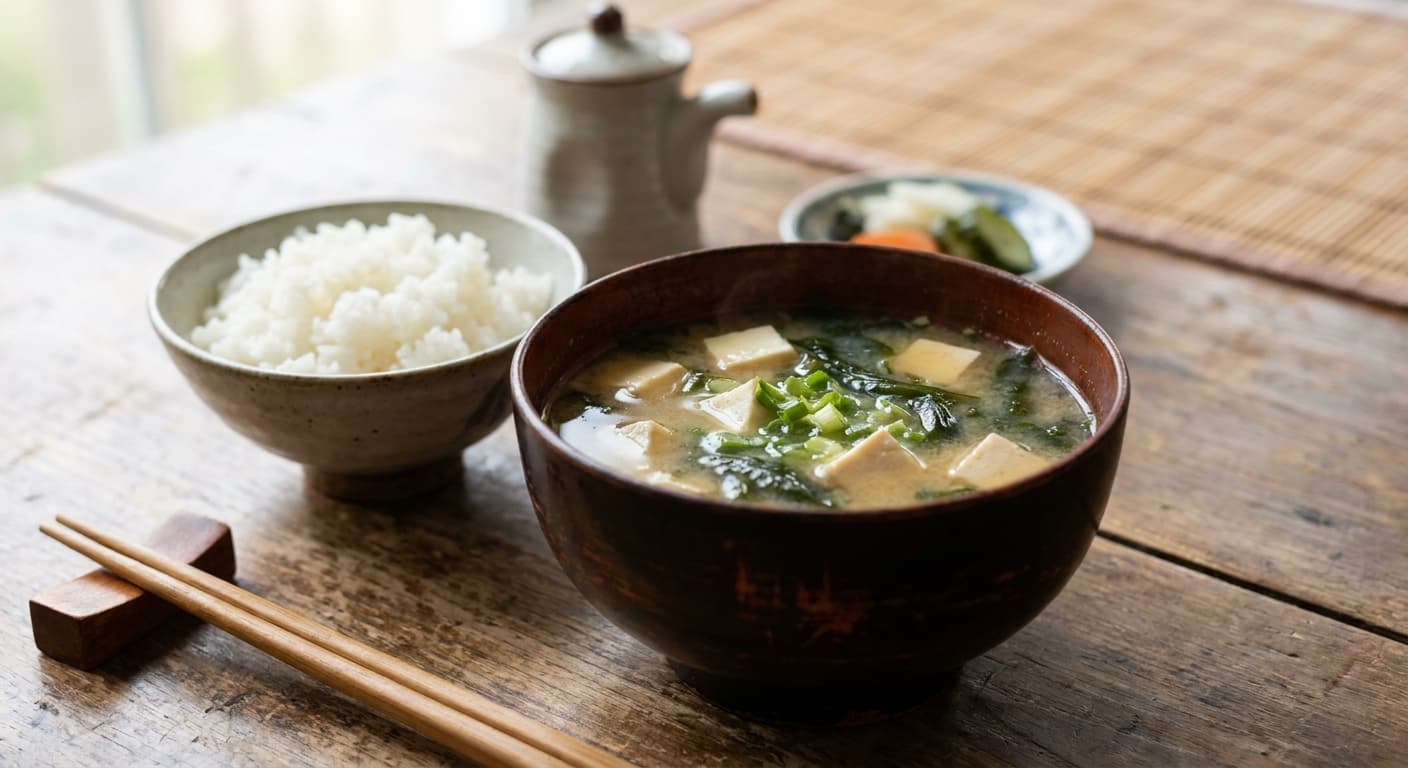
Misoshiru (味噌汁) — Classic Japanese Miso Soup with Tofu and Wakame
Japanese · Soups · 25 min
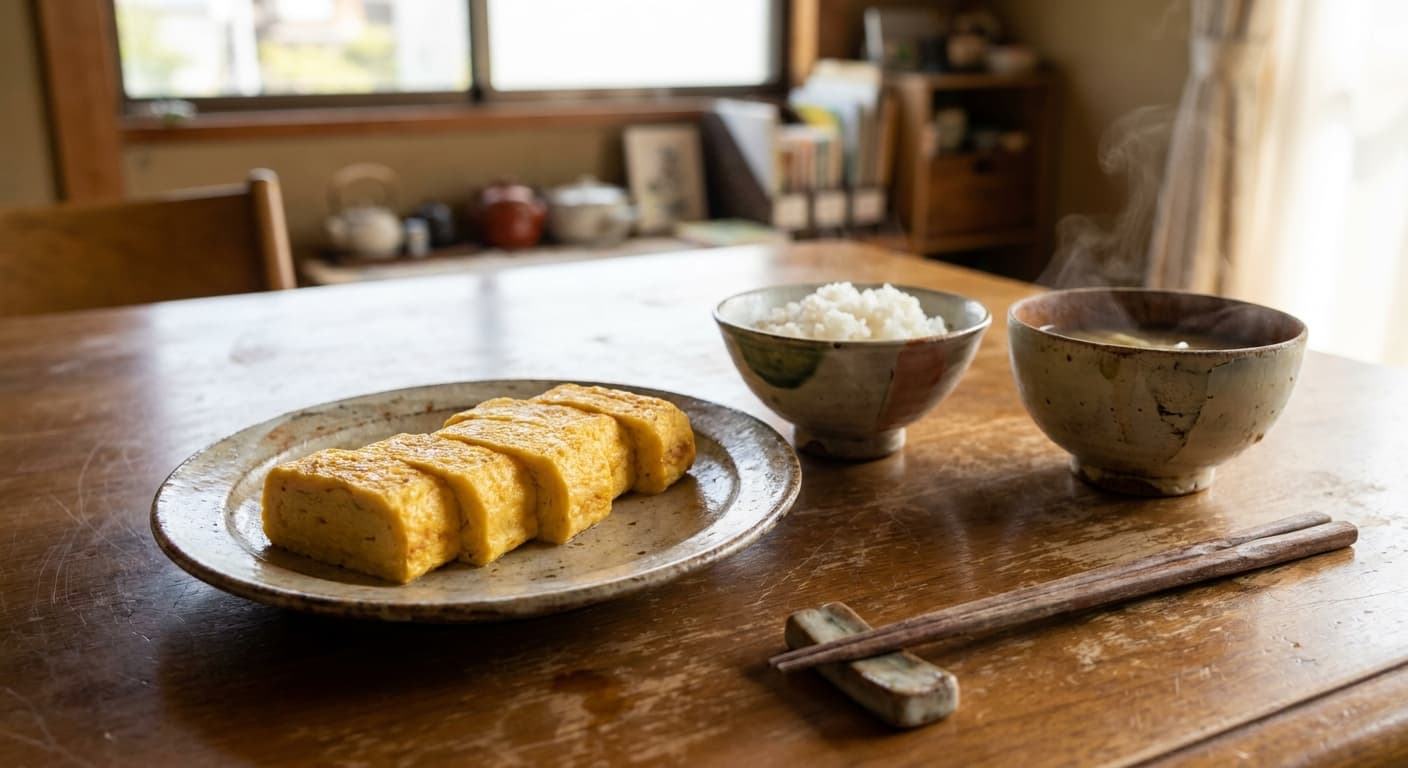
Tamagoyaki (卵焼き) — Japanese Rolled Omelette
Japanese · Side Dishes · 22 min
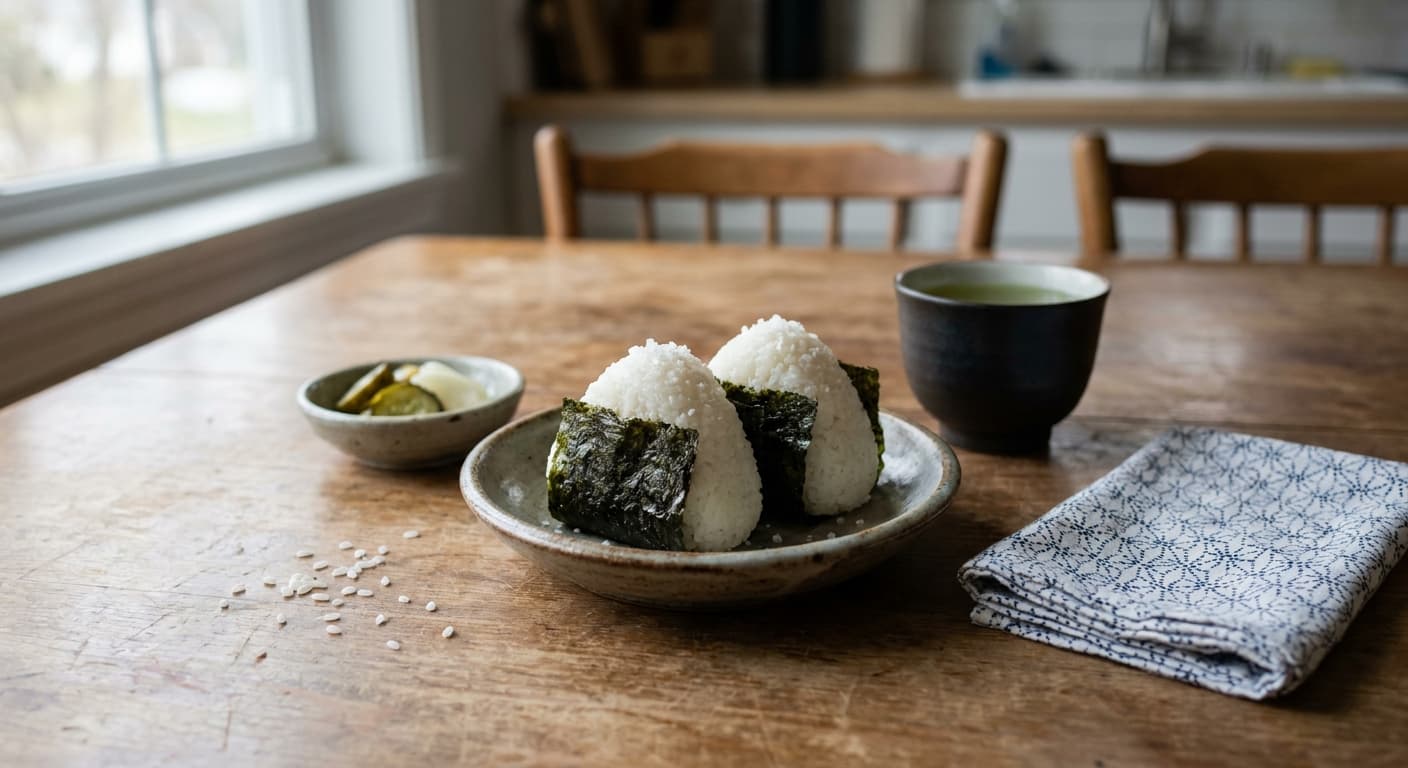
Salted Rice Balls (塩おにぎり) — Simple Japanese Hand-Pressed Rice
Japanese · Rice Dishes · 65 min
Jeow Bong (ແຈ່ວບອງ) — Lao Chili Paste Relish
Laotian · Side Dishes · 60 min
Pol Sambol (පොල් සම්බෝල) — Sri Lankan Coconut Chili Relish
Sri lankan · Side Dishes · 15 min
Har Gow Shrimp Dumplings (虾饺) — Translucent Cantonese Dim Sum
Chinese · Appetizers · 68 min
Galbi Jjim (갈비찜) — Korean Braised Short Ribs
Korean · Main Courses · 175 min
Changua (Changua) — Colombian Milk-and-Egg Breakfast Soup
Colombian · Soups · 25 min
Reviews
Cooked this recipe?
Tap the stars to rate it — that's all it takes. A few words are welcome but optional.
No ratings yet. Cooked this one? Be the first to rate it — it takes one tap.