Buta no Kakuni (豚の角煮) — Japanese Soy-Braised Pork Belly
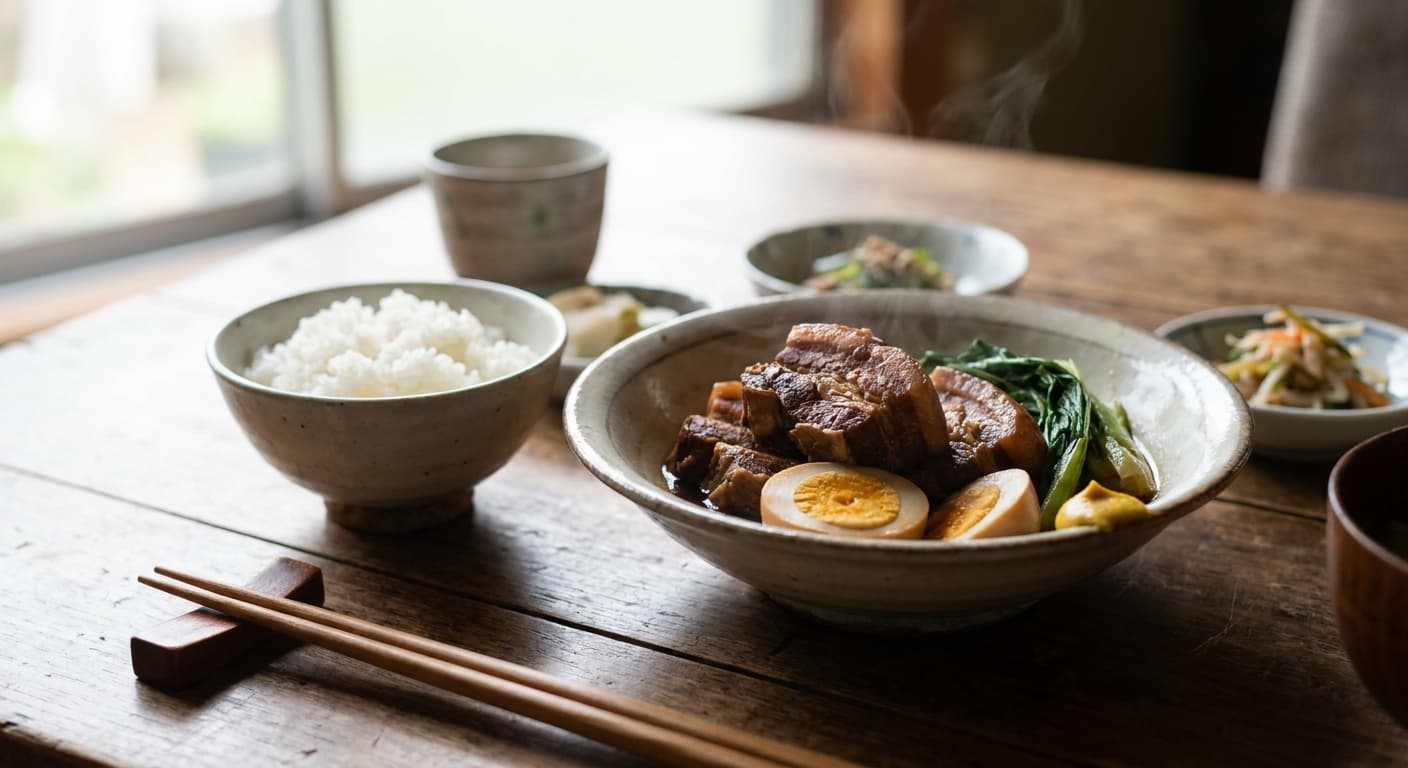
Buta no Kakuni is a Japanese home-style pork belly simmered until spoon-tender in soy sauce, sake, mirin, sugar, and ginger. Its glossy cubes are rich but balanced, often served with rice, greens, mustard, and a seasoned egg.
Printable Recipe Card
Servings: 4 · Total: 190 min · Difficulty: medium
Ingredients (quick list)
- 600 g pork belly slab (skinless or skin-on, cut into 4 cm cubes)
- 1.8 l water
- 2 inch fresh ginger (thinly sliced)
- 1 Japanese long green onion (green top and white section, cut into 8 cm lengths)
- 240 ml sake
- 90 ml Japanese soy sauce
- 60 ml mirin
- 35 g granulated sugar
- 4 eggs
- 1 l cold water (for cooling boiled eggs)
- 200 g komatsuna (trimmed)
- 5 g fine sea salt (for blanching greens)
+ 1 more in the full ingredients section below.
Steps (summary)
- Cut the pork belly into neat 4 cm cubes, keeping the layers of fat and lean as intact as possible. Place the cubes in a heavy p…
- Reduce the heat to low and simmer the pork for 90 minutes, skimming foam and excess surface fat during the first 20 minutes. Ke…
- Lift the pork pieces into a bowl and rinse them gently under warm running water to remove clinging scum. Strain and discard the…
- Return the pork to the pot with 240 ml sake and 500 ml water, then bring to a simmer for 20 minutes to let the sake mellow and…
- Simmer the pork gently for 45 minutes, turning the cubes every 15 minutes so all sides become evenly lacquered. If the liquid r…
- While the pork braises, lower the eggs into boiling water and cook for 7 minutes for jammy centers or 9 minutes for firm center…
+ 3 more steps in the full instructions section below.
Cultural Background
Kakuni reflects Japan's simmered-dish tradition, where careful heat and balanced seasonings transform a fatty cut into a refined home meal. Related pork-braising styles are especially associated with Nagasaki and Okinawan cooking.
Equipment
💡 Tips
- Pre-simmering the pork is essential because it removes scum and renders excess fat before the soy-based braise is added.
- Use a drop lid or a parchment circle to keep the pork partly submerged without needing too much liquid.
- Resting the cooked pork in the sauce improves flavor and makes the meat easier to handle without breaking.
⚠️ Common Mistakes
❌ Boiling the pork hard during the braise.
✅ Fix: Keep the heat low and maintain only small bubbles so the lean meat softens without becoming stringy.
❌ Adding soy sauce at the beginning of the long pre-simmer.
✅ Fix: Cook the pork first in plain water with aromatics, then add soy sauce after the meat has started to tenderize.
❌ Reducing the sauce until it becomes overly salty.
✅ Fix: Stop reducing when the sauce coats a spoon lightly, and serve only about 30 ml sauce per portion.
🧊 How to Store
Cool leftovers in the braising liquid within 2 hours, then refrigerate in an airtight container for up to 3 days. Reheat gently in a covered saucepan over low heat, adding 30 ml water if the sauce has thickened too much.
📅 Make Ahead
Braise the pork 1 day ahead and chill it in its sauce. The fat cap will solidify on top, making it easy to remove before reheating gently with the eggs and greens.
🍽️ Pairs Well With
- Steamed Japanese short-grain rice
- miso soup
- blanched komatsuna
- Japanese pickles
- karashi mustard.
Regional Variations
- Nagasaki-style versions often show influence from historic Chinese-style pork cookery and may be served as part of a broader banquet table.
- Okinawan rafute is a close relative made with pork belly and often uses awamori and black sugar for a deeper, rounder sweetness.
- Some home cooks add daikon during the final braise so the radish absorbs the pork and soy flavors.
Ingredients
- 600 gpork belly slab (skinless or skin-on, cut into 4 cm cubes)
- 1.8 lwater
- 2 inchfresh ginger (thinly sliced)
- 1Japanese long green onion (green top and white section, cut into 8 cm lengths)
- 240 mlsake
- 90 mlJapanese soy sauce
- 60 mlmirin
- 35 ggranulated sugar
- 4eggs
- 1 lcold water (for cooling boiled eggs)
- 200 gkomatsuna (trimmed)
- 5 gfine sea salt (for blanching greens)
- 2 tspkarashi mustard
🔄 Substitutions
- Japanese soy sauce→ tamari
- komatsuna→ baby bok choy
- Japanese long green onion→ leek
Instructions
- 1
Cut the pork belly into neat 4 cm cubes, keeping the layers of fat and lean as intact as possible. Place the cubes in a heavy pot, add 1.8 l water, the 2 inch sliced ginger, and the Japanese long green onion, then bring slowly to a gentle boil over medium heat.
- 2
Reduce the heat to low and simmer the pork for 90 minutes, skimming foam and excess surface fat during the first 20 minutes. Keep the liquid at a quiet bubble rather than a rolling boil, because harsh boiling can toughen the lean layers before the collagen has softened.
- 3
Lift the pork pieces into a bowl and rinse them gently under warm running water to remove clinging scum. Strain and discard the pre-simmering liquid and aromatics, then wipe the pot clean so the final braising sauce tastes clear and glossy.
- 4
Return the pork to the pot with 240 ml sake and 500 ml water, then bring to a simmer for 20 minutes to let the sake mellow and penetrate the meat. Add the soy sauce, mirin, sugar, and the remaining 1 inch sliced ginger, then set a drop lid or a parchment circle directly on the surface.
- 5
Simmer the pork gently for 45 minutes, turning the cubes every 15 minutes so all sides become evenly lacquered. If the liquid reduces below one-third of the pork height before the meat is tender, add 60 ml hot water and continue at the same low heat.
- 6
While the pork braises, lower the eggs into boiling water and cook for 7 minutes for jammy centers or 9 minutes for firm centers. Transfer the eggs to 1 l cold water for 10 minutes, peel carefully, and keep them whole so they can absorb the braising liquid without breaking.
- 7
Bring a separate pot of water to a boil, add 5 g fine sea salt, and blanch the komatsuna for 45 seconds. Rinse under cold water, squeeze gently, and cut into 5 cm lengths so the greens stay bright and provide a clean contrast to the rich pork.
- 8
Add the peeled eggs to the pork pot for the final 15 minutes of cooking, turning them once so they stain evenly. Remove the drop lid and reduce the sauce for 5 to 10 minutes until it lightly coats a spoon and the pork looks shiny.
- 9
For the best texture, turn off the heat and rest the pork in its sauce for 20 minutes before serving. Arrange pork cubes, halved eggs, and komatsuna in shallow bowls, spoon over 30 ml sauce per serving, and serve with a small dab of karashi mustard.
🪪 Recipe Passport
Cultural Background
Kakuni reflects Japan's simmered-dish tradition, where careful heat and balanced seasonings transform a fatty cut into a refined home meal. Related pork-braising styles are especially associated with Nagasaki and Okinawan cooking.
Regional Variations
Researched from multiple sources and validated by the Zaffaron editorial team. Every recipe is tested for accuracy, measurements, and cultural authenticity.
📚 Sources & Cultural References
- Shizuo Tsuji — Japanese Cooking: A Simple Art — (1980)
- NHK World-Japan — Dining with the Chef recipe archive
Sources cited by the Zaffaron editorial team during recipe research. Cultural and culinary references supporting authenticity claims.
Nutrition per serving
Pairs well with
If you enjoyed this recipe, here are a few related Zaffaron recipes to try next.
Does your family make this differently?
Every family has their own version. Maybe your grandmother adds a secret ingredient, or your aunt has a completely different technique. Preserve your family's version — with their name on it, forever.
You Might Also Like
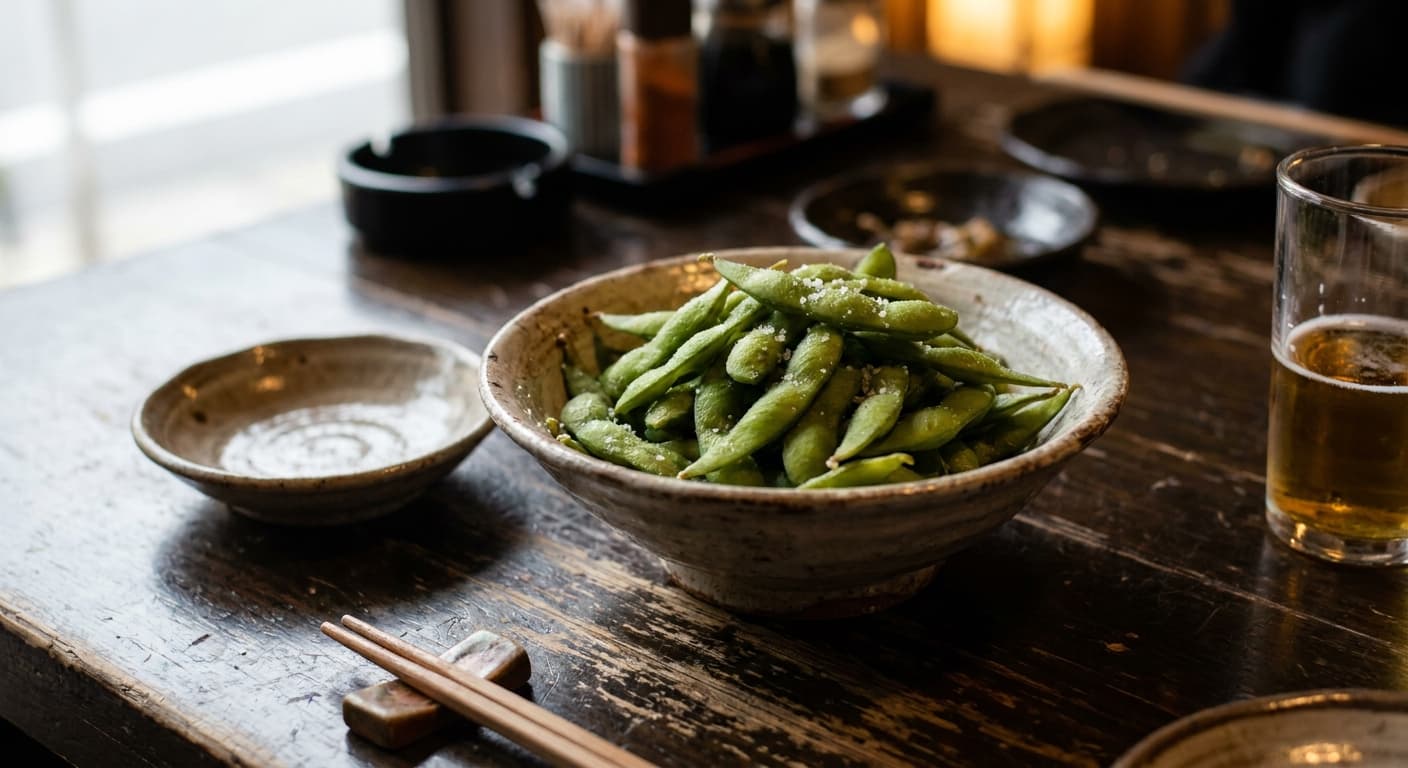
Edamame (枝豆) — Boiled Salted Soybeans, Japanese Izakaya Snack
Japanese · Appetizers · 15 min
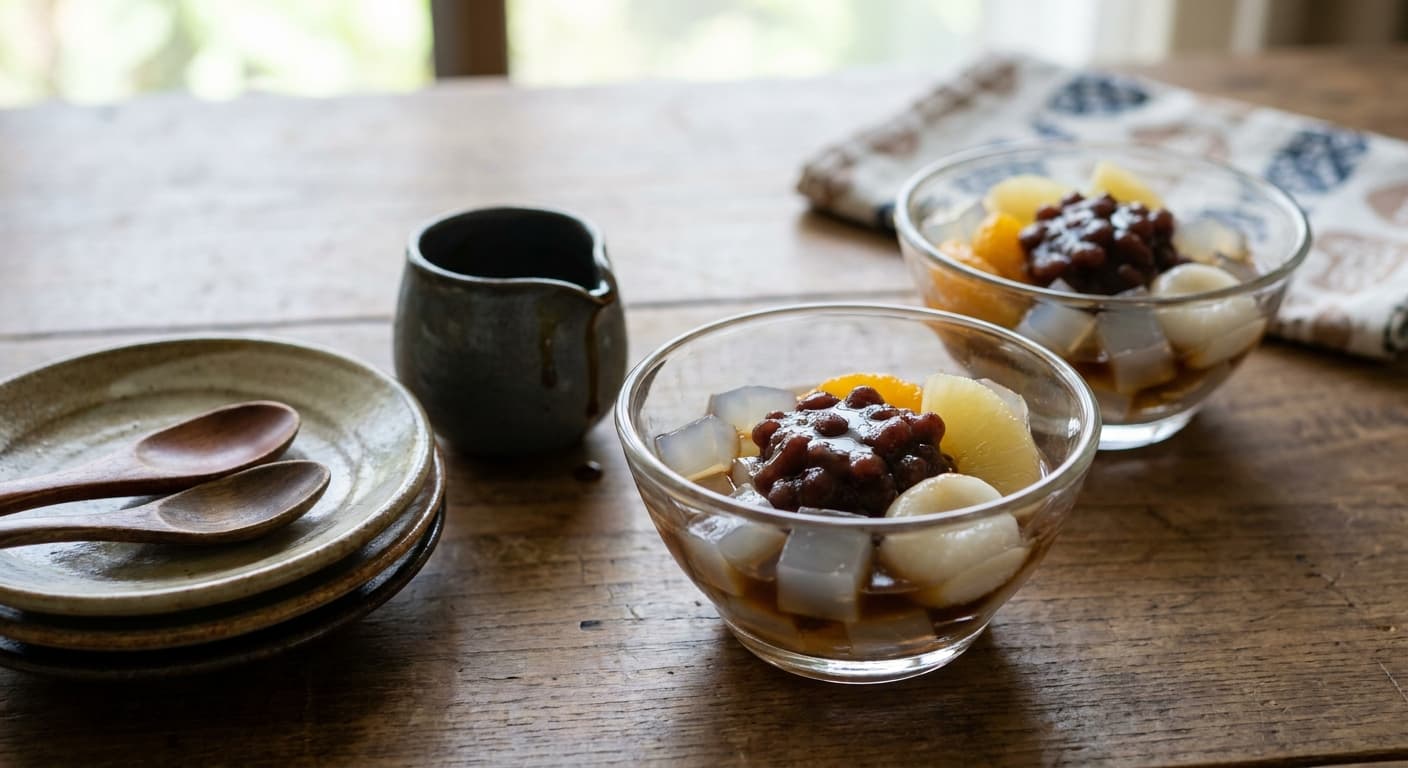
Anmitsu (あんみつ) — Kanten Jelly Dessert with Red Bean Paste
Japanese · Desserts · 55 min
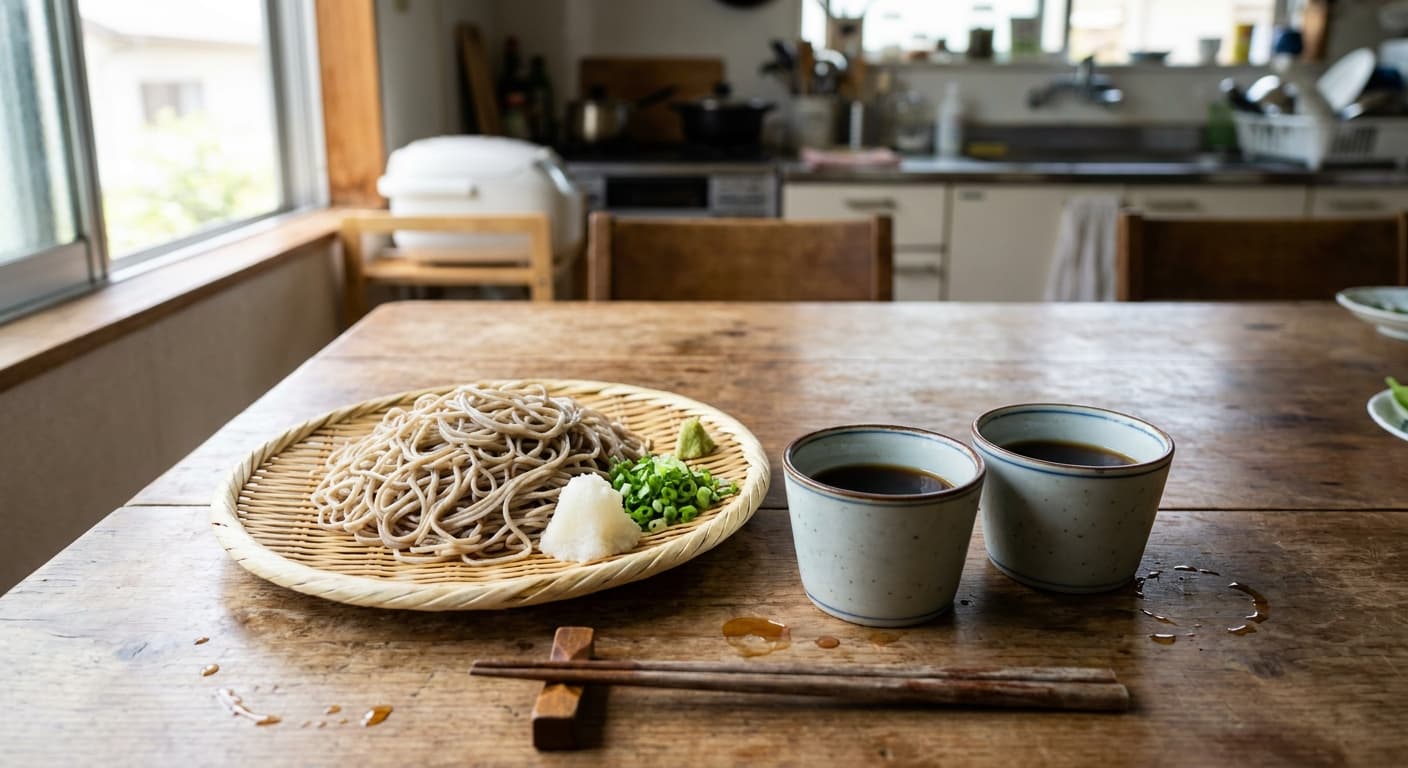
Soba (蕎麦) — Cold Buckwheat Noodles with Dipping Sauce
Japanese · Main Courses · 50 min
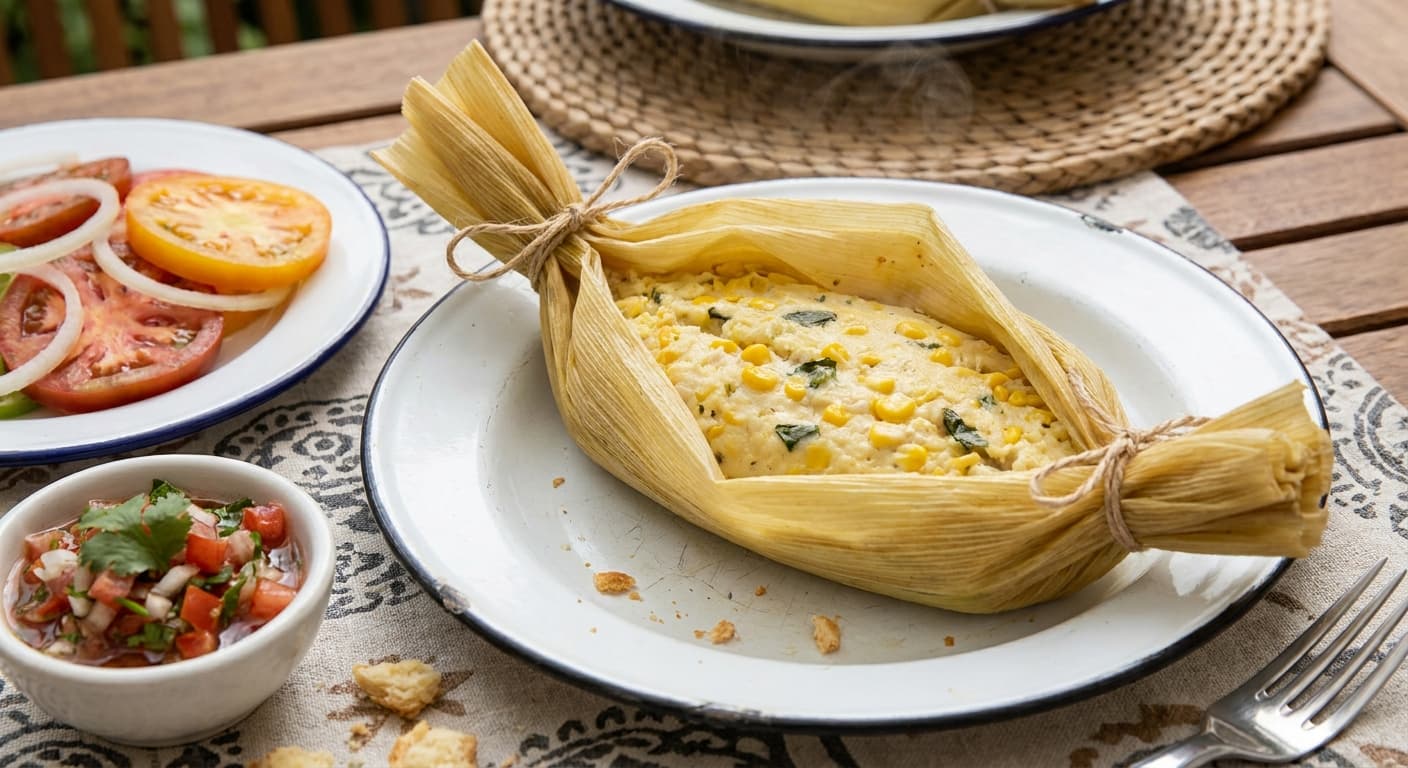
Chilean Humitas (Humitas) — Fresh Corn Parcels with Basil
Chilean · Main Courses · 90 min
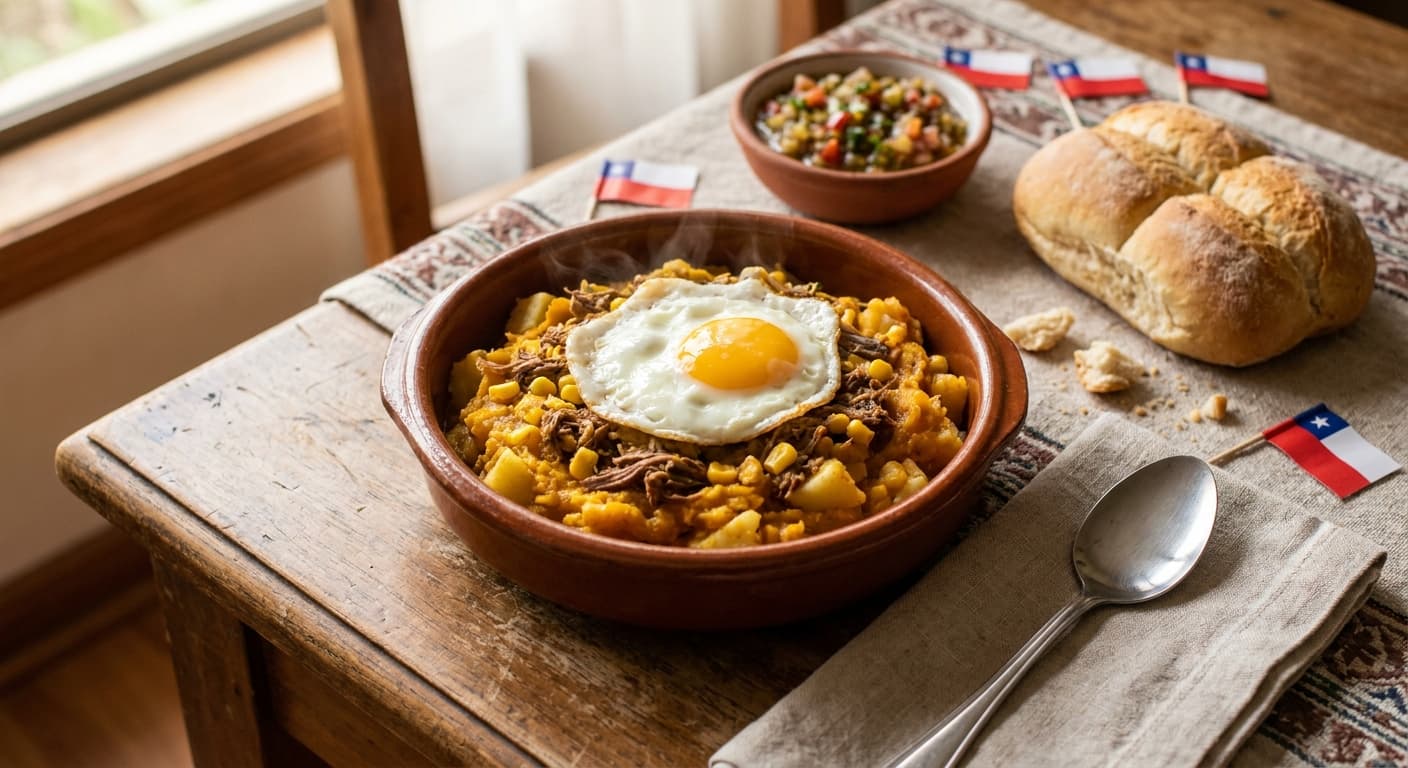
Charquicán (Charquicán) — Chilean Beef and Vegetable Hash
Chilean · Main Courses · 70 min
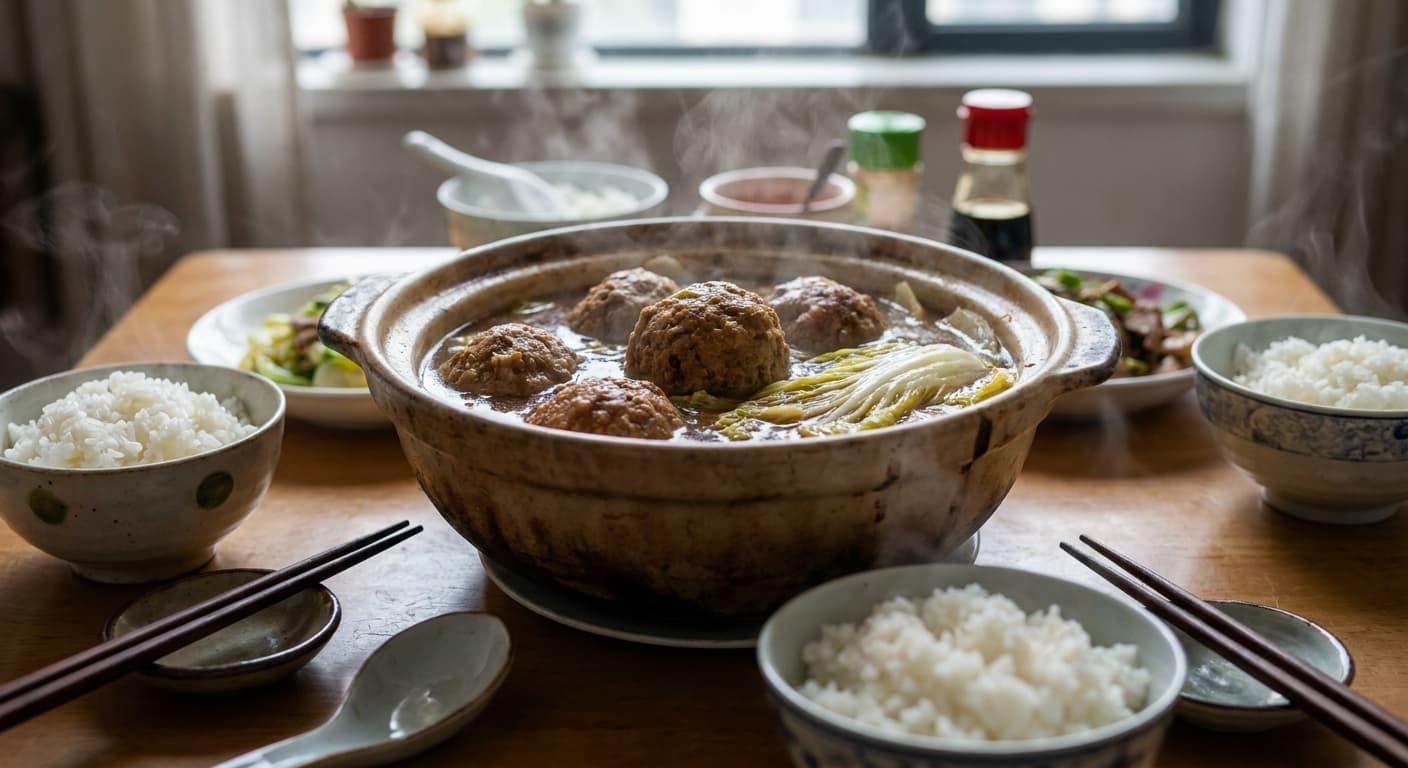
Lion's Head Meatballs (狮子头) — Braised Huaiyang Pork Meatballs
Chinese · Main Courses · 110 min
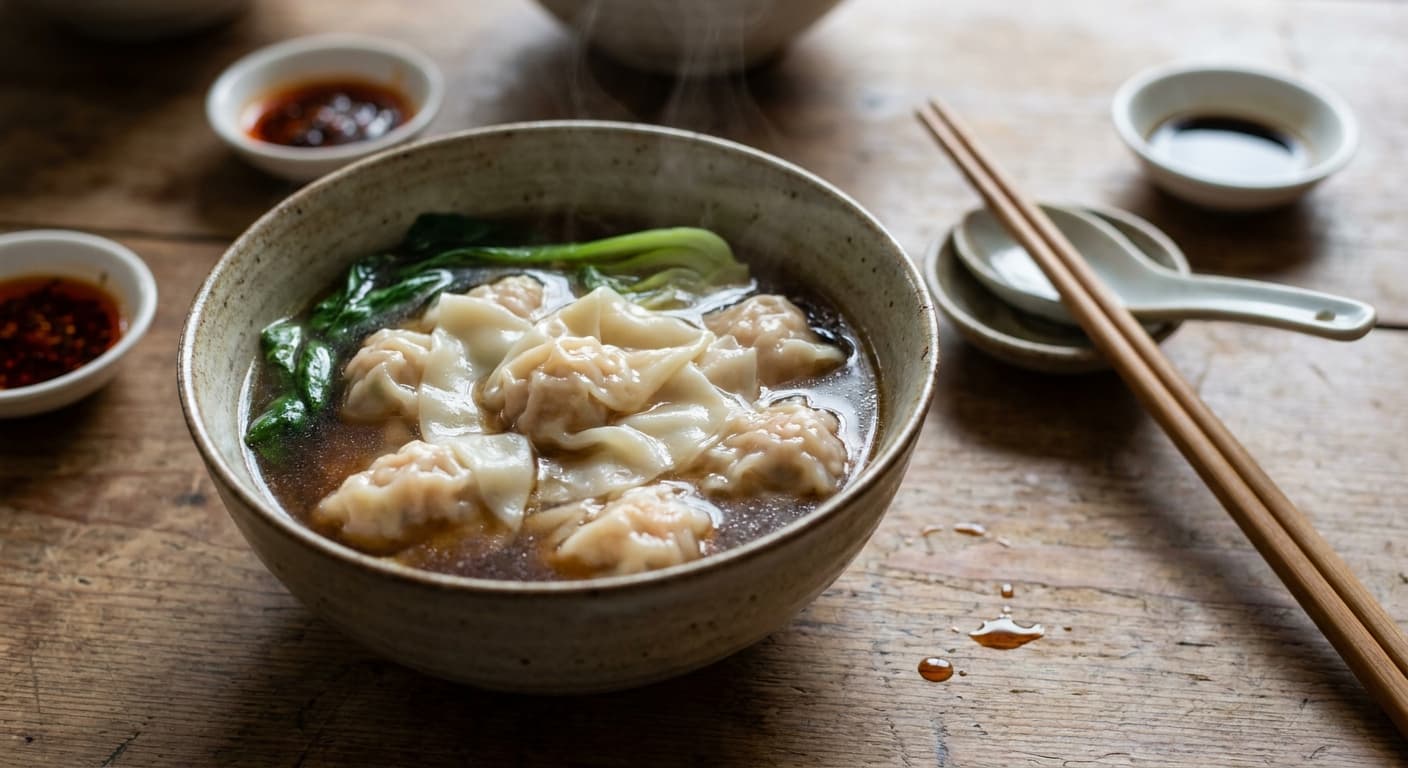
Wonton Soup (雲吞湯) — Cantonese Pork and Shrimp Dumpling Broth
Chinese · Soups · 70 min
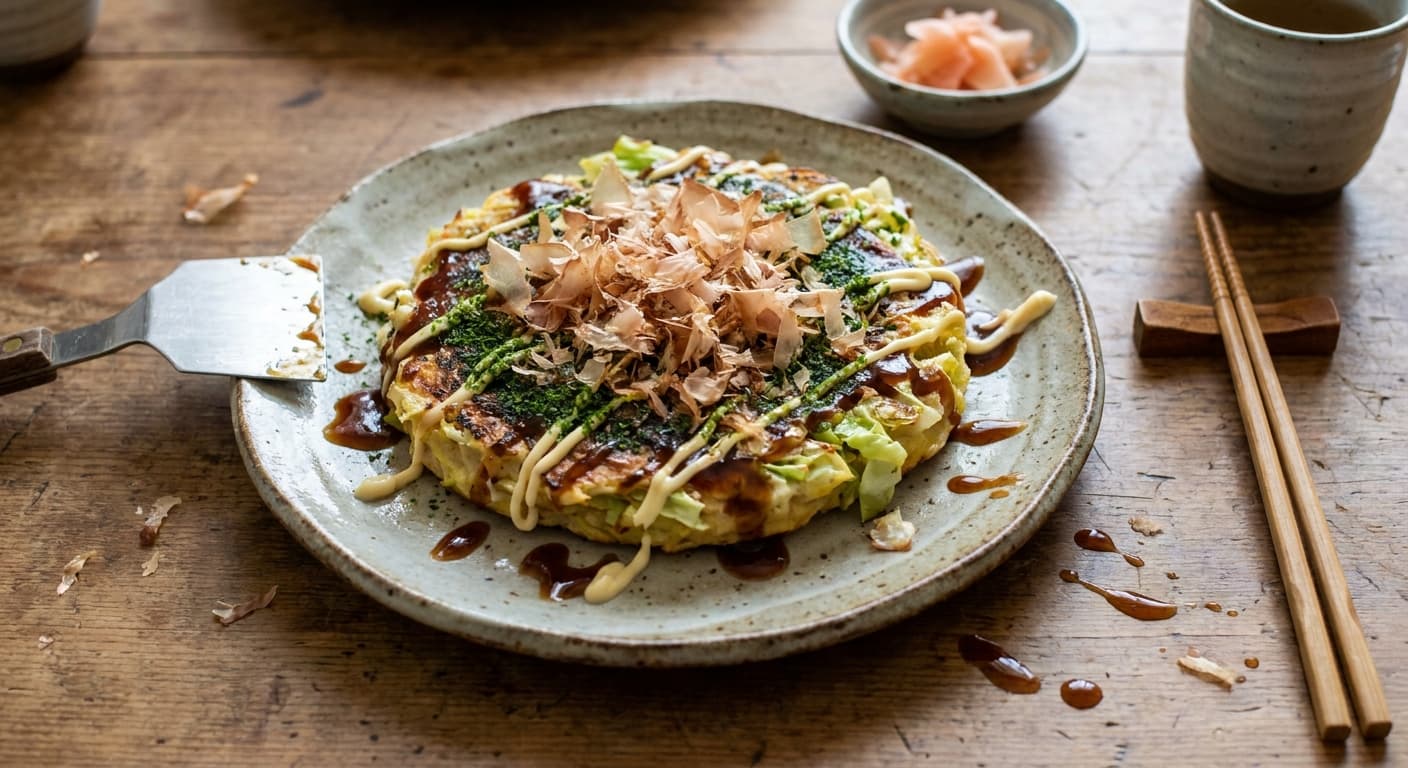
Okonomiyaki (お好み焼き) — Osaka-Style Savory Cabbage Pancake
Japanese · Main Courses · 49 min
Reviews
Cooked this recipe?
Tap the stars to rate it — that's all it takes. A few words are welcome but optional.
No ratings yet. Cooked this one? Be the first to rate it — it takes one tap.