Obon Dango (お盆団子) — Plain Rice Dumplings for Ancestral Offerings
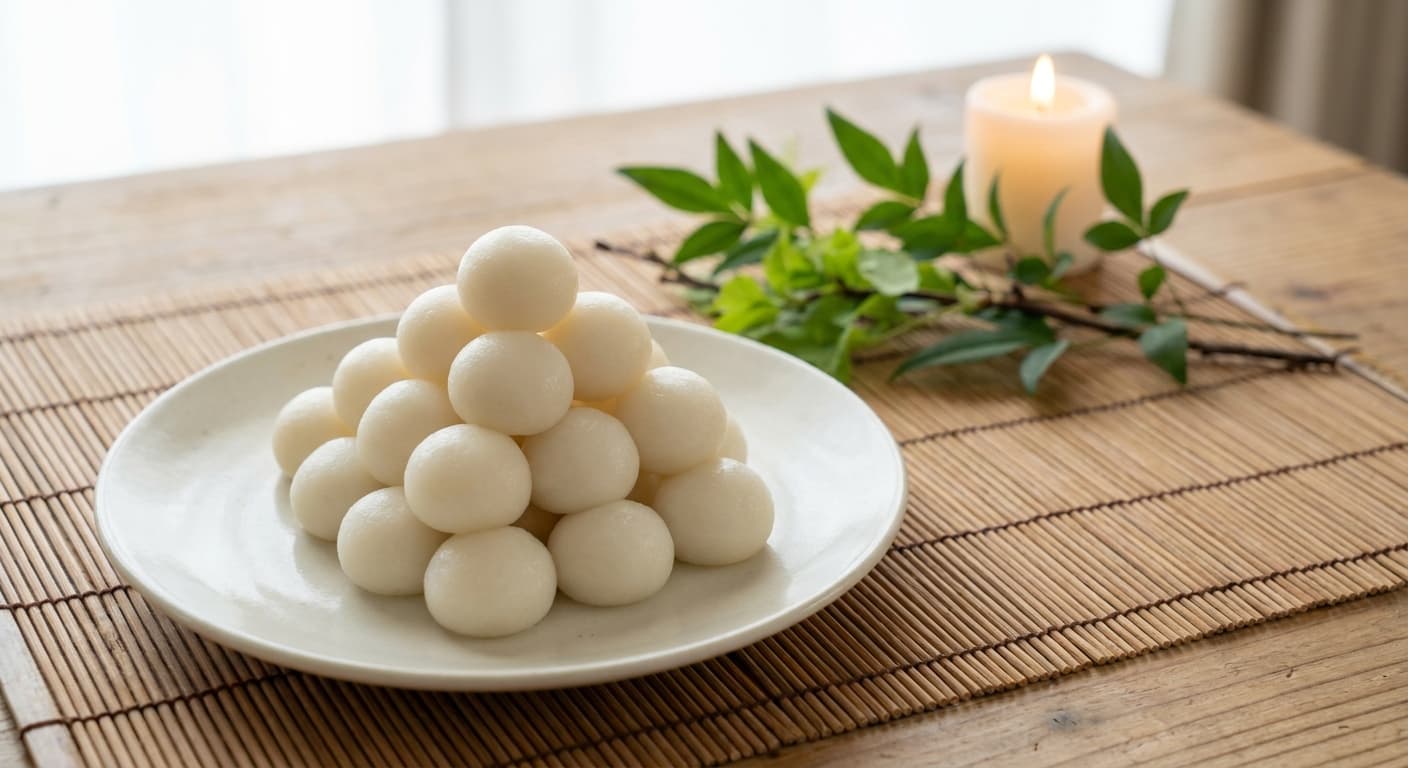
Obon dango are simple Japanese rice dumplings prepared as offerings during the Obon season, when families welcome ancestral spirits home. They are usually plain, white, and modest, then eaten with sweet or savory accompaniments after offering.
Printable Recipe Card
Servings: 6 · Total: 37 min · Difficulty: medium
Ingredients (quick list)
- 200 g joshinko rice flour (non-glutinous Japanese rice flour)
- 50 g shiratamako rice flour (glutinous Japanese rice flour for tenderness)
- 12 g granulated sugar
- 2 g fine sea salt
- 210 ml boiling water (add gradually; exact absorption varies by flour)
- 1 l ice water
Steps (summary)
- Combine the joshinko, shiratamako, sugar, and salt in a heatproof mixing bowl, breaking up any large lumps of shiratamako with…
- Pour in 180 ml of the boiling water while stirring constantly with chopsticks or a sturdy wooden spoon. Add the remaining 30 ml…
- When the dough is cool enough to handle but still warm, knead it in the bowl for 3 minutes until smooth and pliable. The textur…
- Divide the dough into 18 equal portions of about 25 g each and roll each portion into a smooth ball between your palms. Keep th…
- Bring a wide pot of water to a gentle boil over medium-high heat. Add the dumplings in batches so they have room to move, then…
- Boil the dumplings until they float, then continue cooking for 2 full minutes to set the centers. Do not remove them immediatel…
+ 2 more steps in the full instructions section below.
Cultural Background
During Obon, many Japanese households prepare simple rice dumplings as respectful offerings to ancestral spirits. Their plain white form reflects purity, humility, and the seasonal act of welcoming and sending off family ancestors.
Equipment
💡 Tips
- Use boiling water for the dough; it partially gelatinizes the rice starch and gives the dumplings their proper chew.
- If the dough cracks while rolling, knead in 5 ml more hot water; if it feels sticky, dust your hands with a very small amount of joshinko.
- For offering, keep the dumplings plain and white, then add toppings only when serving them to eat.
⚠️ Common Mistakes
❌ Adding all the water at once and making the dough too loose.
✅ Fix: Start with 180 ml and add the final 30 ml gradually, stopping when the dough is smooth and pliable.
❌ Removing the dumplings as soon as they float.
✅ Fix: Continue boiling for 2 minutes after they rise so the centers fully cook.
❌ Letting shaped dumplings sit uncovered.
✅ Fix: Cover them with a damp towel while shaping the remaining portions to prevent cracks.
🧊 How to Store
Obon dango are best eaten the day they are made. Store leftovers covered at room temperature for up to 8 hours, or refrigerate for 1 day; refresh by simmering for 1 minute and cooling briefly before serving.
📅 Make Ahead
The flours, sugar, and salt can be weighed and mixed 1 day ahead. Shape and boil the dumplings on the day of offering, because rice-flour dango firm quickly after cooking.
🍽️ Pairs Well With
- Kinako sugar
- sweet red bean paste
- mitarashi-style sweet soy glaze
- green tea.
Regional Variations
- Some households make the dumplings entirely with joshinko for a firmer, more rustic chew.
- In parts of Japan, Obon dumplings are arranged as welcome dumplings at the beginning of the festival and farewell dumplings near the end.
- After offering, families may eat the dumplings with kinako, sweet red bean paste, or a glossy sweet soy sauce.
Ingredients
- 200 gjoshinko rice flour (non-glutinous Japanese rice flour)
- 50 gshiratamako rice flour (glutinous Japanese rice flour for tenderness)
- 12 ggranulated sugar
- 2 gfine sea salt
- 210 mlboiling water (add gradually; exact absorption varies by flour)
- 1 lice water
🔄 Substitutions
- joshinko rice flour→ finely milled regular rice flour
- shiratamako rice flour→ mochiko
- granulated sugar→ caster sugar
Instructions
- 1
Combine the joshinko, shiratamako, sugar, and salt in a heatproof mixing bowl, breaking up any large lumps of shiratamako with your fingers. This even distribution is important because the dough is only lightly seasoned and any dry pockets will show in the finished dumplings.
- 2
Pour in 180 ml of the boiling water while stirring constantly with chopsticks or a sturdy wooden spoon. Add the remaining 30 ml only as needed, 1 tbsp at a time, until the mixture forms moist clumps that can be pressed together without cracking.
- 3
When the dough is cool enough to handle but still warm, knead it in the bowl for 3 minutes until smooth and pliable. The texture should feel like a soft earlobe, which is the traditional Japanese cue for properly hydrated dango dough.
- 4
Divide the dough into 18 equal portions of about 25 g each and roll each portion into a smooth ball between your palms. Keep the finished balls under a damp kitchen towel so the surface does not dry before cooking.
- 5
Bring a wide pot of water to a gentle boil over medium-high heat. Add the dumplings in batches so they have room to move, then stir once with a slotted spoon to prevent them from sticking to the bottom.
- 6
Boil the dumplings until they float, then continue cooking for 2 full minutes to set the centers. Do not remove them immediately when they rise, because rice-flour dumplings can still be dense in the middle at that point.
- 7
Transfer the cooked dumplings to the ice water and let them cool for 3 minutes. Drain them well on a clean tray or bamboo mat, spacing them apart so they remain round and do not become waterlogged.
- 8
For an Obon presentation, arrange the dumplings in a small pyramid or neat mound on a clean plate or offering stand. After the offering period, serve them the same day with kinako sugar, sweet red bean paste, or a light sweet soy glaze if desired.
🪪 Recipe Passport
Cultural Background
During Obon, many Japanese households prepare simple rice dumplings as respectful offerings to ancestral spirits. Their plain white form reflects purity, humility, and the seasonal act of welcoming and sending off family ancestors.
Regional Variations
Researched from multiple sources and validated by the Zaffaron editorial team. Every recipe is tested for accuracy, measurements, and cultural authenticity.
📚 Sources & Cultural References
- Elizabeth Andoh — Washoku: Recipes from the Japanese Home Kitchen — (2005)
- Japan National Tourism Organization — Obon Cultural Information
Sources cited by the Zaffaron editorial team during recipe research. Cultural and culinary references supporting authenticity claims.
Nutrition per serving
Pairs well with
If you enjoyed this recipe, here are a few related Zaffaron recipes to try next.
Does your family make this differently?
Every family has their own version. Maybe your grandmother adds a secret ingredient, or your aunt has a completely different technique. Preserve your family's version — with their name on it, forever.
You Might Also Like
Inarizushi (稲荷寿司) — Sweet Tofu-Pocket Sushi
Japanese · Rice Dishes · 80 min
Misoshiru (味噌汁) — Classic Japanese Miso Soup with Tofu and Wakame
Japanese · Soups · 25 min
Tamagoyaki (卵焼き) — Japanese Rolled Omelette
Japanese · Side Dishes · 22 min
Key Lime Pie (Key Lime Pie) — Florida Keys Citrus Custard Pie
American · Desserts · 50 min
Kutia (Кутя) — Ukrainian Christmas Wheat Berry Pudding
Ukrainian · Desserts · 105 min
Buddha Jumps Over the Wall (佛跳墙) — Fujian Banquet Treasure Soup
Chinese · Soups · 540 min
Kimbap (김밥) — Korean Seaweed Rice Rolls
Korean · Main Courses · 70 min
Cornbread (Cornbread) — Classic Cast-Iron American Quick Bread
American · Breads · 40 min
Reviews
Cooked this recipe?
Tap the stars to rate it — that's all it takes. A few words are welcome but optional.
No ratings yet. Cooked this one? Be the first to rate it — it takes one tap.