Kimbap (김밥) — Korean Seaweed Rice Rolls
Kimbap is a beloved Korean rice roll wrapped in roasted seaweed and filled with seasoned vegetables, egg, and beef. It is a classic picnic, lunchbox, and family outing food, prized for its neat slices and balanced flavors.
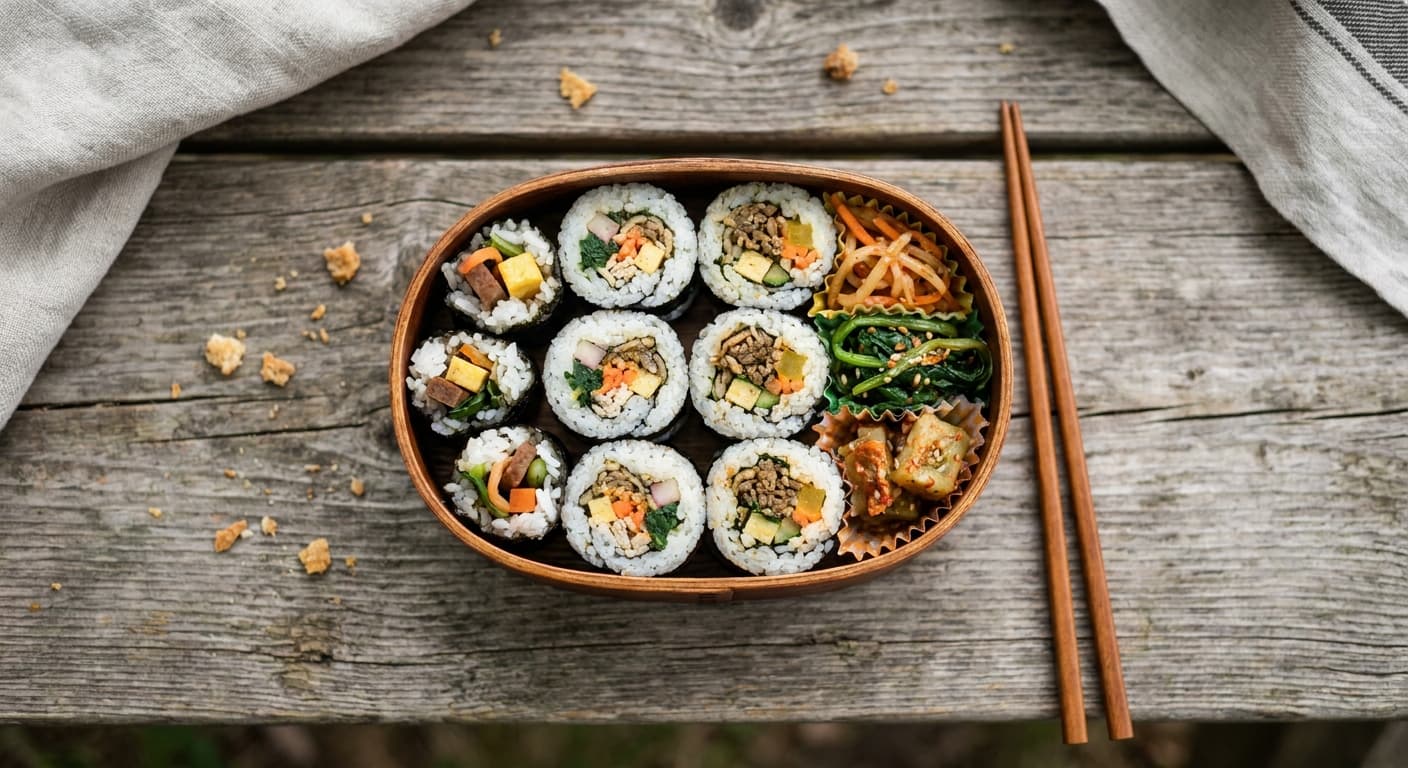
Printable Recipe Card
Servings: 5 · Total: 70 min · Difficulty: medium
Ingredients (quick list)
- 500 g cooked short-grain white rice
- 15 ml toasted sesame oil
- 4 g fine sea salt
- 9 g toasted sesame seeds
- 200 g lean beef sirloin (cut into thin matchsticks)
- 30 ml soy sauce
- 8 g granulated sugar
- 2 clove garlic (finely minced)
- 0.5 tsp freshly ground black pepper
- 200 g spinach (trimmed)
- 160 g julienned carrot
- 15 ml neutral cooking oil
+ 4 more in the full ingredients section below.
Steps (summary)
- Place the hot cooked rice in a wide bowl and sprinkle it with 15 ml sesame oil, 4 g salt, and 9 g sesame seeds. Fold gently wit…
- Combine the beef with 30 ml soy sauce, 8 g sugar, minced garlic, 5 ml sesame oil, and black pepper. Mix thoroughly and let it m…
- Bring 1.5 l water to a boil and add 10 g salt, then blanch the spinach for 30 seconds. Drain immediately, rinse under cold wate…
- Heat 5 ml neutral oil in a skillet over medium heat and add the julienned carrot with 2 g salt. Stir-fry for 2 to 3 minutes unt…
- Beat the eggs with 1 g salt until evenly blended. Heat 5 ml neutral oil in the skillet over medium-low heat, cook the egg in a…
- Wipe the skillet clean, add the remaining 5 ml neutral oil, and cook the marinated beef over medium-high heat for 3 to 4 minute…
+ 5 more steps in the full instructions section below.
Cultural Background
Kimbap is closely tied to Korean home cooking, school excursions, train travel, and packed lunches. Its colorful fillings reflect practicality and abundance, turning simple rice and side dishes into a portable shared meal.
Equipment
💡 Tips
- Use warm, freshly cooked short-grain rice because cold rice will not spread smoothly and hot rice can make the seaweed soggy.
- Squeeze the spinach very firmly after blanching; excess water is the most common reason kimbap becomes wet and loose.
- Cut all fillings into long, even strips so each slice shows balanced color and texture.
⚠️ Common Mistakes
❌ Spreading the rice too thickly
✅ Fix: Use about 100 g rice per sheet and leave a 3 cm bare strip at the far edge for sealing.
❌ Using wet spinach or watery fillings
✅ Fix: Squeeze blanched spinach firmly and cool cooked fillings before rolling.
❌ Rolling too loosely
✅ Fix: Use the bamboo mat to press the first turn firmly over the fillings before completing the roll.
🧊 How to Store
Kimbap is best eaten the day it is made. Refrigerate leftovers in an airtight container for up to 24 hours, then pan-sear slices for 1 to 2 minutes per side or dip in beaten egg and fry to refresh the rice and seaweed.
📅 Make Ahead
Cook and season the fillings up to 1 day ahead, then refrigerate them separately. Season the rice and roll the kimbap shortly before serving for the best texture.
🍽️ Pairs Well With
- Kimchi
- danmuji
- Korean fish cake soup
- cucumber muchim
- barley tea.
Regional Variations
- Chungmu-style rolls are smaller plain rice-and-seaweed rolls served with spicy squid or radish on the side.
- Vegetable kimbap omits meat and emphasizes spinach, carrot, cucumber, pickled radish, and burdock.
- Tuna kimbap uses seasoned canned tuna, often with perilla leaves, for a popular modern lunchbox version.
Ingredients
- 500 gcooked short-grain white rice
- 15 mltoasted sesame oil
- 4 gfine sea salt
- 9 gtoasted sesame seeds
- 200 glean beef sirloin (cut into thin matchsticks)
- 30 mlsoy sauce
- 8 ggranulated sugar
- 2 clovegarlic (finely minced)
- 0.5 tspfreshly ground black pepper
- 200 gspinach (trimmed)
- 160 gjulienned carrot
- 15 mlneutral cooking oil
- 3eggs
- 5yellow pickled radish strips (each about 20 cm long)
- 5seasoned burdock root strips (each about 20 cm long)
- 5 sheetroasted gim seaweed sheets (full-size sheets for rolling)
🔄 Substitutions
- lean beef sirloin→ firm tofu strips
- soy sauce→ gluten-free tamari
- seasoned burdock root strips→ cucumber batons
Instructions
- 1
Place the hot cooked rice in a wide bowl and sprinkle it with 15 ml sesame oil, 4 g salt, and 9 g sesame seeds. Fold gently with a rice paddle so the grains stay intact, then cover the bowl with a clean towel and let the rice cool until warm but not cold.
- 2
Combine the beef with 30 ml soy sauce, 8 g sugar, minced garlic, 5 ml sesame oil, and black pepper. Mix thoroughly and let it marinate for 15 minutes while you prepare the vegetables.
- 3
Bring 1.5 l water to a boil and add 10 g salt, then blanch the spinach for 30 seconds. Drain immediately, rinse under cold water, squeeze firmly to remove excess moisture, and season with 5 ml soy sauce and 5 ml sesame oil.
- 4
Heat 5 ml neutral oil in a skillet over medium heat and add the julienned carrot with 2 g salt. Stir-fry for 2 to 3 minutes until the carrot is flexible but still bright, then transfer it to a plate to cool.
- 5
Beat the eggs with 1 g salt until evenly blended. Heat 5 ml neutral oil in the skillet over medium-low heat, cook the egg in a thin sheet, then cool it and slice it into long strips about 1 cm wide.
- 6
Wipe the skillet clean, add the remaining 5 ml neutral oil, and cook the marinated beef over medium-high heat for 3 to 4 minutes. Stir often until the beef is just cooked through and the marinade has reduced enough to lightly glaze the meat.
- 7
Set one gim sheet shiny side down on a bamboo rolling mat with the longer edge facing you. Spread about 100 g seasoned rice over the sheet, leaving a 3 cm bare strip at the far edge so the roll can seal cleanly.
- 8
Arrange one strip each of pickled radish and burdock across the rice near the lower third, then add spinach, carrot, egg, and beef in even lines. Keep the fillings compact and parallel because loose or uneven filling makes the finished slices fall apart.
- 9
Lift the near edge of the mat and roll firmly over the fillings, pressing forward to form a tight cylinder. Continue rolling to the bare edge, then press the sealed roll gently with the mat to set the shape without crushing the rice.
- 10
Repeat with the remaining gim sheets, rice, and fillings to make 5 rolls. Brush the outside of each roll with 5 ml sesame oil in total and sprinkle with 3 g sesame seeds for aroma and shine.
- 11
Use a sharp knife lightly wiped with sesame oil or water to cut each roll into 8 even slices. Clean the blade between rolls so the rice and fillings stay neatly defined.
🪪 Recipe Passport
Cultural Background
Kimbap is closely tied to Korean home cooking, school excursions, train travel, and packed lunches. Its colorful fillings reflect practicality and abundance, turning simple rice and side dishes into a portable shared meal.
Regional Variations
Researched from multiple sources and validated by the Zaffaron editorial team. Every recipe is tested for accuracy, measurements, and cultural authenticity.
📚 Sources & Cultural References
- Maangchi — Maangchi's Real Korean Cooking: Authentic Dishes for the Home Cook — (2015)
- Korean Food Promotion Institute — The Korean Kitchen: Classic Recipes from the Land of the Morning Calm — (2016)
Sources cited by the Zaffaron editorial team during recipe research. Cultural and culinary references supporting authenticity claims.
Nutrition per serving
Pairs well with
If you enjoyed this recipe, here are a few related Zaffaron recipes to try next.
Does your family make this differently?
Every family has their own version. Maybe your grandmother adds a secret ingredient, or your aunt has a completely different technique. Preserve your family's version — with their name on it, forever.
You Might Also Like
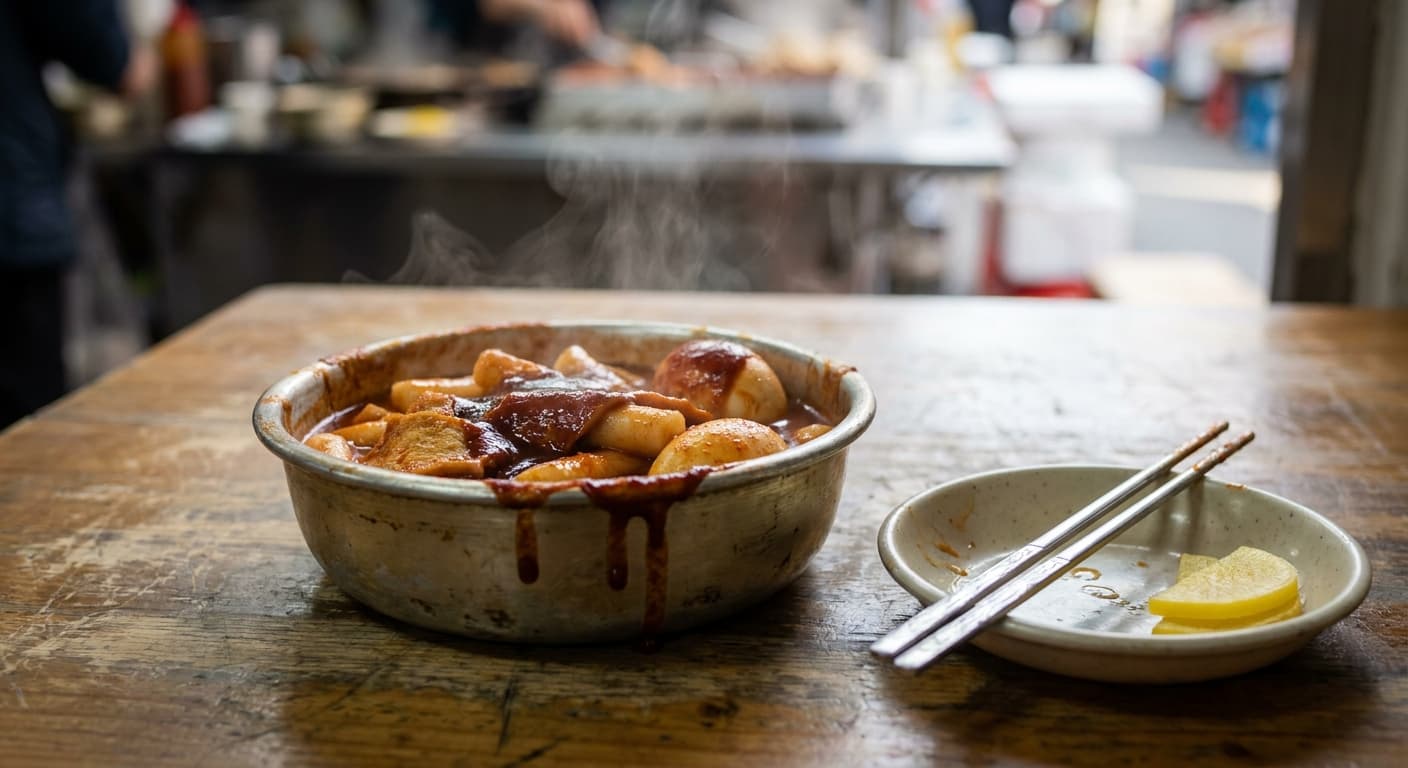
Tteokbokki (떡볶이) — Spicy Korean Rice Cakes
Korean · Main Courses · 45 min
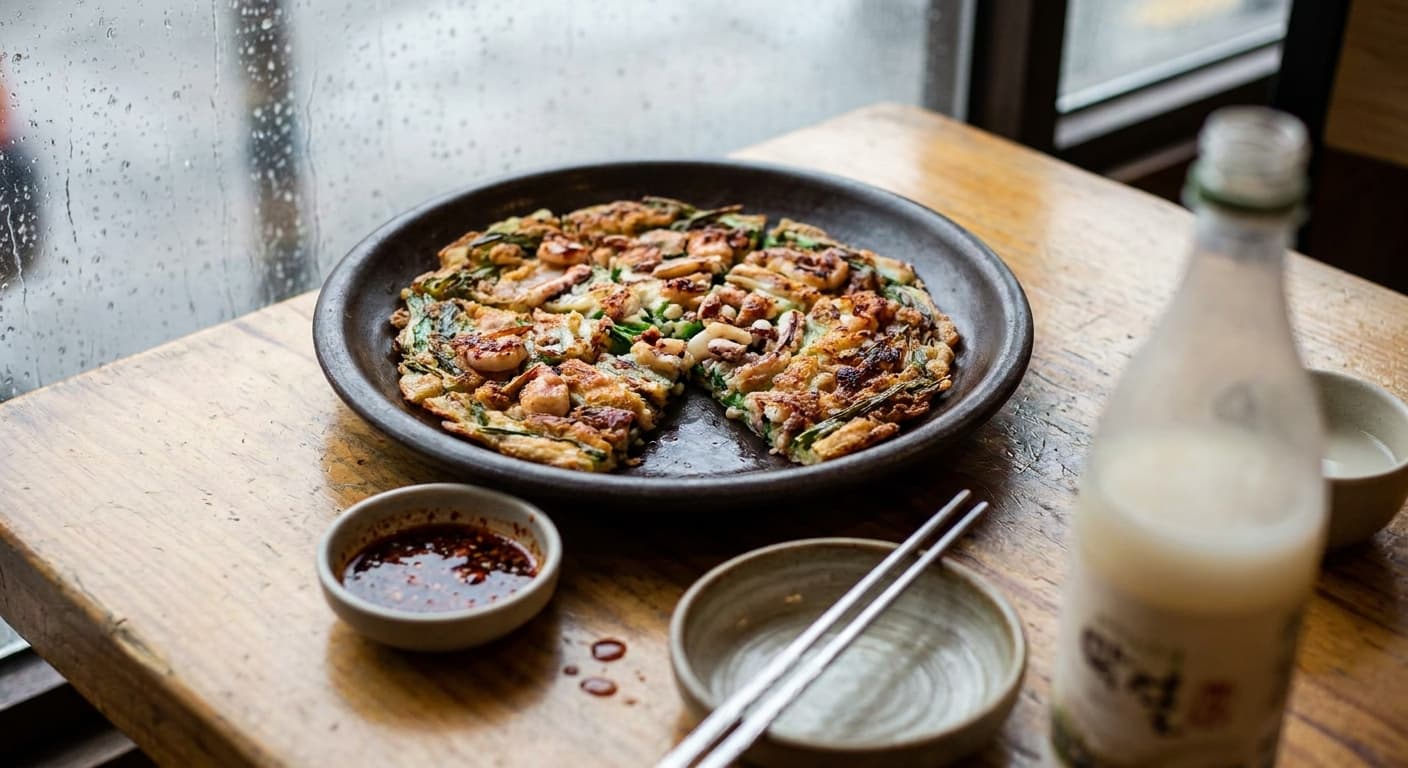
Haemul Pajeon (해물파전) — Korean Seafood Scallion Pancake
Korean · Appetizers · 41 min
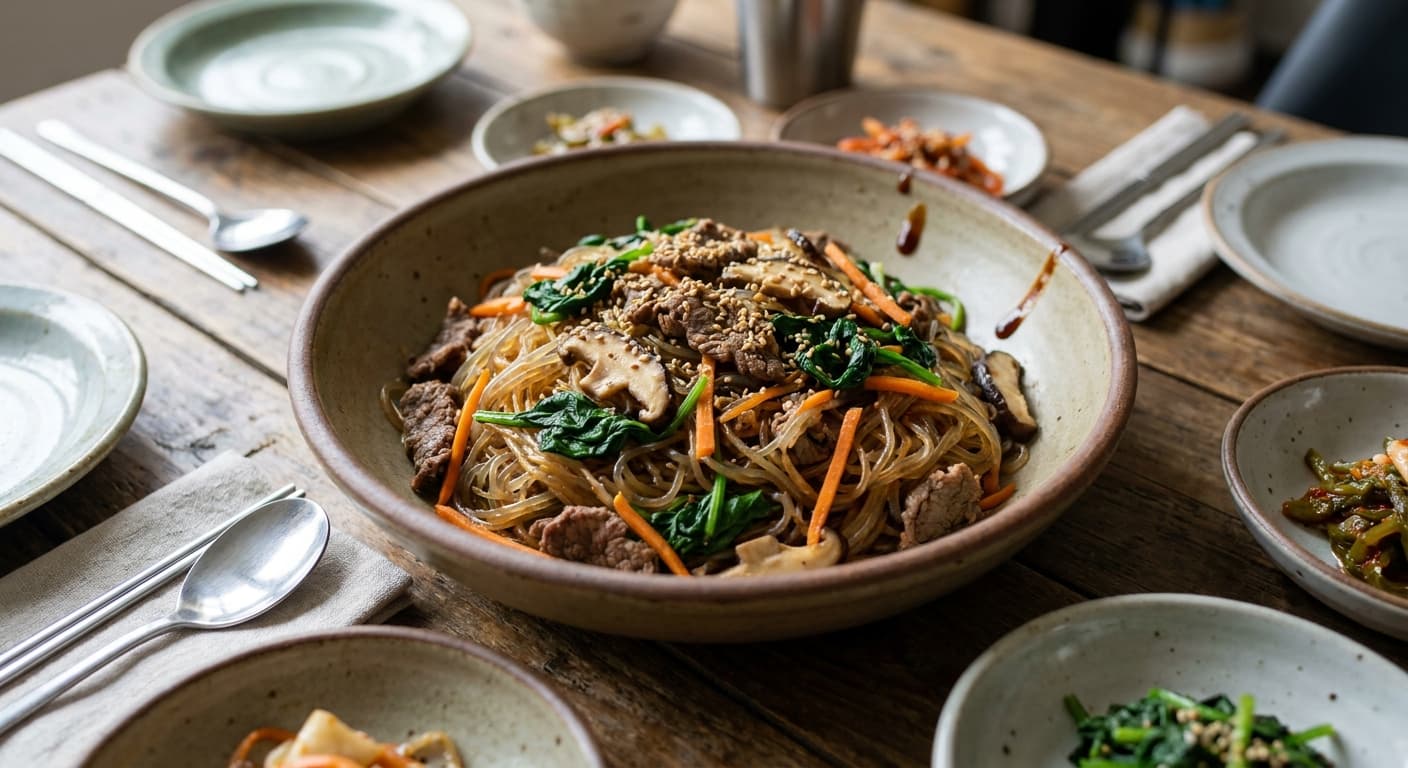
Japchae (잡채) — Korean Glass Noodles with Beef and Vegetables
Korean · Main Courses · 60 min
Chilean Beef Empanada (Empanada de pino) — Baked pastry filled with beef, onion, egg, olive, and raisins
Chilean · Main Courses · 125 min
Toad in the Hole (Toad in the Hole) — Sausages Baked in Yorkshire Pudding Batter
British · Main Courses · 65 min
Biangbiang Noodles (油泼扯面) — Xi'an Hand-Pulled Belt Noodles
Chinese · Main Courses · 65 min
Japanese Chicken Katsu Curry (チキンカツカレー) — Crispy Cutlet with Rich Curry Rice
Japanese · Main Courses · 65 min
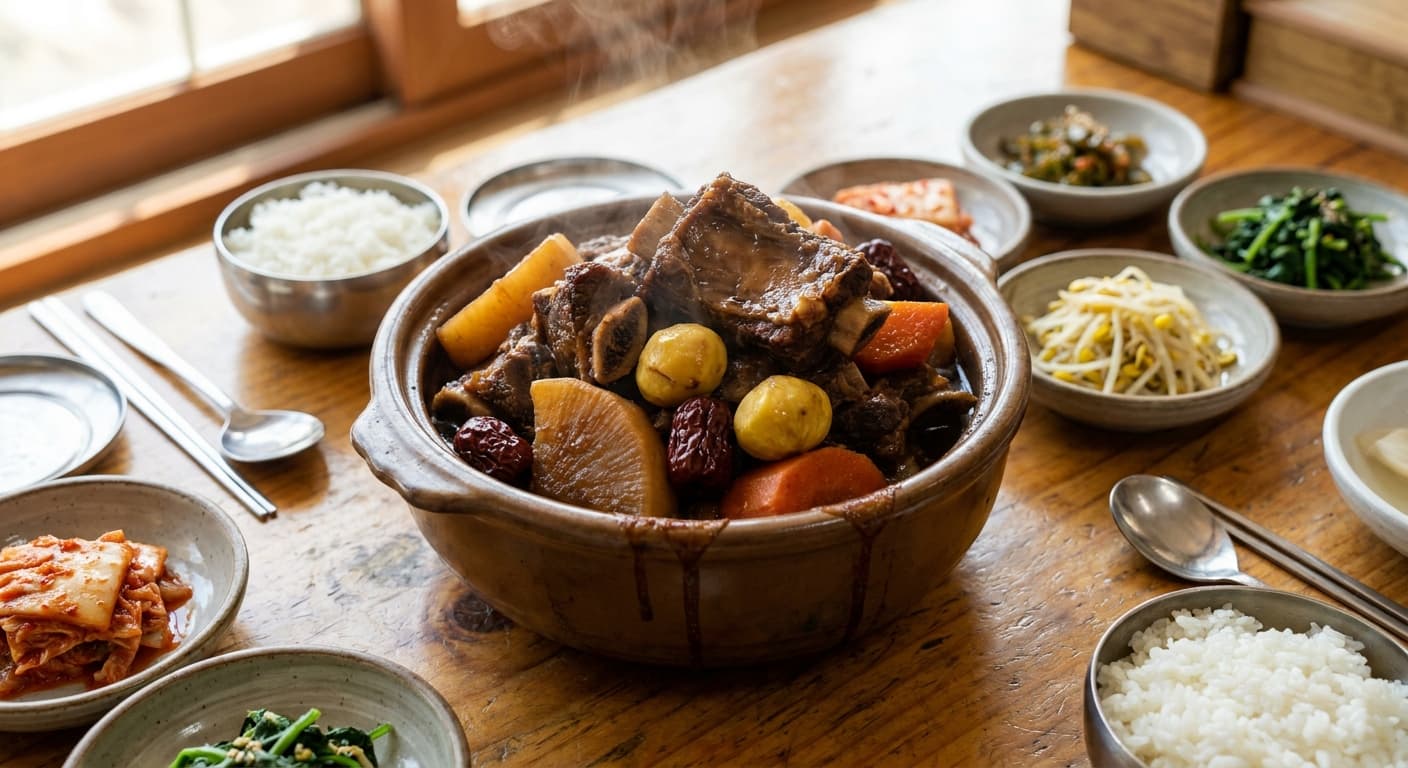
Galbi Jjim (갈비찜) — Korean Braised Short Ribs
Korean · Main Courses · 175 min
Reviews
Cooked this recipe?
Tap the stars to rate it — that's all it takes. A few words are welcome but optional.
No ratings yet. Cooked this one? Be the first to rate it — it takes one tap.