Zaatar Saj (زعتر صاج) — Lebanese Thyme-Sesame Flatbread Cooked on Saj
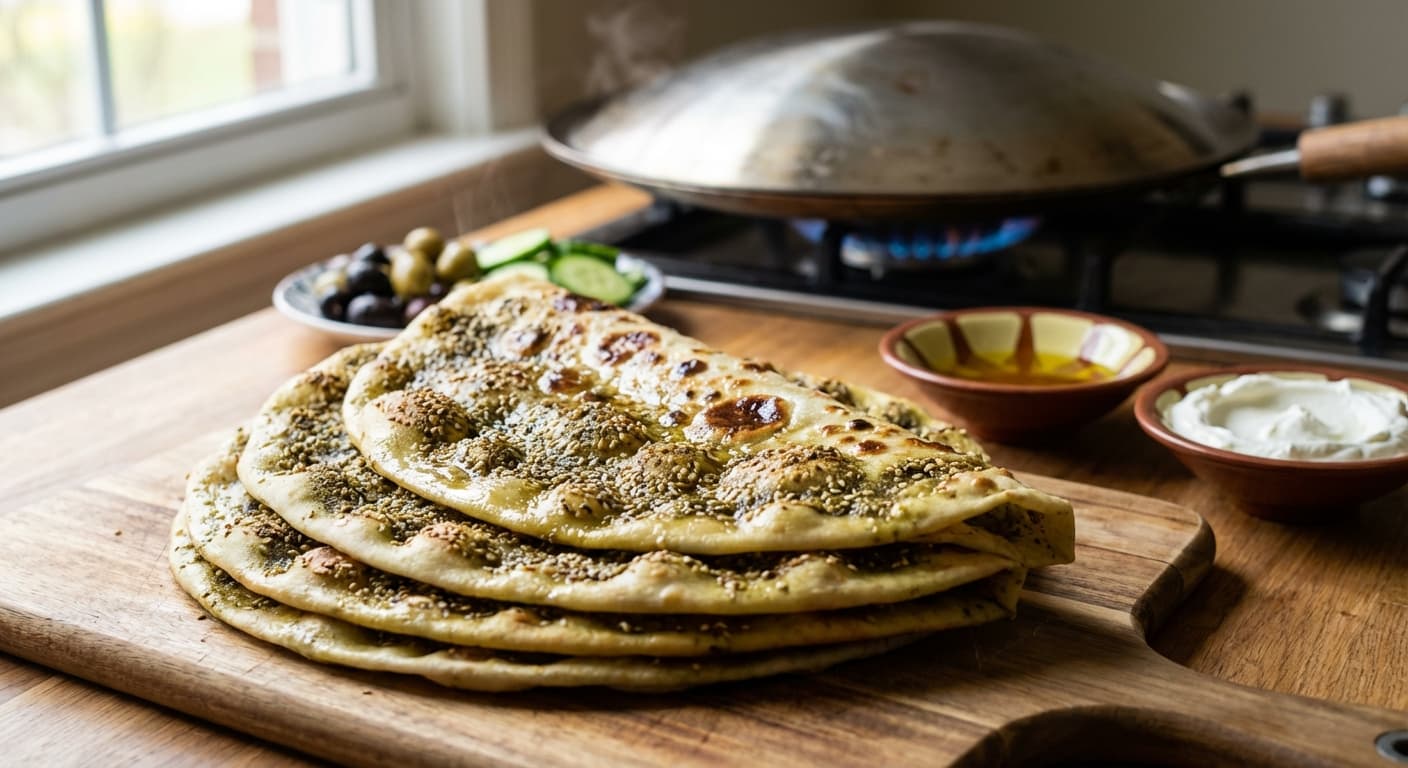
Zaatar Saj is a beloved Lebanese street bread: thin dough stretched and baked on a domed saj, then brushed with olive oil and zaatar. It’s fast, fragrant, and often eaten folded as a handheld breakfast or snack.
Printable Recipe Card
Servings: 6 · Total: 45 min · Difficulty: medium
Ingredients (quick list)
- 360 g bread flour (plus 20 g for dusting)
- 240 ml warm water (about 38°C)
- 4 g instant yeast (about 1 tsp)
- 6 g granulated sugar (about 1 1/2 tsp)
- 7 g fine sea salt (about 1 1/4 tsp)
- 15 ml olive oil (about 1 tbsp)
- 60 g zaatar blend (thyme/sumac/sesame mix)
Steps (summary)
- Make the dough by whisking the warm water, yeast, and sugar in a bowl until dissolved. Let it stand for 5 minutes; it should lo…
- Add the flour and salt, then mix until a shaggy dough forms and no dry flour remains. Drizzle in the olive oil and knead for 8…
- Cover the dough and let it rise at room temperature for 45 minutes, or until roughly doubled in size. While it rises, stir the…
- Divide the dough into 6 equal pieces (about 105 g each) and shape each into a tight ball. Cover and rest for 10 minutes so the…
- Heat a saj (or an inverted wok/large metal bowl set over a burner) over medium-high heat for 8 minutes until very hot. Lightly…
- Stretch one dough ball into a very thin round, about 28–32 cm wide, using your hands and knuckles rather than a rolling pin for…
+ 2 more steps in the full instructions section below.
Cultural Background
Across Lebanon and the Levant, saj bread is a hallmark of village and street cooking, prized for its speed and smoky blistering. Zaatar saj is especially associated with breakfast and school snacks, folded and eaten by hand with labneh or vegetables.
Equipment
💡 Tips
- Aim for a very hot saj: if the bread takes longer than 90 seconds per side, increase heat to avoid drying it out.
- Keep dough balls covered during shaping so a skin doesn’t form, which can cause tearing when stretching thin.
- Spread zaatar after baking for classic saj-style aroma; if you prefer a toastier topping, return the topped bread to the saj for exactly 15 seconds.
⚠️ Common Mistakes
❌ Dough tears while stretching and won’t go thin.
✅ Fix: Rest the dough balls 10–15 minutes longer and dust lightly; relaxed gluten stretches without ripping.
❌ Bread turns dry and cracker-like.
✅ Fix: Increase saj heat so cooking is faster, and cover stacked breads loosely to trap steam and keep them pliable.
❌ Zaatar paste slides off or feels greasy.
✅ Fix: Stir the paste well before each use and spread thinly (about 25 g per bread); too much oil prevents absorption.
🧊 How to Store
Cool breads completely, then wrap tightly and refrigerate up to 3 days, or freeze up to 2 months with parchment between pieces. Reheat on a dry skillet over medium heat for 30–45 seconds per side, then brush with 5 ml olive oil to refresh softness.
📅 Make Ahead
Mix and knead the dough, then refrigerate covered for up to 18 hours for deeper flavor. Bring to room temperature for 45 minutes before dividing and stretching; the zaatar-oil paste can be made 3 days ahead and refrigerated.
🍽️ Pairs Well With
- Labneh
- sliced cucumbers and tomatoes
- olives
- mint tea
- pickled turnips.
Regional Variations
- Southern Lebanon style: slightly more sumac in the zaatar for a sharper tang and deeper purple color.
- Beirut street-stall style: add 5 g toasted sesame on top after spreading for extra crunch.
- Mountain villages: serve the saj bread plain first, then dip bites into zaatar mixed with olive oil at the table.
Ingredients
- 360 gbread flour (plus 20 g for dusting)
- 240 mlwarm water (about 38°C)
- 4 ginstant yeast (about 1 tsp)
- 6 ggranulated sugar (about 1 1/2 tsp)
- 7 gfine sea salt (about 1 1/4 tsp)
- 15 mlolive oil (about 1 tbsp)
- 60 gzaatar blend (thyme/sumac/sesame mix)
🔄 Substitutions
- bread flour→ all-purpose flour
- instant yeast→ active dry yeast
- saj→ inverted wok or inverted large metal bowl over a gas burner
Instructions
- 1
Make the dough by whisking the warm water, yeast, and sugar in a bowl until dissolved. Let it stand for 5 minutes; it should look slightly foamy, which confirms the yeast is active.
- 2
Add the flour and salt, then mix until a shaggy dough forms and no dry flour remains. Drizzle in the olive oil and knead for 8 minutes until smooth and elastic; the dough should feel soft but not sticky.
- 3
Cover the dough and let it rise at room temperature for 45 minutes, or until roughly doubled in size. While it rises, stir the zaatar, olive oil, and 1 g salt into a spreadable paste and set it aside.
- 4
Divide the dough into 6 equal pieces (about 105 g each) and shape each into a tight ball. Cover and rest for 10 minutes so the gluten relaxes, which makes stretching thin on the saj much easier.
- 5
Heat a saj (or an inverted wok/large metal bowl set over a burner) over medium-high heat for 8 minutes until very hot. Lightly dust your work surface and hands with 10–20 g flour to prevent sticking without drying the dough.
- 6
Stretch one dough ball into a very thin round, about 28–32 cm wide, using your hands and knuckles rather than a rolling pin for the best texture. Lay it onto the hot saj; cook for 45–60 seconds until bubbles form and the underside shows light brown spotting.
- 7
Flip the bread and cook the second side for 30–45 seconds, just until set and lightly speckled. Transfer to a board and immediately spread about 25 g of the zaatar-oil paste evenly over the surface while the bread is hot so it absorbs the aroma.
- 8
Repeat stretching, baking, and topping with the remaining dough and zaatar paste, keeping cooked breads stacked and loosely covered to stay pliable. Serve warm folded into quarters, or roll it into a wrap while it is still soft.
🪪 Recipe Passport
Cultural Background
Across Lebanon and the Levant, saj bread is a hallmark of village and street cooking, prized for its speed and smoky blistering. Zaatar saj is especially associated with breakfast and school snacks, folded and eaten by hand with labneh or vegetables.
Regional Variations
Researched from multiple sources and validated by the Zaffaron editorial team. Every recipe is tested for accuracy, measurements, and cultural authenticity.
Nutrition per serving
Pairs well with
If you enjoyed this recipe, here are a few related Zaffaron recipes to try next.
Does your family make this differently?
Every family has their own version. Maybe your grandmother adds a secret ingredient, or your aunt has a completely different technique. Preserve your family's version — with their name on it, forever.
You Might Also Like

Jallab (جلاب) — Lebanese date-molasses drink with pine nuts
Lebanese · Drinks · 10 min
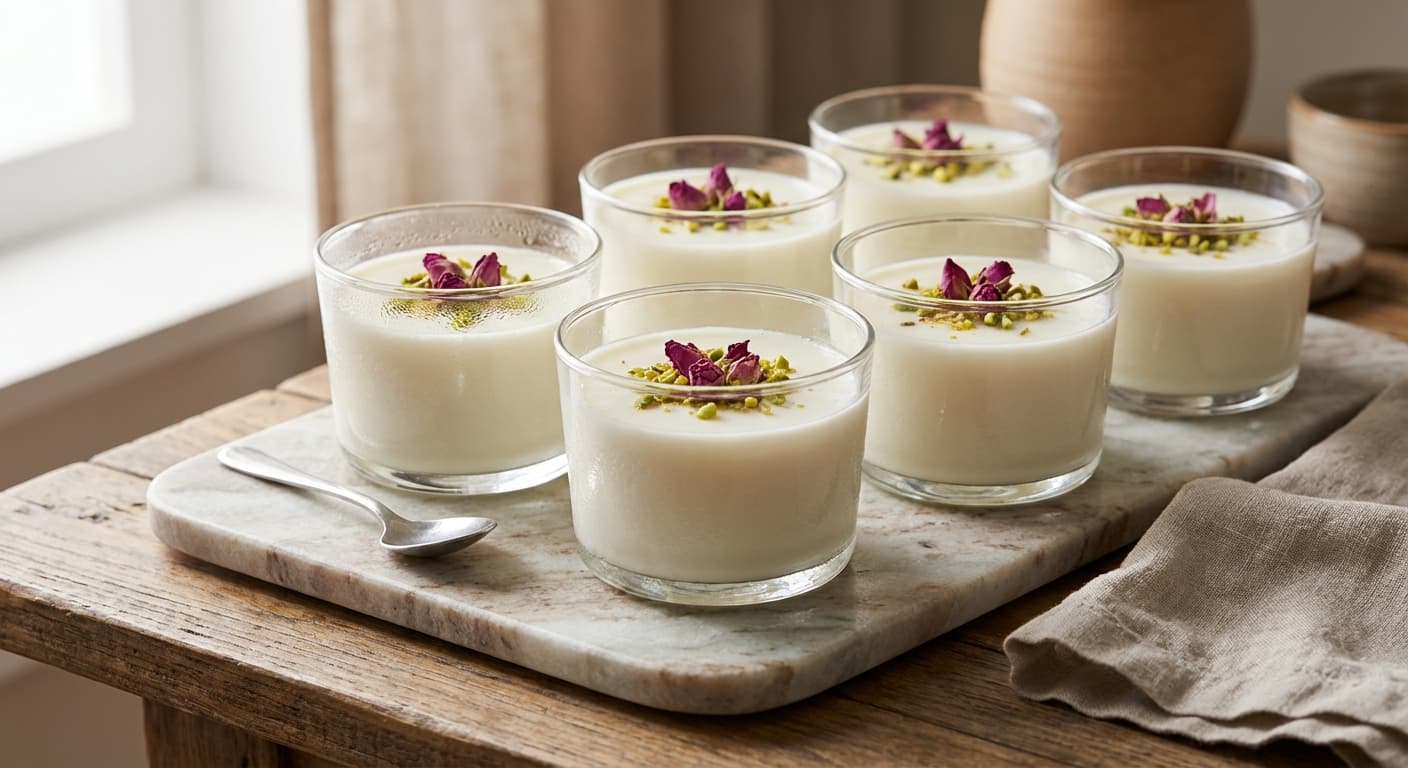
Mhalabiyeh (مهلبية) — Lebanese Milk Pudding with Orange Blossom
Lebanese · Desserts · 22 min
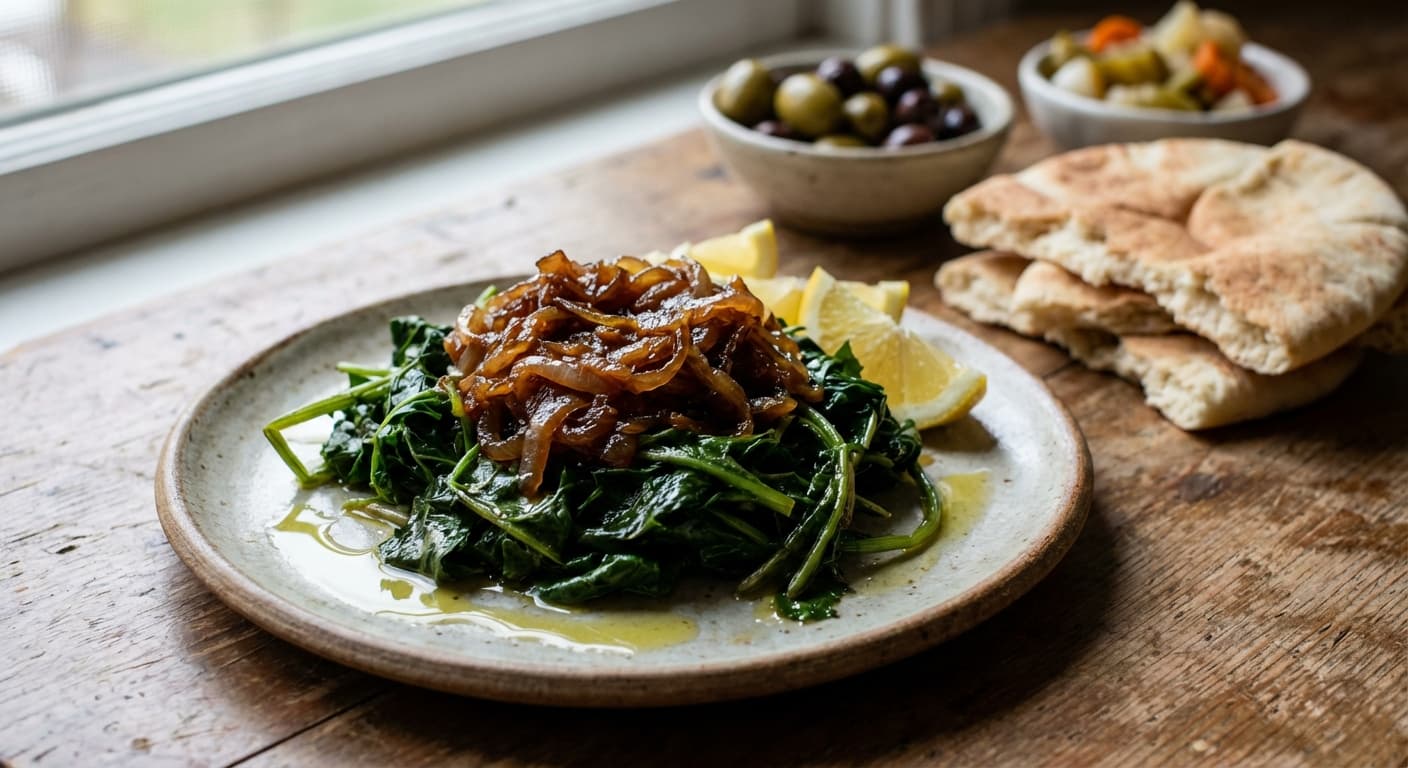
Hindbeh b Zeit (هندبة بزيت) — Lebanese dandelion greens with onions and olive oil
Lebanese · Side Dishes · 55 min
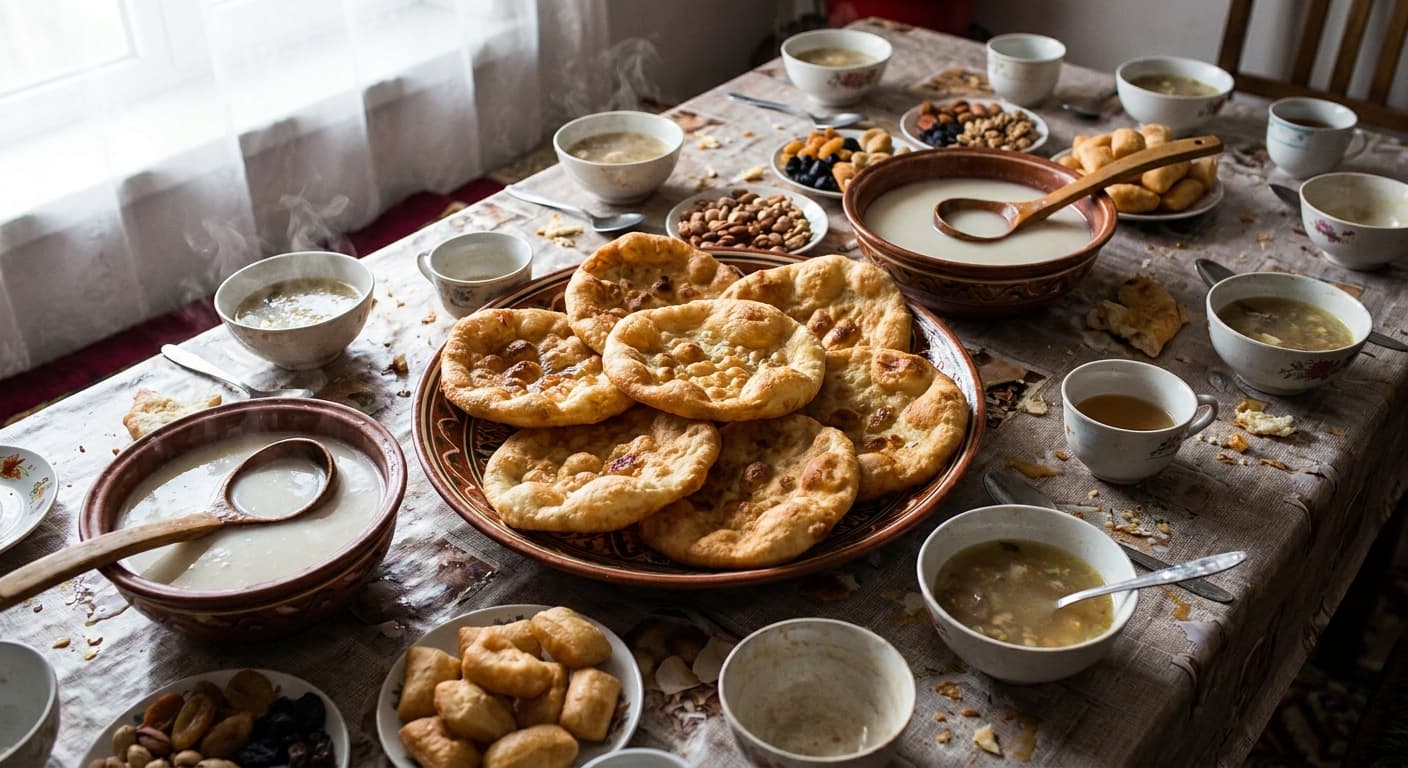
Shelpek (Шелпек) — Kazakh Fried Flatbread
Kazakh · Breads · 63 min
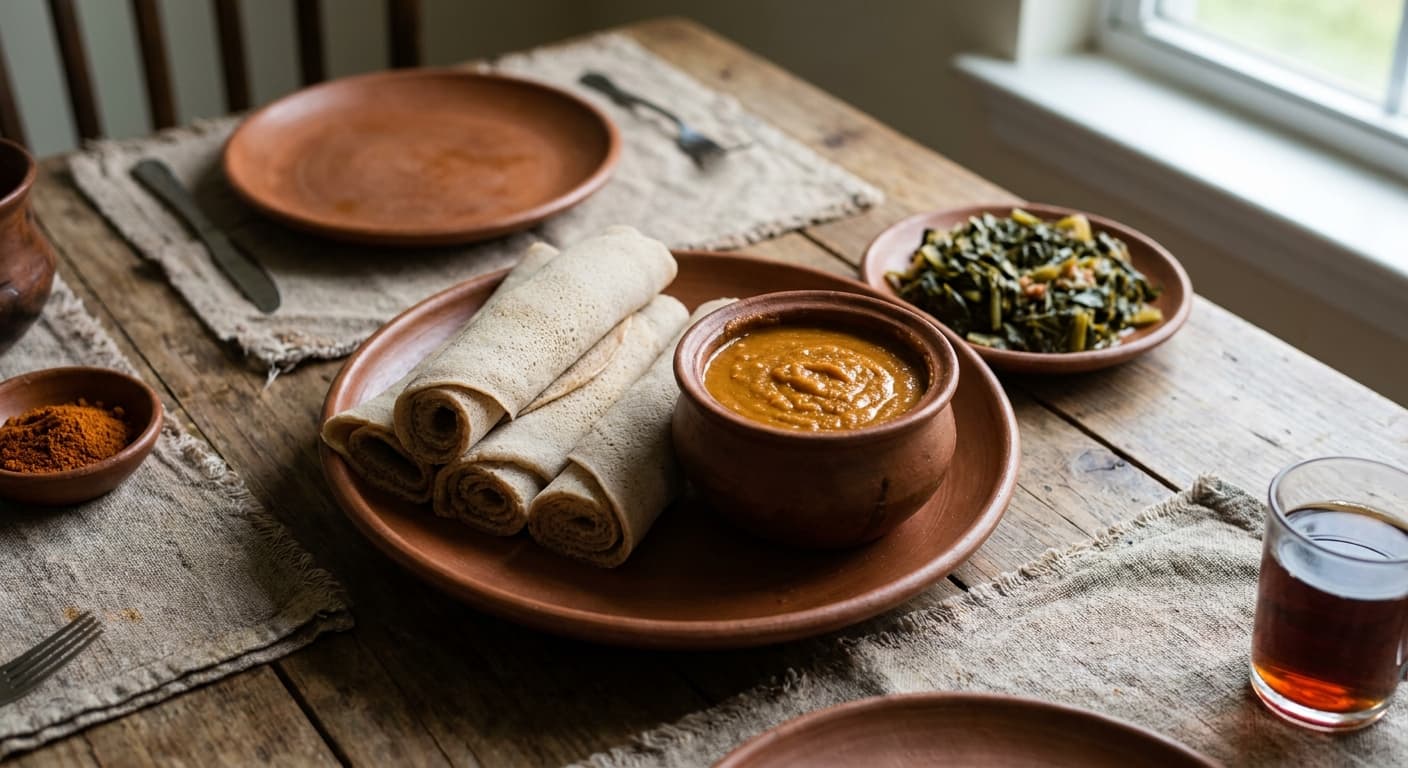
Injera (እንጀራ) — Fermented Ethiopian Teff Flatbread
Ethiopian · Breads · 70 min
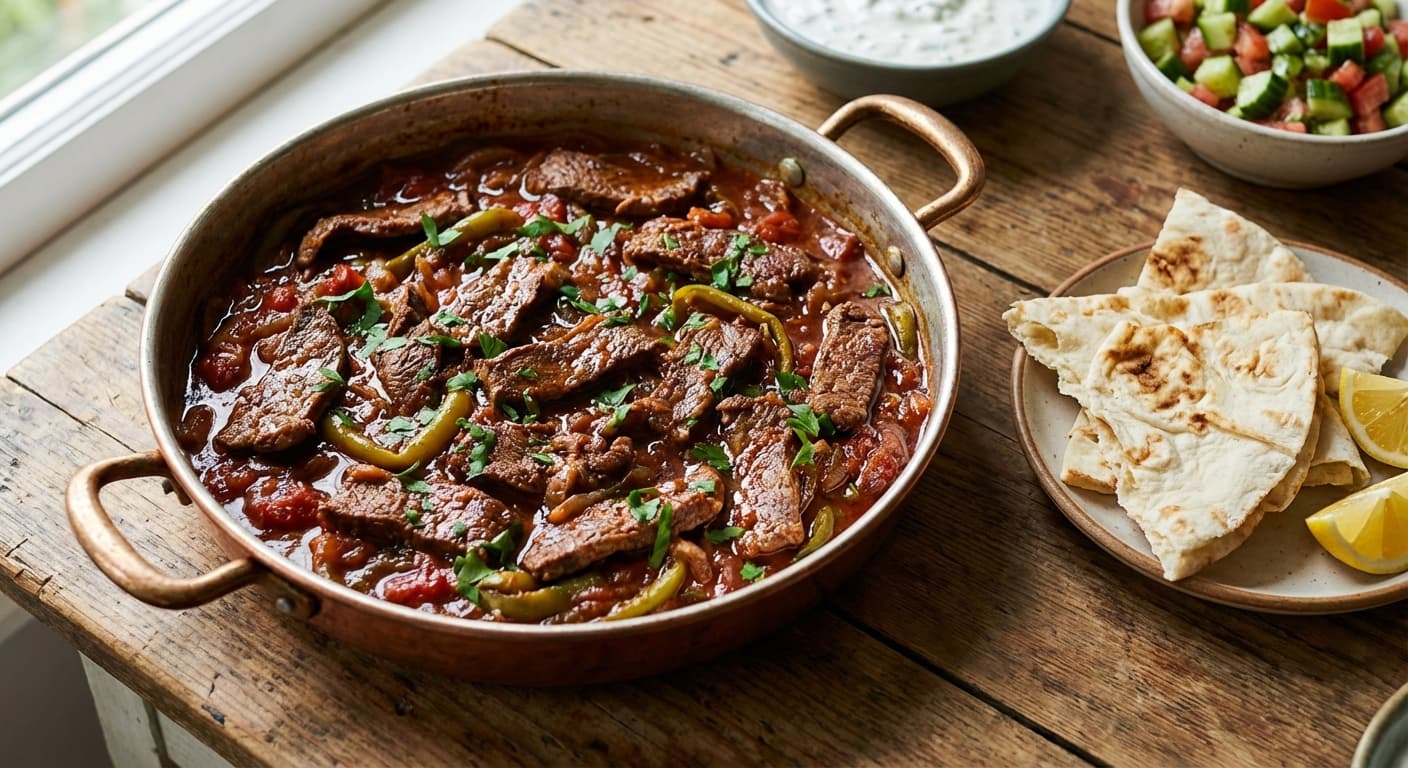
Sac Kavurma (Saç Kavurma) — Thin-Sliced Turkish Meat Sautéed with Onions
Turkish · Main Courses · 38 min
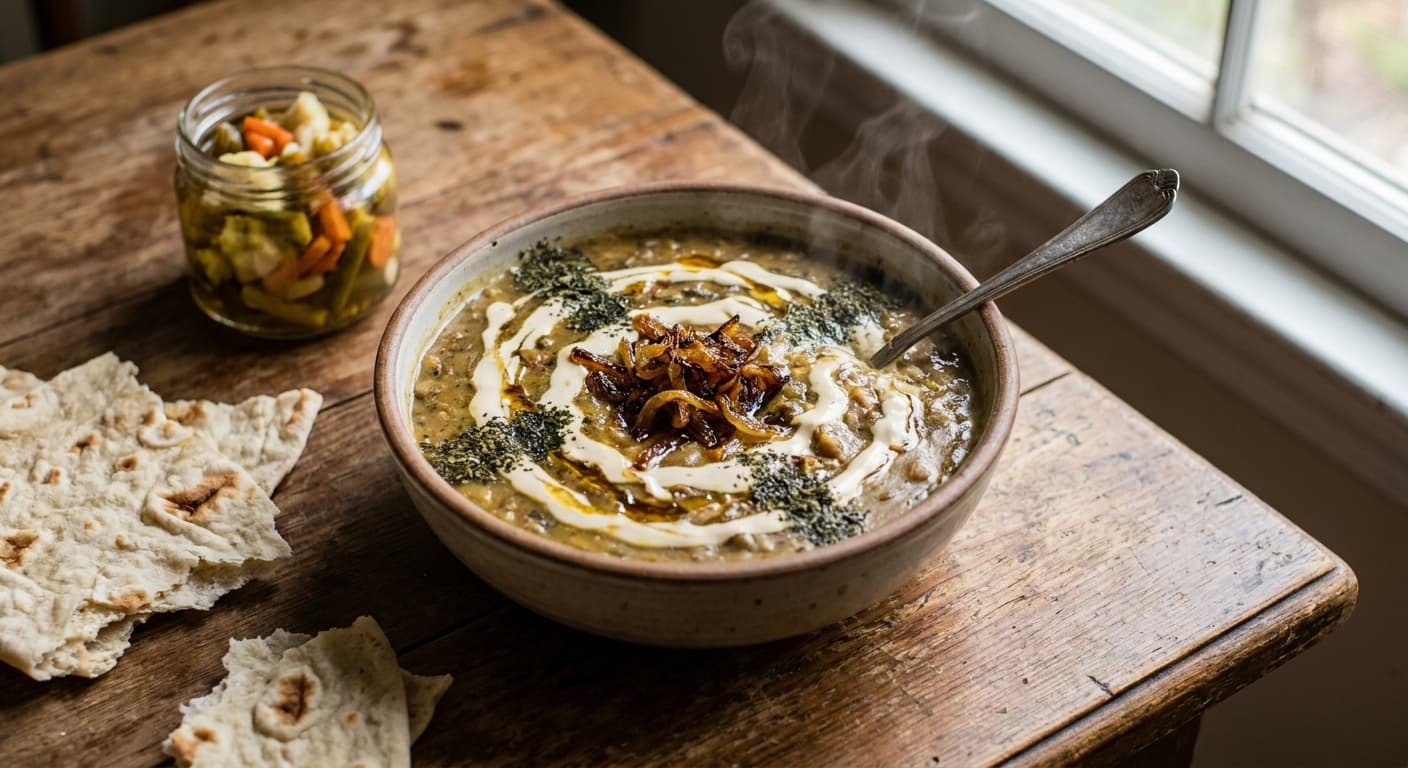
Ash-e Sak (آش ساک) — Gorgani Spinach and Lamb Ash
Persian · Soups · 175 min
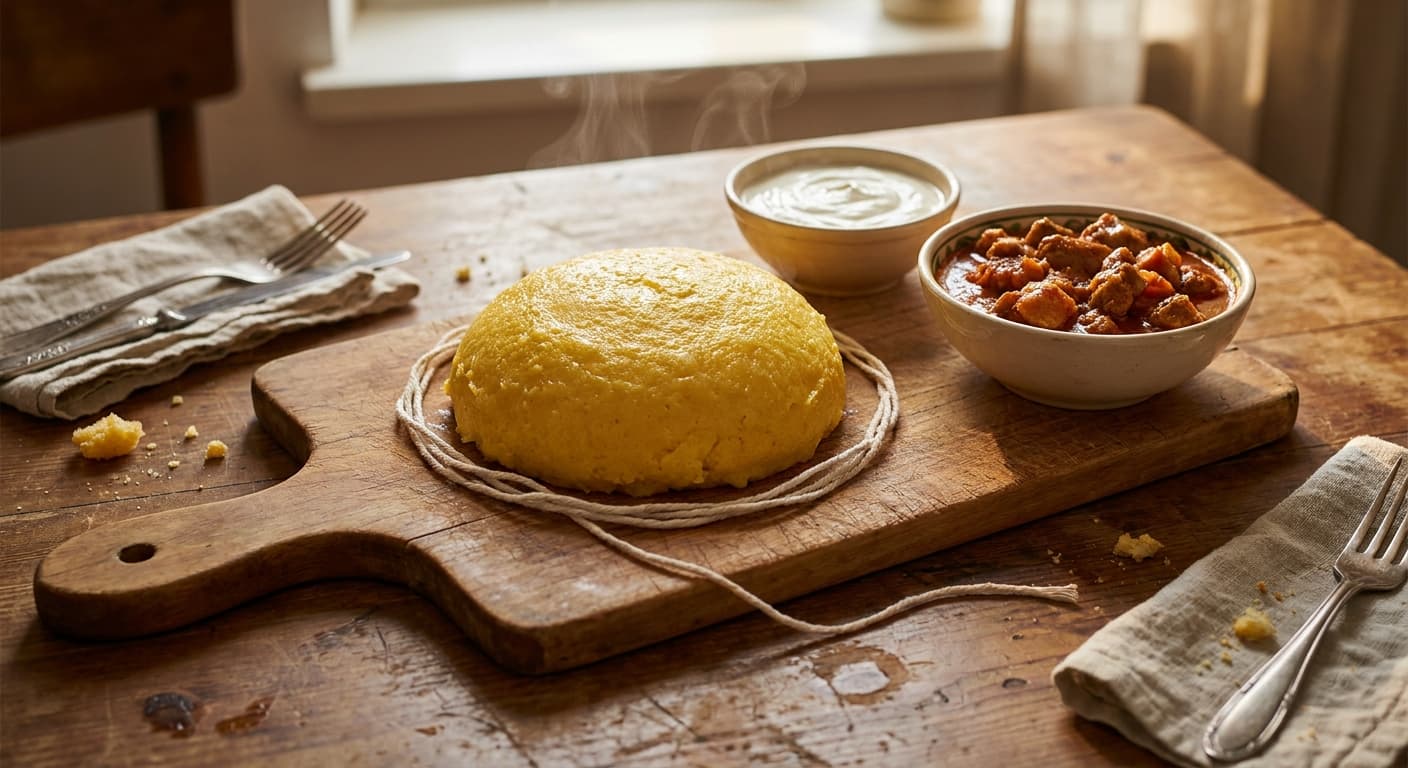
Romanian Polenta (Mămăligă) — Firm Cornmeal Porridge
Romanian · Side Dishes · 30 min
Reviews
Cooked this recipe?
Tap the stars to rate it — that's all it takes. A few words are welcome but optional.
No ratings yet. Cooked this one? Be the first to rate it — it takes one tap.