Nikujaga (肉じゃが) — Japanese Beef and Potato Stew
Nikujaga is a beloved Japanese home-style simmered dish of thin beef, potatoes, onions, and carrots in a sweet-savory dashi broth. It is everyday comfort food, closely tied to family cooking rather than restaurant formality.
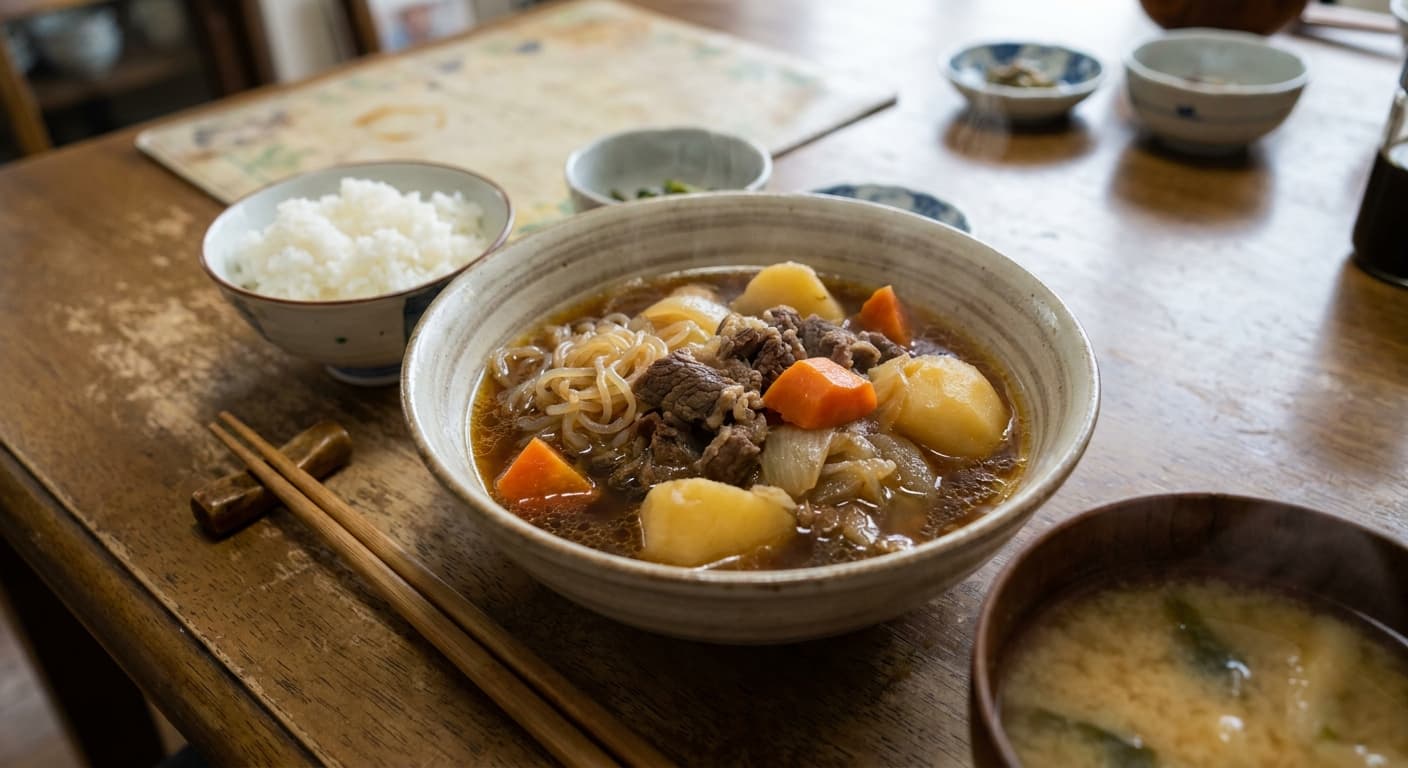
Printable Recipe Card
Servings: 4 · Total: 55 min · Difficulty: easy
Ingredients (quick list)
- 300 g thinly sliced beef chuck or ribeye
- 600 g Yukon Gold potatoes (peeled and cut into 4 cm chunks)
- 2 yellow onions (cut into 2 cm wedges)
- 1 carrot (peeled and cut into 1.5 cm rolling wedges)
- 200 g shirataki noodles (rinsed, parboiled for 2 minutes, and cut shorter)
- 8 snow peas (strings removed)
- 1 tbsp neutral oil
- 480 ml dashi stock
- 60 ml Japanese soy sauce
- 45 ml mirin
- 45 ml sake
- 18 g granulated sugar
Steps (summary)
- Rinse the shirataki noodles under cold running water, then boil them in plain water for 2 minutes to remove their alkaline arom…
- Prepare the vegetables before heating the pot because nikujaga moves quickly once the beef is added. Soak the cut potatoes in c…
- Heat the neutral oil in a wide, heavy pot over medium heat, then add the onions and cook for 3 minutes until the edges begin to…
- Add the drained potatoes, carrot, and shirataki noodles, arranging the shirataki away from the beef as much as possible. Pour i…
- Skim off any foam from the surface with a ladle for a cleaner-tasting broth. Place a drop lid over the ingredients, or use a ro…
- Remove the drop lid and simmer uncovered for 5 minutes so the broth slightly concentrates and glazes the vegetables. Turn the p…
+ 2 more steps in the full instructions section below.
Cultural Background
Nikujaga is a standard dish of Japanese home cooking, often associated with family meals and everyday care. Its balance of meat, potatoes, and seasoned dashi reflects the practical, comforting style of household simmered dishes.
Equipment
💡 Tips
- Use a wide pot so the ingredients sit in a shallow layer and absorb the seasoned broth evenly.
- Do not over-stir after the potatoes soften, because broken potatoes make the broth pasty.
- Nikujaga often tastes better after resting for 30 minutes, then being gently rewarmed before the meal.
⚠️ Common Mistakes
❌ Boiling the stew too hard
✅ Fix: Keep the liquid at a gentle simmer so the potatoes cook evenly without breaking apart.
❌ Adding shirataki directly from the package
✅ Fix: Rinse and briefly boil the noodles first to remove their strong packaged aroma.
❌ Serving immediately without resting
✅ Fix: Let the pot stand for at least 10 minutes so the potatoes absorb the seasoned broth.
🧊 How to Store
Cool leftovers quickly, then refrigerate in an airtight container for up to 3 days. Reheat gently in a covered pot over low heat with 30 ml water or dashi if the broth has reduced, avoiding hard boiling so the potatoes do not collapse.
📅 Make Ahead
Cut the vegetables up to 6 hours ahead and keep the potatoes submerged in cold water in the refrigerator. The full stew can be cooked 1 day ahead and reheated gently for deeper flavor.
🍽️ Pairs Well With
- Steamed Japanese short-grain rice
- miso soup
- cucumber sunomono
- pickled daikon.
Regional Variations
- Eastern Japanese households commonly use pork instead of beef for a lighter but still rich version.
- Some Kansai-style versions lean sweeter and use beef with a stronger mirin presence.
- Green beans or snap peas may replace snow peas depending on season and household preference.
Ingredients
- 300 gthinly sliced beef chuck or ribeye
- 600 gYukon Gold potatoes (peeled and cut into 4 cm chunks)
- 2yellow onions (cut into 2 cm wedges)
- 1carrot (peeled and cut into 1.5 cm rolling wedges)
- 200 gshirataki noodles (rinsed, parboiled for 2 minutes, and cut shorter)
- 8snow peas (strings removed)
- 1 tbspneutral oil
- 480 mldashi stock
- 60 mlJapanese soy sauce
- 45 mlmirin
- 45 mlsake
- 18 ggranulated sugar
🔄 Substitutions
- thinly sliced beef chuck or ribeye→ thinly sliced pork belly
- shirataki noodles→ ito konnyaku
- dashi stock→ kombu dashi
Instructions
- 1
Rinse the shirataki noodles under cold running water, then boil them in plain water for 2 minutes to remove their alkaline aroma. Drain well, cut into easy-to-eat lengths, and keep them separate from the raw beef so the noodles do not toughen the meat during cooking.
- 2
Prepare the vegetables before heating the pot because nikujaga moves quickly once the beef is added. Soak the cut potatoes in cold water for 5 minutes to remove excess surface starch, then drain them thoroughly so they simmer cleanly without clouding the broth too much.
- 3
Heat the neutral oil in a wide, heavy pot over medium heat, then add the onions and cook for 3 minutes until the edges begin to turn translucent. Add the beef and stir gently for 1 to 2 minutes, just until it loses most of its raw color and releases a savory aroma.
- 4
Add the drained potatoes, carrot, and shirataki noodles, arranging the shirataki away from the beef as much as possible. Pour in the dashi, sake, mirin, soy sauce, and sugar, then bring the liquid to a steady simmer without boiling aggressively.
- 5
Skim off any foam from the surface with a ladle for a cleaner-tasting broth. Place a drop lid over the ingredients, or use a round sheet of parchment paper with a small center hole, and simmer for 18 to 22 minutes until the potatoes are tender but still hold their shape.
- 6
Remove the drop lid and simmer uncovered for 5 minutes so the broth slightly concentrates and glazes the vegetables. Turn the pot gently once or twice rather than stirring hard, because the potatoes should remain chunky and intact.
- 7
Blanch the snow peas in boiling water for 30 seconds, then cool them quickly in cold water and drain well. Add them to the finished pot just before serving so they stay bright green and provide a fresh contrast to the sweet-savory stew.
- 8
Let the nikujaga rest off the heat for 10 minutes before serving, as the potatoes absorb more flavor while cooling slightly. Serve it in deep bowls with a little broth spooned over each portion, making sure every serving gets beef, potato, onion, carrot, shirataki, and snow peas.
🪪 Recipe Passport
Cultural Background
Nikujaga is a standard dish of Japanese home cooking, often associated with family meals and everyday care. Its balance of meat, potatoes, and seasoned dashi reflects the practical, comforting style of household simmered dishes.
Regional Variations
Researched from multiple sources and validated by the Zaffaron editorial team. Every recipe is tested for accuracy, measurements, and cultural authenticity.
📚 Sources & Cultural References
- NHK World-Japan — Dining with the Chef: Nikujaga
- Elizabeth Andoh — Washoku: Recipes from the Japanese Home Kitchen — (2005)
Sources cited by the Zaffaron editorial team during recipe research. Cultural and culinary references supporting authenticity claims.
Nutrition per serving
Pairs well with
If you enjoyed this recipe, here are a few related Zaffaron recipes to try next.
Does your family make this differently?
Every family has their own version. Maybe your grandmother adds a secret ingredient, or your aunt has a completely different technique. Preserve your family's version — with their name on it, forever.
You Might Also Like
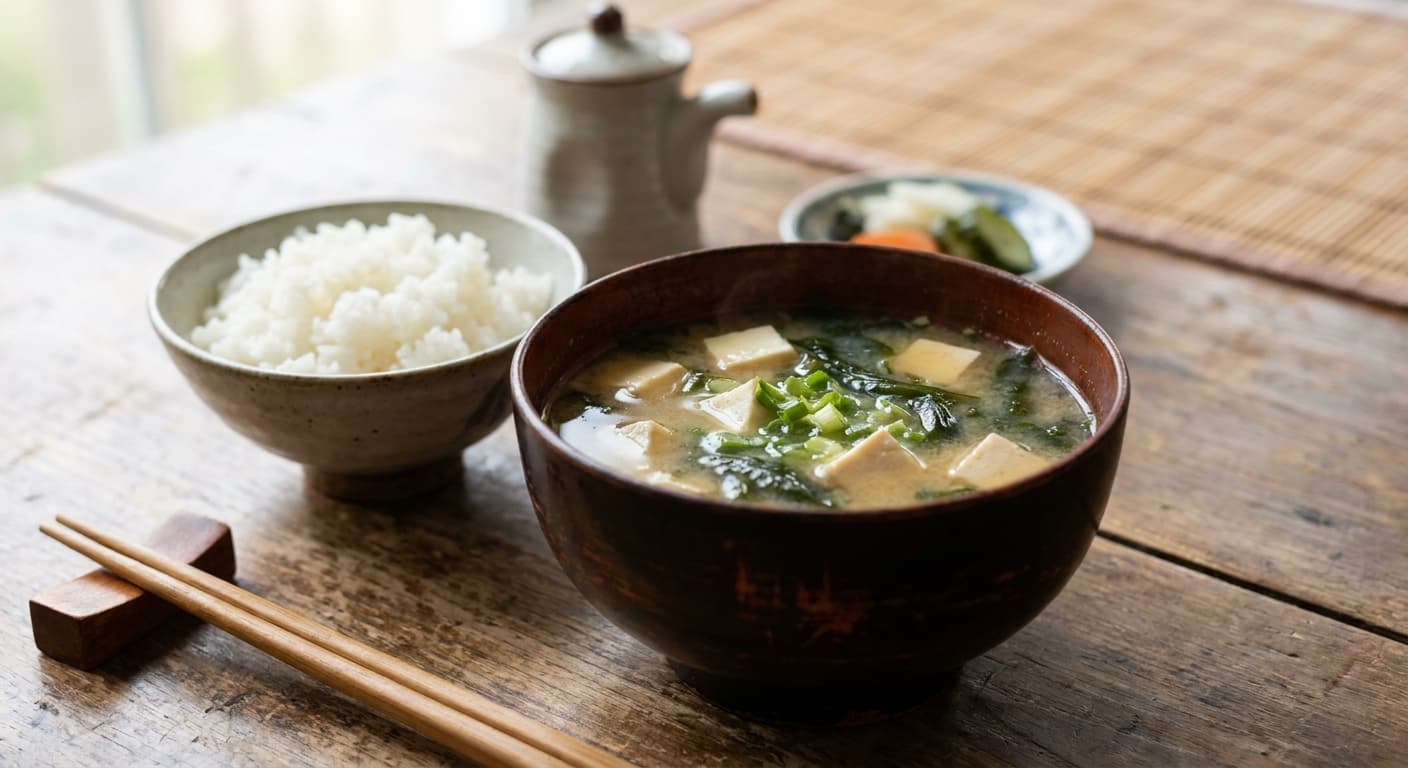
Misoshiru (味噌汁) — Classic Japanese Miso Soup with Tofu and Wakame
Japanese · Soups · 25 min
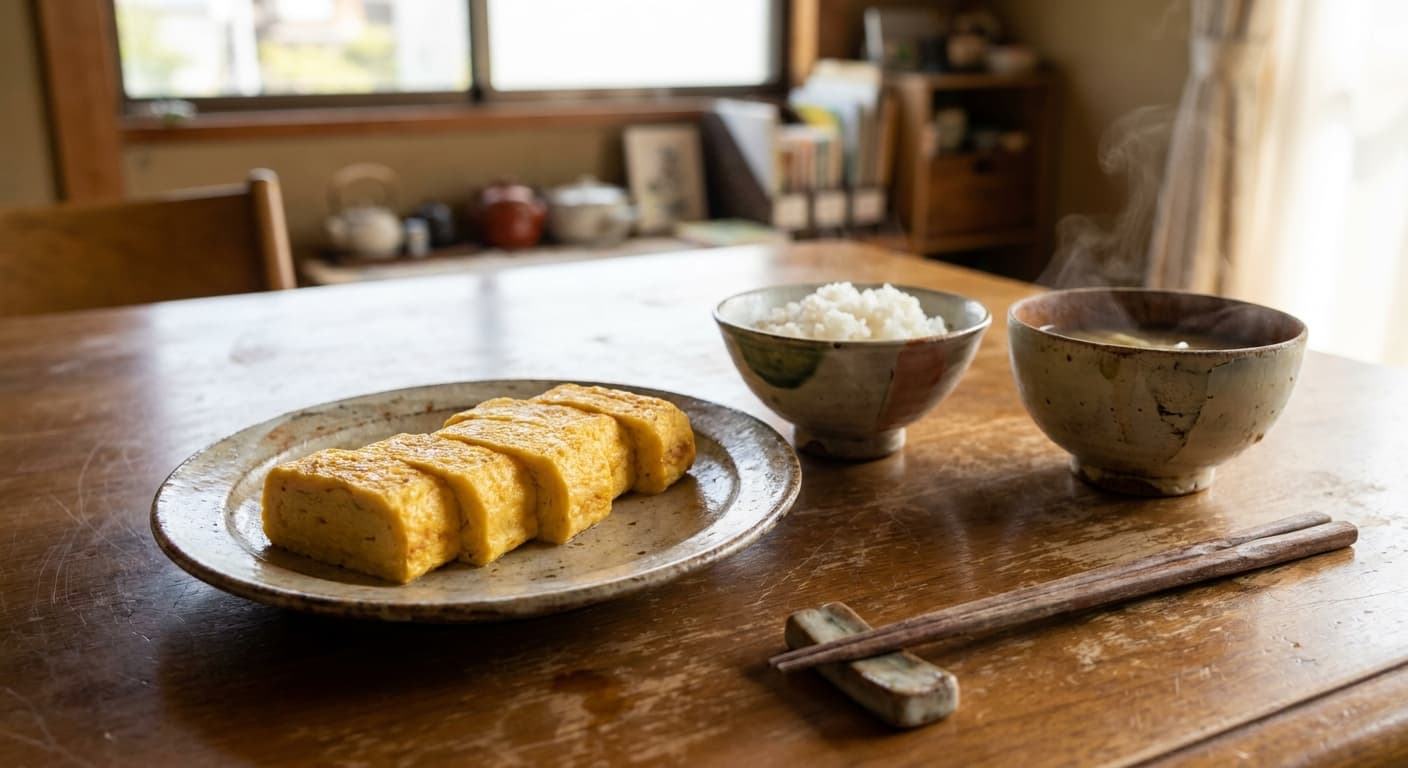
Tamagoyaki (卵焼き) — Japanese Rolled Omelette
Japanese · Side Dishes · 22 min
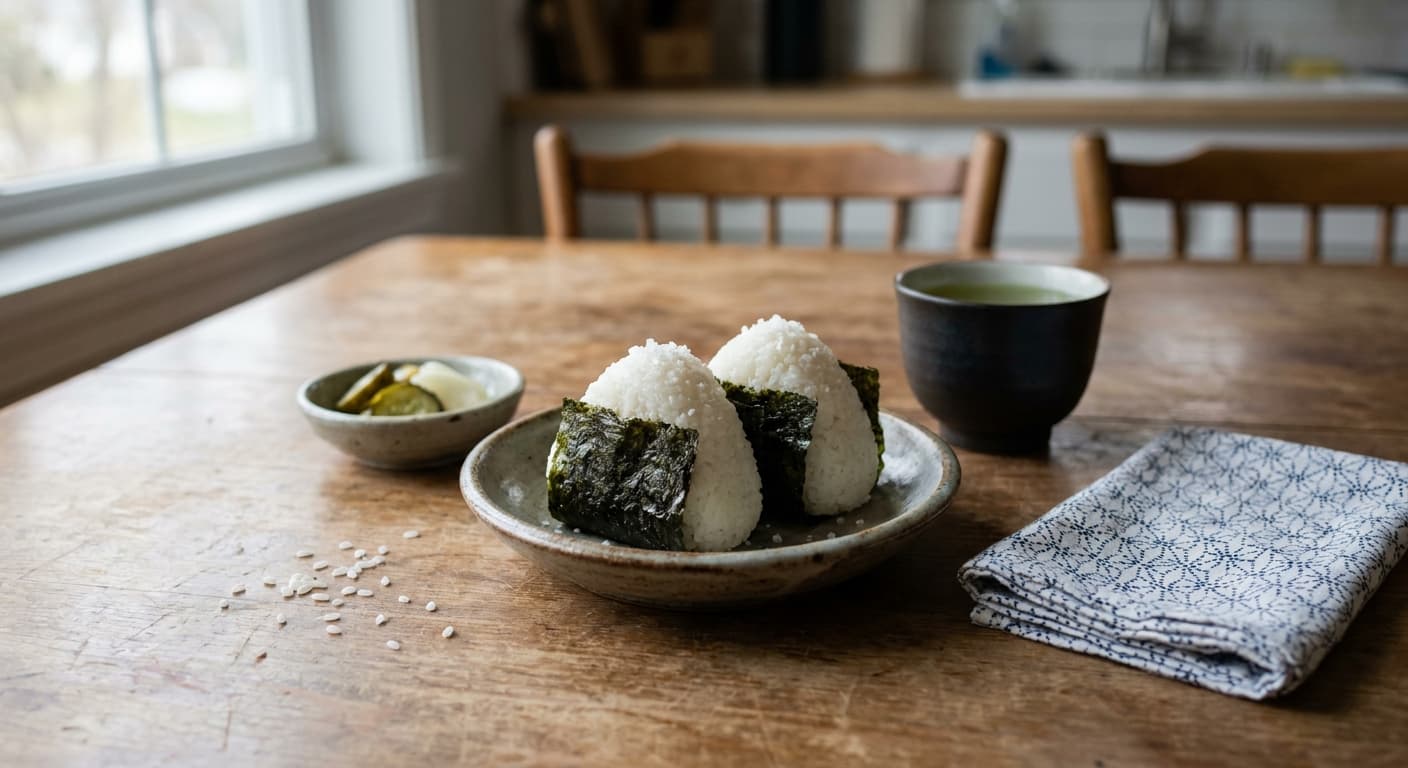
Salted Rice Balls (塩おにぎり) — Simple Japanese Hand-Pressed Rice
Japanese · Rice Dishes · 65 min
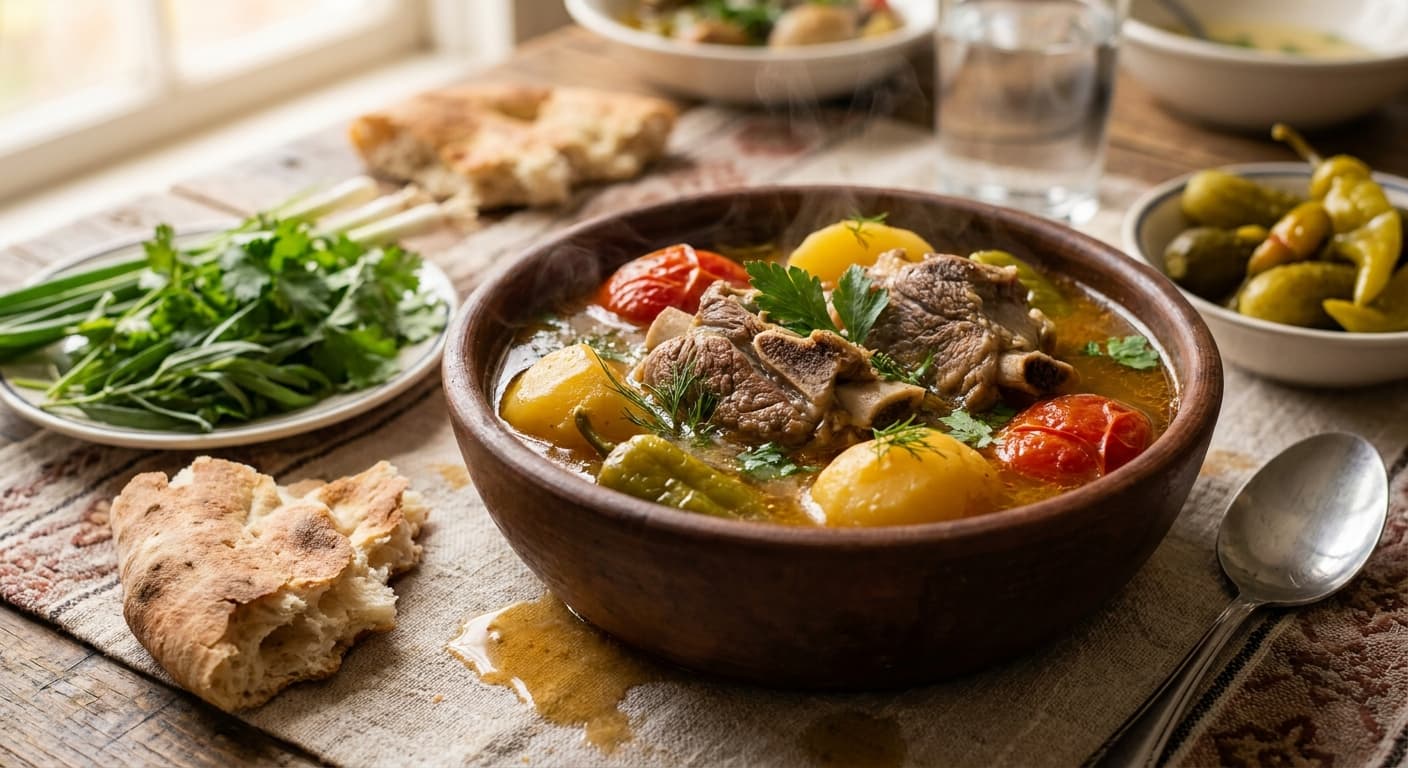
Khashlama (Խաշլամա) — Armenian Lamb and Vegetable Stew
Armenian · Stews · 160 min
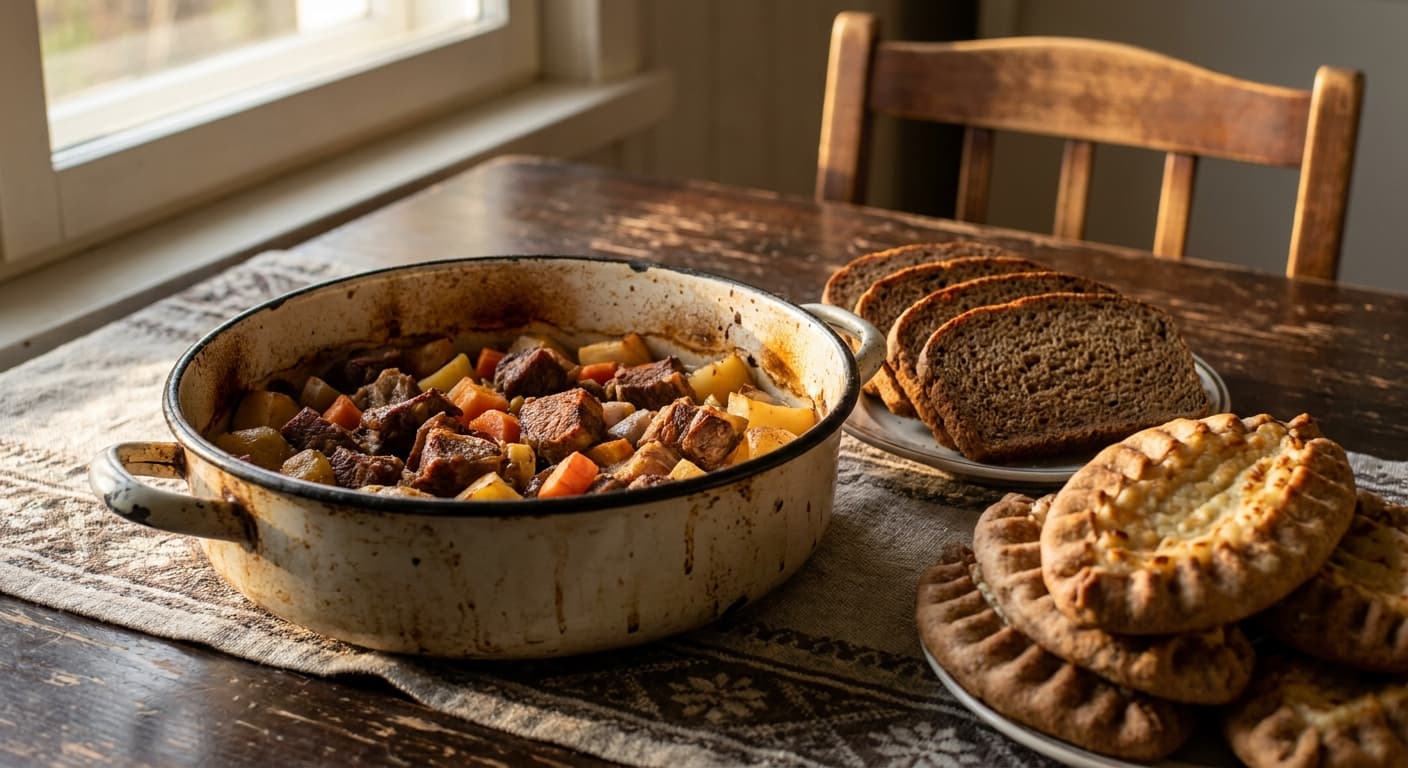
Karelian Hot Pot (Karjalanpaisti) — Finnish Oven-Braised Meat Stew
Finnish · Stews · 230 min
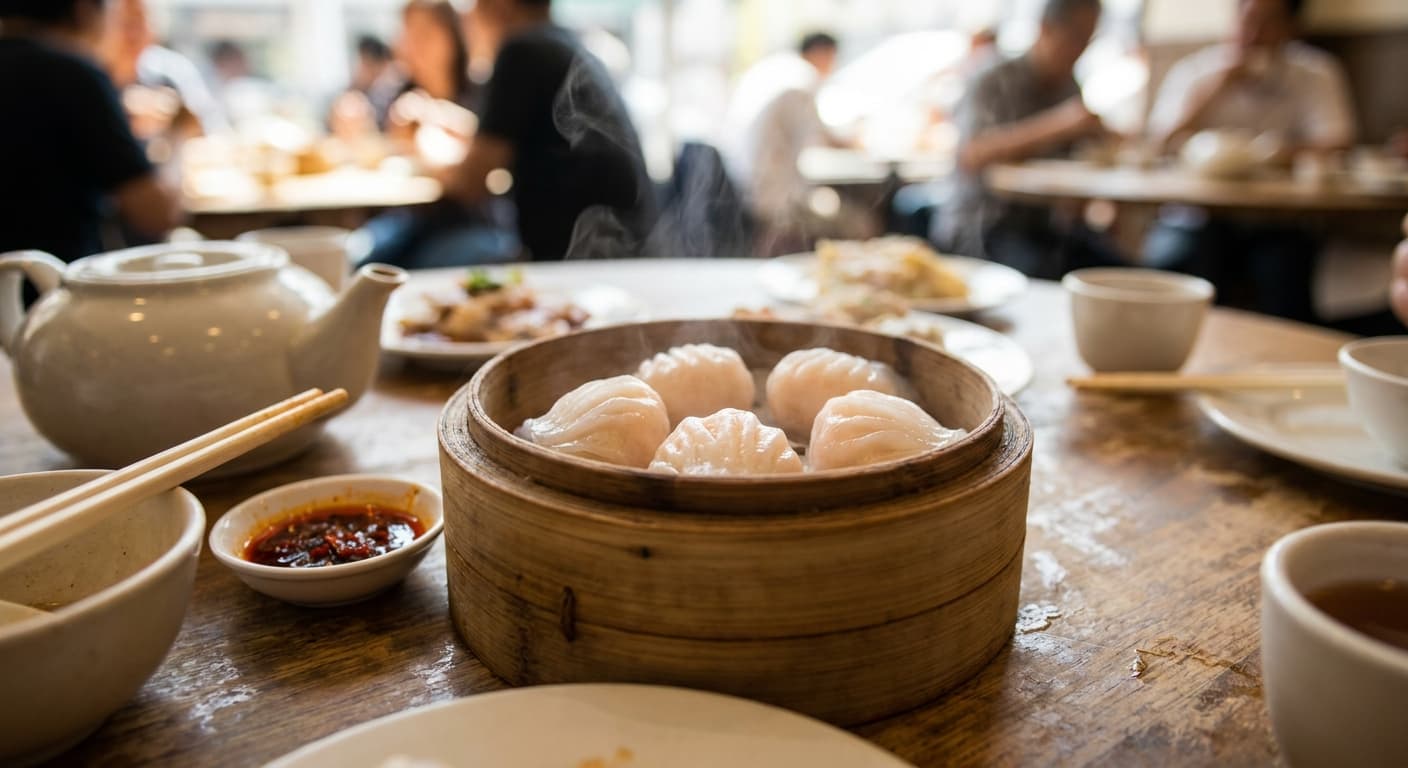
Har Gow Shrimp Dumplings (虾饺) — Translucent Cantonese Dim Sum
Chinese · Appetizers · 68 min
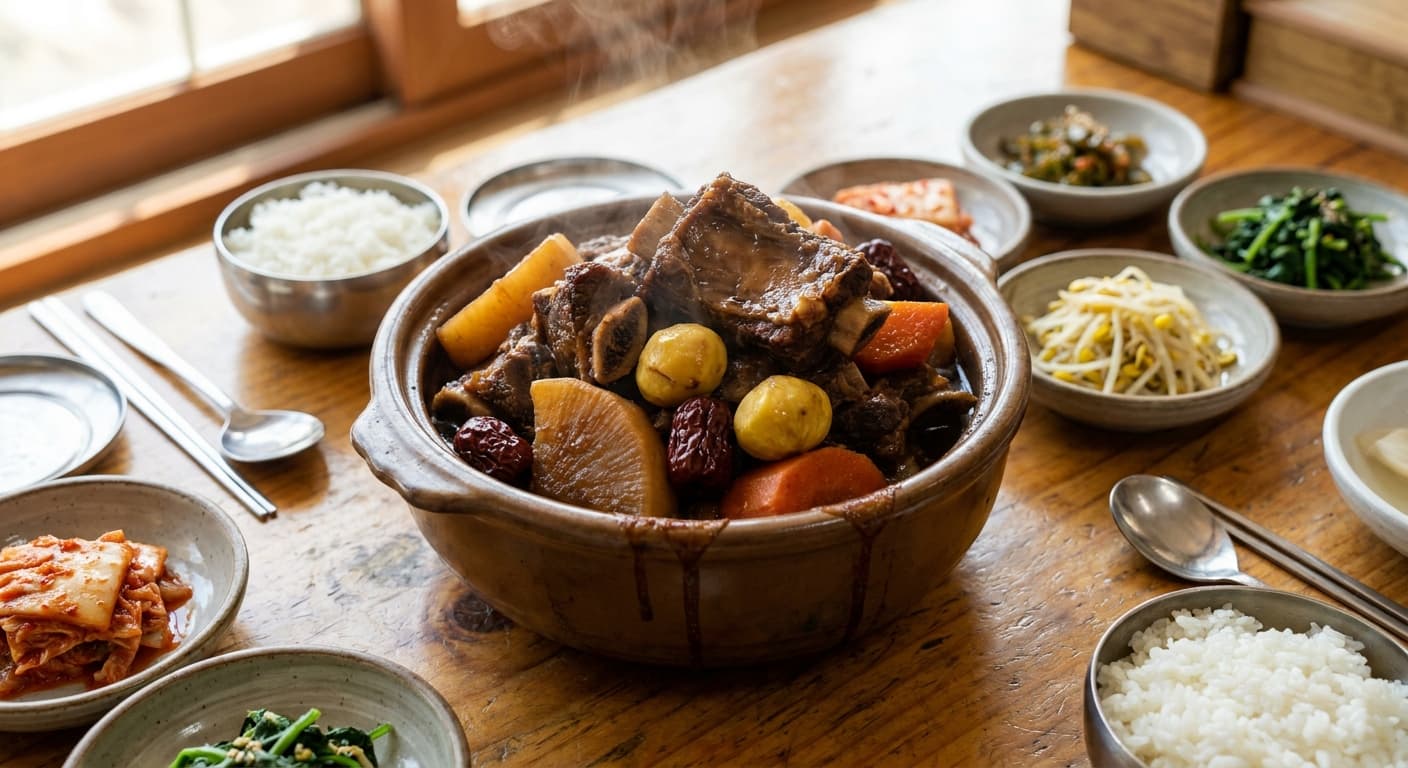
Galbi Jjim (갈비찜) — Korean Braised Short Ribs
Korean · Main Courses · 175 min
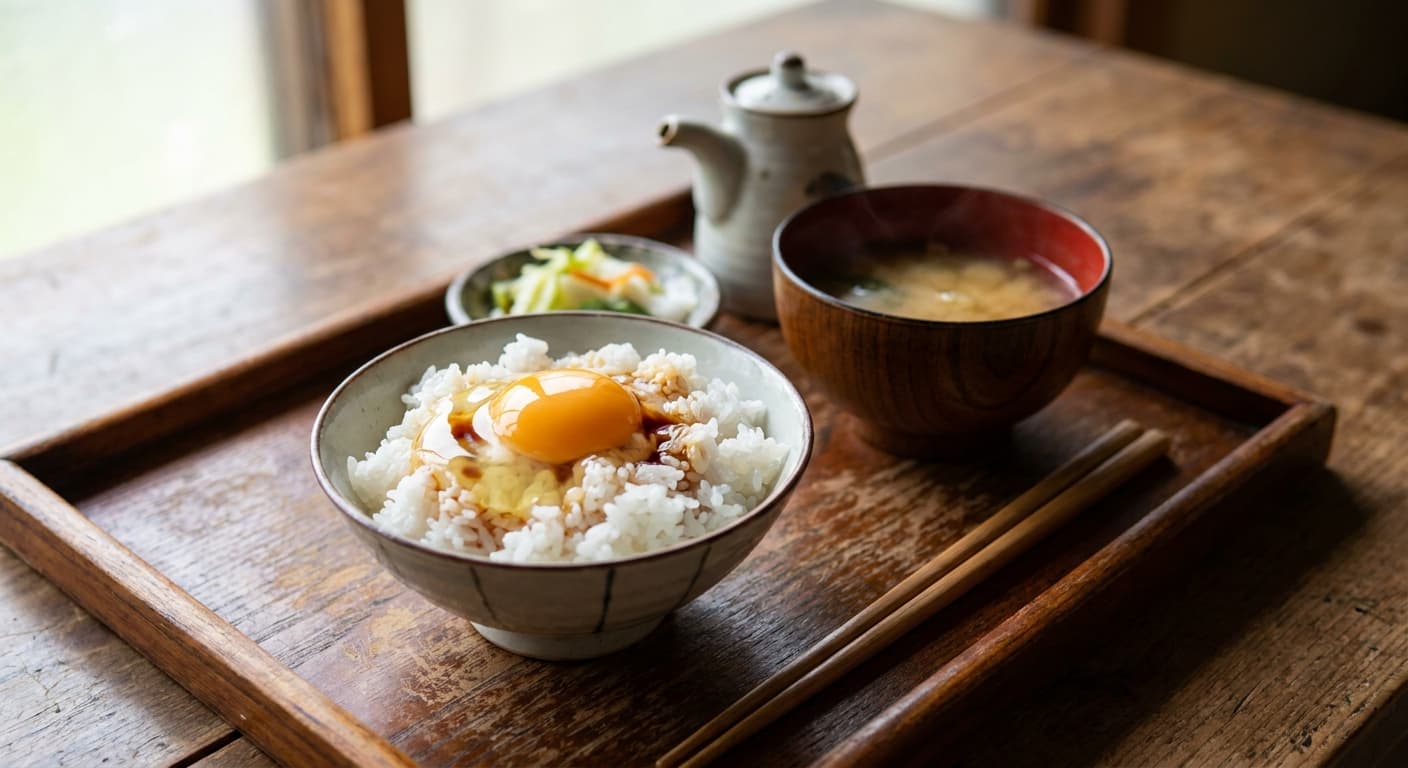
Tamago Kake Gohan (卵かけご飯) — Japanese Raw Egg Rice Breakfast
Japanese · Rice Dishes · 40 min
Reviews
Cooked this recipe?
Tap the stars to rate it — that's all it takes. A few words are welcome but optional.
No ratings yet. Cooked this one? Be the first to rate it — it takes one tap.