Japchae (잡채) — Korean Glass Noodles with Beef and Vegetables
Japchae is a beloved Korean celebration dish of springy sweet potato noodles tossed with soy-sesame seasoning, beef, egg, mushrooms, and colorful vegetables. It is commonly served at birthdays, holidays, and family gatherings.
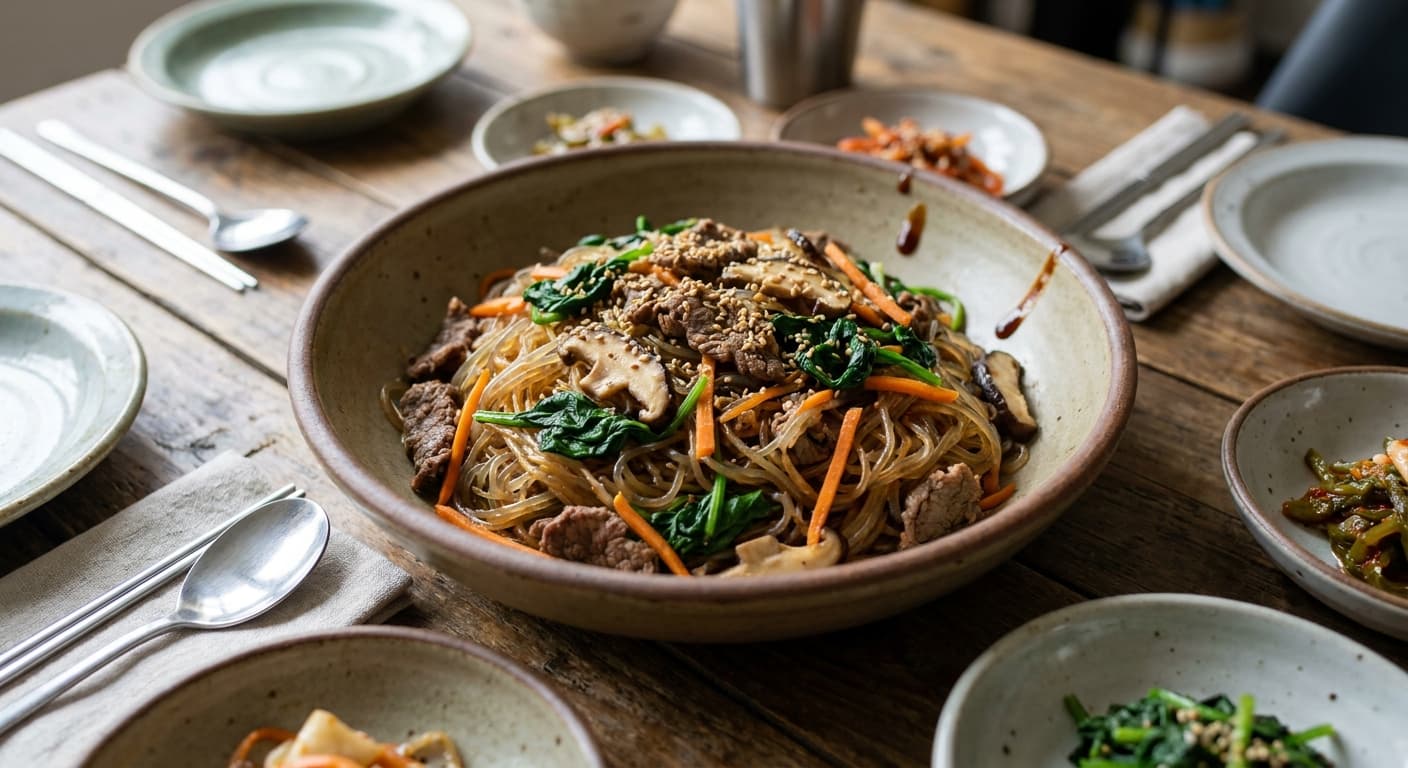
Printable Recipe Card
Servings: 4 · Total: 60 min · Difficulty: medium
Ingredients (quick list)
- 300 g dried Korean sweet potato starch noodles
- 2 l water
- 12 g fine sea salt
- 20 g dried shiitake mushrooms
- 240 ml hot water
- 200 g spinach (trimmed and washed)
- 120 g carrot (julienned)
- 150 g yellow onion (thinly sliced)
- 120 g red bell pepper (thinly sliced)
- 2 eggs
- 30 ml neutral cooking oil
- 180 g beef sirloin (thinly sliced across the grain)
+ 6 more in the full ingredients section below.
Steps (summary)
- Put the dried shiitake mushrooms in a bowl and cover them with 240 ml hot water for 20 minutes. Squeeze them dry, discard the t…
- Combine the beef with 15 ml soy sauce, 6 g sugar, 1 grated garlic clove, 5 ml sesame oil, and 1 g black pepper. Massage the mar…
- Beat the eggs with a fork until evenly blended, then heat a nonstick skillet over low heat with 5 ml neutral oil. Cook the eggs…
- Bring 2 l water and 12 g fine sea salt to a boil in a large pot. Blanch the spinach for 30 seconds, rinse it under cold water,…
- Return the same pot of water to a boil and add the sweet potato starch noodles. Cook for 7 minutes, or until the noodles are tr…
- Whisk together 60 ml soy sauce, 24 g sugar, 2 grated garlic cloves, 30 ml sesame oil, and 1 g black pepper in a large mixing bo…
+ 4 more steps in the full instructions section below.
Cultural Background
Japchae began as a royal Korean vegetable dish and later became associated with sweet potato starch noodles. Today it is a festive staple for Seollal, Chuseok, birthdays, and generous family tables.
Equipment
💡 Tips
- Cook each vegetable separately so the colors stay bright and each ingredient keeps its own texture.
- Toss the noodles with sauce while hot; sweet potato starch noodles absorb seasoning best before they cool.
- Cut the cooked noodles with kitchen shears so the finished japchae is easier to mix and serve.
⚠️ Common Mistakes
❌ Boiling the noodles until mushy
✅ Fix: Cook them only until translucent and elastic, then drain immediately and season while hot.
❌ Stir-frying all vegetables together
✅ Fix: Cook each vegetable separately so onions soften, carrots stay crisp, and peppers keep their color.
❌ Adding too much sesame oil early
✅ Fix: Use measured amounts and add most of the sesame oil in the sauce so the final dish tastes fragrant rather than greasy.
🧊 How to Store
Refrigerate leftovers in an airtight container for up to 3 days. Reheat in a skillet over medium heat with 15 ml water per serving, tossing until the noodles loosen and become glossy again.
📅 Make Ahead
Slice the vegetables, soak the mushrooms, and marinate the beef up to 12 hours ahead. Cook and season the noodles close to serving for the best chewy texture.
🍽️ Pairs Well With
- Baechu kimchi
- oi muchim
- miyeokguk
- steamed short-grain rice
- Korean pear slices.
Regional Variations
- Busan-style japchae may include more seafood or fish cake alongside the vegetables.
- Vegetarian japchae often omits beef and increases shiitake, oyster mushrooms, or wood ear mushrooms.
- Party japchae is sometimes made sweeter and glossier, with extra egg garnish and a wider mix of colorful vegetables.
Ingredients
- 300 gdried Korean sweet potato starch noodles
- 2 lwater
- 12 gfine sea salt
- 20 gdried shiitake mushrooms
- 240 mlhot water
- 200 gspinach (trimmed and washed)
- 120 gcarrot (julienned)
- 150 gyellow onion (thinly sliced)
- 120 gred bell pepper (thinly sliced)
- 2eggs
- 30 mlneutral cooking oil
- 180 gbeef sirloin (thinly sliced across the grain)
- 15 mlsoy sauce
- 6 ggranulated sugar
- 1 clovegarlic (finely grated)
- 5 mltoasted sesame oil
- 1 gground black pepper
- 12 gtoasted sesame seeds
🔄 Substitutions
- beef sirloin→ extra shiitake mushrooms
- soy sauce→ gluten-free tamari
- red bell pepper→ green bell pepper
Instructions
- 1
Put the dried shiitake mushrooms in a bowl and cover them with 240 ml hot water for 20 minutes. Squeeze them dry, discard the tough stems, slice the caps thinly, and toss the sliced mushrooms with the mushroom seasoning ingredients.
- 2
Combine the beef with 15 ml soy sauce, 6 g sugar, 1 grated garlic clove, 5 ml sesame oil, and 1 g black pepper. Massage the marinade into the meat for 30 seconds, then let it stand while you prepare the vegetables.
- 3
Beat the eggs with a fork until evenly blended, then heat a nonstick skillet over low heat with 5 ml neutral oil. Cook the eggs as a thin, flat omelet for about 2 minutes per side, cool it on a board, and slice it into fine ribbons.
- 4
Bring 2 l water and 12 g fine sea salt to a boil in a large pot. Blanch the spinach for 30 seconds, rinse it under cold water, squeeze it firmly, and cut it into 5 cm lengths.
- 5
Return the same pot of water to a boil and add the sweet potato starch noodles. Cook for 7 minutes, or until the noodles are translucent and elastic, then drain and cut them twice with kitchen shears for easier eating.
- 6
Whisk together 60 ml soy sauce, 24 g sugar, 2 grated garlic cloves, 30 ml sesame oil, and 1 g black pepper in a large mixing bowl. Add the hot drained noodles and toss for 1 minute so the noodles absorb the seasoning while they are warm.
- 7
Heat a large skillet over medium-high heat and add 10 ml neutral oil. Stir-fry the onion for 2 minutes, transfer it to the noodle bowl, then repeat separately with the carrot for 2 minutes and the red bell pepper for 90 seconds, adding 5 ml oil as needed.
- 8
Add the seasoned shiitake mushrooms to the skillet and stir-fry for 2 minutes until glossy and fragrant. Transfer them to the noodle bowl, then cook the marinated beef for 2 to 3 minutes until just cooked through and lightly browned.
- 9
Add the beef, spinach, egg ribbons, and 12 g toasted sesame seeds to the seasoned noodles. Toss gently with tongs or gloved hands for 2 minutes, lifting from the bottom so the vegetables stay distinct and the noodles become evenly glossy.
- 10
Let the japchae rest for 5 minutes before serving, because the noodles settle into their final chewy texture as they absorb sauce. Serve warm, at room temperature, or lightly reheated, with an extra 3 g sesame seeds if you want a more pronounced toasted aroma.
🪪 Recipe Passport
Cultural Background
Japchae began as a royal Korean vegetable dish and later became associated with sweet potato starch noodles. Today it is a festive staple for Seollal, Chuseok, birthdays, and generous family tables.
Regional Variations
Researched from multiple sources and validated by the Zaffaron editorial team. Every recipe is tested for accuracy, measurements, and cultural authenticity.
📚 Sources & Cultural References
- Maangchi — Maangchi's Real Korean Cooking — (2015)
- Institute of Traditional Korean Food — The Beauty of Korean Food: With 100 Best-Loved Recipes — (2007)
Sources cited by the Zaffaron editorial team during recipe research. Cultural and culinary references supporting authenticity claims.
Nutrition per serving
Pairs well with
If you enjoyed this recipe, here are a few related Zaffaron recipes to try next.
Does your family make this differently?
Every family has their own version. Maybe your grandmother adds a secret ingredient, or your aunt has a completely different technique. Preserve your family's version — with their name on it, forever.
You Might Also Like

Bulgogi (불고기) — Korean Soy-Marinated Grilled Beef
Korean · Main Courses · 37 min
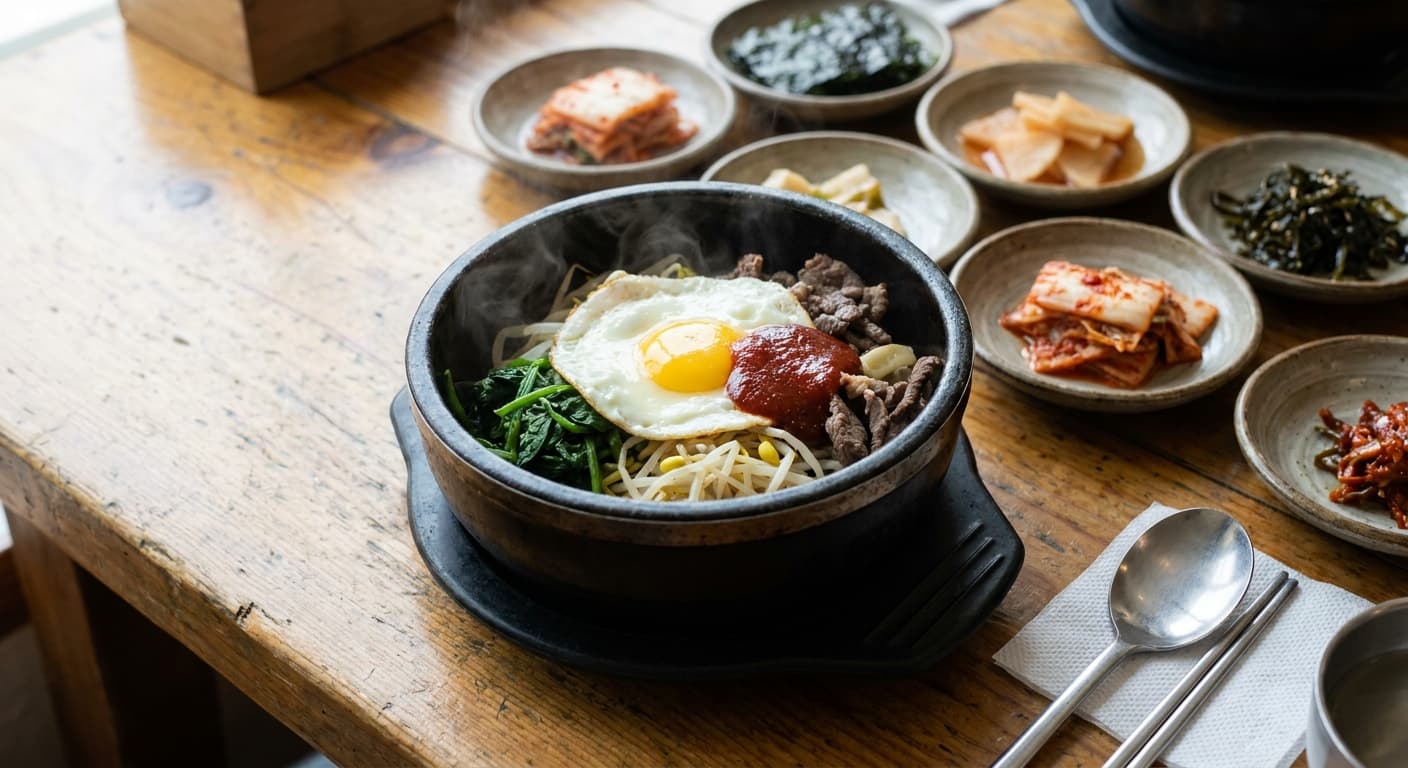
Bibimbap (비빔밥) — Korean Mixed Rice Bowl
Korean · Rice Dishes · 80 min
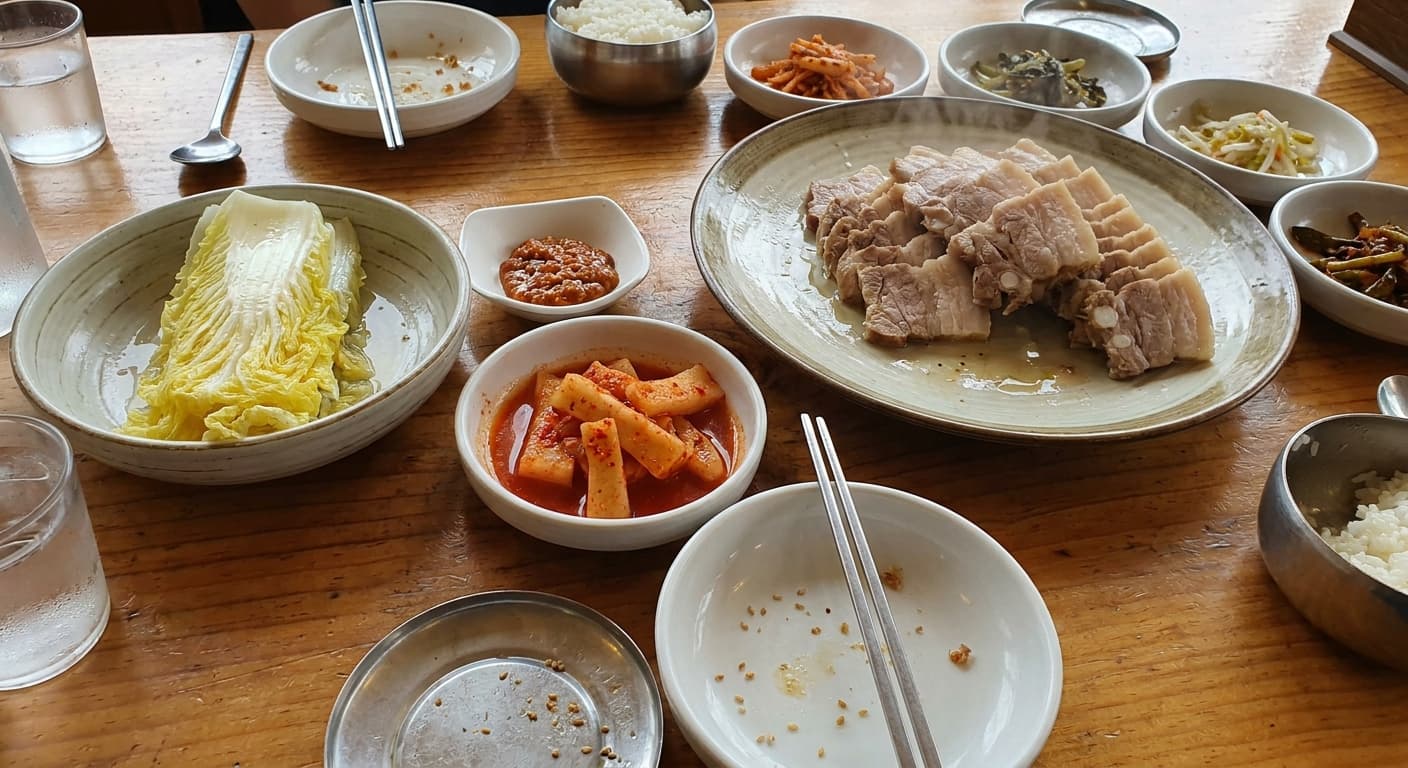
Bossam (보쌈) — Korean Boiled Pork Lettuce Wraps
Korean · Main Courses · 135 min

Cornish Pasty (Cornish Pasty) — Traditional Beef and Swede Hand Pie
British · Main Courses · 100 min
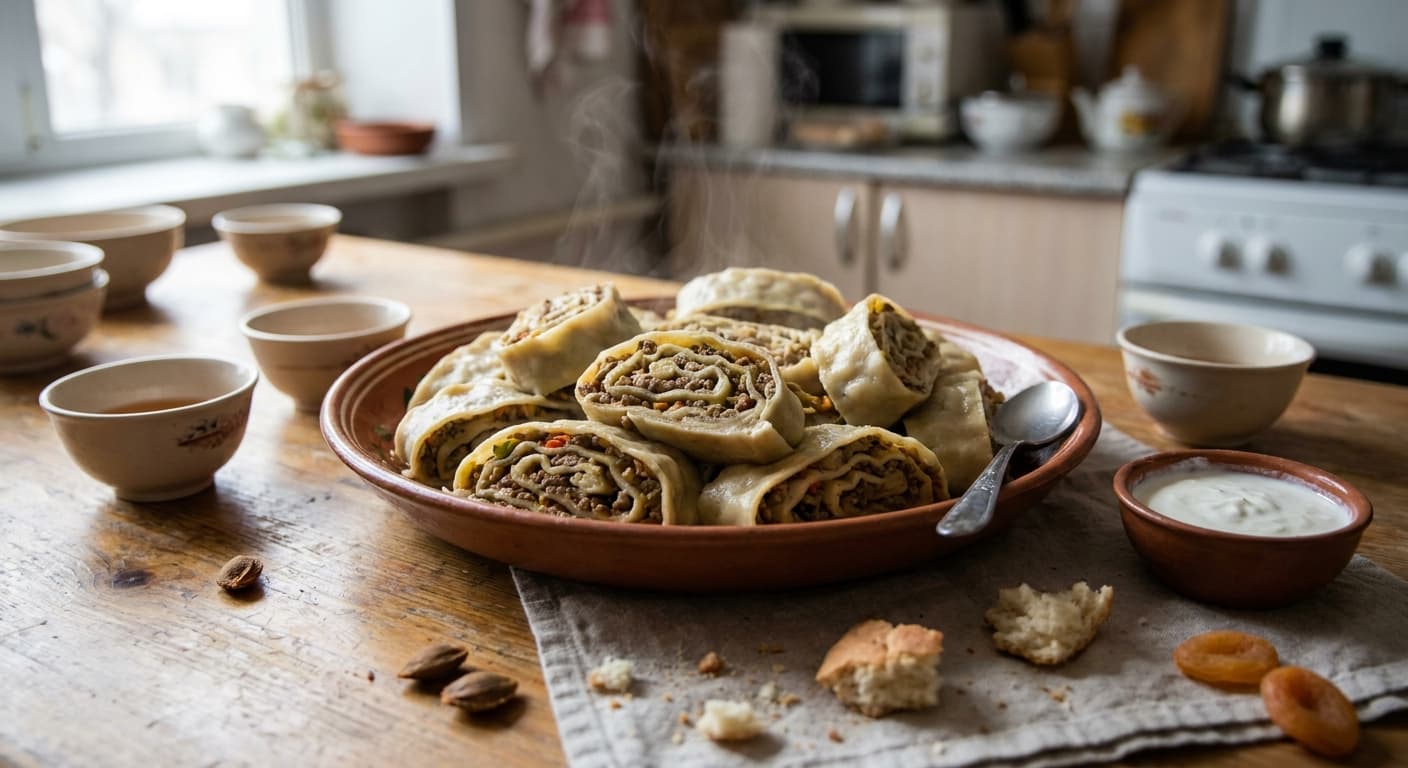
Orromo (Оромо) — Kyrgyz Steamed Rolled Dumpling with Lamb and Pumpkin
Kyrgyz · Main Courses · 105 min
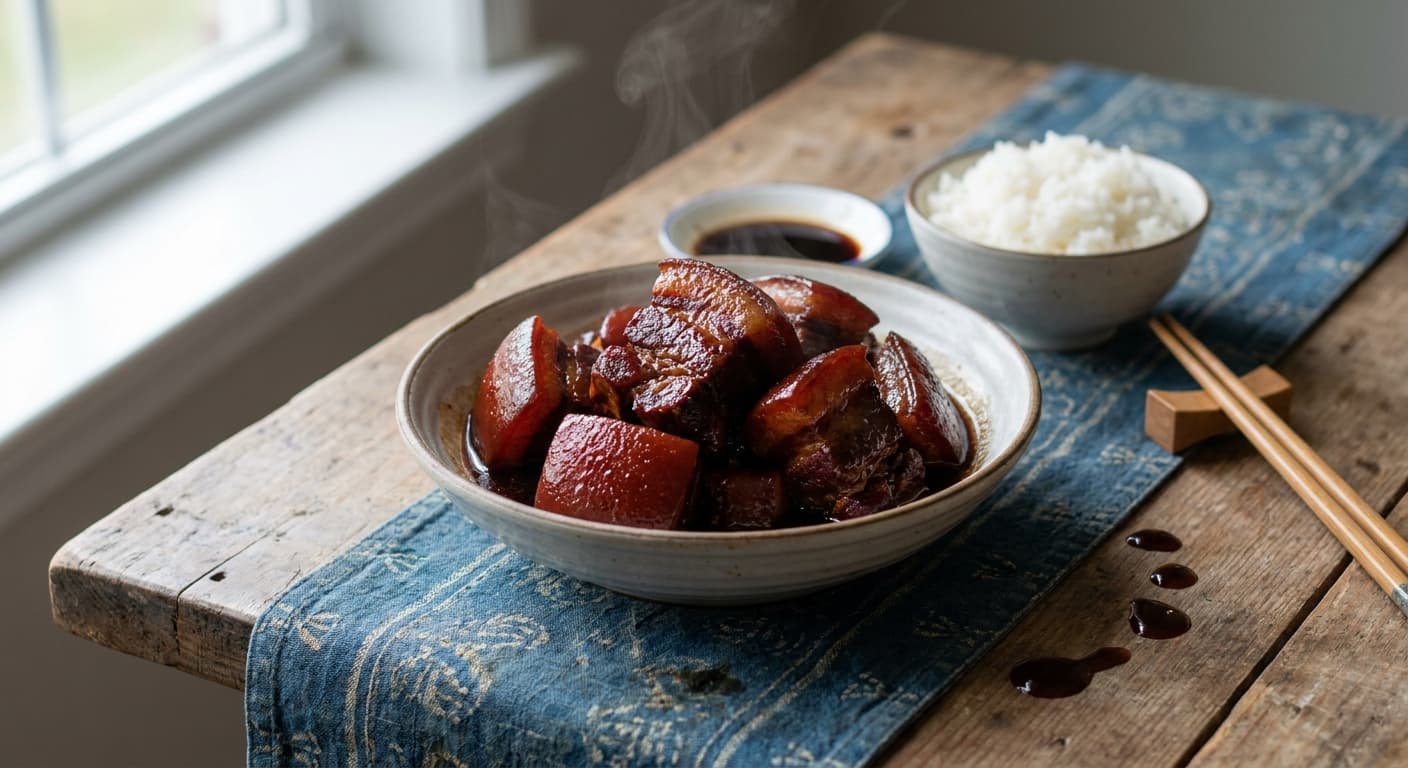
Dongpo Pork (东坡肉) — Hangzhou Red-Braised Pork Belly
Chinese · Main Courses · 205 min
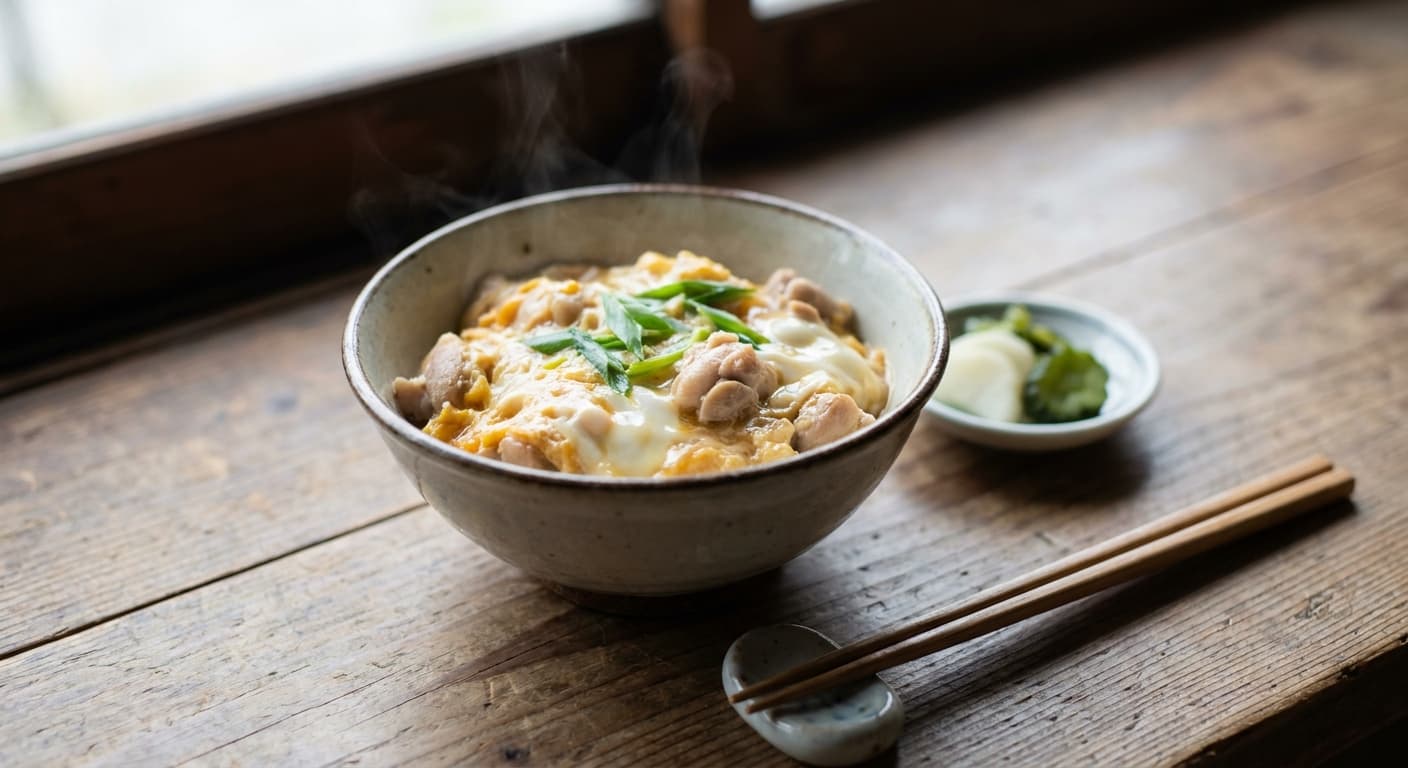
Japanese Oyakodon (親子丼) — Chicken and Egg Rice Bowl
Japanese · Rice Dishes · 29 min
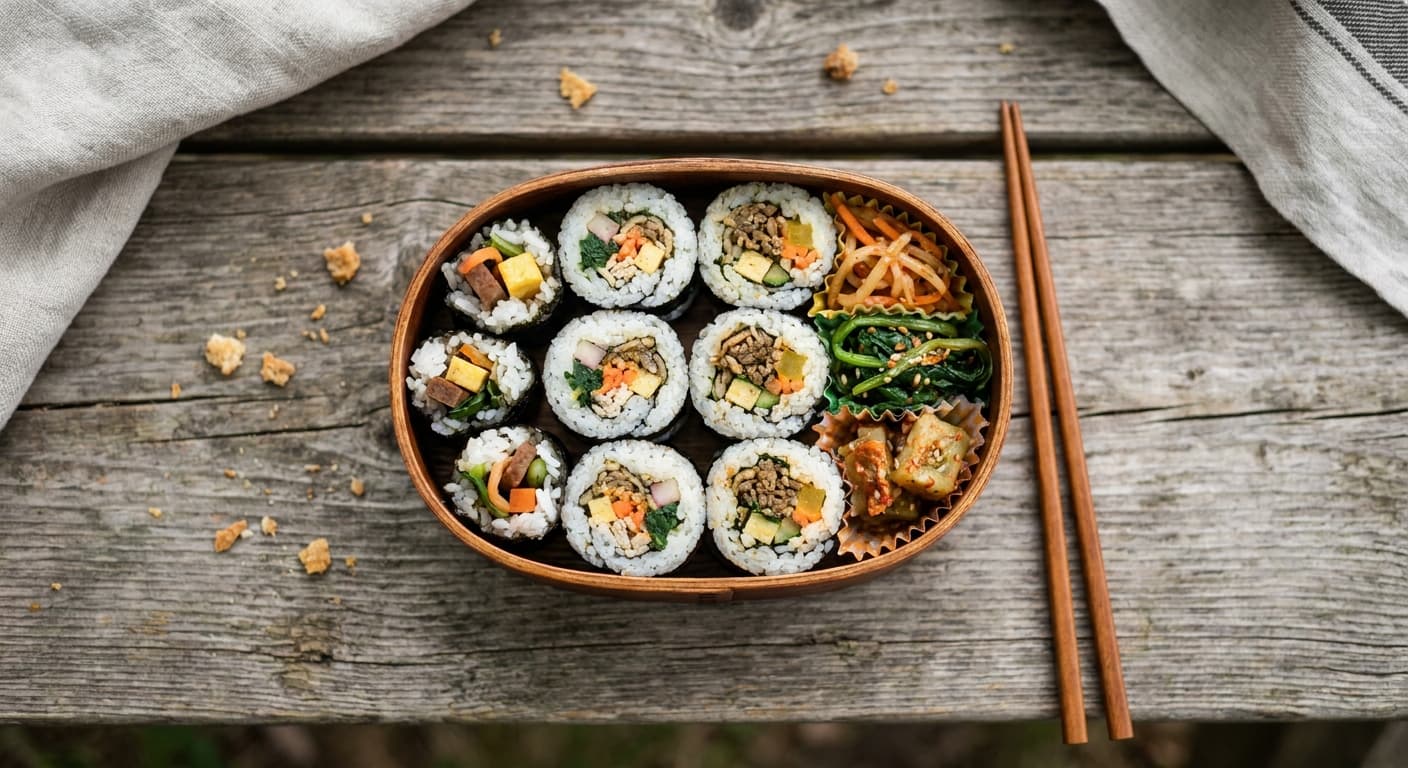
Kimbap (김밥) — Korean Seaweed Rice Rolls
Korean · Main Courses · 70 min
Reviews
Cooked this recipe?
Tap the stars to rate it — that's all it takes. A few words are welcome but optional.
No ratings yet. Cooked this one? Be the first to rate it — it takes one tap.