Tteokbokki (떡볶이) — Spicy Korean Rice Cakes
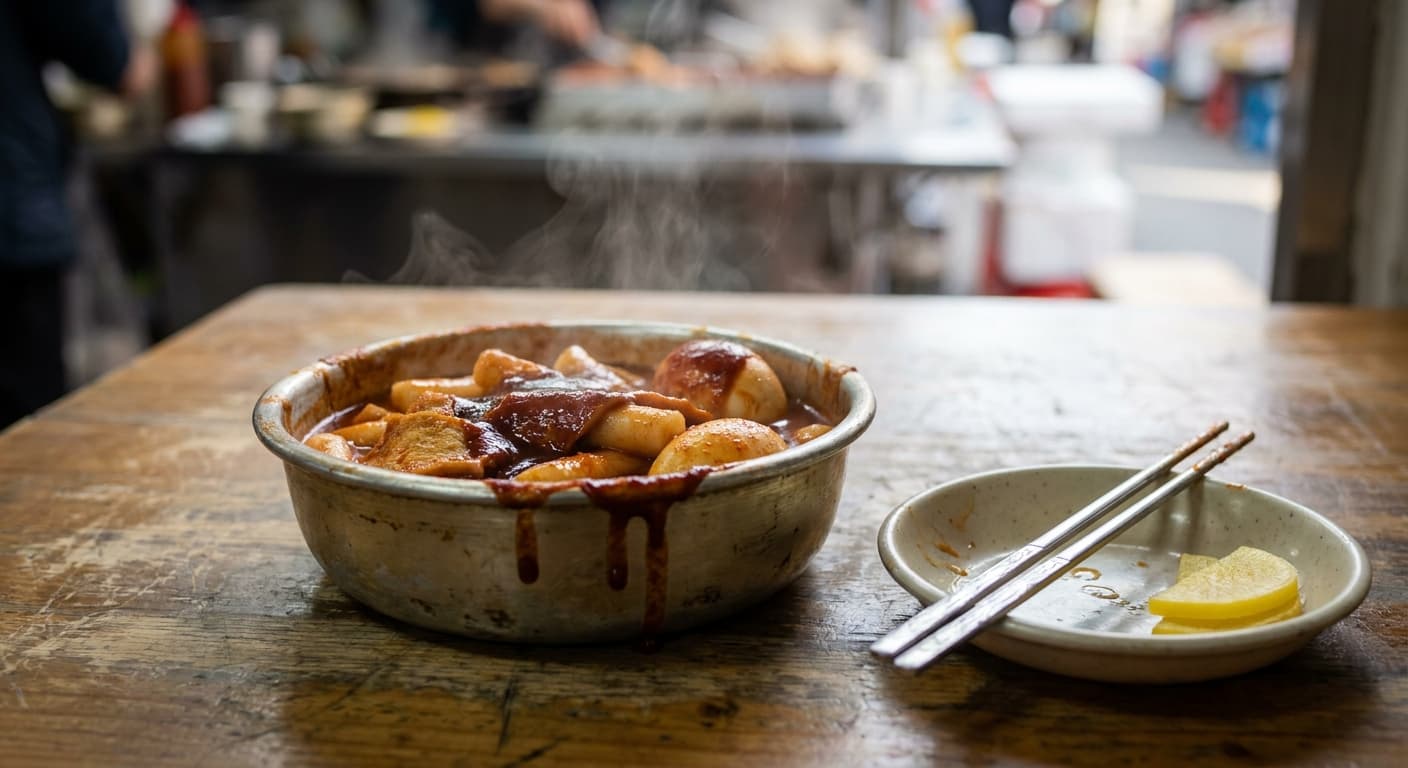
Tteokbokki is a beloved Korean street-food dish of chewy cylindrical rice cakes simmered in a glossy, spicy-sweet gochujang sauce. This version uses anchovy-kelp broth, fish cakes, scallions, and eggs for classic snack-shop depth.
Printable Recipe Card
Servings: 4 · Total: 45 min · Difficulty: medium
Ingredients (quick list)
- 600 g cylindrical Korean rice cakes (fresh or refrigerated; use the short tteokbokki shape)
- 1000 ml cold water (for soaking refrigerated or frozen rice cakes)
- 720 ml water
- 20 g dried anchovies (large soup anchovies, heads and guts removed)
- 10 g dried kelp (Korean dasima or Japanese kombu)
- 90 g gochujang
- 16 g gochugaru (medium-coarse Korean red pepper flakes)
- 30 ml light soy sauce
- 24 g granulated sugar
- 30 ml rice syrup (Korean ssalyeot; adds street-style gloss)
- 2 clove garlic (finely grated)
- 200 g Korean fish cake sheets (cut into 5 cm triangles or strips)
+ 6 more in the full ingredients section below.
Steps (summary)
- Place the rice cakes in 1000 ml cold water and separate any pieces that are stuck together. Soak refrigerated rice cakes for 20…
- Combine 720 ml water, dried anchovies, and dried kelp in a wide shallow pan and bring to a gentle simmer over medium heat. Simm…
- In a small bowl, stir together the gochujang, gochugaru, soy sauce, sugar, rice syrup, and grated garlic until the paste is smo…
- Whisk the sauce mixture into the hot broth until fully dissolved, then bring it to a steady simmer. Add the drained rice cakes…
- Add the fish cake sheets, cabbage, onion, scallions, and hard-boiled eggs to the pan. Keep the mixture at a lively simmer for 8…
- Continue simmering until the sauce thickens to a glossy coating that lightly drags across the bottom of the pan. If the rice ca…
+ 1 more steps in the full instructions section below.
Cultural Background
Modern tteokbokki is closely tied to Korean street stalls, markets, and after-school snacking. Its chewy rice cakes and red gochujang sauce made it one of the most recognizable everyday comfort foods in Korea.
Equipment
💡 Tips
- Use a wide shallow pan rather than a deep pot so the sauce reduces quickly and coats the rice cakes evenly.
- Do not boil the kelp hard, because aggressive boiling can make the broth taste slippery and slightly bitter.
- Tteokbokki thickens as it sits, so serve it as soon as the sauce turns glossy and spoon-coating.
⚠️ Common Mistakes
❌ Using dry or cracked rice cakes without soaking them first.
✅ Fix: Soak them in cold water until flexible, then drain before adding them to the simmering sauce.
❌ Cooking the sauce too fast over high heat.
✅ Fix: Keep a steady simmer and stir often so the rice cakes soften before the sauce becomes too thick.
❌ Adding sesame oil early in the cooking process.
✅ Fix: Stir it in after turning off the heat so its nutty aroma stays fresh.
🧊 How to Store
Refrigerate leftovers in an airtight container for up to 2 days. Reheat gently in a pan with 45 ml water per serving, stirring until the rice cakes soften again; microwaving can make them tough and uneven.
📅 Make Ahead
The anchovy-kelp broth and sauce paste can be prepared 1 day ahead and refrigerated separately. Soak the rice cakes just before cooking so they keep their springy texture.
🍽️ Pairs Well With
- Danmuji pickled radish
- kimchi
- twigim fried snacks
- eomuk soup
- cold barley tea.
Regional Variations
- Gungjung-style tteokbokki uses soy sauce instead of gochujang and is associated with an older royal-court style.
- Street-stall tteokbokki is often saucier, sweeter, and served with fish cakes, boiled eggs, and fried snacks.
- Cheese tteokbokki is a modern variation topped with melted mozzarella for a richer, milder finish.
Ingredients
- 600 gcylindrical Korean rice cakes (fresh or refrigerated; use the short tteokbokki shape)
- 1000 mlcold water (for soaking refrigerated or frozen rice cakes)
- 720 mlwater
- 20 gdried anchovies (large soup anchovies, heads and guts removed)
- 10 gdried kelp (Korean dasima or Japanese kombu)
- 90 ggochujang
- 16 ggochugaru (medium-coarse Korean red pepper flakes)
- 30 mllight soy sauce
- 24 ggranulated sugar
- 30 mlrice syrup (Korean ssalyeot; adds street-style gloss)
- 2 clovegarlic (finely grated)
- 200 gKorean fish cake sheets (cut into 5 cm triangles or strips)
- 150 ggreen cabbage (cut into 4 cm squares)
- 1large onion (thinly sliced)
- 4scallions (cut into 5 cm lengths)
- 4hard-boiled eggs (peeled)
- 5 mltoasted sesame oil
- 6 gtoasted sesame seeds
🔄 Substitutions
- rice syrup→ corn syrup
- Korean fish cake sheets→ firm tofu puffs
- dried anchovies and dried kelp→ unsalted vegetable stock
Instructions
- 1
Place the rice cakes in 1000 ml cold water and separate any pieces that are stuck together. Soak refrigerated rice cakes for 20 minutes or frozen rice cakes for 40 minutes, then drain well before cooking.
- 2
Combine 720 ml water, dried anchovies, and dried kelp in a wide shallow pan and bring to a gentle simmer over medium heat. Simmer for 10 minutes, then remove and discard the anchovies and kelp so the broth stays clean rather than bitter.
- 3
In a small bowl, stir together the gochujang, gochugaru, soy sauce, sugar, rice syrup, and grated garlic until the paste is smooth. Mixing the sauce first prevents clumps of chile paste from sticking to the rice cakes.
- 4
Whisk the sauce mixture into the hot broth until fully dissolved, then bring it to a steady simmer. Add the drained rice cakes and cook for 6 minutes, stirring every minute so they soften evenly and do not catch on the bottom.
- 5
Add the fish cake sheets, cabbage, onion, scallions, and hard-boiled eggs to the pan. Keep the mixture at a lively simmer for 8 to 10 minutes, turning the eggs and folding the vegetables through the sauce so everything becomes coated.
- 6
Continue simmering until the sauce thickens to a glossy coating that lightly drags across the bottom of the pan. If the rice cakes become too tight before the sauce thickens, add 30 ml water and cook for 2 more minutes.
- 7
Turn off the heat and stir in the toasted sesame oil. Transfer the tteokbokki to a shallow serving bowl, sprinkle with sesame seeds, and serve immediately while the rice cakes are hot and chewy.
🪪 Recipe Passport
Cultural Background
Modern tteokbokki is closely tied to Korean street stalls, markets, and after-school snacking. Its chewy rice cakes and red gochujang sauce made it one of the most recognizable everyday comfort foods in Korea.
Regional Variations
Researched from multiple sources and validated by the Zaffaron editorial team. Every recipe is tested for accuracy, measurements, and cultural authenticity.
📚 Sources & Cultural References
- Maangchi — Maangchi's Big Book of Korean Cooking — (2019)
- Korean Food Promotion Institute — Korean Food Guide
Sources cited by the Zaffaron editorial team during recipe research. Cultural and culinary references supporting authenticity claims.
Nutrition per serving
Pairs well with
If you enjoyed this recipe, here are a few related Zaffaron recipes to try next.
Does your family make this differently?
Every family has their own version. Maybe your grandmother adds a secret ingredient, or your aunt has a completely different technique. Preserve your family's version — with their name on it, forever.
You Might Also Like
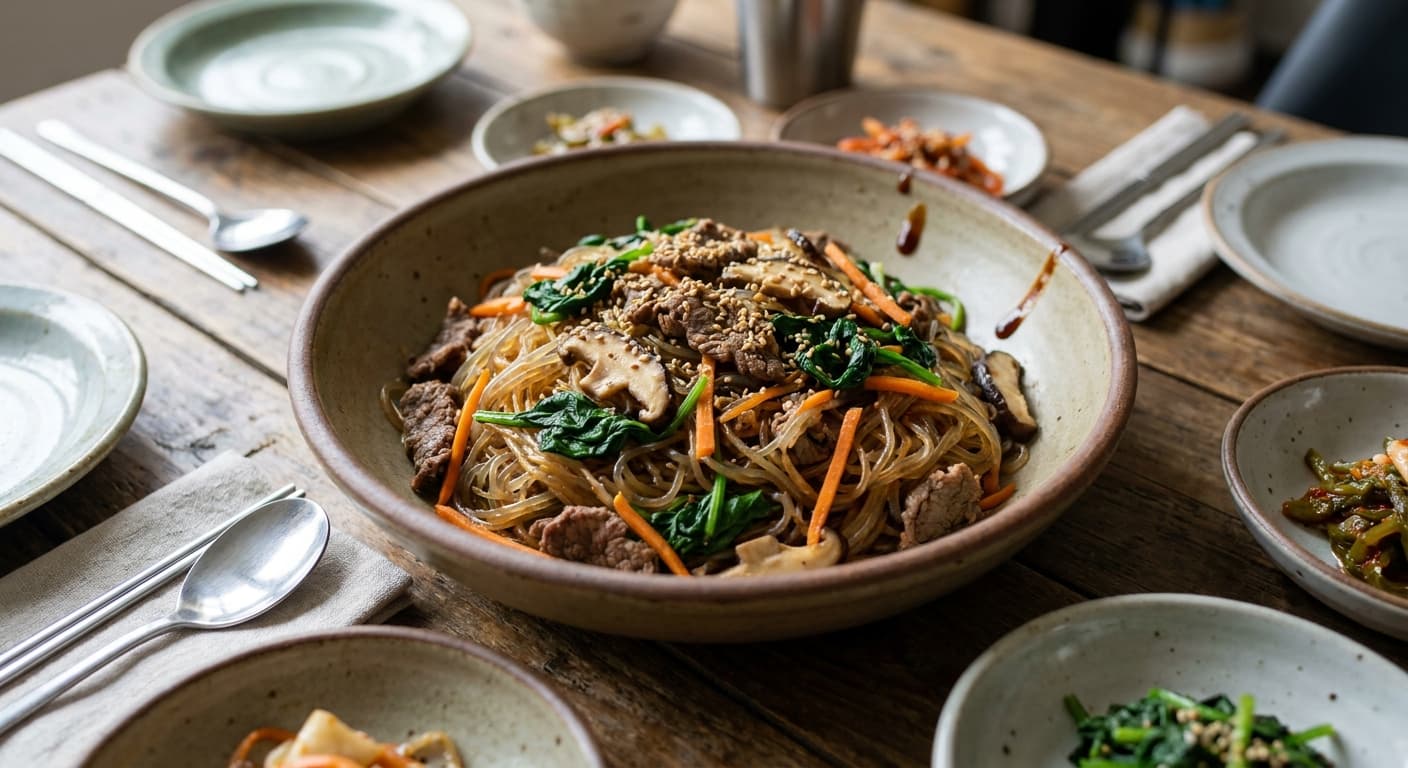
Japchae (잡채) — Korean Glass Noodles with Beef and Vegetables
Korean · Main Courses · 60 min
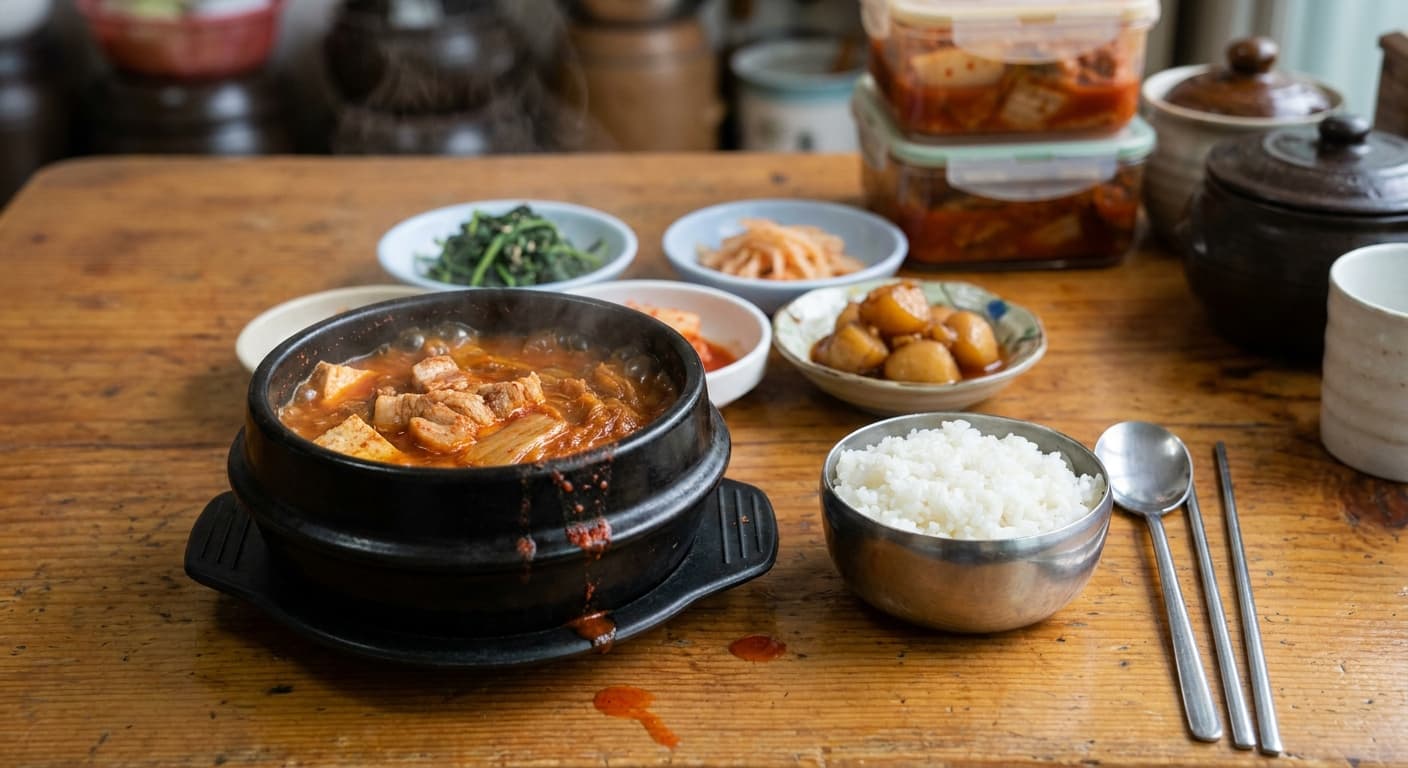
Kimchi Jjigae (김치찌개) — Korean Kimchi Stew
Korean · Stews · 60 min

Bulgogi (불고기) — Korean Soy-Marinated Grilled Beef
Korean · Main Courses · 37 min
Varenyky (Вареники) — Ukrainian Potato-Cheese Dumplings
Ukrainian · Main Courses · 95 min
Cornish Pasty (Cornish Pasty) — Traditional Beef and Swede Hand Pie
British · Main Courses · 100 min
Cantonese Chicken Congee (粵式雞粥) — Silky Rice Porridge with Ginger
Chinese · Rice Dishes · 95 min
Beef Chow Fun (干炒牛河) — Cantonese Wok-Fried Rice Noodles with Beef
Chinese · Main Courses · 33 min
Lithuanian Tree Cake (Šakotis) — Spit-Baked Celebration Cake
Lithuanian · Desserts · 230 min
Reviews
Cooked this recipe?
Tap the stars to rate it — that's all it takes. A few words are welcome but optional.
No ratings yet. Cooked this one? Be the first to rate it — it takes one tap.