All Recipes
1841 authentic recipes from our kitchen to yours.
 medium
Norwegian · Main Courses
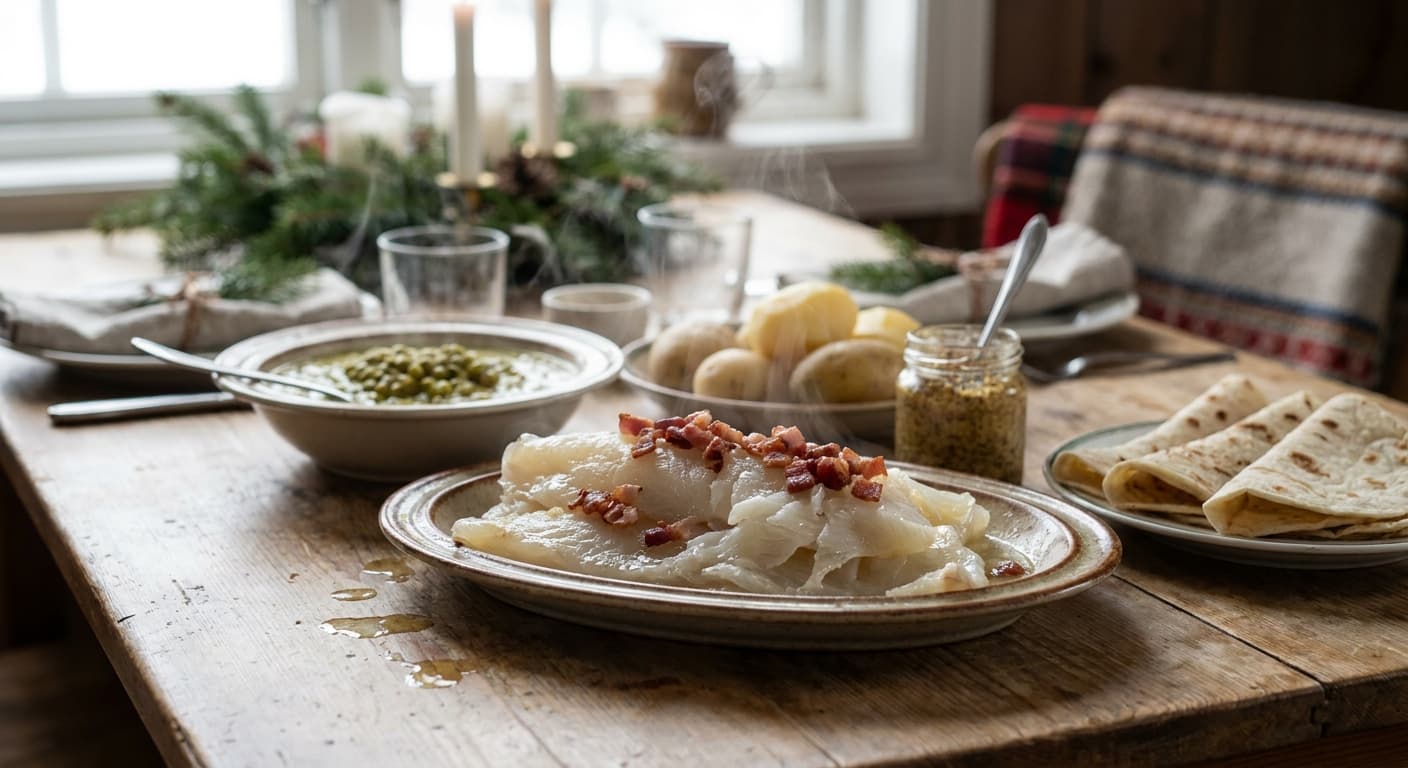
Lutefisk (lutefisk) — Lye-Cured Cod with Potatoes and Pea Stew
Lutefisk is Norway’s famous lye-cured white fish, traditionally prepared from dried cod such as tørrfisk. It is most associated with Christmas meals and julebord tables, served with potatoes, pea stew, bacon, mustard, and sometimes lefse.
90 min 4 805 cal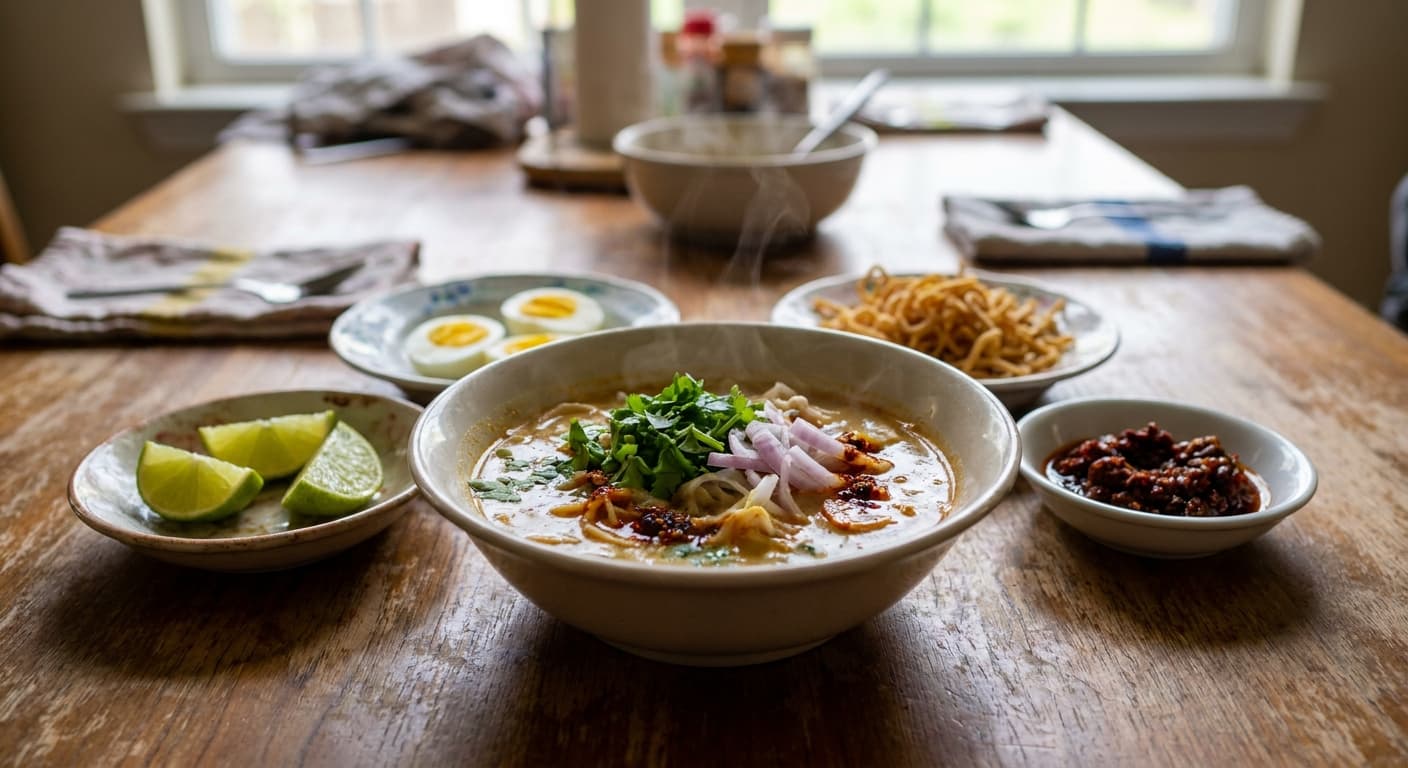 medium
Burmese · Main Courses
Ohn No Khao Swe (အုန်းနို့ခေါက်ဆွဲ) — Burmese Coconut Chicken Noodles
Ohn no khao swe is a beloved Burmese khao swè dish of wheat noodles in a turmeric-tinted coconut chicken hin-style broth. Chickpea flour gives the soup its gentle body, while lime, egg, chile oil, and crisp noodles finish each bowl.
75 min 6 640 cal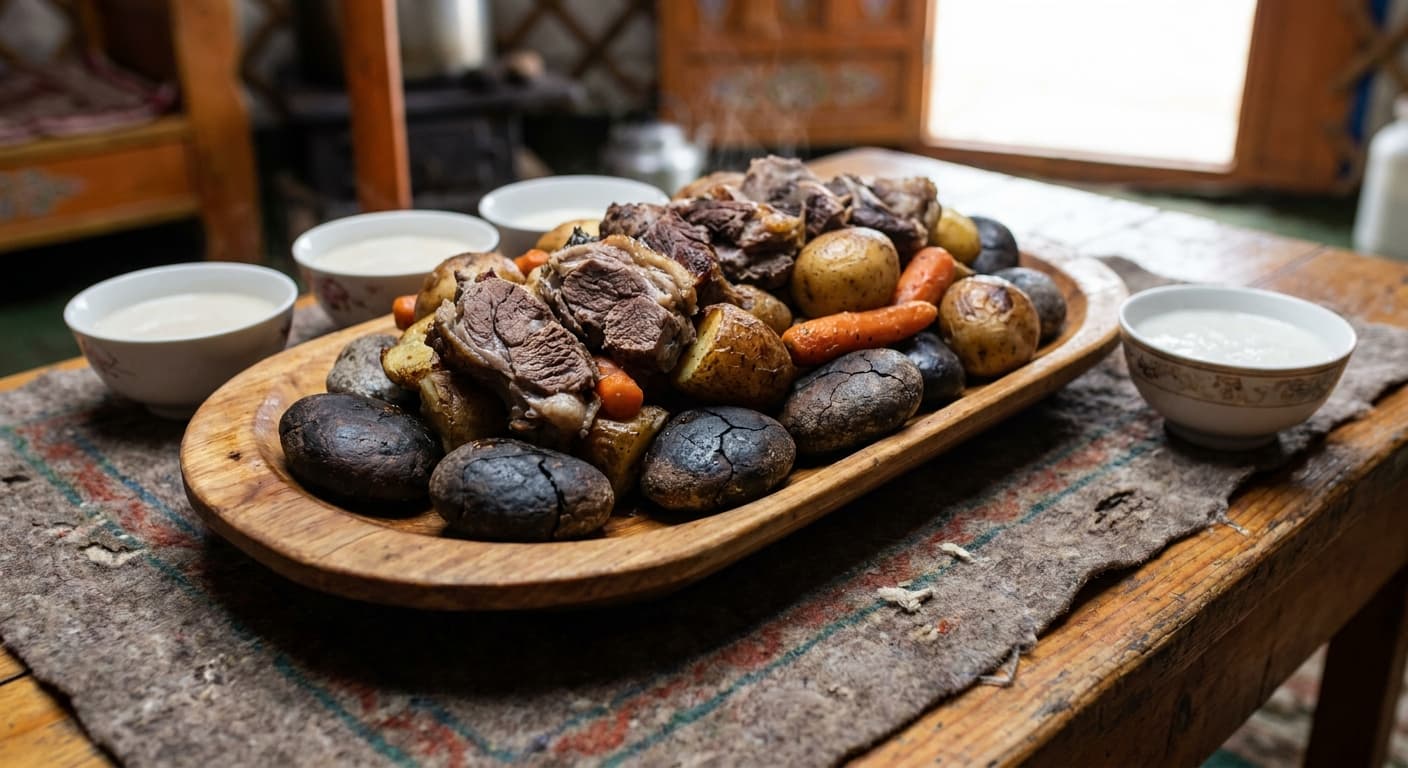 expert
Mongolian · Main Courses
Boodog (Боодог) — Mongolian Hot-Stone Goat Roast
Boodog is a dramatic Mongolian pastoral roast in which hot stones cook meat from inside the animal’s skin. Unlike khorkhog, which cooks in a pot, boodog is an outdoor herder technique, often shared with airag or suutei tsai.
180 min 12 640 cal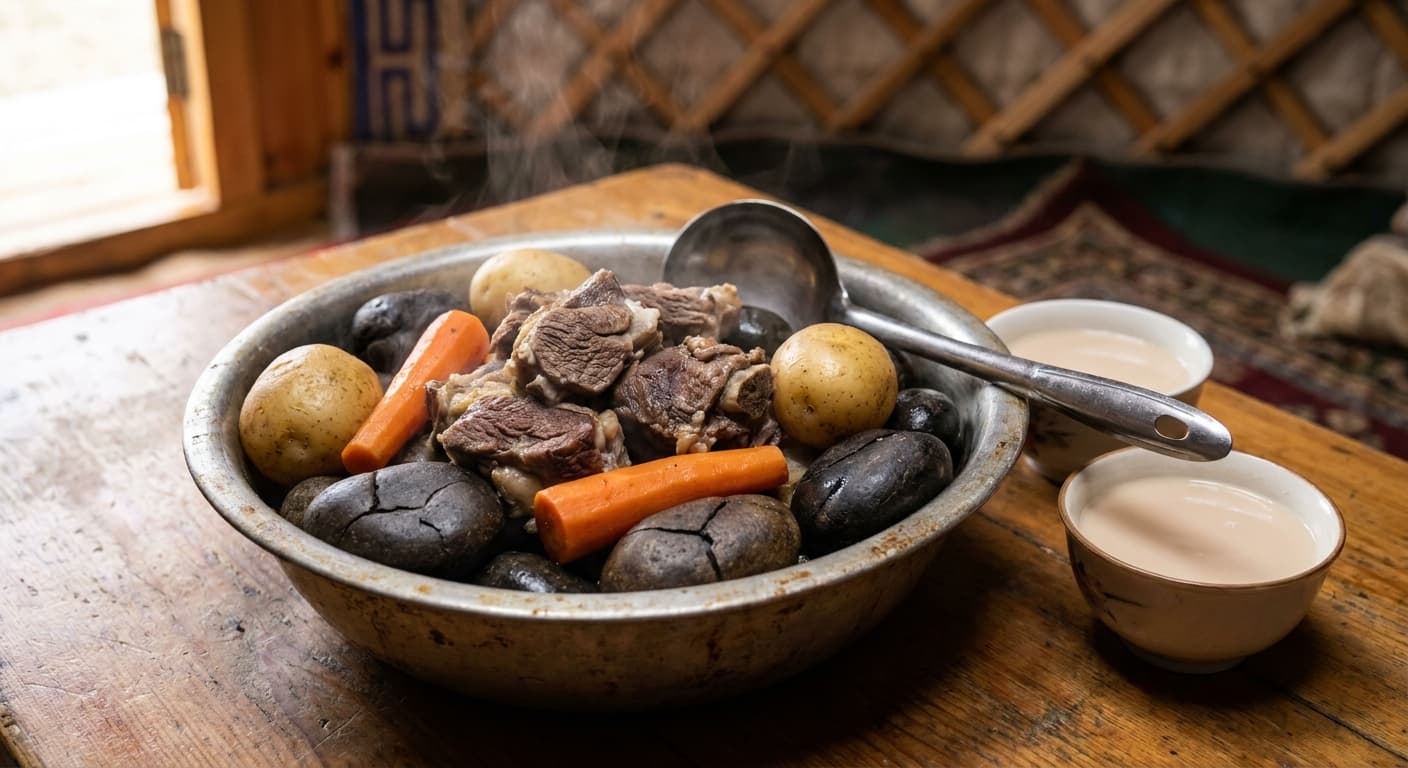 medium
Mongolian · Main Courses
Khorkhog (Хорхог) — Mongolian Hot-Stone Lamb Stew
Khorkhog is a Mongolian countryside feast of lamb or mutton sealed with fire-heated stones so the meat steams in its own juices. Unlike boodog, the stones go inside the pot, not the animal, and the meal is often followed by salty suutei tsai.
130 min 6 635 cal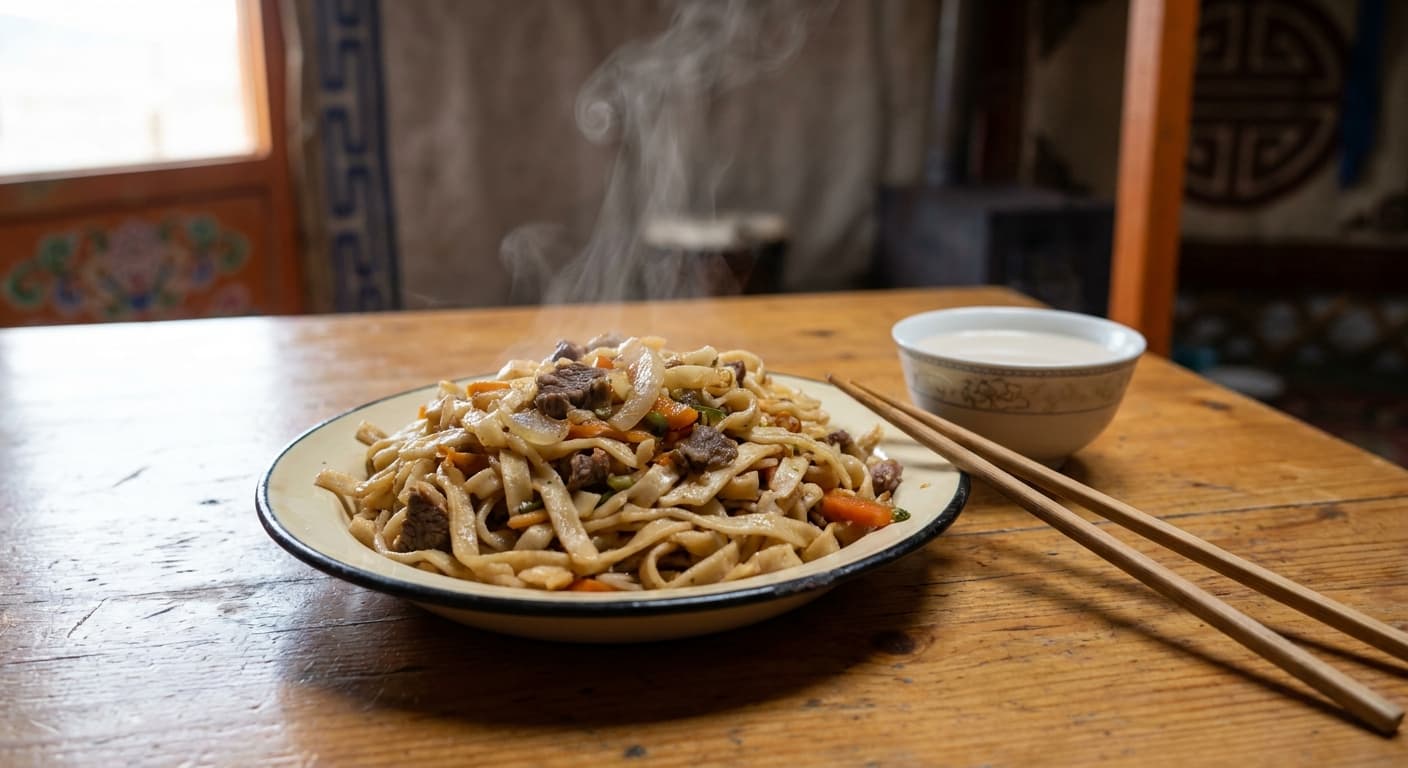 medium
Mongolian · Main Courses
Tsuivan (Цуйван) — Mongolian Steamed Noodles with Meat and Vegetables
Tsuivan is a hearty Mongolian one-pan noodle dish made by steaming hand-cut dough over meat and vegetables. Unlike guriltai shul, it cooks mostly dry, so the noodles absorb lamb juices and become chewy, savory, and deeply satisfying.
80 min 4 760 cal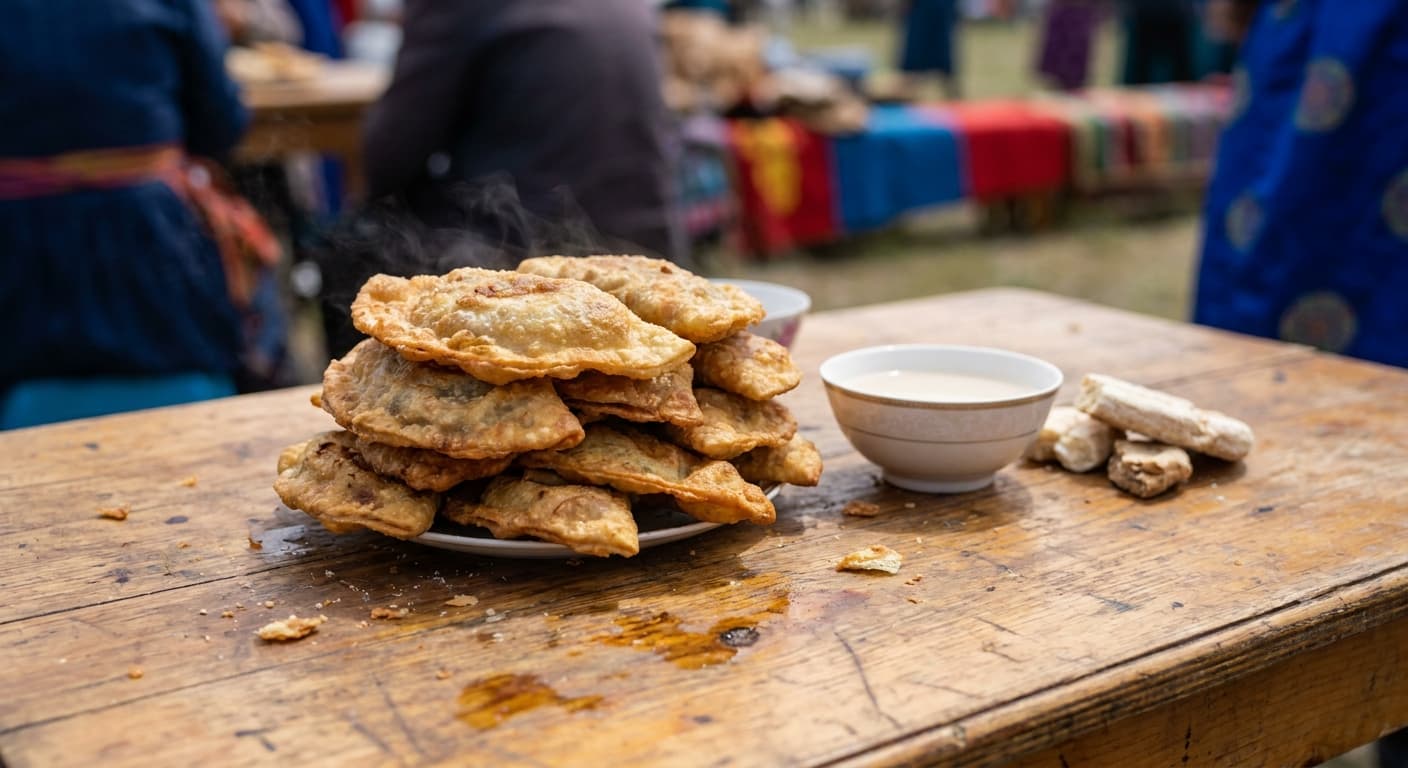 medium
Mongolian · Main Courses
Khuushuur (Хуушуур) — Crisp Mongolian Fried Meat Pockets
Khuushuur is Mongolia’s beloved fried meat pastry, especially associated with Naadam. It uses a simple wheat-flour dough like buuz, filled with juicy minced mutton or lamb, onion, garlic, salt, and pepper.
70 min 6 620 cal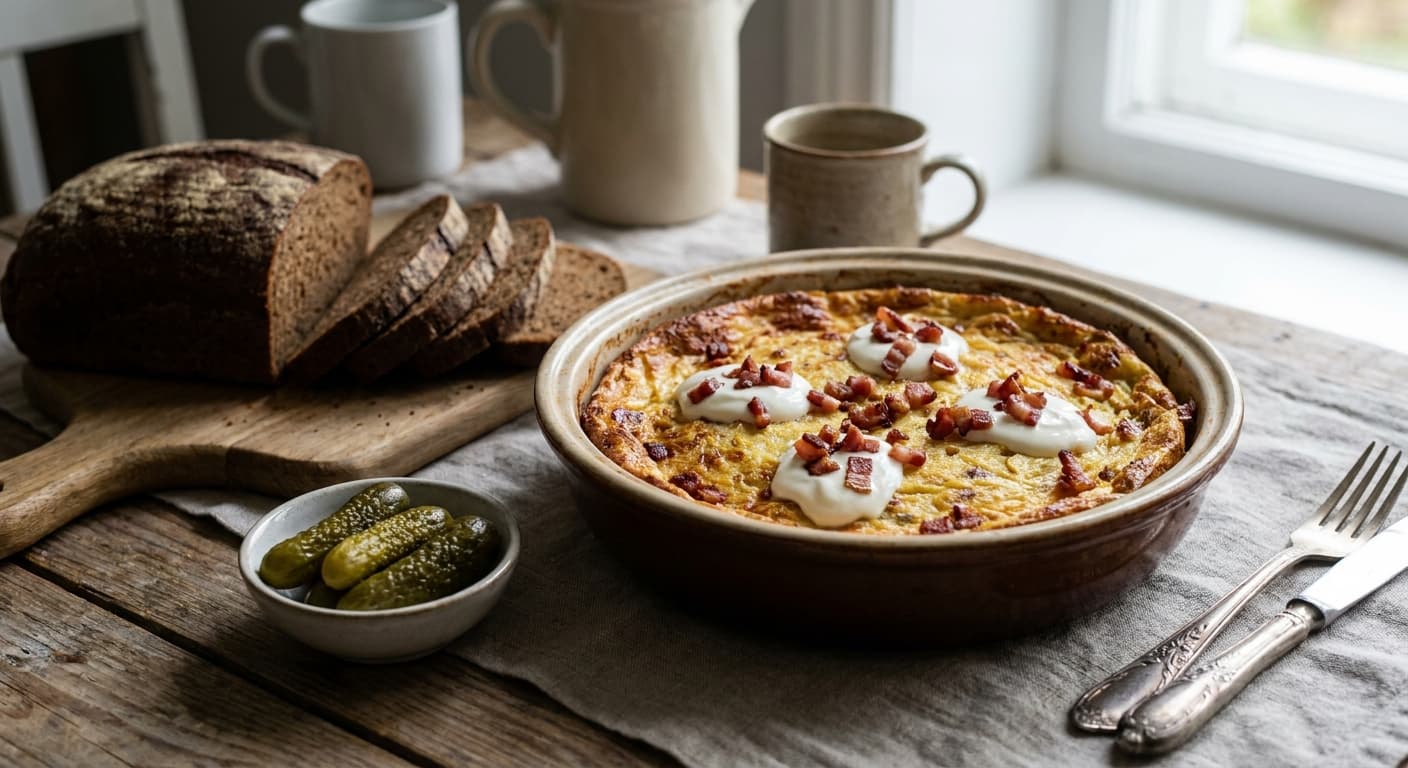 medium
Lithuanian · Main Courses
Lithuanian Kugelis (Kugelis) — Savory Baked Potato Pudding
Kugelis is Lithuania's beloved baked grated-potato pudding, rich with bacon, onion, eggs, and hot milk. It belongs to the same potato-cookery world as cepelinai and bulviniai blynai, but bakes into a sliceable family casserole.
115 min 8 386 cal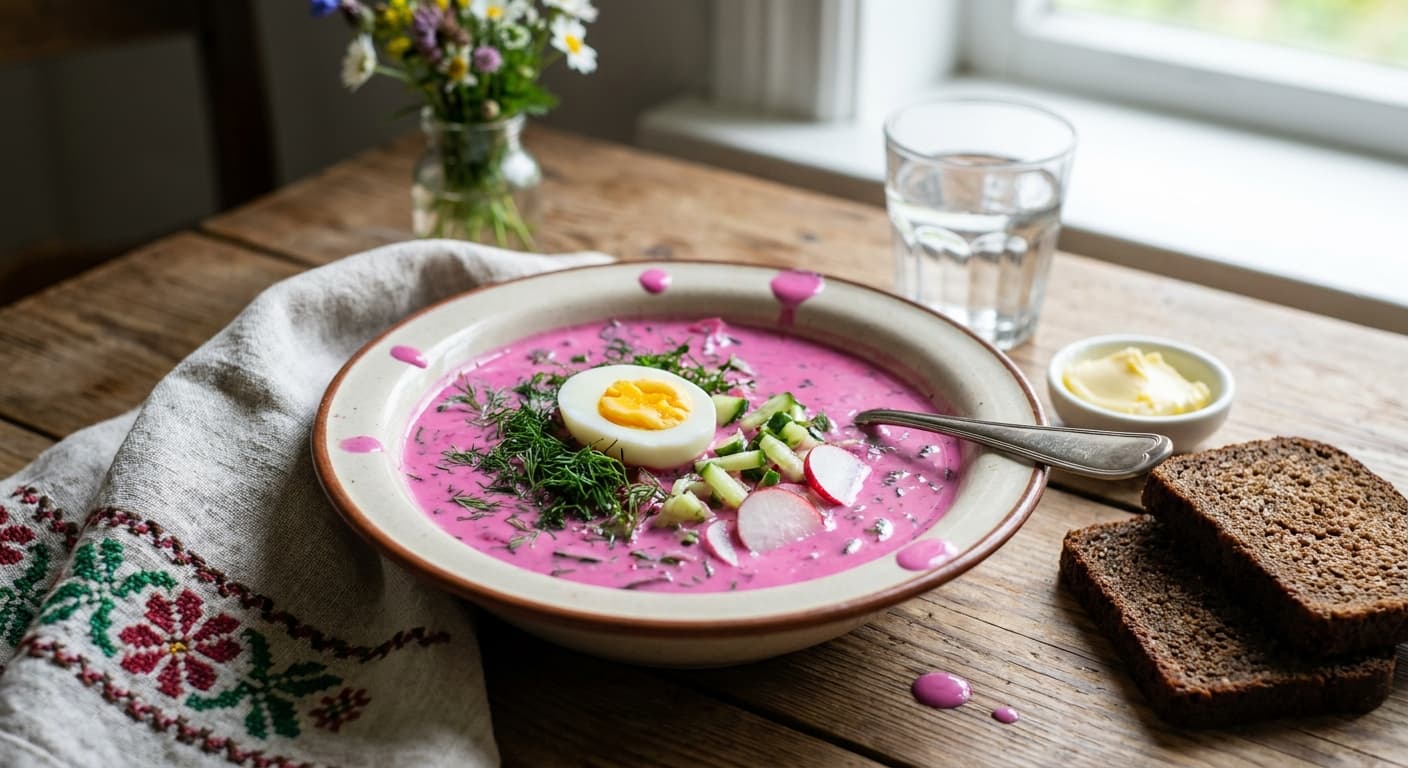 easy
Latvian · Soups
Cold Beet Soup (Aukstā zupa) — Latvian Kefir Beet Summer Soup
Aukstā zupa is Latvia’s vivid summer cold beet soup, stirred with kefir, cucumber, dill, potatoes, and eggs rather than cooked. It is common on hot days and at Jāņi tables, often served with rupjmaize and wedges of Jāņu siers.
45 min 4 540 cal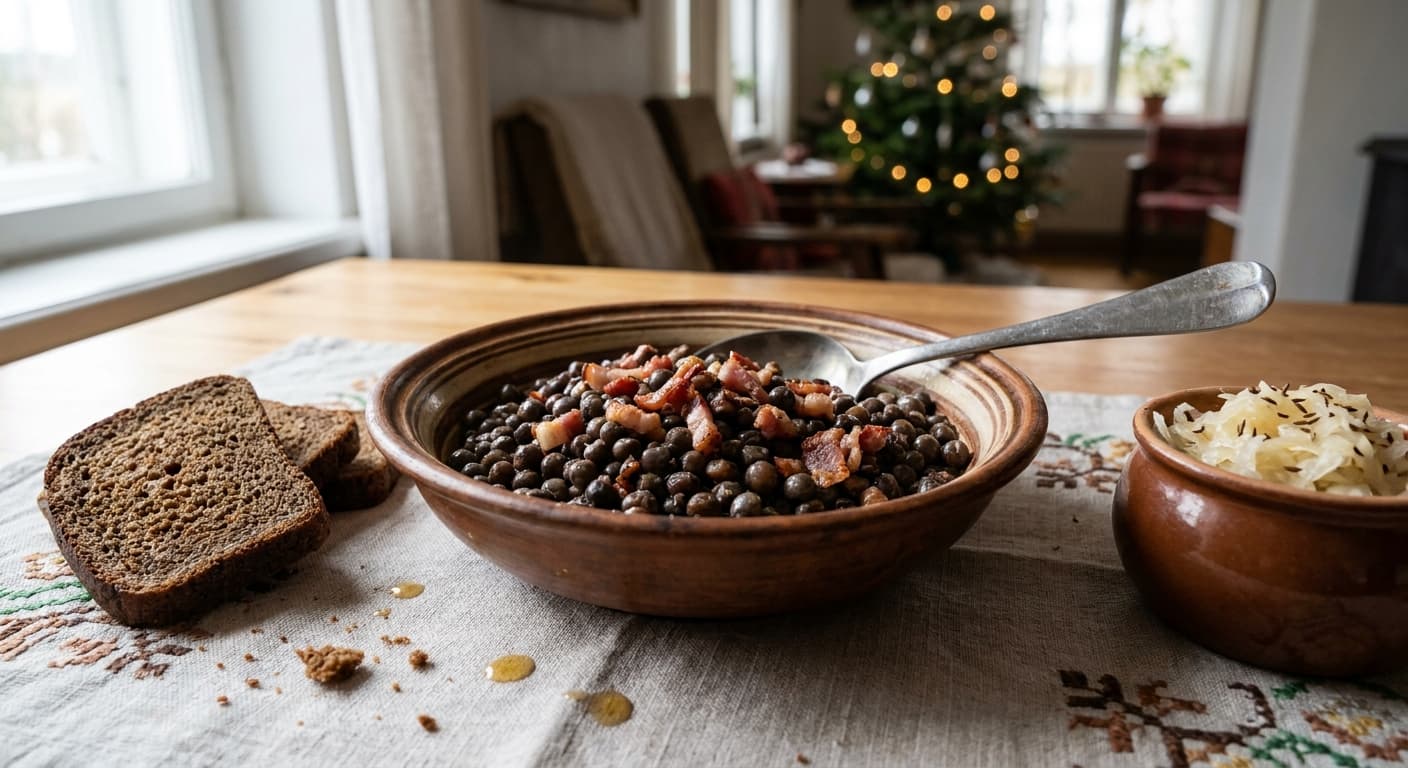 easy
Latvian · Main Courses
Grey Peas with Speck (Pelēkie zirņi ar speķi) — Latvian Christmas Peas
Grey peas with speck is Latvia's hearty pelēkie zirņi ar speķi, made from earthy grey peas, sometimes called pēku zirņi, and smoky diced pork. It is especially tied to Christmas Eve and is often served with rupjmaize.
110 min 6 495 cal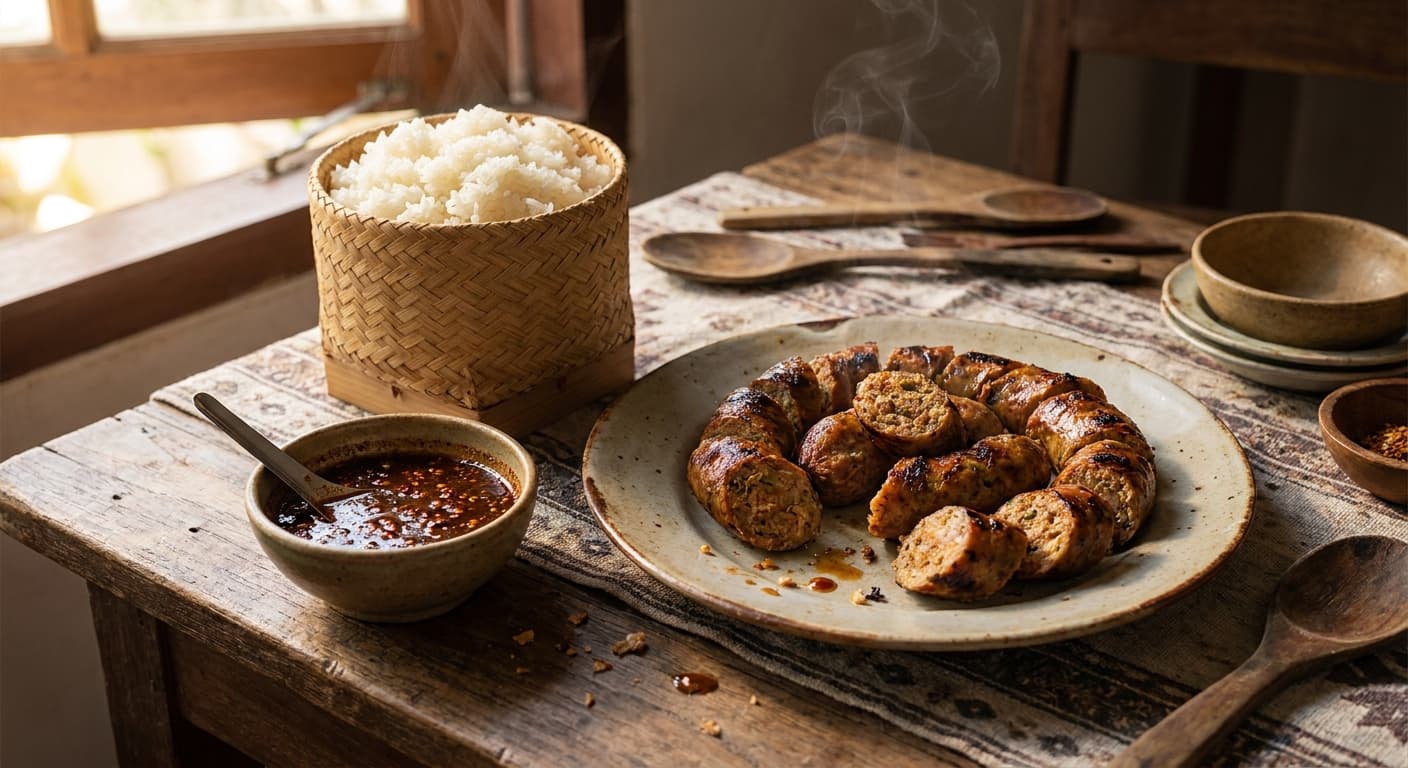 medium
Laotian · Main Courses
Sai Oua (ໄສ້ອົ່ວ) — Lao Herb Sausage with Lemongrass and Padaek
Sai oua is a fragrant Lao pork sausage packed with lemongrass, galangal, herbs, chiles, and padaek. It is traditionally ping-grilled and served with khao niaw, jeow, and crisp vegetables.
75 min 6 610 cal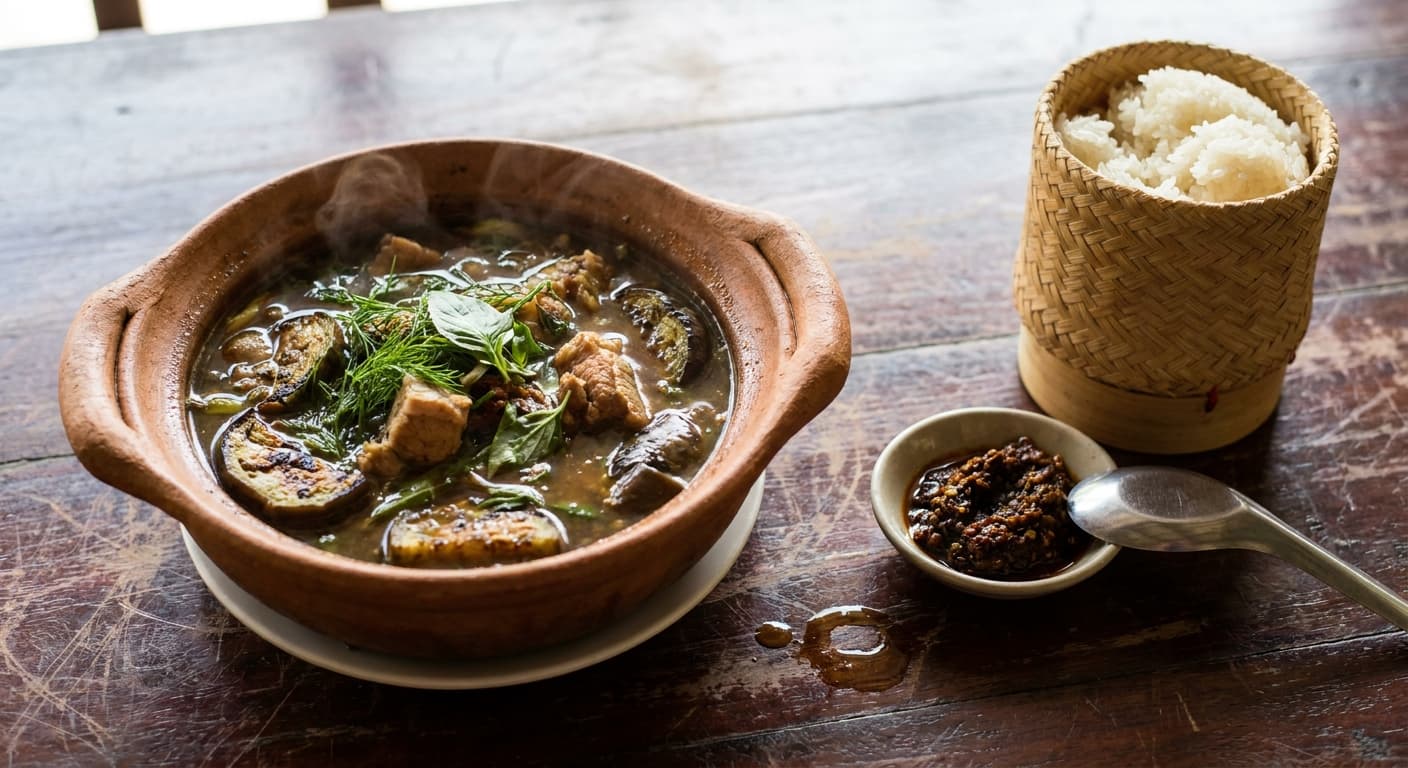 medium
Laotian · Stews
Or Lam (ເອາະຫຼາມ) — Luang Prabang Herb Stew
Or lam is a thick, herb-heavy stew from Luang Prabang, prized for sa khan vine, yanang, padaek, and tender meat. It is earthy, gently spicy, and traditionally eaten with khao niaw.
155 min 6 440 cal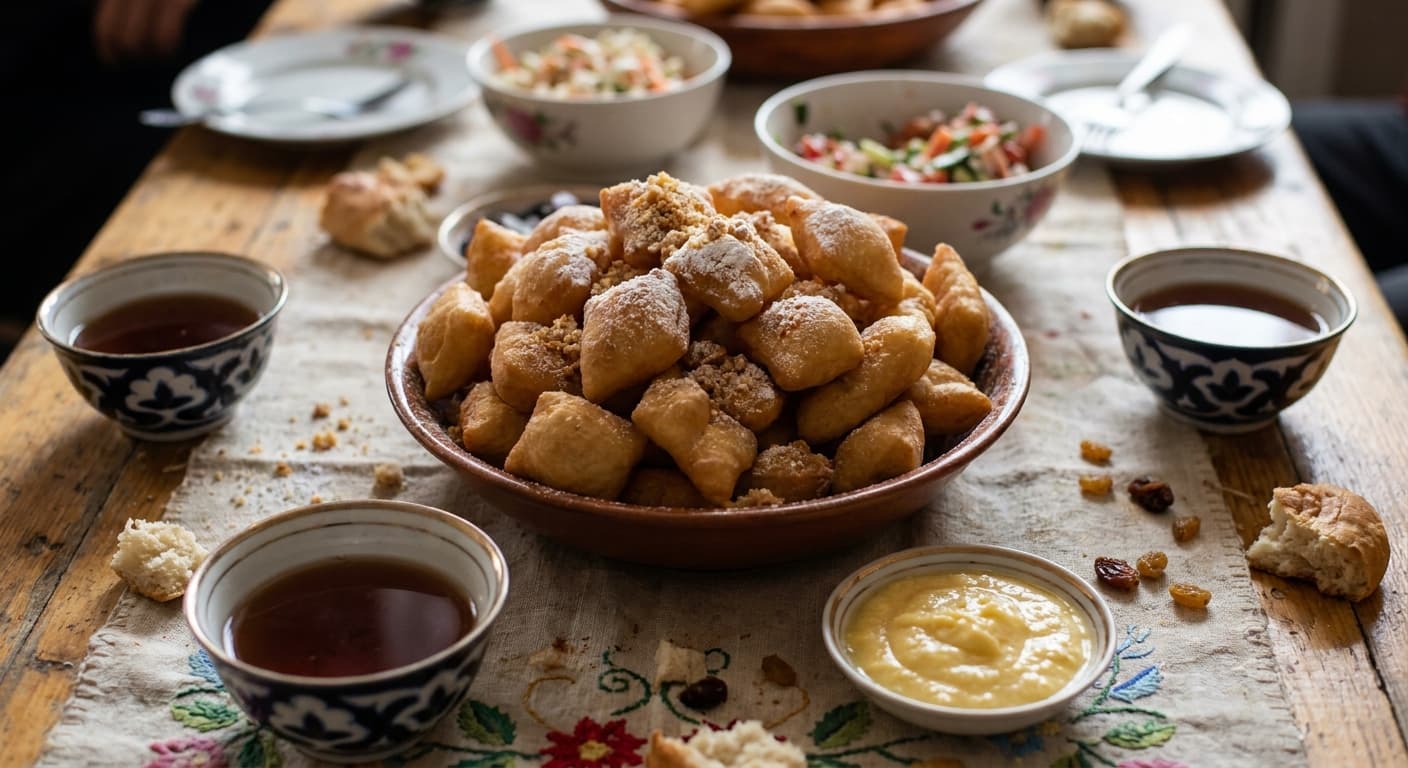 medium
Kyrgyz · Breads
Boorsok (Боорсок) — Kyrgyz Fried Celebration Bread
Boorsok is Kyrgyz fried bread, cut into small pillows and served at toi celebrations, family tables, and with tea. Its crisp-golden outside and soft center make it a natural partner for kymyz, shorpo, jam, or kaymak.
120 min 8 510 cal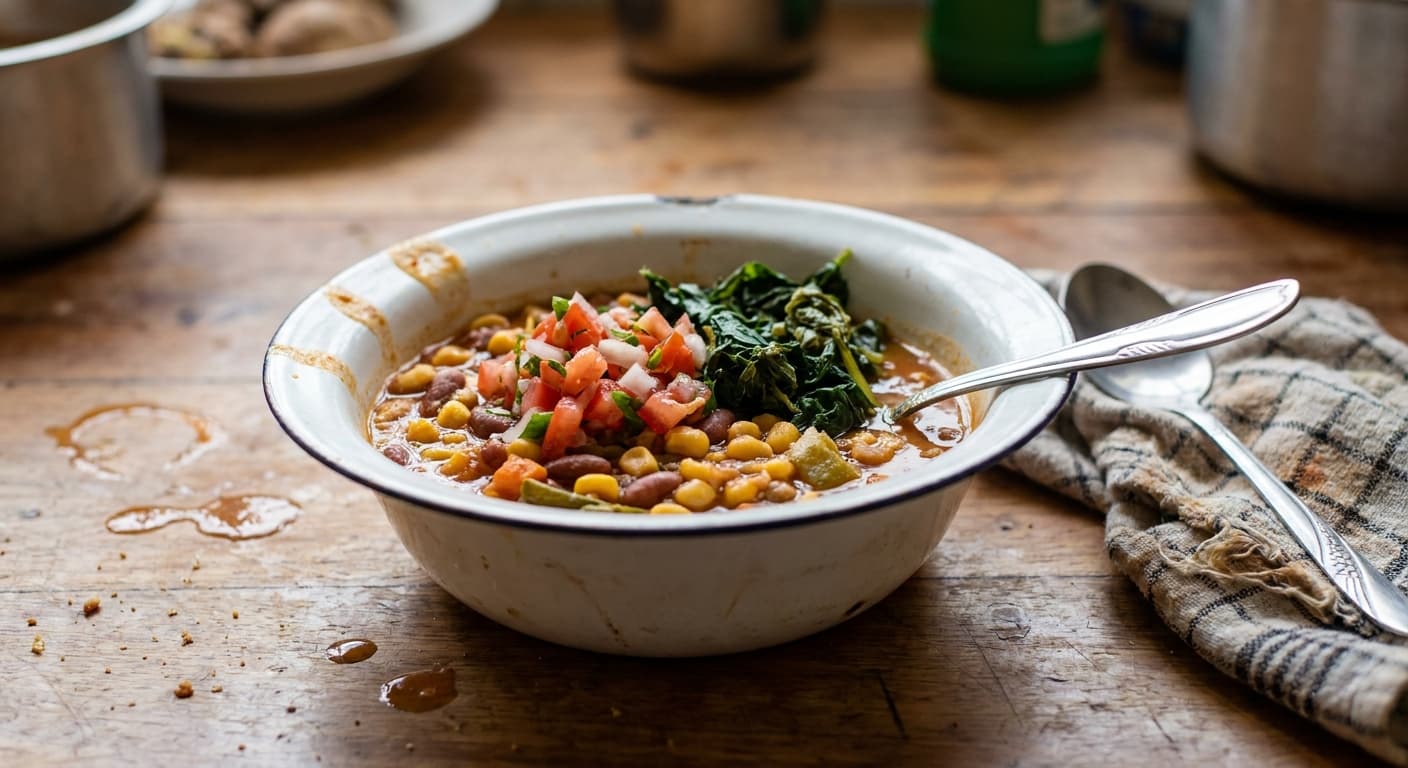 medium
Kenyan · Main Courses
Githeri (Gĩtheri) — Kenyan Maize and Bean Stew
Githeri is a Kenyan one-pot staple of maize and beans, especially associated with Kikuyu and wider central Kenyan home cooking. This version finishes the boiled grains in a tomato mchuzi with sukuma wiki and is excellent with kachumbari.
185 min 6 565 cal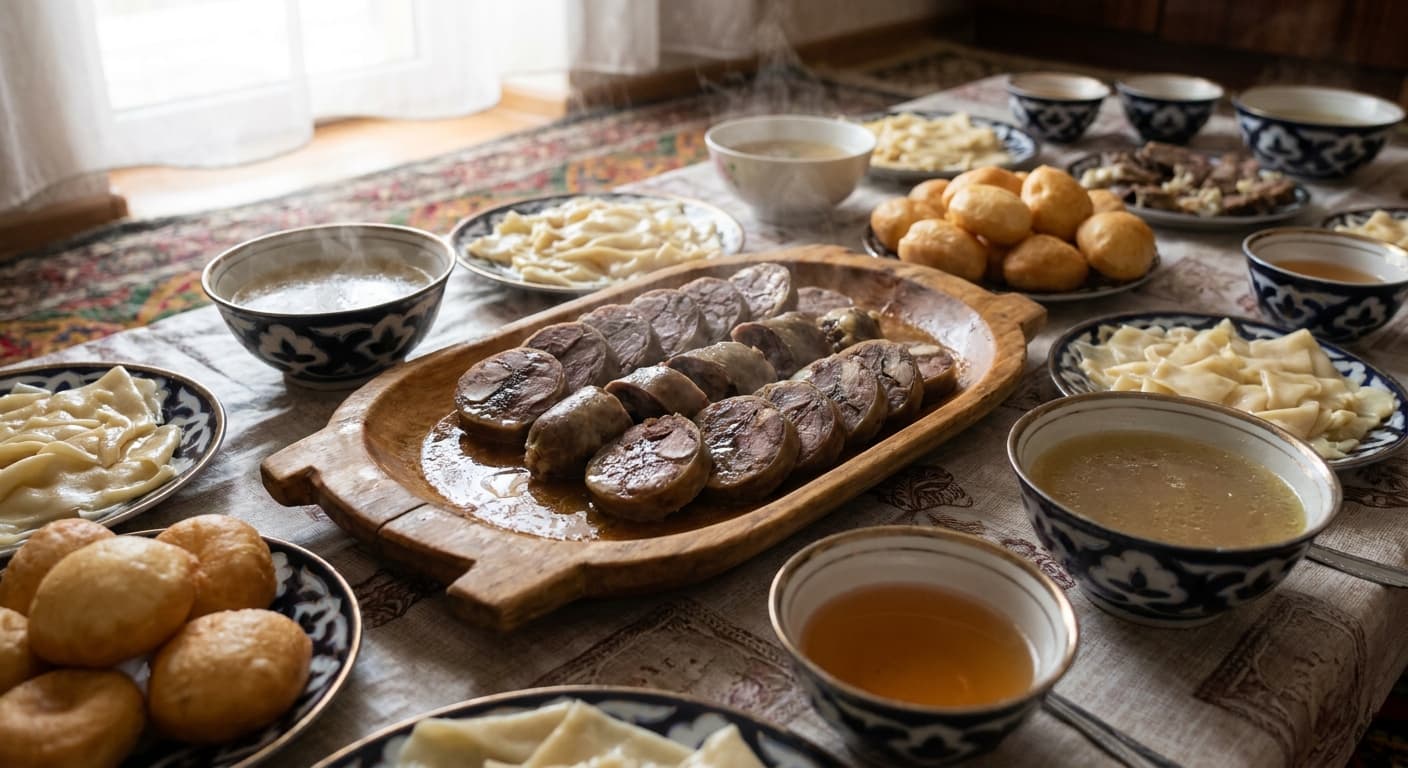 hard
Kazakh · Appetizers
Kazy (Қазы) — Kazakh Horsemeat Rib Sausage
Kazy is a treasured Kazakh sausage made from fatty horse rib meat stuffed into natural casing, then cured briefly and gently boiled. It is sliced for a dastarkhan, served with beshbarmak, sorpa, and festive breads such as baursak.
240 min 10 465 cal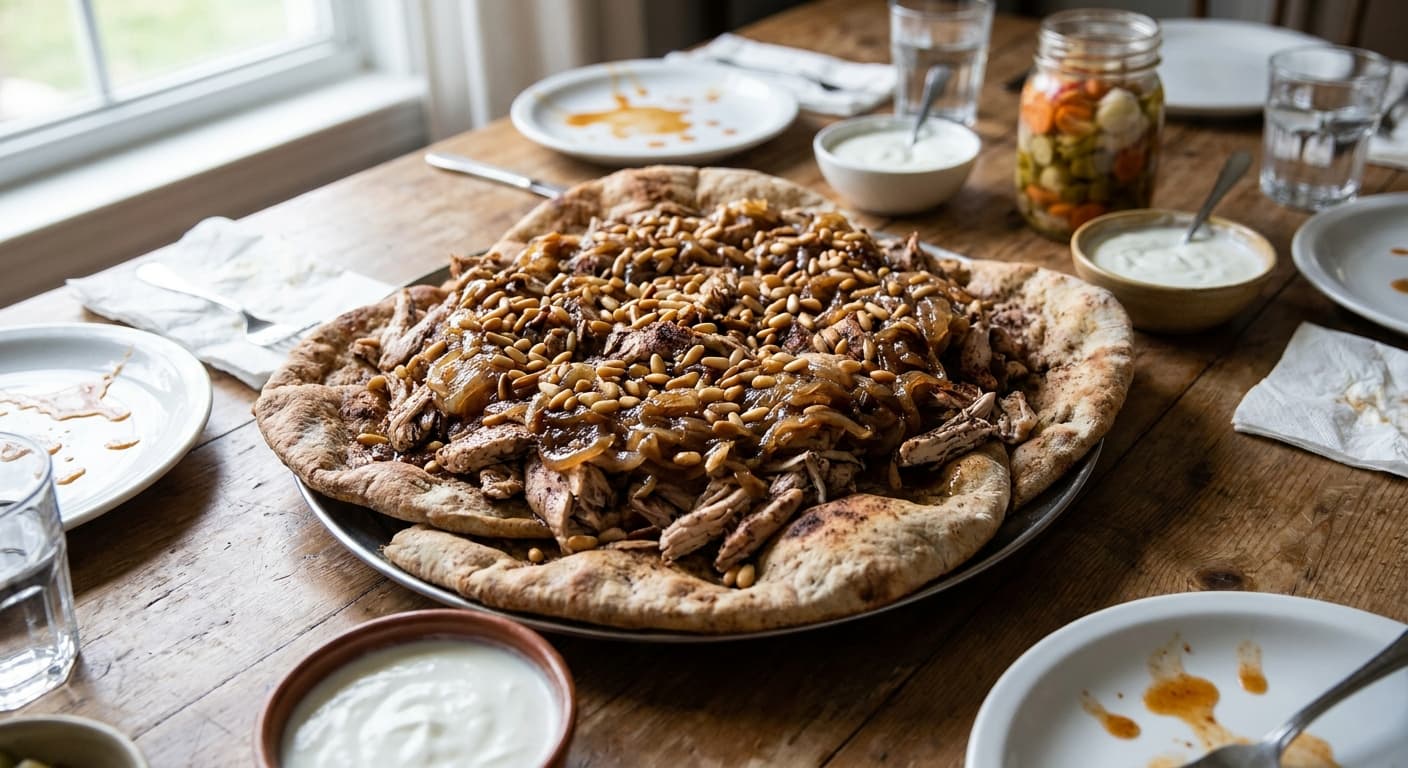 medium
Jordanian · Main Courses
Musakhan (مسخن) — Sumac Chicken on Shrak Bread
Musakhan is a beloved Jordanian-Palestinian platter of sumac chicken, olive-oil onions, and pine nuts over shrak, the thin markook bread common in Jordan. Like mansaf, it is served communally for generous family meals.
95 min 6 820 cal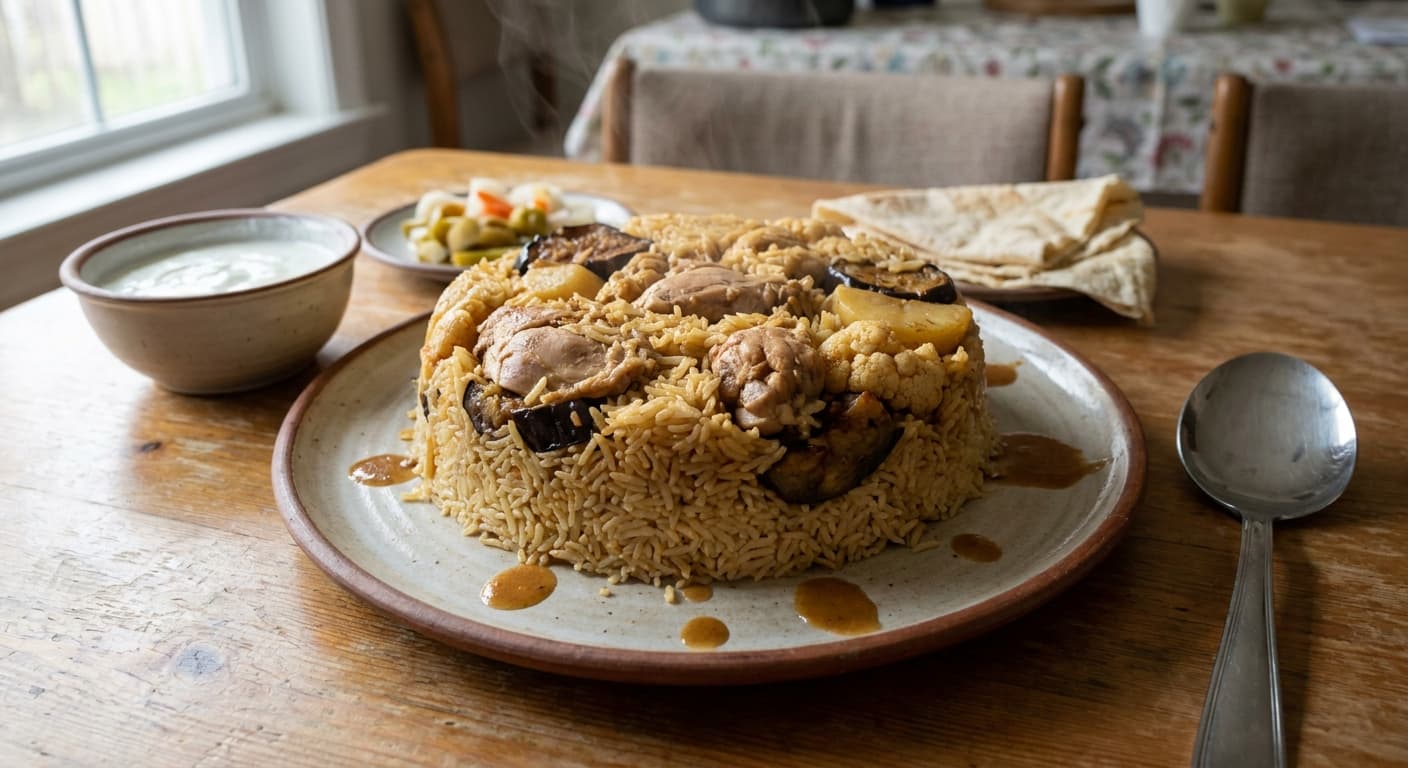 medium
Jordanian · Rice Dishes
Maqluba (مقلوبة) — Jordanian Upside-Down Rice with Chicken
Maqluba is Jordan’s beloved upside-down rice dish, layered with spiced chicken, eggplant, cauliflower, potatoes, and tomatoes. The dramatic flip at the table makes it a centerpiece for Friday lunch, Ramadan iftar, and family gatherings.
110 min 6 810 cal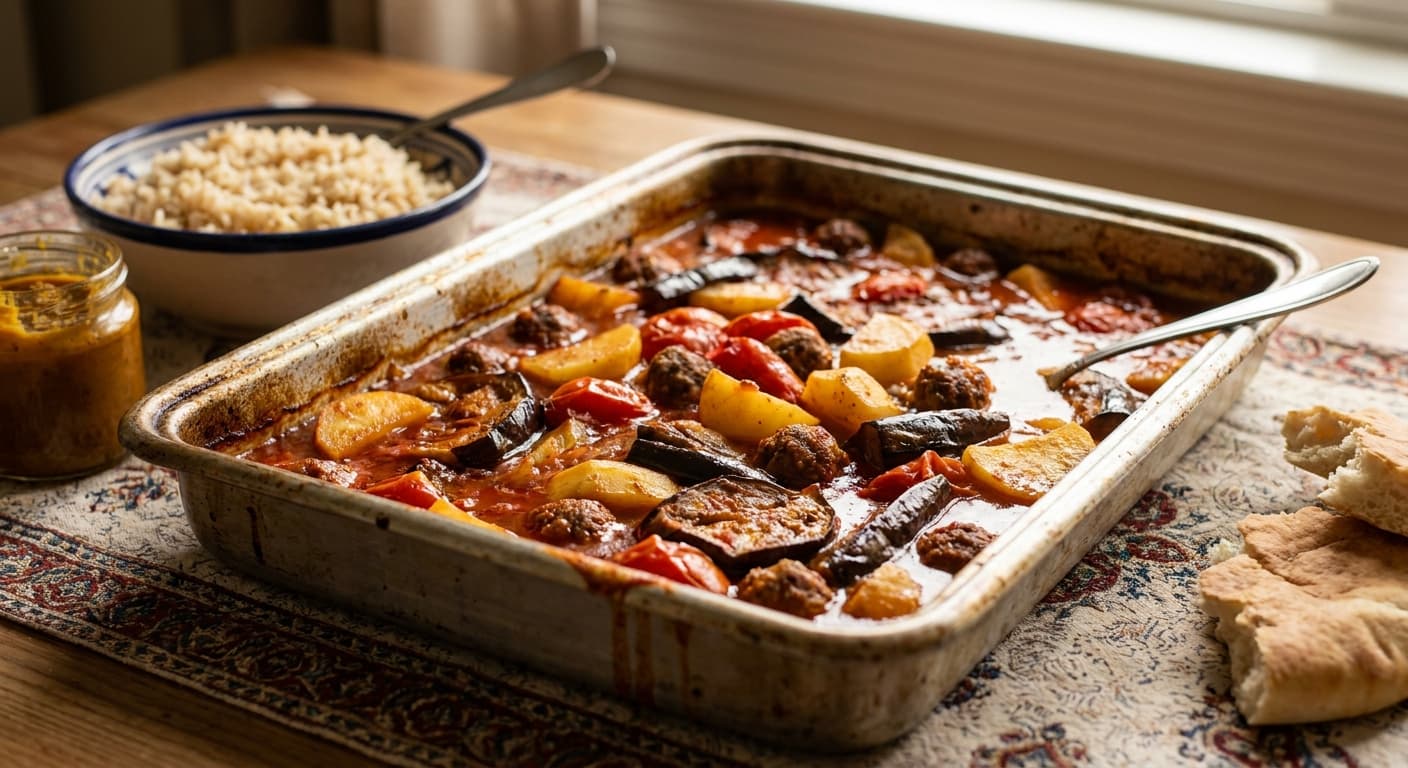 medium
Iraqi · Main Courses
Tepsi Baytinijan (تبسي بيتنجان) — Iraqi Eggplant Tray Bake
Tepsi Baytinijan is an Iraqi tray-baked eggplant casserole layered with potatoes, tomatoes, onions, and spiced meatballs. Its tomato-rich sauce gives the comfort of marga while staying a true tepsi, usually served with timman.
90 min 6 618 cal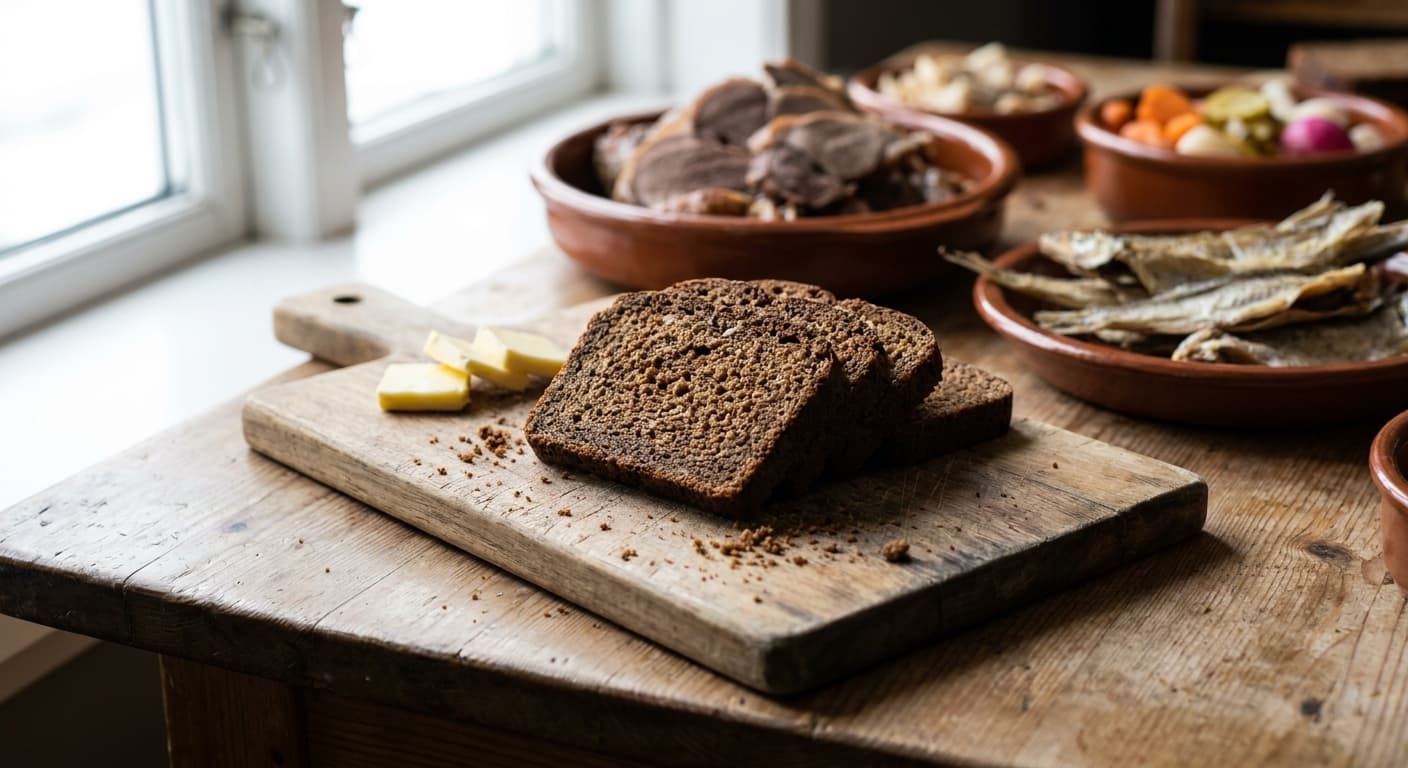 medium
Icelandic · Breads
Icelandic Rye Bread (Rúgbrauð) — Dense Geothermal-Style Rye Loaf
Rúgbrauð is Iceland’s dark, sweet, slow-cooked rye bread, traditionally steamed by geothermal heat. Slice it thin with butter, hangikjöt, plokkfiskur, skyr, or hardfiskur for a deeply Icelandic table.
440 min 12 258 cal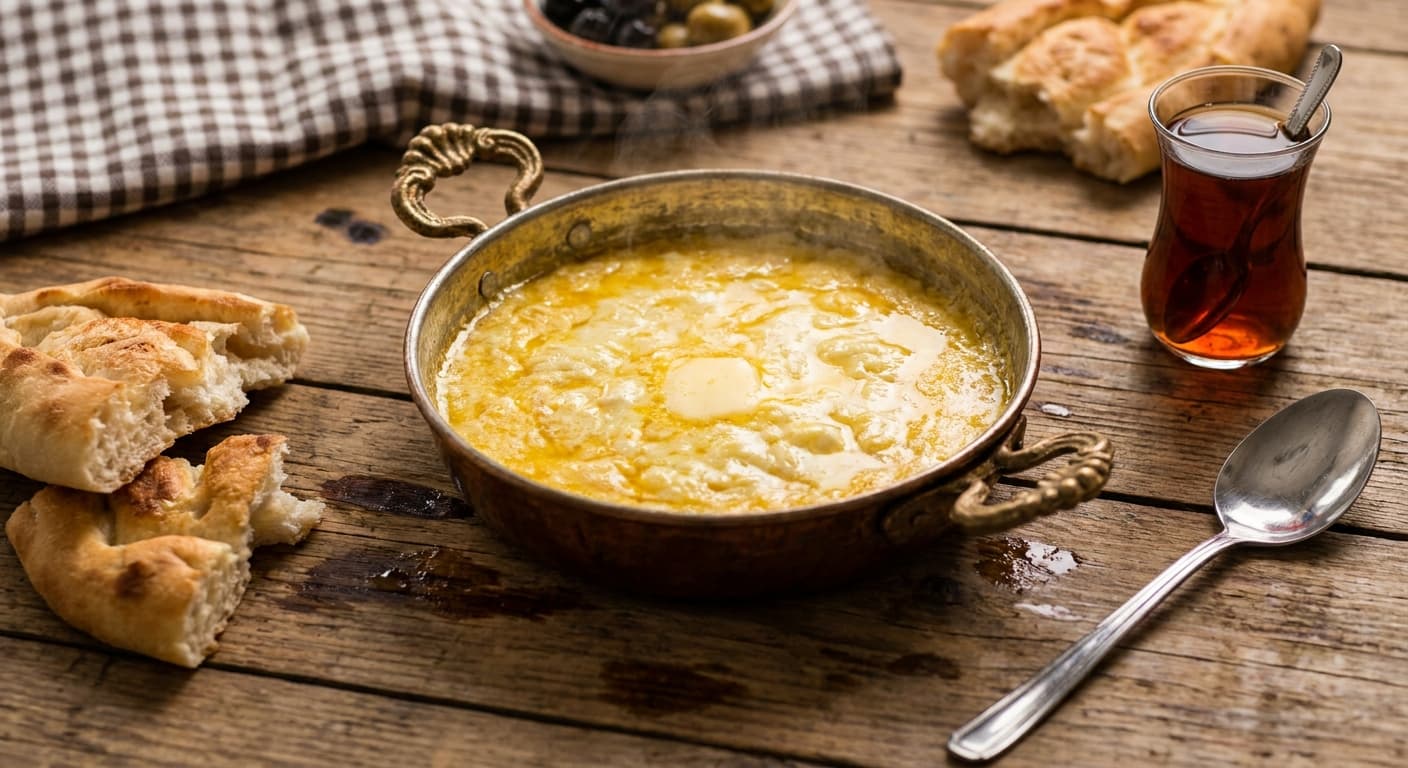 easy
Turkish · Main Courses
Mıhlama (Mıhlama) — Black Sea Cornmeal and Cheese Skillet
Mıhlama is the molten cornmeal-and-cheese skillet of Turkey’s eastern Black Sea breakfast table. Built on mısır unu, tereyağı, and stringy kolot cheese, it is a kahvaltı staple served with pide rather than a kebab or börek dish.
25 min 4 555 cal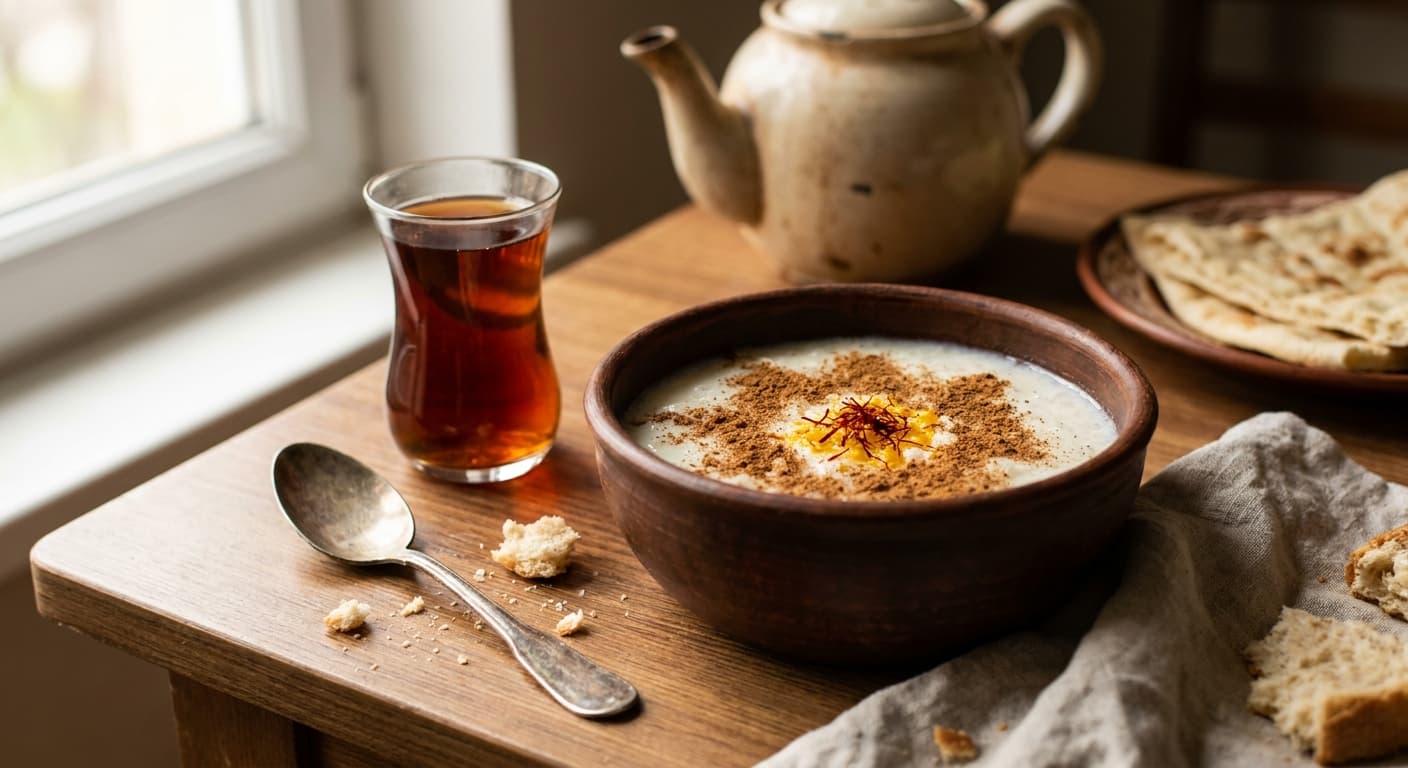 easy
Azerbaijani · Rice Dishes
Azerbaijani Milk Rice Porridge (Südlü Sıyıq) — Creamy Breakfast Bowl
Südlü sıyıq is a gentle Azerbaijani milk-and-rice porridge, very different from separate-grain plov. This home breakfast is simmered slowly until creamy, then finished with butter, cinnamon, and a small saffron bloom.
40 min 4 406 cal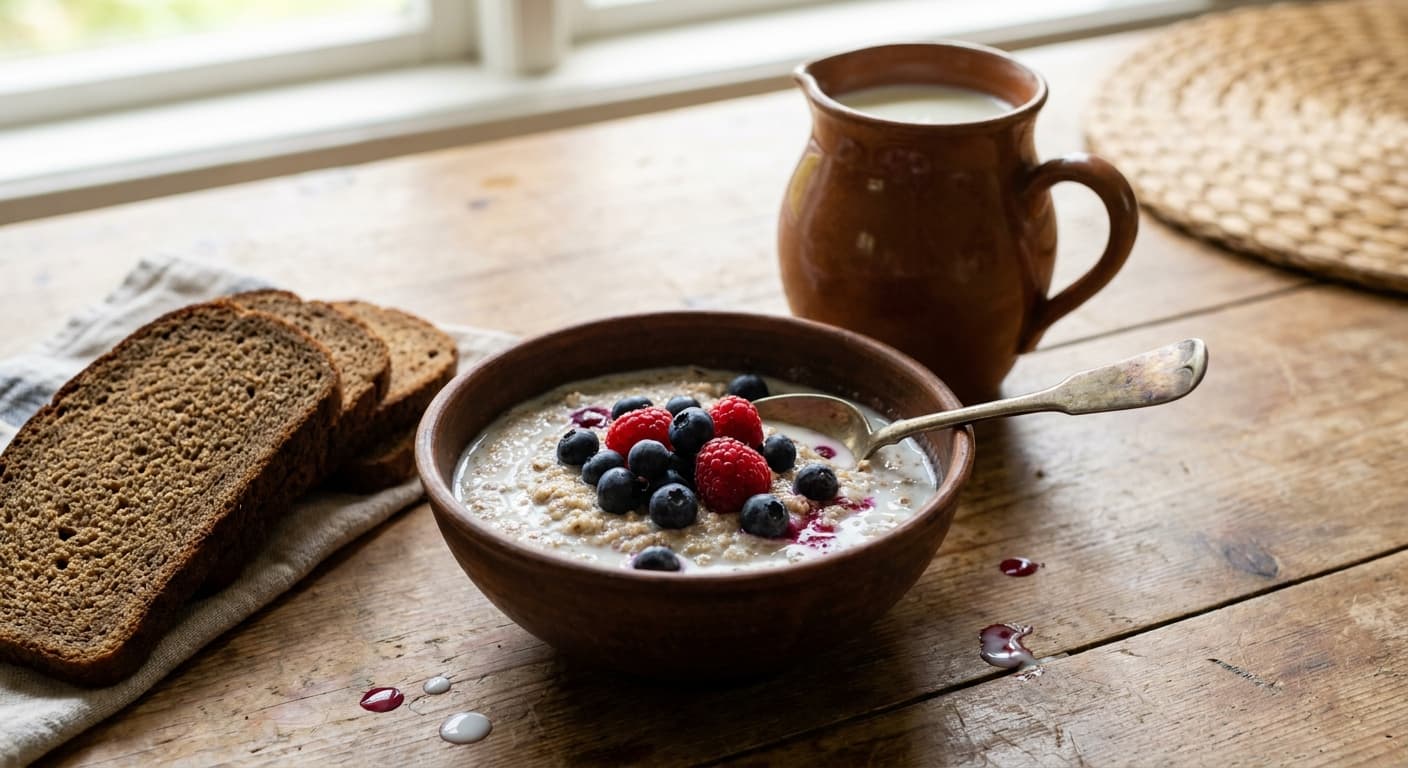 easy
Estonian · Drinks
Kama (Kama) — Estonian Toasted Grain Kefir Drink
Kama is Estonia’s beloved no-cook blend of roasted grains and peas, whisked into kefir for a tangy summer drink or spoonable bowl. It sits naturally beside rye leib and, like kohuke, reflects Estonia’s affection for dairy snacks.
10 min 4 260 cal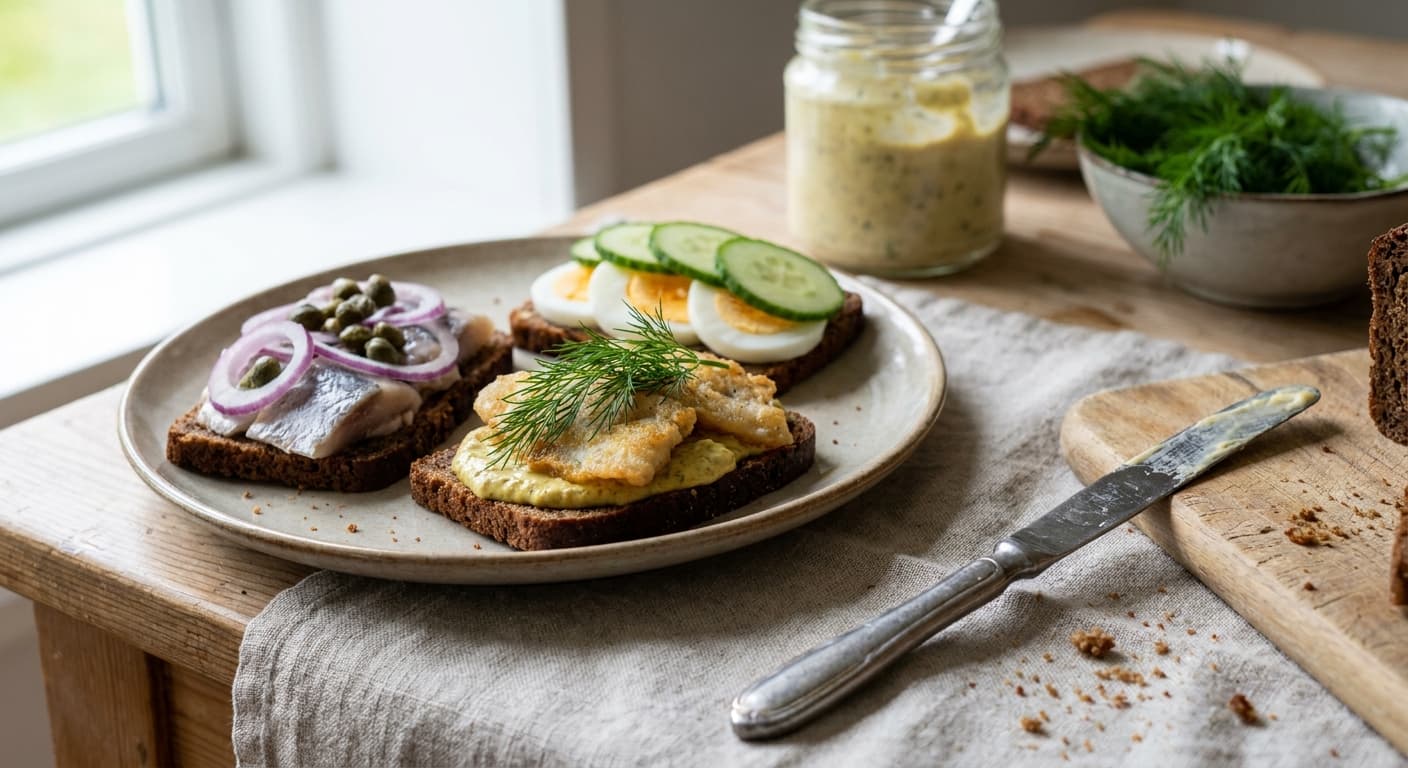 medium
Danish · Main Courses
Smørrebrød (Smørrebrød) — Danish Open-Faced Rye Sandwiches
Smørrebrød is the classic Danish open-faced sandwich, built on buttered rugbrød and arranged with generous, tidy toppings. This recipe makes a traditional lunch board with pickled herring, shrimp and egg, roast beef with remoulade, and warm leverpostej.
47 min 4 920 cal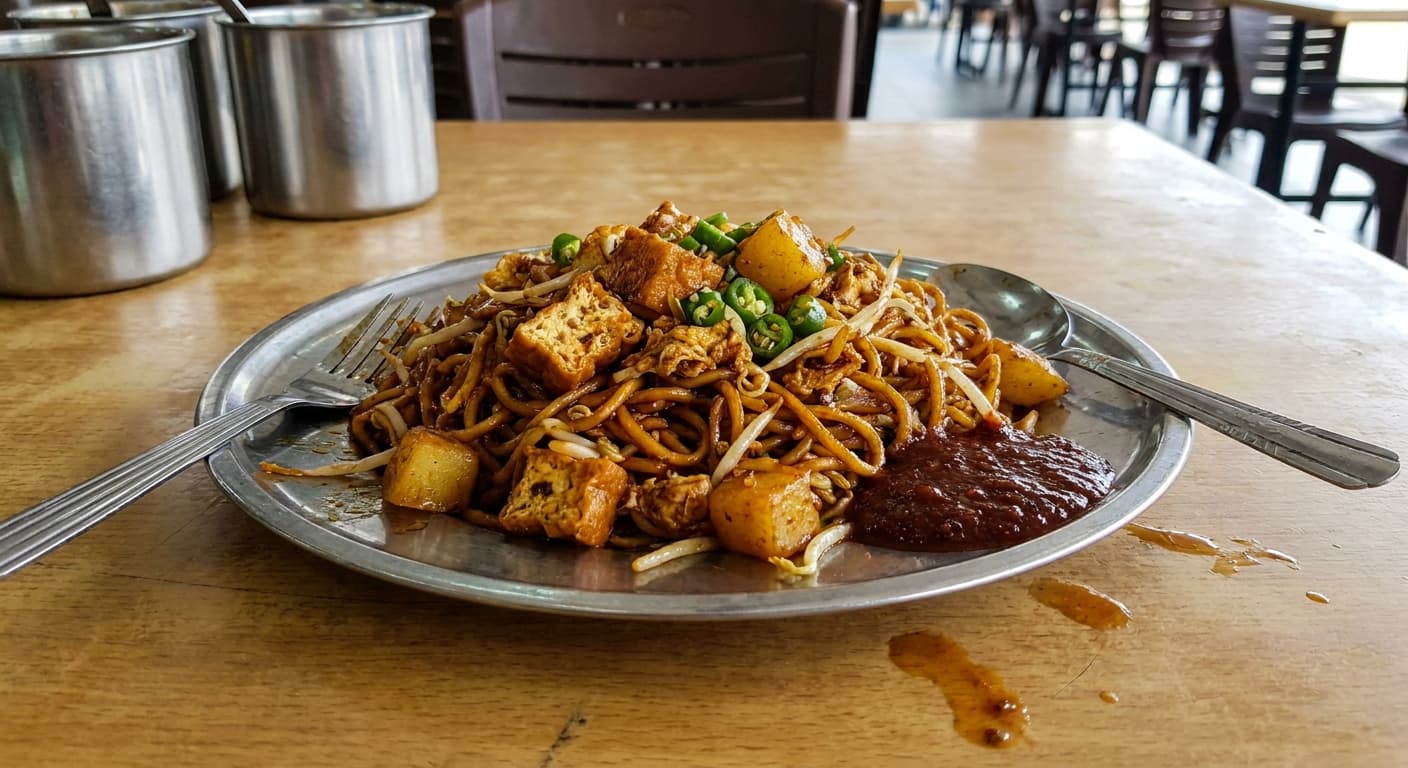 medium
Malaysian · Main Courses
Mamak Fried Noodles (Mee Goreng Mamak) — Malaysian Indian Street-Stall Noodles
Mee Goreng Mamak is Malaysian Indian Muslim street-stall fried noodles, linked to Mamak shops that also serve roti canai and nasi kandar. A chili sambal-rempah, kicap manis, tofu, potato, and egg make it sweet, savory, and smoky.
40 min 4 625 cal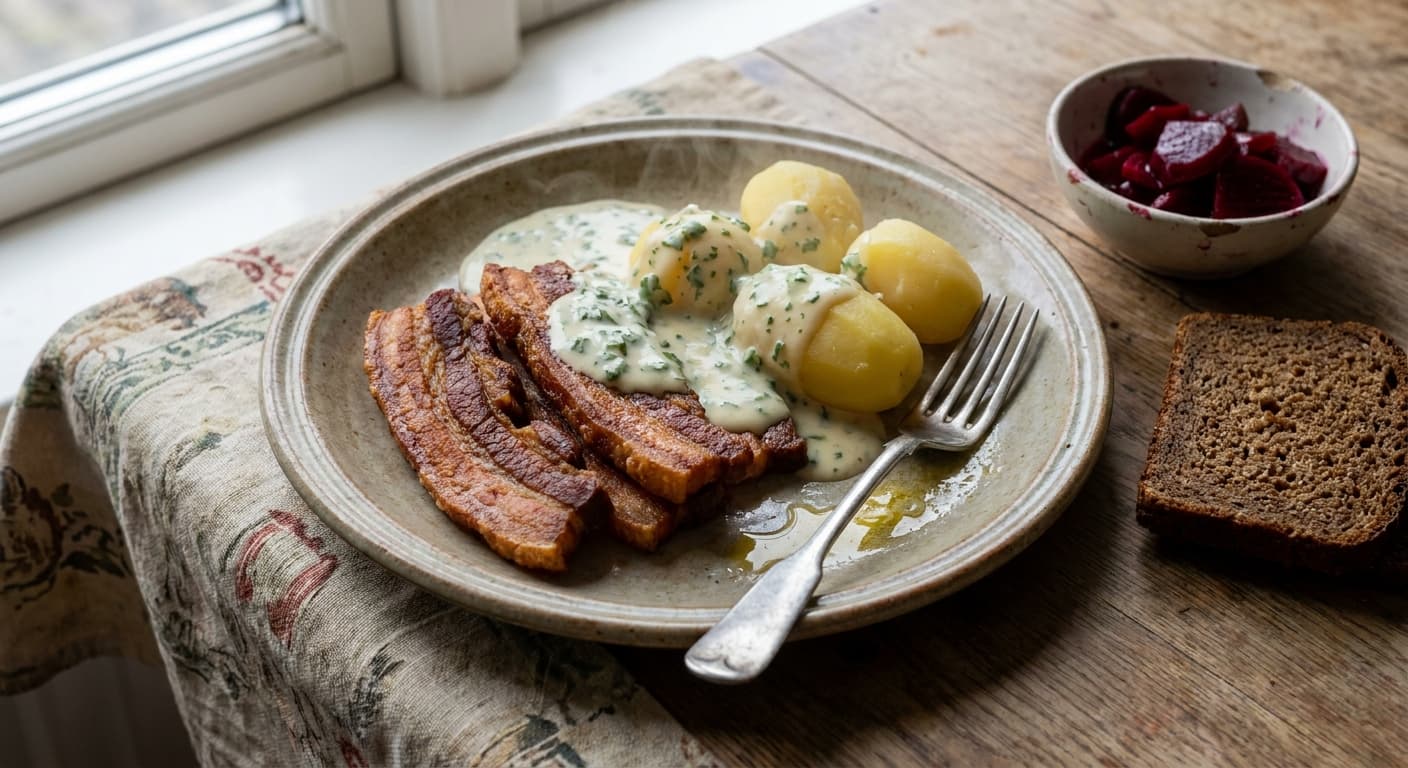 easy
Danish · Main Courses
Danish Fried Pork Belly (Stegt flæsk med persillesovs) — Crisp Pork with Parsley Sauce
Stegt flæsk med persillesovs is a beloved Danish home dish of crisp pork belly, boiled potatoes, and creamy parsley sauce. It sits proudly among classics like frikadeller and flæskesteg, with leftovers often enjoyed on rugbrød as smørrebrød.
60 min 4 858 cal